
A first year special education teacher often arrives in August with a degree, a caseload list, and very little idea of how the first Monday will actually feel. Picture the second week of school: one student is under the table, two are arguing over a pencil, a paraprofessional is waiting for directions, and an IEP meeting is scheduled for 3:30. Nothing in the textbook looked quite like this.
This guide is for new special educators and the mentors who support them. You will learn how to set up routines before content, plan transitions, build relationships with students and adults, manage behavior with calm, simple systems, and protect your own energy through the first year.
Examples are fictional. Adapt to the student’s goals and agreed supports. This is guidance, not a diagnosis.
At a glance
- Teach routines first. Content flows more easily once the room feels predictable.
- Plan transitions as carefully as lessons, because that is where many problems start.
- Build relationships with students, families, and paraprofessionals from week one.
- Use a few clear expectations and respond to behavior calmly and consistently.
- Protect your energy with simple systems and a mentor you can ask anything.
1. Teach routines before content as a first year special education teacher
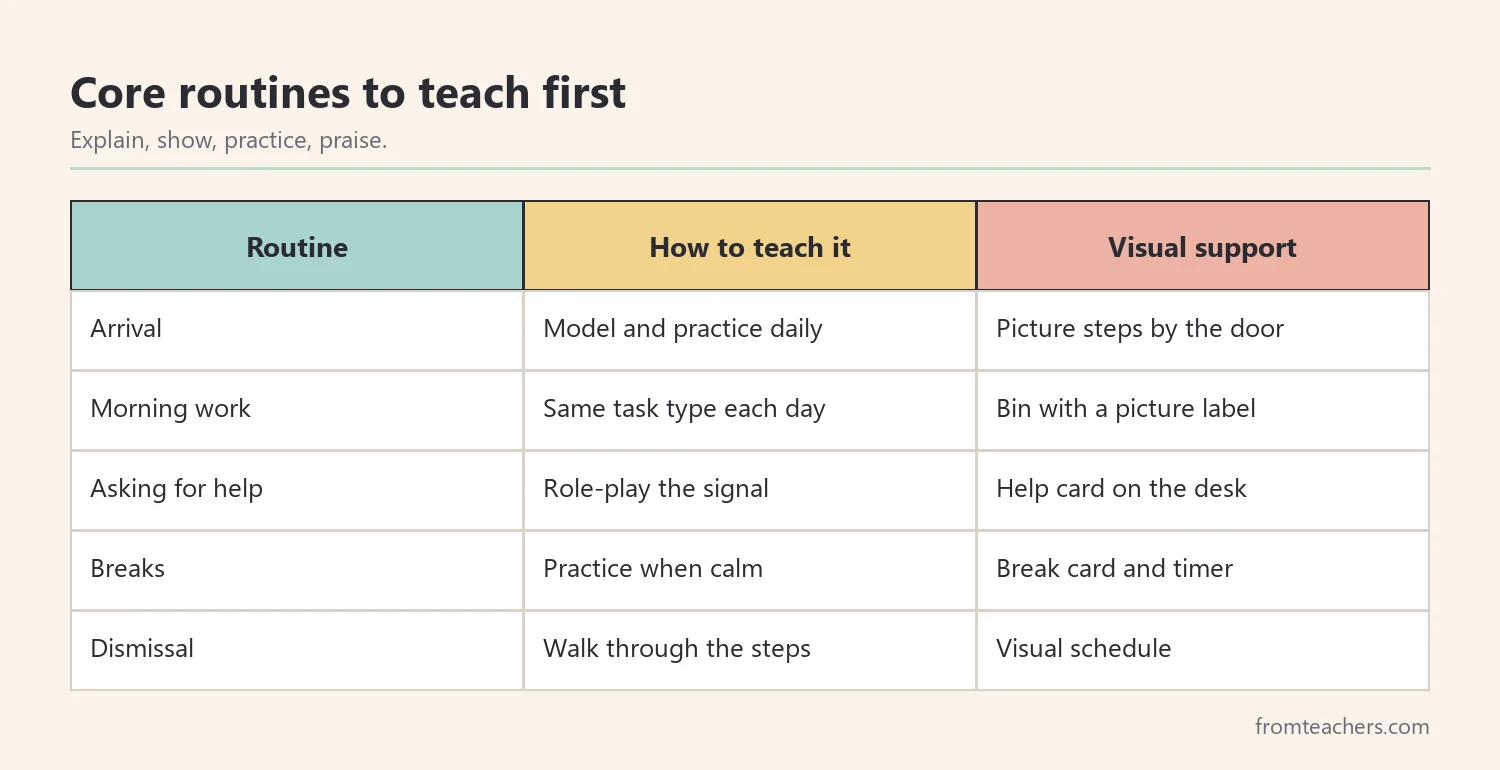
First, list the routines your students will repeat every day: arrival, morning work, lining up, small groups, asking for help, using the restroom, breaks, and dismissal. Each one is a mini lesson. Students with disabilities often thrive when routines are taught explicitly, practiced, and kept consistent.
Next, teach each routine with the same pattern: explain it, show it, practice it, and praise it. For example, model how to enter the room, hang a backpack, and start morning work. Then, let students practice while you narrate what they did well.
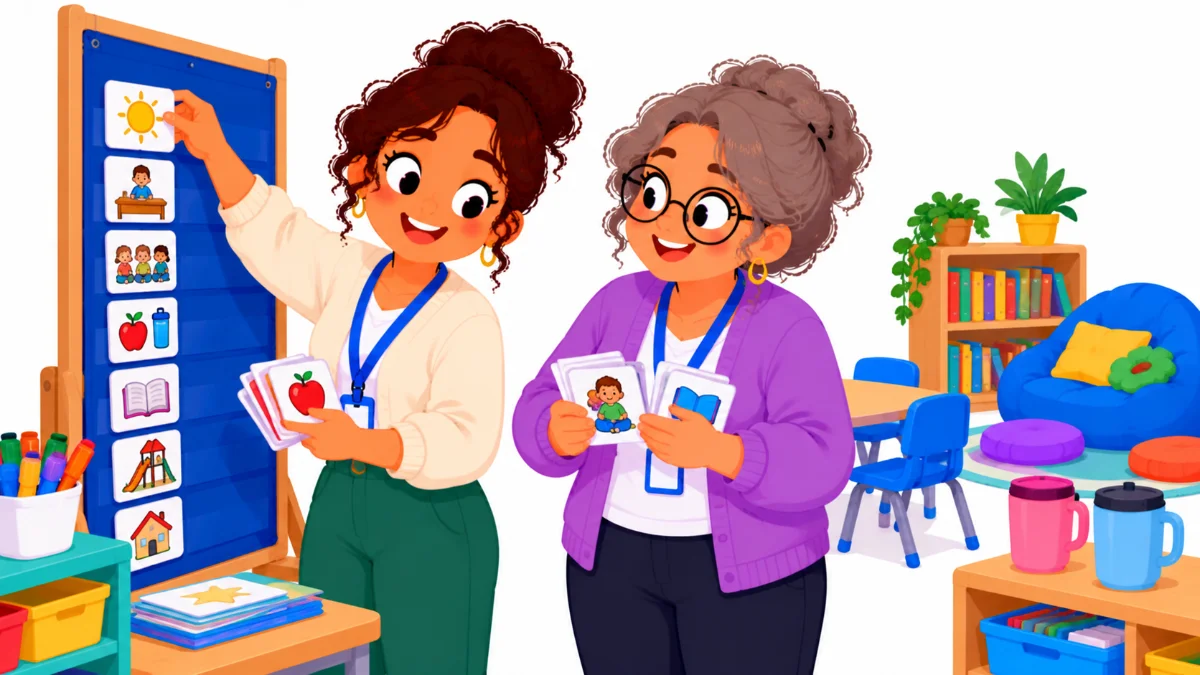
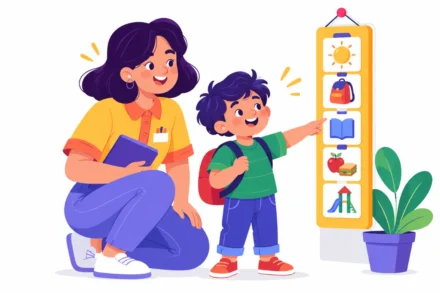
Also, use visual supports. A visual schedule at the front of the room, picture cues for each routine, and a first-then board for students who need it all reduce the need for repeated verbal directions. Visuals speak for you when you are busy with another group.
Ms. Rivera (fictional) started as a first year special education teacher in a K to 2 resource room. In her first two weeks, she taught only five routines, practiced them several times a day, and delayed most new content. By week three, transitions were faster and calmer, and she had more time for teaching.
Moreover, expect to reteach. After a long weekend, a holiday, or a schedule change, routines often slip. Plan a short refresher on the first morning back. Every first year special education teacher discovers that reteaching is not a failure, it is simply part of the job.
In addition, write your routines down. A one-page routine guide helps substitutes, paraprofessionals, and visiting specialists follow the same steps. Consistency across adults is one of the biggest gifts you can give your students.
2. Plan transitions as carefully as lessons
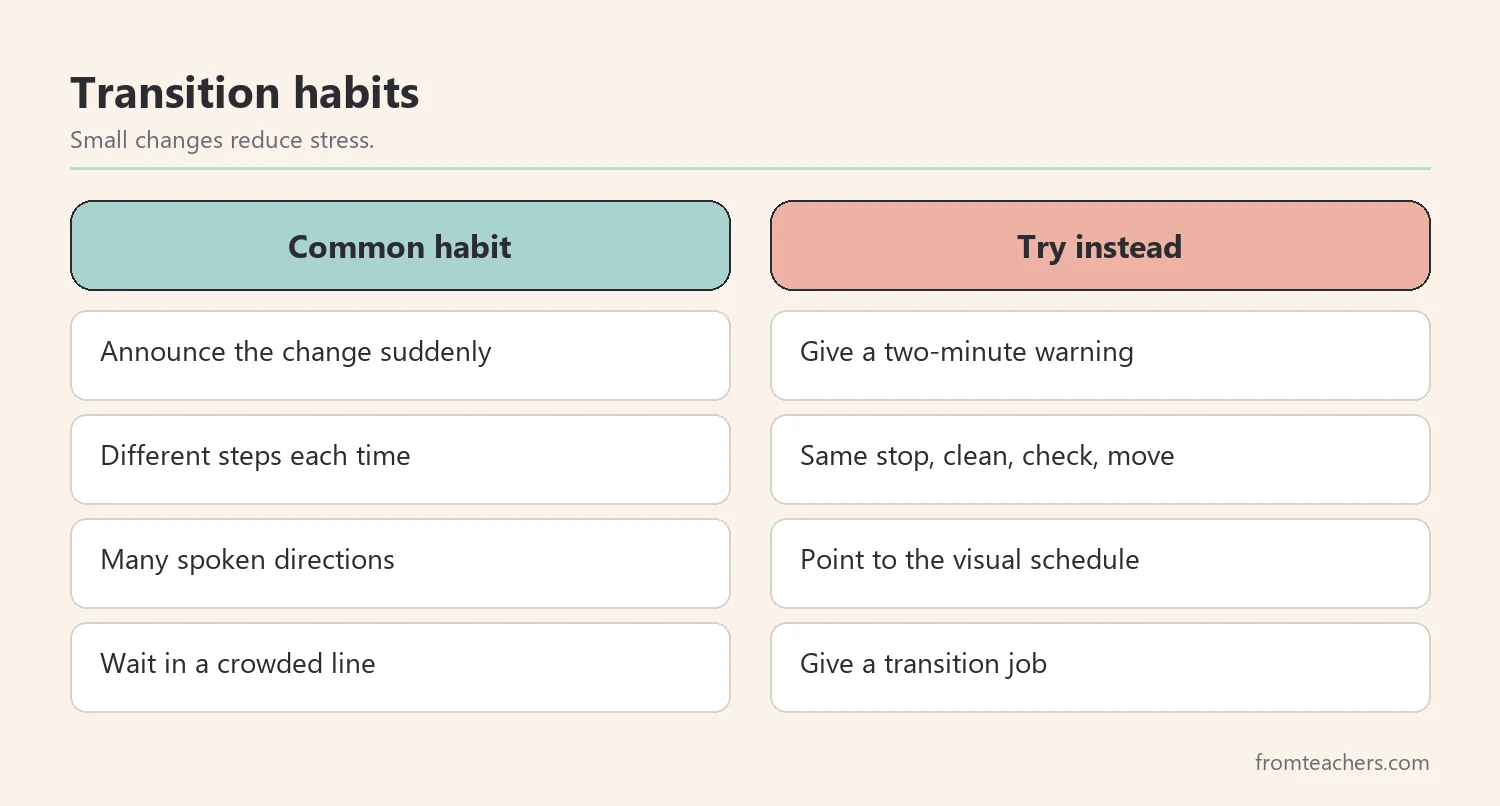
Many difficult moments happen between activities rather than during them. Students may be unsure what comes next, have to stop something they enjoy, or move through a crowded hallway. Therefore, treat transitions as part of the lesson plan.
For example, give a warning before each change. A visual timer, a two-minute signal, or a short song can prepare students. Then, use the same clear sequence every time: stop, clean up, check the schedule, move.
A visual guide of dos and don’ts can sharpen this skill quickly. The classroom management strategies dos and don’ts guide for SPED teachers pairs a “what not to do” scene with a “do this instead” scene across engagement, behavior, transitions, differentiation, and communication. Flipping through it during planning time can help you spot small changes that make a big difference.
In Ms. Rivera’s room, Eli (fictional, grade 2) struggled every time small groups changed. She added a two-minute visual timer and a “next” card showing his following activity. Within a few weeks, his transitions were much smoother, and he began checking the schedule by himself.
Also, plan for students who need more support. Some may need a job during the transition, like carrying the book basket, or a quieter path through the hallway. These small adjustments are often written into IEPs as accommodations, so check each student’s plan.
3. Build relationships with students and adults
Relationships are the foundation of classroom management. Students who feel known and safe are more likely to try hard tasks and recover from difficult moments. So, spend time in the first weeks learning about each student’s interests, strengths, and preferences.
Next, connect with families early. A short, positive message in the first two weeks sets a warm tone before any problems arise. Families of students with disabilities often hear about difficulties first, so a good-news note can mean a lot.
Also, invest in your paraprofessionals. A first year special education teacher often supervises adults with more years of experience. Respect that experience, share your plans clearly, and agree on roles. A short weekly meeting can prevent many misunderstandings.
| Who | First-month action | Why it helps |
|---|---|---|
| Students | Interest survey and one-on-one chats | Builds trust and motivation |
| Families | A positive note in week one or two | Sets a warm tone |
| Paraprofessionals | Weekly roles meeting | Prevents confusion |
| General ed teachers | Share accommodations simply | Supports inclusion |
In addition, meet with general education colleagues who teach your students. Share each student’s key accommodations in plain language and ask how you can help. Collaboration makes inclusion work and helps you see students in other settings.
Also, learn the names and roles of the related service providers who see your students, such as speech-language pathologists and occupational therapists. A quick hello and a shared schedule help everyone coordinate sessions without pulling students out at the worst moments.
Ms. Rivera sent a short note to every family in week two, describing one thing their child did well. Several parents replied with useful information about their child, which helped her plan supports.
4. Manage behavior with calm, simple systems
Start with a few clear expectations, stated positively. For example: “Safe body. Kind words. Try your best.” Post them with pictures and teach what each one looks like in different routines.
Next, notice and praise positive behavior often. Specific praise, such as “You put your materials away right when the timer rang,” teaches more than general praise. Many teachers aim for much more positive feedback than corrections across the day.
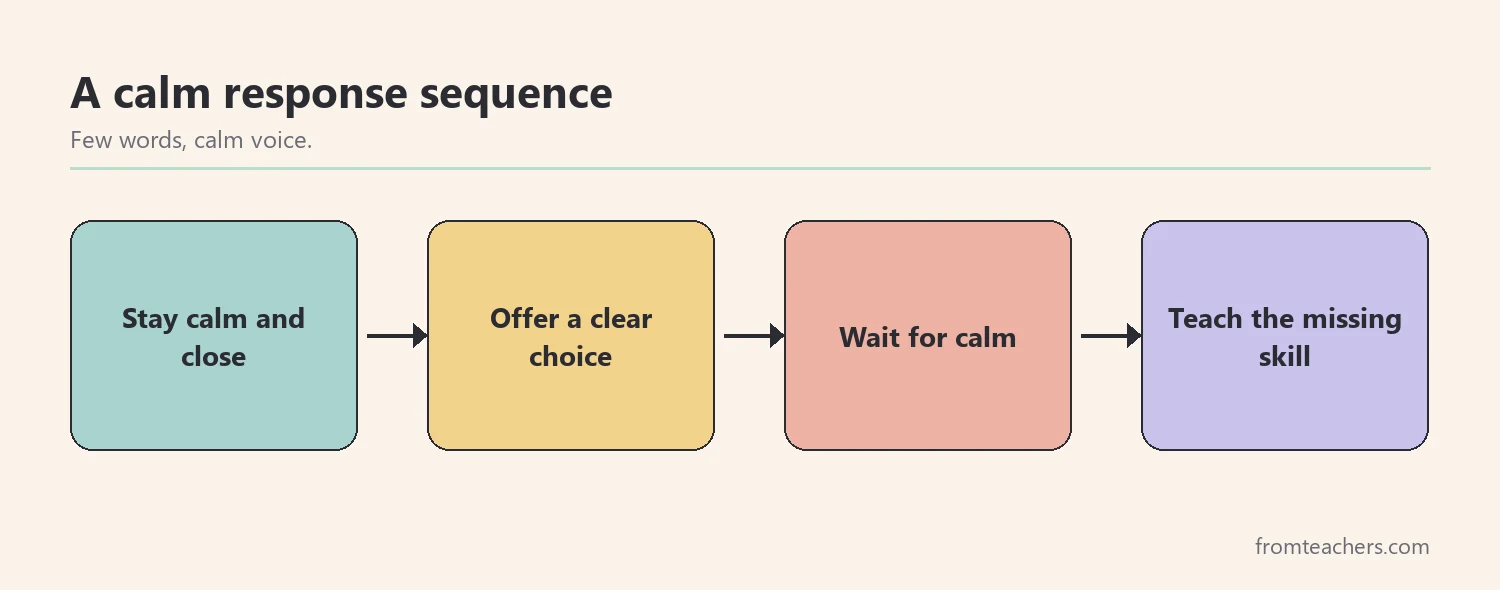
When problems happen, respond calmly. Use a quiet voice, few words, and a clear choice. Then, once the student is calm, teach the skill they were missing. As a first year special education teacher, remember that behavior is communication. Ask what the student might be trying to get or avoid.
Also, keep simple data. A short note on when, where, and what happened before a difficult moment can reveal patterns. Over time, these notes help the team plan supports and, if needed, a behavior intervention plan.
Moreover, follow each student’s existing plan. If a student has a behavior intervention plan, it describes the agreed responses. Read it carefully, ask the case manager or behavior specialist questions, and follow it consistently.
For Eli, short notes showed that most difficult moments happened just before writing tasks. Ms. Rivera and the team added a choice of writing tools and a short movement break before writing. The difficult moments became less frequent over the next month.
5. Organize paperwork and IEP responsibilities
Paperwork can overwhelm a new teacher quickly. Therefore, set up simple systems early. Create a calendar with every IEP meeting, progress report date, and reevaluation deadline for your caseload. Then, set reminders a few weeks before each date.
Next, create a folder for each student with their IEP at a glance, contact information, accommodations, and data sheets. A one-page summary per student is especially helpful for quick reference and for sharing with substitutes.
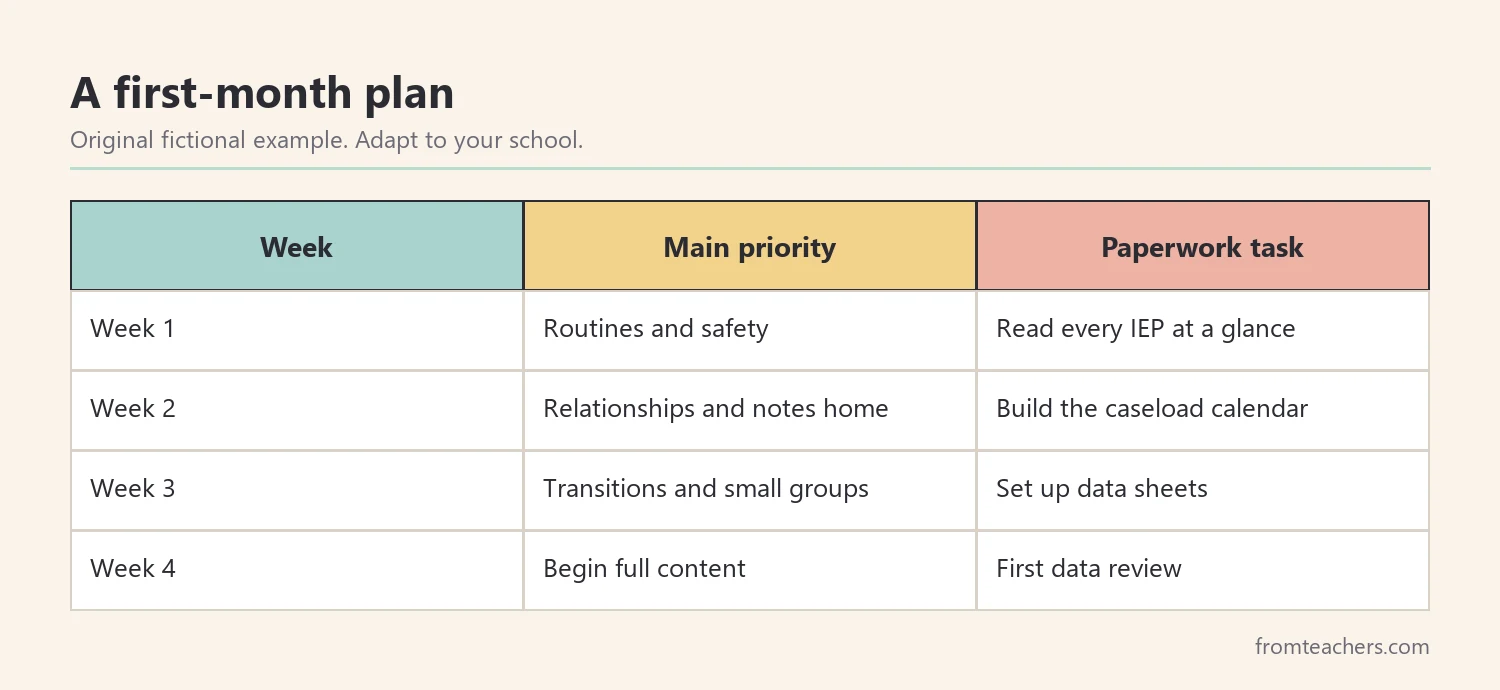
Similarly, keep a simple communication log. Note the date, the person, and a one-line summary each time you talk with a family or colleague about a student. When questions come up later, a first year special education teacher with a log can answer calmly and accurately.
Also, collect data a little at a time. Short, regular data collection is easier than a rush before progress reports. Choose one or two simple data sheets and use them consistently.
In addition, ask for help. Your district may have a special education coordinator, a mentor, or an experienced colleague who can explain procedures. No first year special education teacher is expected to know every form on day one.
6. Protect your energy as a first year special education teacher
The first year is demanding. Many new special educators work long hours and carry emotional weight from their students’ challenges. So, plan small ways to protect your energy before you feel exhausted.
First, set a realistic end time for most workdays. Leave non-urgent tasks for tomorrow. Next, reuse what works: a lesson template, a data sheet, or a parent email format saves time week after week.
Also, find a mentor or a peer group. Talking with someone who understands special education helps you solve problems faster and feel less alone. If your school does not assign a mentor, ask for one or join an online professional community.
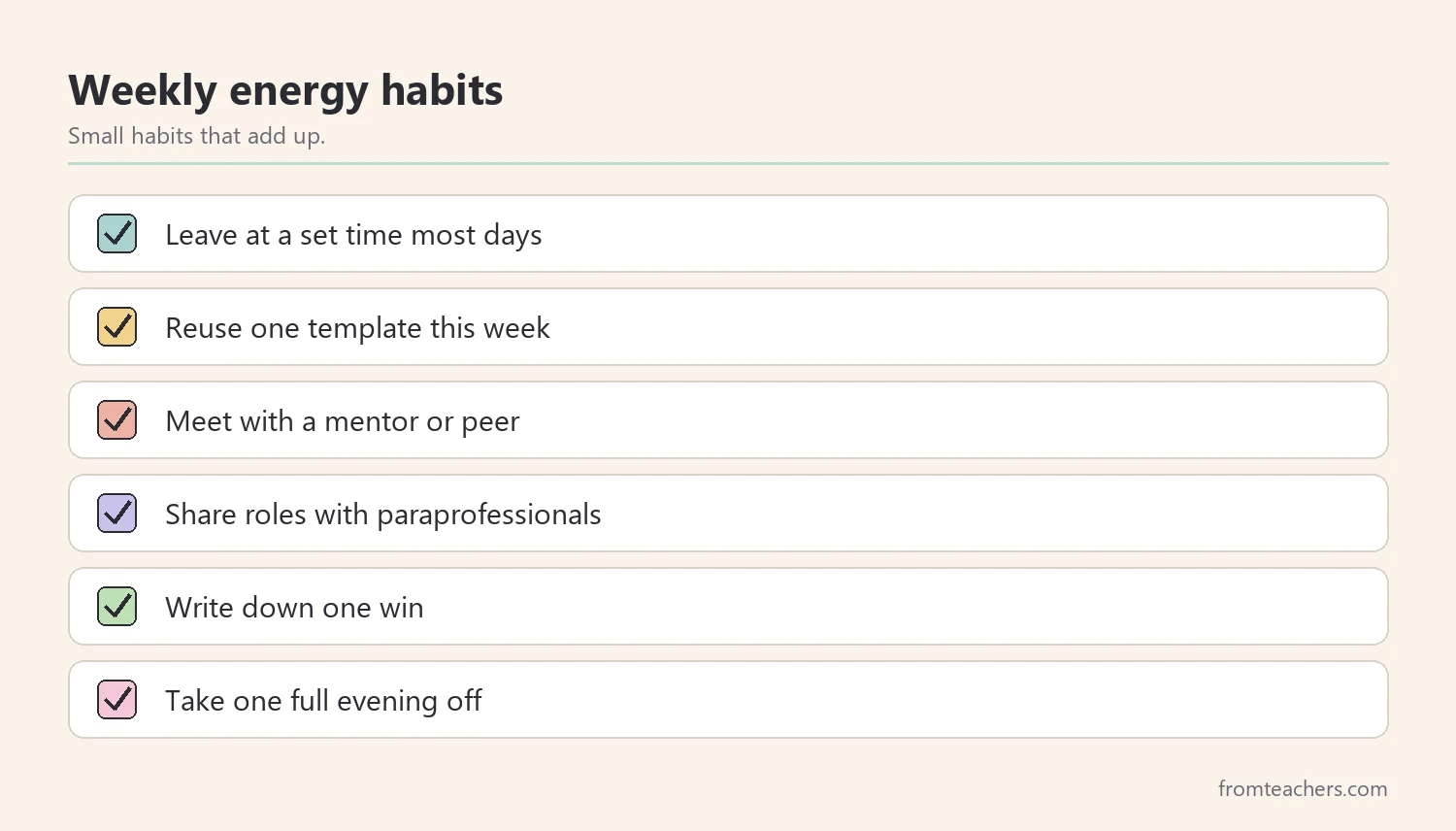
In addition, guard your planning time. Use it for the tasks that matter most this week, such as preparing materials for small groups, rather than answering every email at once. A short list of three priorities for each planning period keeps the most important work moving.
Finally, notice your wins. Write down one success each week, however small. Looking back at that list in a hard month is a powerful reminder of how far you and your students have come.
By spring, Ms. Rivera had a notebook full of small wins: Eli checking his schedule alone, a parent thanking her for a note, a paraprofessional suggesting a new idea. As a first year special education teacher, she learned that steady routines and relationships mattered more than any perfect lesson.
Common mistakes and how to avoid them
- Rushing into content. Routines never settle. Fix: spend the first weeks teaching and practicing routines.
- Ignoring transitions. Problems cluster between activities. Fix: plan warnings and clear sequences.
- Talking too much during behavior. Long talks escalate. Fix: use few words, calm voice, and a clear choice.
- Doing everything alone. Burnout comes fast. Fix: share roles with paraprofessionals and ask a mentor.
- Leaving paperwork to the last minute. Deadlines pile up. Fix: build a caseload calendar in the first week.
Questions teachers and parents ask about being a first year special education teacher
What should I focus on in the first week?
Focus on safety, relationships, and routines. Learn each student’s IEP essentials, teach a few key routines, and connect with families. Content can follow once the room feels predictable.
How do I work with a paraprofessional who has more experience?
Respect their experience and ask for their ideas. At the same time, share your plans clearly and agree on roles. A regular short meeting keeps communication open.
How do I handle my first IEP meeting?
Prepare early, review the current IEP, and bring clear data and examples. Ask your coordinator or a mentor to review your draft. Open the meeting with the student’s strengths.
What if a strategy is not working?
Give it a fair trial, then look at your data. Small changes, such as adding a visual or adjusting timing, can help. Ask colleagues for ideas and check whether the student’s plan suggests other approaches.
How can parents support a new teacher?
Share what works at home, respond to messages, and ask questions openly. A respectful partnership from early in the year helps both the teacher and the child.
Related reading: Special Education Strategies Guide, Special Education Challenges and Strategies, and Positive Alternatives for Classroom Management.
You may also need: Classroom Observation Form for Special Education (SEN): 12 Daily Checklists.
A companion resource for your first year in special education:
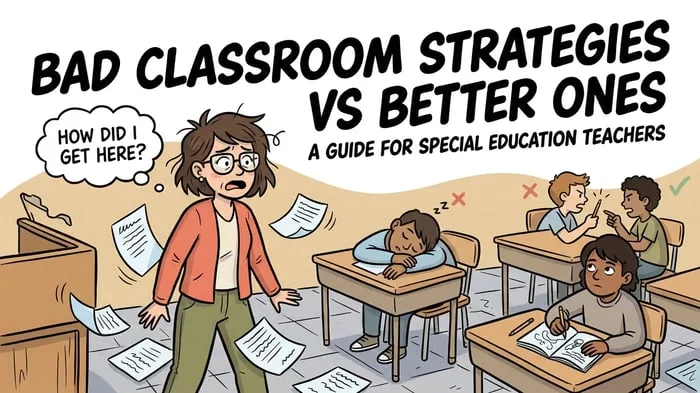
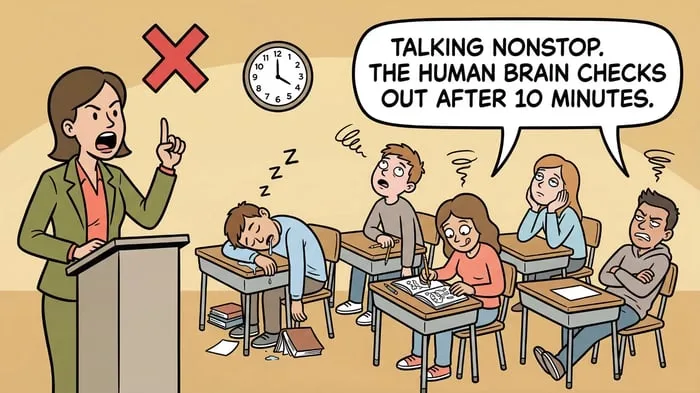
Classroom Management Strategies: Dos and Don’ts for SPED Teachers: a 51-page comic-style PDF that pairs common classroom habits with more effective alternatives across engagement, behavior, transitions, differentiation, and communication.
Sources and scope
- IRIS Center, Vanderbilt University: free modules on classroom behavior management and working with paraprofessionals.
- Center on PBIS: resources on positive behavioral interventions and supports in schools.
- IDEA, U.S. Department of Education: the federal law on IEPs and special education services.
- Council for Exceptional Children: professional resources and standards for special educators.
This guide offers practical first-year strategies for special education classrooms. It does not replace district policy, legal guidance, or the specific supports written in each student’s IEP or behavior plan.
Key takeaways
- A first year special education teacher gains the most by teaching routines before content.
- Planned transitions prevent many difficult moments.
- Early, positive relationships with students, families, and paraprofessionals pay off all year.
- Calm, consistent responses and simple data make behavior manageable.
- Simple systems and a mentor help protect your energy.




Leave a Comment