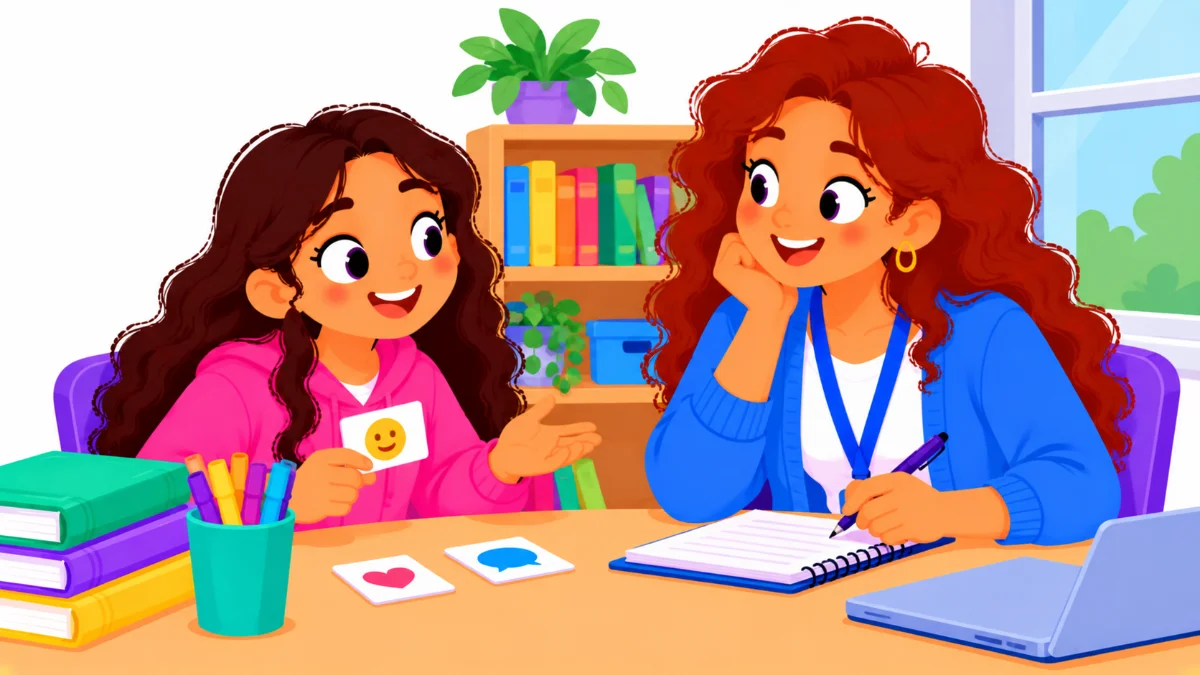

Self-advocacy phrases give students the exact words to speak up for what they need, at the moment they need them. Picture a sixth grader who does not understand the directions. Instead of asking, she sighs, pushes her paper away, and says, “This is stupid.” Her teacher sees attitude. In reality, she simply did not have a calm, ready sentence for “I’m confused.”
This guide gives you five steps: explain what self-advocacy is, match phrases to real situations, teach each phrase, prompt and fade support, and track growth. By the end, you will be able to teach self-advocacy phrases that students actually use in class, at home, and later in life.
Examples are fictional. Adapt to the student’s goals and agreed supports. This is guidance, not a diagnosis.
At a glance
- Self-advocacy means knowing what you need and asking for it respectfully.
- Ready-made phrases lower the effort of speaking up in hard moments.
- Match phrases to common situations, such as needing time, a break, or help.
- Rehearse when calm, then prompt and fade support in real moments.
- Accept every form of communication: voice, card, device, or gesture.
1. Explain what self-advocacy means
First, give students a clear, simple definition. Self-advocacy means knowing what you need and asking for support in a respectful way. It is not complaining, and it is not getting out of work. It is a skill that helps students learn, connect with others, and feel safe.
Next, connect it to everyday life. Adults advocate for themselves all the time: asking a coworker to repeat something, telling a doctor what hurts, or asking for more time on a project. Students practice the same skill when they use self-advocacy phrases at school.
Also, make clear that any form of communication counts. Some students speak. Others use a card, a device, gestures, or writing. A student who taps “I need a break” on an AAC device is advocating just as much as one who says it out loud.
In addition, talk about why it matters. Students who can explain their needs often get the right support faster. They also tend to feel more in control, which can lower stress in hard moments.
Worked example. Jordan is a fictional sixth grader with an IEP. Her teacher, Mr. Delgado, holds a short class discussion: “When was a time you needed something but didn’t know how to ask?” Jordan says, “When I don’t get the math.” Mr. Delgado writes that down as the first situation to work on.
2. Match self-advocacy phrases to real situations
Next, organize phrases by situation. A list of random sentences is hard to remember. Situations give students a clear trigger: “When this happens, I can say this.”
For example, common situations include not understanding, needing more time, finding the work too hard, needing a break, having a sensory need, needing something different, wanting support in social situations, and feeling uncomfortable or unsafe. Each one can have two or three short self-advocacy phrases.
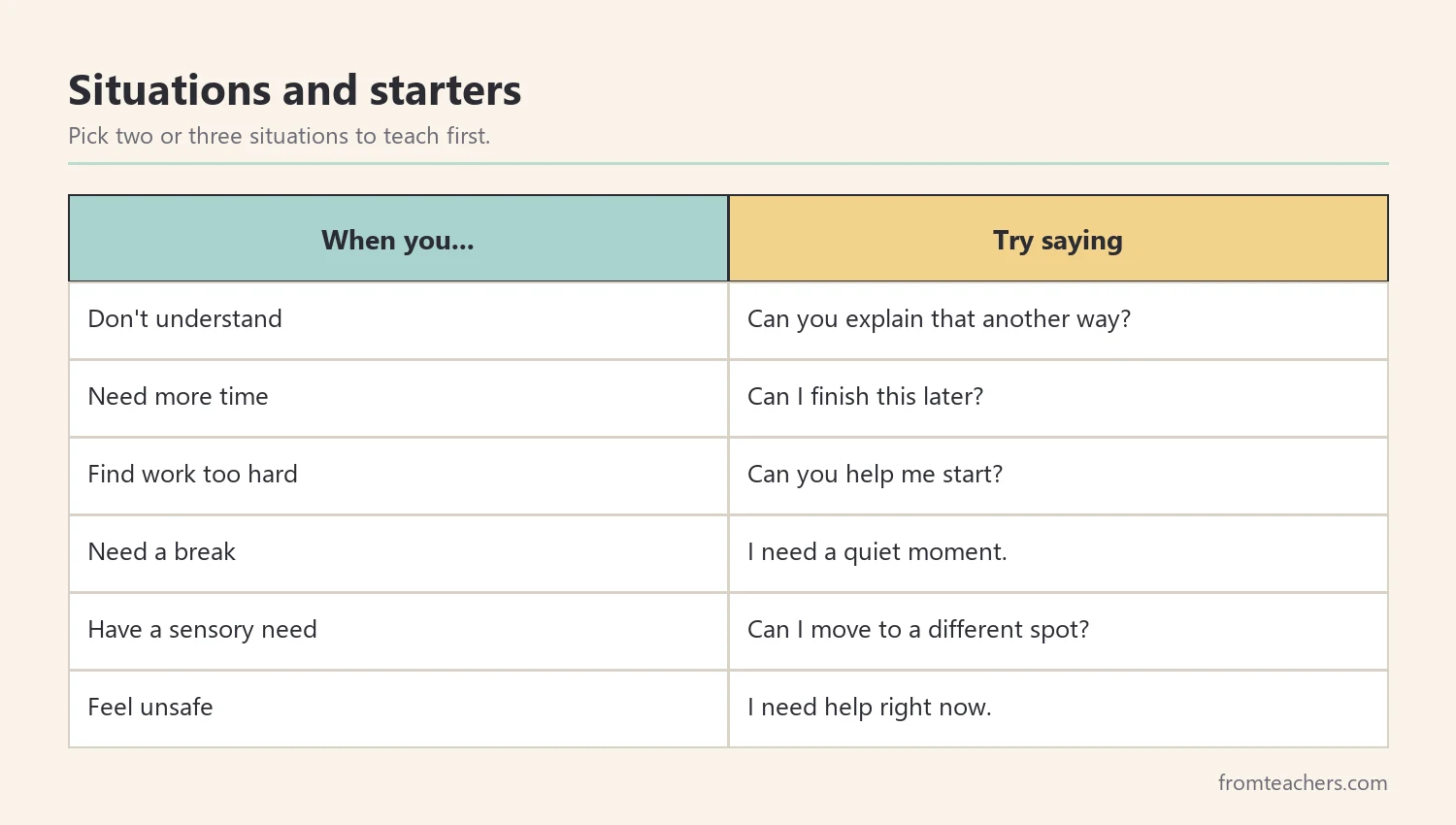
Also, keep phrases short and natural. “Can you explain that another way?” is easier to say under stress than a long, formal request. Use words the student would actually use, and let older students reword phrases in their own style.
In addition, start small. Pick two or three situations that happen often for this student, and teach those first. Add more once the first phrases feel easy.
Then, make the phrases visible. A poster in the room and a small card on the desk give students a quick reminder. The self-advocacy starters poster with phrases for eight situations is one ready-made way to put these words in front of the whole class.
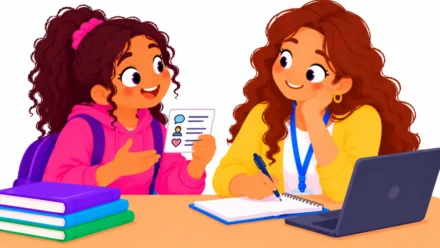
Worked example. Mr. Delgado chooses three situations for Jordan: not understanding, needing more time, and needing a break. Her desk card shows one phrase for each: “Can you show me an example?”, “Can I finish this later?”, and “I need a quiet moment to calm down.”
Writing your own self-advocacy phrases
Sometimes a student needs words for a situation that no poster covers. In that case, write new self-advocacy phrases together. Start with the need, then find the shortest polite way to say it. For example, “The lights hurt my eyes” can become “Can I sit away from the bright light?”
Also, test each phrase out loud. Good self-advocacy phrases are easy to say in one breath, use everyday words, and end with a clear request. If the student stumbles over it, shorten it.
In addition, let the student own the wording. Teenagers in particular may reject phrases that sound childish. When students choose their own self-advocacy phrases, they are much more likely to use them with peers nearby.
Finally, keep a short personal list. Three to five self-advocacy phrases on an index card, a phone note, or a page in the planner is enough for most students to carry from class to class.
3. Teach each phrase step by step
Next, teach phrases the same way you would teach any new skill. Model, practice, prompt, then fade. This simple sequence works for most students and most self-advocacy phrases.
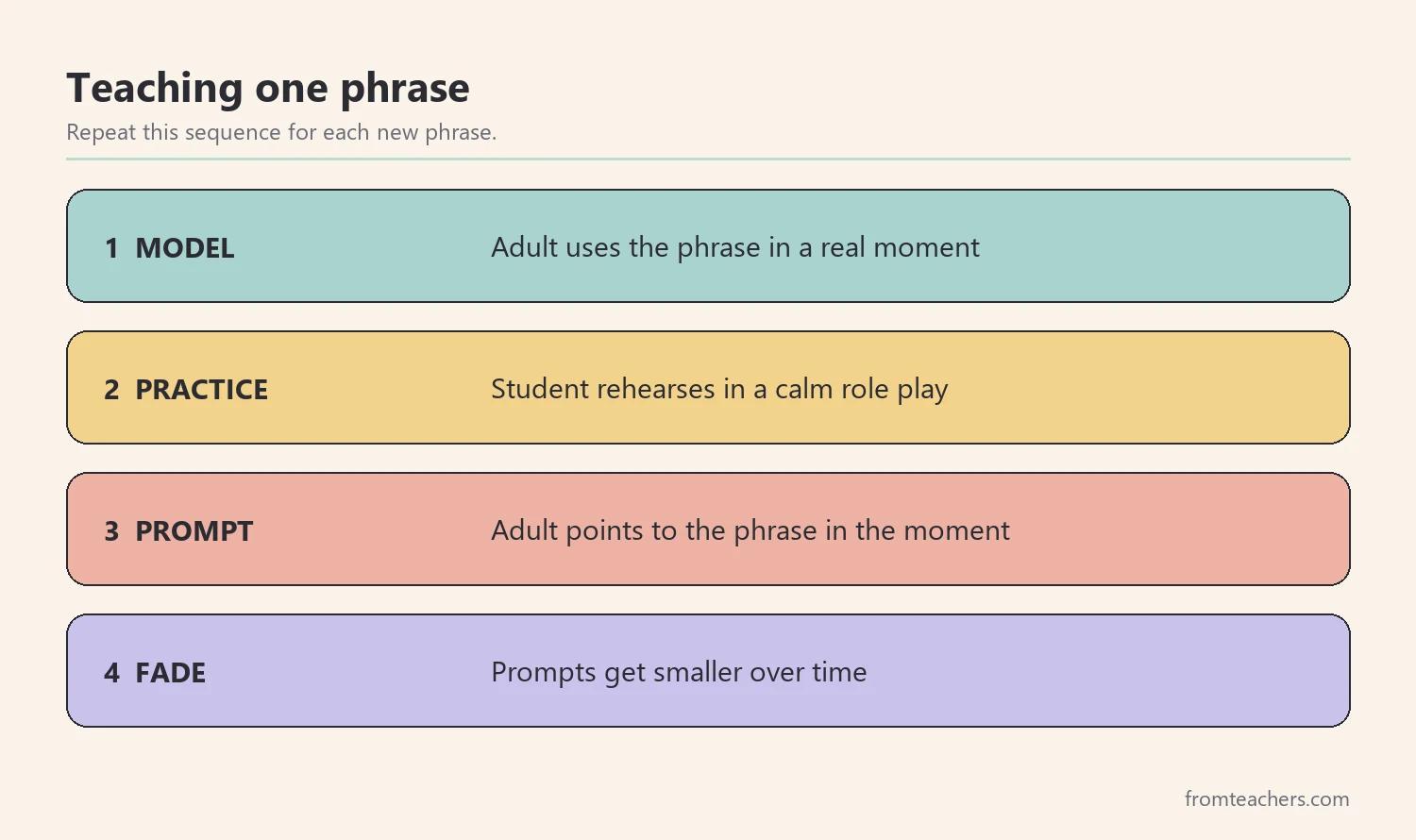
First, model the phrase in real moments. When you need something, say it out loud: “I don’t understand this email yet. Can you explain it another way?” Students learn a lot from hearing adults ask for help.
Also, practice in calm role plays. Act out a short scene: “The directions are confusing. What could you say?” Let the student try the phrase several times. Keep it light and praise every attempt.
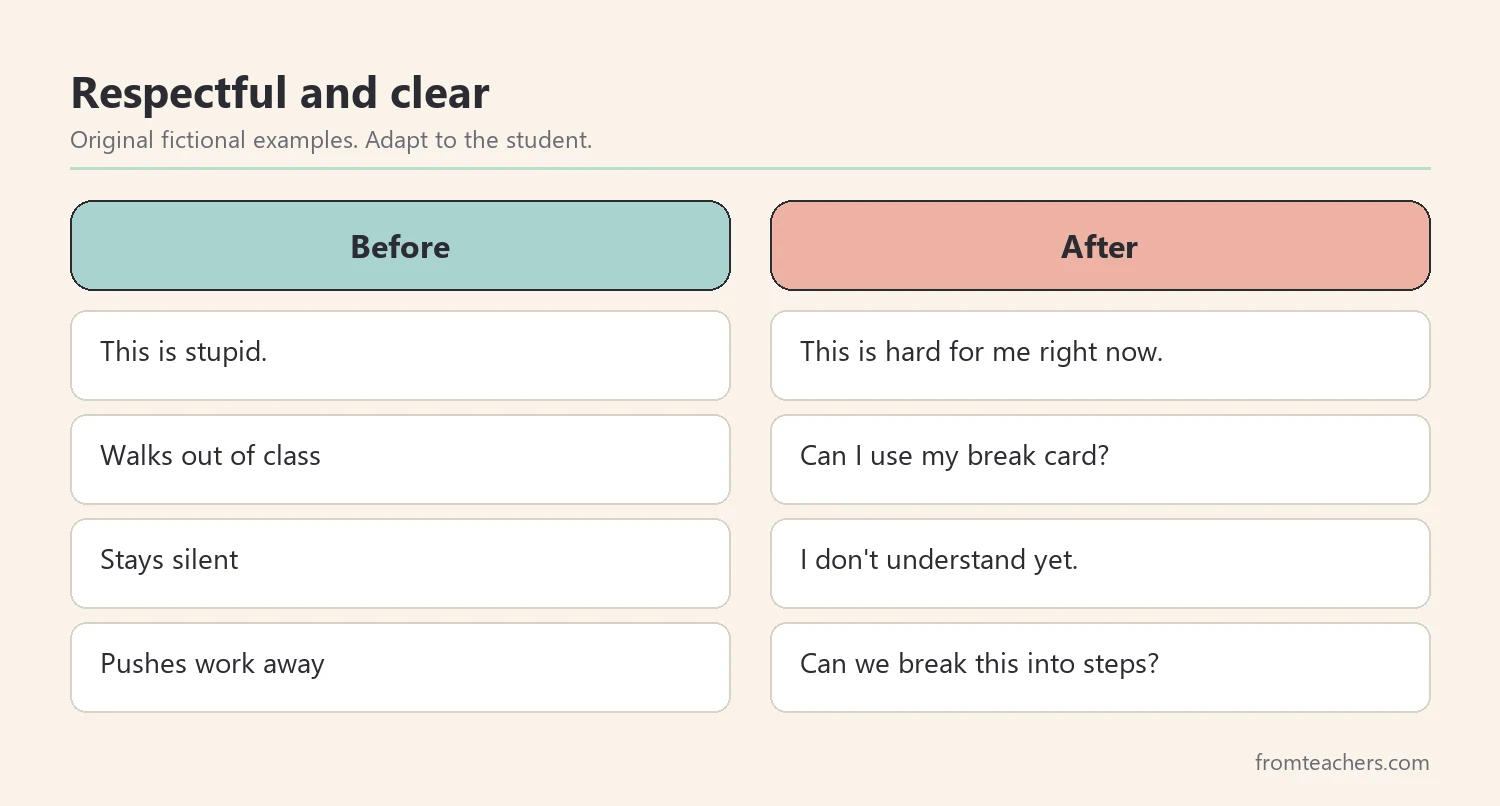
In addition, show how phrases replace less helpful reactions. A student who walks out of class might instead ask to use a break card. A student who stays silent might say, “I don’t understand yet.” Seeing the before and after helps students understand why the phrase is worth using.
Meanwhile, teach tone and body language too. A calm voice, eye contact if comfortable, and a respectful tone make requests more likely to succeed. However, never force eye contact. Some students, especially autistic students, find it uncomfortable.
Worked example. Mr. Delgado and Jordan practice “Can you show me an example?” three times during a calm morning check-in. He pretends to give confusing directions, and Jordan uses the phrase. She giggles the first time, then says it smoothly by the third try.
4. Prompt self-advocacy phrases in real moments
Next, help students use the phrases when it counts. Real moments are harder than role plays. Students may forget, feel embarrassed, or be too upset to find the words. Gentle prompts help students reach for their self-advocacy phrases when it matters.
First, use the smallest prompt that works. Pointing to the desk card is often enough. If not, try a quiet verbal prompt: “What could you say?” Avoid saying the whole phrase for the student unless they are very stuck.
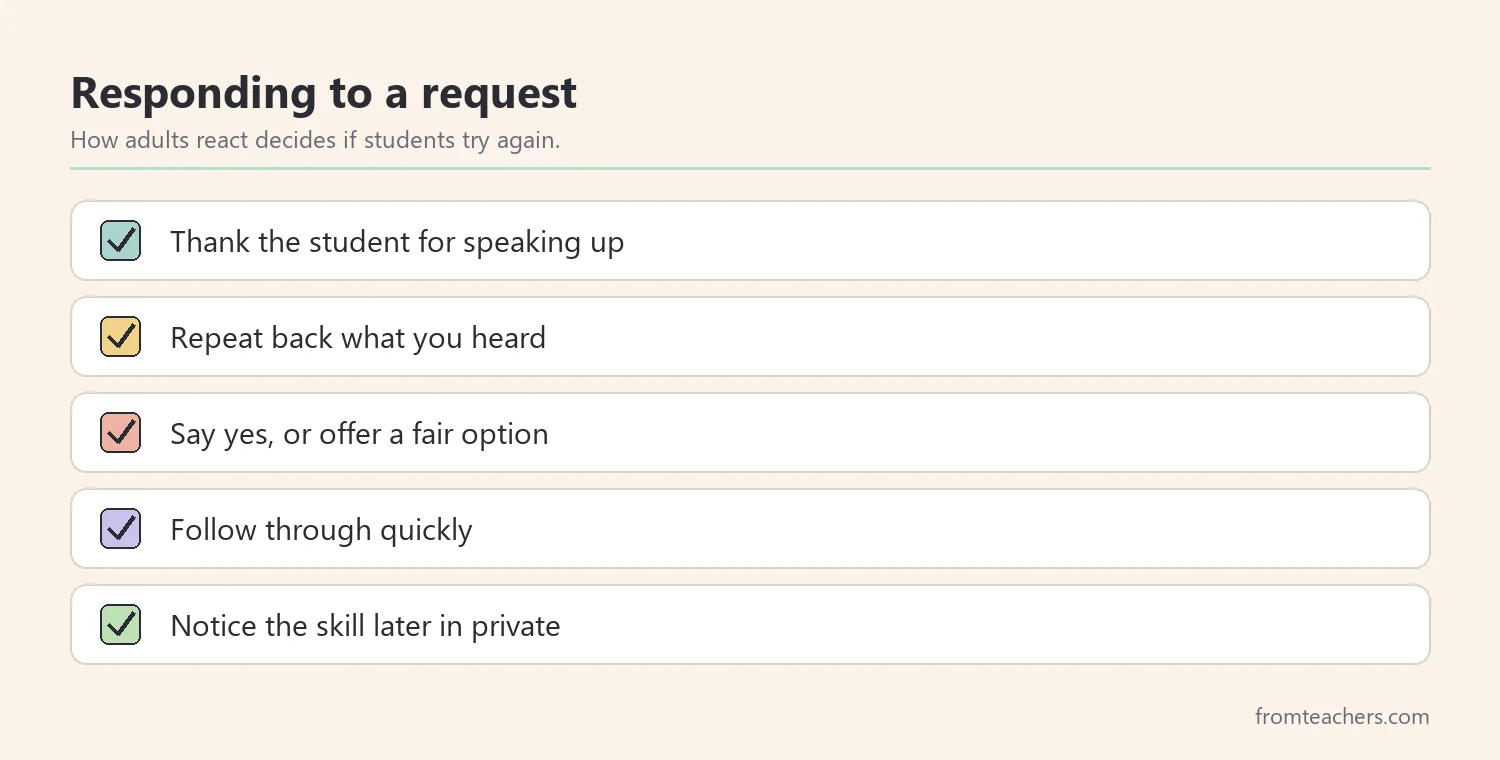
Also, respond well when a student speaks up. Thank them, repeat back what you heard, and either say yes or offer a fair option. Then follow through quickly. If speaking up leads to nothing, students learn not to bother.
In addition, be honest when the answer is no. Sometimes a request cannot be granted right away. Explain briefly and offer an alternative: “We can’t stop the test now, but you can take a break as soon as you finish this page.” Students still learn that their voice was heard.
Then, fade prompts over time. Move from pointing, to a glance at the card, to no prompt at all. Independence is the goal, but it takes time and practice.
Worked example. During a math lesson, Jordan starts to push her paper away. Mr. Delgado taps her desk card. Jordan says, “Can you show me an example?” He thanks her, shows one example, and she starts the first problem.
5. Track growth and connect to goals
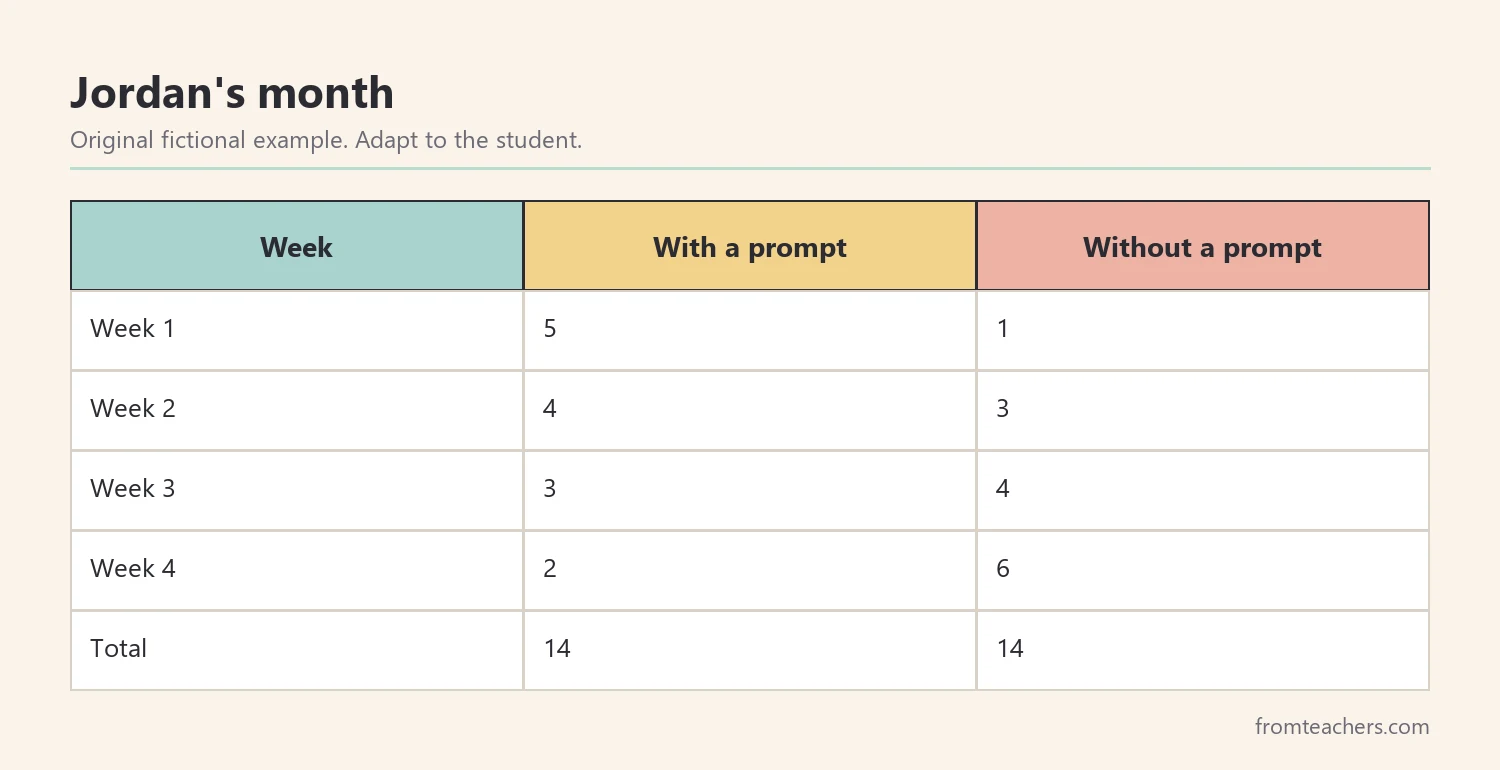
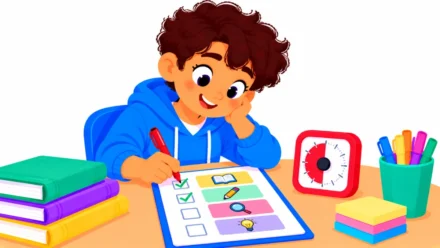
Finally, track how often students use self-advocacy phrases, and whether they needed a prompt. A simple tally works well. These numbers show progress and help the team decide when to fade support.
Next, connect self-advocacy phrases to the student’s plan. Self-advocacy is often part of IEP goals and transition planning. Clear data on phrase use can help the team write and measure those goals.
Also, include the student in reviewing the data. Show them the numbers and ask, “What helps you speak up?” Students who see their own growth often feel proud and motivated.
In addition, share progress with families. Families can practice the same phrases at home, for example during homework or at appointments. Using the same words in different places helps the skill last.
Then, add new situations. Once the first phrases feel easy, add situations such as sensory needs or social moments. Older students can begin practicing how to explain their accommodations to new teachers.
Worked example. Mr. Delgado tracks Jordan for four weeks. In week 1, she uses a phrase 5 times with a prompt and once without. In week 2, it is 4 with and 3 without. In week 3, 3 with and 4 without. In week 4, 2 with and 6 without. Across the month, that is 14 prompted and 14 independent requests, with independent use rising each week.
Self-advocacy phrases beyond the classroom
Self-advocacy does not stop at the classroom door. Students need the same skills in the lunchroom, on the bus, at after-school clubs, and later at work. So, practice phrases for these places too. “Can you say that again more slowly?” works in a job interview as well as a math class.
Also, prepare students for new adults. Substitutes, specials teachers, and coaches may not know a student’s needs. A short, practiced script such as “I work best when I can see the directions written down” helps students explain themselves quickly.
Finally, celebrate courage. Speaking up can feel risky, especially for students who have been misunderstood before. Notice the effort, not just the result.
Common mistakes and how to avoid them
- Teaching too many phrases at once. Students cannot recall them under stress. Fix: start with two or three situations.
- Not following through. Students stop asking. Fix: respond quickly, or explain and offer an option.
- Accepting only spoken words. Some students are left out. Fix: accept cards, devices, gestures, and writing.
- Prompting too much. Students wait for adults. Fix: use the smallest prompt and fade it.
- Treating requests as excuses. Trust breaks down. Fix: see each request as a skill being used.
Questions teachers and parents ask about self-advocacy phrases
What age should students start learning self-advocacy?
Students can start young with simple phrases like “I need help” or “I need a break.” Older students can learn to explain their needs and accommodations in more detail. Adjust the words to the student’s age and skills.
What if a student uses a phrase to avoid work?
First, look for patterns. If a request comes every time a certain task starts, the task may be too hard or unclear. Adjust the work, and teach a “try one step first” routine alongside the phrase.
Can self-advocacy be an IEP goal?
Yes, self-advocacy often appears in IEP goals and transition plans. The student’s team decides the exact goal. Simple tallies of phrase use make progress easy to measure.
How do I help a shy student speak up?
Offer quieter options, such as a card or a written note. Practice privately first, and respond warmly every time. Confidence usually grows with each positive experience.
Should families use the same phrases at home?
Using the same phrases at home and school helps the skill transfer. Share the student’s desk card with the family so everyone uses the same words.
Related reading: Navigating the Path to Adulthood: Building Essential Life Skills, Accommodations vs Modifications in Special Education: The Difference Explained, and Spectrum Voices: Essential Strategies for Navigating High-Functioning Autism.
A companion resource for self-advocacy phrases:
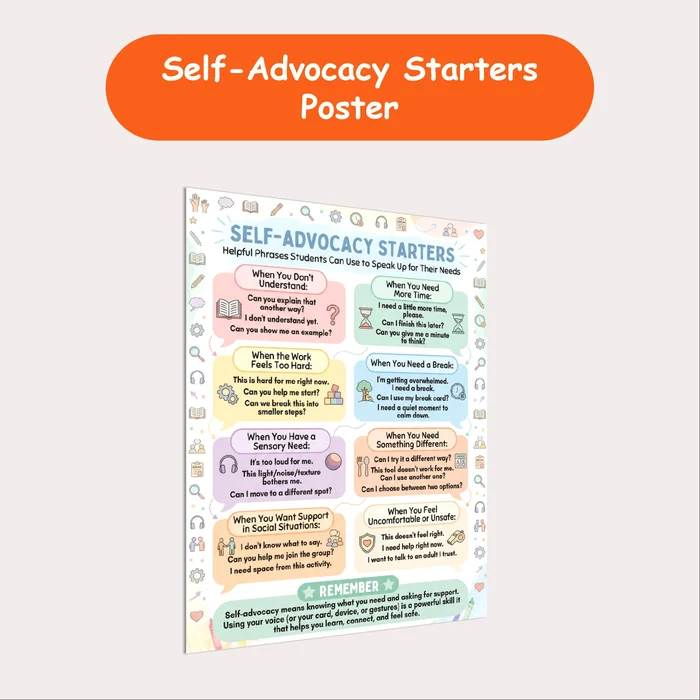
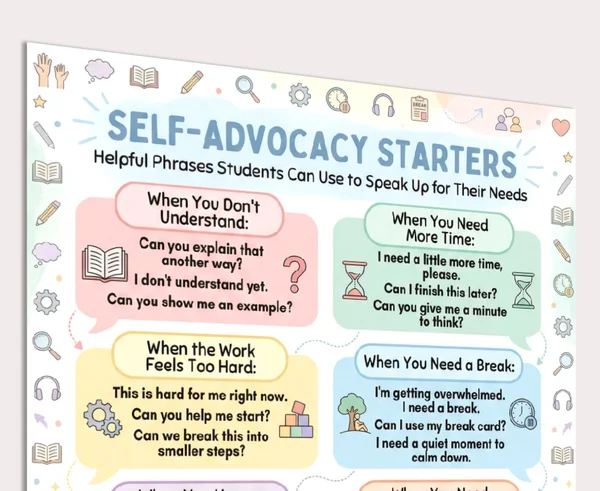
Self-Advocacy Starters Poster: a printable poster with helpful phrases students can use to speak up for their needs in eight common situations. A practical self-advocacy poster for special education, IEP goal work, and transition programs.
Sources and scope
- IDEA, U.S. Department of Education: the law behind special education, IEPs, and transition planning.
- IRIS Center, Vanderbilt University: free modules on student supports and transition.
- Understood.org: family-friendly information on self-advocacy and learning differences.
- Center for Parent Information and Resources: information for families on special education and self-advocacy.
This guide covers everyday teaching of short phrases students can use to speak up. It does not replace counseling, speech-language therapy, or the decisions of the student’s IEP team.
Key takeaways
- Self-advocacy phrases give students ready words for hard moments.
- Organize phrases by situation and start with two or three.
- Model, practice, prompt, and fade each phrase.
- Respond quickly and fairly so students keep speaking up.
- Track prompted and independent use, and link it to goals.




Leave a Comment