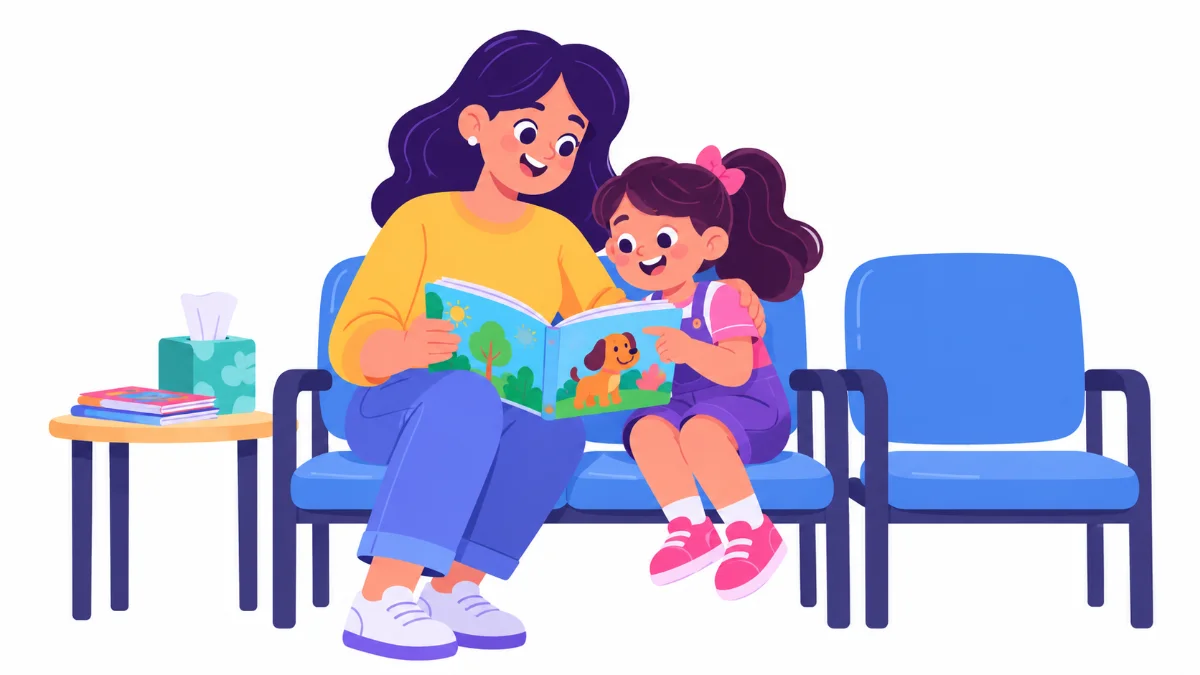

A doctor visit social story can turn a scary, unpredictable appointment into a series of familiar steps. Picture a child who freezes at the clinic door, covers her ears in the waiting room, and pulls away from the stethoscope. Often, the hard part is not the doctor. It is not knowing what comes next.
After reading this guide, you will be able to plan a short story that previews each part of the visit, write it in calm first-person language, read it in a way that builds comfort, and use it on the day itself. You will also know how to review what worked so the next appointment goes a little more smoothly.
Examples are fictional. Adapt to the student’s goals and agreed supports. This is guidance, not a diagnosis.
At a glance
- Break the appointment into the real steps the child will experience, in order.
- Use short, honest, first-person sentences that describe what happens and how it may feel.
- Build one coping strategy into the hardest page, such as deep breaths.
- Read the story several times before the visit, then bring it along.
- Review afterward and update the story for the next appointment.
1. Map the steps of the doctor visit
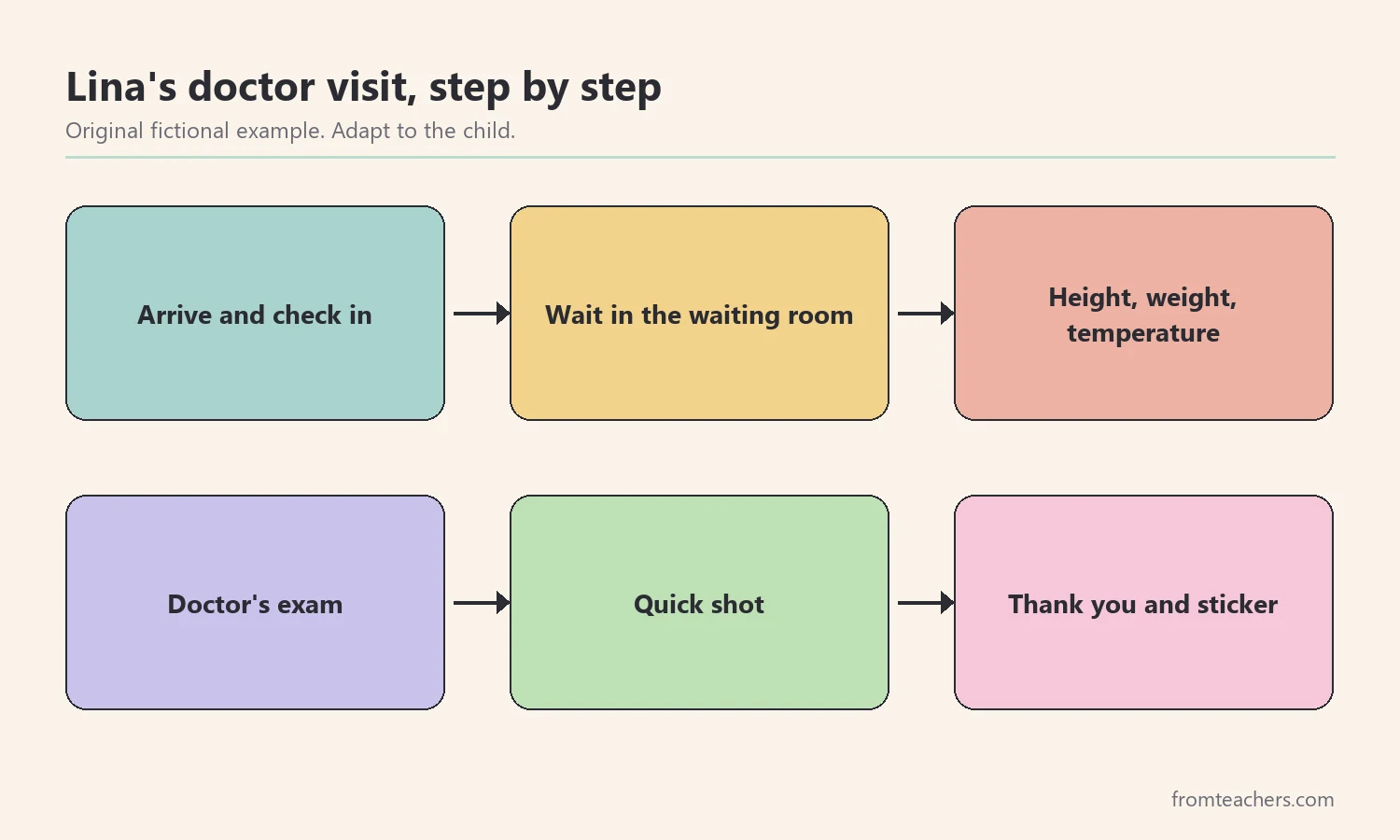
First, list what actually happens at the appointment, in order. Most check-ups follow a similar pattern: arriving, checking in, waiting, being called in, height and weight, temperature, the doctor’s exam, and leaving. Some visits also include a shot.
Next, ask the clinic what to expect if you are unsure. Front desk staff can often tell you whether there will be a shot, how long waits usually are, and whether a quieter waiting area is available. That way, the story describes the real visit rather than a guess.
Then, notice which steps are likely to be hardest for this child. For some children, it is the noisy waiting room. For others, it is being touched by a stranger or the feeling of a cold instrument. Those steps deserve the clearest pages and the most reassurance.
It can also help to think about the senses at each step. Waiting rooms may be bright and loud. Exam rooms may smell of cleaning products, and the paper on the exam table may crinkle. Noting these details helps you decide what to mention in the story and what to bring, such as headphones or a favorite toy.
Worked example: Lina, age 6
Lina is autistic and has a check-up next month. Her dad, Omar, and her kindergarten teacher, Ms. Park, both notice that new places and unexpected touch upset her. Omar calls the clinic and learns that Lina will get one shot at this visit.
| Step | What happens | Likely hard? |
|---|---|---|
| Arrive | Check in at the desk | A little |
| Wait | Sit in the waiting room | Yes, noise |
| Check | Height, weight, temperature | A little |
| Exam | Stethoscope, ears, mouth | Yes, touch |
| Shot | Quick shot in the arm | Yes |
| Finish | Say thank you, get a sticker | No |
Because the list follows the real order of the day, it becomes the outline for the story. Each row will turn into one page.
Before moving on, check the outline with someone who knows the child well. Ms. Park mentions that Lina handles waiting better when she can sit near a wall instead of in the middle of a room. Omar adds that detail to the waiting page, so the story includes a choice Lina already finds calming. Small, personal touches like this make the story feel like it was written just for her.
2. Write the doctor visit social story in the child’s voice
Social stories usually work best in short, first-person sentences. “I sit in the waiting room. I can hold my book while I wait.” The child hears their own voice describing what will happen, which can feel more personal and predictable.
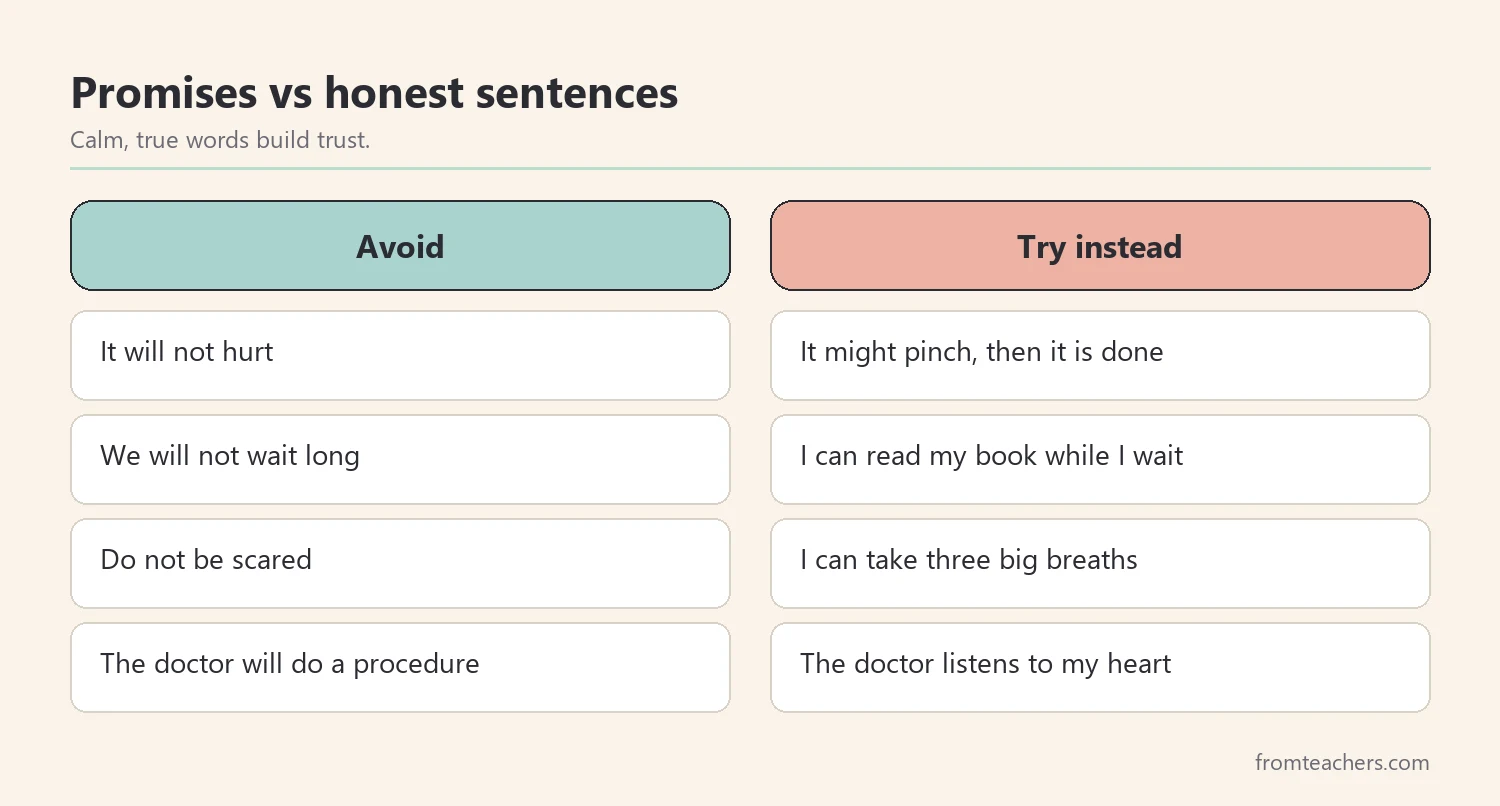
Keep each page to one idea. Describe what happens, then add a short, honest line about how it might feel. “The stethoscope might feel cold, but it is okay.” Avoid promising things you cannot control, such as “It will not hurt” or “We will not wait long.”
Also, balance the sentences. Most lines should simply describe what happens. A smaller number can name a feeling or a helpful choice. Too many instructions can make the story sound like a list of rules rather than a calm preview.
Lina’s pages
Omar writes six short pages, one for each step in the table. For the exam page, he writes: “The doctor listens to my heart with a stethoscope. It might feel cold. I can count to five while she listens.” For the finish page: “I say thank you. I get a sticker. I did a great job.”
Moreover, use pictures that match the real visit as closely as you can. A drawing of a generic clinic is fine, but photos of the actual building or waiting room can help even more. Ready-made options, like this visual going-to-the-doctor social story with first-person speech bubbles, save time when you need something quickly and can be personalized with a few added details.
Finally, read the draft aloud before showing it to the child. Listen for words that sound scary or unclear, like “needle” or “procedure.” Often a simpler word, such as “shot” or “check,” feels calmer. If an older sibling or another adult hears the draft, ask whether anything sounds confusing.
3. Plan a coping strategy for the hardest moment
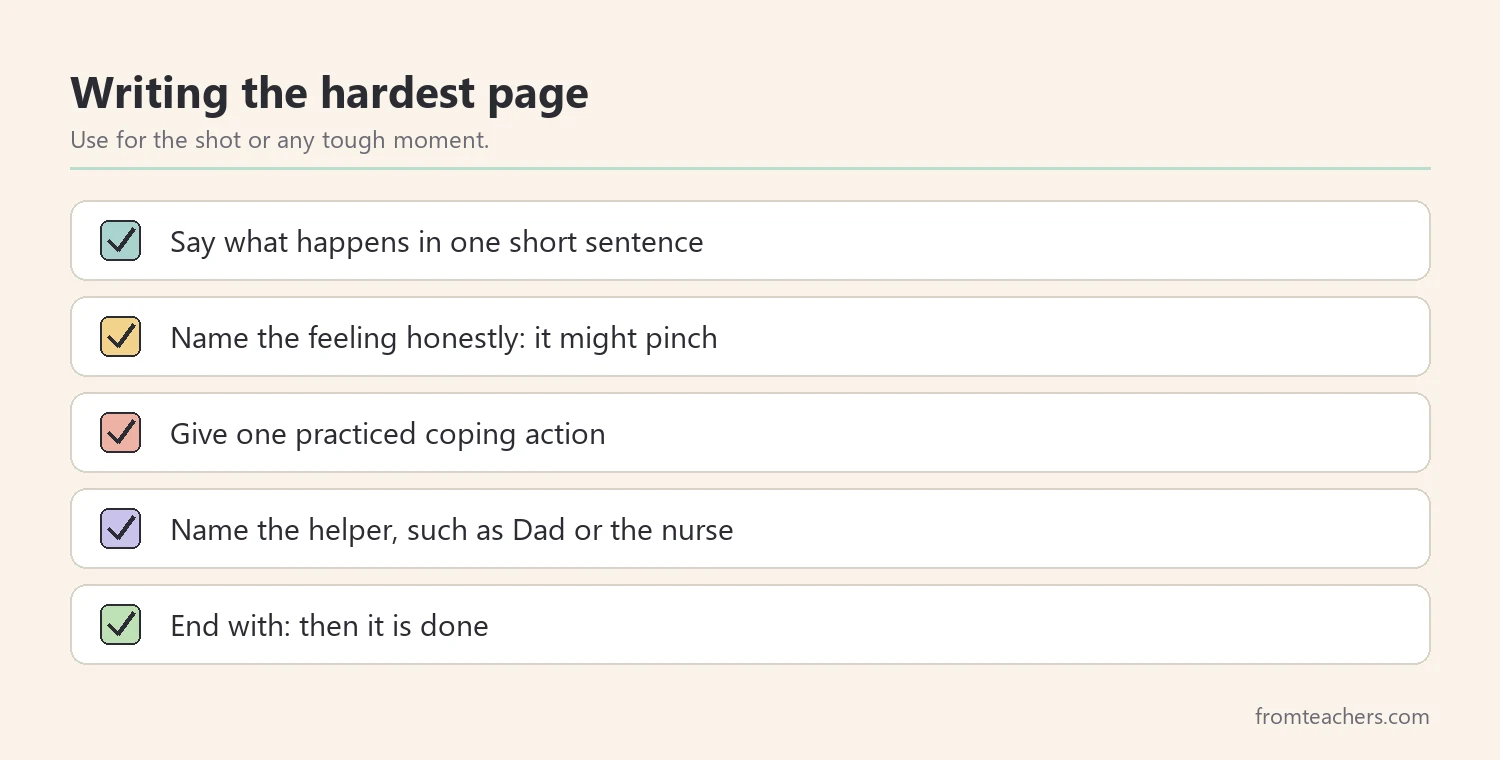
Every visit has a peak moment. For many children, it is the shot. Rather than skipping that page, build a coping strategy right into it. Skipping it can make the real moment feel like a surprise.
Choose a strategy the child already knows or can practice at home. Common choices include slow deep breaths, holding a parent’s hand, squeezing a small toy, or counting. The strategy should be simple enough to use while feeling nervous.
Then, practice the strategy outside the story too. Omar and Lina practice “smell the flower, blow out the candle” breathing at bedtime. Ms. Park uses the same words during a calm-down moment in class. Because the words match, Lina hears the same cue at home, at school, and at the clinic.
It also helps to agree on what adults will say during the hard moment. Omar plans to say only: “Breathe with me. Almost done.” Short, repeated phrases are easier for a nervous child to follow than long explanations. In the same way, Ms. Park keeps her calm-down language short in class.
Lina’s shot page
The shot page reads: “The nurse gives me a quick shot in my arm. It might pinch. I hold Dad’s hand and take three big breaths. Then it is done.”
Notice that the page names the feeling honestly, offers a clear action, and ends with “Then it is done.” That ending tells the child the hard part has a finish line.
4. Read the doctor visit social story before the appointment
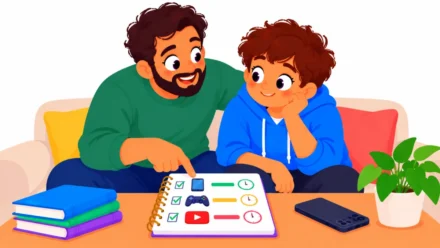
Reading the story once the morning of the visit is usually not enough. Instead, start several days ahead. Many families read it once a day for about a week, at a calm time such as after dinner or before bed.
Keep the reading relaxed. Let the child turn pages, point at pictures, and ask questions. If they want to skip a page, that is fine, but come back to it later in a calm moment.
Additionally, combine reading with play. A toy doctor kit lets the child practice being the patient and the doctor. Lina likes to put the toy stethoscope on her stuffed rabbit and say “It might feel cold, but it is okay.”
Watch the child’s reactions as you read. Signs of interest, such as pointing or repeating lines, show that the story is becoming familiar. Signs of worry, such as covering a page, show which part may need more practice or gentler wording.
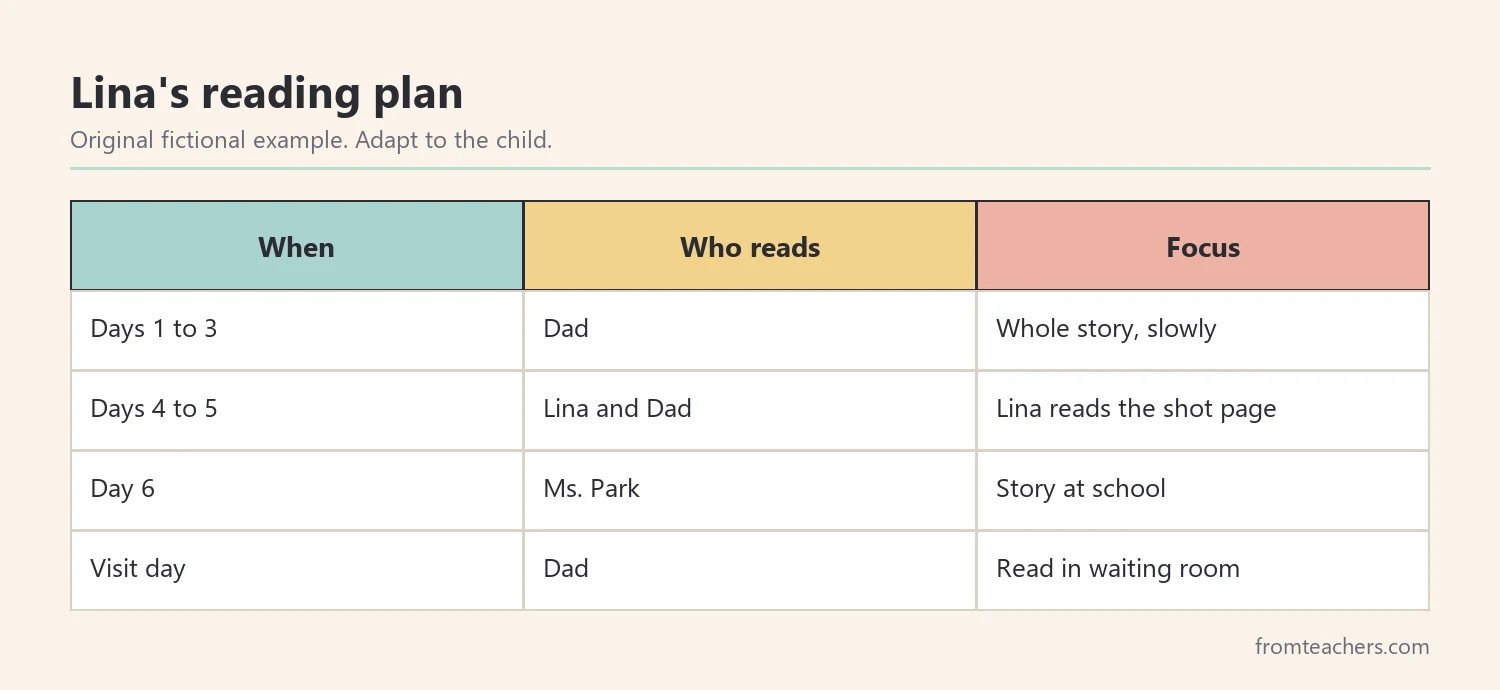
A simple reading plan
| When | Who reads | Focus |
|---|---|---|
| Days 1 to 3 | Dad | Whole story, slowly |
| Days 4 to 5 | Lina and Dad | Lina reads the shot page |
| Day 6 | Ms. Park | Story at school |
| Visit day | Dad | Read in waiting room |
Finally, bring the story to the appointment. Reading it in the waiting room gives the child something familiar to hold and look at while they wait.
5. Review the visit and update the story
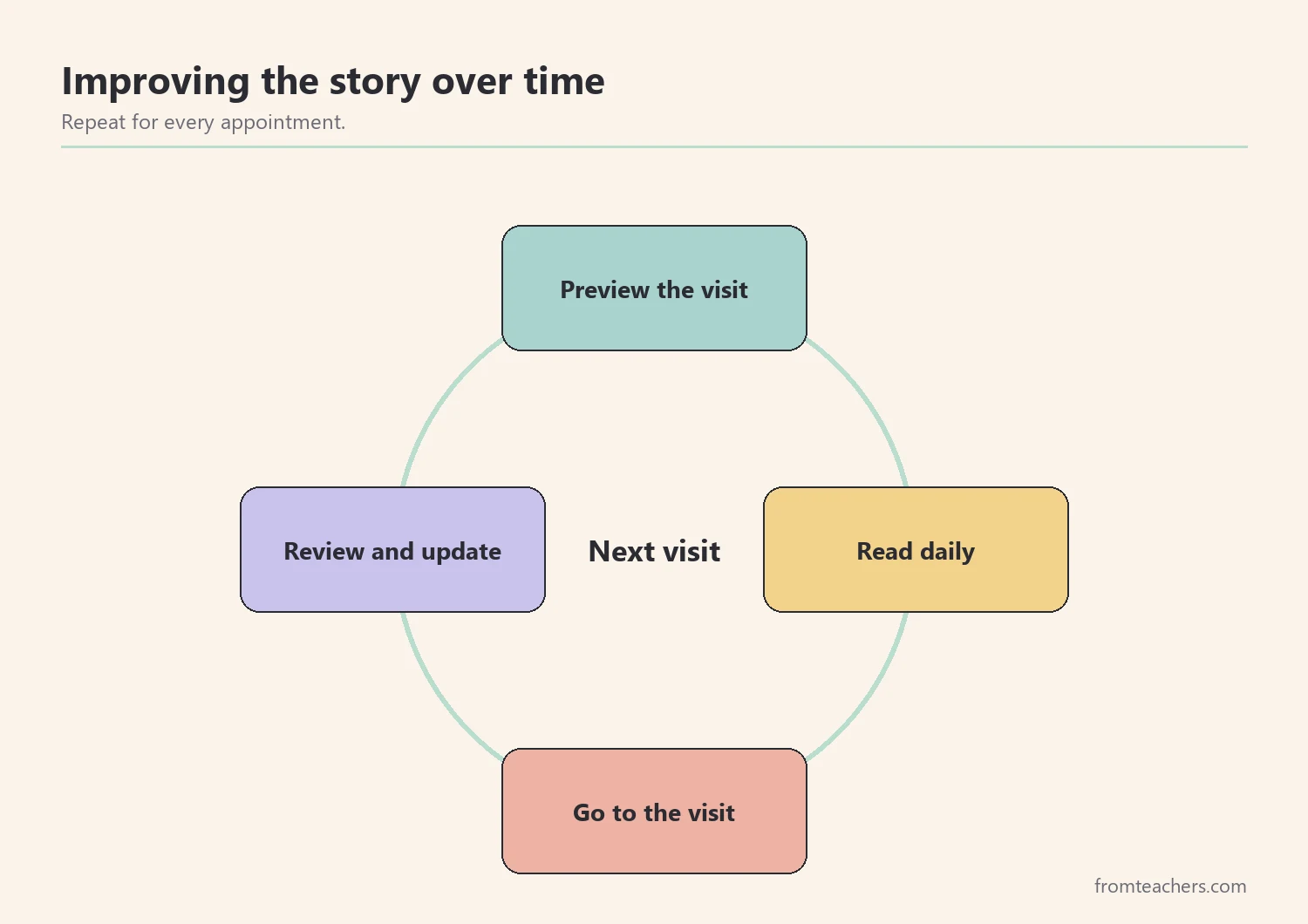
After the appointment, take a few minutes to reflect. What went smoothly? Which step was hardest? Did the coping strategy help? Even a short note on the back of the story is useful for next time.
Celebrate effort, not perfection. Lina cried briefly during the shot, but she held Dad’s hand and took her breaths. Omar tells her: “You held my hand and breathed, just like the story said. I am proud of you.” Her pride page now feels true.
Then, update the story. If the wait was longer than expected, add a page about waiting with a book or a tablet. If the nurse did something new, such as checking blood pressure, add that step. The story works best as a living tool that grows with the child.
Also, share what you learned with the people who support the child. Ms. Park can reuse the same breathing words in class, and the clinic may appreciate a note about what helped. Over time, the same approach can support dentist visits, haircuts, and other new experiences.
Keep the updated story somewhere easy to find, such as a folder by the door or a photo album on a tablet. Then, before the next appointment, you only need to change a few details instead of starting again.
Common mistakes and how to avoid them
- Promising no pain. Fix: describe the feeling honestly, then name a coping action.
- Leaving out the hard part. Fix: include the shot or exam page with clear reassurance.
- Reading only once. Fix: read daily for about a week before the visit.
- Using a generic story that does not match the clinic. Fix: add real details, such as the waiting room or the doctor’s name.
- Forgetting the ending. Fix: finish with a clear “all done” page and a proud moment.
Most of all, be patient with progress. One visit may go smoothly and the next may feel harder because the child is tired or unwell. Keep using the same calm routine, because predictability builds slowly across many visits rather than in one appointment.
Questions teachers and parents ask about a doctor visit social story
How long should a doctor visit social story be?
Most work well with six to twelve short pages. One idea per page keeps it easy to follow. For younger children, shorter is usually better.
When should we start reading it?
Starting about a week before the appointment gives time for the story to become familiar. Read it at a calm time of day. Then bring it along on the day of the visit.
What if my child gets upset reading the shot page?
That is useful information. Pause, stay calm, and practice the coping strategy together. Come back to the page later, and keep the language gentle and honest.
Can teachers use the story at school?
Yes. Reading it at school, especially before a school nurse check or a vision screening, can help. Using the same words as home makes the routine feel consistent.
Does this replace medical advice?
No. A social story is a preparation tool. Questions about health, sensory needs, or medical care belong with the child’s doctor and care team.
Related reading: Autism Spectrum Disorder: A Guide to Early Signs, Support, and Effective Strategies, Managing Sensory Overload: Practical Strategies for Autism and ADHD, and Autism Social Skills Development: Practical Strategies for Growth.
A companion resource for your doctor visit social story:
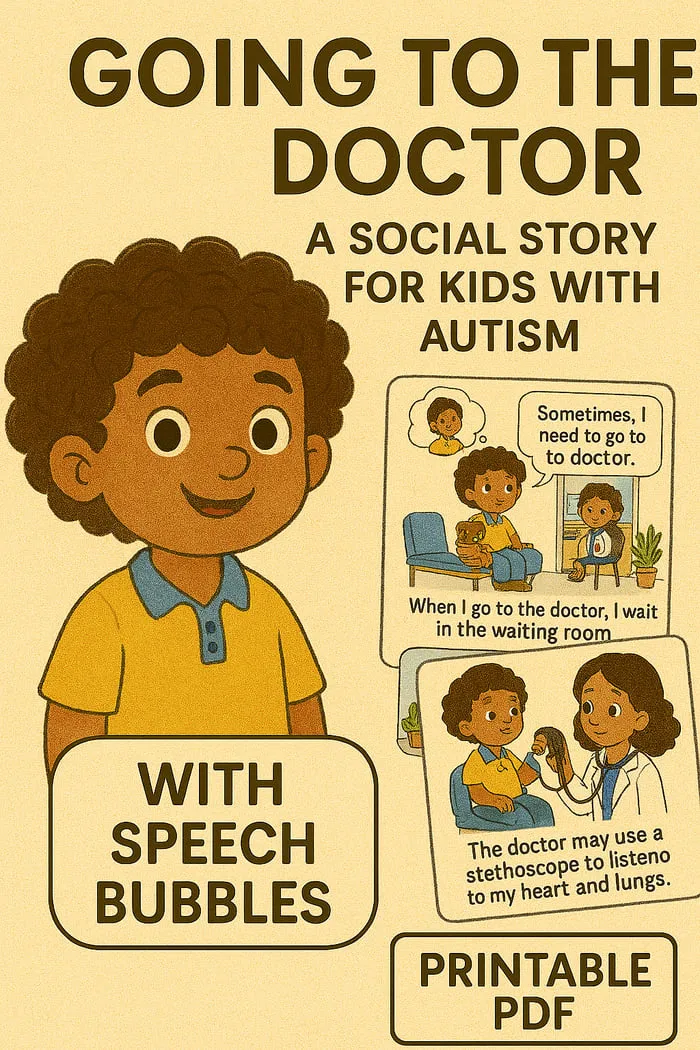
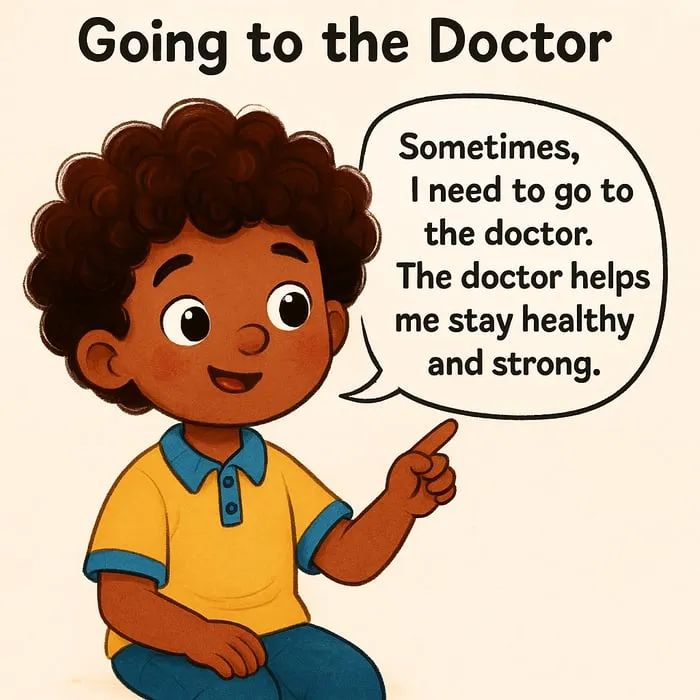
Going to the Doctor: Autism Social Story: a visual story with first-person speech bubbles that previews the waiting room, height, weight, temperature, and stethoscope checks, a shot page with a built-in coping strategy, and a proud ending with a sticker.
Sources and scope
- CDC autism information: general background on autism spectrum disorder in children.
- HealthyChildren.org, American Academy of Pediatrics: parent information on check-ups, vaccines, and child health.
- IRIS Center, Vanderbilt University: free modules on autism and evidence-based practices in education.
- National Professional Development Center on Autism Spectrum Disorder: overviews of evidence-based practices for autistic learners.
This guide covers preparing a child for a routine doctor visit with a social story. It does not cover medical decisions, sedation, or sensory evaluations, which belong to the child’s doctor and care team.
Key takeaways
- A doctor visit social story previews the real steps of the appointment in order.
- Use short, honest, first-person sentences and avoid promises you cannot keep.
- Build one practiced coping strategy into the hardest page.
- Read the story daily for about a week, then bring it to the visit.
- Review afterward and update the story for next time.







Leave a Comment