
Teaching the size of emotions helps children understand that some feelings are small enough to handle alone, while others need more time, space, or support. Picture a student who cries just as hard over a broken crayon as over a fight with a best friend. Every feeling seems huge, so every reaction is huge too.
This guide gives you five steps to teach the size of emotions at school or at home: introduce little and big feelings, notice body clues, match strategies to each size, practice with real examples, and respond with care over time. By the end, you will be able to help children choose the right tool for the feeling they have.
Examples are fictional. Adapt to the student’s goals and agreed supports. This is guidance, not a diagnosis.
At a glance
- Feelings come in different sizes, and every size is normal.
- Little feelings can often be managed with a quick strategy.
- Big feelings need more time, space, or adult support.
- Body clues help children notice the size of a feeling early.
- Noticing the size is the first step to handling a feeling safely.
1. Introduce the size of emotions
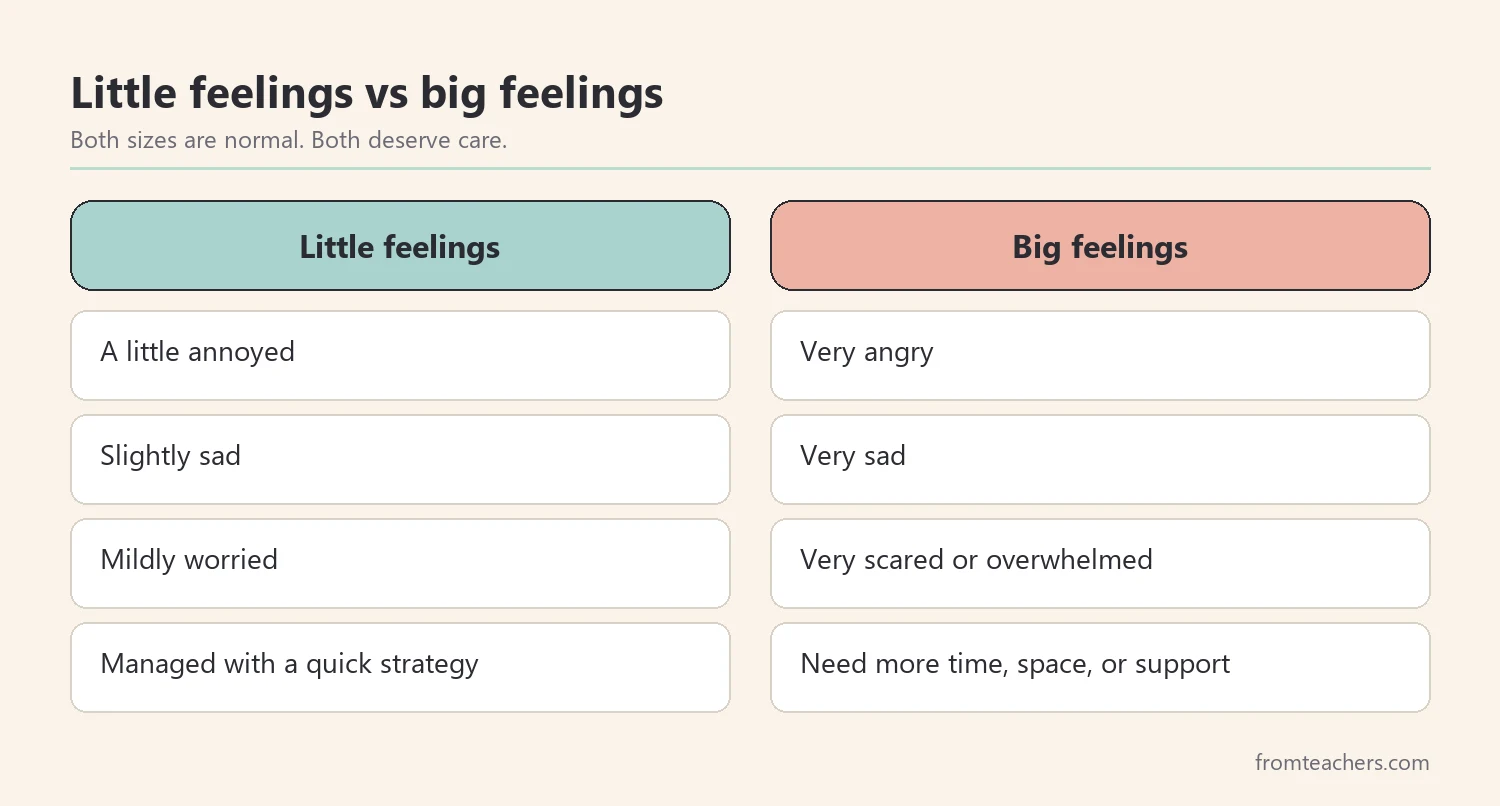
First, start with a simple idea: feelings come in different sizes. A little feeling might be a bit annoyed, slightly sad, or mildly worried. A big feeling might be very angry, very scared, or feeling out of control. Both kinds are normal, and both deserve care.
Next, avoid labeling feelings as good or bad. The goal is not to make big feelings disappear. Instead, the goal is to help children see the size of emotions clearly, so they can pick a strategy that fits. A small tool for a big feeling will not be enough, and a big response to a small feeling can make the day harder.
Also, use concrete examples from children’s lives. Losing a turn in a game, a small problem with a friend, or feeling unsure about a task are often little feelings. A big argument, too many things happening at once, or a frightening surprise can bring big feelings.
Remember that size is personal
In addition, remember that size is personal. Something that feels little to one child can feel big to another, especially for children with anxiety, sensory differences, or past hard experiences. So, never argue with a child about how big a feeling is. Instead, accept the child’s rating and help from there.
Then, introduce a shared language. Words like “little feeling,” “big feeling,” and “Is this a quick-tool feeling or a more-support feeling?” give adults and children a common way to talk. Shared words make the size of emotions easier to discuss during calm and hard moments.
Finally, keep the first lessons light. A picture book, a short role-play, or a quick class poll about small and large feelings is enough to begin. Children learn the size of emotions best through many short exposures, not one long lesson.
Worked example. Noah is a fictional grade 2 student who often reacts strongly to small setbacks. His teacher, Mrs. Lin, reads a short story with him and asks, “Was the character’s feeling little or big?” Noah answers, “Little, because he just lost one block.” It is a good start.
2. Notice body clues for each size
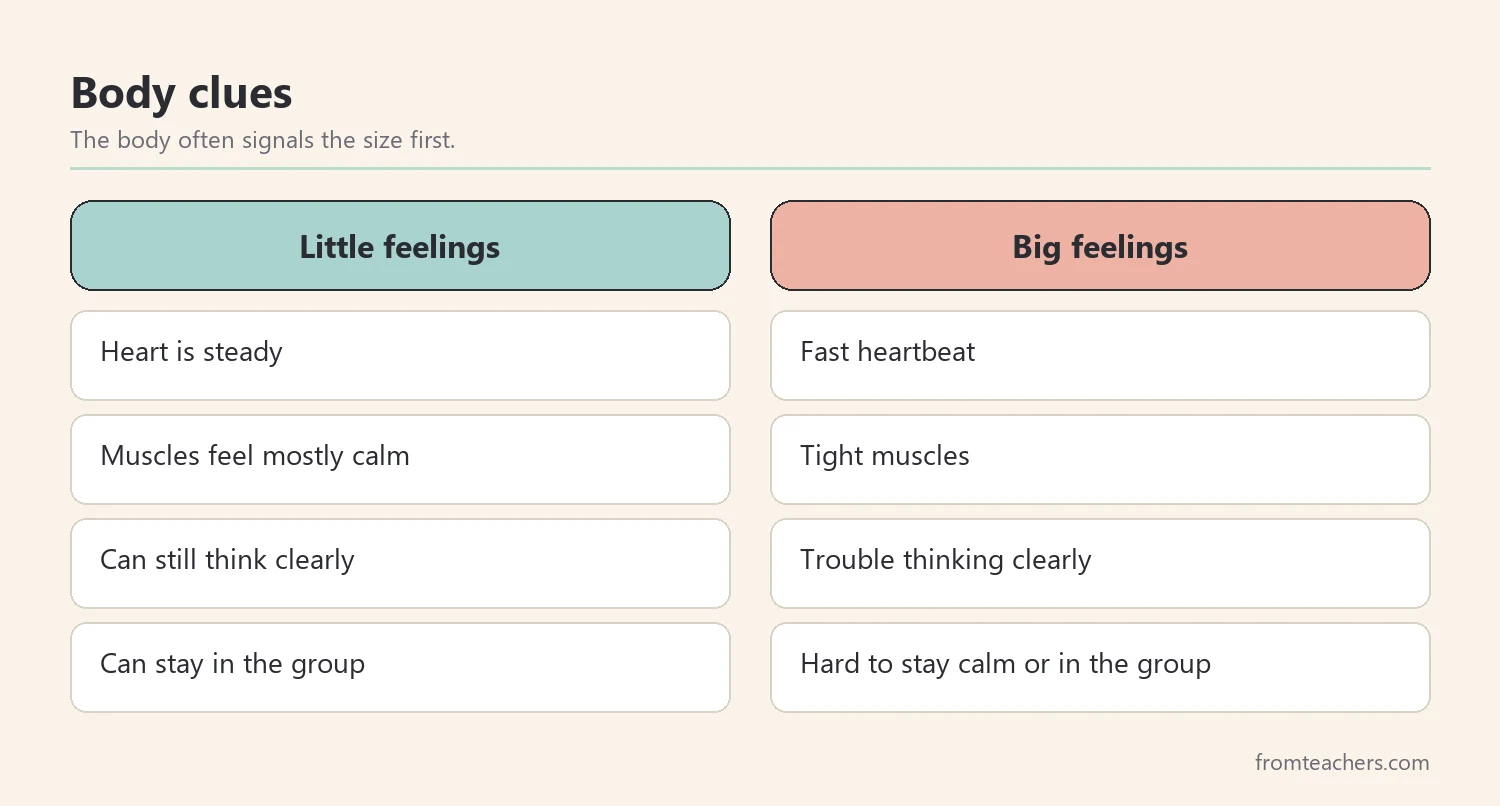
Next, teach children to check their bodies. The body often signals the size of emotions before words do. With little feelings, the heart usually stays steady, muscles feel mostly calm, and children can still think clearly and stay with the group.
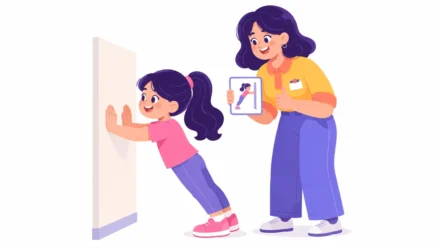
By contrast, big feelings often bring a fast heartbeat, tight muscles, trouble thinking clearly, and difficulty staying calm or staying in the group. These signals tell the child, and the adult, that more support is needed.
Also, practice body scans. Ask children to place a hand on their chest, notice their breathing, and check their hands and shoulders. A quick scan takes less than a minute, and it builds the habit of noticing.
In addition, give children words for their bodies. Phrases such as “My heart is fast” or “My hands feel tight” help children explain what is happening. These words are useful for students who find it hard to name feelings directly.
Meanwhile, watch for your own clues as an adult. Children notice when adults are calm or tense. A calm adult body helps children feel safer and makes it easier for them to read their own clues.
Worked example. Mrs. Lin teaches Noah a quick check: hand on heart, look at hands, take one breath. During a calm morning, he says, “Heart slow, hands loose. Little or no feeling.” Later in the week, after a game ends badly, he says, “Heart fast. Big feeling.” Noticing it is real progress.
3. Match strategies to the size of emotions
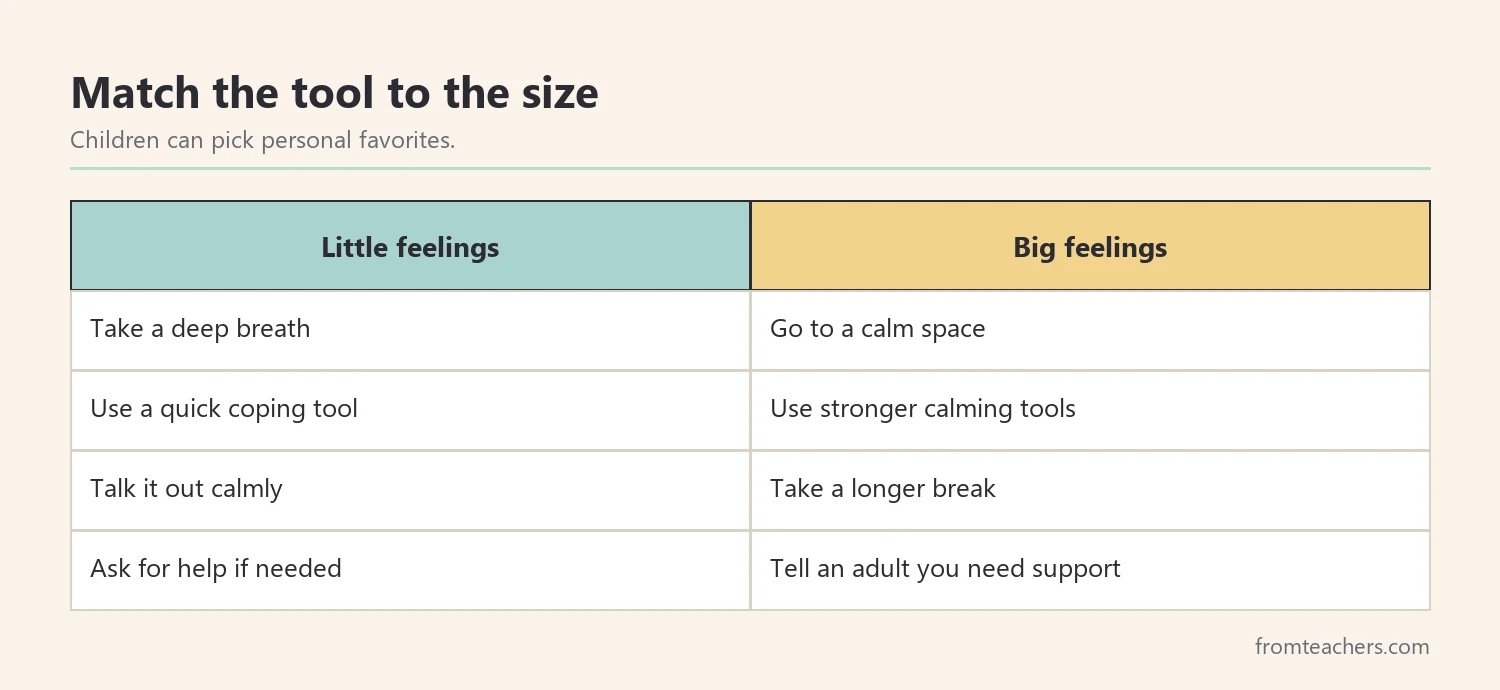
Next, connect each size to the right tools. Little feelings often respond to quick strategies such as taking a deep breath, using a quick coping tool, talking it out calmly, or asking for help if needed. These tools let a child carry on with the activity.
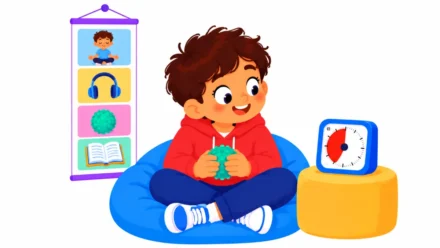
On the other hand, big feelings usually need bigger support. Helpful options include going to a calm space, using stronger calming tools, taking a longer break, or telling an adult that support is needed. Big feelings are not a failure. They simply need more time and care.
Also, a visual reference helps children remember the match. The big feelings vs little feelings poster pairs illustrated examples and body clues with matching strategies for each size, which makes it a clear reference for a calm corner or a classroom wall.
In addition, let children build a personal list. Ask each child to pick two quick tools for little feelings and two bigger supports for big feelings. Personal lists are easier to remember than a long chart.
Then, plan adult responses for big feelings. Decide where a child can go, what tools are available, and who will check in. This planning supports the size of emotions approach, because children know that big feelings will be met with help, not punishment.
Worked example. Noah chooses a deep breath and talking it out for little feelings. For big feelings, he chooses the calm space and telling Mrs. Lin. She writes both lists on a small card with simple pictures and tapes it inside his folder.
4. Practice the size of emotions with examples
Next, practice sorting feelings when everyone is calm. Children learn to judge the size of emotions through repetition, just like other skills. Short games make practice fun and low-pressure.
First, try a sorting game. Write simple situations on cards, such as “Someone took my pencil” or “I got lost at the store.” Children decide whether the feeling would be little or big for them and explain why. There are no wrong answers, only discussions.
Also, practice the strategies right after sorting. If a card is sorted as little, practice a deep breath. If it is sorted as big, walk through how to get to the calm space. Pairing the sort with action helps the learning stick.
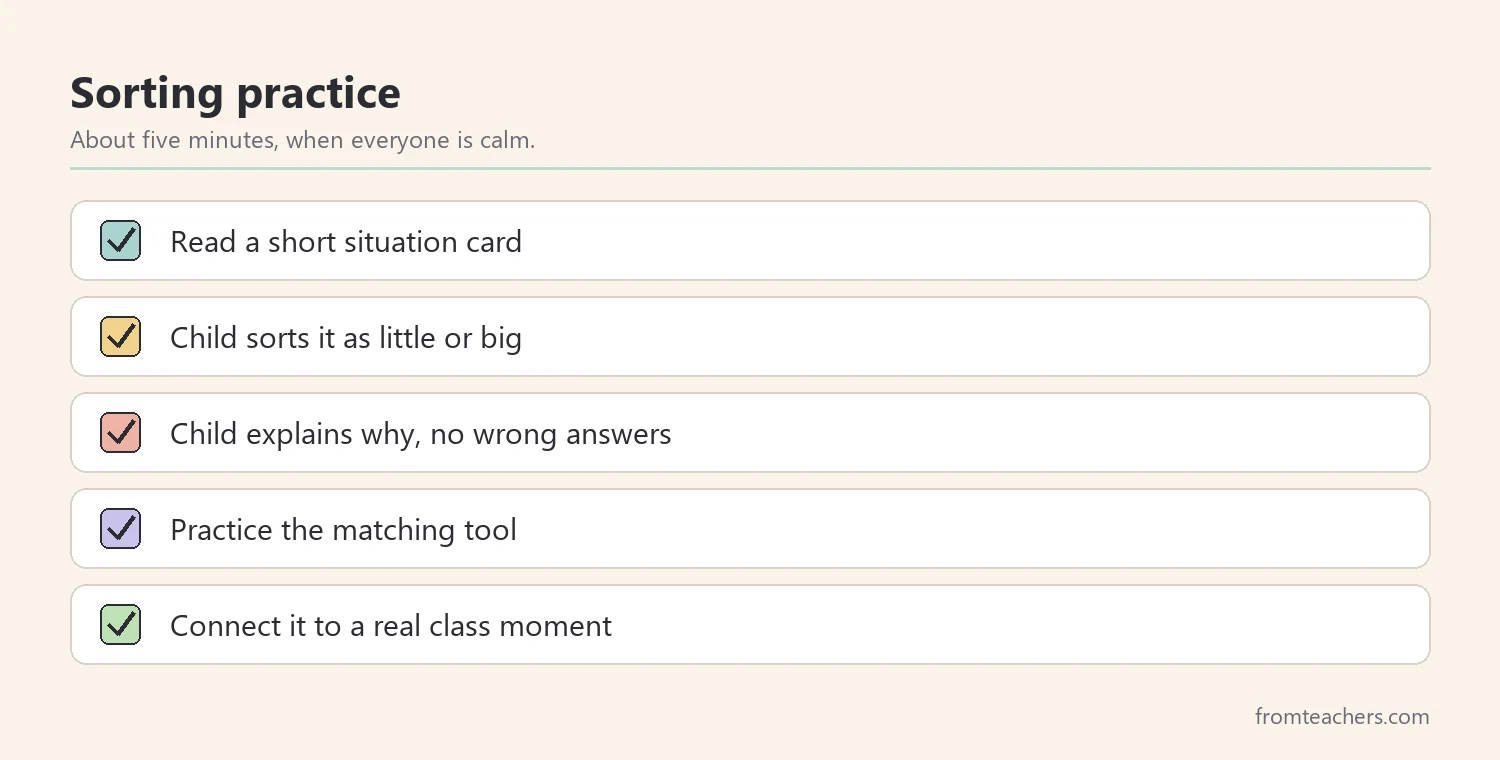
In addition, use stories and real events. Books, short videos, or a recent class moment can become examples. Ask, “What size was that feeling? What helped?” Real examples help children connect the idea to their own lives.
Keep practice short
Meanwhile, keep practice short. Five minutes a few times a week is usually enough. Longer sessions can feel like a lecture, and children may lose interest.
Then, invite children to create their own cards. When students write or draw situations from their own day, the examples feel real and the discussion becomes richer. Some children may want to keep their cards private, and that is fine. Over time, a class deck of situation cards becomes a useful tool for practicing the size of emotions during morning meetings, small groups, or the last few minutes before lunch.
Worked example. Mrs. Lin runs a five-minute sorting game three times a week. Noah sorts “My tower fell down” as little and says he would take a deep breath. He sorts “My friend said I can’t play” as big and says he would tell an adult. Both answers match his personal card.
5. Respond with care and review progress
Finally, respond to the child, not only the behavior. When a feeling turns out bigger than expected, stay calm and offer support. Say, “That feels like a big feeling. Let’s use a big-feeling tool.” This keeps the language consistent and avoids shame.
Also, reflect when the child is calm. Ask, “What size was the feeling? Did the tool help? What could help next time?” These short conversations build self-awareness over time.
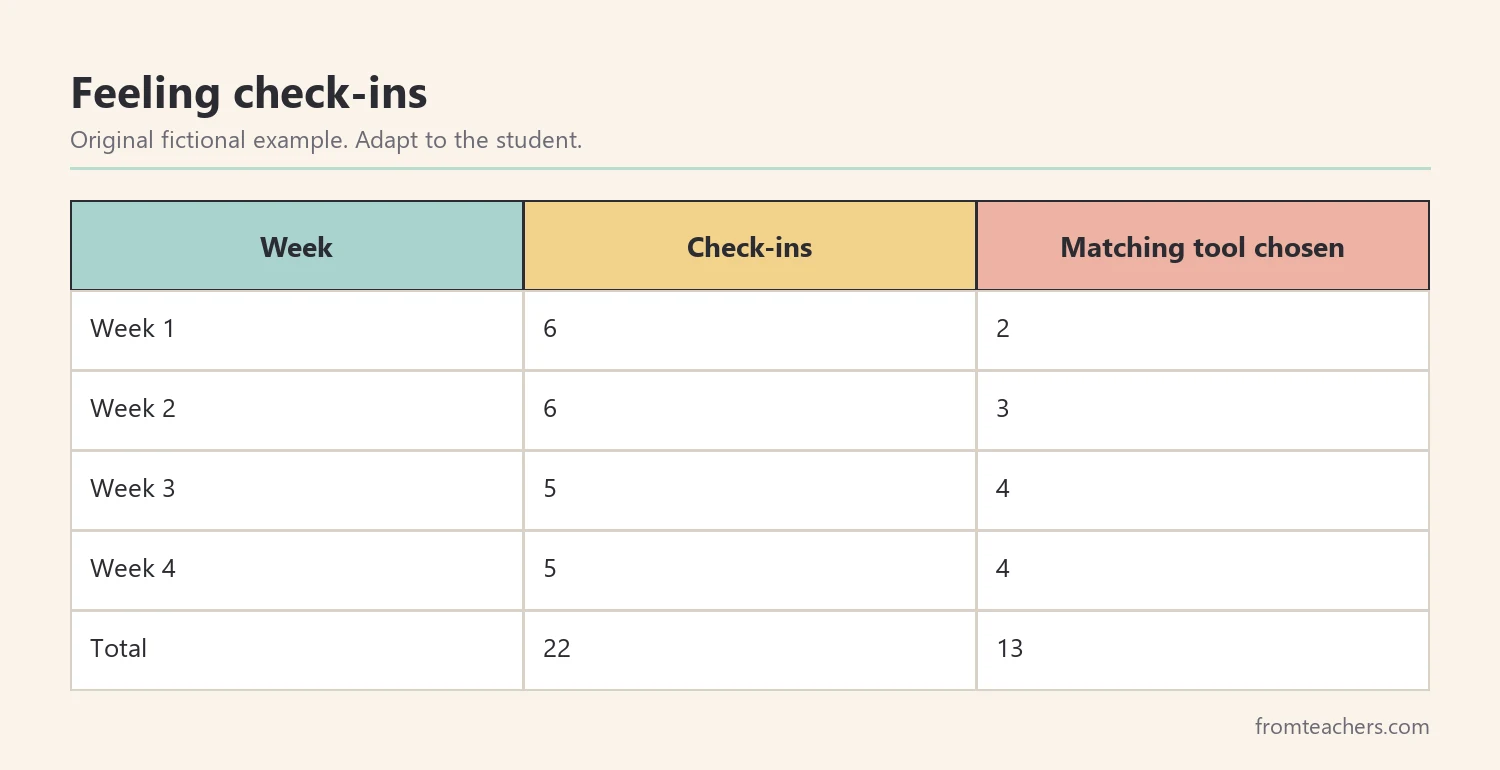
Next, track simple progress. Count how often the child names the size of a feeling and how often they choose a matching tool. Over weeks, the numbers show growth, even when hard days still happen.
In addition, share progress with families. A note such as “Noah noticed a big feeling and asked for the calm space today” helps families use the same words at home.
Then, review the plan every few weeks. Add new tools, remove ones that do not help, and check whether new situations bring big feelings. The size of emotions approach works best when it changes with the child.
Worked example. Mrs. Lin tracks Noah’s feeling check-ins for four weeks. In week 1, he had 6 check-ins and chose a matching tool in 2. Week 2 brings 6 check-ins and 3 matches. In week 3, 5 check-ins and 4 matches. By week 4, it holds at 5 check-ins and 4 matches. That is 22 check-ins and 13 matching choices across the month.
Using the idea at home
Families can use the same language at home. Ask, “Is this a little feeling or a big feeling?” during everyday moments, and model your own answers out loud.
Also, agree on a home calm space and a few tools. Consistency between home and school helps children use the size of emotions idea everywhere.
Common mistakes and how to avoid them
- Telling a child the feeling is too big. The child feels dismissed. Fix: accept the child’s rating and offer a matching tool.
- Calling big feelings bad. Children start hiding them. Fix: say that all sizes are normal.
- Teaching only during hard moments. Learning is limited. Fix: practice sorting when calm.
- Using the same tool for every size. Big feelings stay big. Fix: plan bigger supports for big feelings.
- Skipping the body. Children notice feelings late. Fix: teach quick body scans.
Questions teachers and parents ask about the size of emotions
What age is right for teaching the size of emotions?
Many young children can grasp little and big with pictures and simple words. Older students can add more detail, such as rating feelings on a scale. Adjust the language and visuals to the child.
What if a child says every feeling is big?
Accept it at first and offer support. Over time, practice sorting during calm moments and notice body clues together. Some children need extra time and adult help before they see differences.
Is this the same as a feelings thermometer or zones?
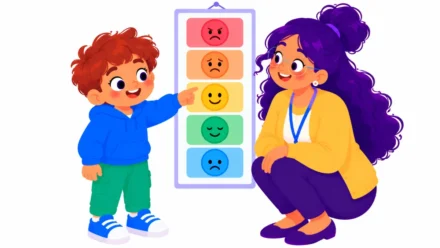
It is related. Many tools help children notice the intensity of feelings. A two-size approach, little and big, is a simple place to start, especially for young learners.
Should children always handle little feelings alone?
No. Little feelings can often be managed with a quick strategy, but asking for help is always allowed. The goal is independence with support, not isolation.
When should we seek more help?
If big feelings happen very often, last a long time, or lead to unsafe behavior, talk with the school counselor, the child’s team, or a health professional.
Related reading: Meltdowns vs Tantrums: A Guide to Understanding and Responding, Understanding Autism ADHD Meltdowns: Signs and Support Strategies, and Building Stronger School Counseling Programs: A Framework for Student Success.
A companion resource for the size of emotions:
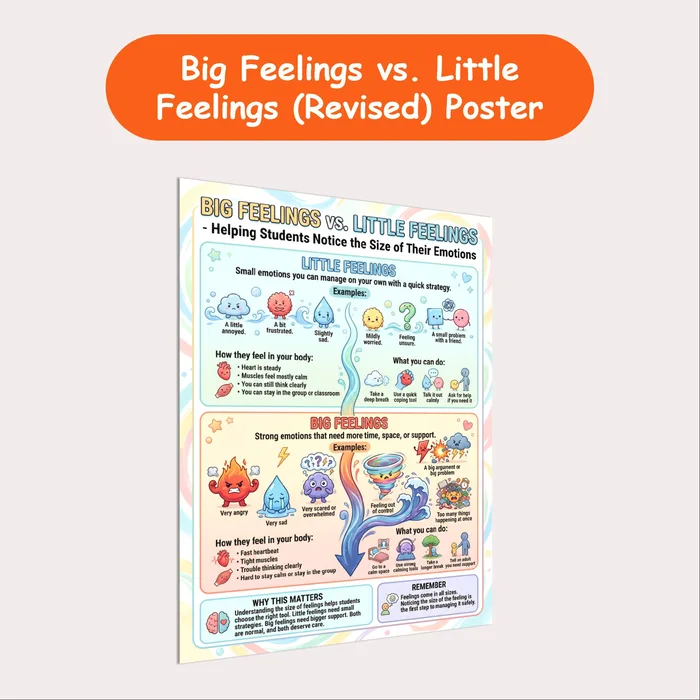
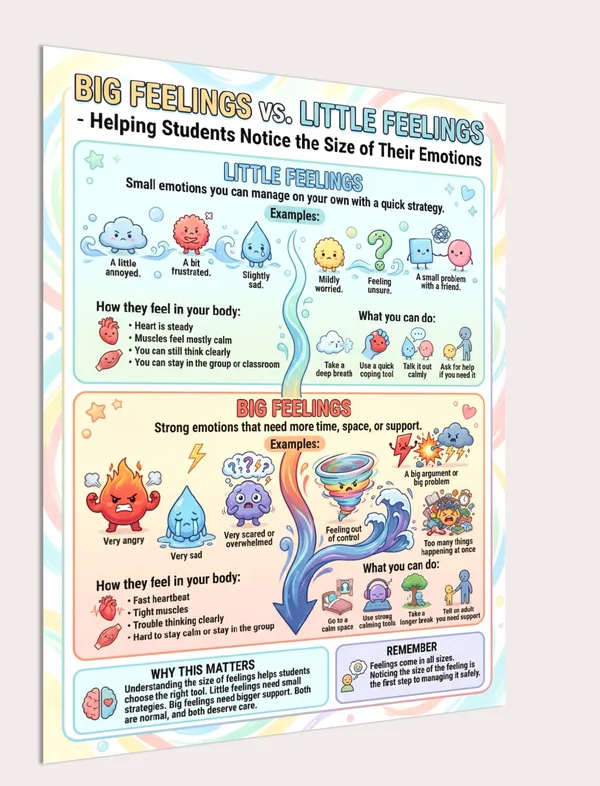
Big Feelings vs Little Feelings Poster (Version 2): a size of emotions chart with illustrated examples, body clues, and matching strategies, for SEL classrooms and calm corners.
Sources and scope
- CASEL: resources on social and emotional learning, including self-awareness and self-management.
- Centers for Disease Control and Prevention (CDC): general information on children’s development and mental health.
- ZERO TO THREE: information for families and educators on young children’s emotional development.
- Understood.org: family-friendly information on learning and thinking differences and emotions.
This guide covers everyday classroom and home strategies for helping children notice how strong their feelings are. It does not replace mental health care, diagnosis, or the decisions of a child’s support team.
Key takeaways
- Teach that feelings come in sizes, and all sizes are normal.
- Use body clues to notice the size of emotions early.
- Match quick tools to little feelings and bigger support to big ones.
- Practice sorting with examples during calm moments.
- Respond with care and review progress with families.
Leave a Comment