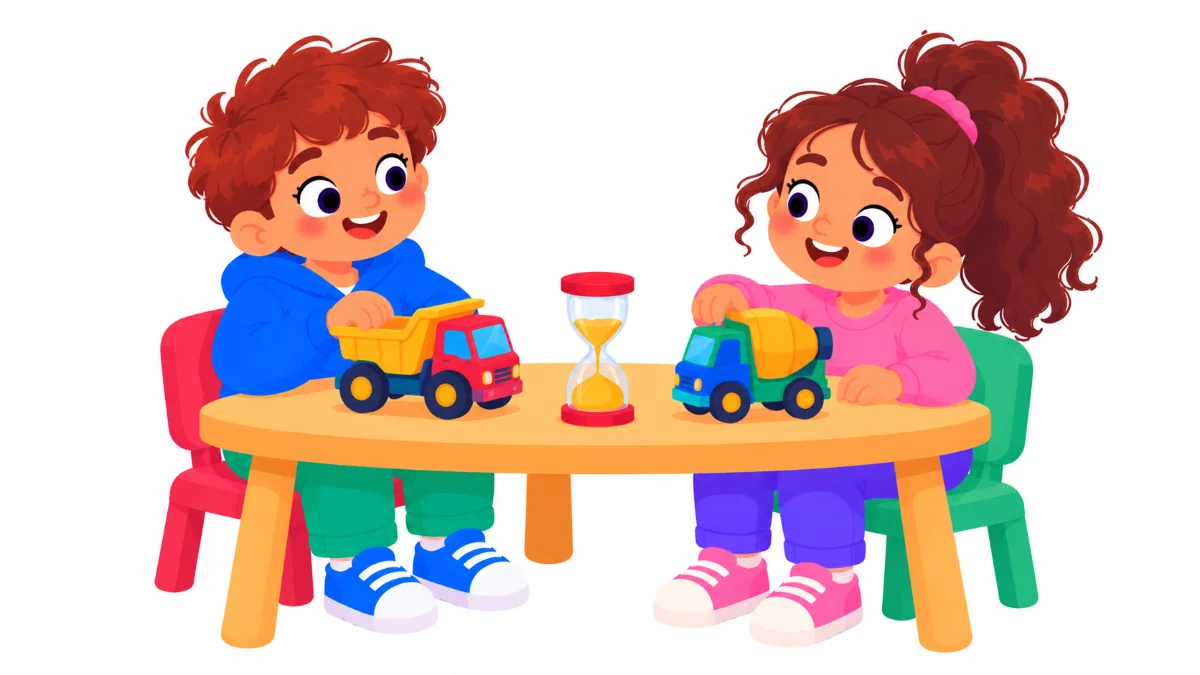

Teaching kids to share works best when adults treat sharing as a skill to practice, not a feeling children are supposed to have on demand. Picture a kindergarten block center. One child has built a tall tower and another reaches for the bottom block. Within seconds, there is a shout, a push, and tears. An adult says “Share!” but neither child knows what that actually means in this moment.
This guide offers five steps for teaching kids to share: understand sharing as a skill, teach kind words, teach turn-taking, plan for when sharing feels hard, and practice and celebrate. By the end, you will have concrete language and routines you can use in a classroom, a therapy room, or at home.
Examples are fictional. Adapt to the student’s goals and agreed supports. This is guidance, not a diagnosis.
At a glance
- Sharing is a skill children practice over time, not something they always feel ready to do.
- Children need specific words, such as “Can I have a turn when you’re done?”
- Turn-taking with a clear order or timer feels fairer than forced sharing.
- A plan for hard moments helps children wait without grabbing.
- Noticing and celebrating sharing builds the habit.
1. Approach teaching kids to share as a skill
First, reframe what sharing means. For young children, giving up something they are enjoying is genuinely hard. Their brains are still developing the ability to wait, manage disappointment, and think about another person’s wishes. So, sharing is not a moral test. It is a skill children practice with support.
Next, notice that sharing covers several different things. Children share materials, like markers and blocks. They share space, like a spot at the sand table. They also share activities, like a game or a turn on the swing. Each type needs slightly different words and routines.
Also, rethink forced sharing. When an adult takes a toy from one child and hands it to another, the first child learns that sharing means losing. The second child learns that complaining to an adult works. Instead, teaching kids to share means giving both children words and a fair plan.
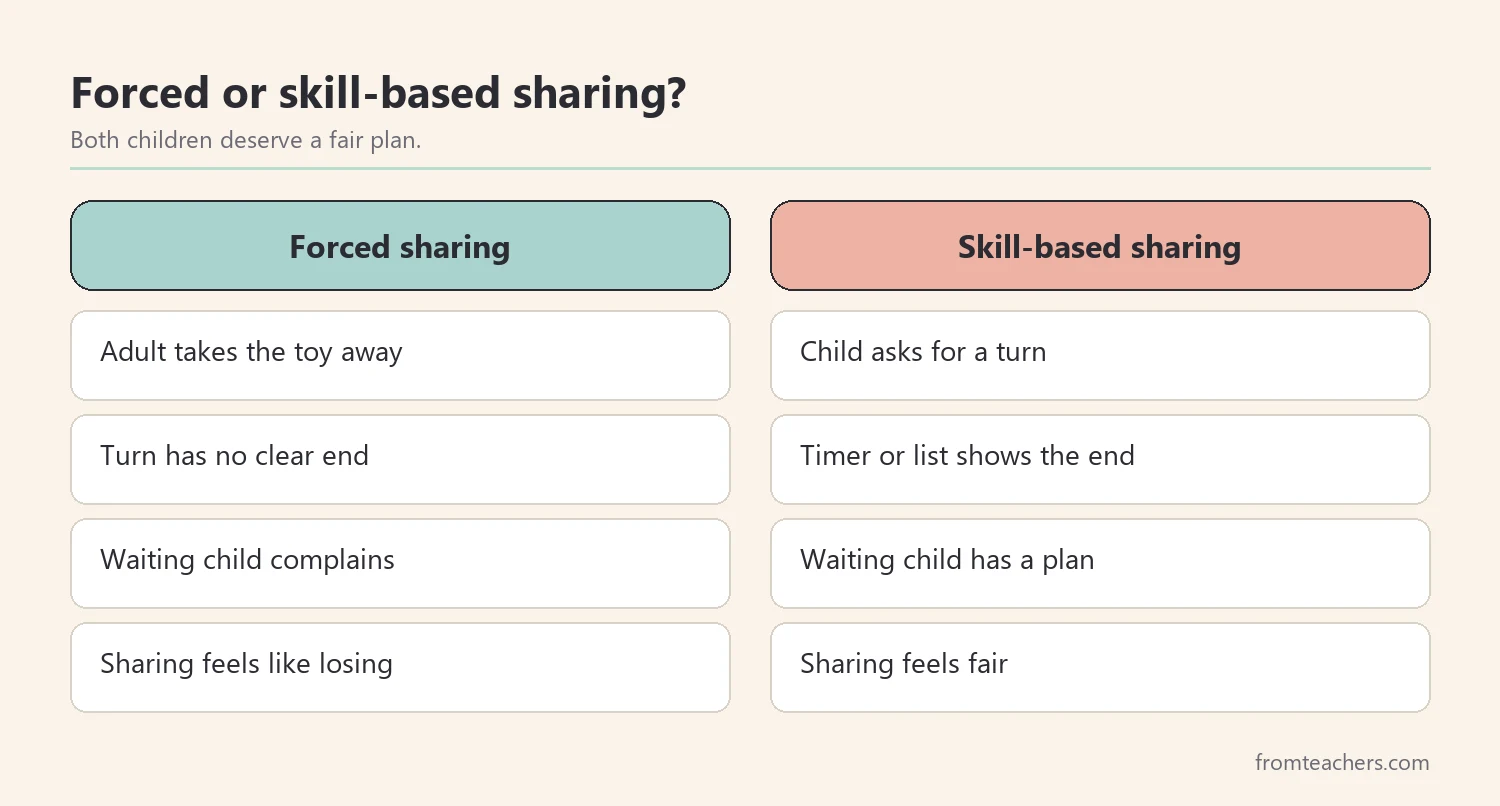
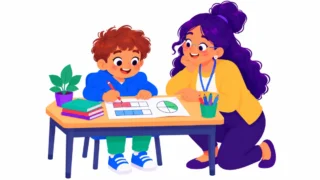
Consider Kai, a fictional kindergartner. Kai loves the toy trucks and often grabs them from others. When adults take the trucks away, he cries and hides under the table. His teacher, Ms. Patel, realizes that Kai does not yet have the words or the waiting skills to share. She decides to teach both.
Moreover, look at what the child already does well. Maybe a child shares easily with one friend, or happily hands out snacks. Those moments show that the skill is already growing. Teaching kids to share goes faster when you build on these strengths instead of focusing only on conflicts. Write down two or three moments when the child shared without help, and use them as examples later: “Remember when you gave Leo a crayon? That was sharing.”
Finally, keep expectations realistic. Sharing grows slowly, and setbacks are normal. A child who shares well on Monday may struggle on Friday when tired. Patience from adults is part of teaching kids to share.
2. Start teaching kids to share with kind words
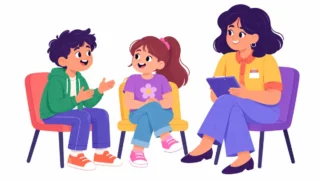
Children cannot use words they do not have, so teaching kids to share starts with language. Therefore, the first practical step is a small set of phrases children can say when they want something, when they are using something, and when they are done.
Start with a few simple scripts. To ask: “Can I share with you?” or “Can I have a turn when you’re done?” To offer: “Would you like a turn?” To thank: “Thank you for sharing with me.” To ask before using something: “Is it okay if I use this?” or “Are you finished?” To suggest teamwork: “Can we use it together?”
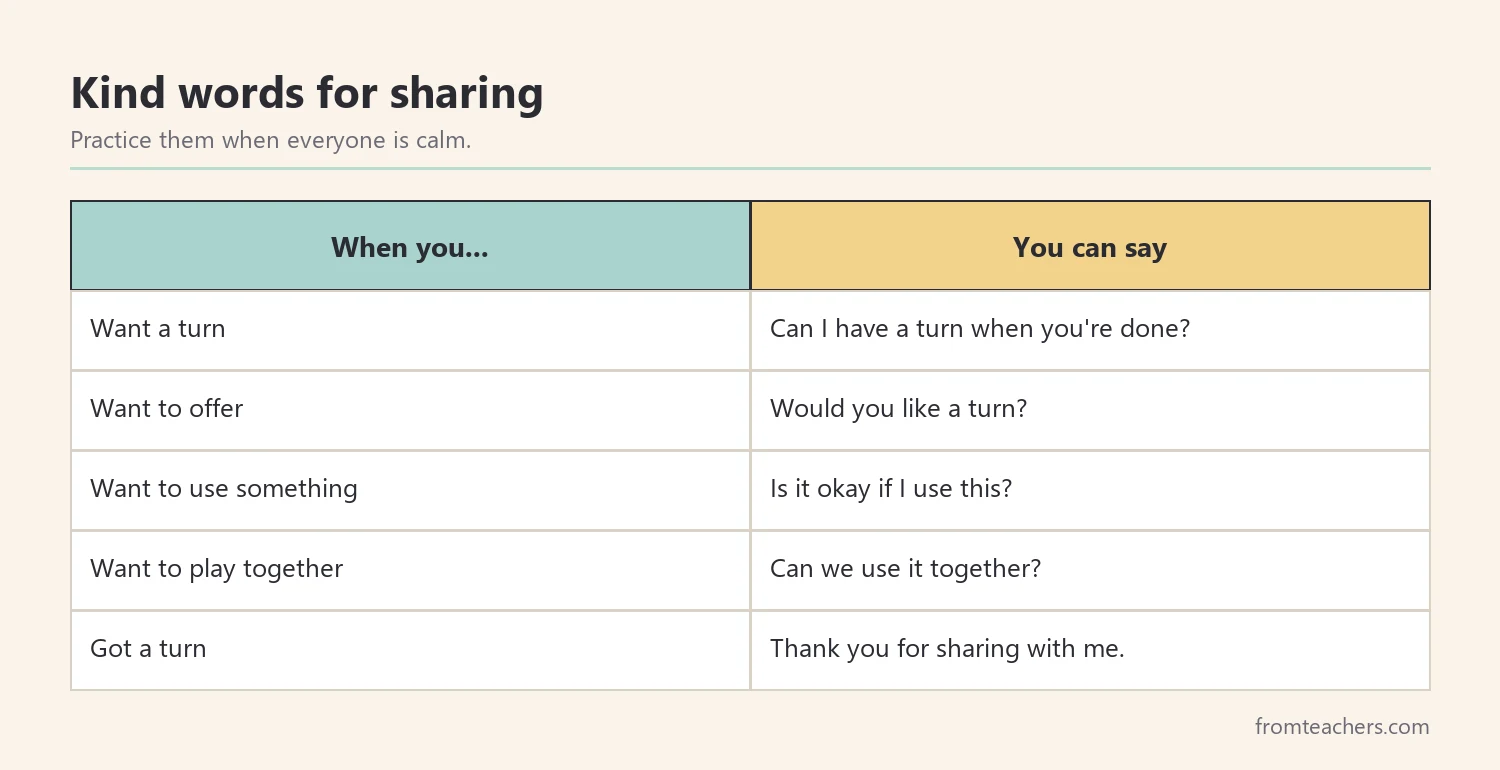
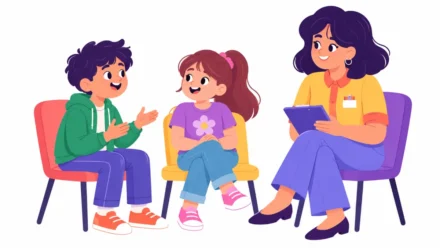
Next, practice the phrases often. Role-play with puppets, stuffed animals, or classmates. Say the words together, then let children try them on their own. Practice when everyone is calm, so the words are ready when a real conflict happens.
Also, teach children that “Not yet” is an acceptable answer. When a child asks for a turn, the other child may say “When I’m done.” That is fair, as long as a turn is coming. This protects the child who is playing and still teaches the child who is waiting.
For Kai, Ms. Patel chose one phrase to start: “Can I have a turn when you’re done?” She practiced it with him every morning for a week, using his favorite truck and a puppet. On Thursday, Kai used the phrase with a real classmate. He still had to wait, but he did not grab.
In addition, use visuals. Pictures of children asking, waiting, and thanking help early learners and students who are still building language. A sharing reminders poster with illustrated speech bubbles shows these kind words right where children play and work.
3. Teach fair turn-taking
When teaching kids to share, turn-taking is often the most practical place to focus. Instead of two children using one toy at once, each child gets a clear turn. This feels fairer, and it gives the waiting child a clear end point.
Use a simple, predictable sequence. First, the child asks for a turn. Then, the child waits. Next, a timer or an agreed order shows when the turn changes. Finally, the first child hands the item over. Everyone gets a chance.
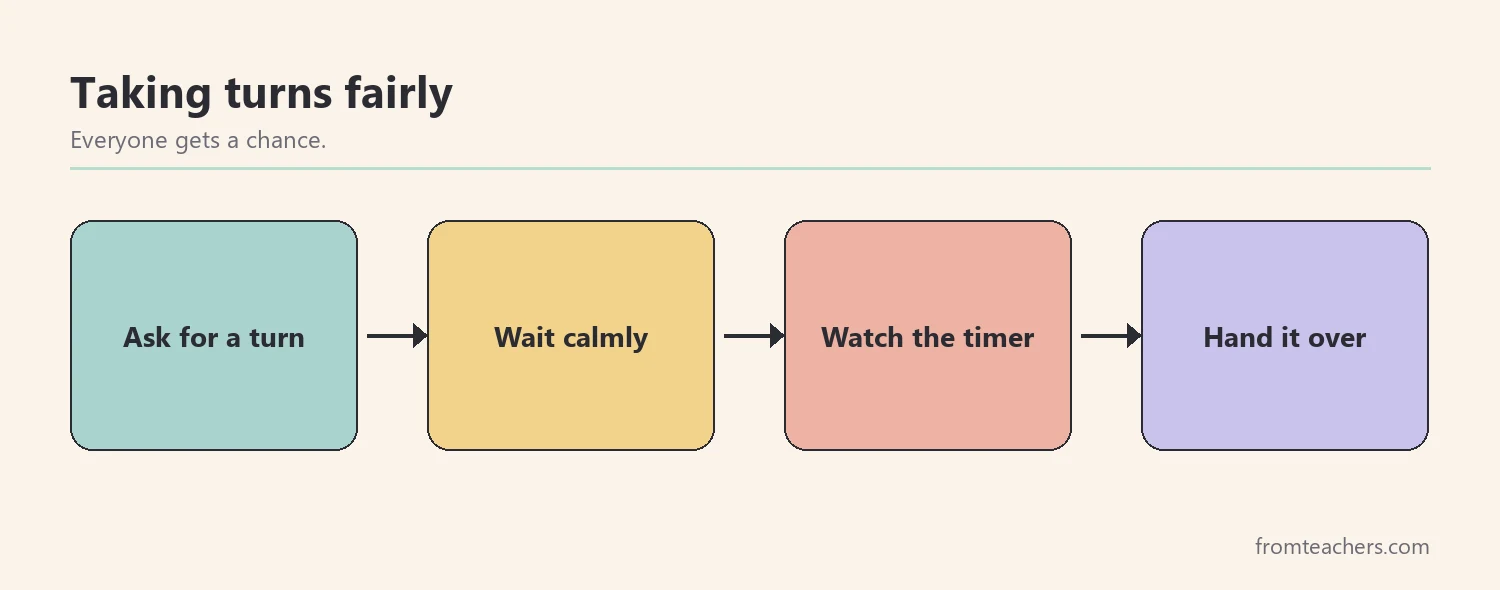
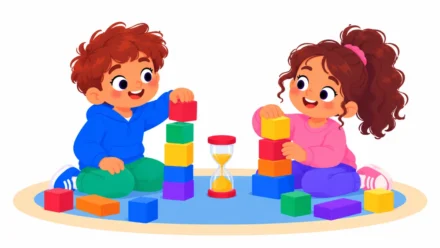
Next, choose a fair tool. Sand timers, visual timers, and turn lists all work. For popular items, a turn list on a clipboard helps children see when their turn is coming. For quick turns, counting to twenty together can work too.
Also, teach the handover. Many children find giving the item back the hardest part. Practice saying “Your turn” and handing the item gently. Praise the handover specifically: “You gave Mia the truck when the timer ended. That was fair.”
For Kai, the sand timer changed everything. Ms. Patel set a three-minute timer for the trucks. Kai watched the sand closely. When it ran out, he still frowned, but he handed over the truck. Teaching kids to share often looks like this: not happy, but calm and fair.
In addition, remember space and materials. Teach children to take only what they need, to let others use items too, and to make room for others at tables or centers. These small actions are sharing too, even when nobody asks.
4. Plan for when sharing feels hard
Some moments will be hard no matter how well you teach. A favorite toy, a tired afternoon, or a crowded center can push any child past their limit. Therefore, part of teaching kids to share is giving them a plan for when it feels hard.
Start with calm body reminders. Wait your turn without grabbing. Hold items gently. Keep a safe body space while sharing. These reminders protect everyone and keep conflicts small.
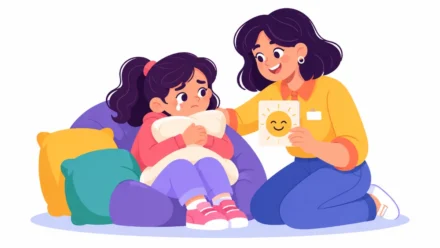
Next, teach a few coping options for the wait. Children can take a break to calm down, use a fidget while waiting, or ask an adult for help if they feel frustrated. A short checklist makes the options easy to remember.
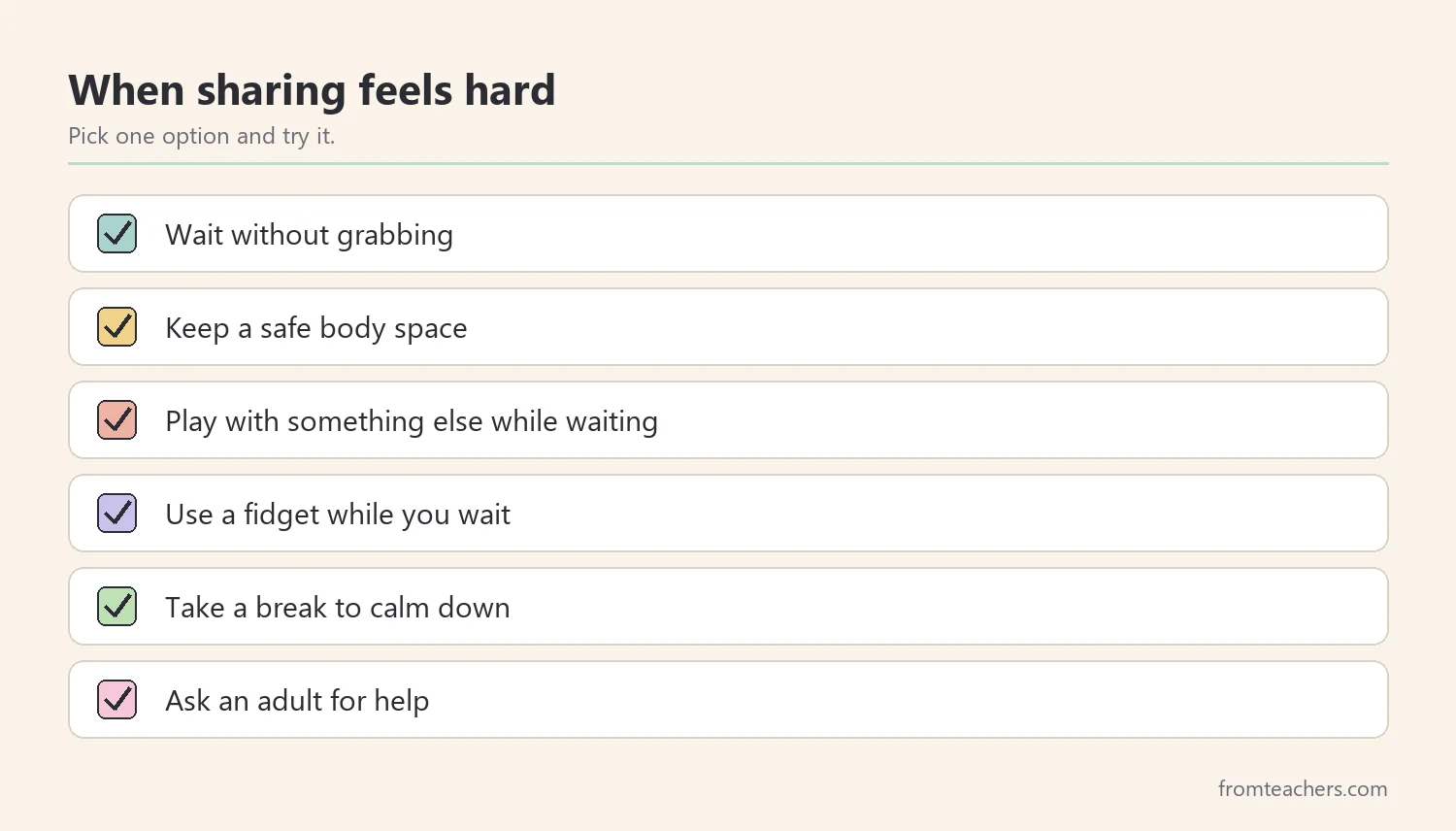
Then, rehearse the plan before it is needed. Walk through a pretend conflict with a puppet: the puppet wants the truck, the timer is running, and the puppet chooses a fidget while waiting. Children enjoy coaching the puppet, and they learn the steps at the same time. Rehearsal is a quiet but powerful part of teaching kids to share, because it moves the plan from words on a poster into actions children have already tried.
Also, notice patterns. If a child always struggles at one center, the problem might be the setup. Maybe there are too few materials or too many children. Adding a second set of popular items, or limiting the number of children at a center, can prevent many conflicts.
For Kai, Ms. Patel added a waiting plan. While he waited for the trucks, he could play with a small car from a basket nearby. He also knew he could say, “I need help,” to an adult. With a plan, the wait felt shorter, and grabbing became rare.
Moreover, protect special items. It is reasonable for a child to keep a comfort object or a personal item that is not for sharing. Respecting this boundary helps children feel safe enough to share other things.
5. Practice and celebrate sharing moments
Finally, keep practicing and make success visible. Sharing grows when children notice that it feels good and that others notice too.
Celebrate sharing moments, since recognition is one of the strongest tools for teaching kids to share. Say something kind when a friend shares. Notice when others show generosity. Smile, clap, or offer a “thank you.” Specific feedback works best: “You made room for Sam at the table. Now you can both build.”
Next, build short practice into the day. Partner games, shared art projects, and center rotations all give natural chances to practice. Remind children of one sharing phrase before the activity begins.
Also, rotate who leads. Let children take turns being the “timer keeper” or the person who hands out materials. These small jobs give children a sense of fairness and responsibility. As a result, teaching kids to share becomes part of how the classroom runs, not just a lesson.
Then, track progress lightly. A simple tally during one center each day, showing grabs and kind requests, is plenty. Watch the trend over a few weeks rather than judging any single day.
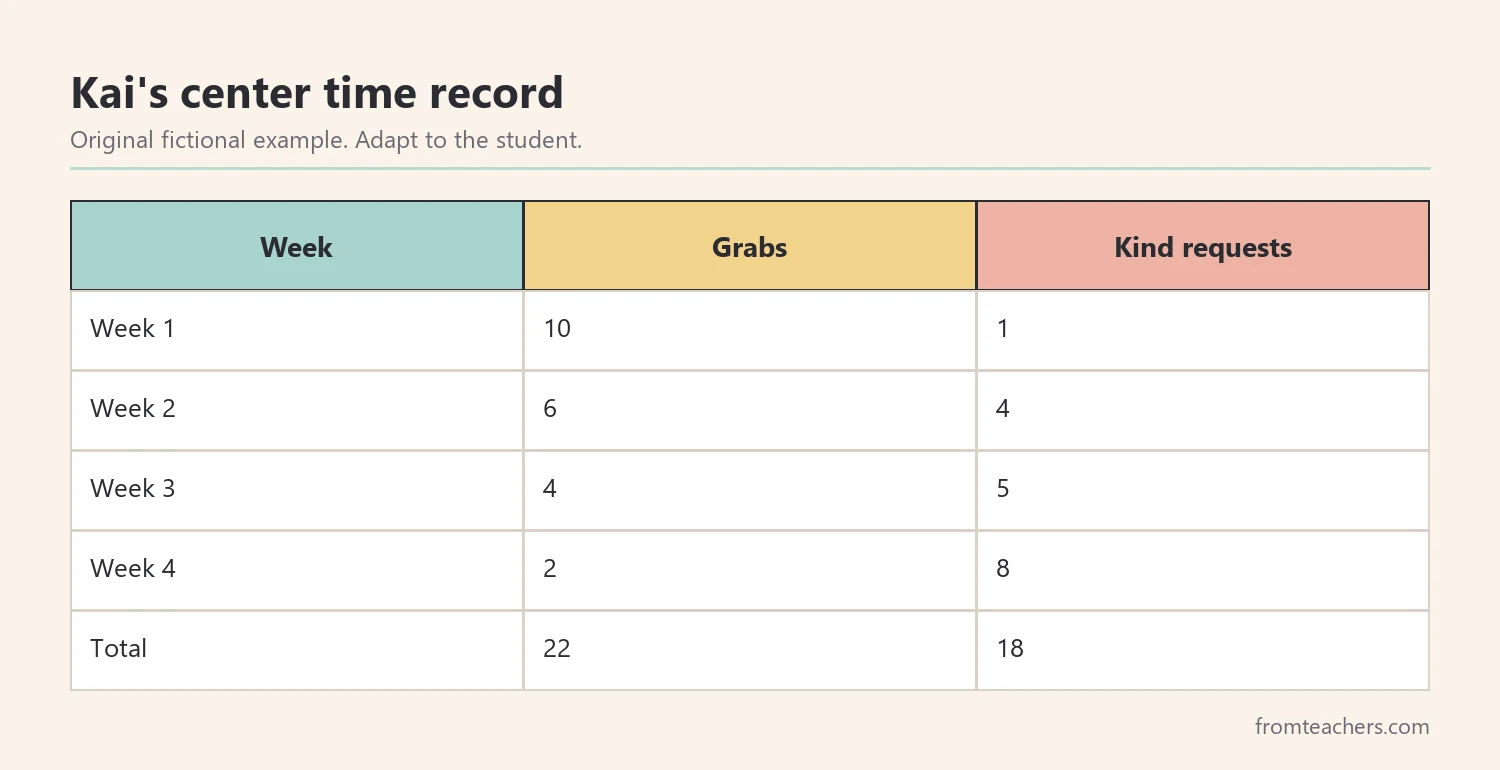
In Kai’s fictional record, grabs fell from 10 in week one to 2 in week four, for a total of 22. Kind requests rose from 1 to 8, a total of 18. Ms. Patel shared the progress with Kai’s family, who started using the same phrase at home with his older sister.
Moreover, involve families. Parents can use the same words and a kitchen timer for turn-taking at home. When teaching kids to share sounds the same at school and home, children learn faster.
Finally, remember the bigger message. Sharing is a skill we practice, not something we always feel ready to do. When we share, we show respect, kindness, and teamwork. Everyone gets better at sharing with time and support.
Common mistakes and how to avoid them
- Forcing immediate sharing. Children feel robbed. Fix: use turn-taking with a clear end point.
- Saying “share” without teaching how. Children don’t know what to do. Fix: teach short, specific phrases.
- Ignoring the waiting child’s feelings. Frustration grows. Fix: offer a waiting plan and coping options.
- Only noticing problems. Sharing feels like a chore. Fix: celebrate sharing moments specifically.
- Expecting every item to be shared. Children feel unsafe. Fix: allow a few personal or comfort items.
Questions teachers and parents ask about teaching kids to share
At what age should children be able to share?
Sharing develops gradually through the preschool and early elementary years. Toddlers need a lot of adult support, while older children can manage more independently. Individual differences are normal.
Should I make my child share a toy they just started using?
Usually, no. It is fair to let a child finish a reasonable turn. Teach the other child to ask and wait, and use a timer if needed.
What if a child never wants to share?
Start small with less-loved items and very short turns. Praise every attempt. If sharing difficulties are part of wider social challenges, talk with the school team.
How can teaching kids to share work for children with autism or language delays?
Use pictures, short scripts, timers, and lots of practice. Predictable routines help. A speech-language pathologist or special educator can tailor the plan to the child.
How long does teaching kids to share usually take?
There is no fixed timeline. Many children improve over weeks of steady practice, but progress often goes up and down. Look for small changes, such as asking before grabbing.
Is turn-taking the same as sharing?
It is one important form of sharing. Children also share space and materials, and they work together on activities. All of these can be taught step by step.
Related reading: Autism Social Skills Development: Practical Strategies for Growth, Special Education Strategies: 10 Powerful Ways Teachers Can Succeed, and How Teachers Communicate With Parents in Special Education: Building a Strong Partnership.
A companion resource for teaching kids to share:
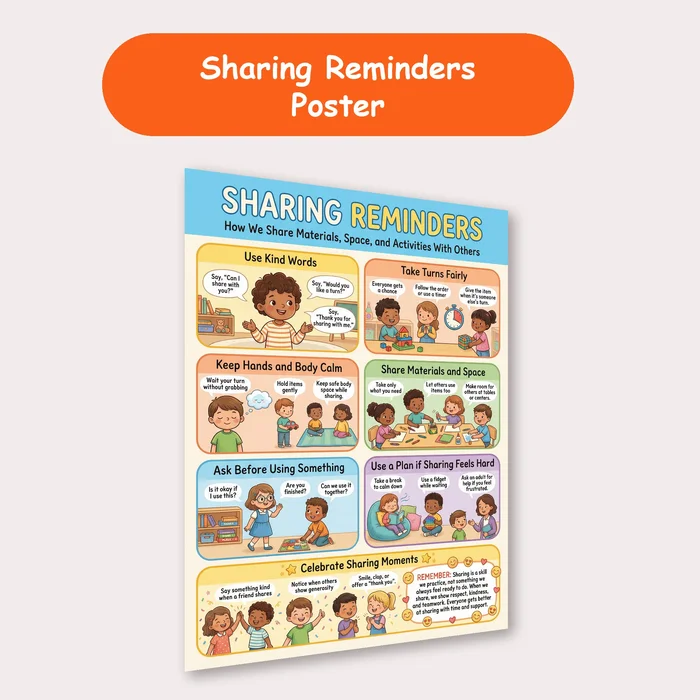
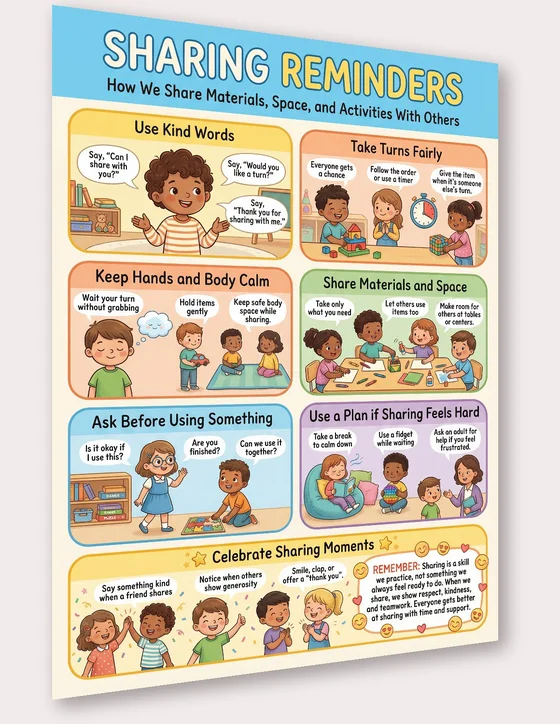
Sharing Reminders Poster: a friendly social skills poster with seven illustrated sections on how to share materials, space, and activities, made for early learners, special education, and play-based classrooms.
Sources and scope
- National Association for the Education of Young Children (NAEYC): guidance on early childhood development and social skills.
- ZERO TO THREE: information on social and emotional development in young children.
- CASEL: a framework for social and emotional learning, including relationship skills.
- Centers for Disease Control and Prevention: general information on child development milestones.
This guide covers everyday teaching of sharing and turn-taking at school and home. It does not replace evaluation or individual plans for children with significant social or developmental needs.
Key takeaways
- Teaching kids to share means treating sharing as a skill, not a feeling.
- Give children short, kind phrases for asking, offering, and thanking.
- Use turn-taking with timers or lists so waiting has a clear end.
- Offer a plan and coping options for hard sharing moments.
- Celebrate sharing and keep the same words at school and home.

Leave a Comment