

Executive functioning skills are the thinking skills students use to plan, start, manage time, and finish their work. Picture a seventh grader with a science report due Friday. Still, on Thursday night, he has not started. He is not careless. He simply did not know where to begin, so the task felt too big to face, and the days slipped by.
This guide gives you five steps to build executive functioning skills in the classroom: find where the student gets stuck, break big tasks down, manage time, set reminders and plan transitions, and check work before submitting. By the end, you will be able to choose the right strategy for the right problem and teach it clearly.
Examples are fictional. Adapt to the student’s goals and agreed supports. This is guidance, not a diagnosis.
At a glance
- Executive functioning skills include planning, starting, managing time, and checking work.
- Find the exact point where a student gets stuck before choosing a strategy.
- Break big tasks into small steps and decide what to do first.
- Timers, short work bursts, and reminders make time visible.
- Teach one strategy at a time with numbered steps and phrases.
A quick note before the steps. Many students, including those with ADHD and some autistic students, find executive functioning skills harder than their peers do. This is not about effort or intelligence. Fortunately, these are skills that can be supported and taught, just like reading or math, with clear steps and regular practice.
1. Find where the student gets stuck
First, look closely before choosing a strategy. “Disorganized” is too broad to fix. Instead, ask where exactly things break down. Does the student struggle to start? To decide what comes first? To manage time? Or to remember? To finish carefully?
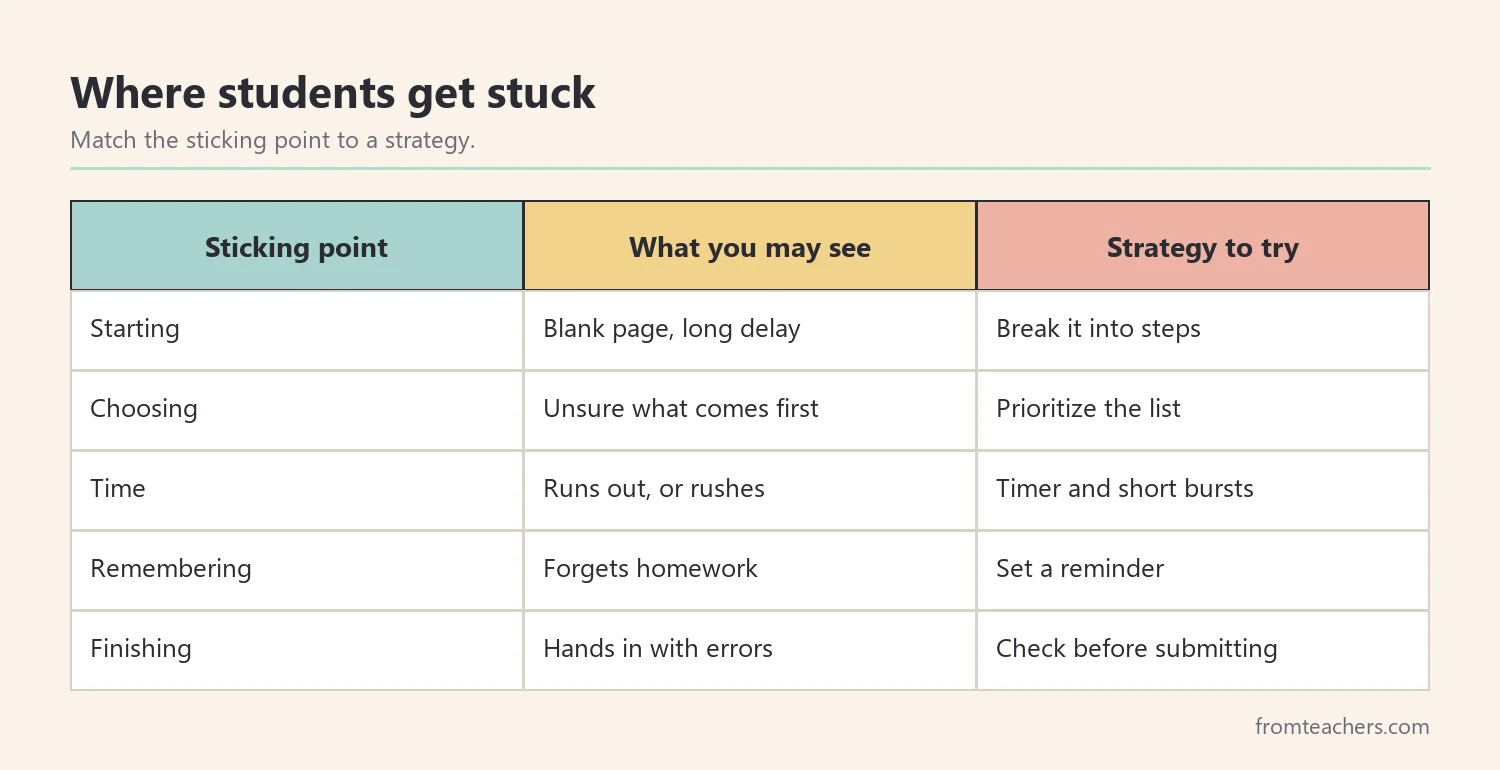
Next, collect a few days of simple notes. Write what you see, such as “Took 12 minutes to start writing” or “Turned in math with three questions skipped.” Patterns usually point to one or two main sticking points.
Also, ask the student. Older students can often describe the problem well: “I don’t know what to do first” or “I always run out of time.” Their answer helps you choose the right strategy and makes them a partner in the plan.
In addition, check with the team. The special education teacher, school psychologist, or family may already know which executive functioning skills are hardest for this student. Some students have related goals in an IEP or 504 plan.
Worked example. Kai is a fictional seventh grader. His teacher, Mr. Ellis, notices that Kai turns in about half of his assignments on time. After a week of notes, Mr. As a result, Ellis sees two clear sticking points: starting big tasks and running out of time.
2. Break down tasks and choose what comes first
Next, make big tasks small. A long assignment can feel like a wall. Once broken into steps, it becomes a staircase. This is one of the most useful executive functioning skills a student can learn.
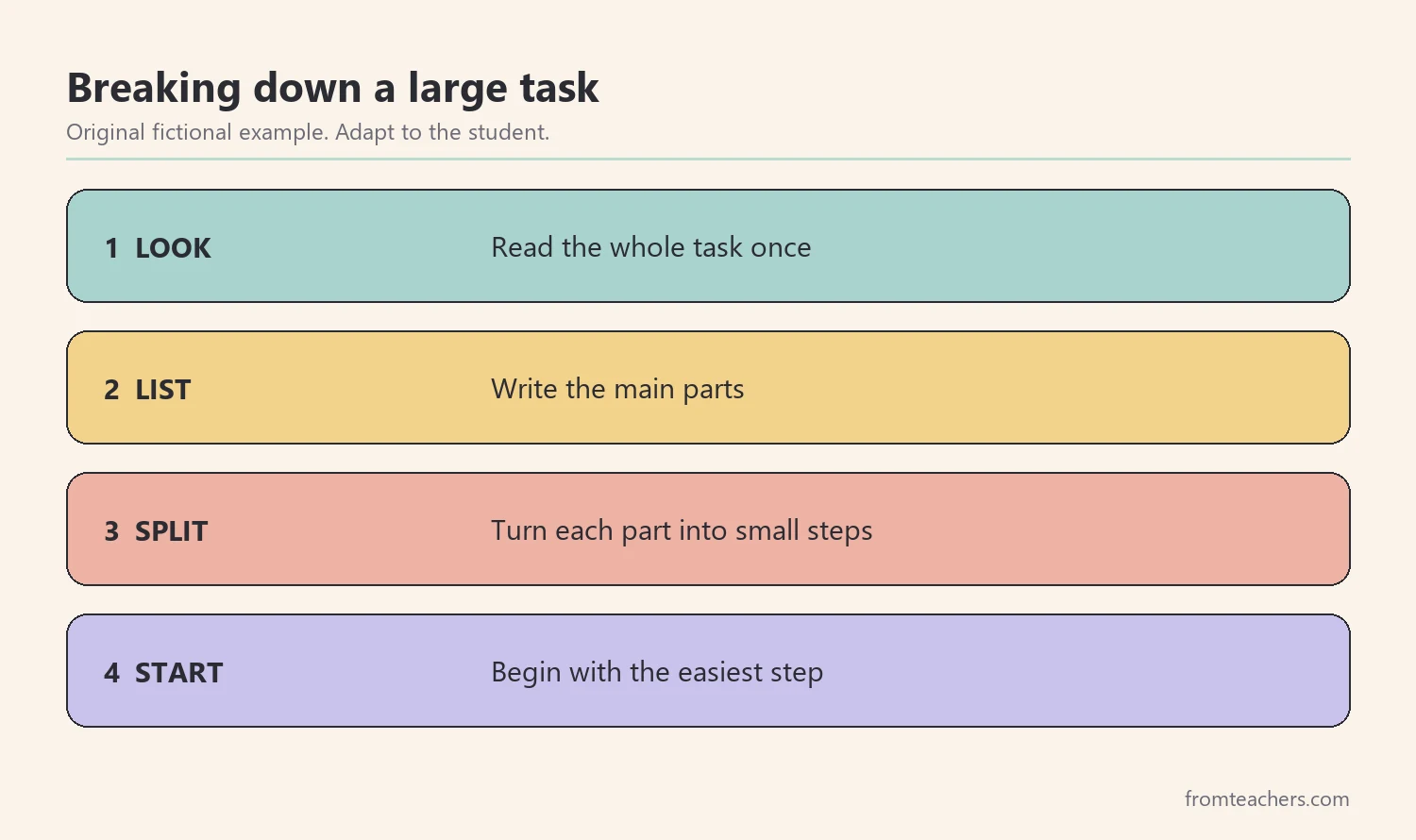
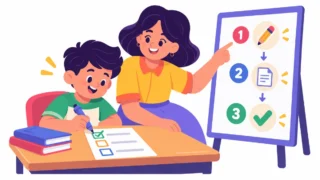
First, teach a simple routine. Read the whole task once. List the main parts. After that, turn each part into small, specific steps. Then start with the easiest step to build momentum.
Also, teach prioritizing. When students have several assignments, they need a way to decide what to do first. A simple approach is to list everything, mark what is due soonest, and mark what is hardest or longest. That way, the most urgent work goes first, and longer projects get small daily steps.
In addition, try planning backwards for big projects. Start from the due date and work back: “Final draft Friday, first draft Wednesday, outline Monday.” This turns a far-off deadline into clear, near steps.
Make the steps visual
Then, make the steps visual. A checklist on paper or in a planner lets students cross off each step and see progress. The executive functioning poster set with ten step-by-step guides covers routines such as breaking down large tasks, prioritizing assignments, and planning backwards, with numbered steps students can follow.
Worked example. Mr. Ellis helps Kai break his science report into five steps: choose a topic, find two facts, write an outline, write a draft, and check it. He then plans backwards from Friday, giving each step a day. Kai crosses off “choose a topic” on Monday and says it felt easier than he expected.
3. Manage time with timers and short bursts
Next, make time visible. Many students struggle to feel how much time has passed or how long a task will take. Visual timers, short work bursts, and planned study blocks turn time into something students can see and manage.
First, use a visual timer. A timer showing time running out helps students stay on track without constant reminders. Start with short times, such as ten or fifteen minutes, and build up.
Also, teach working in short bursts. Choose one small task, set a short time, work with full focus, and take a brief break. Then start another burst. Short bursts make it easier to start and easier to keep going.
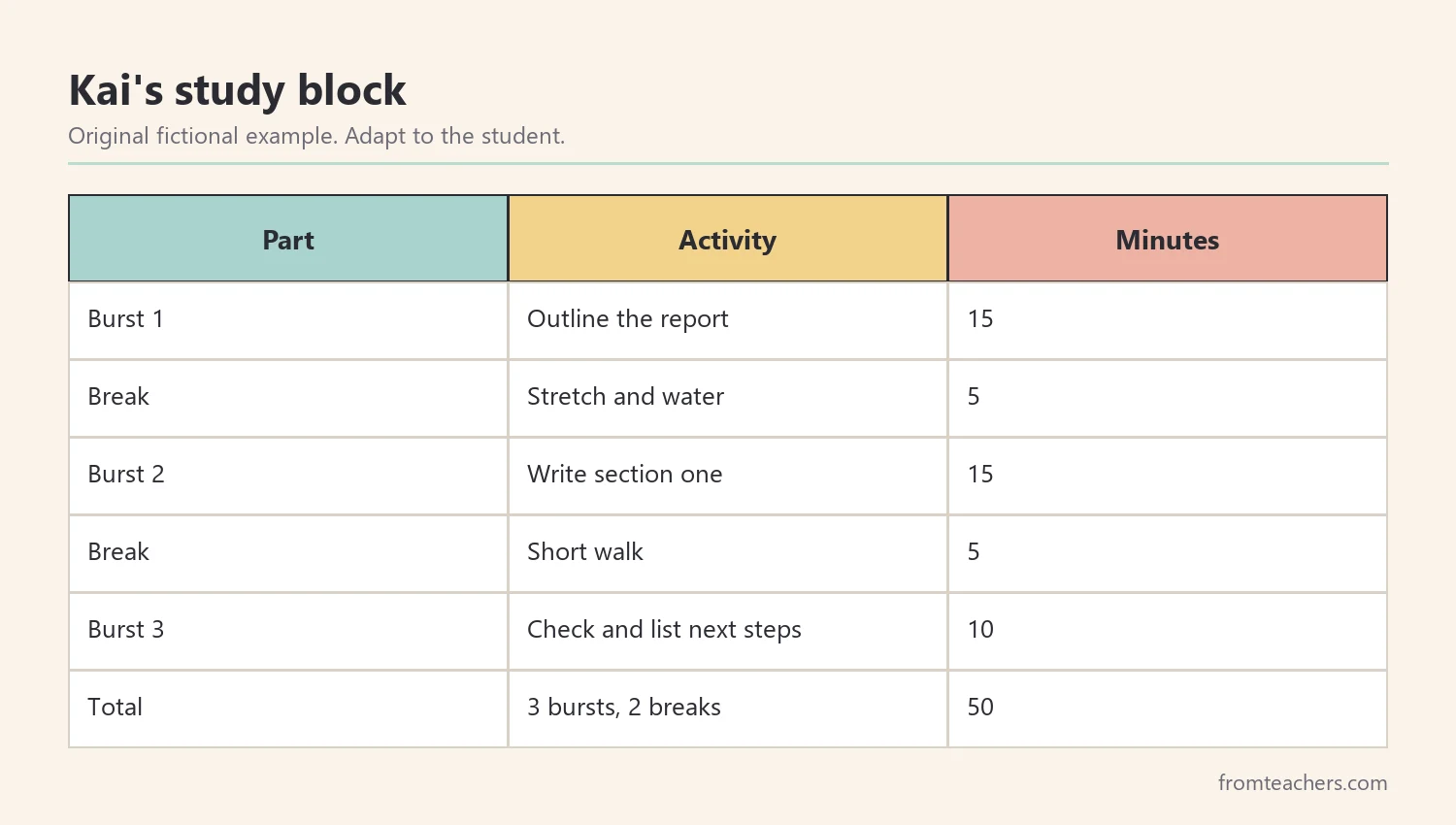
In addition, build study blocks for longer work. A study block combines several bursts with planned breaks. For example, three fifteen-minute bursts with two five-minute breaks make a manageable hour of focused work.
Meanwhile, teach students to slow down, too. Some students rush to finish instead of running out of time. A timer can remind them to pace themselves, not just to hurry. Strong executive functioning skills include knowing when to slow down.
Worked example. Mr. Ellis sets up a study block for Kai: 15 minutes to outline, a 5-minute stretch, 15 minutes to write, a 5-minute walk, and 10 minutes to check and list next steps. That is 40 minutes of work and 10 minutes of breaks, or 50 minutes in total.
4. Set reminders and plan transitions
Next, support memory and switching. Students with executive function challenges often forget materials, homework, or due dates. They may also struggle to move from one activity to another. Reminders and transition routines help with both.
First, teach students to set their own reminders. Ask: what do I need to remember, and when will I need it? Then choose a tool, such as a planner, a sticky note, or an alarm with adult permission. Finally, put the reminder where they will see it at the right time.
Also, keep reminders clear and simple. “Bring science report Friday” is better than “Science.” A specific reminder tells the student exactly what to do.
In addition, plan transitions. Moving between tasks can be hard. A short routine helps: notice the signal that it is time to switch, finish or mark your stopping point, put materials away, get new materials, and listen for the new directions.
Give warnings before transitions
Then, give warnings before transitions. “Five minutes left” helps students prepare to switch. A visual schedule for the day also reduces surprises.
Meanwhile, remember that memory and switching are executive functioning skills in their own right, not signs of a poor attitude. A student who forgets a folder or struggles to stop drawing when math begins needs a routine, not a lecture. Practice the transition routine a few times when nothing is at stake, and praise smooth switches when they happen.
Also, use the same reminder tools across classes when you can. If every teacher points to the same planner page or posted schedule, students build one habit instead of several. Consistent tools are one of the simplest ways to support executive functioning skills across a whole school day.
Worked example. Kai often forgets to bring finished homework. Mr. Ellis helps him write a sticky note, “Report in blue folder, put in backpack tonight,” and place it on his pencil case. The next morning, Kai hands in the report on time.
5. Check work and review executive functioning skills
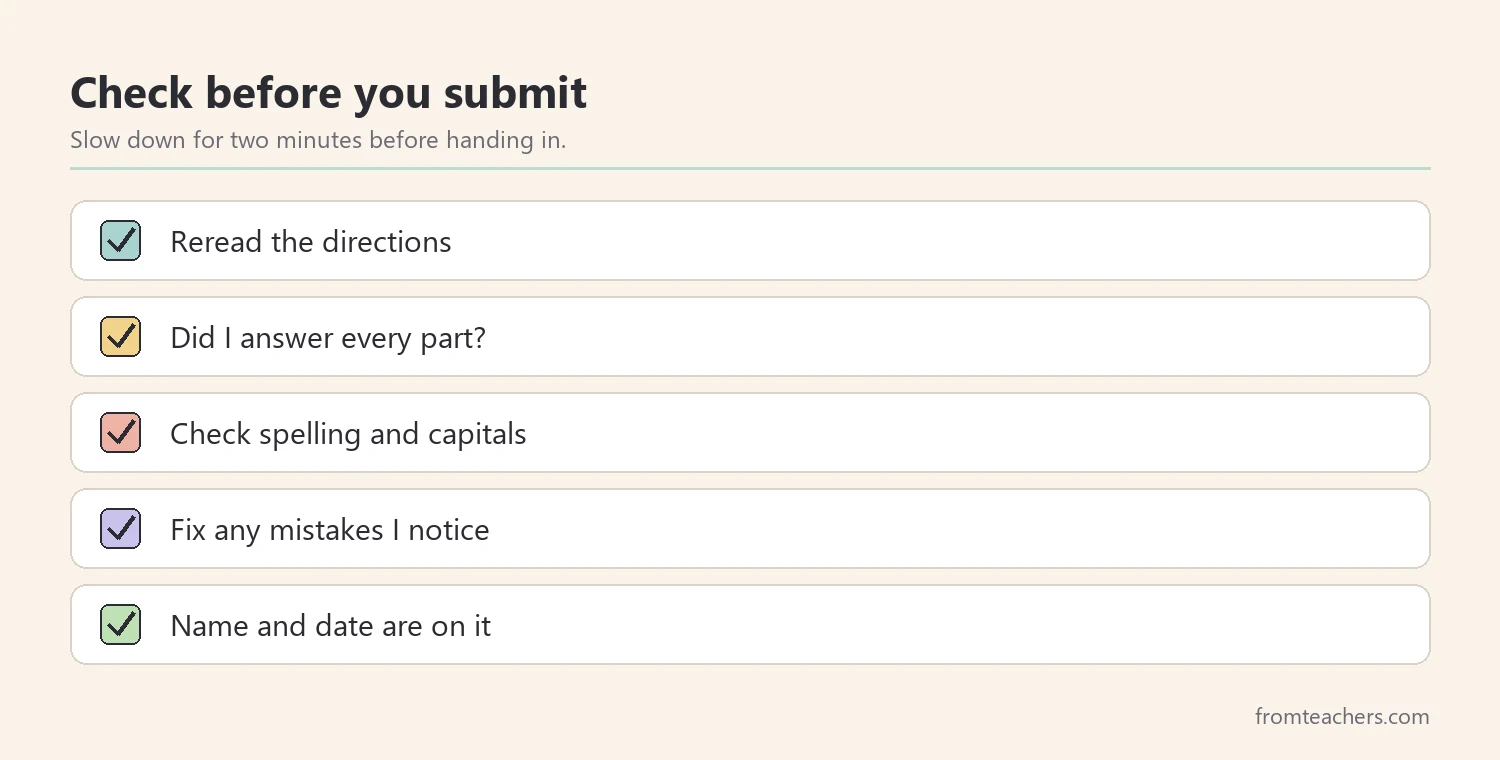
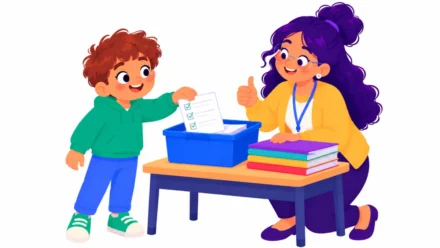
Finally, teach students to check before they submit. A short routine catches many small errors. Students reread the directions, check that every part is answered, look at spelling and capitals, fix mistakes, and make sure their name is on the page.
Next, track progress over time. A simple record of assignments due and turned in on time shows whether strategies are working. You can also note which strategies the student used.
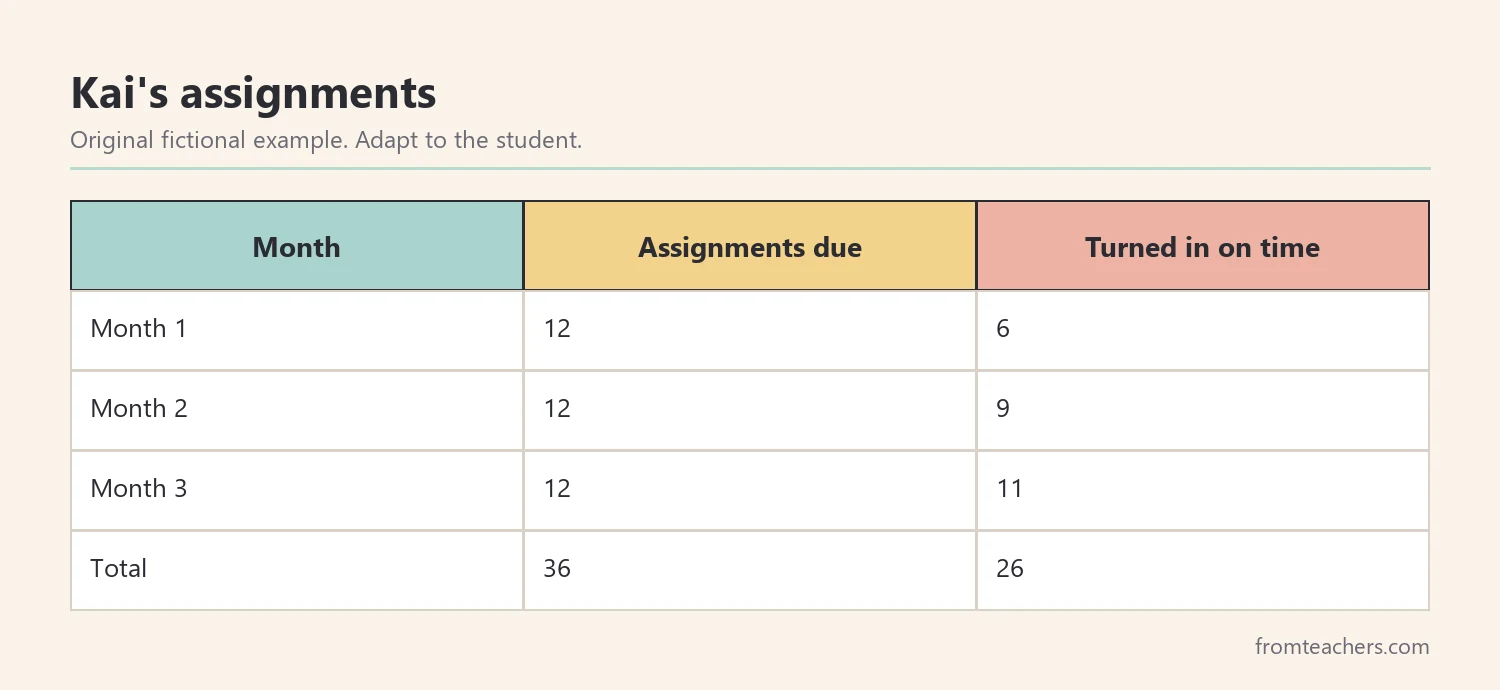
Also, review with the student regularly. Ask which strategies help most and which feel hard. Adjust the plan together. Students who see their own progress often feel more motivated to keep using their executive functioning skills.
In addition, share strategies with families. The same checklists, timers, and reminders can be used for homework. Consistent routines at home and school help skills become habits.
Then, fade support slowly. As students get better at a strategy, reduce prompts. Keep visual supports available, since everyone has busy weeks when extra structure helps.
Worked example. Mr. Ellis tracks Kai for three months. In month 1, Kai turns in 6 of 12 assignments on time. By month 2, he turns in 9 of 12. In month 3, he turns in 11 of 12. Across three months, that is 26 of 36 assignments on time.
Teaching executive functioning skills to the whole class
Many executive functioning skills help every student, not just those with extra needs. So, teach them to the whole class. A short lesson on breaking down tasks or setting reminders at the start of a unit gives everyone a useful tool.
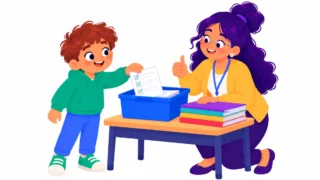
Also, build strategies into routines. Post the steps for checking work near the turn-in tray. Use a visual timer during independent work. Write the day’s schedule on the board. These small habits support students quietly every day.
In addition, model your own planning. Think aloud as you plan a lesson or set a reminder: “This project is big, so I’ll break it into three parts.” Students learn executive functioning skills by watching adults use them.
Finally, teach one strategy at a time. Introducing ten strategies at once is overwhelming. Choose the one that fits the class’s biggest need, practice it for a few weeks, then add another.
Common mistakes and how to avoid them
- Calling a student lazy or careless. It blames instead of helps. Fix: look for the specific sticking point.
- Teaching many strategies at once. Students cannot use them all. Fix: teach one, practice it, then add the next.
- Giving vague reminders. Students forget what they meant. Fix: make reminders specific.
- Long work periods with no breaks. Focus fades. Fix: use short bursts and study blocks.
- Doing the planning for the student. They do not learn the skill. Fix: guide them through the steps.
- Removing support too fast. Progress slips. Fix: fade prompts slowly.
Questions teachers and parents ask about executive functioning skills
What are executive functioning skills?
They are the mental skills people use to plan, organize, start tasks, manage time, remember, and check their work. Students use them all day, in every subject.
Are executive function challenges only linked to ADHD?
No. Executive function challenges are common in ADHD, but they also appear in autism, learning disabilities, and in students with no diagnosis. Any student can benefit from clear strategies.
How long does it take to build these skills?
It varies. Some students pick up a strategy in a few weeks, others need months of practice. Steady, regular use matters more than speed.
Can executive function strategies be part of an IEP?
Yes, executive function goals and supports often appear in IEPs and 504 plans. The student’s team decides the specific goals. Simple data on assignments and strategy use can help.
How can parents help at home?
Parents can use the same checklists, timers, and reminders for homework, and help their child plan big projects backwards. Calm, consistent routines help more than strict rules.
Related reading: ADHD in Children: A Guide to Effective Classroom and Home Support, Effective ADHD Classroom Strategies to Support Student Success, and 5 Practical Teaching Tips to Boost Classroom Focus and Learning.
A companion resource for executive functioning skills:
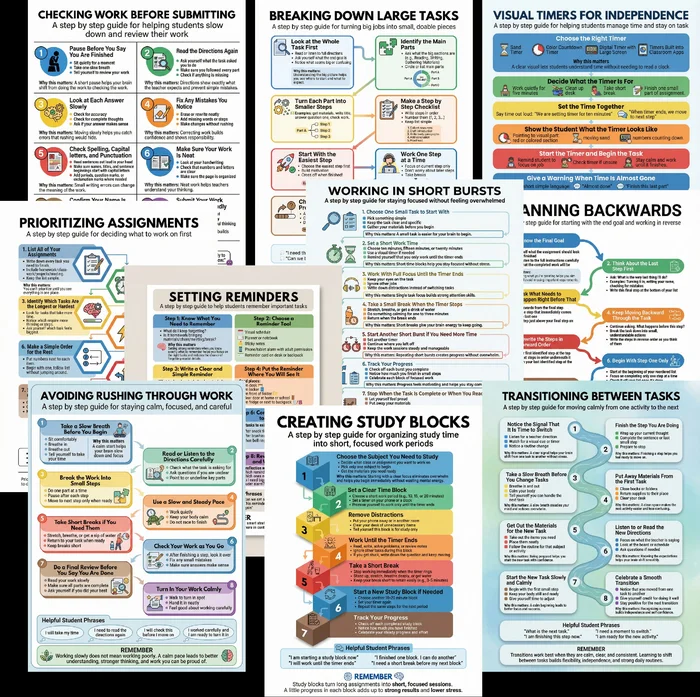
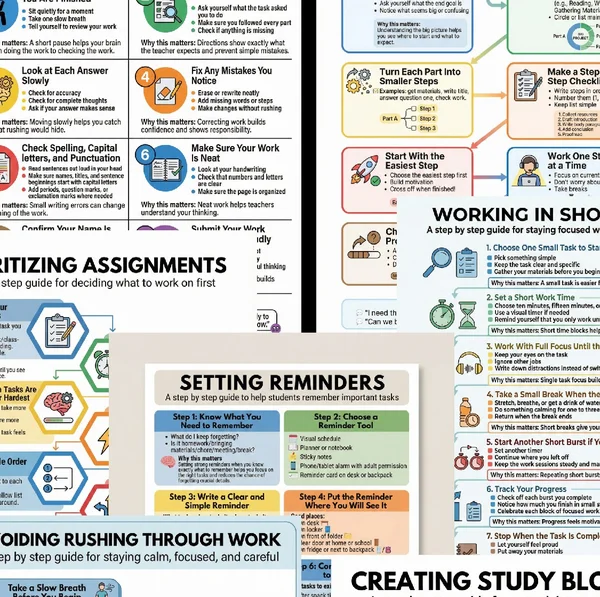
Executive Functioning for Daily Success: 10 Classroom Posters: a set of ten step-by-step guides for planning, managing time, and finishing work. Each poster includes numbered steps and helpful student phrases, for ADHD support and special education classrooms.
Sources and scope
- Center on the Developing Child, Harvard University: information on executive function and how it develops.
- CHADD: information and support related to ADHD for families and educators.
- Understood.org: family-friendly information on executive function and learning differences.
- IRIS Center, Vanderbilt University: free modules on instruction and student supports.
This guide covers everyday classroom and home strategies for planning, time, and finishing work. It does not replace evaluation, diagnosis, treatment, or the decisions of the student’s support team.
Key takeaways
- Executive functioning skills can be taught with clear steps.
- Find the exact sticking point before choosing a strategy.
- Break tasks down, prioritize, and plan backwards.
- Use timers, short bursts, and specific reminders.
- Check work before submitting, and track progress over time.







Leave a Comment