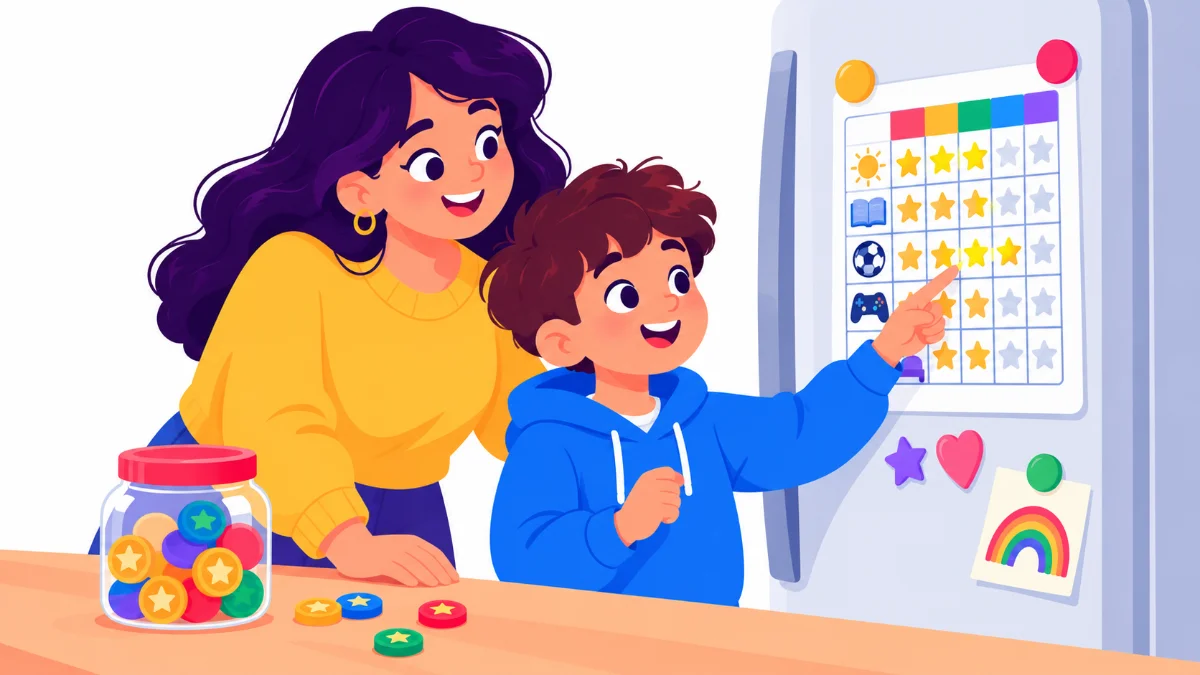

A reward system not working is one of the most frustrating things a parent can face, because it usually started so well. Picture a Thursday evening. Theo, age 7, earned stickers every night last week for getting ready for bed on time, but tonight he shrugs at the chart and says, “I don’t care about stickers anymore.”
This list is for parents and caregivers who use charts, tokens or small rewards at home. It covers seven common signs that a system has stopped helping, what each sign usually means, and a simple fix. By the end, you will know how to tell a bad week from a broken system, and how to keep a short record that shows what is really changing.
Examples are fictional. Adapt to the student’s goals and agreed supports. This is guidance, not a diagnosis.
At a glance
- A bad day is not a broken system: look for patterns over a week or two.
- Rewards lose power when they are too slow, too hard or always the same.
- Praise and connection matter as much as the prize.
- Change one thing at a time so you can tell what helped.
- A short written log makes these signs much easier to see.
How this list is ordered
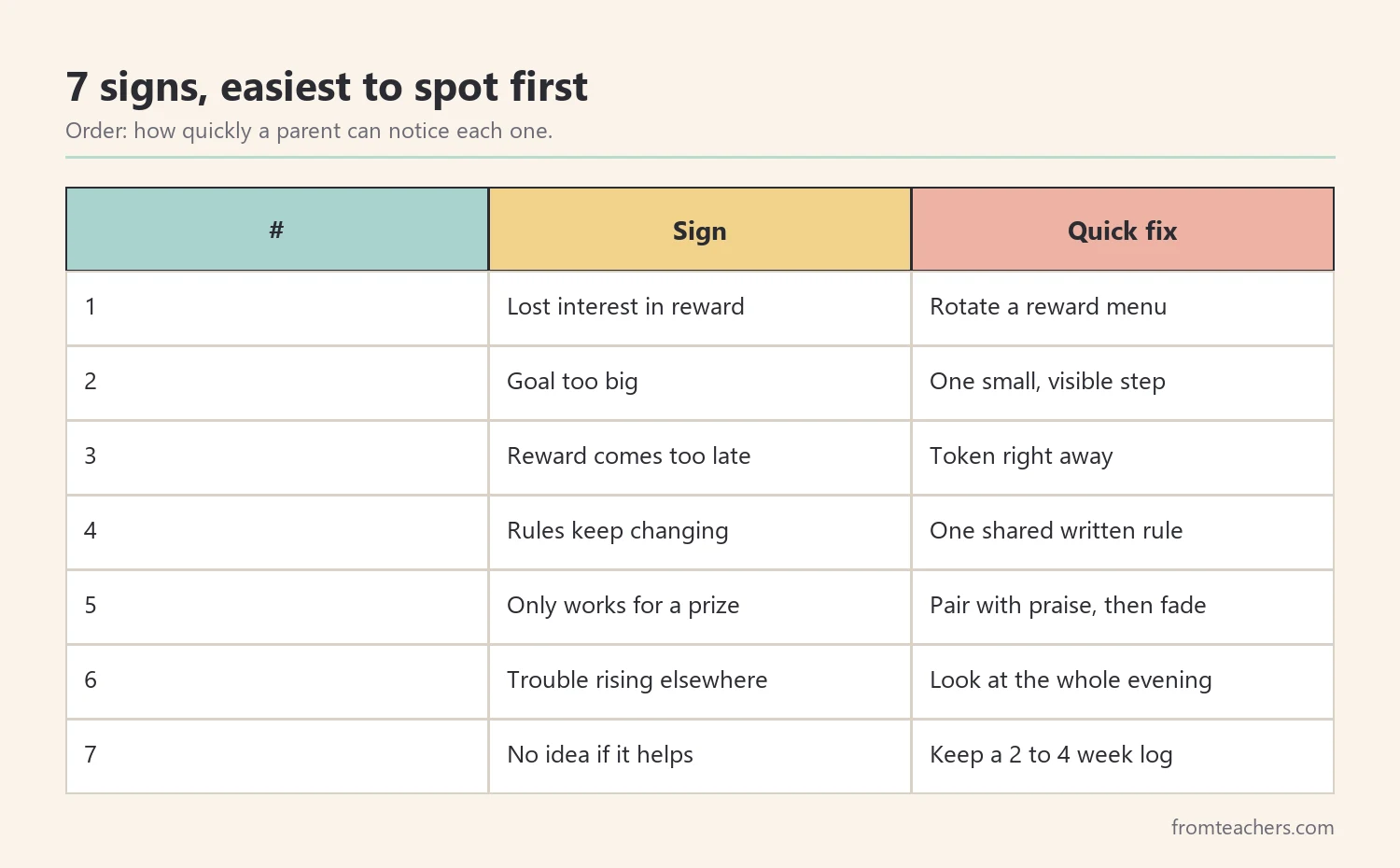
We did not rank these signs by how serious they are. Instead, they follow a practical order: the first signs are easy to notice in a single evening, while the later ones only show up when you look back over a few weeks. Therefore, the list also works as a checklist you can run through on a Sunday night.
Before you start, remember that every child has off days. Illness, a new baby, school stress or a late night can make any system wobble. The signs below matter when they repeat.
1. Your child has lost interest in the reward
The clearest sign of a reward system not working is simple: the prize no longer matters. Children’s interests change fast. What felt exciting in September may feel babyish by November.
What it usually means: the reward has become too familiar, or your child has enough of it already. A sticker loses value after the twentieth one, just as a favorite snack does.
The fix: ask your child to help build a short menu of rewards, including non-material ones such as choosing the dinner, ten extra minutes of reading together, or a trip to the park. Then rotate the menu every couple of weeks.
Example: Theo’s parents made a menu with four choices. He picked “build Lego with Dad” most nights, which cost nothing and gave him time together. Two weeks later, he started choosing “pick the bedtime story” instead, so the menu kept doing its job.
2. The target behavior is too big
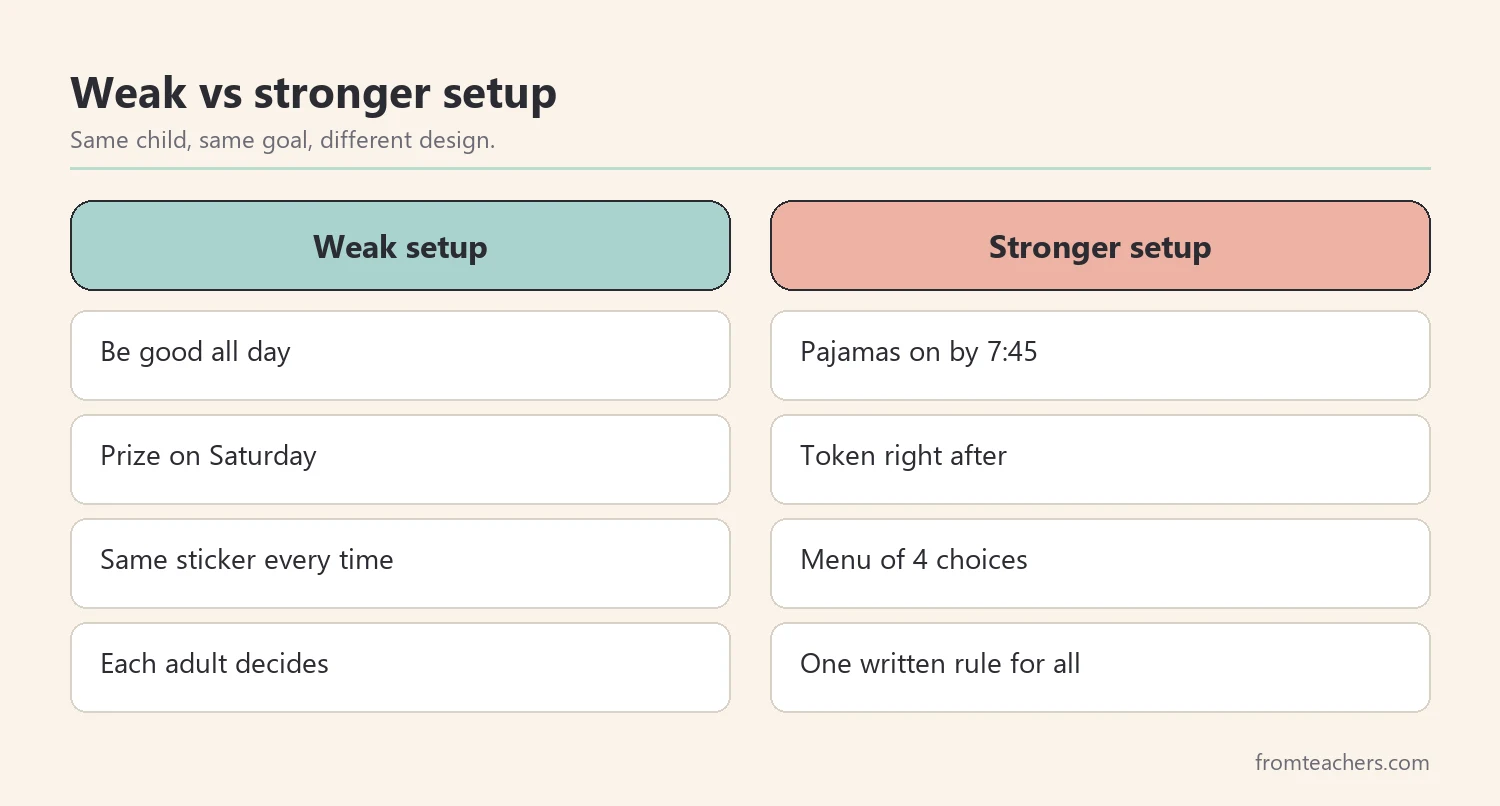
Next, look at what you are asking for. “Be good all day” or “no tantrums” is a huge goal for a young child. If your child rarely earns the reward, the system quickly feels pointless.
What it usually means: the step is too large. Children need to succeed often at the beginning to believe the system is fair.
The fix: break the goal into one small, visible action. For example, “pajamas on by 7:45” is clearer than “good bedtime.” Once your child succeeds most days, add the next step.
Example: Theo’s chart first said “easy bedtime.” His parents changed it to “pajamas on and teeth brushed by 7:45,” and he earned it on four of the next five nights.
3. The reward comes too late
A reward at the end of the week is a long way off for a seven-year-old. When the gap is too long, children struggle to connect what they did on Monday with the treat on Saturday.
What it usually means: your child needs something sooner. Younger children and many children with attention difficulties often respond better to quick feedback.
The fix: give a small, immediate marker, like a token or a check, right after the behavior. Then let tokens add up to a bigger choice later. In addition, say exactly what your child did: “You put your pajamas on the first time I asked.”
Example: Theo moved from one weekly prize to a token each night, with three tokens buying a menu choice.
4. The rules keep changing
Sometimes the problem is the adults, not the child. One parent gives the reward for “almost,” the other does not. A grandparent gives the prize anyway. Bit by bit, the system loses meaning.
What it usually means: your child is unsure what counts. When rules feel random, children test them or stop trying.
The fix: write the target behavior and the reward in one sentence, and make sure every adult at home uses it the same way. Keeping a simple shared log helps a lot. A ready-made positive reinforcement tracking sheet gives you space for the targeted behavior, the chosen rewards and a log of date, type of reward, frequency, response and notes, so everyone can see what was agreed.
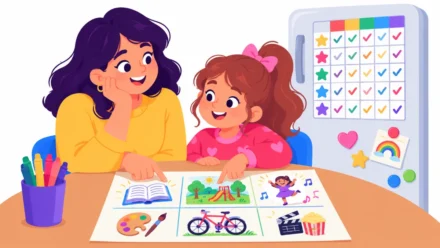
Example: Theo’s parents pinned the sheet on the fridge. Each adult added a line when they gave a token, which ended the “Mom said yes, Dad said no” debates.
5. Behavior is good only when the reward is on offer
Another sign is a child who asks, “What do I get?” before every small request. The behavior happens, but only as a trade.
What it usually means: the system has leaned too heavily on prizes and too little on praise, connection and natural rewards. That is common when a chart has run for many months.
The fix: keep rewarding the target behavior, but pair every reward with specific praise. Then slowly space out the prizes while keeping the praise. For instance, move from a token every night to a token on most nights, then to a surprise token now and then.
Example: After a month, Theo’s parents gave tokens on about four nights a week and praised him every night. His bedtime stayed steady.
6. Problem behavior is rising elsewhere
Occasionally, a reward system fixes one moment and creates trouble in another. A child who must hold it together at bedtime may melt down after dinner instead.
What it usually means: the goal may be asking for more self-control than your child has at that time of day, or something else is going on, such as tiredness, hunger or stress at school.
The fix: look at the whole evening, not only the target moment. Write down when difficult moments happen and what came just before. If behavior changes suddenly or feels worrying, talk with your child’s teacher or pediatrician.
Example: Theo’s log showed that hard evenings came after late soccer practice. His parents moved bedtime routines earlier on those days.
7. You cannot tell whether anything has changed
Finally, the quietest sign of a reward system not working is uncertainty. Weeks go by, and you honestly do not know if things are better. Memory tends to hold on to the hardest nights.
What it usually means: you need a record, not a better reward. Without notes, it is hard to judge any system fairly.
The fix: keep a short log for two to four weeks. Count how often the target behavior happened and how your child responded to the reward. Then look at the numbers together on a weekend.
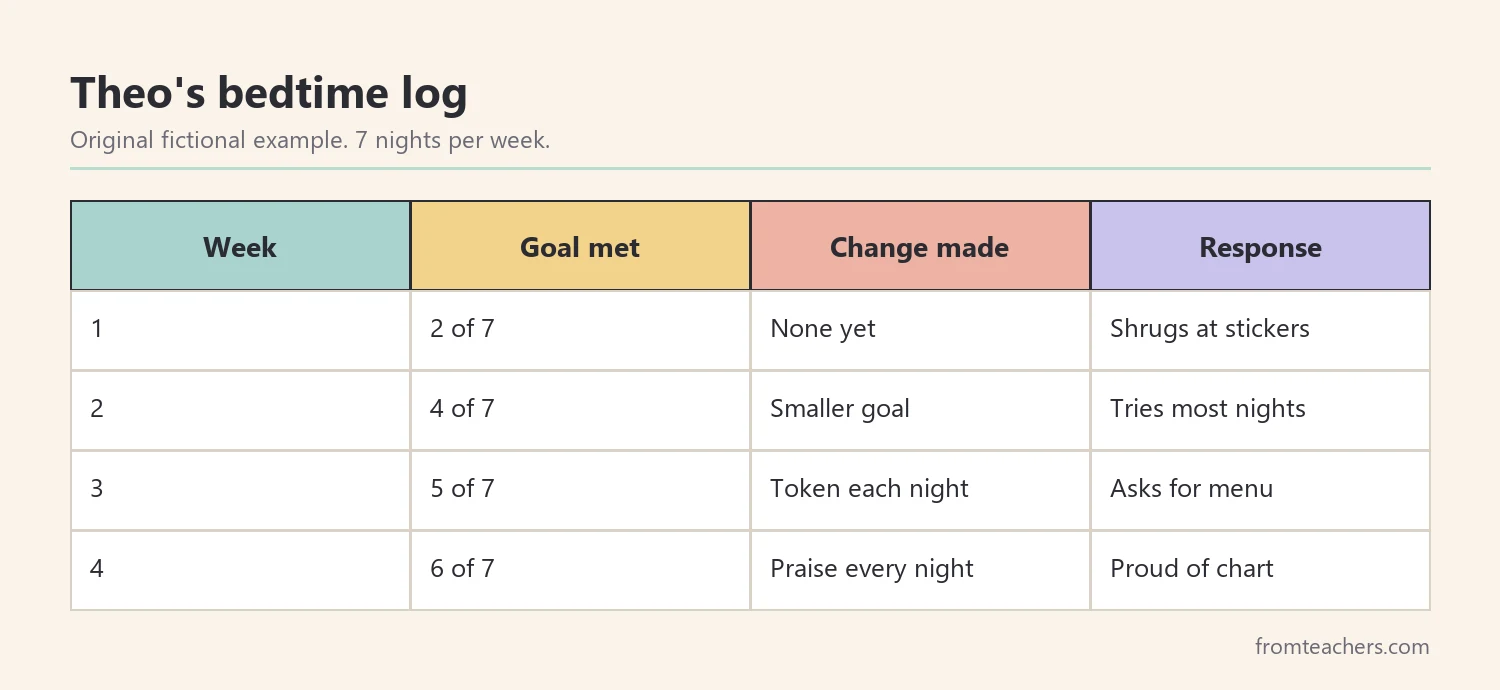
Example: Theo’s log showed bedtime success rising from two nights in week one to six nights in week four. Without the notes, his parents would have remembered only the two hard nights.
What to do once you spot a sign
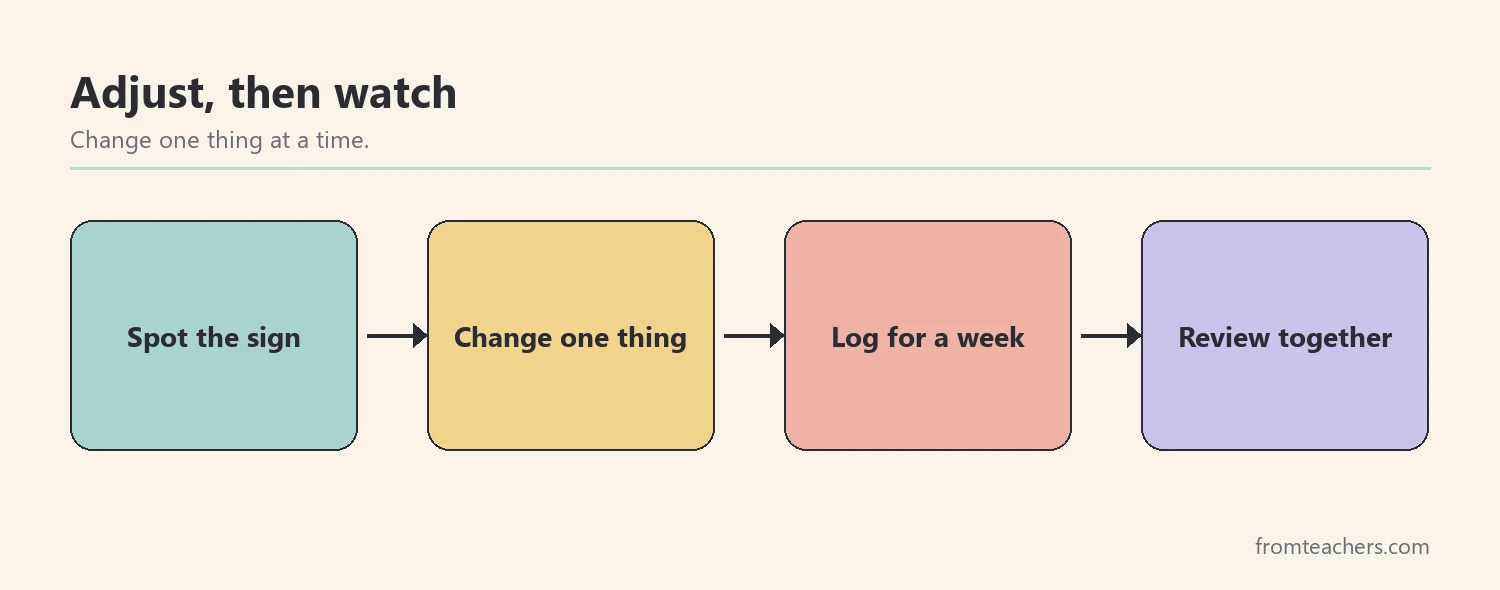
Change one thing at a time. If you change the reward, the goal and the timing all at once, you will not know which change helped. Give each change about a week, unless something is clearly not working for your child.
Also, involve your child. Ask what feels fair and which rewards they would choose. Children who help design a system usually care more about it. Even a five-year-old can point to a favorite choice on a picture menu.
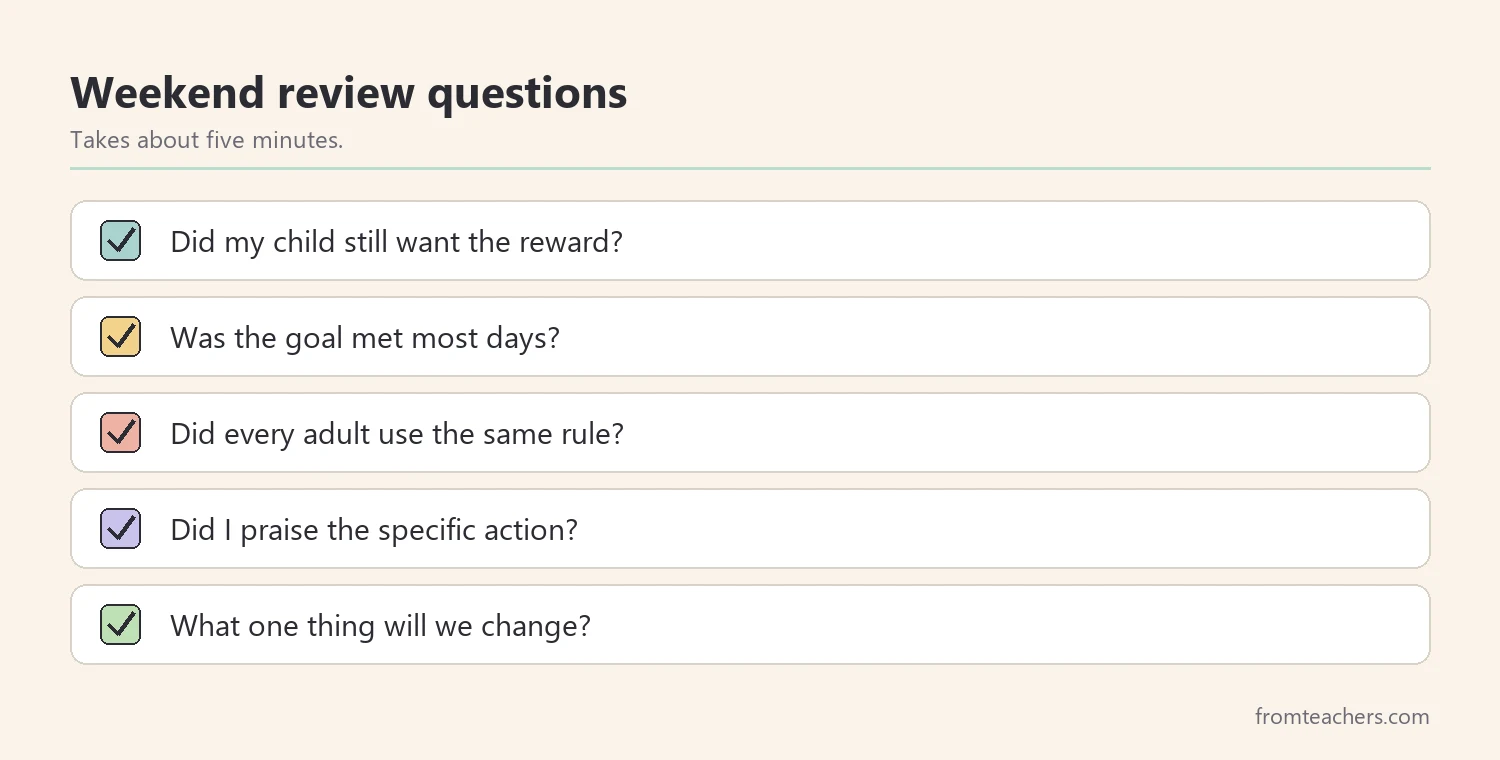
Finally, keep the tone warm. A reward system is meant to notice what your child does well, not to keep score of every mistake. If the chart starts to feel like a source of arguments, step back, simplify the goal and spend a few calm evenings simply praising the small things that go right. Figure 4 lists quick questions to run through each weekend, and Figure 5 shows the four-part loop.
Common mistakes parents make when fixing a reward system
- Taking earned rewards away as punishment. Fix: keep earned rewards earned, and handle other behavior separately.
- Making the reward bigger and bigger. Fix: change the type of reward, not the size.
- Giving up after one bad week. Fix: look at two to four weeks of notes first.
- Comparing siblings out loud. Fix: give each child their own goal and their own chart.
Questions parents ask about a reward system not working
How long should I try a reward system before changing it?
Many families give a new system about one to two weeks before making a change. That is long enough to see a pattern but short enough to avoid a month of frustration. Keep notes so the decision is based on more than one hard night.
Are rewards the same as bribes?
Not quite. A bribe is offered in the middle of a problem to make it stop. A reward is agreed in advance and given after the behavior happens. Planning ahead makes the difference.
Should rewards ever stop?
Usually, the goal is to fade prizes slowly while praise and routine keep the behavior going. Some children need support longer than others, and that is fine.
Can I use the same system my child’s teacher uses?
Often, yes, and it can help. Ask the teacher which behavior and words they use, so home and school feel consistent for your child.
When should I ask for professional help?
If behavior is unsafe, changes suddenly, or keeps getting worse despite a fair system, talk with your pediatrician, school counselor or a behavior specialist.
Related reading: Moving Beyond Shame and Behavior Charts, ADHD in Children: A Guide to Classroom and Home Support, and How Parents and Teachers Can Team Up.
You may also need: Weekly Behavior Chart for Kids, editable reward chart for home.
A companion resource for a reward system not working:
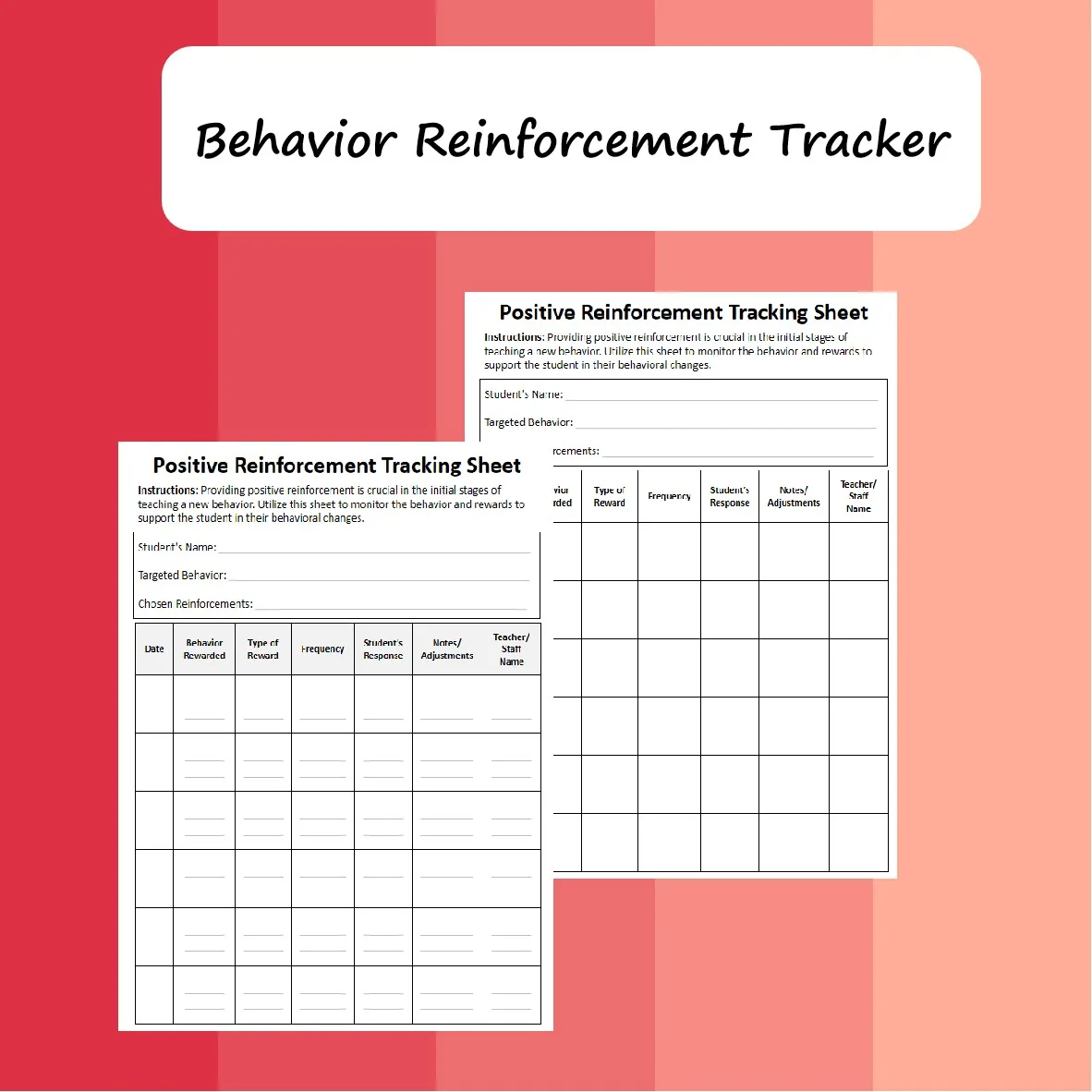
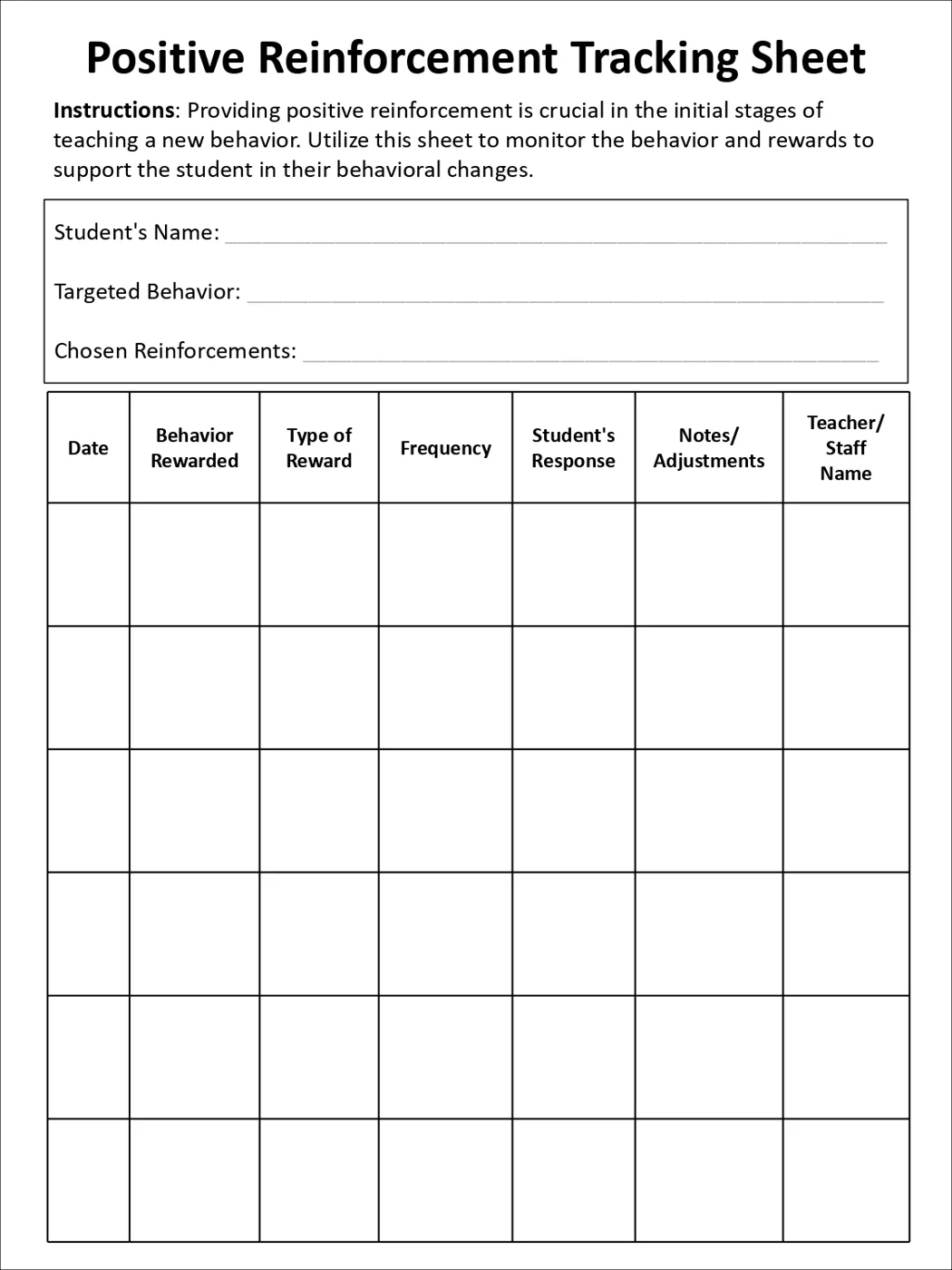
Positive Reinforcement Tracking Sheet Editable Behavior Data Collection Form: a two-page editable tracking sheet with space for the targeted behavior and chosen reinforcements, plus a log for date, behavior rewarded, type of reward, frequency, response, notes and adjustments.
Sources and scope
- HealthyChildren.org (American Academy of Pediatrics): parenting information, including positive discipline and behavior at home.
- Center on PBIS: resources on positive behavior support at school and at home.
- Understood.org: family-friendly articles on behavior, attention and learning differences.
- Center for Parent Information and Resources: information for families about behavior support and working with schools.
This guide covers everyday reward systems that families use at home for routines and daily behavior. It does not replace advice from a pediatrician, psychologist or behavior specialist, especially for unsafe or sudden changes in behavior.
Key takeaways
- A reward system not working usually shows clear, fixable signs.
- Keep goals small and rewards quick, varied and paired with praise.
- Make sure every adult at home uses the same rules.
- Change one thing at a time and give it about a week.
- A short log turns worry into information you can act on.





Leave a Comment