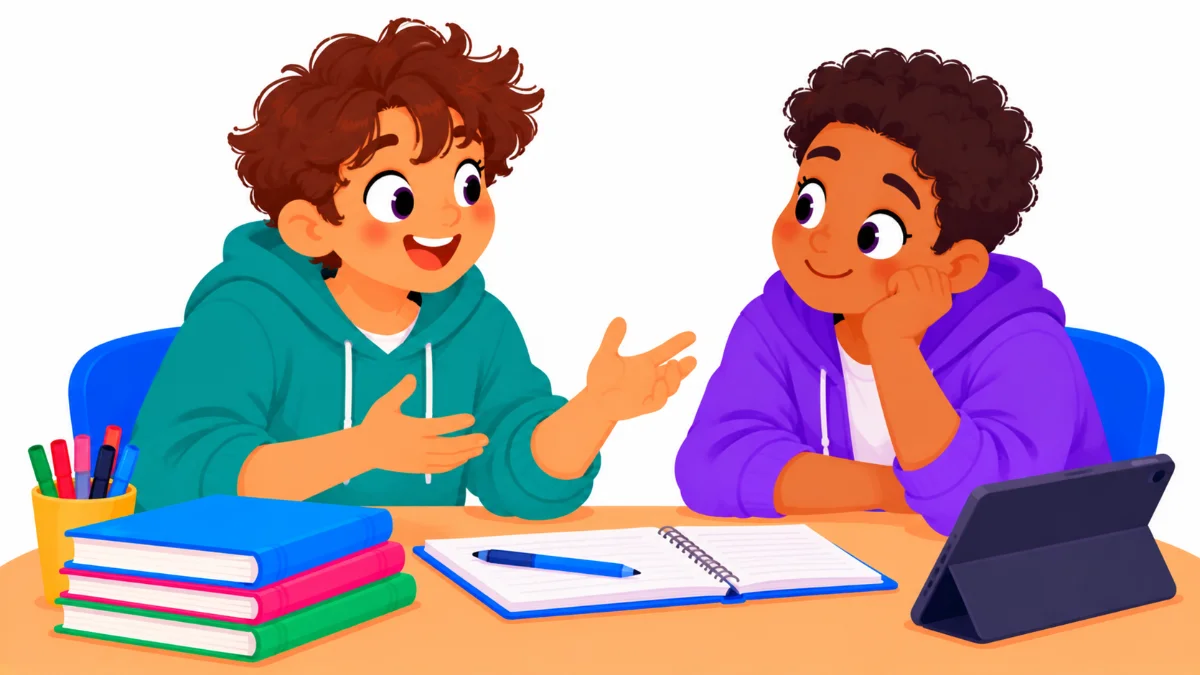

Respectful communication is how students speak, listen, and respond to others kindly and clearly. Picture a sixth grader in a group project who keeps cutting in. Her ideas are good, but her classmates stop listening, and she feels ignored. She is not trying to be rude. Simply put, she has not yet learned how to share her voice while making room for others.
This guide gives you five steps to teach respectful communication: define it together, teach kind and clear speaking, build listening and turn-taking, respect space and breaks, and practice every day. By the end, you will have a simple plan for classrooms, small groups, and counseling sessions.
Examples are fictional. Adapt to the student’s goals and agreed supports. This is guidance, not a diagnosis.
At a glance
- Respectful communication covers speaking, listening, and boundaries.
- Kind words, a calm tone, and clear I statements help students be heard.
- Listening, asking questions, and taking turns show care for others.
- Personal space and breaks are part of respect, too.
- It is a skill students practice every day, with support and patience.
1. Define respectful communication together
First, build a shared meaning. Students hear “be respectful” often, but the word means different things to different people. A clear class definition helps everyone aim for the same target.
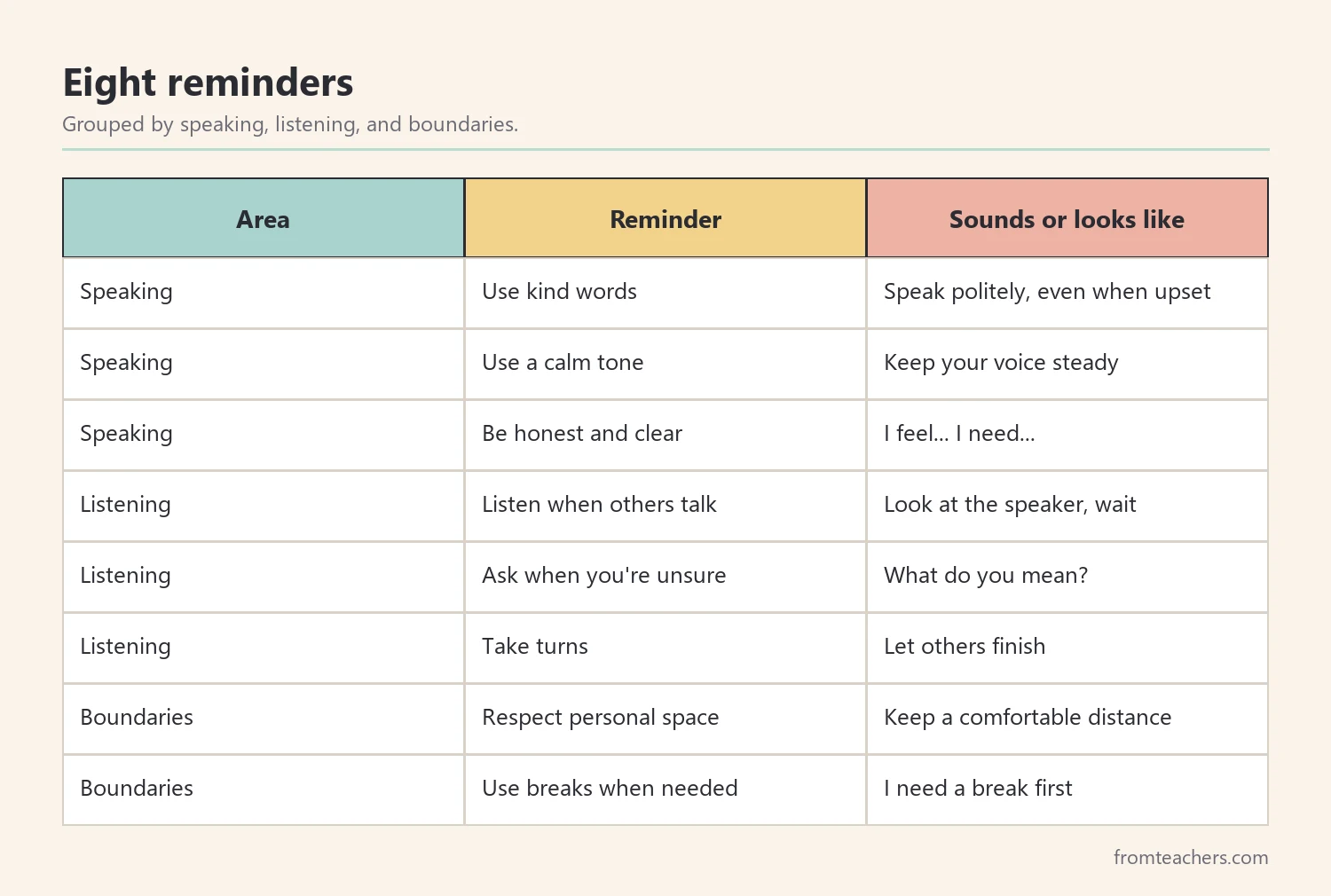
Next, break it into three areas. Speaking is how we use words and tone. Listening is how we show others we care about their message. Boundaries are how we respect space and our own limits. Respectful communication needs all three.
Also, ask students what respect looks like and sounds like. Write their ideas on chart paper. Students often name real examples, such as “no eye-rolling” or “don’t talk over people.” Then, rephrase each idea in positive words, such as “keep your face friendly” or “let others finish.”
In addition, explain why it matters. Kind words build trust. Listening prevents misunderstandings. Clear words help people understand each other. When students see the purpose, they are more likely to try.
Moreover, connect the definition to real places. Respectful communication in a group project looks a little different from respectful communication on the bus or in a counseling session. Ask students how the reminders change in each setting. This helps them adjust rather than follow one script everywhere.
Then, keep the list short. Eight reminders are plenty for most classes. Each one should be easy to remember and easy to practice. You can teach a few at a time across several weeks.
Worked example. Sofia is a fictional sixth grader. Her teacher, Mr. Delgado, leads a class talk about respect. Sofia says, “Respect is when people actually listen to you.” Mr. Delgado adds it to the chart under listening and thanks her for a great point.
2. Teach kind and clear speaking
Now, focus on how students use words. Three reminders guide this step: use kind words, use a calm tone, and be honest and clear. Together, they help students be heard without hurting others.
First, teach kind words. Kind words mean speaking politely, even when you are upset. They also mean avoiding hurtful or teasing language and thinking before you speak. Kind words create safety and trust, which makes conversations work better.
Next, teach a calm tone. Tone changes the meaning of words. “Fine” can sound friendly or angry. Practice keeping a steady voice, taking a breath before responding, and speaking at a comfortable volume. A calm tone helps conversations stay safe and supportive.
Also, teach honest and clear words. Students can say what they feel or need in simple words and avoid exaggeration or blame. I statements are a strong tool here. “I feel…” or “I need…” helps students express themselves respectfully, without attacking the other person.
Prepare phrases for hard moments
In addition, prepare a few ready phrases for hard moments.
| Situation | Respectful phrase |
|---|---|
| You disagree | I see it differently. Here’s why. |
| You feel left out | I’d like to help too. What can I do? |
| Someone is too loud | Could we talk a bit more quietly? |
| You made a mistake | I’m sorry. I’ll try to fix it. |
Then, practice with role-play. Give students a hard moment, such as a classmate taking their seat, and let them try a you statement and an I statement. Ask the class which one would make the conversation go better. Short, real practice builds respectful communication faster than discussion alone.
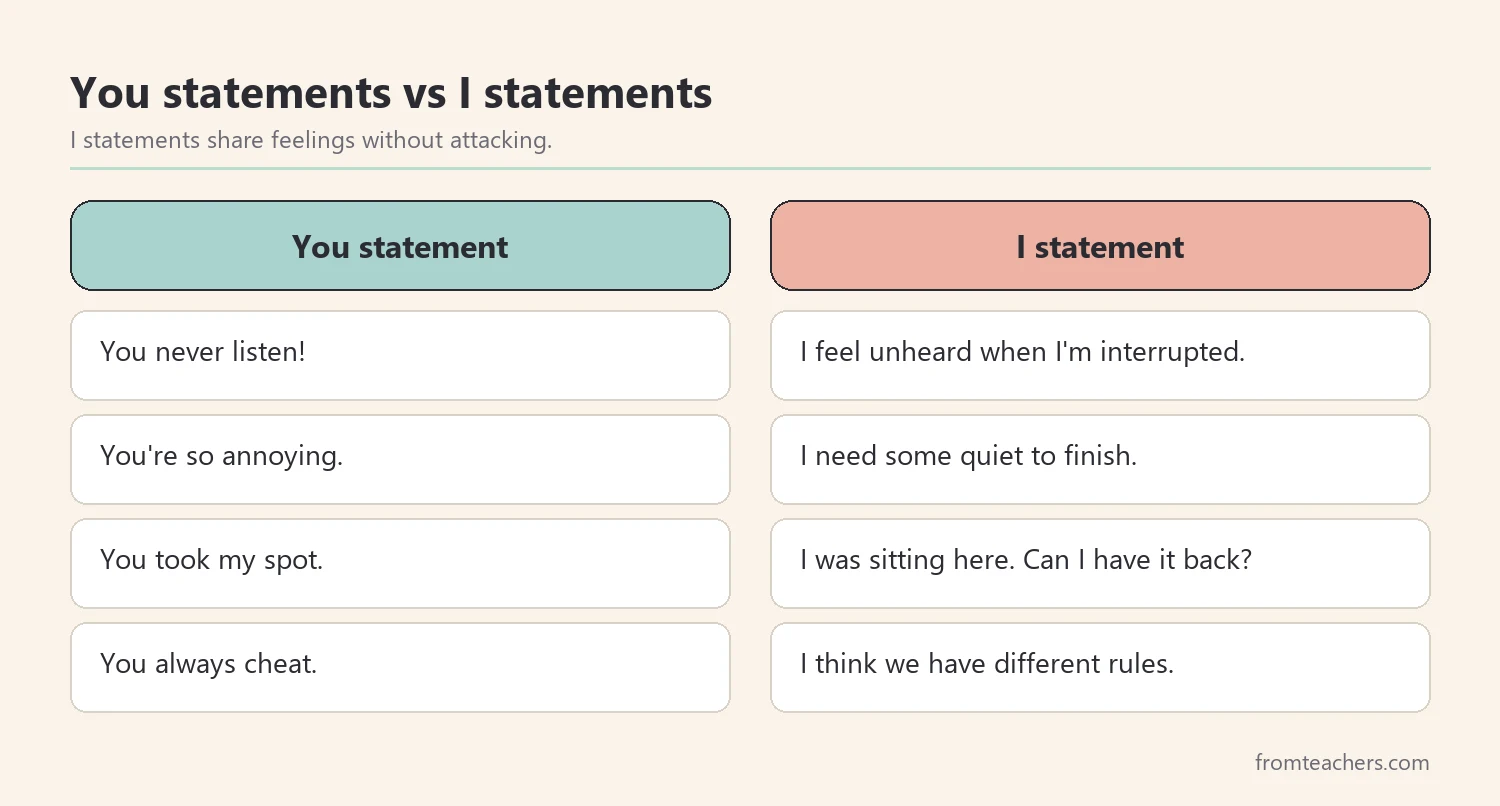
Worked example. In a role-play, Sofia practices responding when a partner ignores her idea. Her first try is, “You never listen!” With a prompt, she tries again: “I feel unheard. Can I finish my idea?” Her partner says the second version made him want to listen.
3. Build listening into respectful communication
Next, teach the listening side. Respectful communication is a two-way process. Three reminders help: listen when others talk, ask questions when you are unsure, and take turns in conversation.
First, teach listening. Students can look toward the speaker or in their direction, wait their turn to speak, and try to understand the message. Listening shows care and prevents misunderstandings.
Next, teach clarifying questions. Give students sentence starters such as “Can you explain that again?” “What do you mean?” or “I want to understand you better.” Asking questions shows that the student cares about understanding, instead of assuming.
Also, teach turn-taking. Students can let others finish their thoughts, share the talking time, and show interest by responding politely. Turn-taking builds patience and social awareness, and it helps students have balanced conversations.
For a ready classroom visual, the Respectful Communication Reminders poster shows students how to speak, listen, and respond kindly and clearly. Its eight reminders each include a “why this matters” note, which makes it useful for classrooms and counseling spaces.
Practice paraphrasing
Moreover, practice paraphrasing. After a classmate speaks, the listener repeats the main idea in their own words: “So you think we should start with the poster?” Paraphrasing proves the message was heard and gives the speaker a chance to correct any misunderstanding.
Then, use structures that support turns. A talking object, numbered roles in groups, or a simple “wait for the speaker to finish, then count to two” rule can help students who tend to interrupt. These structures remove guesswork.
Worked example. Mr. Delgado gives each group a small talking object. Sofia holds it while she shares, then passes it on. When she wants to jump in, she writes her idea on a sticky note instead. By the end of the week, she interrupts much less and her group adopts two of her ideas.
4. Teach respect for space and breaks
Now, cover boundaries. Respectful communication also includes how close we stand and when we step away. Two reminders guide this step: respect personal space and use breaks when needed.
First, teach personal space. Students can keep an appropriate distance, ask before touching someone, and notice others’ comfort levels. Physical boundaries are part of respect. When students learn them, others feel more comfortable and safe.
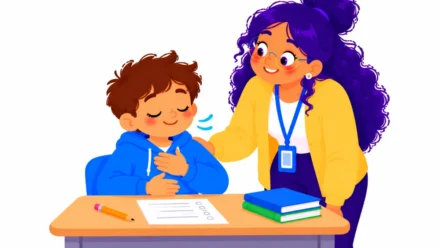
Next, teach healthy breaks. Sometimes the most respectful choice is to pause. Students can say, “I need a break before we continue” or “I’m feeling overwhelmed.” Then they step away respectfully and return when ready. Breaks prevent arguments and emotional overload.
Also, make breaks safe to ask for. Some students worry that asking for a break looks weak or rude. Explain that stepping away is a tool, not a failure. Model it yourself when appropriate.
Moreover, notice nonverbal signals. Crossed arms, a step back, or a turned face can mean a person needs more space. Teach students to notice these cues and respond, for example by stepping back or asking, “Is this okay?”
Then, consider individual needs. Students with sensory differences, anxiety, or autism may need more space or more frequent breaks. Work with the student’s support team so these needs are respected. Respectful communication should fit every learner, not only the ones who find conversation easy.
Worked example. During a heated group debate, Sofia feels her face get hot. She says, “I need a short break before I answer.” She steps to the window, takes a few breaths, and comes back to share her point calmly. Mr. Delgado quietly thanks her afterward.
5. Practice respectful communication every day
Finally, build daily practice. Respectful communication is a skill students practice every day, and everyone can improve with support and patience. Short, regular practice beats a one-time lesson.
In addition, choose one reminder of the week. Post it, model it, and notice it. For example, during “take turns” week, praise students who let others finish. Focused practice helps each reminder stick.
Also, give specific feedback. Say, “You used an I statement when you were upset. That helped your partner understand.” Specific praise teaches more than general comments.
Next, use quick check-ins during the day. Before a partner activity, ask students to name one reminder they will focus on. After the activity, ask how it went. These small moments take less than a minute and keep the skill fresh.
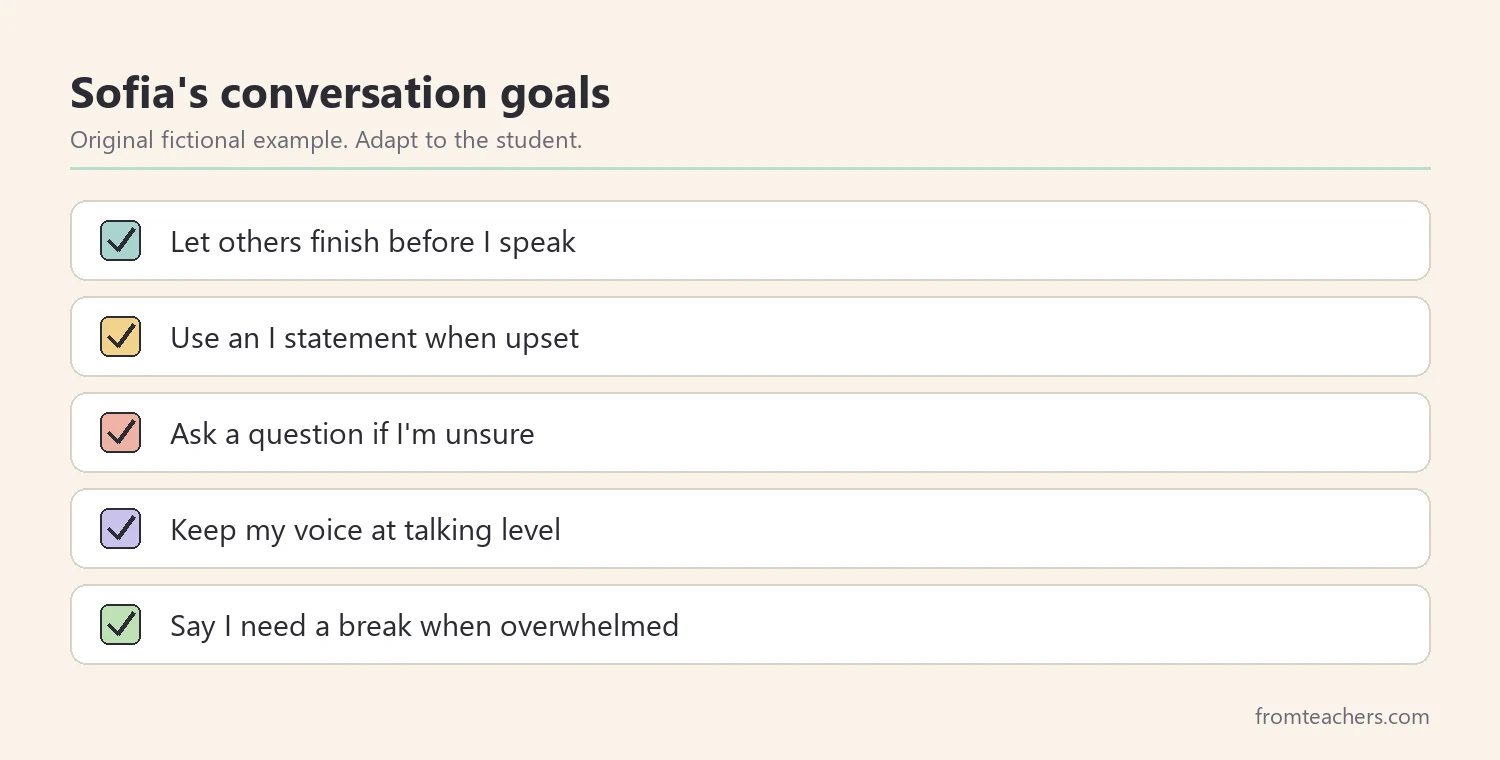
Then, help students set personal goals. A student who interrupts might focus on letting others finish. A student who shuts down might focus on asking questions. Track one goal for a few weeks and celebrate progress together.
Reflect after group work
Also, reflect at the end of group work. Ask each group to rate one reminder, such as taking turns, with a quick thumbs up, sideways, or down. Short reflections keep respectful communication visible without long lectures.
Moreover, involve families. Share the reminders and the student’s goal. Families can use the same language at home, which helps students practice respectful communication across settings.
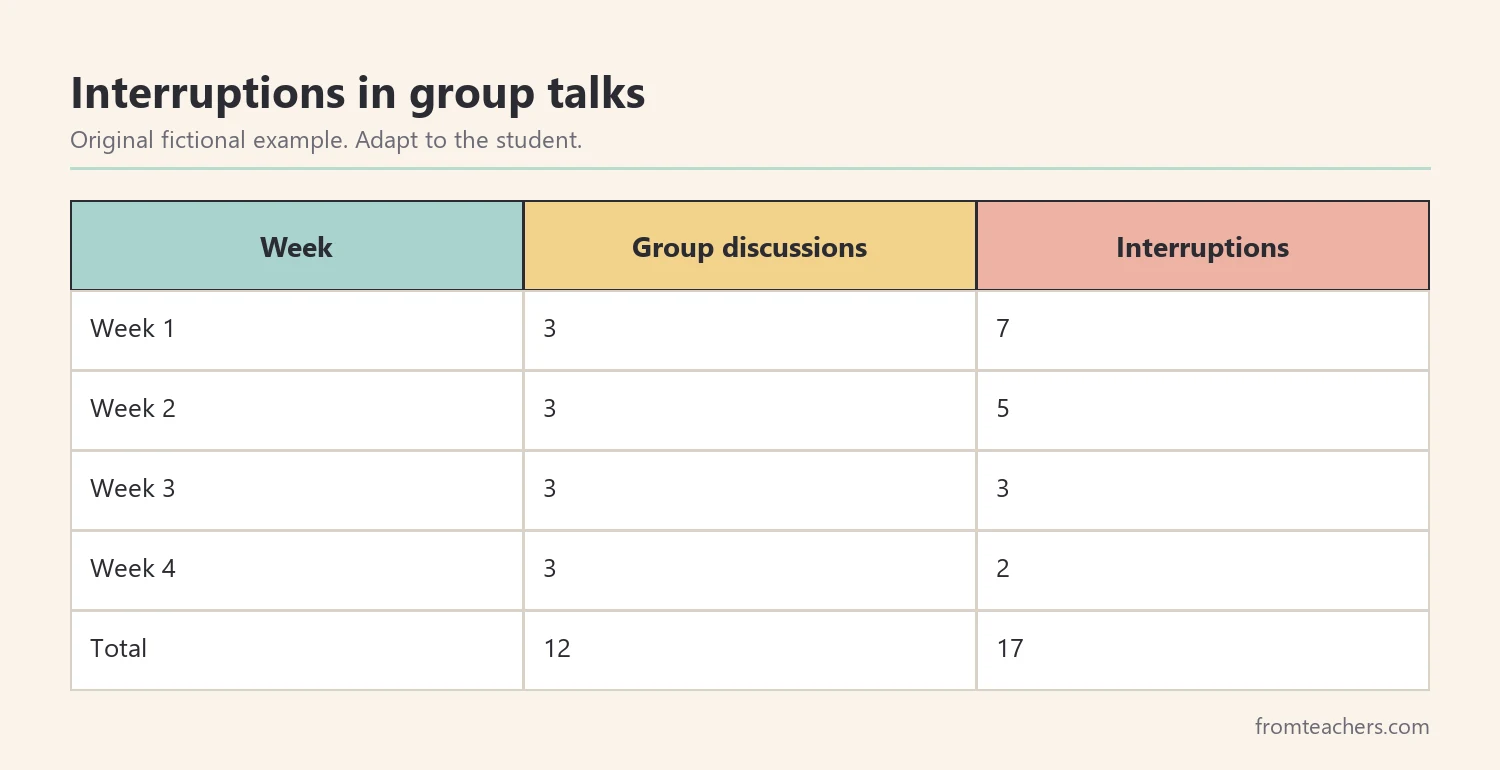
Worked example. Sofia’s goal is to let others finish. Mr. Delgado tracks her interruptions in three group discussions each week. She interrupts 7 times in week one, 5 in week two, 3 in week three, and 2 in week four, for 17 across 12 discussions. Sofia sets a new goal: asking one question per discussion.
A note on repair. Even with practice, students will sometimes say something unkind or talk over a friend. Teach a simple repair routine: notice it, say sorry in a sentence, and try again. For example, “Sorry I cut you off. Please finish.” Repair shows that mistakes are part of learning, and it often restores the conversation quickly. Adults can model repair too, which shows students that everyone makes communication mistakes sometimes.
Common mistakes and how to avoid them
- Saying “be respectful” without examples. Students may not know what it means. Fix: define it together with clear reminders.
- Teaching only speaking. Listening and boundaries matter too. Fix: cover all three areas.
- Treating breaks as rude. Students hold in feelings until they explode. Fix: teach breaks as a respectful tool.
- Correcting in front of the class. It can feel disrespectful. Fix: give private, calm feedback.
- One lesson only. Skills fade without practice. Fix: use a reminder of the week.
Questions teachers and parents ask about respectful communication
What age is this for?
The reminders fit many ages, from upper elementary through middle and high school. Younger students may need simpler words and more pictures. Older students can discuss the “why” in more depth.
What are I statements?
I statements describe your feelings and needs, such as “I feel frustrated when I’m interrupted.” They help students speak honestly without blaming the other person.
How do I help a student who interrupts often?
Use structures such as a talking object or sticky notes for ideas. Set one personal goal and track it. Praise every time the student waits.
Can this support students with social communication needs?
Yes, with adaptations such as visuals, scripts, and extra practice. Work with the speech-language pathologist or support team to fit the student’s goals.
How can families help at home?
Use the same reminders during family talks. Model I statements and breaks. Praise kind words and good listening when you see them.
Related reading: Autism Social Skills Development: Practical Strategies for Growth, School Counseling Strategies: Empowering Students to Dream Big and Achieve Success, and Essential Trauma-Informed Teaching Strategies for Modern Classrooms.
A companion resource for respectful communication:
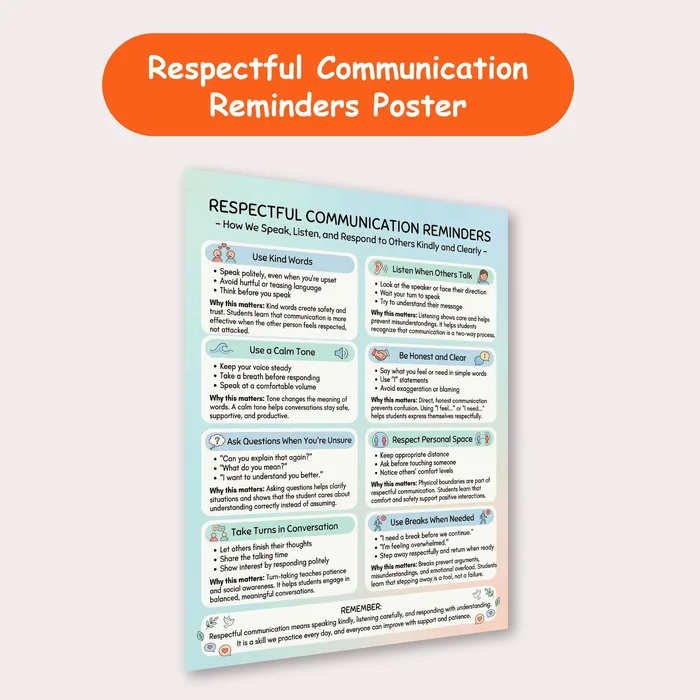
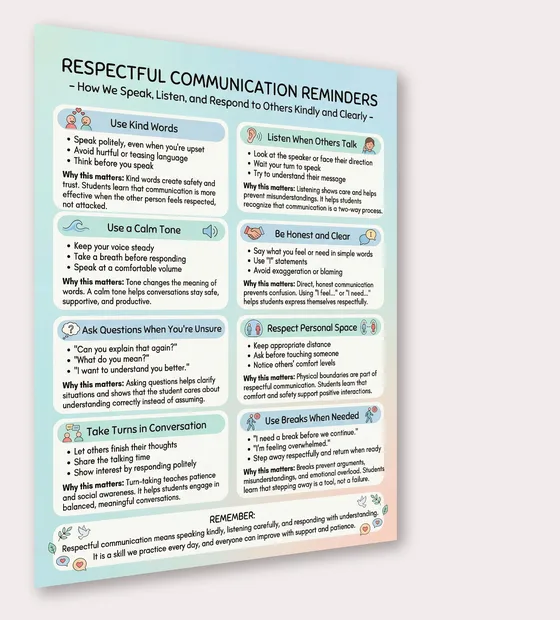
Respectful Communication Reminders Poster: eight reminders with “why this matters” notes that show students how to speak, listen, and respond to others kindly and clearly, for classrooms and counseling spaces.
Sources and scope
- CASEL: a widely used framework for social and emotional learning, including relationship skills.
- American Speech-Language-Hearing Association (ASHA): professional information on social communication.
- American School Counselor Association (ASCA): information on school counseling and student development.
- IRIS Center, Vanderbilt University: free modules on classroom supports for students with disabilities.
This guide covers everyday teaching of communication skills in classrooms and counseling spaces. It does not replace speech-language therapy, counseling, or the decisions of the student’s support team.
Key takeaways
- Define respect together across speaking, listening, and boundaries.
- Teach kind words, a calm tone, and I statements.
- Build listening, clarifying questions, and turn-taking.
- Treat personal space and breaks as part of respect.
- Practice one reminder at a time and track a personal goal.

Leave a Comment