
Picture prompts can help young writers move from describing what they see to explaining what they think. Use a fall image to collect a clue, say an idea aloud, and turn it into a short journal entry.
At a glance
Separate the picture clue from the inference, and give writers a sentence or drawing route into the task.
1. Look for one detail
Show the image without a caption first. Ask students to point to an object, expression, or action they can actually see.
2. Make a guess from a clue
Model “I think it is cold because I see a coat.” Ask children to show the clue that supports their idea. Different guesses can work with good reasons.
3. Sketch an idea before writing
Invite children to draw the next event or make a quick sequence. Keep the drawing brief so there is time to explain it.
4. Say the message out loud
Have students rehearse a sentence with a partner or communicate it through their usual supports. Offer a short frame for a clue and a reason.
5. Check the entry for meaning
Ask the writer to read it or have an adult read it back. Add one detail if the reason or sequence would be unclear to a reader.
A classroom example
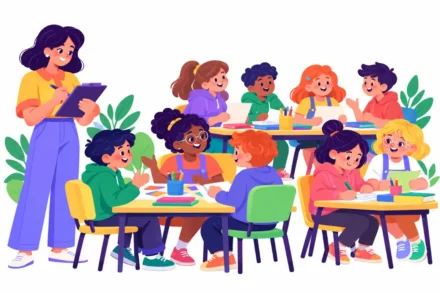
In a fictional kindergarten group, Ada says a character is going somewhere. Her teacher asks which clue helped. Ada points to a bag and dictates a sentence explaining her guess.
Companion printable
The 55-page printable has 24 November prompts in primary and regular line styles, two covers, a teacher guide, and continuation pages.



Leave a Comment