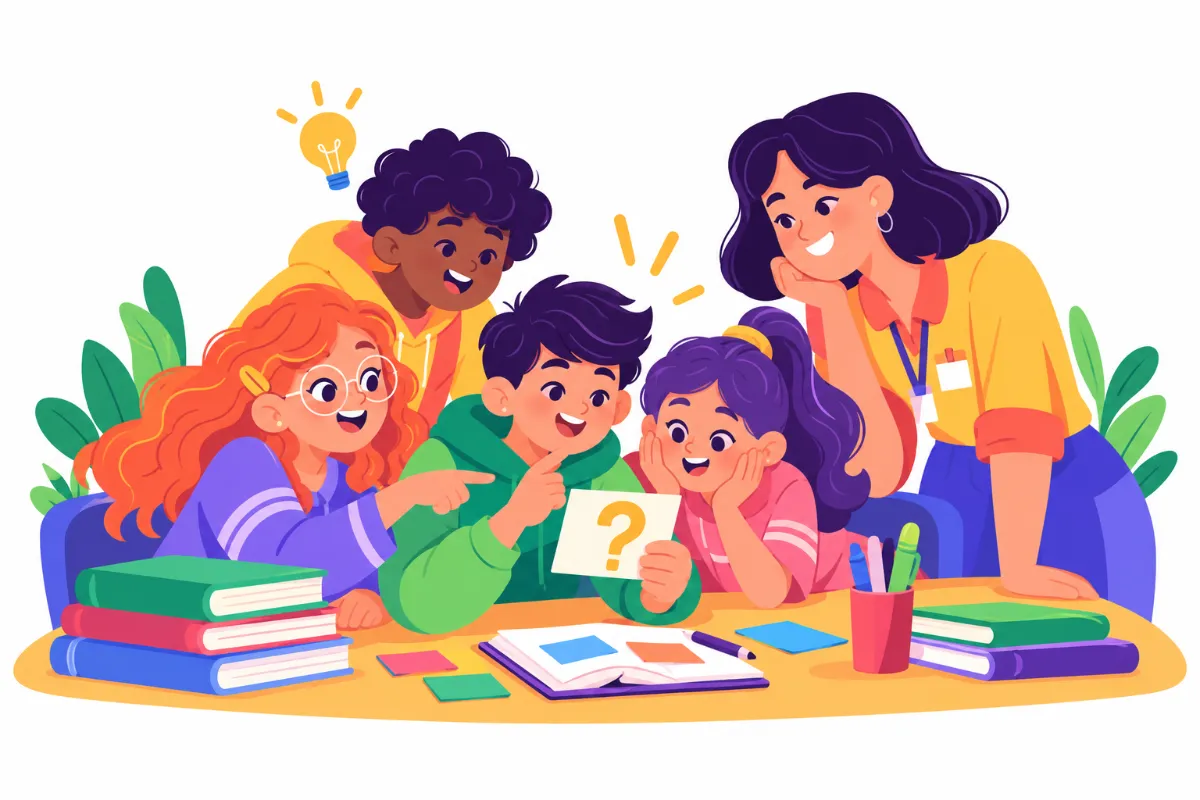

Brain teasers for students are a quick, fun way to build logic, creativity, and persistence in any classroom. A single riddle can wake up a sleepy morning group, spark lively debate, and get quiet students talking. Best of all, teasers invite kids to think in new directions.
However, puzzles work best with a plan. Without one, the same few fast thinkers may answer everything while others give up. This guide explains why teasers help, how to choose the right level, and how to use them so every student benefits.
Why Brain Teasers for Students Build Thinking Skills
Most school tasks have one expected path to an answer. Brain teasers break that pattern. Students must question assumptions, notice details, and consider unusual possibilities.
As a result, teasers strengthen several skills at once:
- Logical reasoning: following clues step by step.
- Flexible thinking: shifting perspective when the first idea fails.
- Attention to detail: reading every word carefully.
- Persistence: staying with a problem that is not easy.
- Communication: explaining reasoning to others.
In addition, teasers feel like play. Students who avoid traditional problem solving often lean in when a riddle is on the board.
Choosing the Right Difficulty Level
A puzzle that is too easy feels boring, while one that is too hard feels discouraging. Therefore, match the challenge to your group.
- Easy: short riddles with familiar words, great for younger students or warm-ups.
- Medium: puzzles that need two or three steps of reasoning.
- Hard and expert: lateral thinking problems that require questioning assumptions.
For example, start the year with easy teasers to build confidence. Then gradually increase the difficulty as students learn strategies. A collection organized by level makes this progression simple.
Five Ways to Use Brain Teasers for Students
- Morning warm-up. Post a teaser as students arrive. Discuss answers after attendance.
- Brain break. Use a riddle between lessons to reset attention.
- Partner challenge. Pairs solve together and explain their thinking.
- Early finisher task. Keep a box of puzzle cards for students who finish work.
- Weekly challenge board. Post one expert puzzle each Monday and reveal the answer Friday.
Each format serves a different purpose. Meanwhile, rotating them keeps puzzles fresh all year.
Teaching Strategies, Not Just Answers
The real value of teasers comes from the thinking process. Therefore, talk about how students reached their answers, not only whether they were right.
Helpful thinking strategies
- Reread the puzzle slowly and underline key words.
- Ask, “What am I assuming that might not be true?”
- Draw a picture or diagram.
- Try a small example first.
- Work backward from a possible answer.
For instance, many lateral thinking puzzles hide a trick in a single word. When students learn to check every word, they also become stronger readers of math word problems.
Making Brain Teasers for Students Inclusive
Every learner can enjoy puzzles with the right support. However, some students may need adjustments to participate fully.
- Read puzzles aloud for students who struggle with text.
- Give thinking time before anyone shares an answer.
- Offer hints in steps rather than revealing the solution.
- Allow drawing or acting out the puzzle.
- Celebrate creative wrong answers that show good reasoning.
Also, avoid timed competitions for every puzzle. Speed rewards a few students, while thoughtful discussion includes everyone. Students with ADHD often thrive on short, engaging challenges like these when the pressure stays low.
Brain Teasers for Students at Home
Families can use puzzles too. For example, share a riddle at dinner, during car rides, or before bedtime. Kids love stumping their parents, and the conversation builds language and reasoning skills.
In addition, puzzles are a great screen-free activity during travel or waiting rooms. A short stack of cards fits easily in a bag.
Building a Puzzle Routine That Lasts
Consistency turns occasional fun into real skill growth. Therefore, choose a regular time and stick with it. Keep a simple chart where the class tracks puzzles solved together.
If you want a ready supply, this collection of 40 brain teasers and riddles with solutions covers five difficulty levels, so you can grow the challenge all year. For broader ideas on developing thinking skills, the Understood.org site offers helpful learning resources.
Discussing Brain Teasers for Students After Solving
The conversation after a puzzle often teaches more than the puzzle itself. Therefore, save a few minutes for reflection. Ask several students to explain different paths they tried, including ones that did not work.
- “What was your first idea, and why did you change it?”
- “Which word in the puzzle was the real clue?”
- “How could we write a puzzle like this one?”
For example, inviting students to write their own riddles is a powerful extension. Creating a puzzle requires them to think about how others read and assume. As a result, students practice perspective taking, writing, and logic together.
In addition, keep a class “puzzle journal” where students record favorite teasers and the strategies that cracked them. Over time, the journal becomes a reference for solving new challenges and shows how much their thinking has grown.
Frequently Asked Questions
What age are brain teasers best for?
Children as young as six enjoy simple riddles. Older students and adults enjoy more complex lateral thinking puzzles.
Should I give the answer right away?
No. Give hints first and allow time to think. The struggle is where learning happens.
Do brain teasers help with academic skills?
They build reasoning, careful reading, and persistence, which support many subjects, especially math and reading comprehension.
Ready-to-use resource:
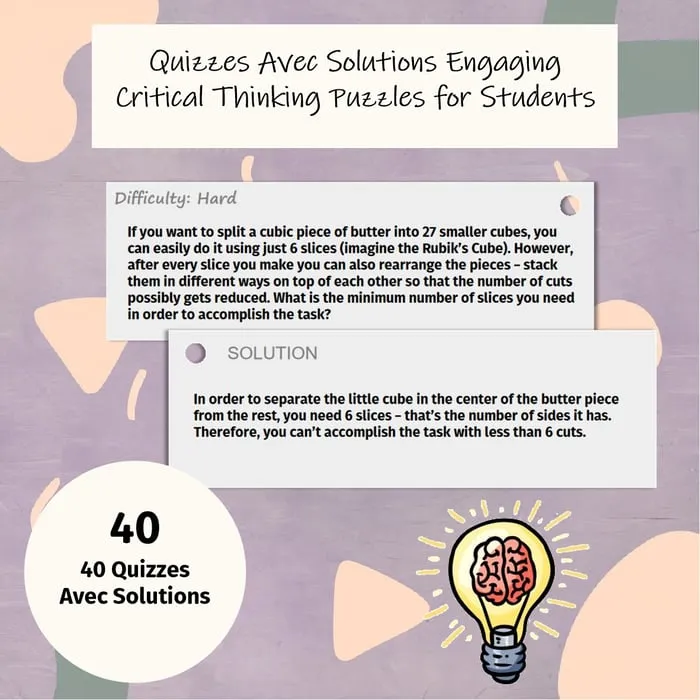
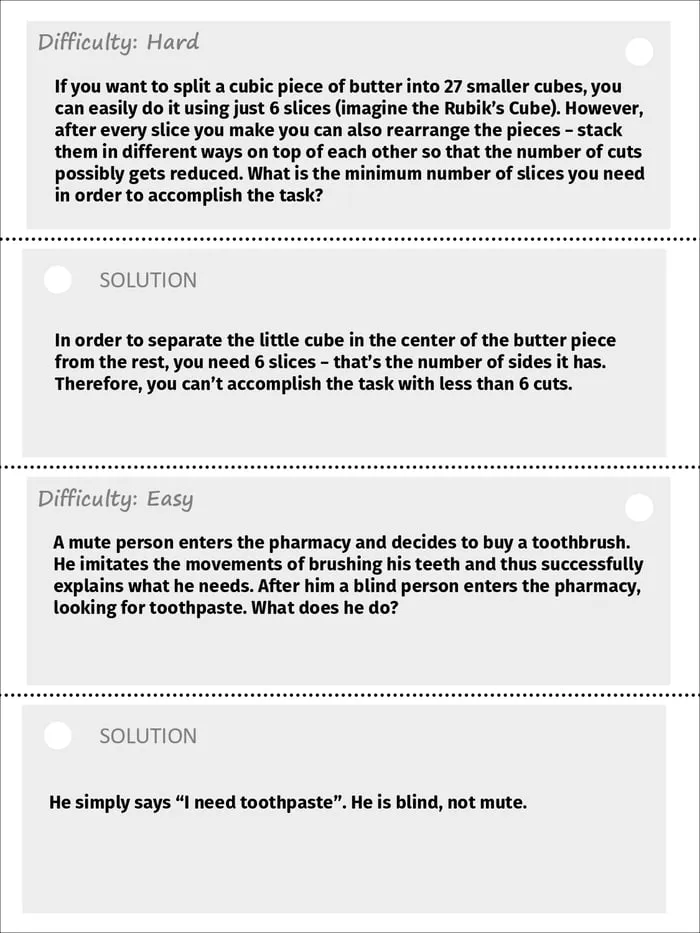
40 Brain Teasers & Riddles with Solutions: Critical Thinking Puzzles: 40 lateral thinking puzzles across five difficulty levels, each with a clear solution, ready for warm-ups and enrichment.
Related reading: 5 Practical Teaching Tips to Boost Classroom Focus and Learning and Learning Styles Student Success Guide.
Also on FromTeachers:
Key Takeaways
- Brain teasers build logic, flexible thinking, and persistence.
- Match puzzle difficulty to your students and increase it gradually.
- Discuss strategies, not only answers.
- Keep puzzles inclusive with read-alouds, hints, and thinking time.

Leave a Comment