

An all about me worksheet is one of the simplest ways to start the school year. In a few minutes, students share their name, favorite things, friends, and dreams. Meanwhile, you get a quick snapshot of each child’s personality.
But this little page can do much more than fill the first morning. Used well, it builds community, supports shy students, and even helps with planning. This guide shares practical ways to get the most from it.
Why an All About Me Worksheet Matters
Relationships come first in any classroom. For example, a student who feels known is more likely to take risks and ask for help. So learning about students early pays off all year.
Also, the worksheet gives every child a voice. Quiet students who rarely speak up can still share who they are on paper. As a result, you learn things you might miss in a busy first week.
In addition, families love it. Many parents keep these pages for years as a snapshot of their child at that age.
What to Include on an All About Me Worksheet
Keep it short and fun. Too many questions turn it into a test. So choose a handful of prompts.
- Name, nickname, and age.
- Favorite food, color, and activity.
- A picture frame for a drawing or photo.
- Three best friends.
- What I want to be when I grow up.
Next, show a completed example before students begin. Because they can see what a finished page looks like, they start with confidence.
Using the All About Me Worksheet as an Icebreaker
Once pages are done, put them to work. Here are a few easy ideas.
Guess who
First, read a few clues aloud without the name. Then let the class guess who it is. Students love hearing their favorites shared. Plus, it quickly shows how much classmates have in common, which helps new friendships start naturally.
Find someone who
Next, have students walk around and find a classmate with the same favorite food or color. Also, this gets kids talking to new friends right away.
Partner introductions
Finally, pair students to swap pages and introduce each other. This builds listening and speaking skills at the same time.
Supporting Students Who Find It Hard
Not every child finds this activity easy. For instance, students with writing challenges may struggle to fill in the lines. So offer options.
- Let students draw answers instead of writing.
- Allow a partner or adult to scribe.
- Provide picture choices to circle.
- Give extra time without pressure.
In addition, some children may have sensitive situations at home. Therefore, keep prompts gentle and optional. A child should never feel singled out by a question.
Also, students who use AAC can share answers with their device. Then an adult can help record them on the page.
Using an All About Me Worksheet for Planning
These pages are a goldmine for teachers. So keep them handy.
For example, if many students love dinosaurs, add dinosaur books to your library. If a student dreams of being a vet, use animal examples in math. As a result, lessons feel more personal and engaging.
Also, use the friends section to guide seating and grouping. However, watch for students who list no friends. That can be a quiet sign that someone needs extra social support. In that case, plan small partner activities and check in privately with the student.
If you want a ready page, this printable all about me worksheet includes spaces for favorites, friends, a self-portrait, and future dreams, plus an example.
Displaying and Keeping the Pages
Students love seeing their work on the wall. So consider a “Meet Our Class” bulletin board for the first month. Then move the pages into a class book that students can read during free time.
Next, save a copy for a portfolio. At the end of the year, have students complete a new page. Comparing the two shows growth in drawing, writing, and interests. Families especially love this before-and-after view.
Also, think about digital copies. A quick photo of each page lets you review student interests from home while planning. However, store photos safely and follow your school’s privacy rules.
All About Me Worksheet for New Students
Mid-year arrivals often feel nervous. Therefore, use the worksheet to welcome them.
First, give the new student a page on day one. Then share it with the class, with permission. Also, match the new student with a buddy who shares a favorite. As a result, the newcomer has an instant connection.
Connecting With Families
The worksheet can open a conversation with home. For example, send a blank copy home for parents to complete about their child. Then compare it with the student’s version.
In addition, invite families to share a photo or a fun fact. This small step shows that you value their knowledge. Over time, that trust supports stronger partnerships.
The CDC Learn the Signs. Act Early. pages also offer helpful ideas for families of young children.
Frequently Asked Questions
What age is an all about me worksheet best for?
It works from preschool to middle school. Simply adjust the prompts and how much writing you expect.
Should students share their pages aloud?
Only if they want to. Some children love the spotlight, while others prefer a quiet display.
Can I use it more than once a year?
Yes. Many teachers repeat it at the end of the year to show growth and changing interests.
Ready-to-use resource:
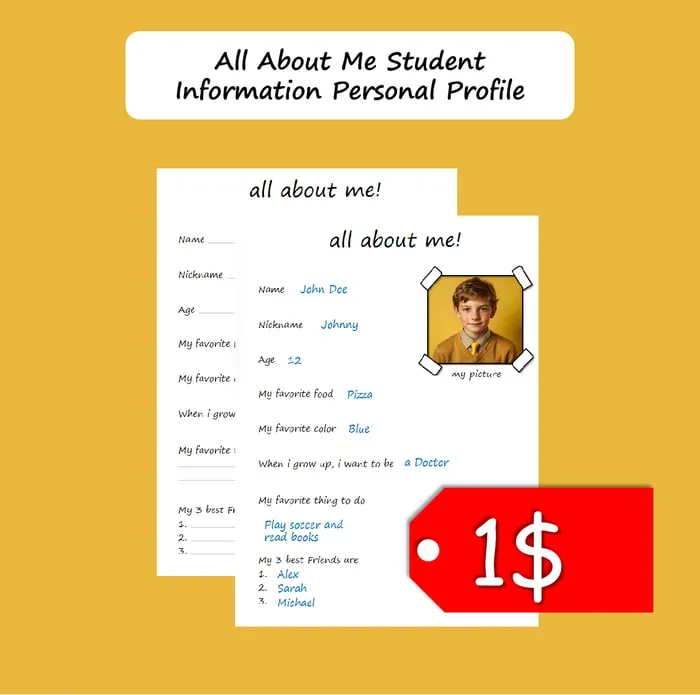
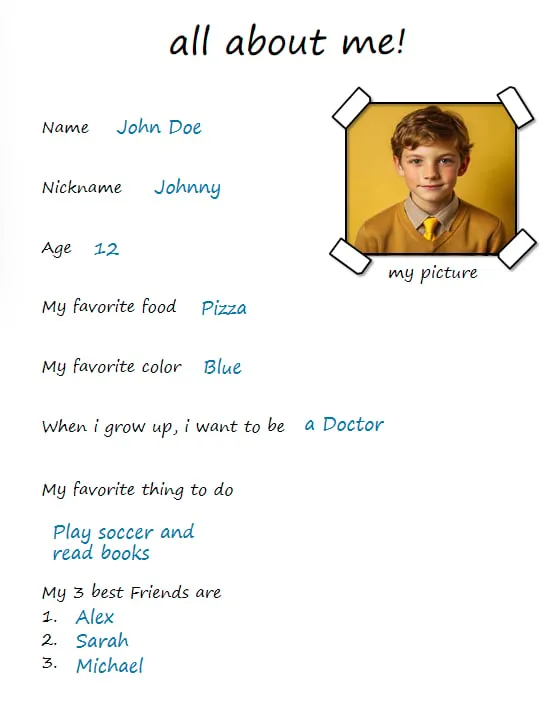
All About Me Student Information Profile: A friendly printable profile with spaces for name, favorites, friends, a self-portrait, and future dreams, plus a completed example page.
Related reading: Learning Styles Student Success Guide and How Teachers Communicate With Parents in Special Education.
Also on FromTeachers:
Key Takeaways
- An all about me worksheet helps you know students quickly and build community.
- Keep prompts short, fun, and optional, with options for every learner.
- Turn pages into icebreakers, displays, and planning tools.
- Repeat it at year end to celebrate growth.







Leave a Comment