

Critical thinking for kids starts with a simple habit: noticing a problem and wondering how to fix it. Children do not need big words to think well. They need practice, patience, and adults who ask good questions instead of giving every answer.
In this guide, you will find a clear way to teach thinking skills through stories, daily routines, and teamwork. The ideas work in special education rooms, general classrooms, and at the kitchen table.
What Critical Thinking for Kids Really Means
For young learners, critical thinking is not about debate or logic puzzles. Instead, it means looking closely, asking “why,” and trying more than one idea. It also means learning from mistakes without giving up.
For example, a child who cannot reach a book might stand on a stool, ask a friend, or use a grabber. Each choice shows thinking. As a result, the child learns that problems have many possible fixes.
These skills grow slowly. However, they grow faster when adults name the thinking out loud. Say, “You noticed the tower was wobbly, and you tried a wider base. That was smart thinking.”
Why Stories Build Critical Thinking for Kids
Stories give children a safe place to practice. Because the problem belongs to a character, the child can think calmly. There is no pressure and no fear of being wrong.
Also, adventure stories keep attention. A character who gets lost, breaks a toy, or argues with a friend creates a real reason to think. Children want to know what happens next.
When you read, stop at the problem. Then ask, “What could she do now?” Next, list two or three ideas together. Finally, read on and compare the story’s choice with the class ideas.
This approach is the heart of our problem solving adventure story for young learners, which walks children through spotting problems, making choices, and trying again.
Five Thinking Steps Children Can Learn
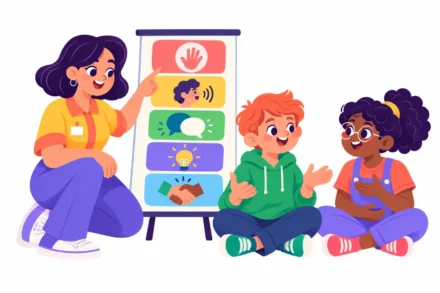
Short, repeatable steps help every child. Keep the words the same each time, and post them where children can see them.
- Spot the problem. Say it in one sentence.
- Break it down. Split a big problem into small parts.
- Think of choices. Name at least two ideas.
- Try one. Pick the safest, kindest idea first.
- Learn and try again. If it fails, go back to your choices.
Next, practice the steps with tiny, low-stakes problems. For instance, the glue stick is dry, or the line for the sink is long. Small wins build confidence for bigger moments.
Everyday Activities for Critical Thinking for Kids
You do not need special materials for critical thinking for kids. Daily routines already hold many small problems. The key is to pause before you rescue.
At school
- Leave one item missing from a center and ask, “What do we need?”
- Give a group one set of scissors and let them plan turns.
- Ask “What would happen if…” questions during science or snack.
At home
- Let your child plan how to carry groceries without dropping them.
- Ask them to choose between two outfits for rainy weather and explain why.
- Play “fix it” games with puzzles that have a missing piece.
In addition, praise the effort, not just the result. A child who tried three ideas has done great thinking, even if none worked yet.
Critical Thinking for Kids With Learning Differences
Children with autism, ADHD, or language delays can be strong thinkers. However, they may need more structure to show it. Visual steps, choice cards, and extra wait time help a lot.
For example, offer two picture choices instead of an open question. Then slowly add a third choice. Over time, move toward open questions as the child gains confidence.
Also, watch for frustration. If a child melts down when a plan fails, the problem is too big for now. Shrink it, model the next step, and celebrate a small success. The Understood website offers more ideas for supporting kids who learn and think differently.
Teaching Kids to Try Again After Mistakes
Mistakes are part of critical thinking for kids. Still, many children feel ashamed when an idea fails. They may stop trying or wait for an adult to fix things.
To change this, model your own mistakes. Say, “Oops, my plan did not work. Let me try another way.” Children copy what they see.
Next, use a simple phrase such as “Try and learn.” When a plan fails, ask, “What did we learn?” As a result, mistakes become information instead of failure.
Solving Problems Together as a Team
Group work builds critical thinking for kids and social skills at the same time. When children solve a problem together, they hear new ideas and learn to listen.
First, give each child a role, such as idea-giver, checker, or helper. Then set a short time limit. Finally, ask the group to share which idea they chose and why.
Because teamwork can bring conflict, teach a few kind phrases. For instance, “Let’s try your idea next,” or “Can we mix both ideas?” These small scripts keep the group calm and focused.
Frequently Asked Questions About Critical Thinking for Kids
At what age can children start learning critical thinking?
Children can start in the preschool years. Simple “what could we do?” questions during play are a great first step.
How do I help a child who gives up quickly?
Make the problem smaller and offer two clear choices. Then praise every attempt, not only success.
Are stories really useful for thinking skills?
Yes. Stories let children practice choices safely because the problem belongs to a character, not to them.
Ready-to-use resource:
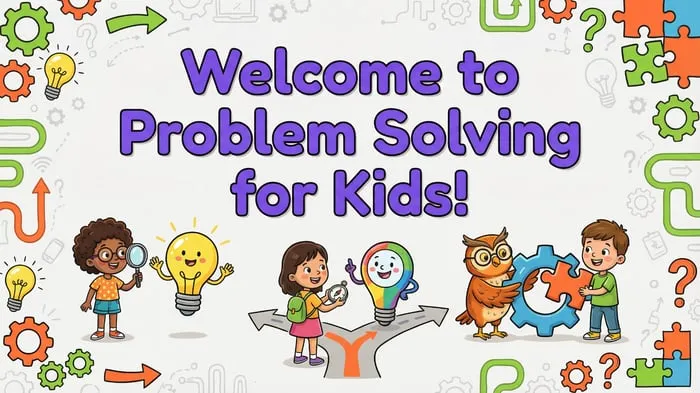
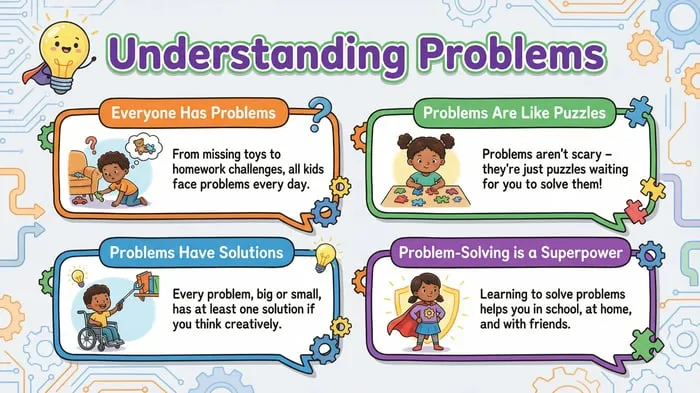
Problem Solving for Kids: Thinking Skills Story: An engaging adventure-style guide that helps young learners spot problems, break them into steps, and keep trying until they succeed.
Related reading: Autism Social Skills Development: Practical Strategies for Growth and Learning Styles Student Success Guide.
Also on FromTeachers:
Key Takeaways
- Critical thinking for kids grows through daily practice with small, real problems.
- Stories let children practice choices calmly and safely.
- Simple, visual steps help every learner, including those with learning differences.
- Treat mistakes as information and celebrate every new try.



Leave a Comment