

Daily routine cards show children what is happening now and what comes next, using simple pictures and short words. For many kids, that one change turns a confusing day into a predictable one.
This is especially true for young learners, autistic children, and kids with ADHD or anxiety. In this guide, you will learn why picture routines work, how to set them up at home and school, and how to fade support as children grow more independent.
What Are Daily Routine Cards?
Daily routine cards are small picture cards that each show one part of the day. For example, one card might show waking up, another lunch, and another story time. Children see the cards in order, so the schedule becomes visible instead of something they must remember.
A good set usually includes:
- A clear illustration for each activity.
- A short label, such as “Recess” or “Bath Time.”
- A simple, kid-friendly description of what happens.
- Cards for both school and home routines.
Because the cards are separate, adults can rearrange them whenever the day changes. As a result, the same set works on a calm Monday and on a busy field-trip Friday.
Why Visual Routines Help Children Feel Safe
Many children struggle with transitions because they cannot predict what is coming. However, when they can see the plan, they spend less energy worrying and more energy participating.
Picture schedules support children in several ways:
- Less anxiety: the unknown becomes known.
- Smoother transitions: kids can prepare for the next activity.
- More independence: children check the cards instead of asking an adult.
- Language support: pictures help kids who are still learning words.
In addition, visual supports are a well-known strategy in autism education. The CDC autism resources describe how routines and structure can help many autistic children.
How to Set Up Daily Routine Cards at School
First, decide where the schedule will live. A strip on the wall near the door works for a whole class. Meanwhile, a small strip taped to a desk works for an individual student.
Choose the right length
Next, think about how much a child can process. Some students handle the full day at once. Others do better with three or four cards, or even a simple “first, then” board.
Teach the routine directly
Then, walk through the cards each morning during circle time. Point to each picture, say the activity, and model checking the schedule. Also, praise students when they check it on their own.
Mark finished activities
Finally, give students a way to show an activity is done. They might flip the card, move it to a “finished” pocket, or place a check beside it. This small action builds a sense of progress.
Using Daily Routine Cards at Home
Home routines can be just as hard as school ones. Mornings, homework time, and bedtime often bring the biggest battles. Fortunately, the same cards work well on the fridge, in the bathroom, or beside the bed.
Try these home routines:
- Morning: wake up, get dressed, breakfast, backpack, go to school.
- After school: snack, homework or play, dinner.
- Evening: bath time, story time, bedtime.
For example, instead of repeating “brush your teeth” five times, you can simply point to the card. The routine becomes the reminder, so there is less nagging and less arguing.
When home and school use the same pictures, children experience real consistency. That shared language is one of the biggest benefits of a matching set.
Siblings can join in, too. A younger brother or sister often enjoys having a matching strip, which makes the routine feel like a family habit rather than a special rule for one child. Keep the tone light and celebrate small wins, such as getting dressed before breakfast without a reminder.
Handling Changes and Surprises
Real days rarely go exactly to plan. A fire drill, a substitute, or a rainy recess can upset a child who relies on routine. Therefore, it helps to prepare for change on purpose.
- Add a “change” or “surprise” card and practice using it on calm days.
- Swap cards early, before the change happens, and talk about it.
- Keep the next familiar activity visible so the child knows routine will return.
Over time, children learn that changes are manageable. In other words, the cards teach flexibility as well as structure.
Fading Daily Routine Cards Over Time
The goal is independence, not lifelong dependence on adults. As children master a routine, you can gradually reduce support.
- Shorten prompts from “Check your schedule” to a simple point.
- Move from many cards to fewer, broader cards.
- Shift from adult-arranged cards to child-arranged cards.
- Eventually, move to a written list or a simple planner.
However, do not rush. Some children will benefit from visual schedules for years, and that is perfectly fine.
If you want a ready-made set, these colorful printable daily routine cards for kids cover eighteen school and home activities with bright pictures and simple descriptions.
Frequently Asked Questions About Daily Routine Cards
What age are daily routine cards best for?
They work well from preschool through early elementary. Older children with autism or anxiety may also benefit.
How many cards should I show at once?
Start with what the child can manage. Some children need three cards, while others can follow a full day.
Should I laminate the cards?
Yes, if possible. Laminated cards last longer and can be attached with Velcro so they are easy to move.
Ready-to-use resource:
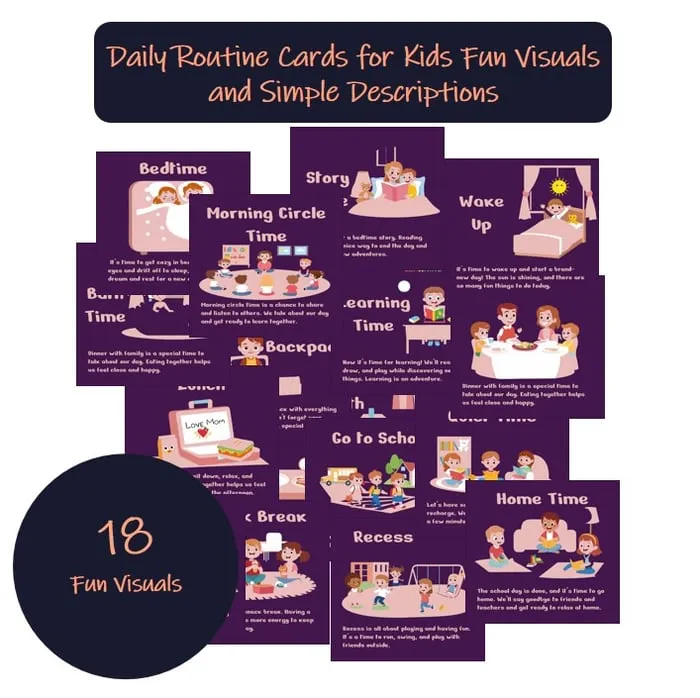
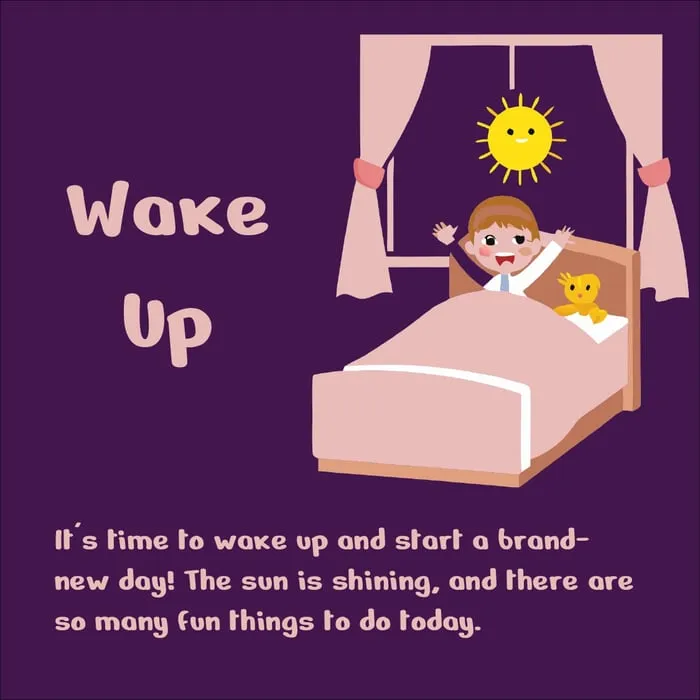
Daily Routine Cards for Kids – Visual Schedule Set: Eighteen bright, illustrated cards for school and home routines help children see what is happening now and what comes next.
Related reading: Autism Spectrum Disorder: A Guide to Early Signs, Support, and Effective Strategies and Meltdowns vs Tantrums: A Guide to Understanding and Responding.
Also on FromTeachers:
Key Takeaways
- Picture schedules make the day predictable and reduce transition stress.
- Teach the routine directly and give kids a way to mark finished tasks.
- Using the same cards at home and school builds real consistency.
- Fade support slowly, always aiming for more independence.








Leave a Comment