

Feelings and needs stories give children a safe way to talk about hard moments without being put on the spot. Picture a nine-year-old who has just had a rough morning: a plan changed, a friend moved her things, and now she is curled up under the table. Asking “What’s wrong?” gets a shrug or a shout. Later, reading a story about a character in the same situation, she points at the page and says, “That’s like me.”
This guide shows you how to use illustrated stories in five practical steps. By the end, you will be able to read a story in a way that invites talk, help the child name a feeling, link it to a need, practice a short message, and review progress so the words reach real life.
Examples are fictional. Adapt to the student’s goals and agreed supports. This is guidance, not a diagnosis.
At a glance
- Stories let children talk about feelings at a safe distance.
- Read in a calm moment, never in the middle of distress.
- Move from feeling to need to message, one small step at a time.
- Accept every way of answering: speech, pointing, drawing, or a device.
- Track the messages the child uses in real life, not only in practice.
1. Choose feelings and needs stories and a calm time to read
First, choose the right story and the right moment. A story works best when the situation feels familiar: a broken plan, a misunderstanding with a friend, a noisy room, or a change nobody explained. When the child recognizes the moment, the conversation starts on its own.
Next, pick a calm time. Reading about frustration while a child is still frustrated rarely helps. Instead, read during a quiet part of the day, such as after lunch or before bed. In addition, keep the first sessions short, around ten minutes, so the child leaves wanting more.
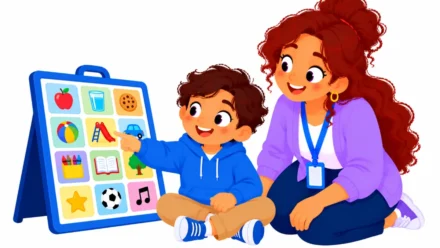
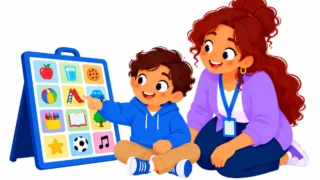
Also think about how the child will join in. Some children answer aloud. Others point at pictures, choose from two options, draw, or use a communication device. Decide this before you start, and have the tools nearby.
Consider Ava, a fictional nine-year-old in a third-grade class with resource support. Ava often hides when plans change. Her teacher, Mr. Okafor, chose a story about a character whose carefully built project gets bent by accident. He read it with Ava after recess, in the reading corner, with her picture cards on the table.
| Decision | Ava’s version |
|---|---|
| Story theme | An accident and a changed plan |
| Time | After recess, ten minutes |
| Place | Reading corner |
| How she answers | Words or picture cards |
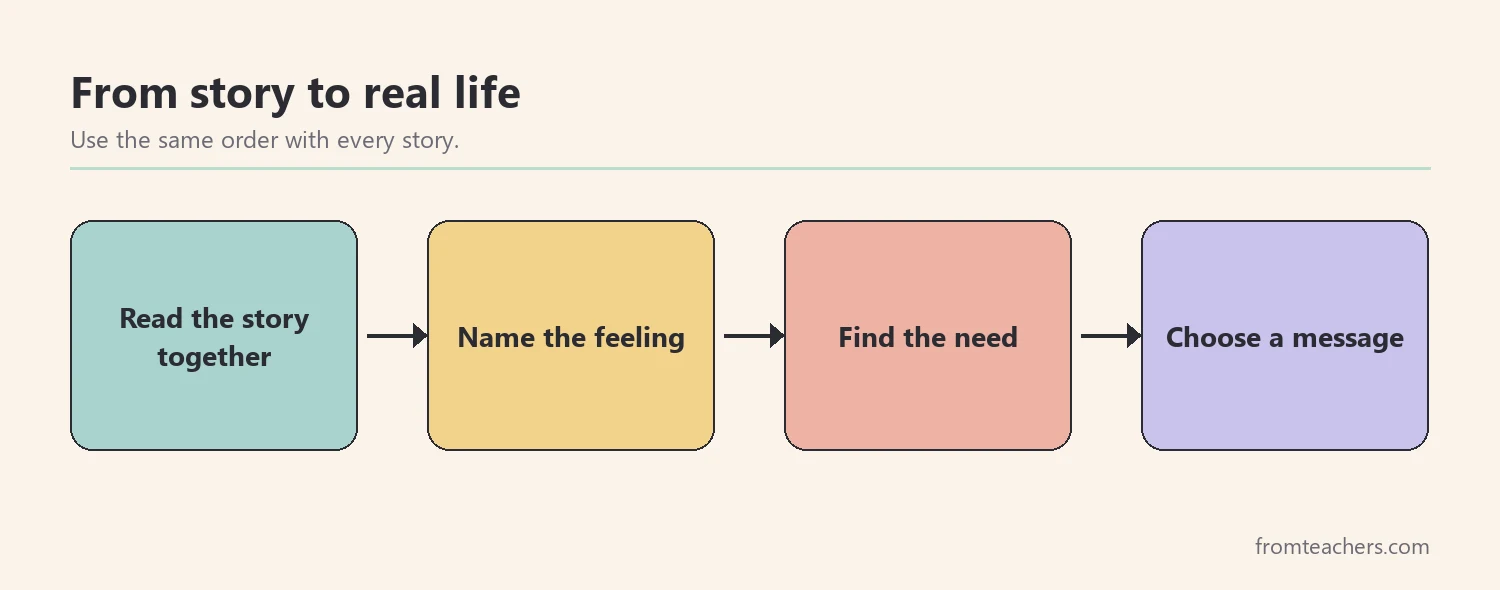
Finally, read the whole story once without stopping too often. Let the child enjoy it first. The talking comes next.
2. Help the child name the feeling
After reading, ask about the character, not the child. “What do you think she felt when the bridge bent?” is easier to answer than “How do you feel when things go wrong?” The story creates distance, and distance makes honesty safer.
Accept the first answer, even if it is simple. “Sad” or “mad” is a good start. Then gently widen the vocabulary: “She might feel sad. Could she also feel embarrassed?” Over time, the child builds a larger set of words without being corrected.
Next, introduce the idea that a person can have more than one feeling at once. A character can be upset and still want help. A child can be angry and also relieved. This idea often surprises children, and it helps them make sense of mixed reactions.
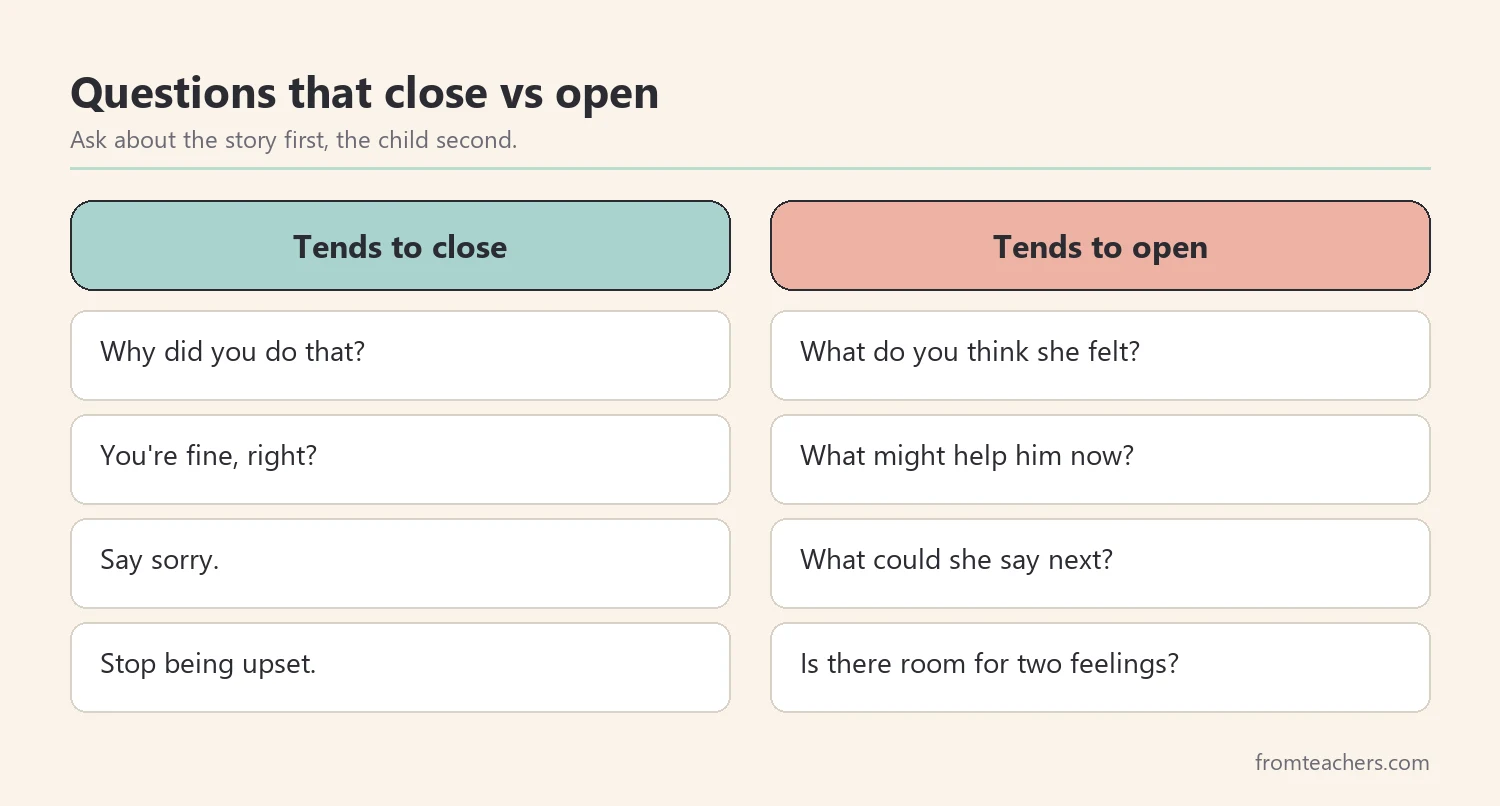
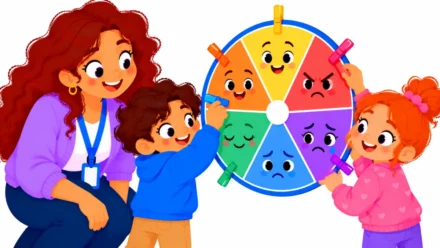
For example, Ava first said the character felt “bad.” Mr. Okafor offered two picture cards: frustrated and sad. Ava chose frustrated. Then he asked, “Is there room for more than one feeling?” Ava added the sad card next to it, and smiled a little.
Avoid pushing for a personal connection. If the child links the story to their own life, welcome it. If not, the story has still done its job. In addition, never use the story as a lesson about what the child did wrong earlier. That turns a safe space into a lecture.
3. Link the feeling to a need
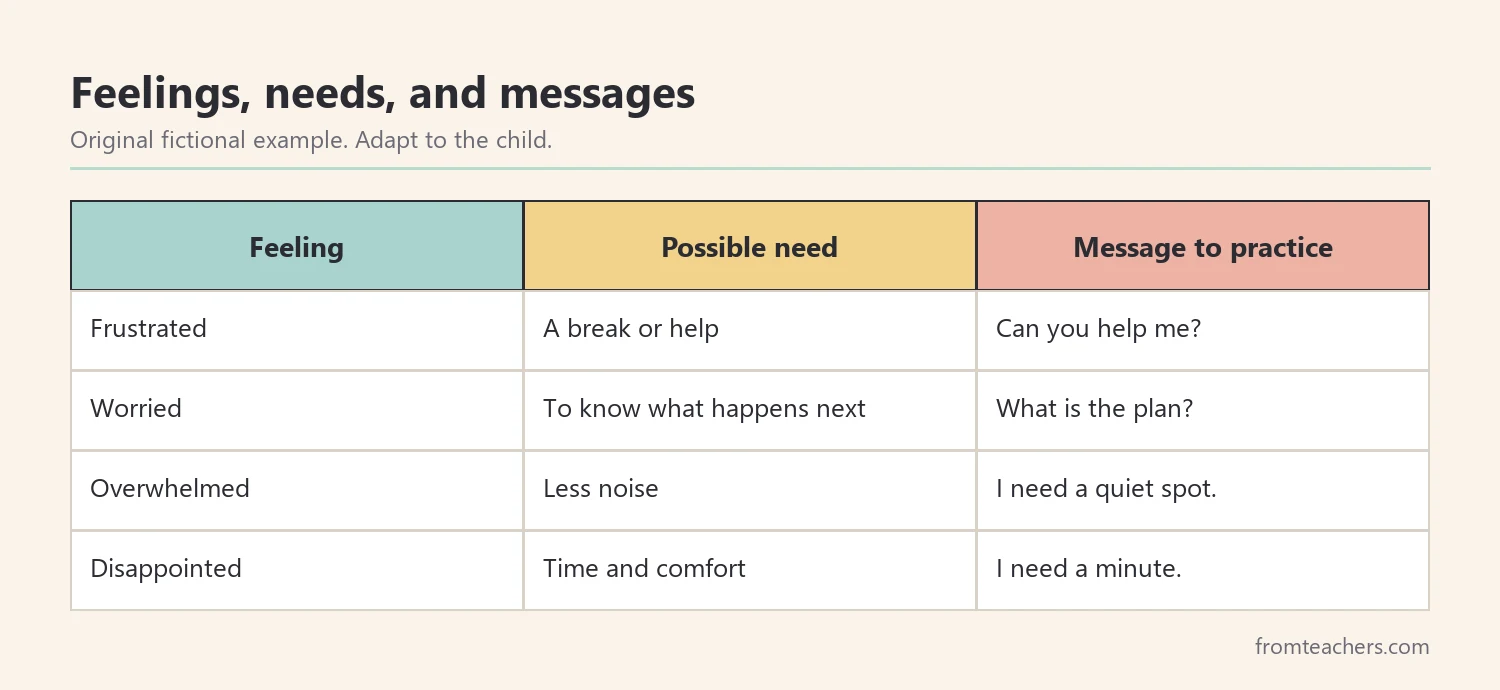
Now move from the feeling to the need behind it. Feelings and needs stories are most useful here, because the character shows that a feeling is information, not a problem to stop. When a character is frustrated, she might need help, a break, or a clear explanation.
Ask open questions: “What might help her now?” or “What did she need?” If the child is unsure, offer two or three possible needs. Keep the list short and concrete. For instance, help, a break, quiet, more time, or to know what happens next.
Also notice that the setting matters as much as the person. A room might be too loud. A task might be too long. Light, seating, or a busy space can make an ordinary day harder. Looking at the place, not only the child, keeps the conversation fair.
In Ava’s session, she said the character needed “the teacher.” Mr. Okafor asked what the teacher could do. Ava said, “Help fix it.” Together they wrote the need as “help to fix it” on a sticky note.
Sometimes the need is not obvious, even to adults. A child who seems irritable may be tired, hungry, in pain, or overwhelmed by noise. For this reason, treat the first guess as a question, not a conclusion. If a child’s reactions keep pointing to discomfort or pain, involve the family and the right professionals rather than relying on a story alone.
It also helps to separate what was hard from who the child is. “That task was hard today” is information. “I am bad at this” is a label. Stories make this difference easy to see, because readers can notice that a character is having a hard day without deciding the character is a problem.
Keep the link simple: one feeling, one need. As a result, the child can remember it, and the next step has a clear target.
4. Practice a short message the child can use
Next, turn the need into a message the child can actually use. A need without a message stays stuck inside. A short, practiced message gives the child a way to ask for help before a hard moment grows.
Keep the message brief and in the child’s own words. “Can you help me?” or “I need a minute” works better than a long sentence. Then decide how the child will send it: saying it, showing a card, pointing to a symbol, or pressing a button on a device. If the child uses a communication system, plan the message with the people who support that system.
Also describe what a helpful response looks like. When Ava shows her “help” card, what should the adult do? A clear answer protects the child’s trust. If the message works, the child will use it again. If it is ignored, the child learns that it does not matter.
Finally, add a backup: “If I am misunderstood, please…” This line helps children who are often misread. A useful message page in the illustrated story and guide includes these prompts, so the child can keep the message nearby or share it with a new adult.
| Part of the message | Ava’s version |
|---|---|
| The message | Can you help me? |
| How she shows it | Help card on her desk |
| Helpful response | Adult comes over and asks what she needs |
| If misunderstood | Please wait and ask again |
Practice the message in a calm role play. For example, Mr. Okafor pretended to knock over a block tower, and Ava showed her help card. They practiced three times, then stopped while it was still fun.
5. Review feelings and needs stories and real-life choices
Finally, check whether the messages are reaching real life. Practice in the reading corner is a start. However, the goal is a child who uses the message in the classroom, on the playground, or at home when it counts.
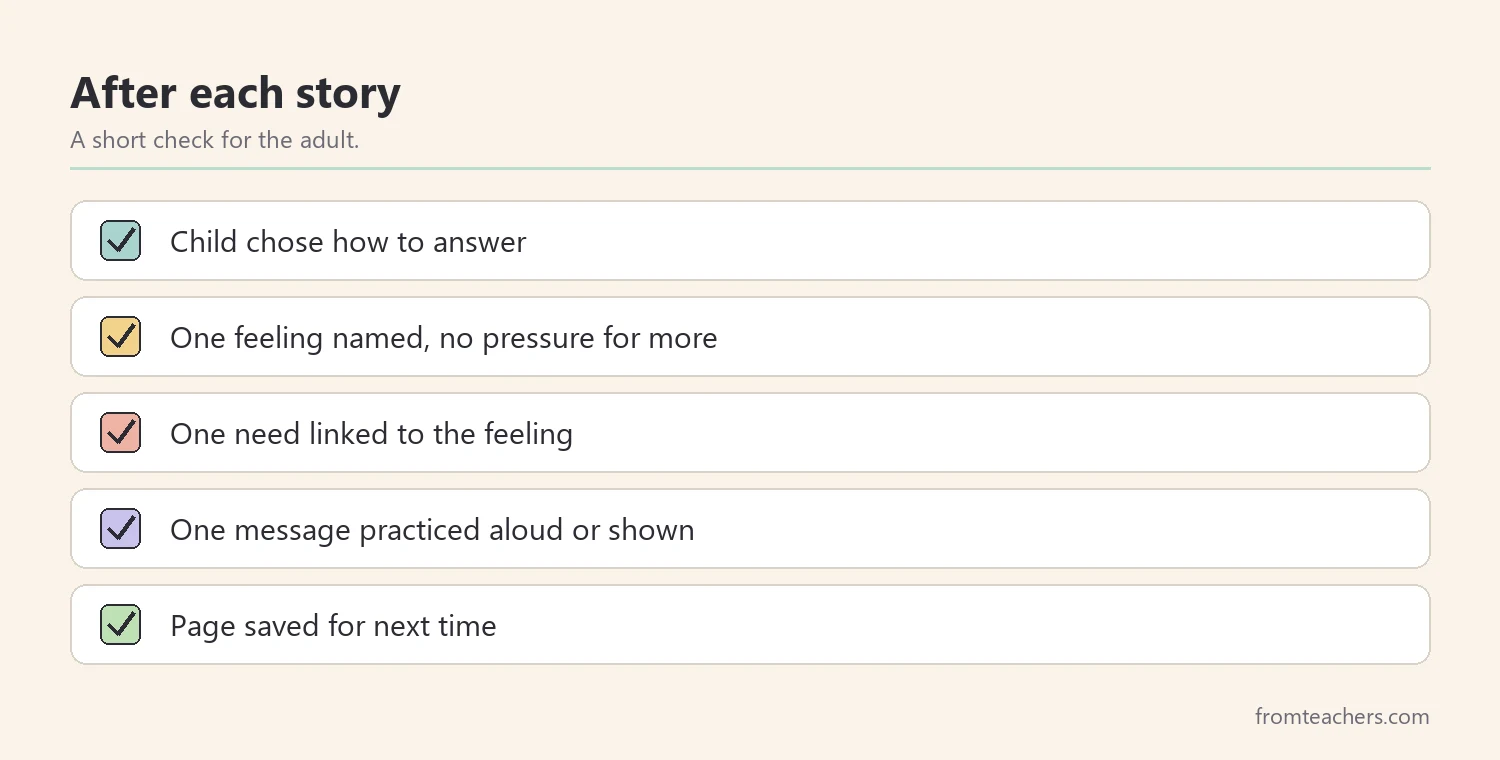
Keep a light record each week: how many stories you read, how many messages you practiced, and how many times the child used a message in a real moment. Real-life use is the number that matters most. Also write a short note on what helped and what did not.
Return to the stories often. Children enjoy hearing the same story again, and each reading can add a new feeling word or a new message. In addition, rereading a story before a known change, such as a field trip, prepares the child without a lecture.
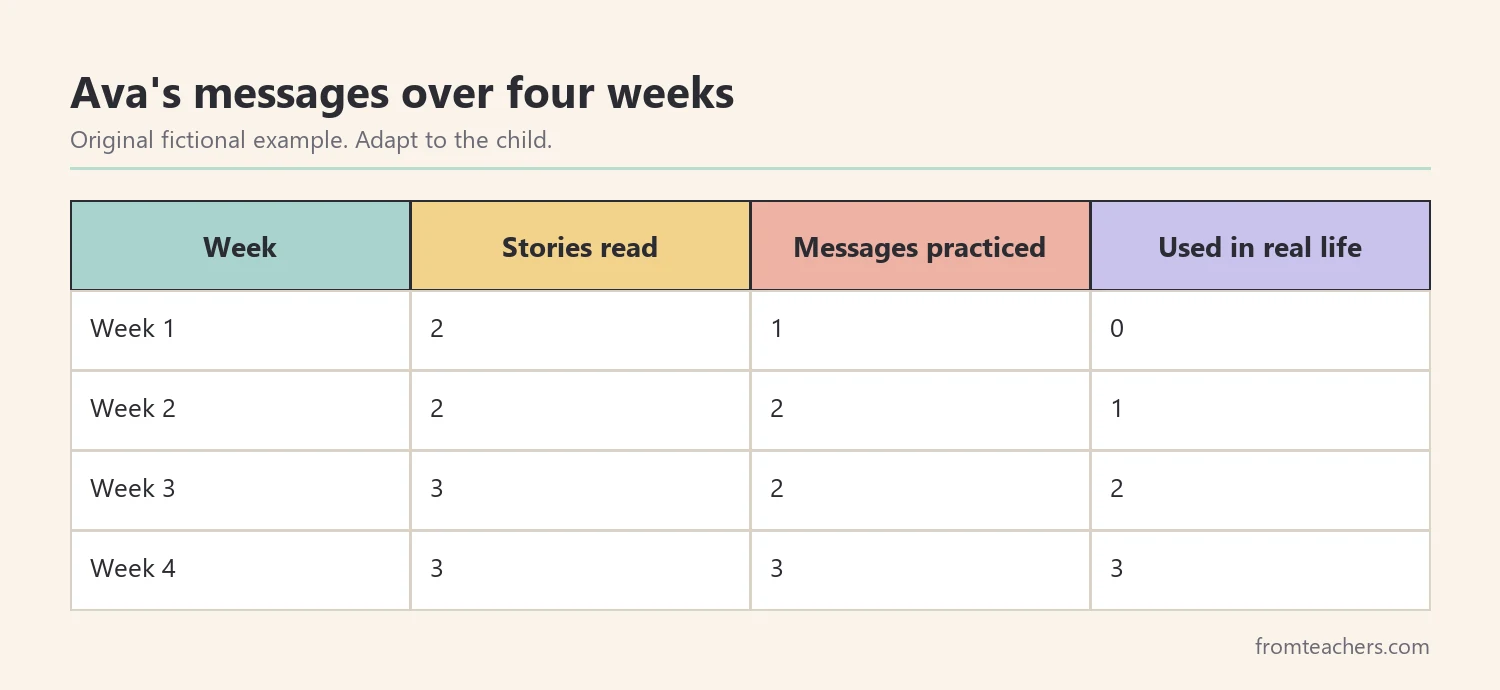
For Ava, the record showed a clear pattern. In week one she practiced a message but did not use it. By week four, she had used her help card three times during the week, including once when a fire drill changed the schedule. Mr. Okafor shared the record with her family, who started reading one story at bedtime.
Share what works with every adult who spends time with the child. A short note listing the message, how it is shown, and the helpful response takes two minutes to write. As a result, a substitute teacher, a lunch supervisor, or a grandparent can respond the same way, and the child does not have to start over with each new person.
Celebrate the child’s choices, not just calm behavior. A child who shows a card instead of hiding has made a real decision. Naming that decision, “You asked for help, and that worked,” builds confidence for the next time.
Common mistakes and how to avoid them
- Reading during distress. A story in the middle of a meltdown adds demands. Instead, read in a calm moment and offer comfort first when the child is upset.
- Turning the story into a lesson about the child. Linking the character to something the child did wrong ends trust. Instead, keep questions about the story and let the child make links.
- Correcting feeling words. Telling a child “No, she was not mad” closes the talk. Instead, accept the answer and offer one more word to consider.
- Messages that are too long. Long scripts are hard to recall when emotions run high. Instead, keep messages to a few words or one symbol.
- Ignoring the message when it is used. If a practiced message gets no response, the child stops using it. Instead, agree on a helpful response and make sure every adult knows it.
Questions teachers and parents ask about feelings and needs stories
What age are feelings and needs stories best for?
Illustrated stories suit many ages, especially younger children and those who benefit from visual support. What matters most is that the situations feel familiar and the language fits the child. You can adjust the questions to the child’s level.
Can a child who does not speak take part?
Yes. Children can answer by pointing to pictures, choosing between two cards, drawing, or using a communication device. The message the child practices should use the same method they already use every day.
How often should we read together?
Short, regular sessions usually work better than long, rare ones. Two or three ten-minute sessions a week is a reasonable start. Follow the child’s interest and stop while it is still enjoyable.
Should parents and teachers use the same stories?
Using the same stories and messages at home and at school helps a lot. The child hears the same words in both places. In addition, both adults learn the same helpful responses.
What if the child refuses to talk about the story?
That is fine. Enjoying the story is still valuable, and many children talk later, sometimes days afterward. Leave the book within reach and try again another time.
Related reading: Meltdowns vs Tantrums: A Guide to Understanding and Responding, Autism Social Skills Development: Practical Strategies for Growth, and Essential Trauma-Informed Teaching Strategies for Modern Classrooms.
A companion resource for feelings and needs stories:
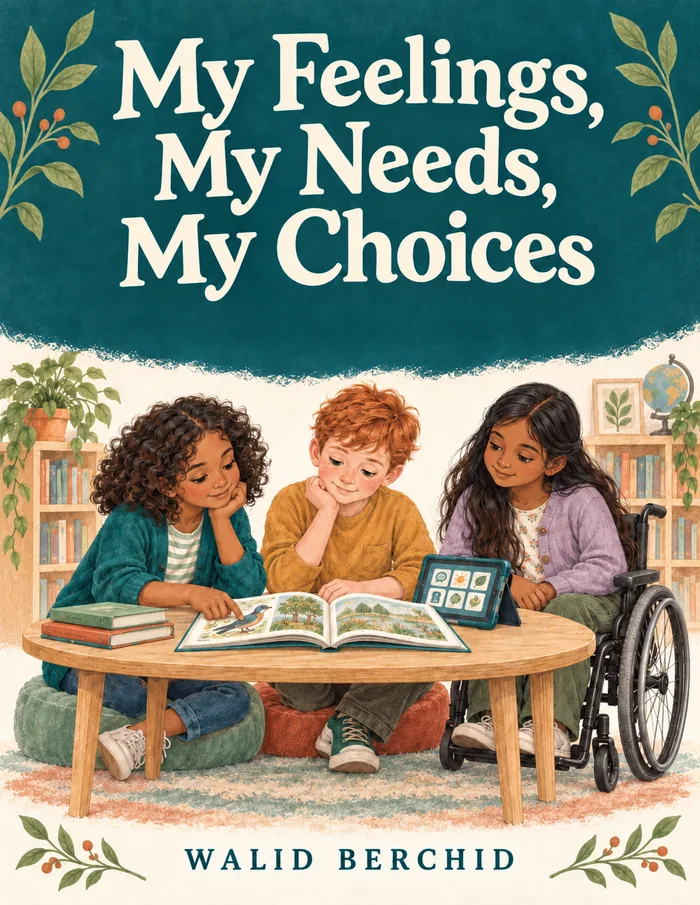
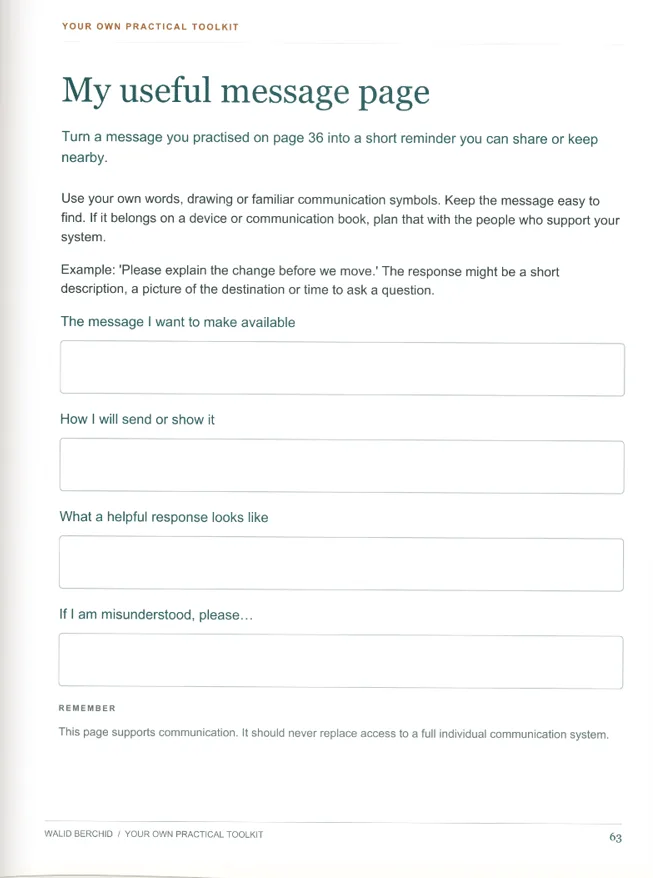
My Feelings, My Needs, My Choices: a warm illustrated book to read together, with connected stories about Maya, Leo, and Noor covering feelings, communication, friendship, changing plans, and finding support. Each story leads into practical pages, in print and fillable PDF versions.
Sources and scope
- CASEL: information on social and emotional learning, including self-awareness and relationship skills.
- IRIS Center, Vanderbilt University: free modules on social and emotional supports and classroom behavior.
- American Speech-Language-Hearing Association (ASHA): information on communication development and augmentative and alternative communication.
- Understood.org: family-friendly information on emotions, communication, and learning differences.
This guide covers everyday reading and conversation about feelings at school and at home. It does not replace mental health care, speech and language therapy, or the decisions of the child’s support team.
Key takeaways
- Feelings and needs stories let children talk about hard moments at a safe distance.
- Read in calm moments and ask about the character first.
- Move from one feeling to one need to one short message.
- Agree on a helpful response so every message works.
- Track real-life use of messages and celebrate the child’s choices.

Leave a Comment