

Teaching the solar system is exciting because students are naturally curious about space. However, the topic is huge, and it is easy to overwhelm young learners with facts. A clear sequence, from big ideas to specific planets, makes the unit feel manageable and memorable.
This guide offers a step-by-step plan for teachers and homeschooling parents. It includes hands-on ideas, tips for explaining gravity and orbits, and ways to support diverse learners.
Start Teaching the Solar System With the Big Picture
Begin with one simple question: what is the solar system? Explain that it is the Sun and everything that travels around it. That includes planets, moons, asteroids, and comets.
Next, show a scale image or video. For example, NASA’s solar system pages offer accurate images and facts students love. As a result, students build a mental map before details arrive.
Explaining Gravity and Orbits Simply
Gravity can feel abstract. Therefore, use concrete demonstrations. First, swing a ball on a string in a circle. Then, explain that the string acts like gravity, pulling the ball toward the center.
In addition, show what happens when you let go: the ball flies straight. This helps students see that orbits are a balance between moving forward and being pulled inward.
Exploring the Sun and Inner Planets
The Sun is a star and the center of our system. Also, it provides the light and heat that make life on Earth possible.
The Rocky Inner Planets
- Mercury: smallest planet and closest to the Sun
- Venus: hottest planet because of its thick atmosphere
- Earth: the only planet known to support life
- Mars: the red planet, explored by rovers
For example, students can compare surface features using photos and fact cards.
Discovering the Outer Planets and Beyond
The outer planets are giants made mostly of gas or ice. Jupiter, Saturn, Uranus, and Neptune each have many moons and ring systems.
Beyond Neptune lie dwarf planets like Pluto and icy objects in the Kuiper Belt. In addition, comets visit from far away. These topics spark great discussion about how scientists classify objects.
Hands-On Ideas for Teaching the Solar System
Active learning helps facts stick. Here are a few favorites:
- Scale walk: place planets along a hallway using a simple scale.
- Planet passports: students “visit” each planet and record facts.
- Model building: create planets from clay or paper.
- Moon journal: observe and draw the Moon each night for two weeks.
Also, a structured reader such as the complete student guide to our solar system gives students a reliable text to return to between activities.
Supporting Diverse Learners in Space Units
Science units can be accessible to everyone. First, use visuals for every new term. Next, provide word banks and labeled diagrams.
In addition, offer choices for showing learning, such as drawing, building, or speaking instead of writing. Finally, break the unit into short chunks with a quick review at the start of each lesson. Students with learning differences benefit from this structure, and so does everyone else.
Real Space Exploration Connects Students to Science
Students love learning that real people and machines explore space today. For example, rovers drive across Mars, and spacecraft have flown past every planet. These stories show that science is active and ongoing.
In addition, invite students to imagine their own missions. Which planet would they visit, and what would they need to survive? This builds problem-solving and connects science to engineering.
Mission Project Ideas
- Design a spacecraft and explain each part
- Write a mission log from a chosen planet
- Create a travel poster for a moon or dwarf planet
- Compare two real missions in a short presentation
Assessing Learning While Teaching the Solar System
Assessment does not have to mean a long test. Instead, use quick checks throughout the unit. For example, exit tickets can ask students to order the planets or explain an orbit in one sentence.
Also, a final project lets students show what they know in their own way. As a result, teaching the solar system ends with confident learners, not just memorized lists.
Getting Started This Week
First, gather a few strong visuals, such as a planet poster and a short video. Next, plan your opening question and one hands-on demonstration. Then, decide how students will record new facts, such as a space journal. In addition, prepare a word wall with key vocabulary. Finally, choose a closing project so students know where the unit is heading. Good planning keeps curiosity high from the first lesson to the last.
Frequently Asked Questions
What grade is best for teaching the solar system?
Many curricula introduce it in elementary school and revisit it in middle school with more depth. Adjust detail to your students’ level.
Why is Pluto not a planet anymore?
Scientists reclassified Pluto as a dwarf planet in 2006 because it has not cleared its orbit of other objects.
How long should a solar system unit last?
Two to four weeks works for most classes. That allows time for big ideas, each planet, and a hands-on project.
Ready-to-use resource:
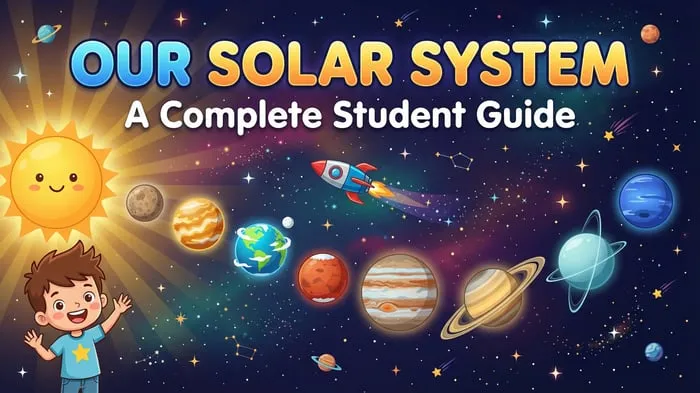
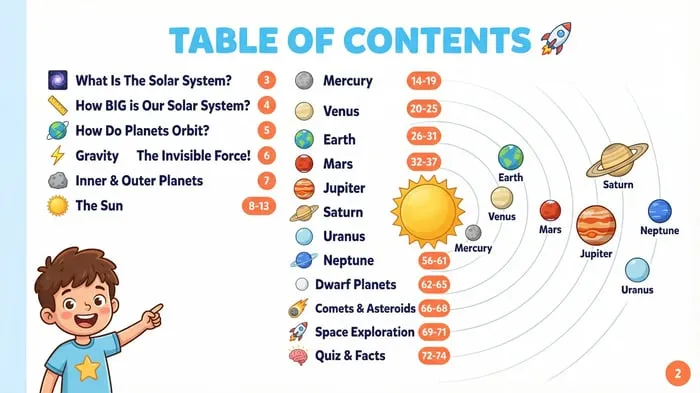
Our Solar System: A Complete Student Guide: A 75-page student guide that builds from basic ideas to gravity, orbits, planets, and real space exploration.
Related reading: learning styles student success guide and homeschooling vs public schooling.
Also on FromTeachers:
Key Takeaways
- Teaching the solar system works best from the big picture down to details.
- Use simple demonstrations to explain gravity and orbits.
- Hands-on projects help students remember planet facts.
- Visuals, word banks, and choices make space units accessible to all.









Leave a Comment