

Good special education teacher resources can give you back hours every week. Picture a Sunday evening: an IEP meeting on Tuesday, a new student with autism arriving Wednesday, and a behavior incident from Friday still on your mind. You open your laptop and start searching, again, through dozens of downloads with names like “final_v3.”
This guide shows you how to build a small, trusted library instead. In five steps, you will map what your caseload actually needs, choose resources you can trust, organize them so you can find anything in a minute, build them into your weekly routine, and review the library with your team. By the end, you will spend less time searching and more time teaching.
Examples are fictional. Adapt to each student’s goals and agreed supports. This is guidance, not legal or clinical advice.
At a glance
- Start from your caseload’s real needs, not from what is popular online.
- Choose resources that are clear, respectful, and easy to adapt.
- Organize by topic so any guide is one or two clicks away.
- Put resources into a weekly routine so they get used, not just saved.
- Review the library with your team each term and remove what you do not use.
1. Map what your caseload needs from special education teacher resources
First, look at your students before you look at any website. The best special education teacher resources are the ones that match the work in front of you. Pull your caseload list and note the main area of support for each student.
Next, group those needs into a few broad topics. For most special educators, the big ones are IEPs, behavior, autism support, transition planning, and classroom systems. A short list keeps the library focused.
Then, mark the moments that take you the longest. Maybe it is writing measurable goals, preparing for a tough meeting, or planning a transition for an older student. These time drains show where a good guide would help most.
Also, ask colleagues what they reach for most. A veteran teacher down the hall may already know which special education teacher resources save the most time in your building. Their advice is free, local, and tested with students like yours.
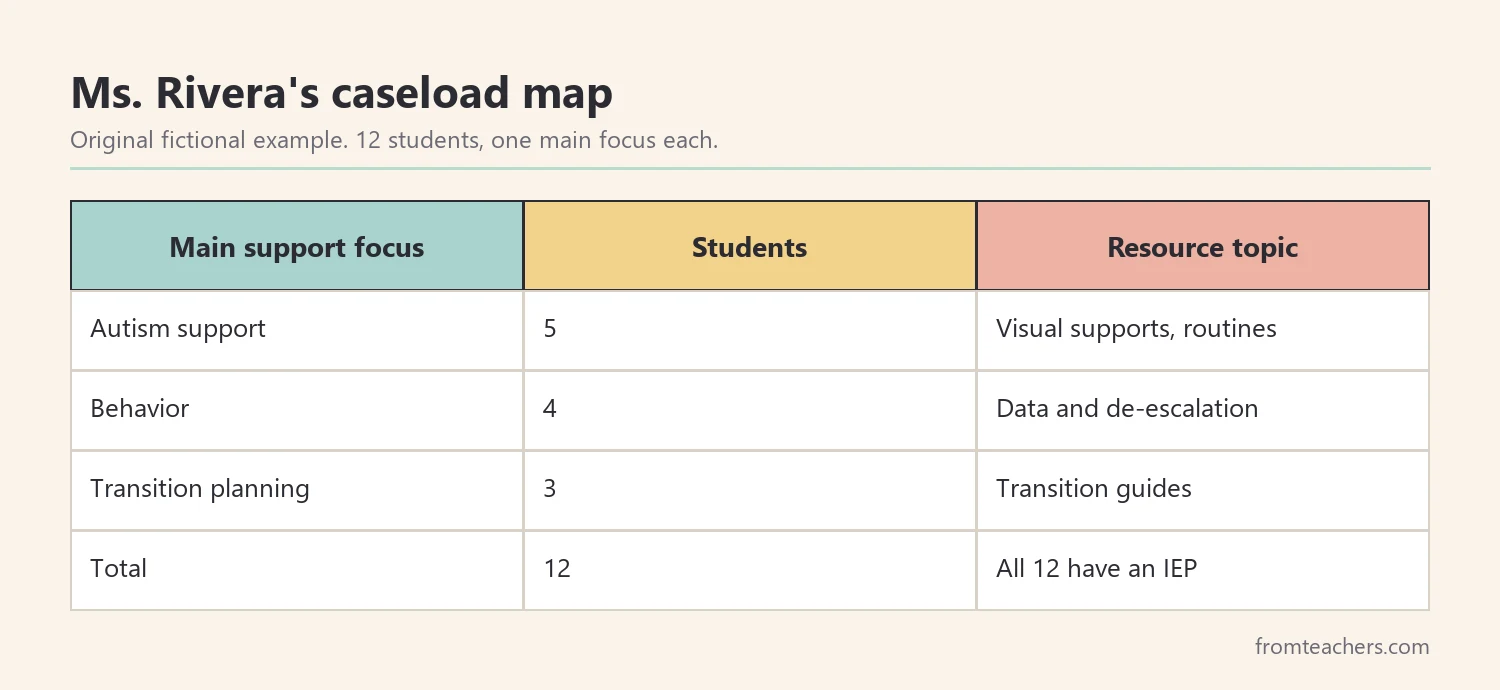
Worked example. Ms. Rivera is a fictional special education teacher in her first year at a middle school. She has 12 students on her caseload. For 5 of them, the main focus is autism support. Behavior is the focus for 4. For the other 3, it is transition planning, because they are getting closer to high school. Every one of the 12 also has an IEP, so IEP tools sit at the top of her list.
In short, a needs map turns a vague wish for “more resources” into a clear shopping list.
Moreover, the map protects you from impulse downloads. When a new freebie appears, you can check it against your list. If it does not match a real need, you can skip it without guilt.
2. Choose special education teacher resources you can trust
Once you know what you need, be picky. Not every free download is worth a place in your library. A smaller set of strong guides beats a huge folder of weak ones.
Start with trusted public sources for background and legal questions. For example, the U.S. Department of Education’s IDEA site explains the law behind IEPs, and university centers such as the IRIS Center offer free learning modules. Use these as your foundation.
Also, check what your district already provides. Many districts share IEP templates, procedural guides, and approved forms. These belong at the core of your special education teacher resources, because they reflect the rules you must follow locally. Outside guides can then fill the gaps, such as practical behavior strategies or autism-friendly visuals.
Check the format and daily usefulness
In addition, pay attention to format. A long guide is helpful for planning, while a one-page printable is better for the middle of a lesson. Strong special education teacher resources often include both, so you can read the reasoning once and then use the short version every day.
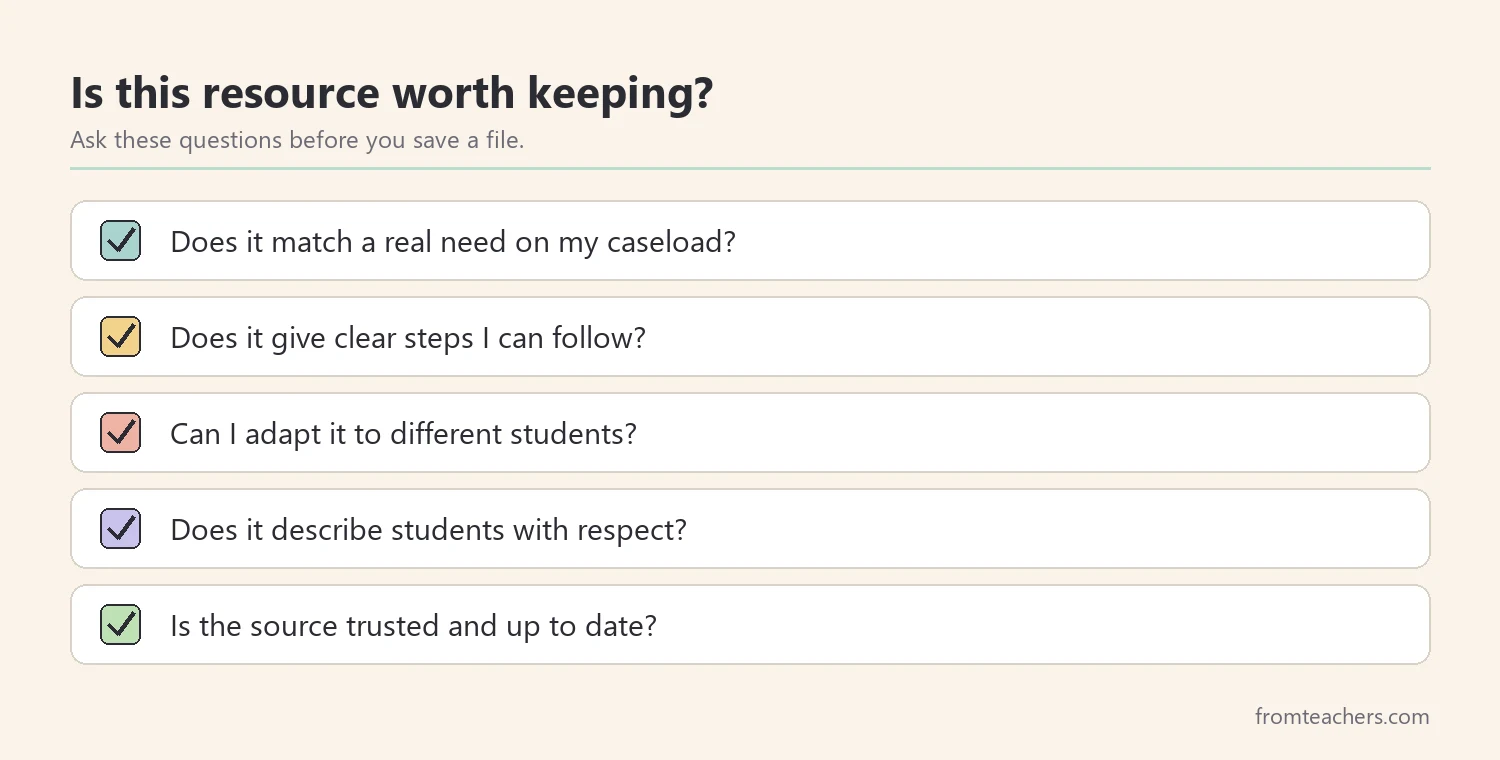
Then, add practical tools for daily work. Look for guides with clear steps, examples you can adapt, and printable pages. In addition, check the tone. Good special education teacher resources treat students as people with strengths, not as problems to manage.
Buying a curated set can also save time. A special education guides bundle covering IEPs, autism, behavior, and transition puts many topics in one place, so you are not stitching together files from a dozen sites.
Worked example. Ms. Rivera deletes 40 old downloads she has never opened. She keeps the IDEA and IRIS links for reference. Then she picks practical guides for each of her four topics: IEPs, autism support, behavior, and transition planning.
Because her library is now smaller, she actually knows what is in it. That alone makes her special education teacher resources more useful than the old folder ever was.
3. Organize your library so you can find anything fast
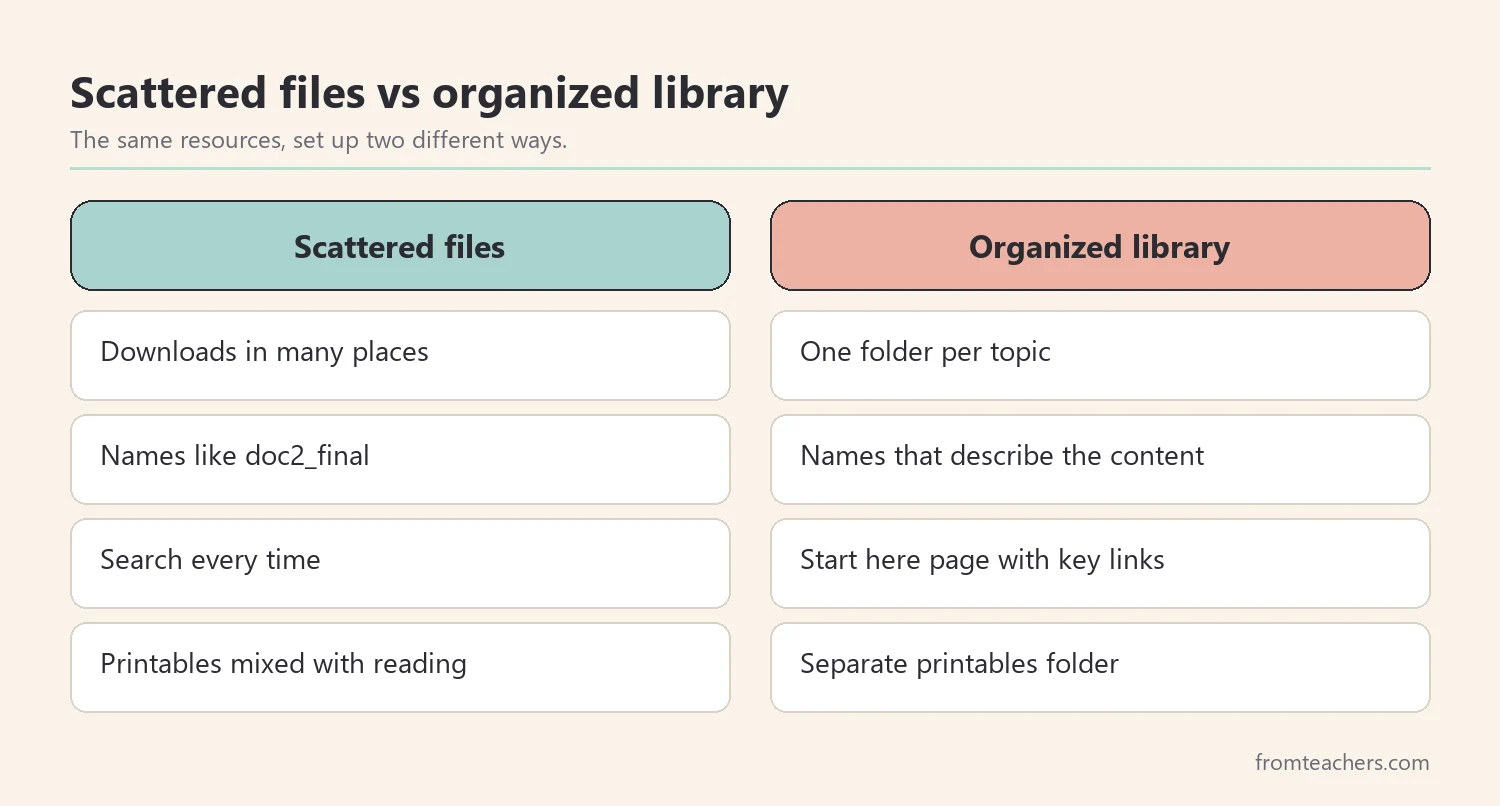
A library only helps if you can find things in a hurry. Therefore, set up a simple folder structure before you add more files. Use the same topics from your needs map as your top folders.
Next, name files in a consistent way. A name like “Behavior: de-escalation steps” tells you what is inside. A name like “doc2_final” tells you nothing. Also, keep one “Start here” document with links to your most used guides.
Then, keep printables separate from reading. Put guides you read for ideas in one place and pages you print often in another. This saves time when you need a visual or a form in the middle of a busy day.
Finally, think about access. If paraprofessionals or co-teachers need the same files, store the library in a shared space your school approves. A well organized set of special education teacher resources helps the whole team only if the whole team can open it.
Folder setup checklist
- One top folder per topic: IEPs, autism support, behavior, transition, classroom systems.
- A “Start here” page with your five most used links.
- A printables folder for pages you use every week.
- Clear file names that describe the content.
- A backup copy in your school’s approved storage.
Worked example. Ms. Rivera creates five folders, one for each topic plus classroom systems. Her “Start here” page links to a goal-writing guide, a de-escalation guide, a visual schedule set, a transition planning guide, and a parent meeting checklist. Now she can find any of them in under a minute.
4. Put special education teacher resources to work every week
Saved resources do nothing on their own. The real value of special education teacher resources comes from using them in a steady routine. Otherwise, the library becomes another folder you feel guilty about.
First, link each resource to a regular task. For example, open the IEP guide when you prepare for meetings, the behavior guide during your weekly data review, and the transition guide when you plan with older students. In this way, the right guide shows up at the right time.
Next, block a small amount of time each week. Even 20 minutes on a set day is enough to read one section and try one idea. Over a school year, those short blocks add up.
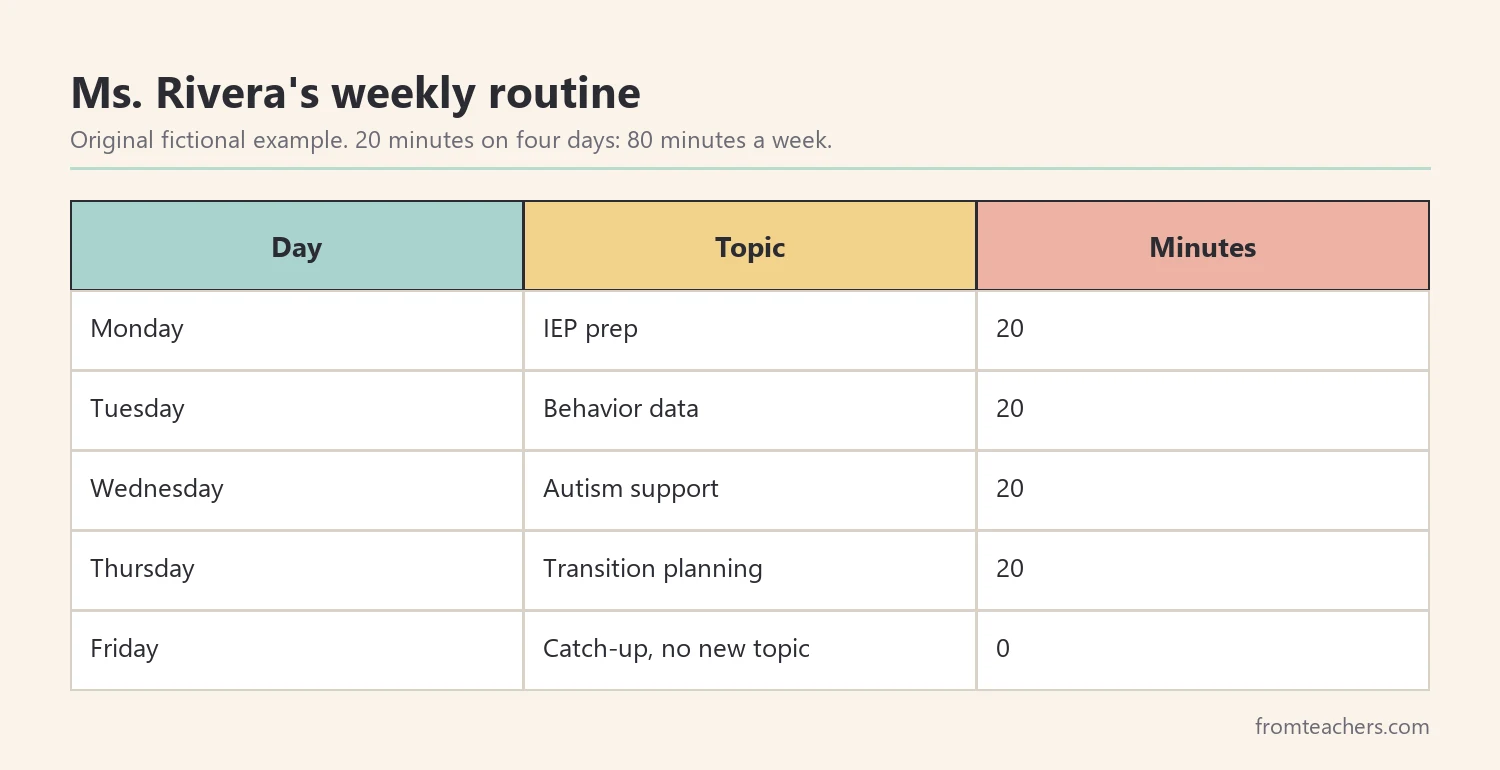
Worked example. Ms. Rivera sets a 20-minute block four days a week. Monday is IEP prep, Tuesday is behavior data, Wednesday is autism support, and Thursday is transition planning. That adds up to 80 minutes a week. Friday stays free for catching up. After a month, she has tried a new visual schedule, a calmer meeting agenda, and a simple behavior tracking sheet.
As a result, her library is now part of her week, not a pile of good intentions.
Also, keep a short log of what you try. One line per idea is enough: the resource, the student or group, and what happened. Over time, this log shows which special education teacher resources really earn their place and which ones only looked good on paper.
5. Share and review your library with the team
Finally, remember that you do not work alone. Paraprofessionals, general education teachers, related service providers, and families all support the same students. A shared set of special education teacher resources helps everyone use the same language and strategies.
Start by sharing a few key items. For example, give paraprofessionals a short behavior guide and the visual supports you use. Also, share a one-page summary with general education teachers so they know what supports each student needs in their class.
Then, review the library each term. Ask three questions: what did we use, what did we never open, and what did we wish we had? Remove what nobody uses. Add what the team keeps asking for.
In addition, invite families into the conversation. Parents often know which visuals or routines work at home. When home and school draw on the same special education teacher resources, students see the same supports in both places, and progress is easier to build.
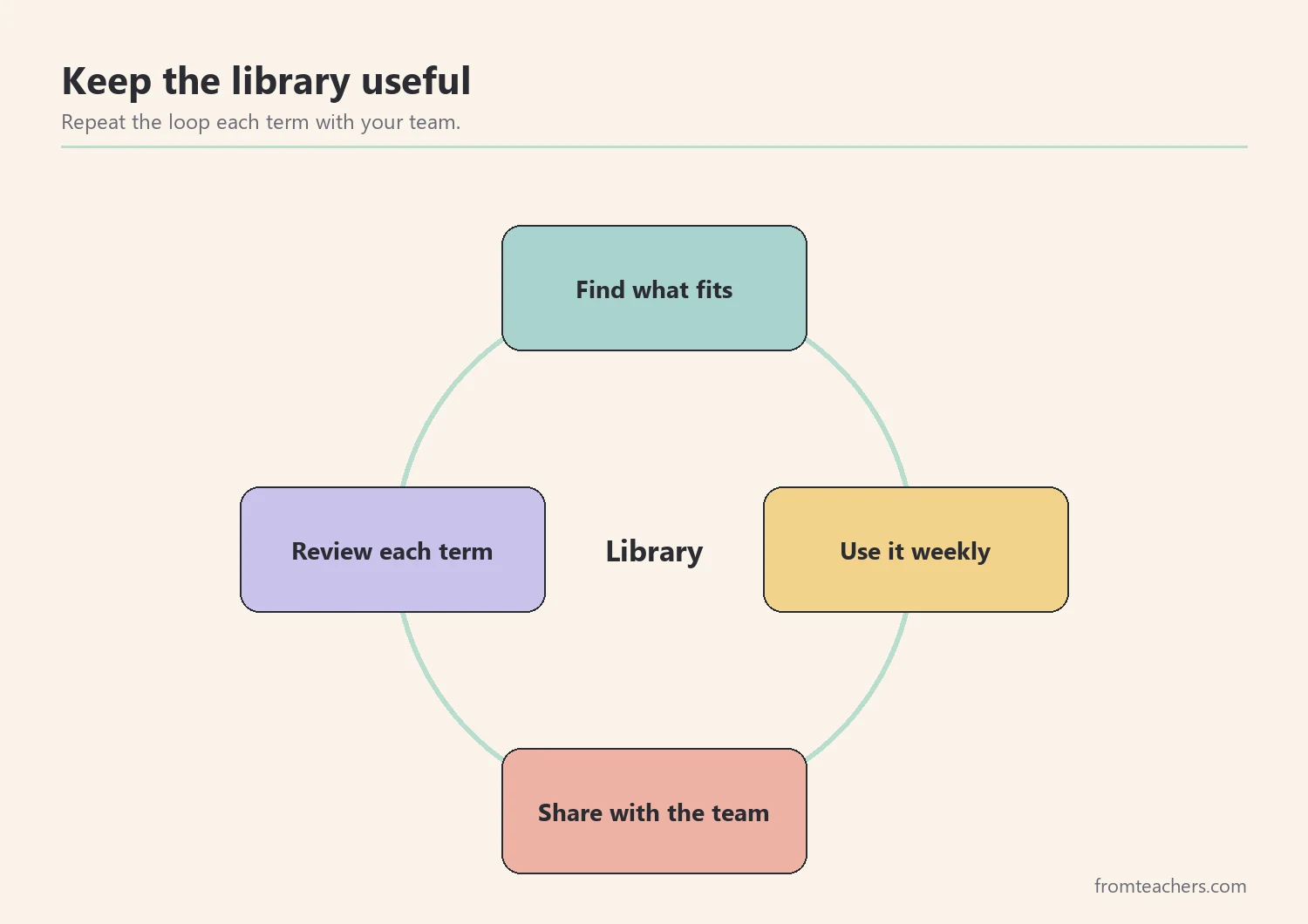
Worked example. At the end of the first term, Ms. Rivera meets with her two paraprofessionals. They agree the behavior and visual supports guides were used every week. The transition guide was used less, so they plan to use it more with the 3 older students next term.
They also remove two guides nobody opened and add a sensory break visual that one paraprofessional kept asking for. The library stays small, current, and tied to real students.
Common mistakes and how to avoid them
- Collecting everything. A huge folder is hard to use. Keep only what matches your caseload and remove the rest.
- Relying on unknown sources. Some free files are outdated or inaccurate. Check legal questions against official sources and your district’s guidance.
- Saving without using. A resource you never open does not help. Link each one to a weekly task.
- Keeping it to yourself. Your team needs the same tools. Share key guides with paraprofessionals and general education teachers.
- Never reviewing. Needs change each year. Review the library each term and update it.
Questions teachers and parents ask about special education teacher resources
Where should a new special education teacher start?
Start with your caseload and your district’s procedures. Then add trusted public sources for background and a few practical guides for IEPs and behavior. Build from there as needs come up.
Are free special education teacher resources good enough?
Many free resources are excellent, especially from government and university sources. However, practical classroom tools can take a long time to find for free. Many teachers use a mix of free references and a few paid guides that save planning time.
How do I know if a resource is respectful of students?
Read how it talks about students. Good resources describe strengths, needs, and supports, and they avoid shaming language. They also encourage working with families and the student.
Can parents use these resources too?
Many can. Guides on visual schedules, behavior, and transition often help families support the same skills at home. Sharing them can also make IEP meetings more collaborative.
How often should I update my library?
A short review each term works well for most teachers. In addition, update it whenever your caseload changes a lot, such as when new students join or older students begin transition planning.
Related reading: Special Education: A Complete Guide for Parents and Educators, Accommodations vs Modifications in Special Education: The Difference Explained, and How Teachers Communicate With Parents in Special Education: Building a Strong Partnership.
A companion resource for special education teacher resources:
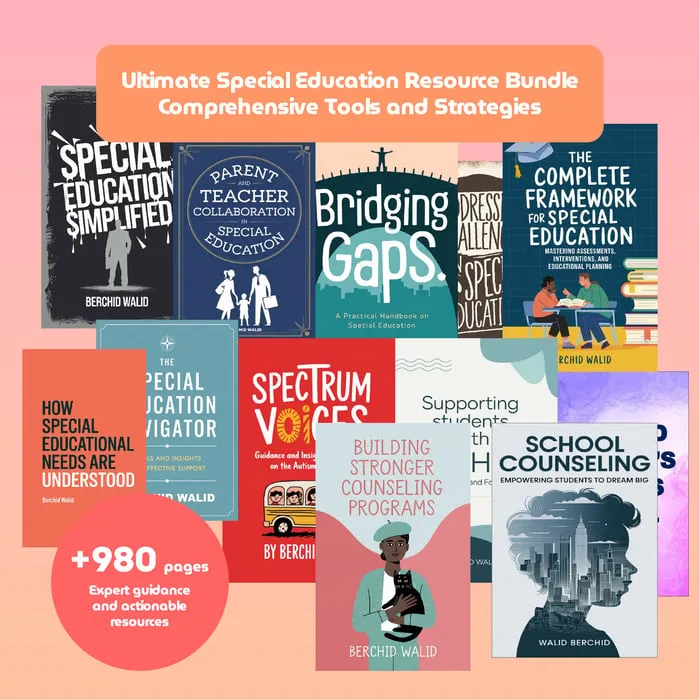
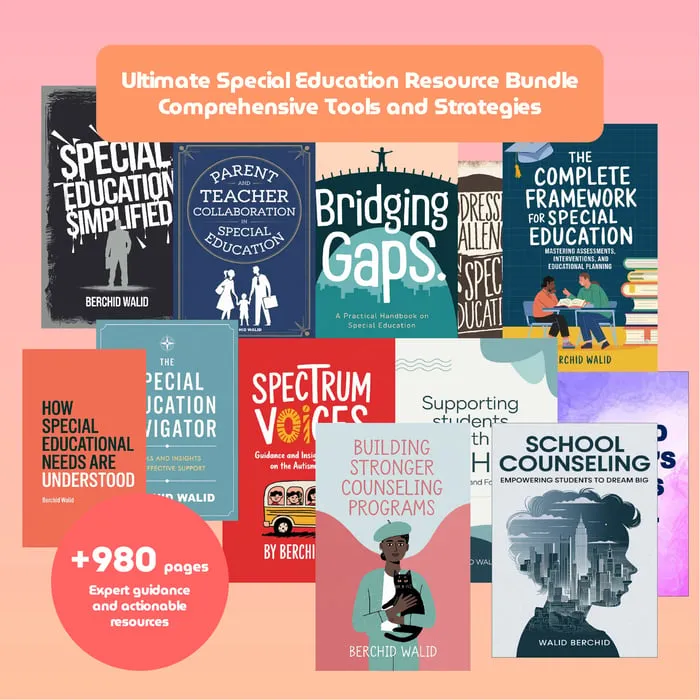
Special Education Guides Bundle: IEP, Autism & Behavior: a collection of 31 special education guides and books covering behavior, autism support, transition planning, and classroom systems, available as an instant digital download.
Sources and scope
- IDEA, U.S. Department of Education: the law behind special education services and IEPs.
- IRIS Center, Vanderbilt University: free modules on IEPs, behavior, and evidence-based practices.
- Council for Exceptional Children: a professional organization for special educators.
- What Works Clearinghouse: reviews of education research and practices.
- Understood.org: practical articles for families and teachers on learning differences.
This guide covers how to choose, organize, and use teaching resources in special education. It does not give legal advice on IEPs or replace your district’s procedures, which you should always follow.
Key takeaways
- Map your caseload first, then choose special education teacher resources that match it.
- Use trusted public sources for background and practical guides for daily work.
- Organize by topic with clear file names and a “Start here” page.
- Link each resource to a weekly task so it actually gets used.
- Share key guides with your team and review the library each term.


Leave a Comment