

Behavior plan implementation is the quiet step that decides whether a behavior intervention plan (BIP) helps a student or just sits in a binder. Picture a Tuesday morning: the plan says to offer a break card before independent work, but the substitute aide has never seen the plan, and the student’s day falls apart by 9:30. Nobody did anything wrong on purpose. The plan simply was not carried out the way it was written.
After reading this guide, you will be able to break a BIP into observable parts, watch real activities, score how consistently each part happens, give useful feedback, and decide what to change. In other words, you will be able to check whether the plan is working before you judge the plan itself.
Examples are fictional. Adapt to the student’s goals and agreed supports. This is guidance, not a diagnosis.
At a glance
- A BIP can only be judged fairly when it is carried out as written.
- Split the plan into small, observable components before you observe.
- Score each component on a simple 1 to 3 scale during real activities.
- Pair every low score with one specific, kind piece of feedback.
- Recheck within two weeks, then decide whether to change the plan or the support for staff.
1. Break the plan into observable components
First, read the BIP with one behavior plan implementation question in mind: what would an observer actually see if this part were happening? Many plans contain broad statements such as “provide positive support” or “use a calm approach.” These are good intentions, yet nobody can score them. Therefore, rewrite each strategy as an action an adult does at a specific moment.
For example, “use a calm approach” can become “speaks in a low voice and gives one direction at a time when the student raises his voice.” Similarly, “reinforce appropriate behavior” can become “gives a token within ten seconds of the student starting work.” Each line should name who does it, when, and what it looks like.
Next, group the components by the part of the plan they come from. Most BIPs include prevention strategies (changes before behavior happens), teaching strategies (replacement skills), and response strategies (what adults do after behavior). Keeping these groups visible helps you notice patterns later, such as strong responses but weak prevention.
Consider our fictional student, Amir, a fourth grader whose plan targets leaving his seat during writing. His team listed six components:
| Group | Component | What you would see |
|---|---|---|
| Prevention | Visual schedule | Schedule reviewed before writing starts |
| Prevention | Chunked task | Writing split into three short parts |
| Teaching | Break card | Adult prompts card use before frustration |
| Teaching | Practice | Card practiced once in a calm moment |
| Response | Token | Token given within ten seconds of starting |
| Response | Planned redirect | One quiet direction, no lecture |
Good behavior plan implementation starts here, because a component list that everyone understands is also the list that everyone can follow. Share the rewritten list with every adult who works with the student, not only the observer.
Keep the list short for behavior plan implementation reviews. Six to twelve components is usually enough for one observation, because an observer cannot track thirty things at once.
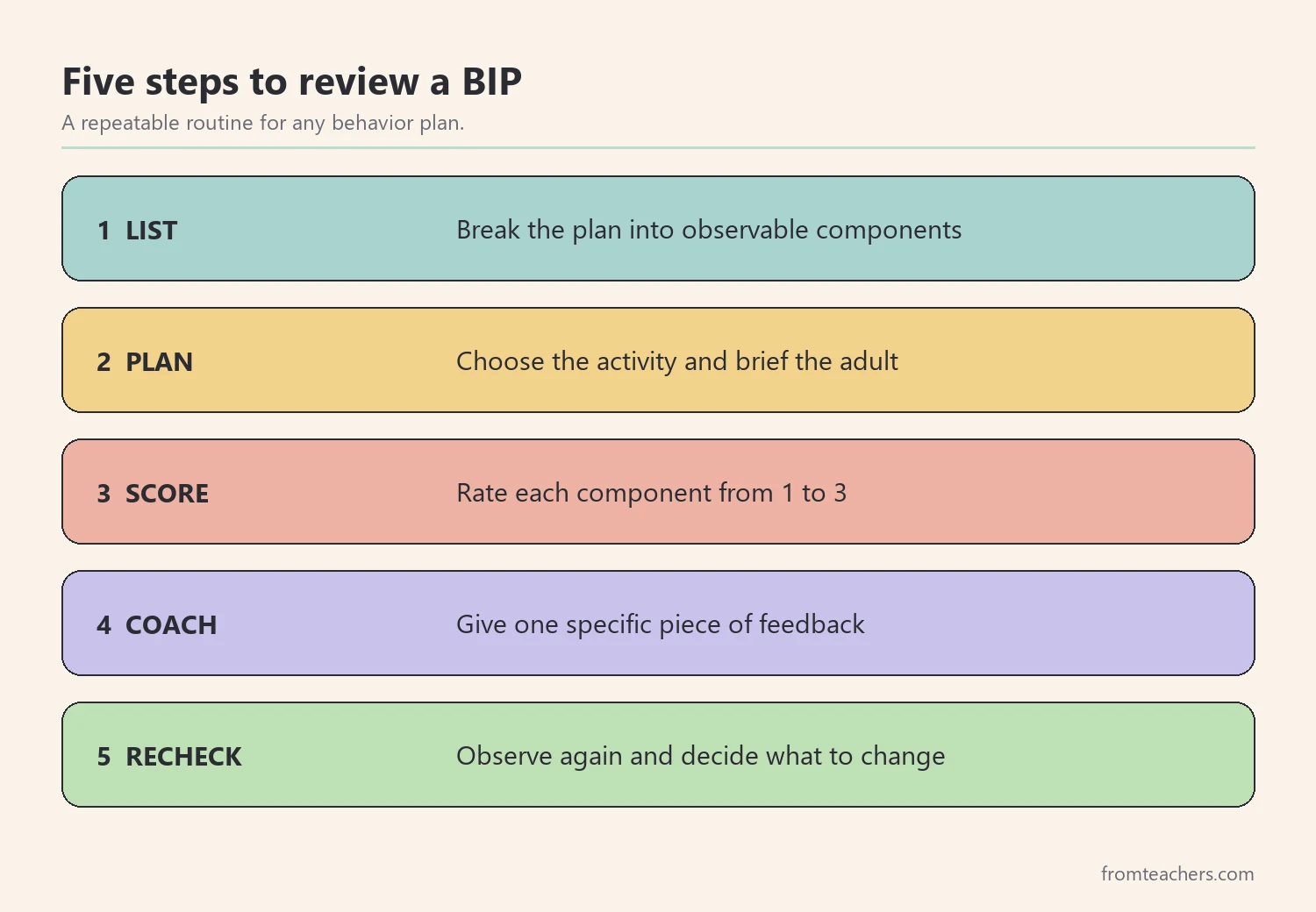
2. Plan the behavior plan implementation observation
Once the components are clear, decide when to observe. The best time is the activity where the target behavior usually happens. For Amir, that is writing block, so an observation during recess would tell the team very little.
Next, agree on the basics with the adult being observed, since behavior plan implementation depends on trust as much as on paperwork. Share the component list in advance, explain that the goal is support rather than evaluation, and set a time to talk afterward. As a result, staff are far more likely to see the observation as help, not as a test.
Also record the context. A useful observation record notes the date, time, staff observed, who completed the form, and the activities observed. Without this, it is hard to compare two observations fairly, because a calm Friday afternoon and a busy Monday morning are not the same.
Finally, plan to observe more than one adult when several people support the student. In many schools, a teacher, a paraprofessional, and a specials teacher all work with the same child. Behavior plan implementation often looks strong with one adult and weak with another, and that difference is useful information.
It also helps to decide how long you will stay. Twenty to thirty minutes during the target activity is often enough to see most components. A short, focused visit makes behavior plan implementation reviews easier to repeat, and repetition is what turns a single check into a habit.
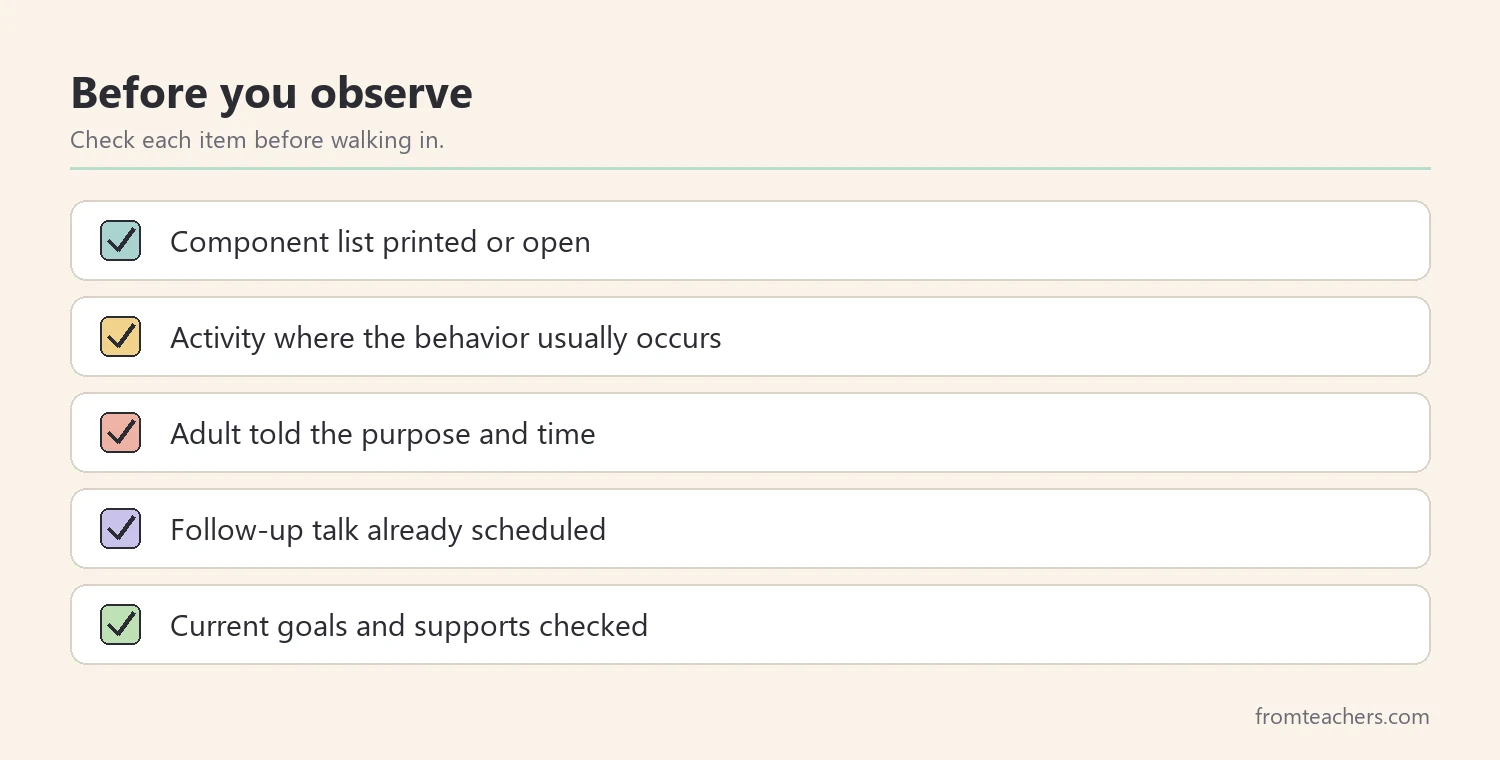
Use this short checklist before you walk in:
- Component list printed or open on a device
- Activity chosen where the behavior usually occurs
- Staff member told the purpose and the time
- Follow-up conversation already scheduled
- Student’s current goals and supports checked
3. Score how consistently each component happens
During the observation, watch quietly and score each component on a simple scale. A three-point scale works well because it is fast and easy to agree on: 1 means seldom, 2 means sometimes, and 3 means consistently. Notably, a short scale also reduces arguments about small differences.
Strong behavior plan implementation scoring also depends on agreement. If two people observe, score the same activity separately once, compare, and talk through any row where you differ by more than one point. As a result, your scores will mean the same thing across observers.
Score what you actually see. If a component never had a chance to happen, for example no frustration occurred so the break card was never needed, mark it as not observed rather than giving a low score. Otherwise, the total will punish staff for a calm day.
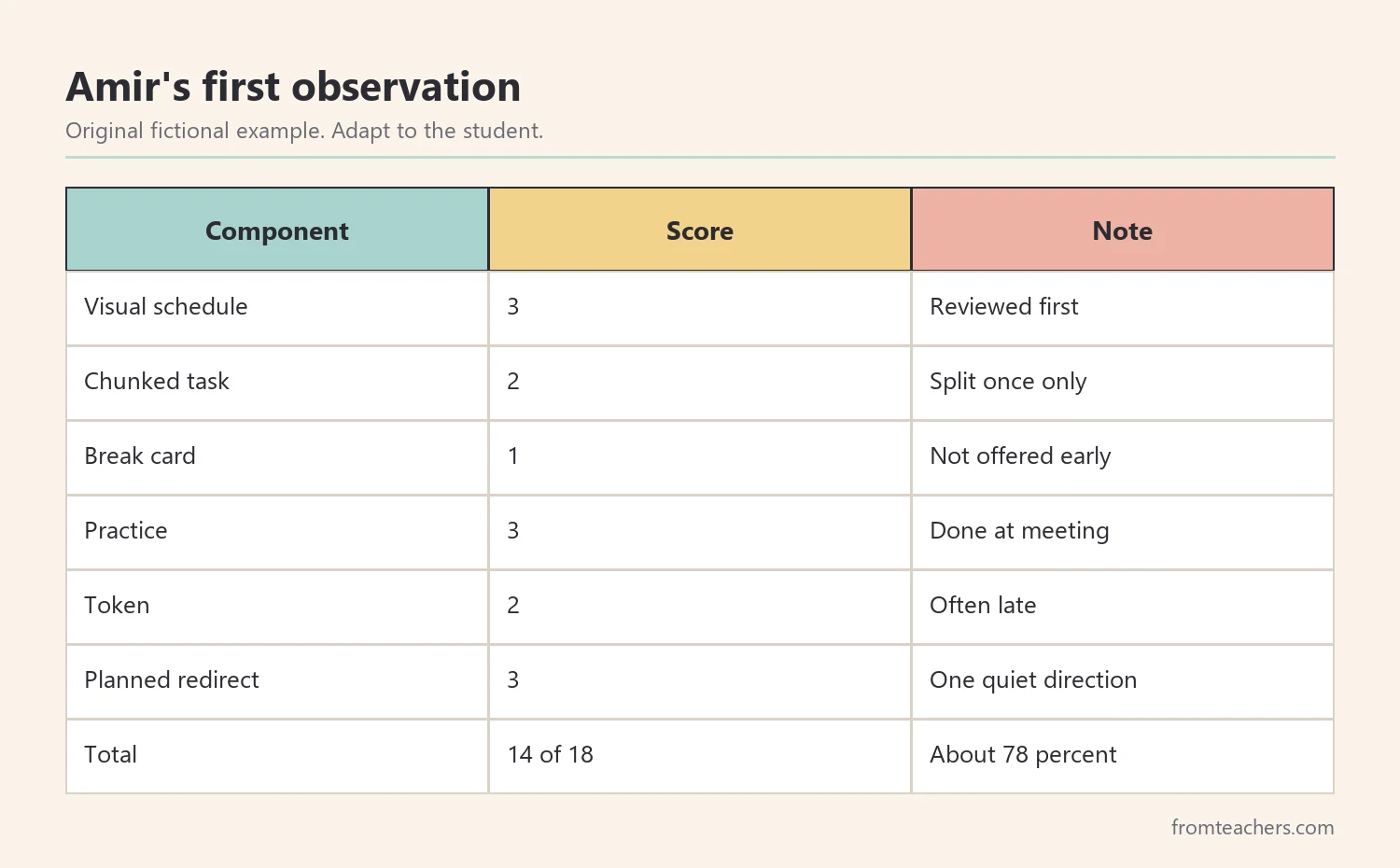
Here is how Amir’s first observation looked:
| Component | Score (1 to 3) | Quick note |
|---|---|---|
| Visual schedule | 3 | Reviewed before writing |
| Chunked task | 2 | Split once, not three times |
| Break card | 1 | Card not offered before frustration |
| Practice | 3 | Practiced at morning meeting |
| Token | 2 | Given, but often late |
| Planned redirect | 3 | One quiet direction each time |
| Total | 14 of 18 | About 78 percent |
A percentage can be a handy summary for the team. To find it, add the scores, divide by the highest possible total, and multiply by 100. Leave out any component marked not observed, and lower the highest possible total to match, so the number stays fair.
The total gives a quick picture, but the individual rows matter more. In this example, the break card is the weak link, and it happens to be the replacement skill the whole plan depends on. Consequently, the team now knows exactly where to focus.
If you want a ready-made layout for this step, the fillable BIP Implementation Review Form includes context fields, twelve component rows, the same 1 to 3 scale, and a feedback column beside every row.
4. Give specific feedback after behavior plan implementation checks
Scores alone rarely change practice. Instead, the conversation after the observation is where improvement happens. Hold it soon, ideally the same day, while both of you still remember the details.
Start with what went well, and be concrete. “The schedule review before writing was clear and Amir looked at it twice” is far more useful than “nice job.” Then move to one or two components that scored low, and describe what you saw without judgment.
Next, agree on one small, specific action. For Amir’s aide, that might be: “When Amir puts his pencil down and looks at the door, hold up the break card and point to it.” This is easy to remember and easy to check next time. In contrast, a list of eight corrections is likely to be forgotten by lunch.
Notably, feedback about behavior plan implementation works best when it sounds like coaching between colleagues. Use “we” language, refer to the plan rather than to personal style, and invite the adult to suggest the next step first.
Finally, ask what gets in the way. Sometimes the adult knows the plan well but has no break card within reach, or covers two students at once during writing. These are system problems, and the fix may be a materials change or a schedule change rather than more training.
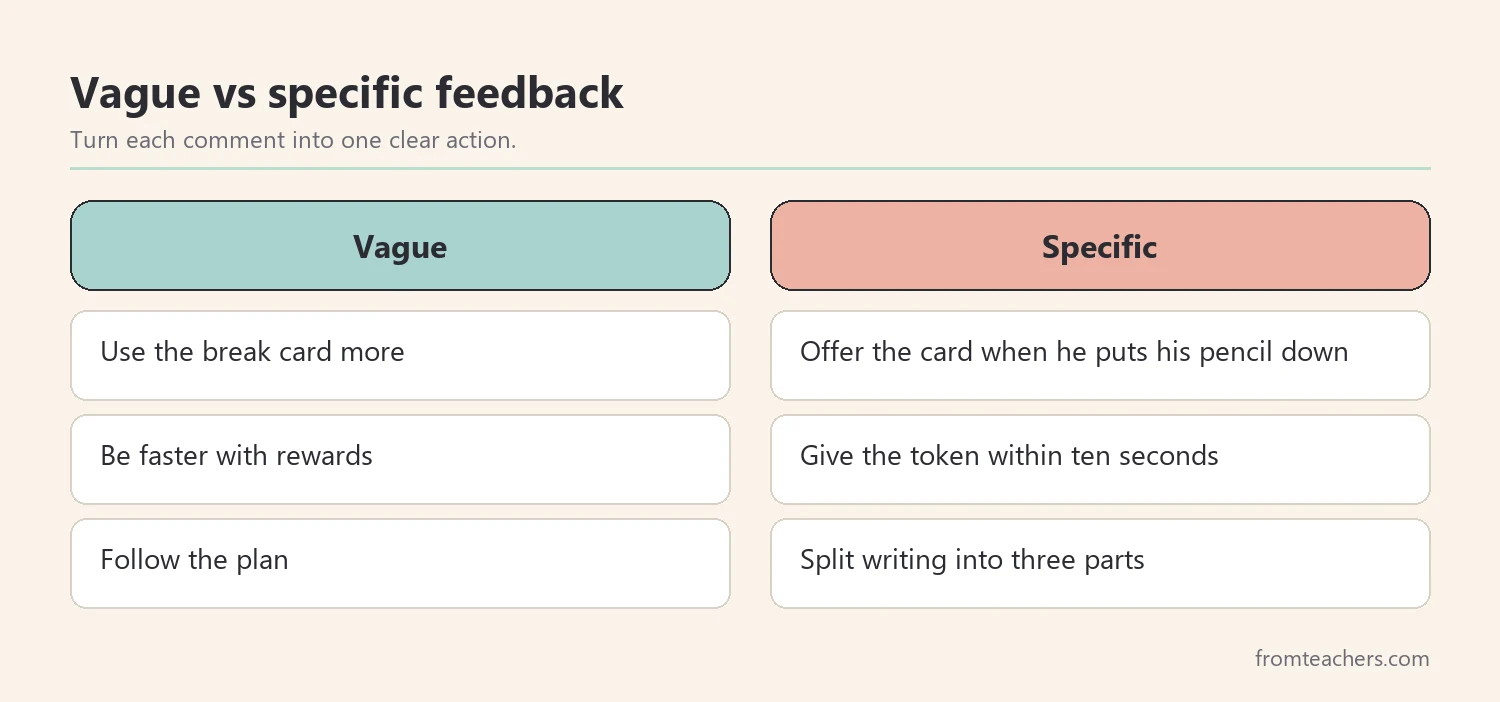
| Vague feedback | Specific feedback |
|---|---|
| Use the break card more | Offer the card when he puts his pencil down |
| Be faster with rewards | Give the token within ten seconds of starting |
| Follow the plan | Split writing into three parts on the board |
5. Recheck and decide what to change
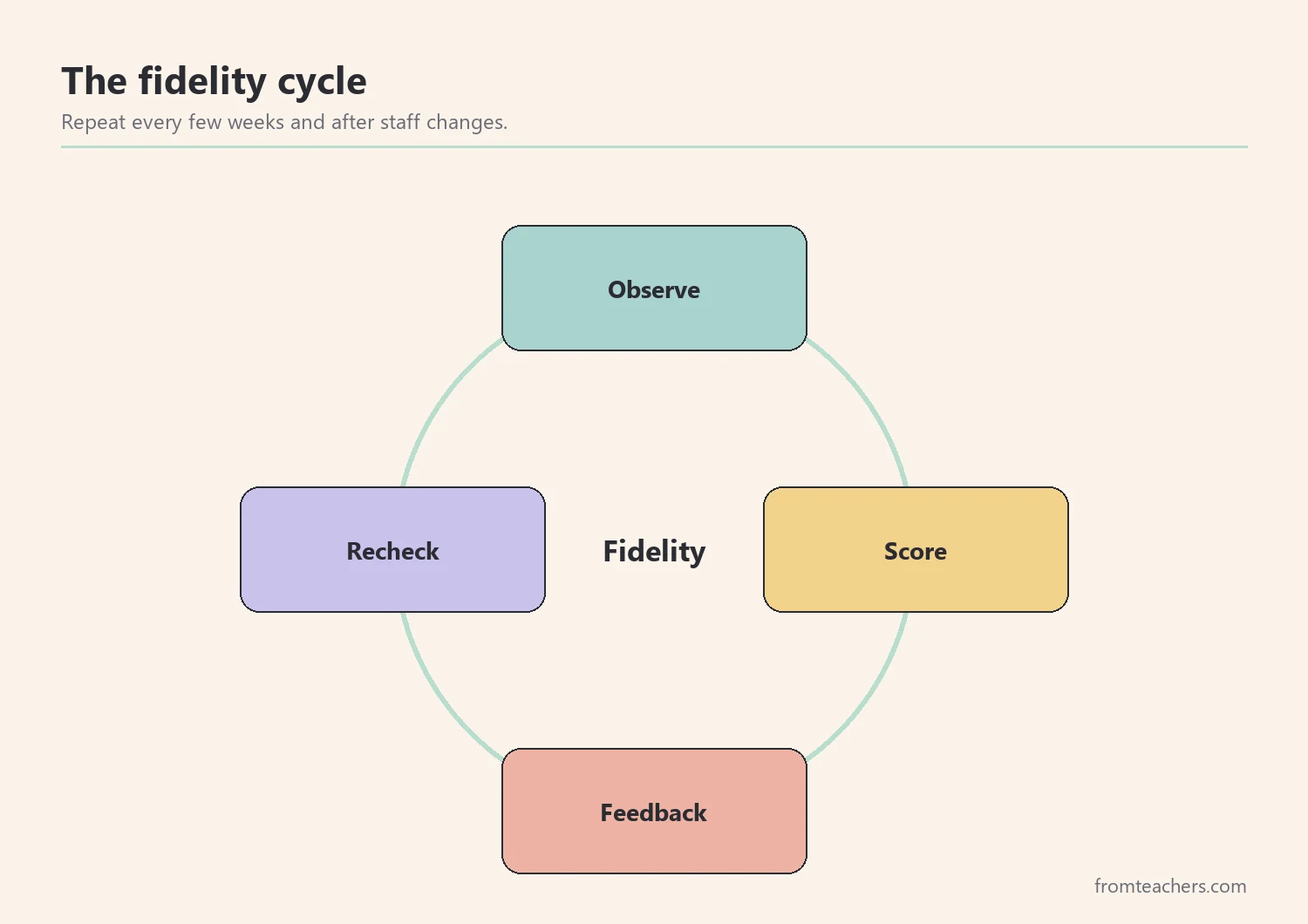
After feedback, observe again within about two weeks during the same activity. Use the same component list so the two observations are comparable. If the scores rise, you are finally in a position to judge whether the plan itself is helping the student.
For Amir, the second observation showed the break card at 3 and the token at 3, with a new total of 17 of 18. Meanwhile, the team’s behavior data showed fewer times out of seat during writing. Because the plan was now being followed, the team could reasonably link the change to the plan.
Use this simple decision guide when you review both sets of information:
- High implementation, behavior improving: keep the plan and keep checking occasionally.
- High implementation, no improvement: the plan may need revision, so bring it back to the team.
- Low implementation, any result: support staff first, because the plan has not had a fair test.
In addition, write down your behavior plan implementation decision and why you made it. A short note in the student’s file helps new staff, substitutes, and the next IEP meeting understand the history. Over time, a pattern of reviews also shows administrators where training or staffing needs to improve.
Also, share the results with the whole team, not only the person observed. When everyone sees that behavior plan implementation improved from 14 to 17 of 18, the progress feels shared, and staff are more willing to be observed again.
Remember that behavior plan implementation checks are a routine, not a single event. A short observation every few weeks, plus a quick recheck after any staffing change, keeps the plan alive.
Common mistakes and how to avoid them
- Judging the plan before checking it was used. Fix: always look at implementation scores next to behavior data.
- Scoring vague components. Fix: rewrite each strategy as something an observer can see.
- Observing at the wrong time. Fix: choose the activity where the behavior usually occurs.
- Giving too much feedback at once. Fix: agree on one or two specific actions per conversation.
- Treating the review as an evaluation. Fix: explain the purpose in advance and lead with strengths.
- Never rechecking. Fix: schedule the second observation before you leave the first conversation.
Questions teachers and parents ask about behavior plan implementation
Who should observe behavior plan implementation?
Behavior plan implementation is usually observed by a behavior analyst, special education coach, case manager, or administrator who knows the plan well. What matters most is that the observer understands each component and can give supportive feedback afterward.
How often should a BIP be reviewed this way?
Many teams start with an observation soon after the plan begins, then recheck within a couple of weeks. After that, a check every few weeks, or after a staffing change, is a practical routine. Follow your school’s own procedures and the student’s agreed review dates.
What if one adult scores much lower than another?
Treat it as useful behavior plan implementation information, not a problem person. Ask what gets in the way, check whether that adult received the plan and any training, and agree on one clear next step.
Can parents use this process at home?
Parents can adapt the idea by listing the home strategies and noticing which ones happen consistently. However, any shared school and home plan should be discussed with the student’s team.
Does a high score mean the plan is working?
Not by itself. A high behavior plan implementation score means the plan got a fair test. You still need behavior data to know whether the student is making progress.
Related reading: Moving Beyond Shame and Behavior Charts, The Power of Data Tracking in Special Education, and Meltdowns vs Tantrums: A Guide to Understanding and Responding.
A companion resource for behavior plan implementation
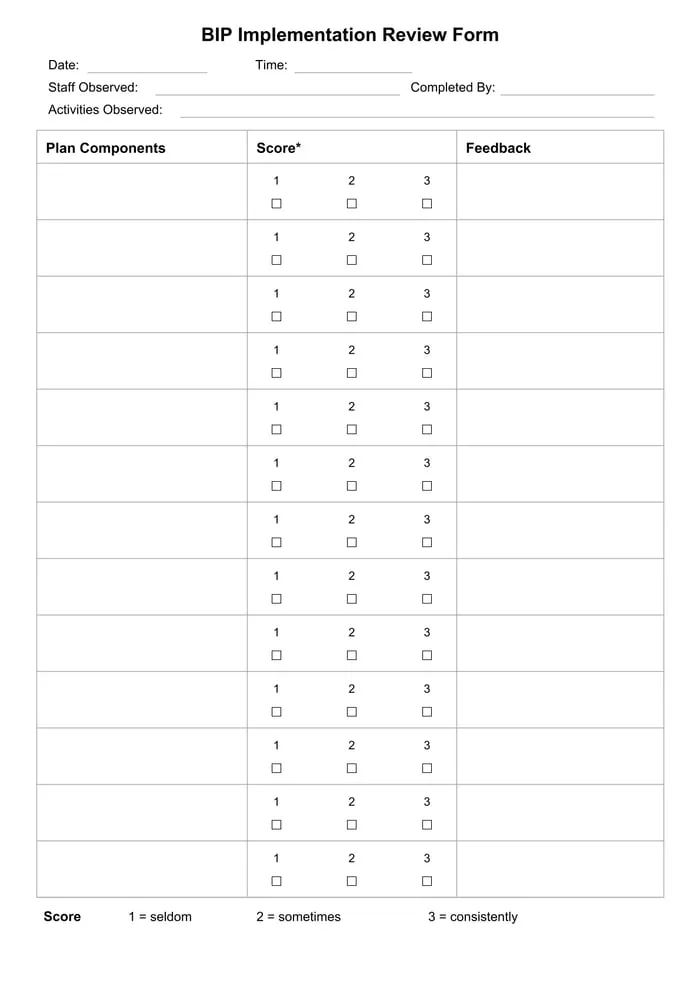
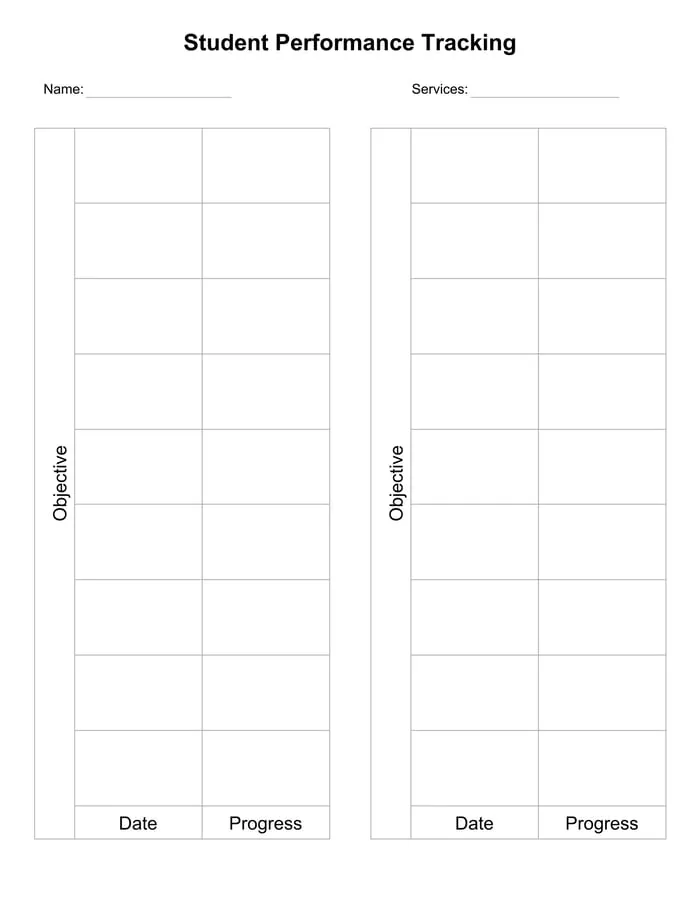
BIP Implementation Review Form: a fillable PDF for observing staff during real activities, scoring each plan component on a 1 to 3 scale, and writing specific feedback beside every row.
Sources and scope
- Individuals with Disabilities Education Act (IDEA), U.S. Department of Education: the federal law and guidance behind IEPs and related supports.
- IRIS Center, Vanderbilt University: free modules on behavior and classroom supports.
- Center on PBIS: resources on positive behavioral interventions and supports, including implementation fidelity.
- What Works Clearinghouse: reviews of education research.
This guide covers a practical routine for checking whether a BIP is carried out as written; it does not cover how to conduct a functional behavior assessment or write the plan itself.
Key takeaways
- Behavior plan implementation must be checked before a BIP is judged.
- Observable components make scoring fair and fast.
- A 1 to 3 scale shows the weak links clearly.
- One specific action per conversation changes practice more than a long list.
- Recheck regularly, and pair implementation scores with behavior data.







Leave a Comment