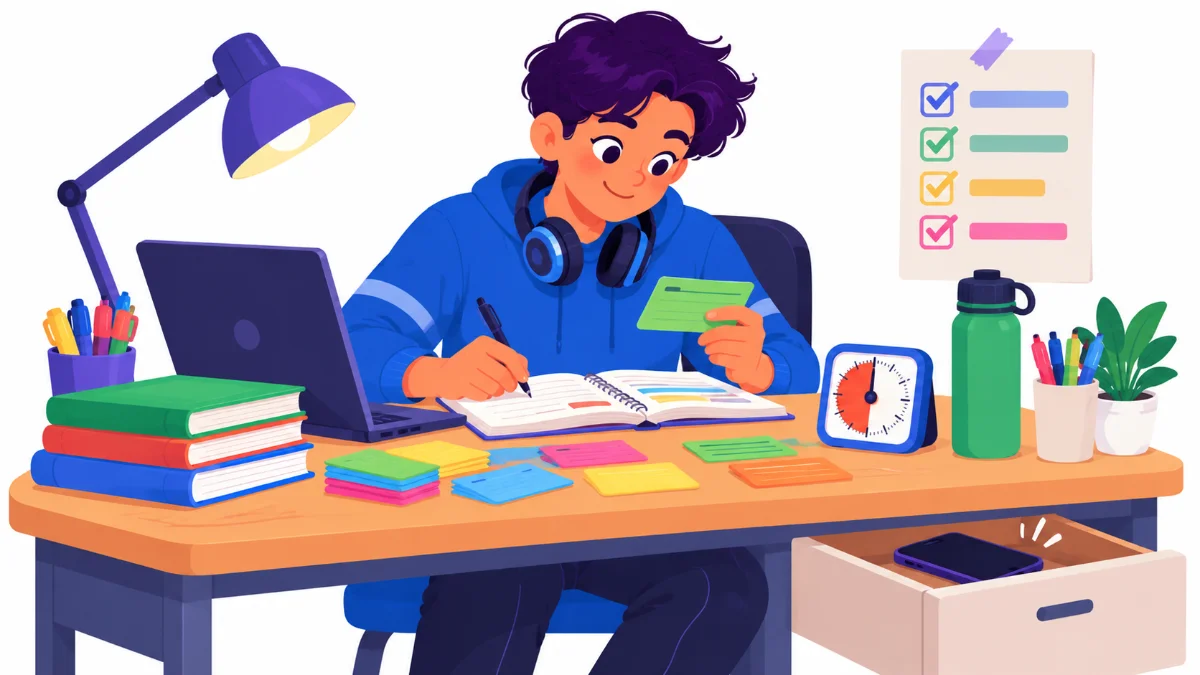

ADHD study tips for high school students need to fit how ADHD brains actually work: strong interest, short bursts of focus and trouble starting boring tasks. Advice like “just sit down for two hours” rarely helps. Picture Jordan, age 16, a junior with ADHD. He understands chemistry in class, but at home he opens his notes, checks his phone and suddenly an hour is gone.
This list is written for teens with ADHD, and for the parents and teachers who support them. It ranks ten tips from the least effort to start to the ones that take planning. Jordan appears as the fictional example, so you can see which changes made the biggest difference for his study evenings.
Examples are fictional. Adapt to the student’s goals and agreed supports. This is guidance, not a diagnosis.
At a glance
- Start with small, short study blocks.
- Put the phone out of reach, not just face down.
- Study actively, not by rereading.
- Use movement and breaks on purpose.
- Plan the week, not just tonight.
How we ranked these tips
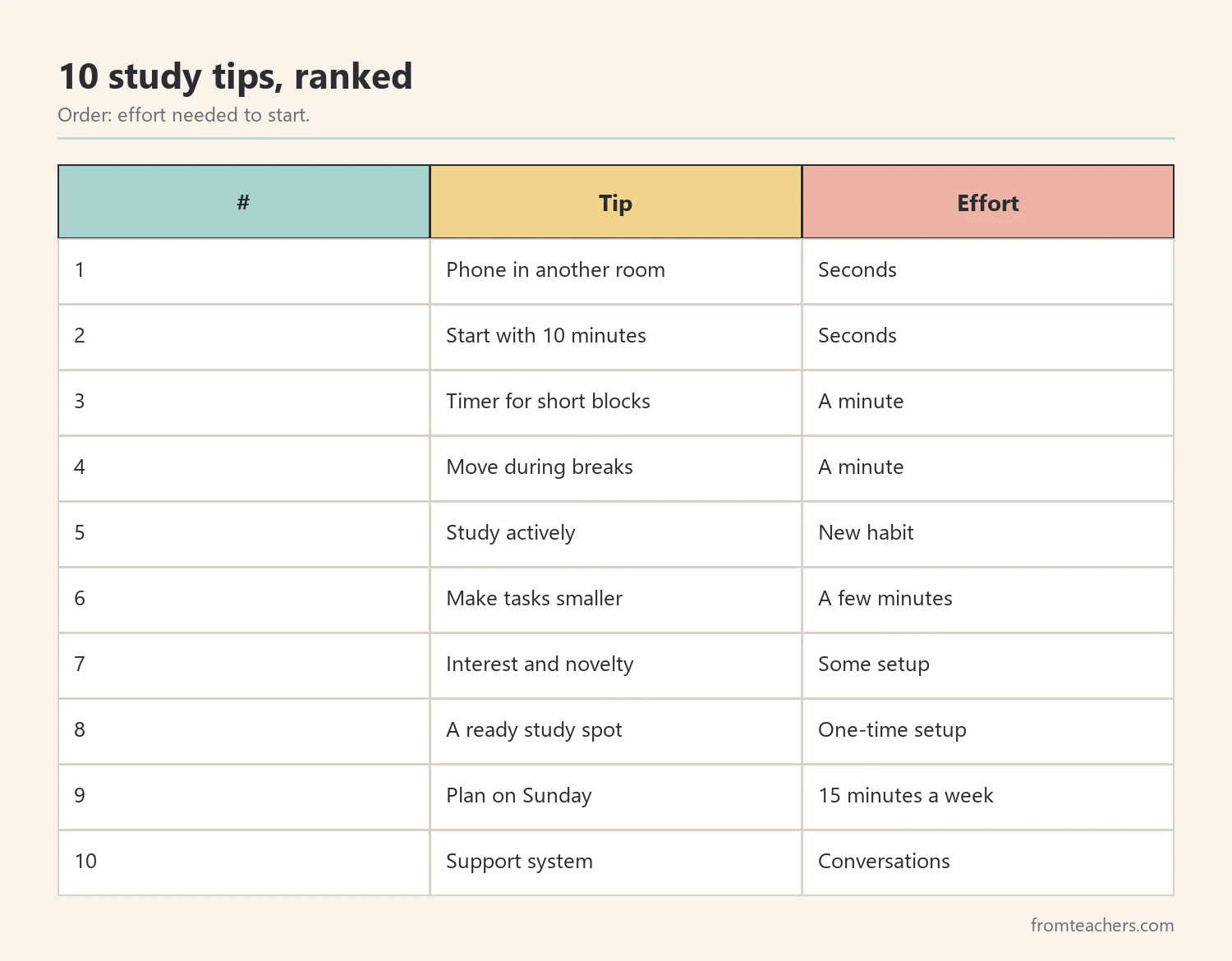
We ranked the ten tips by how much effort they take to start. The first few take seconds. The later ones take setup or a weekly habit. You do not need all ten. Many teens get the biggest change from two or three.
The tips are based on common strategies recommended by ADHD organizations and educators, such as breaking tasks down, reducing distractions and using active study methods. Figure 1 shows the ranking.
1. Put the phone in another room
What it is: the phone leaves the desk during a study block, ideally the room.
Why it helps: a phone within reach pulls attention, even when silent. Distance removes the easy temptation.
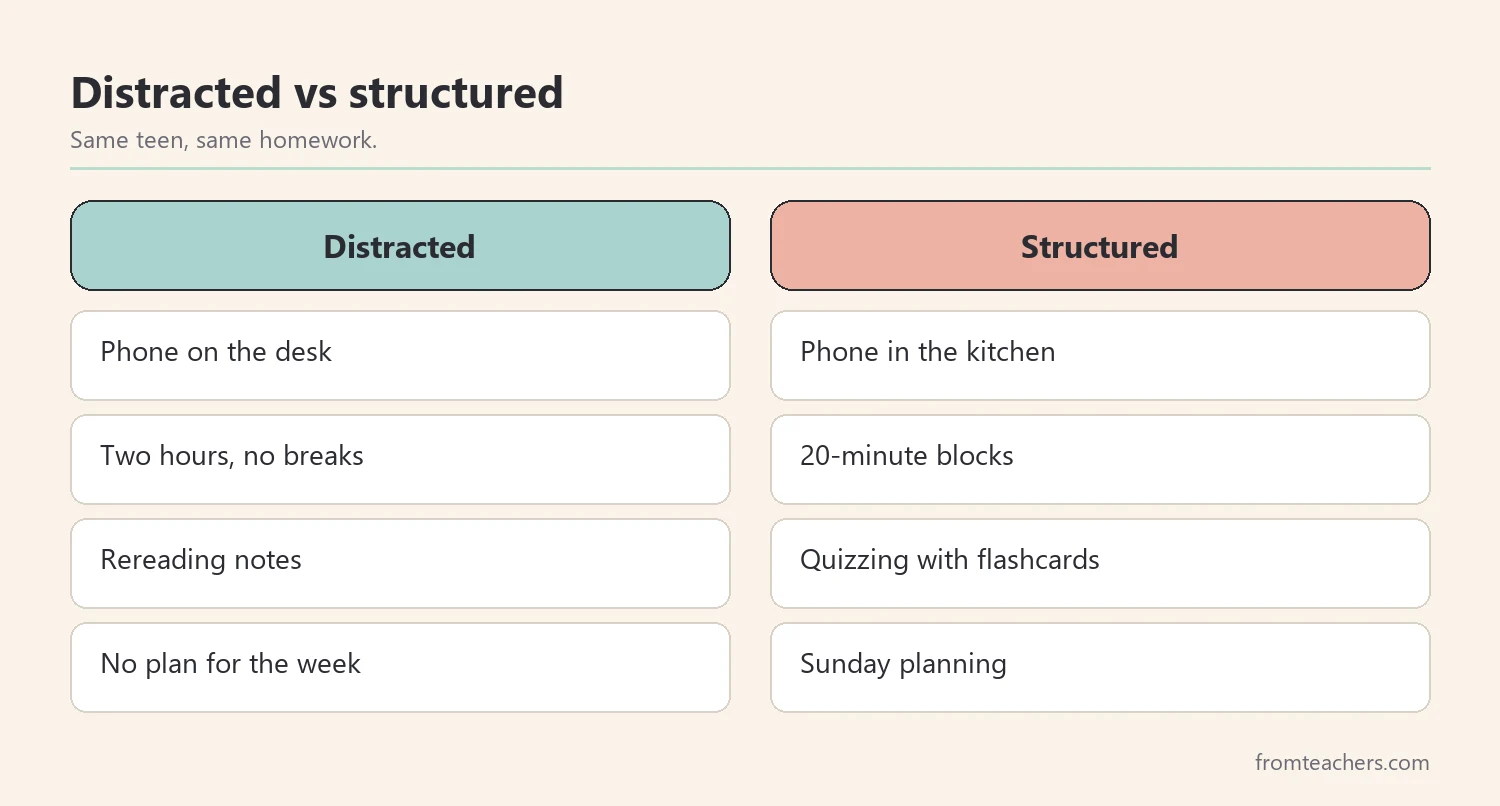
How to start: give the phone to a parent or put it in a drawer in the kitchen for one study block.
Example: Jordan’s first phone-free block lasted twenty minutes, and he finished more chemistry than in the whole previous evening.
2. Start with ten minutes
What it is: agree to study for just ten minutes, then decide whether to continue.
Why it helps: starting is often the hardest part with ADHD. A tiny commitment lowers the barrier.
How to start: set a timer for ten minutes and pick the easiest piece of the task.
Example: Jordan often kept going after the first ten minutes once he had started.
3. Use a timer for short blocks
What it is: study in short blocks, such as 20 or 25 minutes, with short breaks in between.
Why it helps: a visible end point makes focus easier to hold. Breaks prevent burnout.
How to start: try 20 minutes of work, 5 minutes of break, repeated two or three times.
Example: Jordan found that 20-minute blocks worked better than 25 for him.
4. Move during breaks
What it is: breaks include movement, such as a walk, stretching or shooting hoops.
Why it helps: many people with ADHD feel more alert after movement. Moving breaks are also less likely to turn into an hour on the phone.
How to start: list three movement breaks on a sticky note by the desk.
Example: Jordan did ten jumping jacks or walked around the block between blocks.
5. Study actively, not by rereading
What it is: quiz yourself with flashcards, practice problems or explaining ideas out loud.
Why it helps: active recall is a well-supported study strategy, and it keeps the brain engaged. Rereading feels easy but is often passive.
How to start: after reading a section, close the book and write or say three key points.
Example: Jordan explained chemistry formulas to his younger sister. He remembered them far better on the quiz.
6. Make tasks smaller
What it is: break big assignments into small, specific steps.
Why it helps: “study for the test” is overwhelming. “Make ten flashcards for chapter 4” is doable.
How to start: write the first three steps of any big task on a sticky note.
Example: Jordan turned “lab report” into “write the title and hypothesis,” “copy the data table” and “draft the conclusion.”
7. Use interest and novelty
What it is: add something interesting, such as color, music without lyrics, a new place or a study partner.
Why it helps: ADHD attention often responds well to interest and novelty.
How to start: change one thing, such as studying at the library or using colored pens.
Example: Jordan studied history at the kitchen table with a friend on video call, and they quizzed each other.
8. Set up a study spot
What it is: one consistent place with supplies ready and distractions removed.
Why it helps: a ready spot cuts the “gathering stuff” stage that often turns into distraction.
How to start: keep a box with pens, paper, calculator, charger and headphones at the desk.
Example: Jordan’s box saved him from three trips to his room each evening.
9. Plan the week on Sunday
What it is: a short weekly planning session for tests, assignments and practice.
Why it helps: time blindness is common with ADHD. Seeing the whole week makes deadlines real.
How to start: spend fifteen minutes on Sunday writing every due date and planning study blocks.
Example: Jordan noticed a chemistry test and an English essay on the same Thursday and spread the work across the week.
10. Build a support system
What it is: agreed support from parents, teachers or a tutor, plus any accommodations in an IEP or 504 plan.
Why it helps: ADHD is not a lack of effort. The right support makes effort pay off.
How to start: talk with your family about what kind of reminders help and which feel like nagging. The ADHD support toolkit for classroom and home explains ADHD in plain language and includes executive function help, routines and printable trackers families can use together.
Example: Jordan agreed with his mom on one check-in at 8 p.m. instead of reminders all evening.
A sample study log
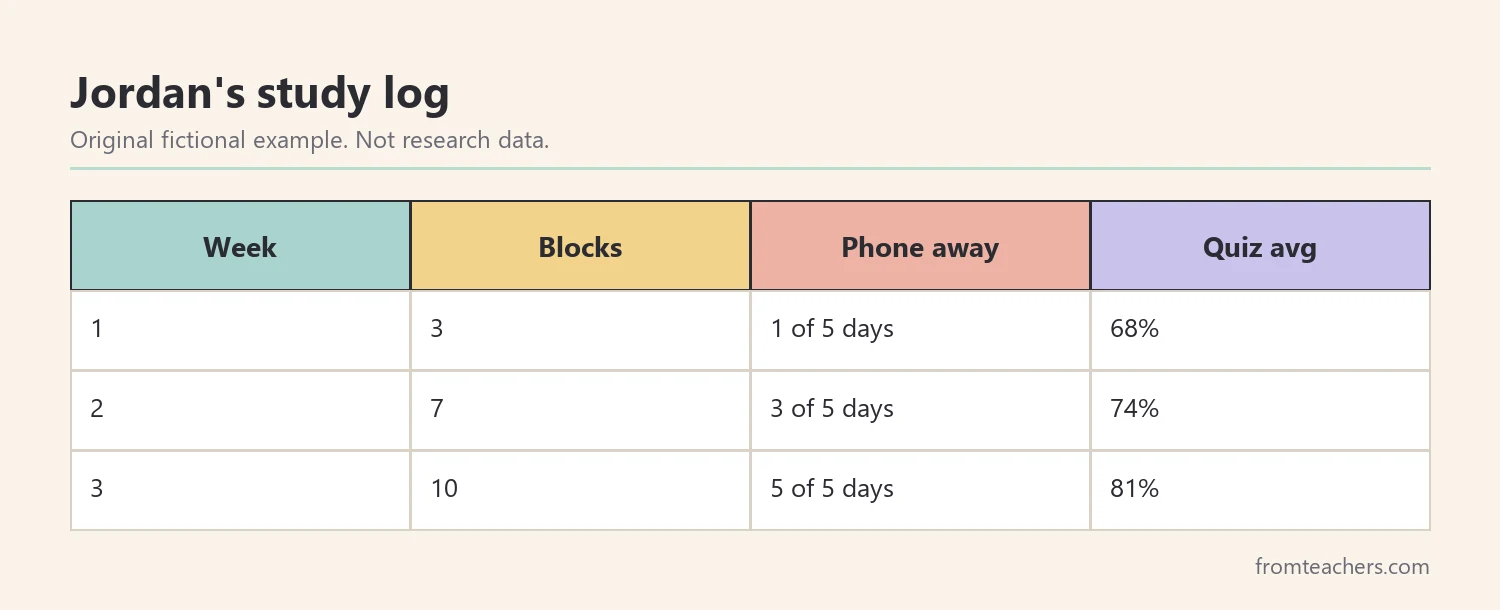
Tracking study blocks for a few weeks shows which tips work best. The table below is a fictional example of Jordan’s log. It shows the format only.
| Week | Blocks finished | Phone away | Quiz average |
|---|---|---|---|
| 1 | 3 | 1 of 5 days | 68% |
| 2 | 7 | 3 of 5 days | 74% |
| 3 | 10 | 5 of 5 days | 81% |
A simple study evening
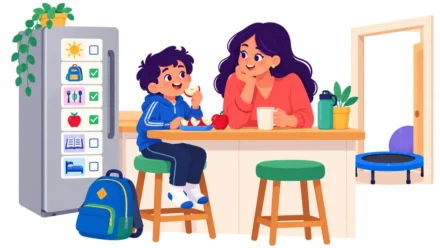
Many of these ADHD study tips for high school students fit into one simple routine. Figure 4 shows a four-step evening flow.
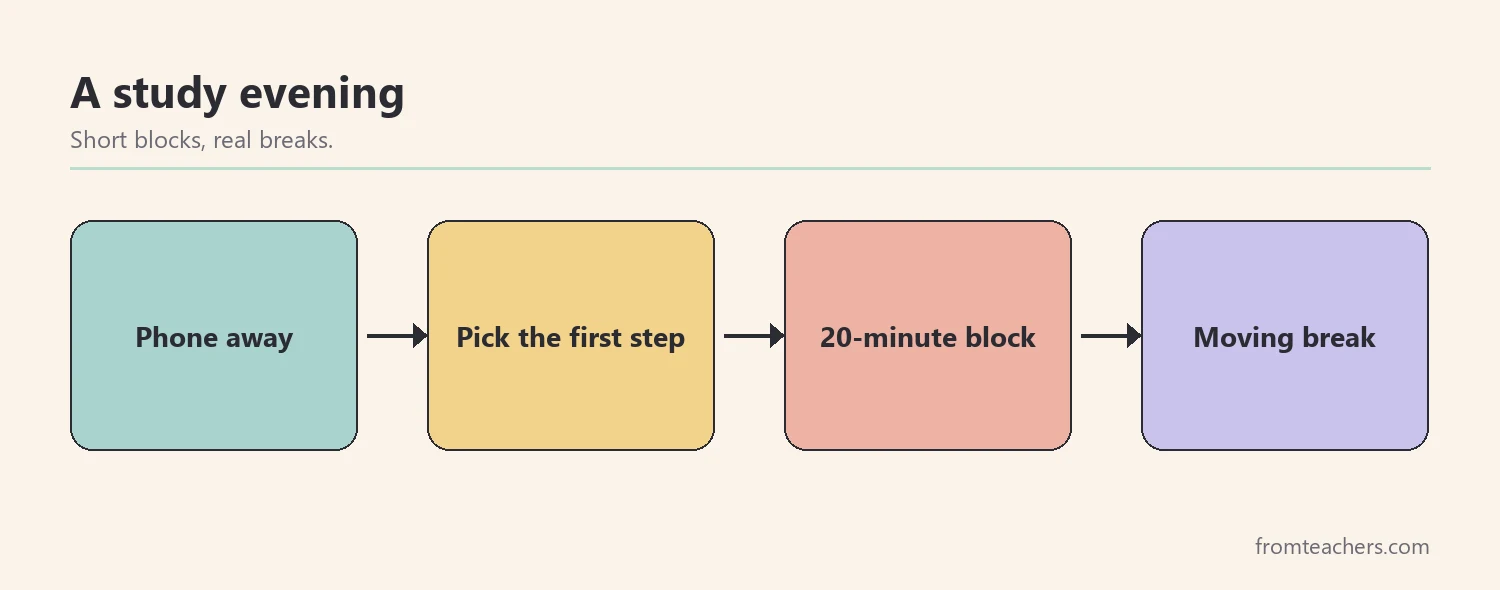
Keep the routine flexible. Some evenings, one block is a win. Other evenings, three or four blocks will feel fine. The goal is consistency over weeks, not perfect nights.
Studying for tests versus doing homework
Homework and test study need slightly different approaches. Homework has a clear end point, such as twenty math problems, so short blocks and a checklist usually work well. Test study is more open-ended, which makes it easier to put off and harder to know when you are done.
For tests, turn studying into concrete tasks. Make a list of topics, then create a small task for each one, such as “ten flashcards on cell parts” or “three practice problems on ratios.” Spread these tasks across several days instead of cramming the night before. Short, repeated practice over time usually sticks better than one long session.
Also, test yourself the way the teacher will test you. If the test has short answers, practice writing short answers. If it has problems to solve, practice solving problems without looking at the notes. This makes study time match the real task.
For parents: how to help without nagging
Many teens with ADHD hear reminders all day, at school and at home. Too many reminders can lead to arguments and less motivation. Instead, agree on a plan together: when study time starts, where the phone goes and when you will check in.
Notice effort, not just grades. A comment like “You finished three study blocks tonight” builds confidence. Also, stay in touch with teachers about missing work, so problems are caught early, and ask the school about accommodations such as extended time or a planner check if they are in your teen’s plan.
Common mistakes and how to avoid them
- Studying for hours without breaks. Fix: use short blocks with moving breaks.
- Phone on the desk. Fix: put it in another room.
- Only rereading notes. Fix: quiz yourself or explain out loud.
- Planning only for tonight. Fix: plan the whole week on Sunday.
- Blaming yourself. Fix: adjust the system, not your worth.
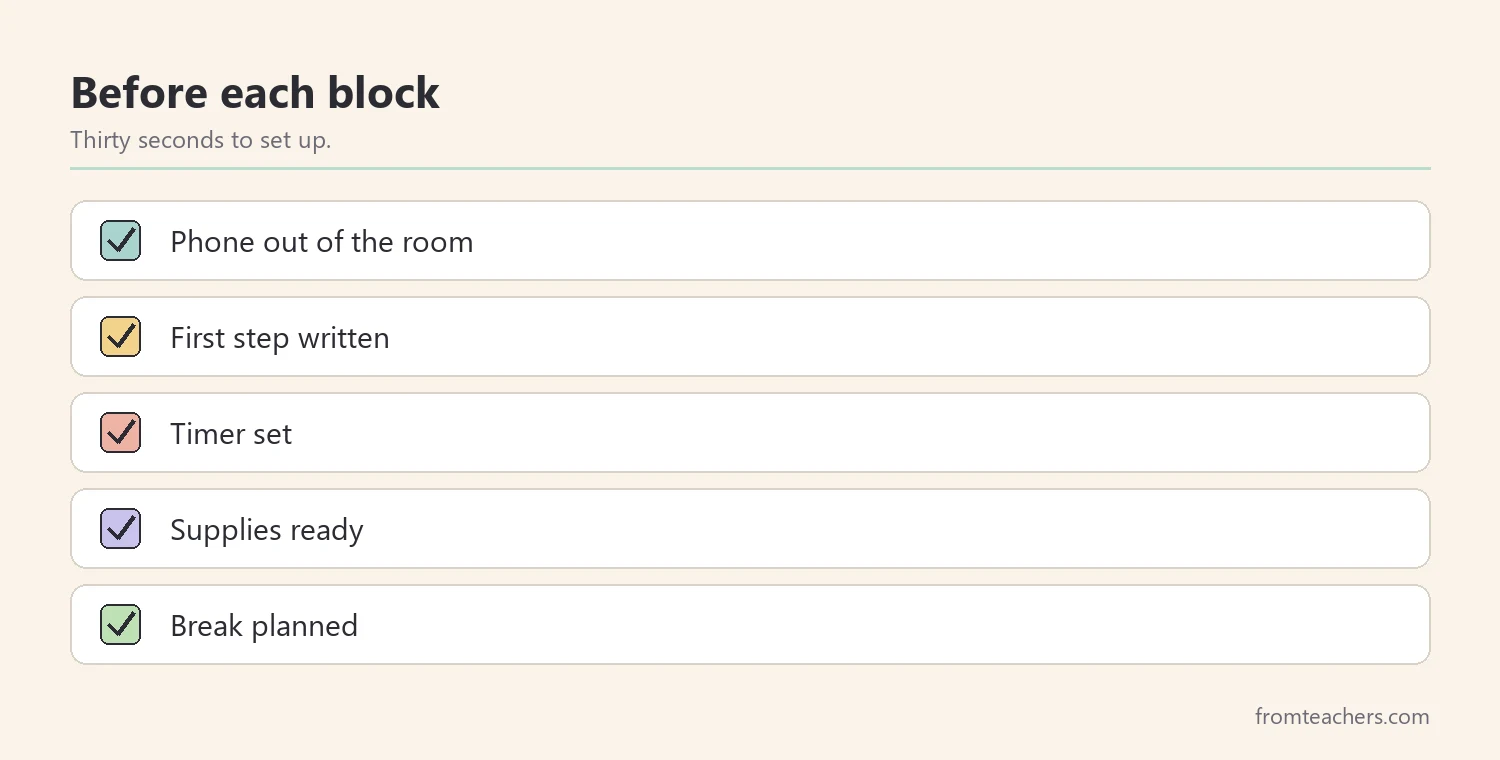
Figure 5 lists a quick setup check before each study block.
Questions about ADHD study tips for high school
Is music okay while studying?
Some teens focus better with music without lyrics. Others find any music distracting. Test both and compare results.
How long should a study block be?
Many teens with ADHD do well with 15 to 25 minutes. Start short and adjust.
What if I forget assignments?
Use one planner or app for everything and check it at the same time every day, such as after the last class.
Should I study with friends?
A focused study partner can help. If the session turns into chatting, try a short quiz game instead.
Do accommodations help with studying?
Accommodations mainly affect school, such as extended time. They can reduce stress, which helps study time feel more manageable.
Related reading: ADHD Children Support Strategies, Understanding Autism and ADHD Meltdowns, and Managing Sensory Overload in Autism and ADHD.
You may also need: Homework Help for ADHD: Focused, Simple, and Supportive Study Strategies.
A companion resource for teens with ADHD and their families:
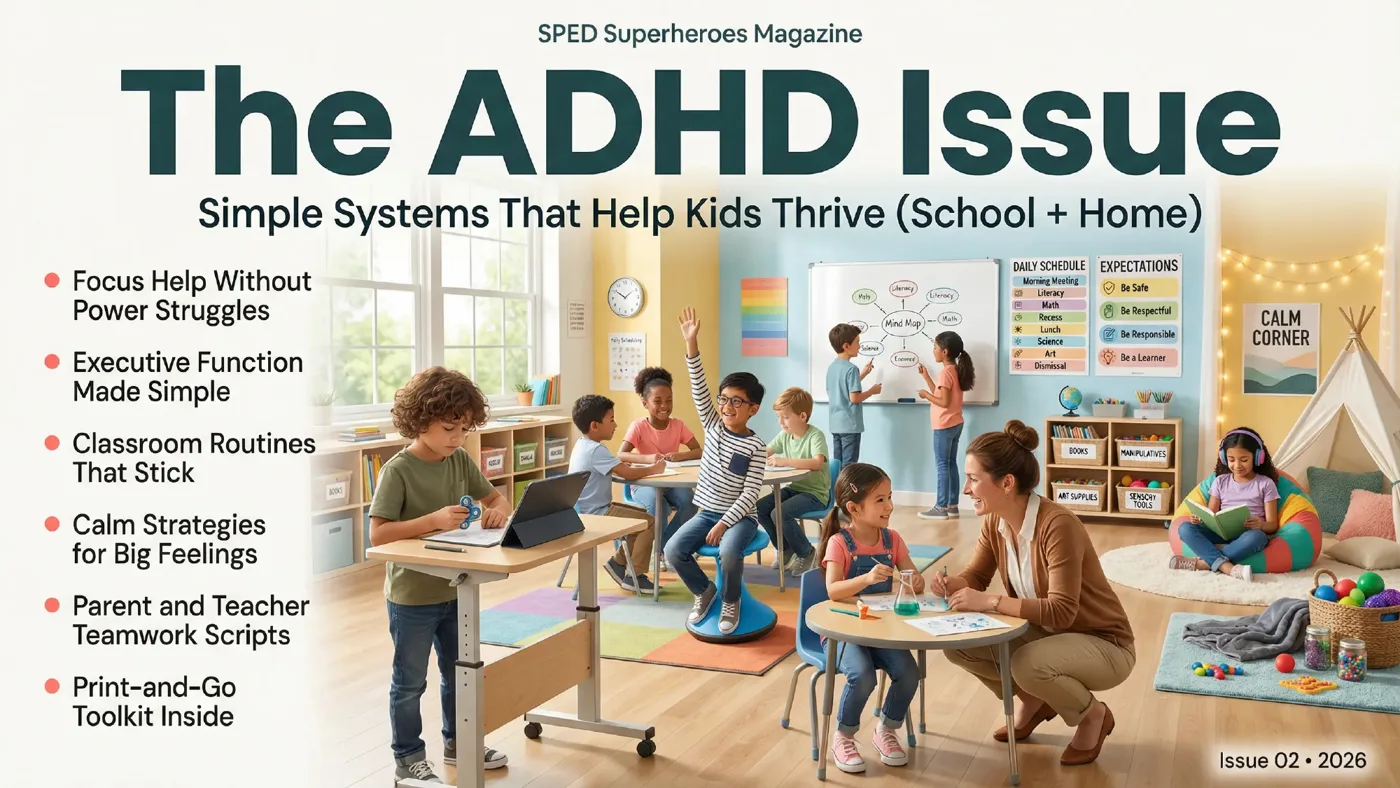
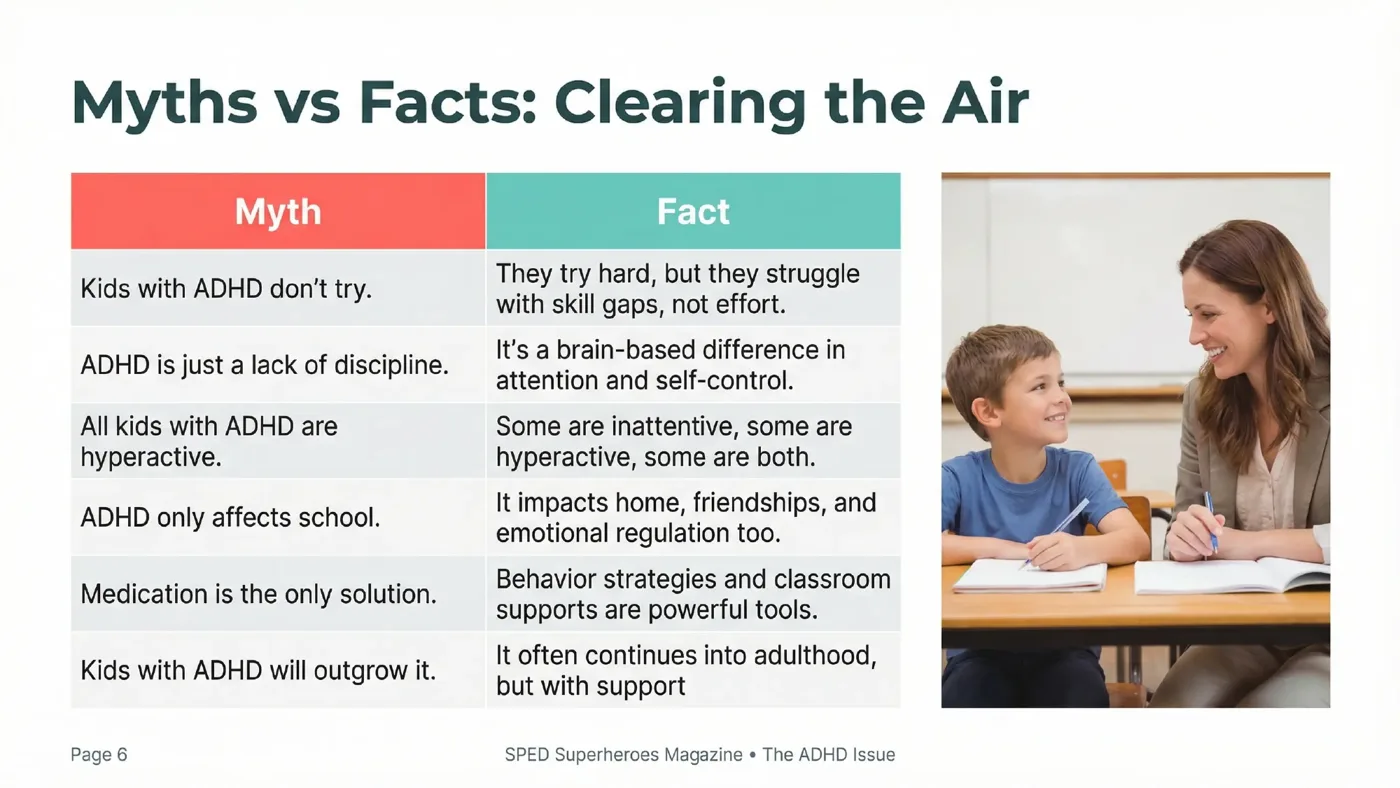
ADHD Support Toolkit: Classroom And Home Strategies: a 49-page guide for teachers and parents with a plain-language ADHD explanation and strengths spotlight, routines for transitions, directions and movement breaks, executive function help, impulsivity and emotional regulation strategies, scripts for meltdown moments, guidance on motivation without bribing, home routines, parent partnership scripts and printable trackers.
Sources and scope
- National Institute of Mental Health: ADHD: information on ADHD symptoms, causes and treatment.
- CHADD: information and support for people with ADHD and their families, including teens.
- Understood: articles on study skills, focus and executive function for teens.
- KidsHealth for Teens (Nemours): teen-friendly articles on ADHD, sleep and school stress.
These are general study ideas, not medical advice or treatment. Teens with ADHD should follow their care plan and any accommodations in their IEP or 504 plan.
Key takeaways
- ADHD study tips for high school work best when they lower the barrier to starting.
- Move the phone away and start with ten minutes.
- Use short blocks, moving breaks and active study methods.
- Break tasks down and plan the whole week.
- Build support with family, teachers and agreed accommodations.







Leave a Comment