

Simple gratitude journal prompts for kids can turn a rushed bedtime into a calm few minutes of connection. Picture Leo, a fictional ten year old. His parents bought him a gratitude journal after reading about it online. The first page said “What are you grateful for?” Leo wrote “my dog” every night for a week, then stopped using it. The idea was good, but the question was too big and too repetitive.
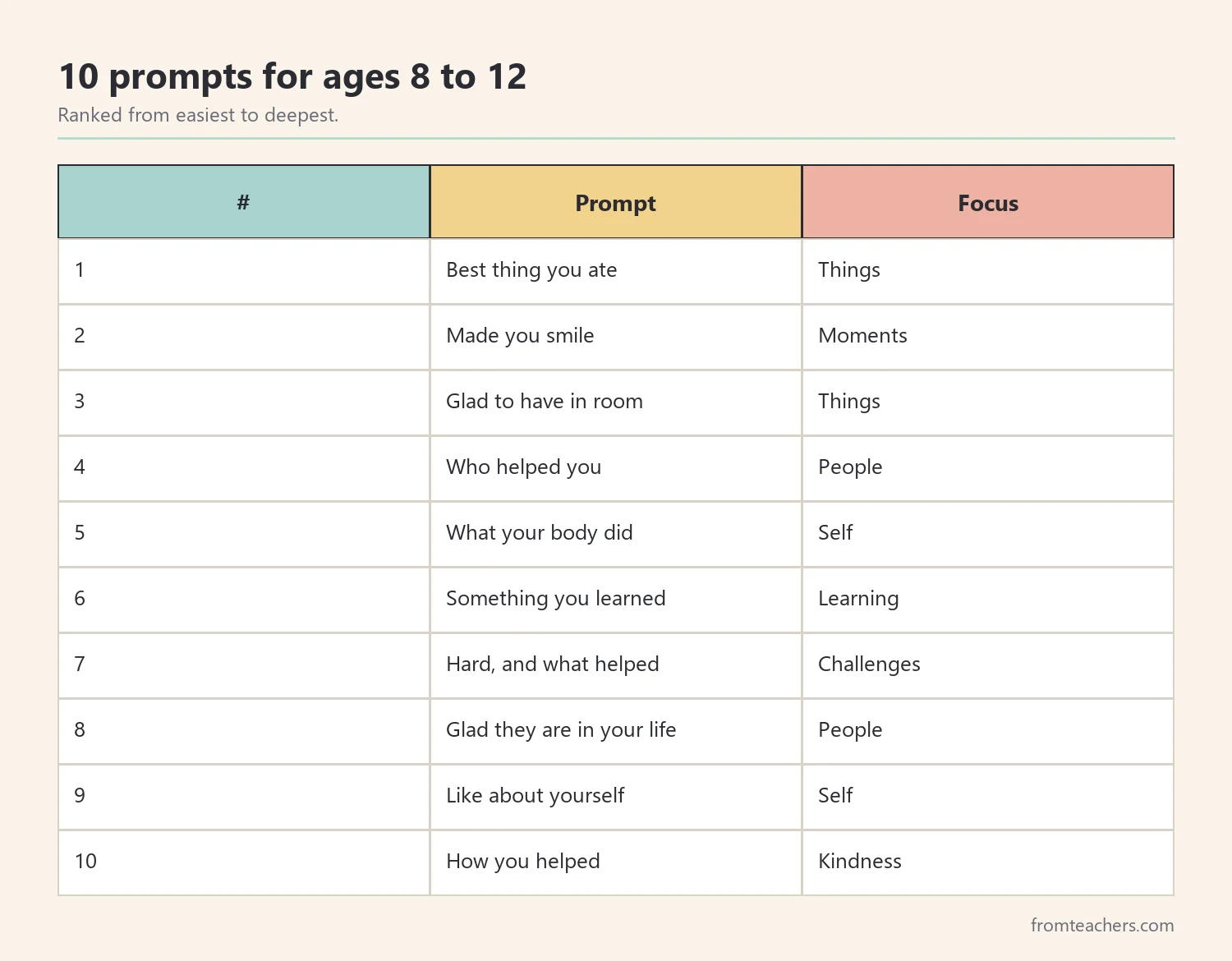
This list is for parents of children ages 8 to 12 who want journaling to feel fresh and meaningful. The ten prompts are ranked from easiest to deepest. Each prompt includes why it works, how to use it and an example answer from Leo.
Examples are fictional. Adapt to the student’s goals and agreed supports. This is guidance, not a diagnosis.
At a glance
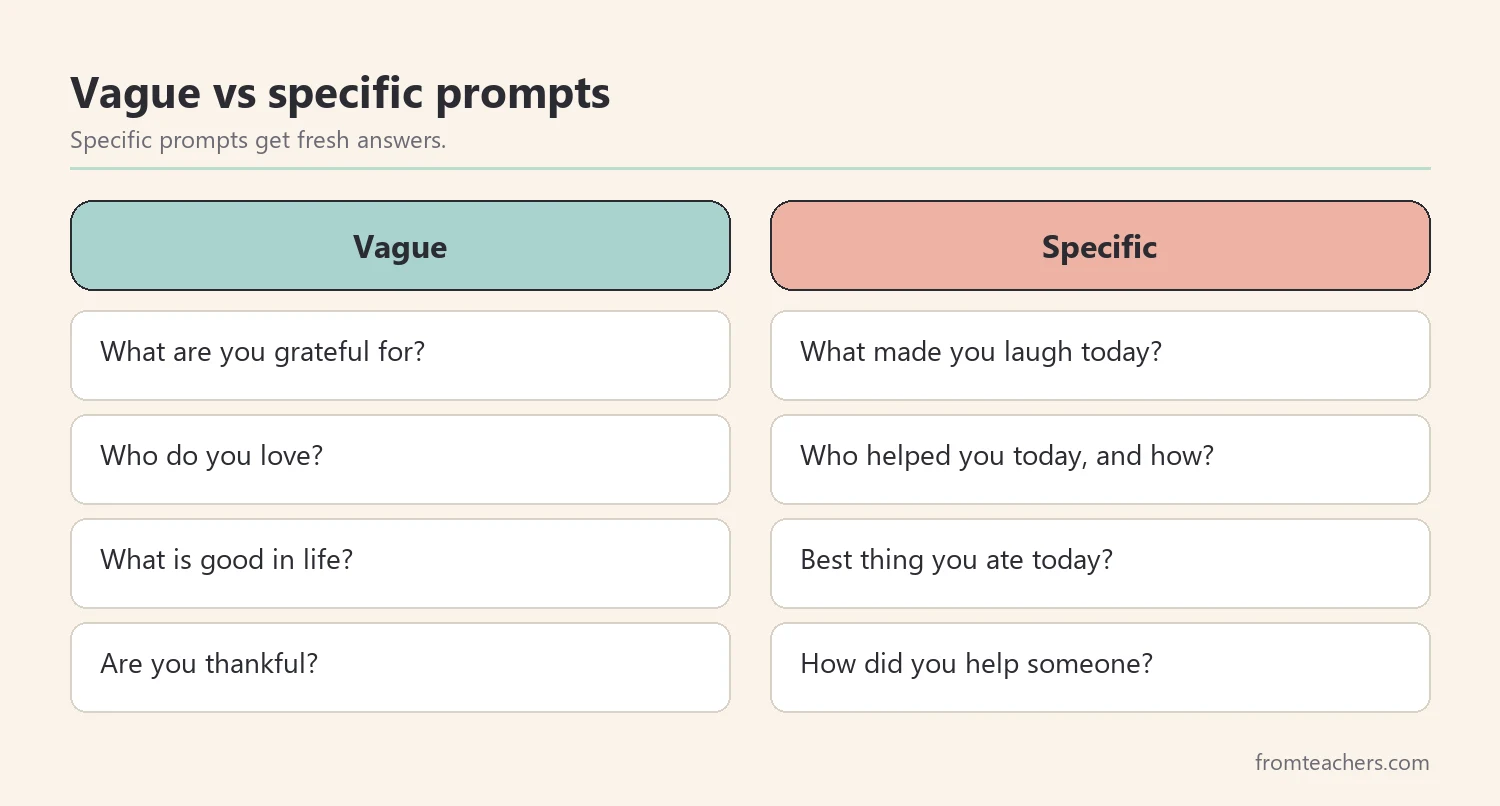
- Specific prompts work better than “What are you grateful for?”
- Start with easy, concrete prompts and move to deeper ones.
- Two or three sentences a day is enough.
- Talking can replace writing for reluctant writers.
- Gratitude should never be used to dismiss hard feelings.
Why gratitude journaling can help
Researchers who study gratitude have linked practices like journaling with positive feelings and stronger relationships in many studies, although results vary from person to person. For children, a short daily reflection also builds self-awareness, a core skill in social and emotional learning. It helps them notice good moments that might otherwise pass by.
However, journaling only helps if children actually do it. Children ages 8 to 12 quickly get bored with the same question. They also find it hard to answer very abstract questions. That is why the prompt matters so much. A good prompt is specific, short and connected to the child’s real day.
How we ranked these prompts
We ranked the prompts from easiest to deepest. Easy prompts ask about concrete things a child can see, touch or remember from today. Deeper prompts ask children to think about people, challenges and themselves. Start at the top and move down over a few weeks. Figure 1 shows the full ranking.
1. What was the best thing you ate today?
Why it works: it is concrete, fun and every child has an answer. It is a gentle way to start the habit.
How to use it: ask for one sentence and one reason, such as “because it was warm.”
Leo’s answer: “The pasta at dinner, because Dad made extra cheese.”
2. What made you smile or laugh today?
Why it works: it helps children scan the day for positive moments. Laughing moments are easy to remember.
How to use it: if your child says “nothing,” share your own funny moment first.
Leo’s answer: “When Max fell off his chair in class and laughed at himself.”
3. What is one thing in your room you are glad to have?
Why it works: it brings attention to everyday objects that are easy to take for granted.
How to use it: ask your child to look around the room before writing.
Leo’s answer: “My blanket, because it is soft and smells like home.”
4. Who helped you today, and how?
Why it works: it moves gratitude from things to people. Naming the action makes it specific.
How to use it: encourage small examples, like someone holding the door or sharing a pencil.
Leo’s answer: “Ms. Diaz helped me find my lost homework in my backpack.”
5. What is something your body let you do today?
Why it works: it builds appreciation for health and ability in a positive, non-judging way.
How to use it: give examples like running, singing, drawing or hugging.
Leo’s answer: “My legs let me run fast in soccer.”
If you want gratitude to sit alongside feelings and goals, a daily reflection journal for students with SEL check-in and goal setting puts all of these on one page.
6. What is something you learned today?
Why it works: it connects gratitude to curiosity and learning, and gives parents a window into the school day.
How to use it: any small fact counts, from school or from a video or friend.
Leo’s answer: “Octopuses have three hearts. I want to learn more about them.”
7. What was hard today, and what helped?
Why it works: it accepts that days include difficult moments, and helps children notice support during hard times.
How to use it: listen first. Do not rush to find the positive side.
Leo’s answer: “The math test was hard. It helped that I practiced with Mom last night.”
8. Who is someone you are glad is in your life, and why?
Why it works: it deepens appreciation for relationships and can be shared with the person later.
How to use it: suggest writing a short note or drawing for that person.
Leo’s answer: “Grandma, because she always asks about my drawings.”
9. What is something you like about yourself today?
Why it works: it builds self-kindness, which many children in this age group find hard.
How to use it: accept small answers, like “I was patient with my sister.”
Leo’s answer: “I kept trying on the puzzle even when I wanted to quit.”
10. How did you help someone else today?
Why it works: it links gratitude to kindness and shows children that they can be the reason for someone else’s good day.
How to use it: if your child cannot think of anything, plan a small kind act for tomorrow together.
Leo’s answer: “I showed the new kid where the library is.”
A sample two-week log
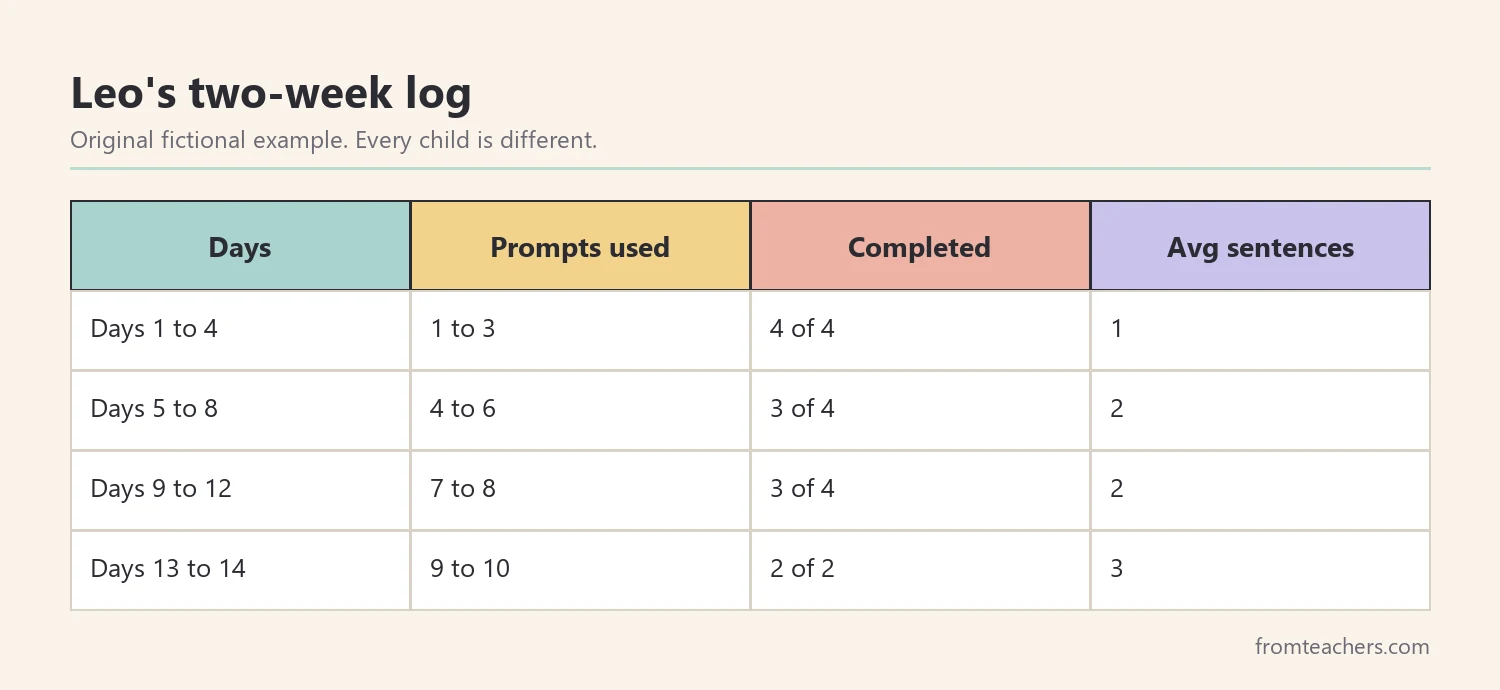
Here is a fictional record from Leo’s parents. It shows how they rotated prompts and tracked how the habit was going. It is an example only.
| Days | Prompts used | Days completed | Average sentences |
|---|---|---|---|
| Days 1 to 4 | 1 to 3 | 4 of 4 | 1 |
| Days 5 to 8 | 4 to 6 | 3 of 4 | 2 |
| Days 9 to 12 | 7 to 8 | 3 of 4 | 2 |
| Days 13 to 14 | 9 to 10 | 2 of 2 | 3 |
The habit did not need to be perfect. Missing a day here and there is normal. What mattered was that Leo kept coming back and that his answers slowly grew longer.
Making gratitude journal prompts for kids part of the routine
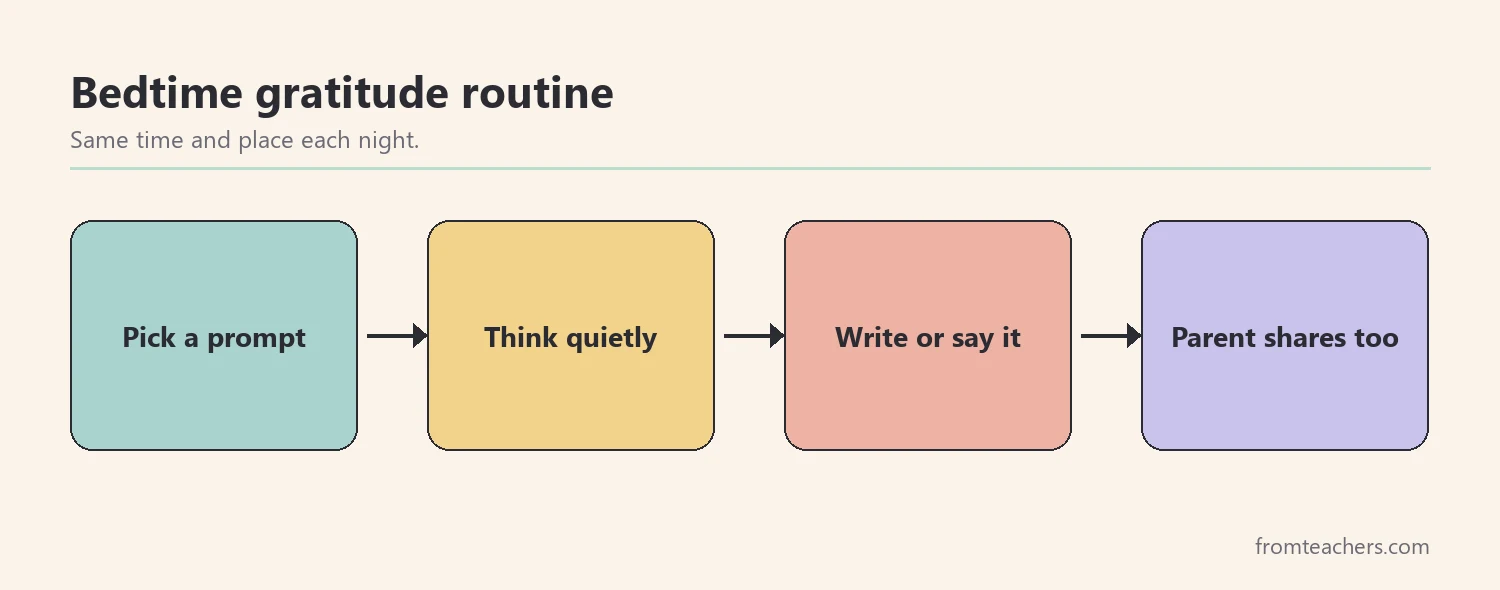
A habit sticks when it happens at the same time and place. Many families use bedtime, because the day is over and the house is quieter. Others use dinner, with everyone sharing one answer out loud. Choose a time that already exists in your routine.
Keep it short. Two or three minutes is enough for most children. A long writing task can feel like homework, which is the opposite of the goal. If your child wants to write more, let them, but do not require it.
Also, join in. Children are more likely to keep a habit when adults do it too. Share your own answer, even a simple one. It shows that gratitude is something the whole family values.
Tips for reluctant writers
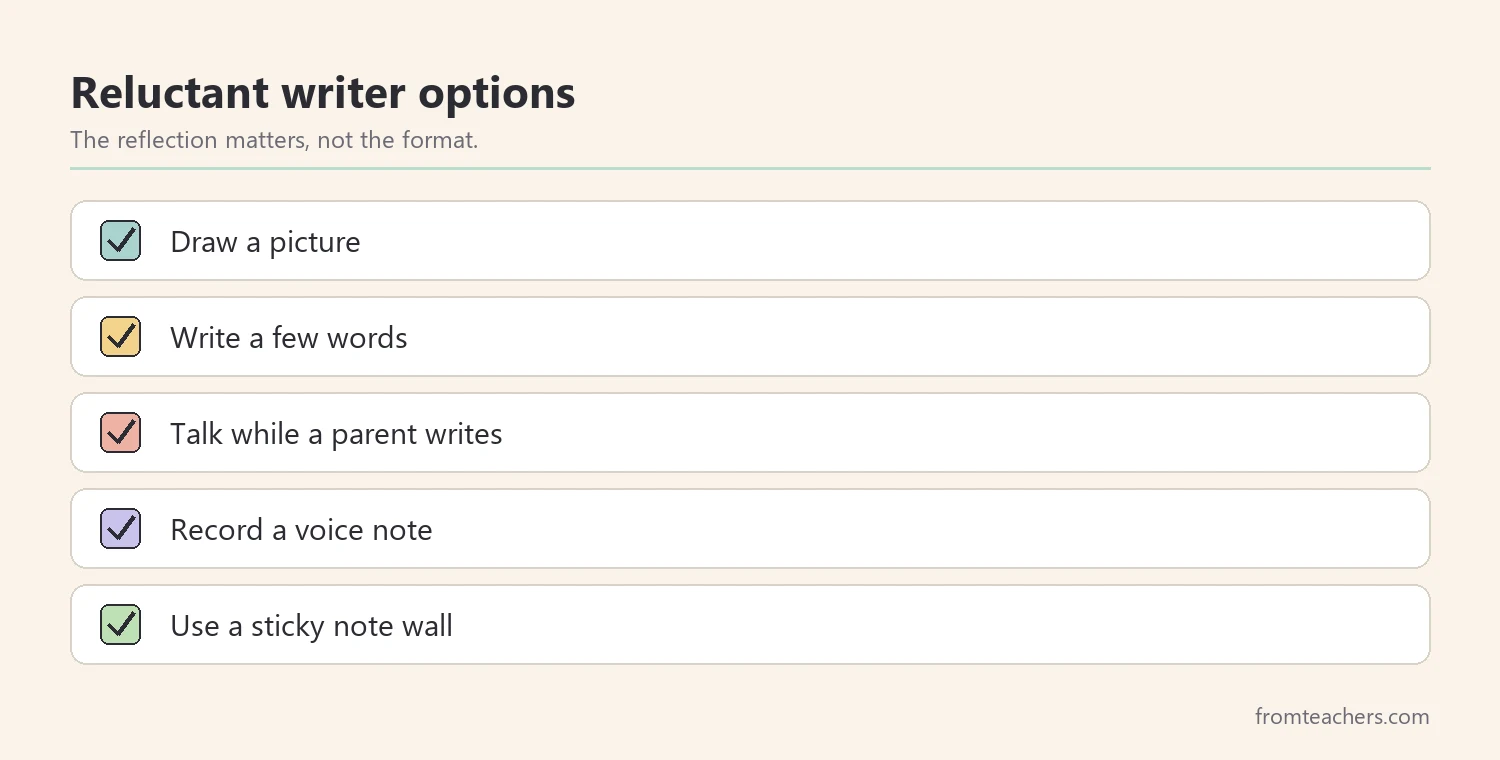
Some children dislike writing, especially those with dyslexia, dysgraphia or ADHD. For them, the writing part can block the reflection. In that case, let them draw a picture, use a few words, or answer out loud while you write for them.
Voice notes can also work. A child can record a short answer on a phone or tablet. Others like using sticky notes on a “gratitude wall” instead of a notebook. The format matters less than the reflection itself.
In addition, offer choice. Let your child pick between two prompts each night. Choice increases buy-in and keeps the journal feeling like theirs.
When gratitude is not the right response
Gratitude is helpful, but it should never be used to dismiss real feelings. If a child is sad, angry or worried, saying “but you should be grateful” can make them feel unheard. Listen first, name the feeling and offer comfort. Gratitude can come later, if at all.
Also, watch for signs that a child is struggling more than usual, such as long periods of sadness, withdrawal or changes in sleep and appetite. In these cases, talk with your child’s doctor or school counselor.
Common mistakes and how to avoid them
- Using the same big question every night. Fix: rotate specific prompts.
- Making it feel like homework. Fix: keep it to two or three minutes.
- Correcting spelling and grammar. Fix: focus on ideas, not writing errors.
- Forcing gratitude during hard moments. Fix: listen to feelings first.
- Doing it alone. Fix: share your own answers too.
Questions parents ask about gratitude journal prompts for kids
How often should my child write?
Daily works for many families, but a few times a week is fine. Consistency matters more than frequency.
What if my child writes the same answer every day?
Switch to a more specific prompt, such as “What made you laugh today?” Specific questions lead to new answers.
Should I read my child’s journal?
Ask first. Some children like to share, while others want privacy. Respecting their choice builds trust.
Is there a best age to start?
Children of many ages can enjoy gratitude prompts. Ages 8 to 12 are a good time, because children can write short answers and think about others.
Can teachers use these prompts?
Yes. Many teachers use similar prompts in morning meetings or end-of-day reflections.
Related reading: 5 Practical Teaching Tips to Boost Classroom Focus, ADHD Children Support Strategies, and Positive Alternatives to Behavior Charts.
You may also need: Daily Routine Journal for Students.
A companion resource for parents building a reflection habit at home:
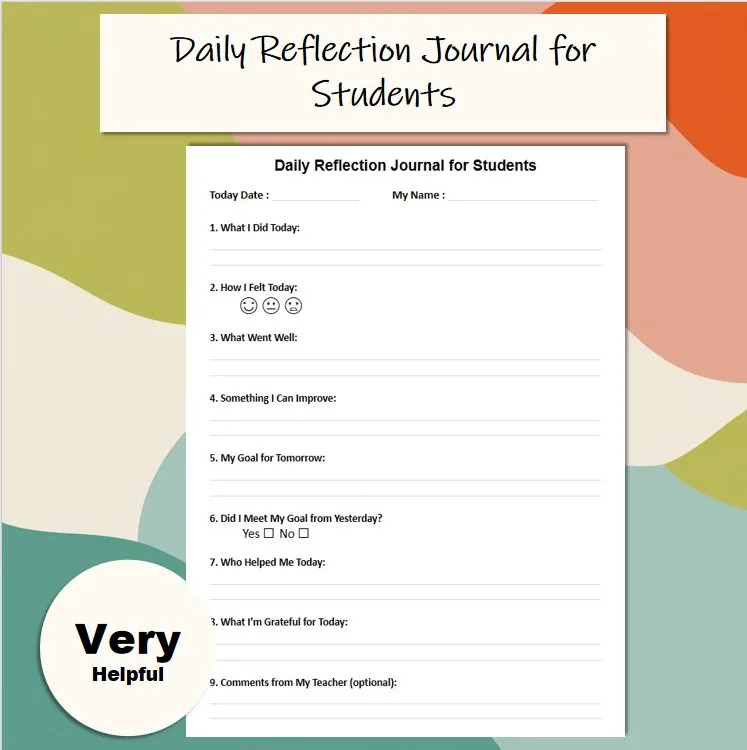
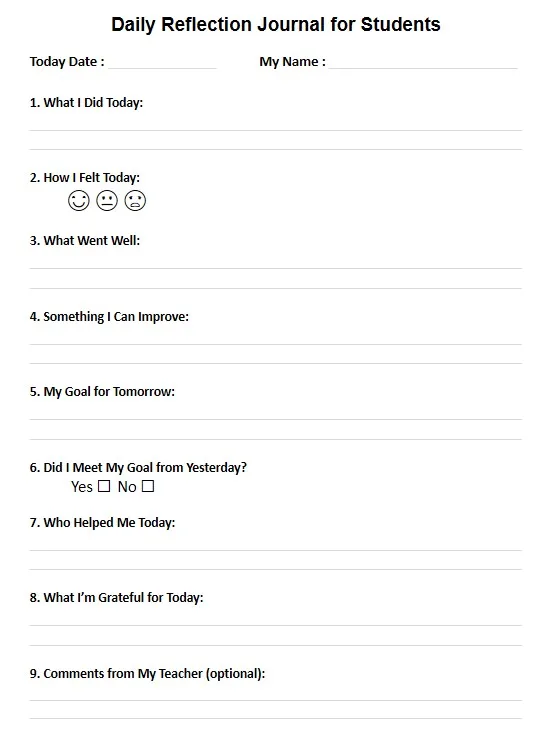
Daily Reflection Journal for Students: SEL Check-In & Goal Setting Sheet: a one page journal, editable or print-ready, with name and date fields, what I did today, a three face feeling scale, what went well, something I can improve, my goal for tomorrow with a did I meet my goal from yesterday check-in, who helped me today, a gratitude prompt and an optional teacher comment space.
Sources and scope
- Greater Good Science Center, UC Berkeley: articles on the science and practice of gratitude.
- CASEL: information on social and emotional learning skills such as self-awareness.
- KidsHealth from Nemours: articles for parents and kids on feelings and emotional health.
- Child Mind Institute: articles for parents on supporting children’s emotional wellbeing.
This guide offers everyday journaling ideas for families. It is not therapy and does not replace support from a counselor or mental health professional if your child is struggling.
Key takeaways
- Specific gratitude journal prompts for kids work better than one big question.
- Start with concrete prompts, then move toward people and self.
- Keep it short and part of an existing routine.
- Let reluctant writers draw, talk or use a few words.
- Listen to hard feelings first and never force gratitude.





Leave a Comment