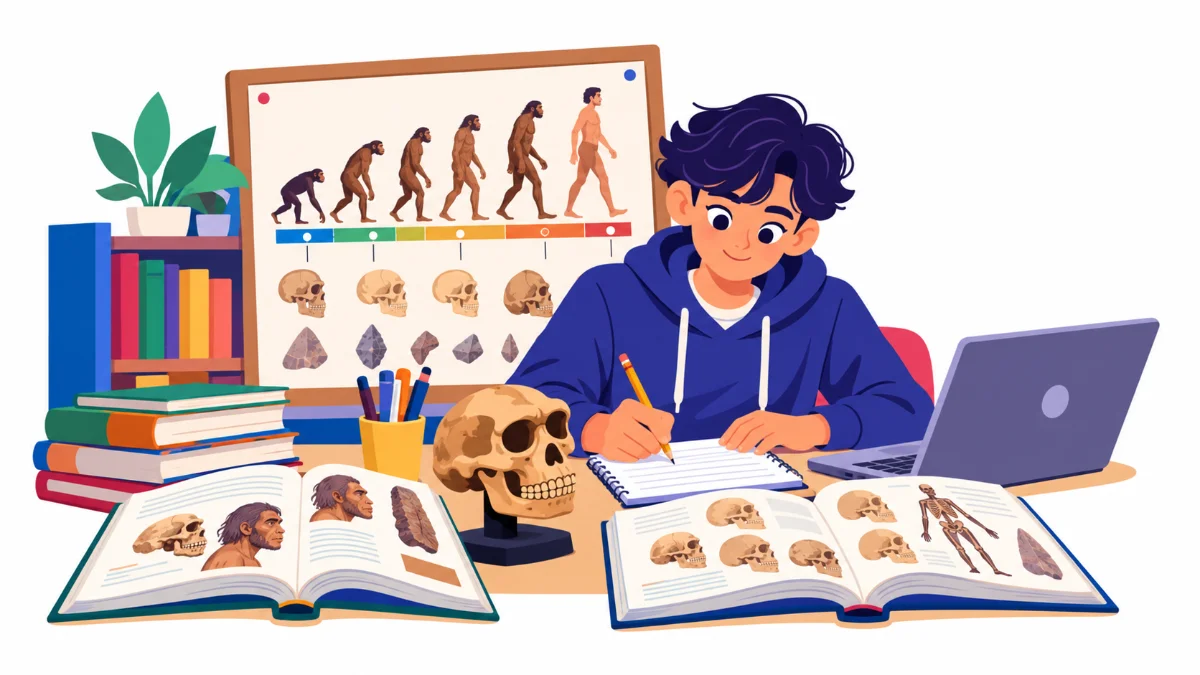

Good human evolution essay topics are focused enough to research in a few weeks and open enough to support a real argument. Picture Daniel, a fictional eleventh grader in biology. His teacher asked for a 1,500-word essay on human evolution. He chose “human evolution” as his topic, found thousands of sources and ended up with a summary of everything and an argument about nothing.
This list is for high school students and their teachers. The ten topics are ranked from easiest to research to most demanding. Each topic includes a sample question, why it works, where to start researching and a tip from Daniel’s second attempt.
Examples are fictional. Adapt to the student’s goals and agreed supports. This is guidance, not a diagnosis.
At a glance
- Narrow topics lead to stronger essays than broad ones.
- Turn each topic into a question you can answer with evidence.
- Use museum, university and science news sources.
- Science changes, so check publication dates.
- Separate evidence from interpretation in your writing.
What makes a strong essay topic
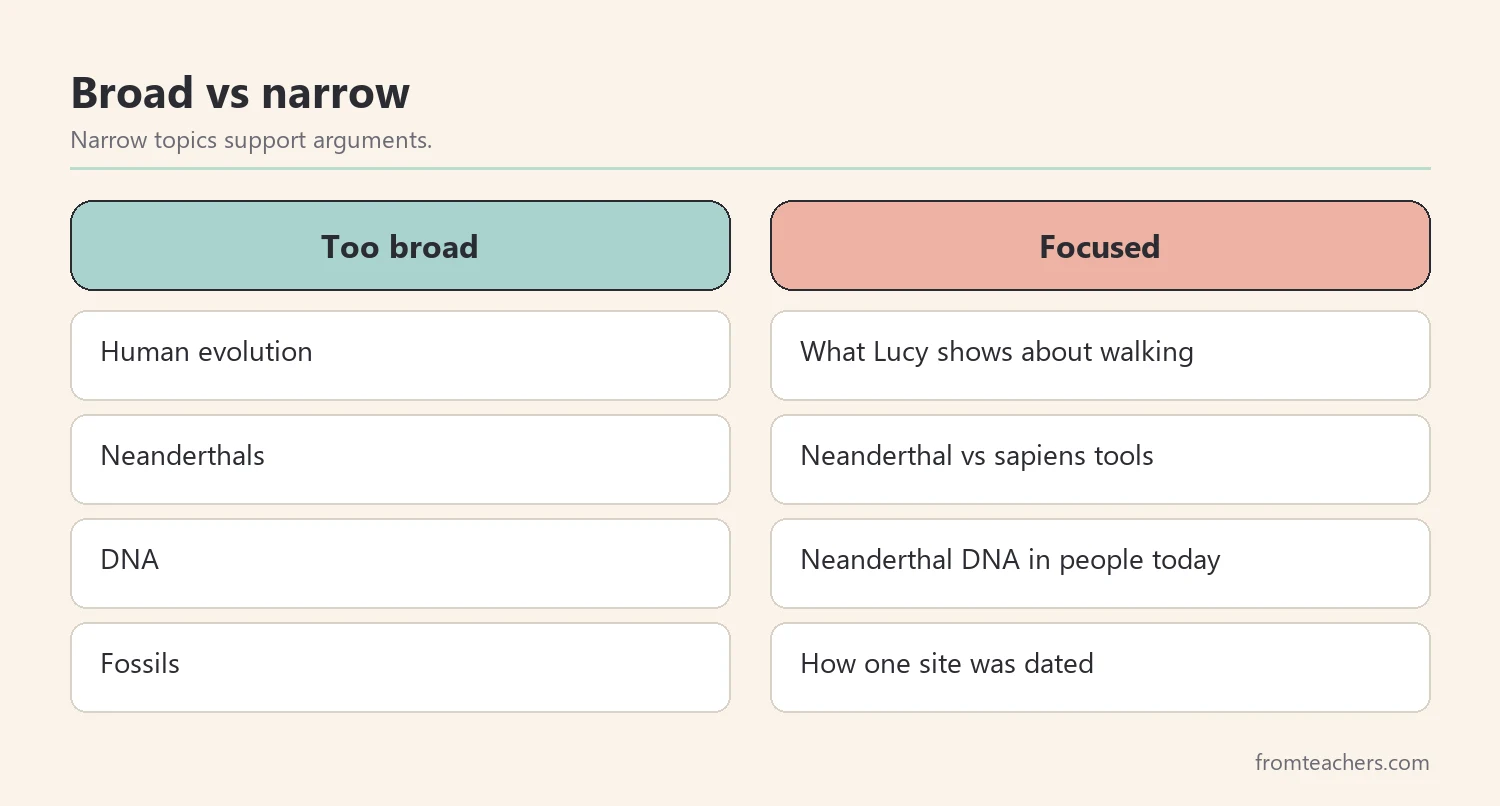
A strong topic is narrow, researchable and arguable. Narrow means it covers one species, one discovery or one question, not the whole story of humanity. Researchable means reliable sources exist at a level you can understand. Arguable means there is something to explain, compare or evaluate, not just describe.
Human evolution is a good field for essays because it combines biology, geology, archaeology and genetics. It also changes often. New fossils and ancient DNA studies regularly update what scientists think. That gives students real questions to explore, but it also means they need to check that sources are current.
How we ranked these topics
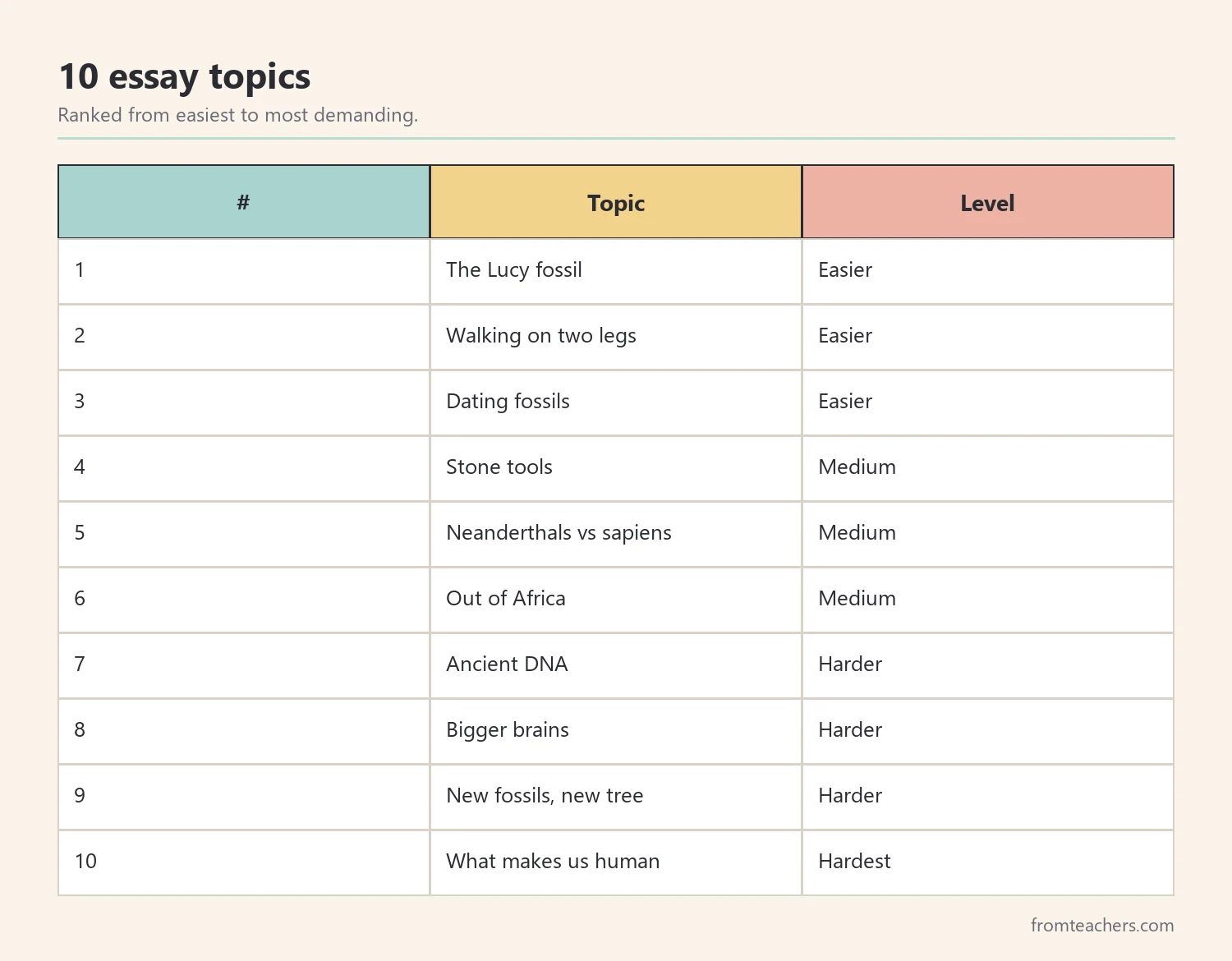
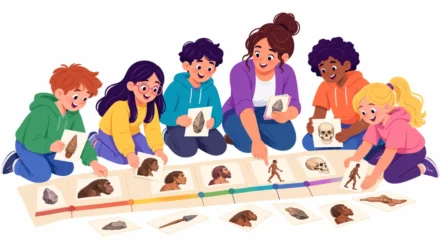
We ranked the topics from easiest to most demanding, based on how much accessible material exists and how much scientific detail the topic needs. Early topics suit students new to the subject. Later topics need more careful reading of scientific debates. Figure 1 shows the full ranking.
1. What does the “Lucy” fossil tell us about early hominins?
Why it works: Lucy, a famous Australopithecus afarensis skeleton, is well documented in museum and educational sources.
Where to start: museum pages on Australopithecus afarensis and on walking upright.
Daniel’s tip: focus on one question, such as what her skeleton shows about walking, instead of retelling the discovery story.
2. Why did walking on two legs matter?
Why it works: bipedalism is a central topic with clear evidence from bones and footprints.
Where to start: sources on hominin skeletons and fossil footprints.
Daniel’s tip: compare at least two scientific explanations for why bipedalism may have evolved.
3. How do scientists date fossils?
Why it works: dating methods connect evolution to physics and chemistry and are explained in many educational resources.
Where to start: explanations of radiometric dating and of dating rock layers around fossils.
Daniel’s tip: choose one site and explain how its fossils were dated.
4. What can stone tools tell us about early humans?
Why it works: tools offer concrete evidence of behavior and change over time.
Where to start: museum resources on early tool technologies.
Daniel’s tip: connect tool changes to possible changes in diet or behavior, while noting uncertainty.
5. How did Neanderthals and Homo sapiens differ, and how were they similar?
Why it works: Neanderthals are well studied, and comparison essays are easy to structure.
Where to start: museum pages on Homo neanderthalensis and on early Homo sapiens.
Daniel’s tip: organize by categories such as body, tools and culture rather than describing each species separately.
For a clear overview of species, migration, dating and DNA, Human Evolution: The Complete Scientific Guide gives students a reliable starting point before they move to deeper sources.
6. What does the Out of Africa model explain?
Why it works: the movement of Homo sapiens out of Africa is a major idea supported by fossil and genetic evidence.
Where to start: museum and university pages on human migration.
Daniel’s tip: explain what kinds of evidence support the model and where questions remain.
7. How has ancient DNA changed our understanding of human evolution?
Why it works: ancient DNA is an exciting, current field, including evidence that many people today carry some Neanderthal DNA.
Where to start: science news articles and museum explanations of ancient DNA.
Daniel’s tip: check publication dates, because this field changes quickly.
8. Why did larger brains evolve, and what did they cost?
Why it works: it combines biology, diet and behavior and invites evaluation of competing hypotheses.
Where to start: sources on brain size across hominin species and on energy needs.
Daniel’s tip: present at least two hypotheses and weigh the evidence for each.
9. How do new fossil discoveries change the human family tree?
Why it works: it shows science as a process of revision and debate.
Where to start: museum news on recent finds, such as Homo naledi or Homo floresiensis.
Daniel’s tip: separate what the fossils show from how scientists interpret them.
10. What makes humans different from other primates?
Why it works: it is a deep, open question that draws on biology, behavior and culture.
Where to start: museum pages on what it means to be human and on primate behavior.
Daniel’s tip: choose two or three traits and argue which matters most, using evidence.
A sample grading table
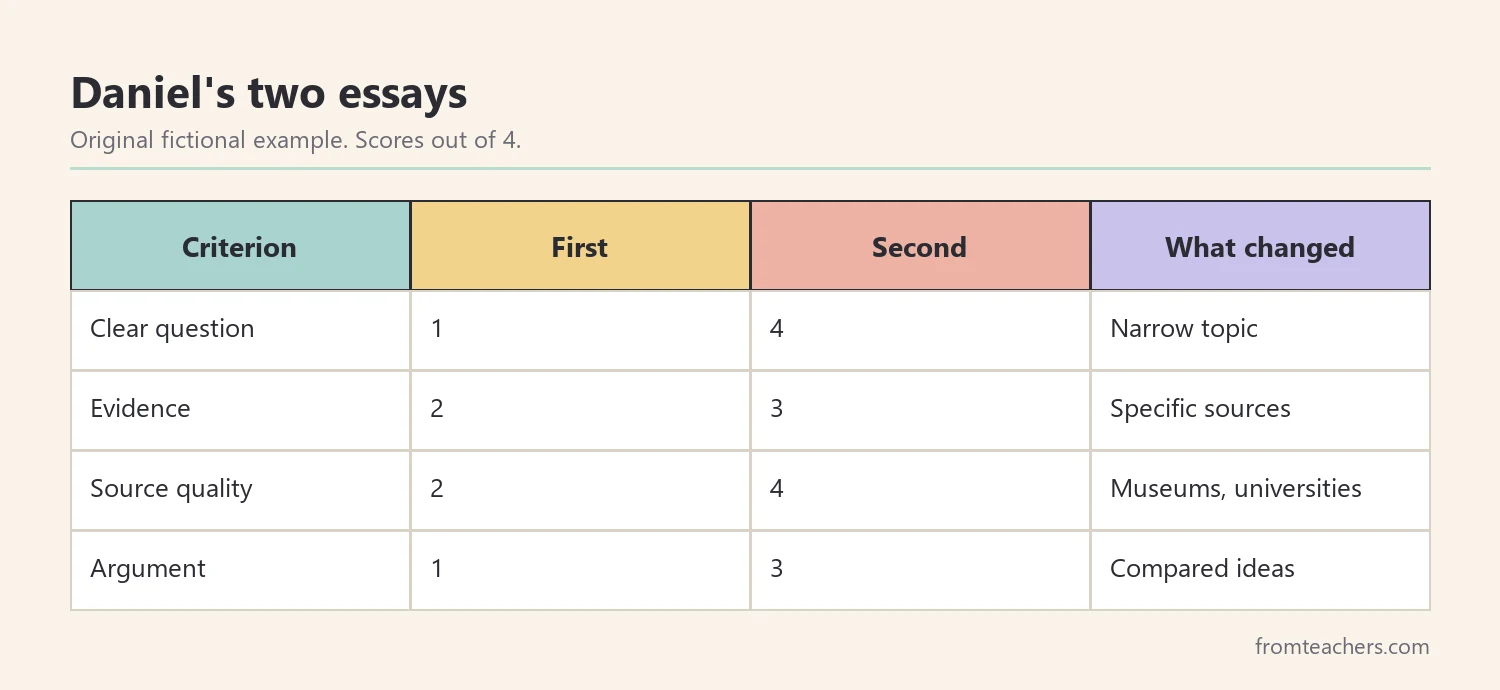
Here is a fictional comparison of Daniel’s two essays using a simple rubric. It shows how narrowing the topic changes the result.
| Criterion | First essay | Second essay | What changed |
|---|---|---|---|
| Clear question | 1 of 4 | 4 of 4 | Narrow topic |
| Use of evidence | 2 of 4 | 3 of 4 | Specific sources |
| Source quality | 2 of 4 | 4 of 4 | Museum and university |
| Argument | 1 of 4 | 3 of 4 | Compared explanations |
The second essay was shorter in scope but much stronger. That pattern is common in student writing.
Structuring your essay
Start with an introduction that states your question and your main answer, or thesis. Each body paragraph should present one piece of evidence and explain how it supports the thesis. Include a paragraph on other explanations or uncertainties, because science essays are stronger when they show what is still debated.
End with a conclusion that answers the question and notes what future research might show. Keep scientific names correctly formatted, with the genus capitalized and the full name in italics if your teacher requires it.
Finally, cite every source. Use the style your teacher asks for and keep a list as you research, so you do not lose track.
Turning human evolution essay topics into thesis statements
A topic is only a starting point. To write a strong essay, turn it into a thesis, which is a one-sentence answer to your question. For example, the topic “walking on two legs” might become “Fossil bones and footprints show that early hominins walked upright long before brains grew much larger.” This sentence is specific, it can be supported with evidence and someone could question it.
Try writing three possible thesis statements for your topic, then choose the one with the best evidence. Share it with your teacher before you write the full draft. Many students find that this small step saves hours of rewriting later.
Also, keep the thesis flexible. If your research shows something unexpected, adjust the thesis. Good science writing follows the evidence.
When you compare human evolution essay topics with classmates, notice how each of you narrowed the question. Hearing other approaches often helps you sharpen your own.
Finding reliable sources
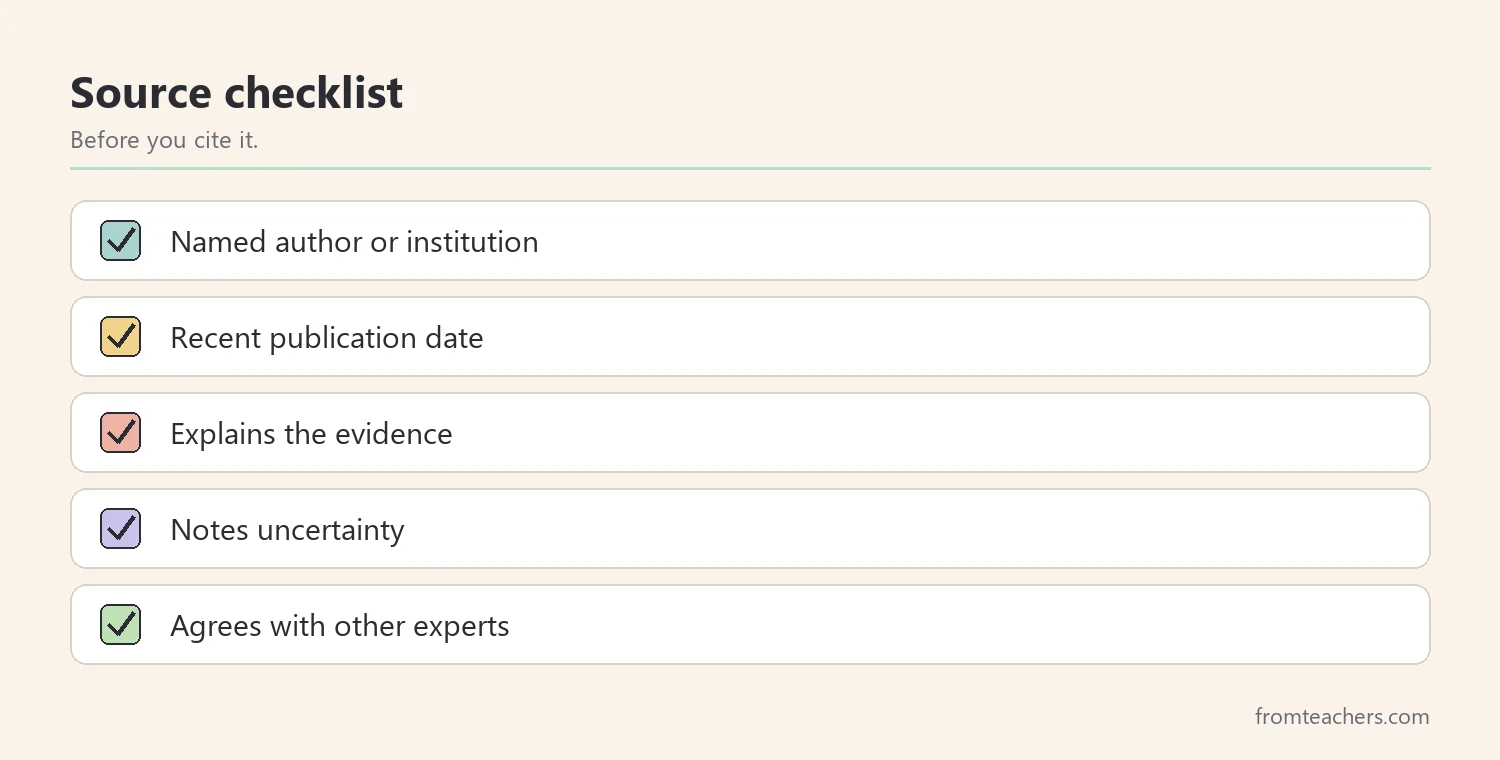
Natural history museums, university websites and established science magazines are good places to start. They explain research clearly and update pages when findings change. Your school library may also offer databases with articles written for students.
Be careful with websites that do not name authors or sources, or that present one discovery as “rewriting everything.” Look for how the scientists themselves describe the finding, and check whether other experts agree.
Notes for teachers
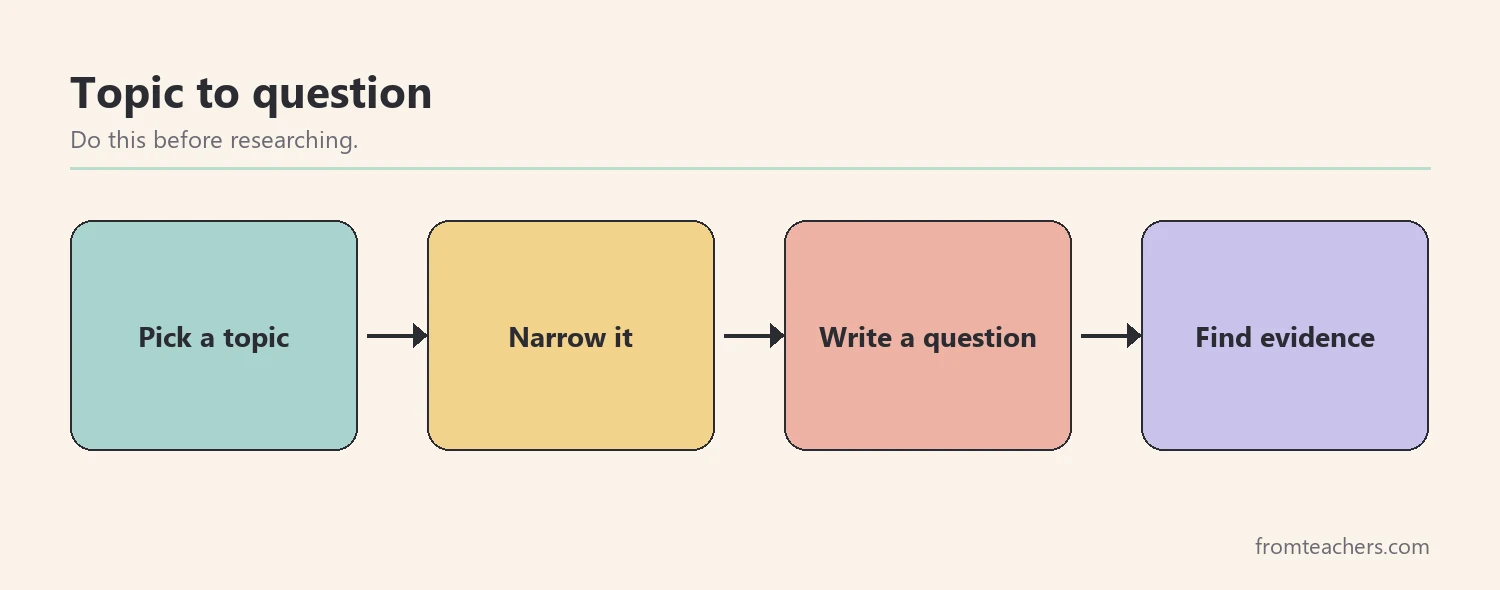
Teachers can support students by offering a list of narrowed topics, like this one, and by teaching how to turn a topic into a question. A short conference after students choose a topic can prevent the “summary of everything” problem.
Also, consider letting students present findings in different ways, such as a poster or short talk, in addition to the essay. This supports students with writing difficulties while still requiring research and reasoning.
Common mistakes and how to avoid them
- Choosing a topic that is too broad. Fix: focus on one species, discovery or question.
- Describing instead of arguing. Fix: answer a clear question.
- Using outdated sources. Fix: check publication dates.
- Presenting hypotheses as facts. Fix: separate evidence from interpretation.
- Skipping citations. Fix: record sources as you research.
Questions students ask about human evolution essay topics
How narrow should my topic be?
Narrow enough that you can answer one question well within the word limit.
Can I use Wikipedia?
Follow your teacher’s rules. Many teachers allow it for background but expect citations from original or institutional sources.
What if sources disagree?
That is useful. Explain the disagreement and the evidence on each side.
How many sources do I need?
Check your assignment. Several reliable sources are usually better than many weak ones.
Can I write about a very recent discovery?
Yes, but note that scientists may still be debating it.
Related reading: Learning Styles Student Success Guide, Dyslexia Solutions in the Classroom, and 5 Practical Teaching Tips to Boost Classroom Focus.
You may also need: Dinosaurs: The Complete Student Field Guide.
A companion resource for students and teachers researching human evolution:
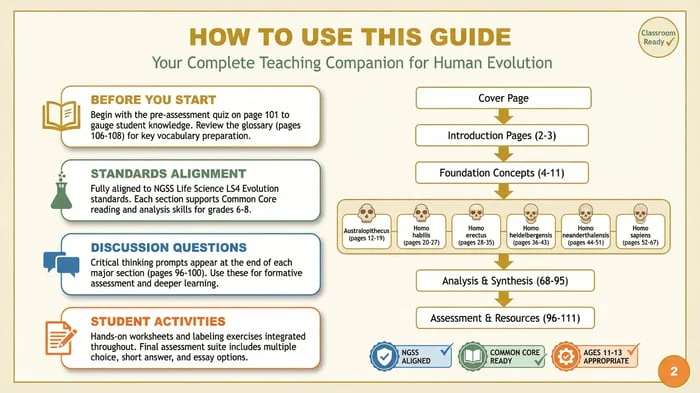
Human Evolution: The Complete Scientific Guide: 111 pages for ages 11 to 13 covering natural selection, the human family tree, six hominin species from Australopithecus afarensis to Homo sapiens, the Out of Africa migration, fossil dating methods, ancient DNA and what makes us human, with discussion questions, a student assessment quiz and a glossary aligned to NGSS Life Science standards and Common Core reading skills for grades 6 to 8.
Sources and scope
- Smithsonian National Museum of Natural History, Human Origins Program: information on hominin species, fossils and human evolution research.
- Natural History Museum, London: articles on human evolution and recent discoveries.
- Understanding Evolution, UC Berkeley: teaching resources on evolution and natural selection.
- Smithsonian Magazine: news articles on fossil discoveries and ancient DNA research.
This guide suggests essay topics and research approaches. Facts about human evolution are updated as new fossils and DNA studies appear, so students should check recent, reliable sources and follow their teacher’s assignment guidelines.
Key takeaways
- The best human evolution essay topics are narrow and arguable.
- Start with well-documented topics and move to debates.
- Turn each topic into a question you can answer with evidence.
- Use museum, university and science news sources and check dates.
- Separate evidence from interpretation and cite carefully.

Leave a Comment