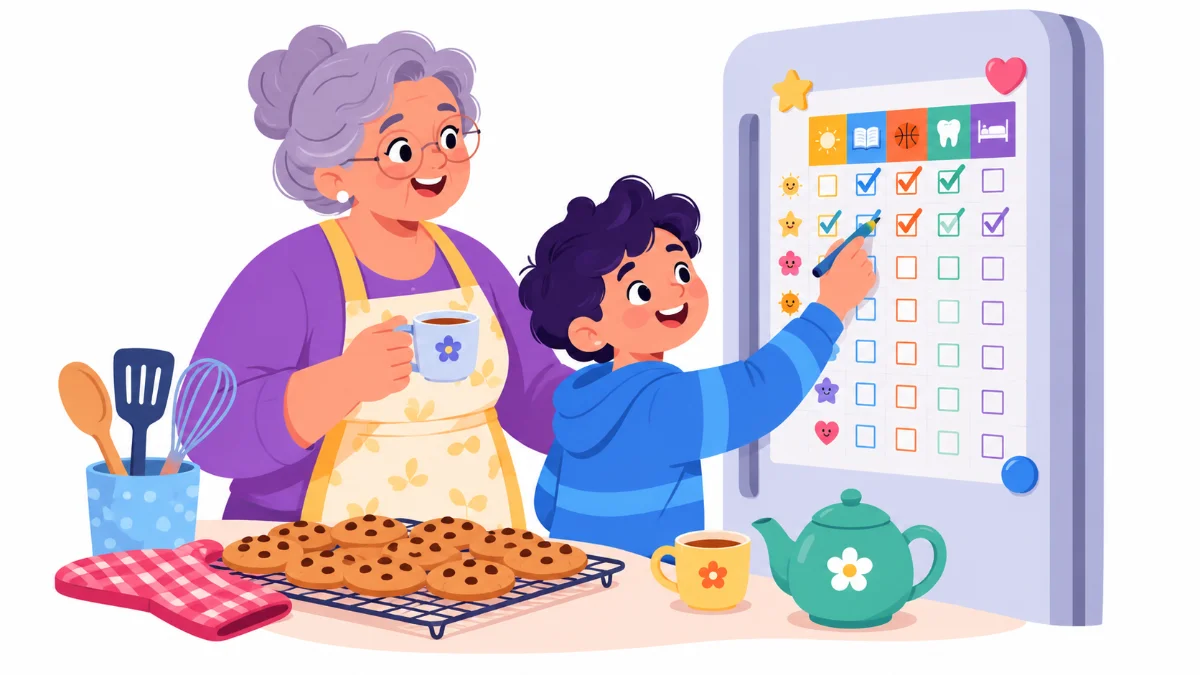

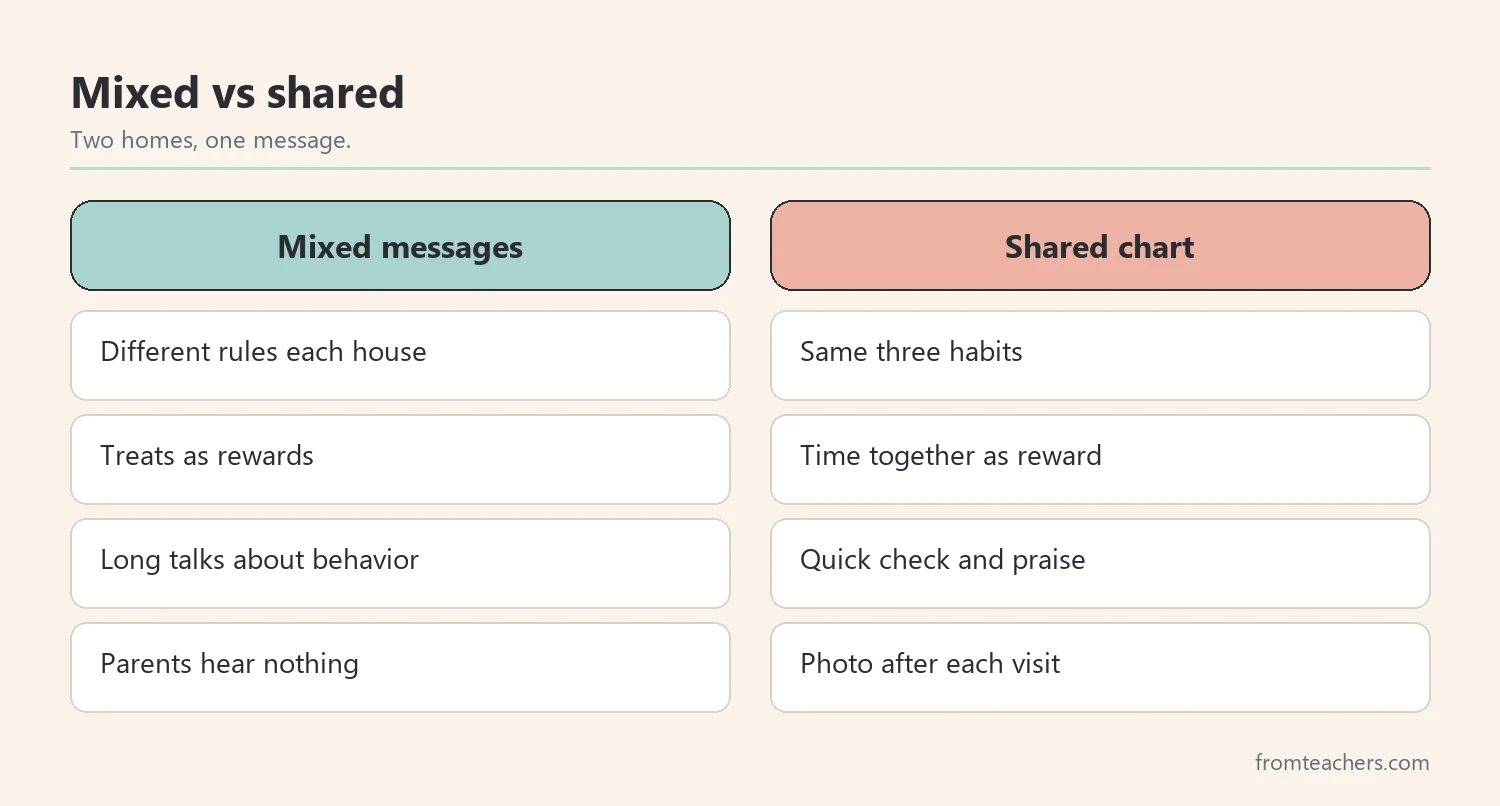
A behavior chart for grandparents can turn a tug of war into a shared plan. Picture Sami, age six, who spends Tuesday and Thursday afternoons at his grandmother’s house. At home, screen time ends at five and toys go back in the box. At grandma’s, the rules are softer, and Sami comes home wound up. Nobody is wrong, but the mixed messages are hard on everyone.
This list is for grandparents who help raise, babysit or host grandchildren, and for the parents who want to work with them. It ranks seven practical ways to use a weekly chart, from easiest to start to most involved. Each idea explains what it is, why it helps and how it looked with Sami.
Examples are fictional. Adapt to the child’s age and needs. This is guidance, not a diagnosis.
At a glance
- One chart shared by two homes keeps expectations simple for the child.
- Grandparents do not need to be strict; they only need to be consistent with a few habits.
- Praise and a quick check mark work better than long talks.
- Rewards can be time together, not things.
- A short weekly chat between parents and grandparents keeps everyone on the same page.
How this list is ranked
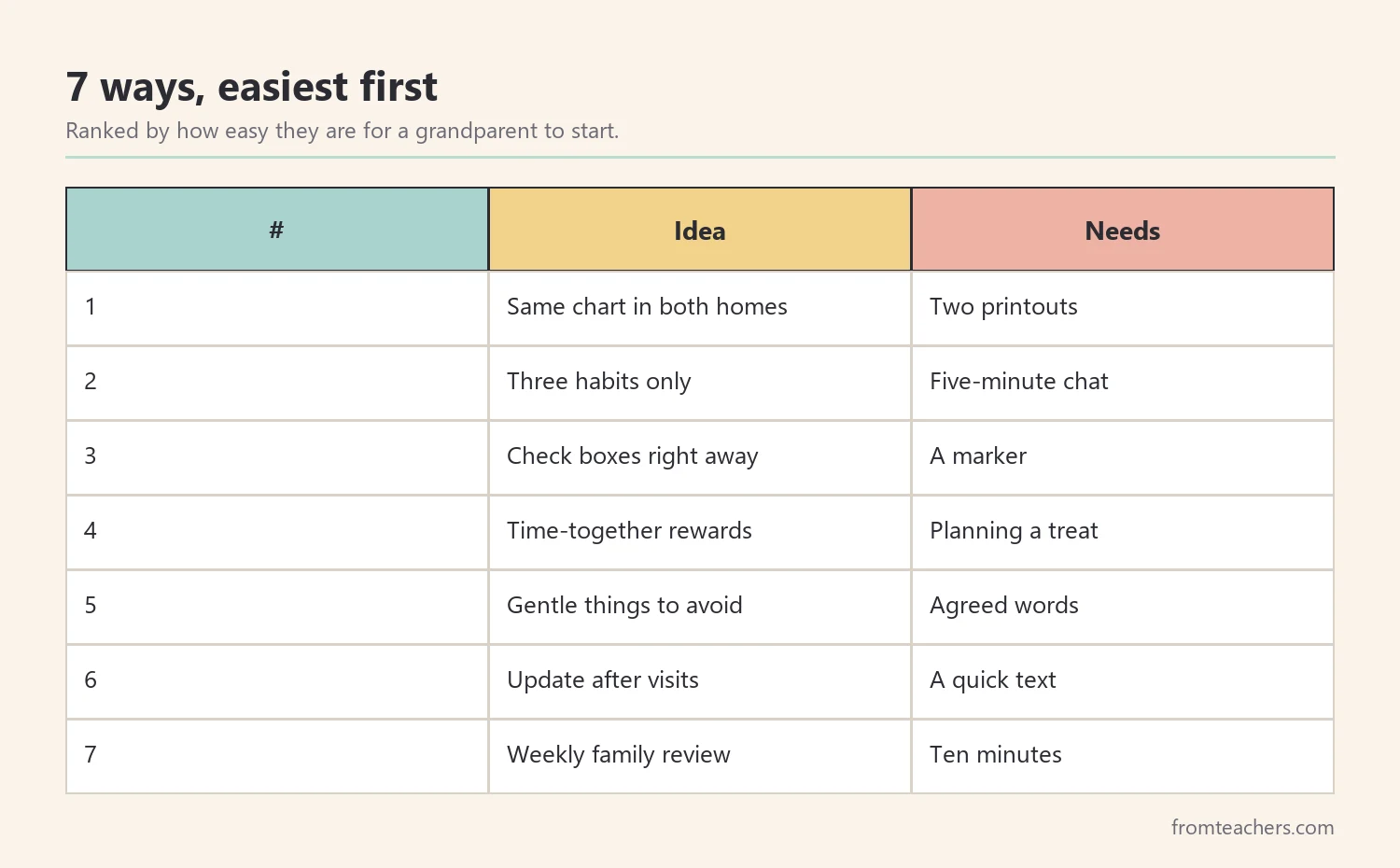
We ranked these seven ideas by how easy they are for a grandparent to start. The first ones need only a printed chart and a pen. Later ideas need a short conversation with the parents or a little planning. We did not rank them by effect, because every family and every child is different.
Also, a behavior chart for grandparents is not about turning grandma’s house into a classroom. Visits should still feel special. The chart simply makes a few important habits feel the same in both homes. Figure 1 shows the full ranking.
1. Put the same chart on both fridges
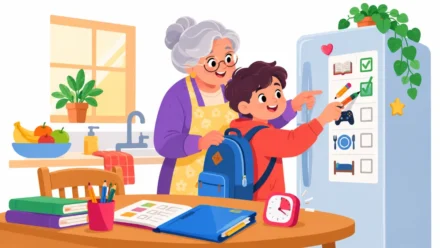
First, the easiest step: print two copies of the same chart, so the behavior chart for grandparents matches the one at home, one for the child’s home and one for the grandparents. Same habits, same colors, same reward box.
Why it works: young children learn faster when the picture in front of them looks the same everywhere. They do not need to remember two sets of rules.
Example: Sami’s mom typed his name on the chart, printed two copies and gave one to Grandma Lina. The first afternoon, Sami pointed at it and said, “That’s my chart!”
2. Choose only three habits for grandparent days
Next, keep it small. A full weekly chart may list many habits, but a behavior chart for grandparents works best when it focuses on two or three that matter most during visits.
Why it works: grandparents have limited time and want it to be happy. Three habits are easy to remember for both adult and child.
Example: the family chose three: listening the first time, keeping hands to himself and putting toys away. Grandma Lina circled them on her copy.
3. Check boxes together, right away
Then make the check mark on the behavior chart for grandparents a small celebration. Mark the box when the habit happens, or at a set time like snack, and say exactly what the child did.
Why it works: quick, specific praise links the habit to the good feeling. Waiting until the end of the day makes the link weaker.
Example: “You put the blocks back without being asked. Let’s check the box!” Sami liked holding the marker himself.
4. Turn the reward into time together
Many grandparents love to give treats. A behavior chart for grandparents can channel that love into rewards that build the relationship instead of filling the toy box.
Why it works: time with a grandparent is often the most valued reward of all, and it costs nothing.
Ideas: baking together, a walk to the park, an extra story, looking at old photos, teaching a card game or planting seeds.
| Reward idea | Time needed | Cost |
|---|---|---|
| Extra bedtime story | 10 minutes | Free |
| Bake cookies together | 45 minutes | Low |
| Old family photos | 20 minutes | Free |
| Park trip | 1 hour | Free |
Example: Sami’s weekly reward was “pancake morning with Grandma,” written in the reward box on both charts.
5. Use the Things to Avoid section gently
Next, decide together how the behavior chart for grandparents will handle the behaviors you want less of. A chart can list a few things to avoid, but the focus should stay on the positive habits.
Why it works: children do better when they hear what to do. A calm reminder, such as “Hands to yourself, please,” followed by praise when they comply, keeps the mood warm.
The weekly behavior chart for kids with a Things to Avoid section gives families one place to list a few behaviors to work on, next to eleven positive habits and a reward box.
6. Share a two-minute update after each visit
Then connect the two homes. A behavior chart for grandparents only works well when parents hear about it, and a quick text or a photo of the chart after each visit helps parents follow through at home.
Why it works: when parents praise what happened at grandma’s, the child sees that both homes are on the same team.
Example: Grandma Lina sent a photo every Tuesday and Thursday. Sami’s dad said at dinner, “Grandma told me you listened the first time. High five!”
7. Review the chart together each week
Finally, the most involved idea: a short weekly review with parents, grandparents and the child. Look at the chart, celebrate progress and decide whether to keep or change a habit.
Why it works: a behavior chart for grandparents loses power when it never changes. Swapping a mastered habit for a new one keeps it fresh.
Example: after four weeks, Sami put toys away almost every visit. The family replaced it with “say please and thank you.”
Talking with your adult children about the chart
Some grandparents feel a chart questions their way of doing things. Others worry it will make them the “strict” one. These feelings are normal, and an honest talk helps.
First, ask the parents what they hope for. Often, they only want a few key habits to match. Next, share what you notice at your house; you may see strengths the parents miss. Then agree on what happens when a box is not checked. In most families, the answer is simple: no box today, try again tomorrow.
Also, remember that a behavior chart for grandparents should not replace affection. Hugs, stories and laughter are not rewards to be earned. They stay free, every visit.
When a behavior chart for grandparents needs extra care
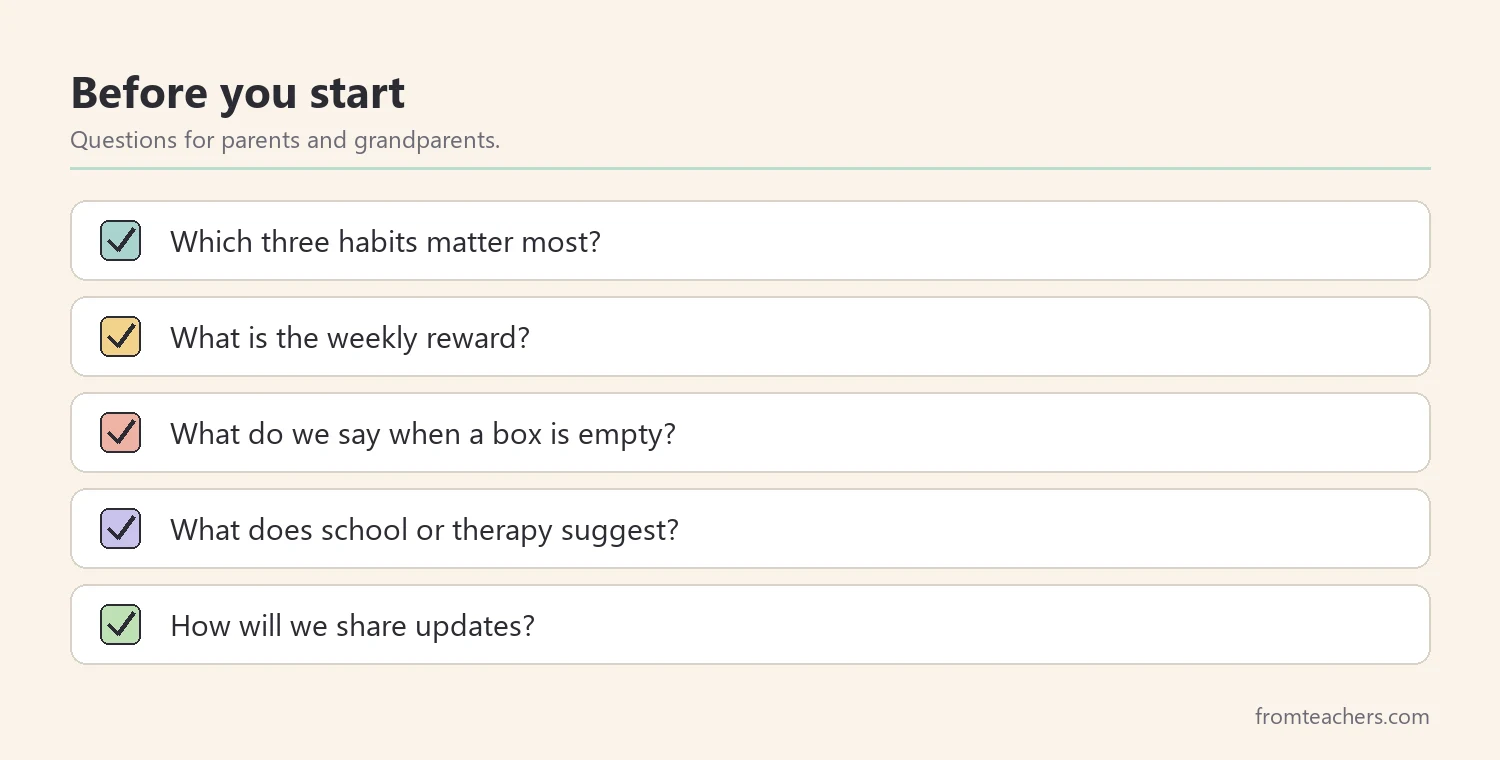
Some children need more support than a simple chart can give. If a grandchild has ADHD, autism or another need, ask the parents what the school or therapist recommends. Their plan may include specific words, visuals or calm-down steps that you can use too.
In addition, adjust for age. A three-year-old may need just one habit and a sticker. A nine-year-old may prefer to track their own boxes and choose the reward. Figure 4 lists questions to ask before you start.
Making it work across the week
Consistency does not mean perfection. Some visits will be tired, rainy or busy. Therefore, aim for “most days,” not “every day.” A chart with a few empty boxes still tells a story of progress.
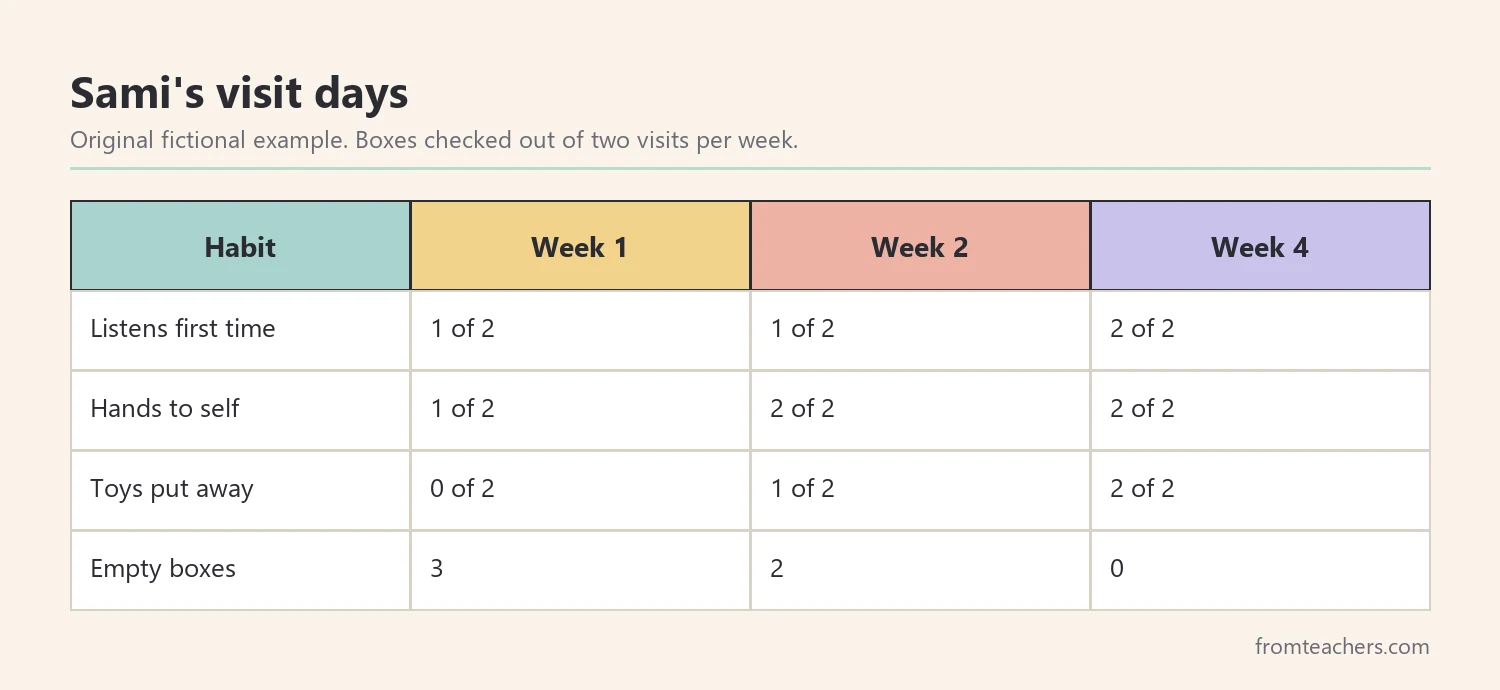
For example, Sami’s chart showed three empty boxes in week one and only one empty box by week four. Figure 3 shows the change. His grandmother said the afternoons felt calmer, and she had more time for the fun parts.
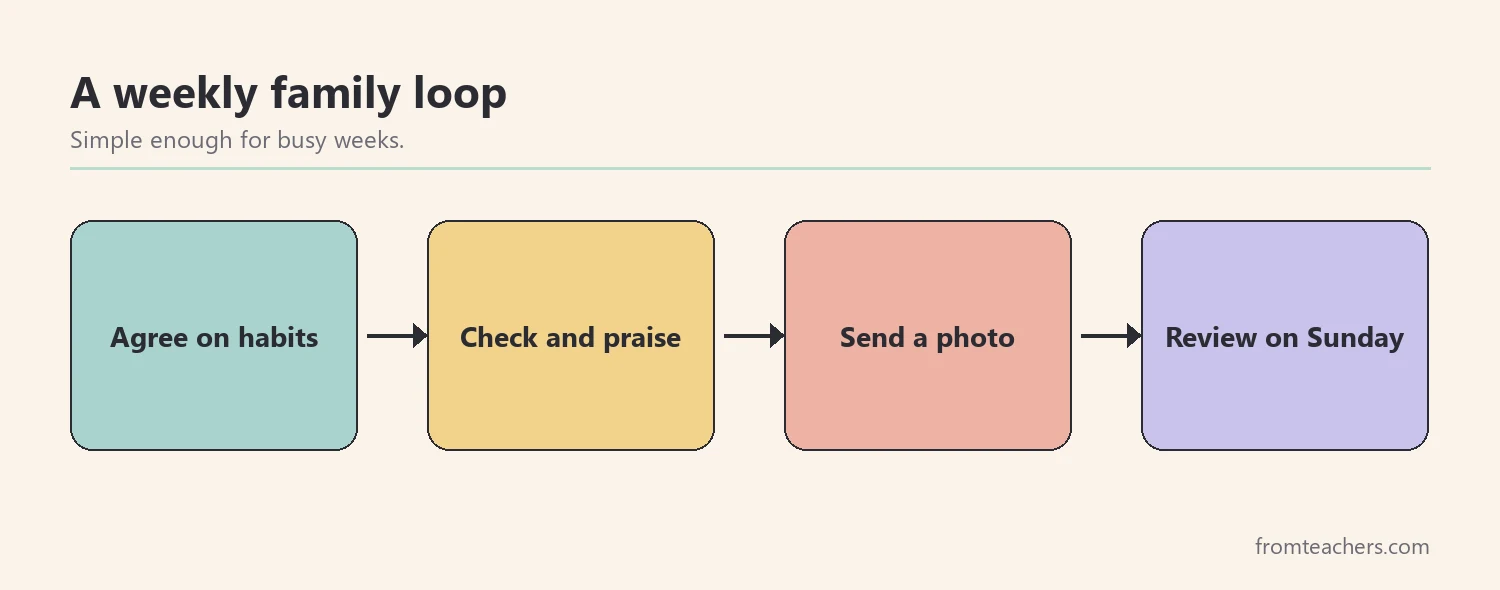
Finally, keep the routine simple. Figure 5 shows a four-step weekly loop that many families can follow.
What to put on a behavior chart for grandparents
Choose habits that actually happen during visits. Morning routines may not matter if the child arrives after school, while snack time, play and pickup almost always happen. A behavior chart for grandparents should reflect the real afternoon, not an ideal day.
For example, good visit habits often include listening the first time, using kind words, helping set the table, putting toys away and getting ready calmly when a parent arrives. Each one is short, clear and easy to see.
In contrast, vague habits like “be good” are hard to check. The child does not know what to do, and the adult has to guess whether it happened. Therefore, write habits as actions you could photograph.
Also, think about the hardest moment of the visit. For many families, it is the goodbye. A habit like “shoes on when Mom arrives” can make pickup smoother for everyone. Sami’s family added it in week five, and the car ride home became calmer.
Finally, keep the language warm. A behavior chart for grandparents that says “We help, we listen, we tidy” feels like a team plan, not a list of rules. Read it aloud together at the start of each visit, and let the child point to each habit.
Common mistakes and how to avoid them
- Too many habits at once. Fix: choose three for grandparent days.
- Different rewards in each home. Fix: write the same reward on both charts.
- Taking away earned checks. Fix: once a box is checked, it stays checked.
- Using the chart as a threat. Fix: point to it for praise, not for warnings.
- Never updating the habits. Fix: review weekly and swap mastered habits.
Questions grandparents ask about a behavior chart for grandparents
Will a chart make me the strict grandparent?
Not if you keep it positive. Most of your time stays the same; the chart only adds praise for a few habits.
What if my grandchild refuses to use it?
Keep it low-key. Praise the habit anyway and check the box yourself. Many children join in once they see the reward.
Should grandparents give rewards or only parents?
Agree on this together. Many families let the grandparent give a small “together time” reward at the end of the week.
How old should a child be for a behavior chart?
Many families start around preschool age with one simple habit. Older children can help choose habits and rewards.
What if we disagree about rules?
Focus on the two or three habits that matter most and let the rest stay different. Children can handle small differences.
Related reading: Moving Beyond Shame and Behavior Charts: Positive Alternatives, How Parents and Teachers Can Team Up for Special Education Success, and ADHD in Children: A Guide to Effective Classroom and Home Support.
You may also need: Healthy Habits for Kids: Sleep, Nutrition & Routines.
A companion resource for behavior chart for grandparents:
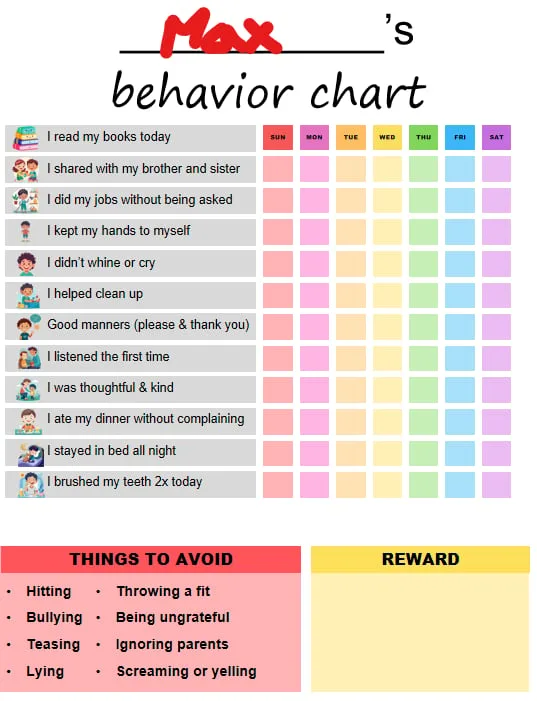
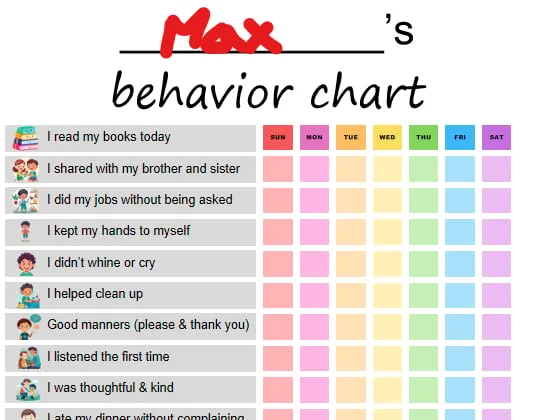
Weekly Behavior Chart for Kids: Editable Printable Reward Chart for Home: a one-page, colorful weekly chart you personalize with the child’s name, with eleven positive daily habits, a Sunday to Saturday grid, a Things to Avoid section and a reward box.
Sources and scope
- HealthyChildren.org: parenting information from the American Academy of Pediatrics, including discipline and routines.
- American Academy of Pediatrics: the professional organization behind HealthyChildren.org.
- Center on PBIS: family resources on positive behavior support at home.
- Understood: articles for families on behavior, routines and learning differences.
This list covers everyday use of a simple weekly behavior chart by grandparents and other relatives. It is not a treatment plan, and it does not replace advice from the child’s doctor, therapist or school team.
Key takeaways
- A behavior chart for grandparents works best when both homes use the same chart.
- Choose only a few habits for visit days.
- Check boxes right away with specific praise.
- Make rewards about time together, not things.
- Share quick updates and review the chart each week.








Leave a Comment