

Signs of executive dysfunction in teens are easy to mistake for laziness, attitude or simply being fifteen. Picture Sam, a tenth grader who understands his chemistry homework, sits down at 7 p.m. with good intentions, and is still staring at the first question at 9. His parents see a phone and an empty page. Sam sees a wall he cannot get past.
This list is for parents of teenagers and the high school teachers who work with them. It walks through nine signs that often point to a skill gap in executive function rather than a motivation problem, what each one can look like at home and at school, and one practical response for each. By the end, you will be able to spot the pattern and respond with support instead of a lecture.
Examples are fictional. Adapt to the student’s goals and agreed supports. This is guidance, not a diagnosis.
At a glance
- Executive function covers skills such as starting tasks, planning, organizing, time management and shifting attention.
- Many teens who struggle here are bright and want to do well.
- Demands rise sharply in high school, so gaps often show up for the first time.
- Small external supports, such as checklists and first steps, usually help more than pressure.
- These signs are not a diagnosis; persistent concerns deserve a conversation with the school or a doctor.
How this list is ordered
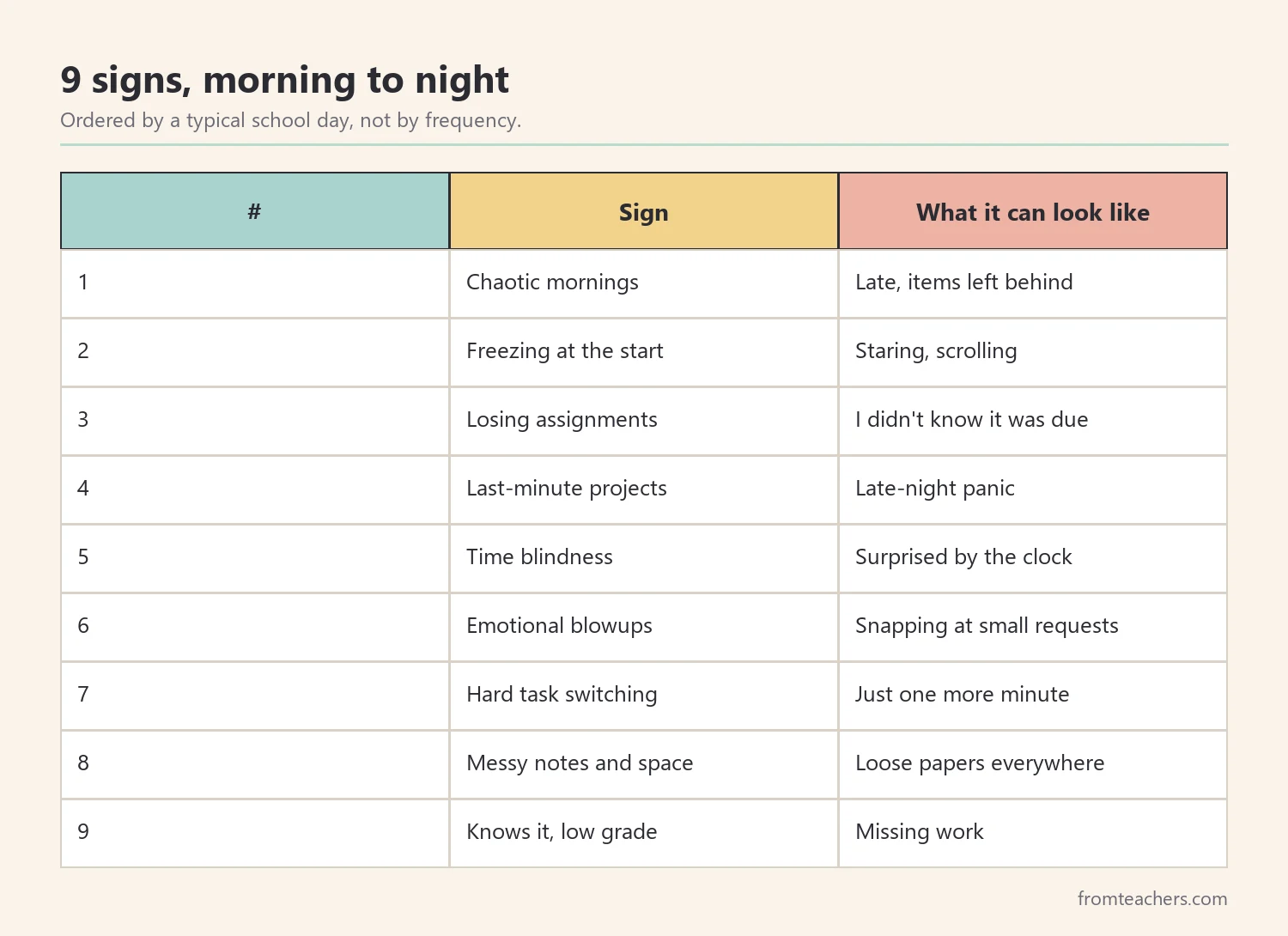
We did not rank these signs by how common they are, because that varies from teen to teen. Instead, the list follows a typical school day, from the morning rush to late-night homework. As a result, you can hold it next to your own teen’s day and see where the hard moments fall.
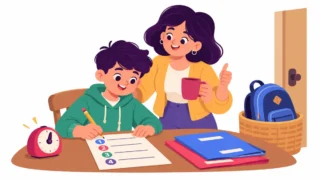
Executive function skills keep developing well into early adulthood. Meanwhile, high school asks teens to manage more classes, longer projects and more independence than ever before. That mismatch is why many signs of executive dysfunction in teens appear in ninth or tenth grade. Figure 1 shows the full list.
1. Chaotic mornings, every morning
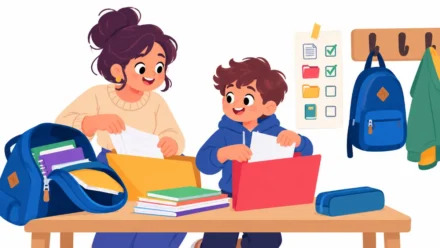
The first of the signs of executive dysfunction in teens often shows up before school. Lost shoes, a missing charger and a forgotten permission slip happen to everyone. Yet when they happen nearly every day, they can point to planning and working memory gaps.
What it can look like: running late, arguing about small tasks, leaving important items behind.
Try this: move decisions to the night before. A short checklist by the door, such as “laptop, charger, ID, lunch,” removes the need to remember under pressure.
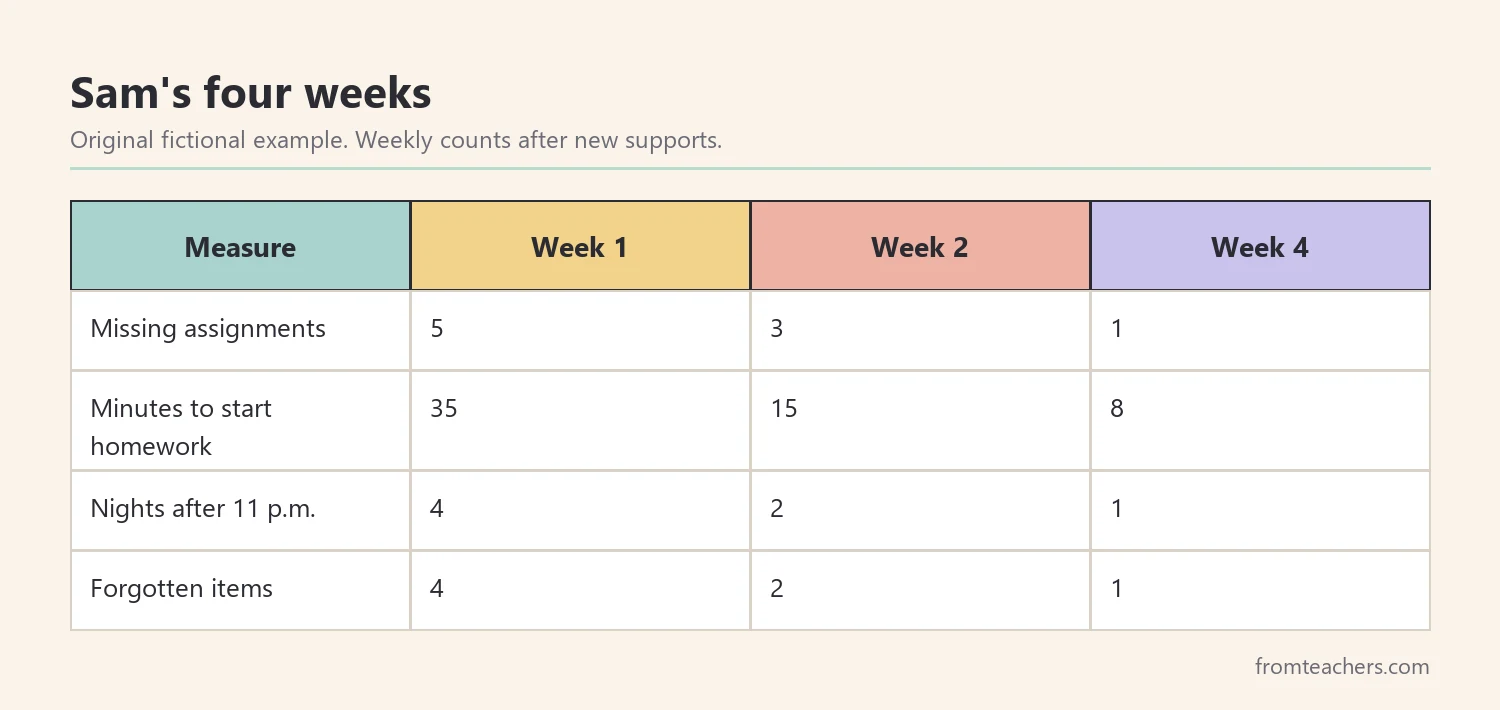
Example: Sam’s family taped a four-item list to the door. Forgotten items dropped from most days to about once a week.
2. Freezing at the start of a task
Task initiation is one of the most misunderstood skills. A teen may truly want to start but cannot find the first step.
What it can look like: staring at the page, cleaning the desk, scrolling, saying “I’ll do it later.”
Try this: make the first step tiny and concrete, such as “Write your name and copy question one.” A short timer, such as ten minutes, can also lower the barrier.
Example: Sam’s chemistry teacher started posting a “first step” on the board for each assignment. Sam began work within five minutes on most days.
3. Losing track of assignments
Next comes tracking. Many high school students juggle six or seven teachers, each with their own system. A teen with working memory or organization gaps may lose track quickly.
What it can look like: “I didn’t know it was due,” missing assignments that were actually finished, a backpack full of loose papers.
Try this: choose one planner or one app and check it at the same time every day. A weekly backpack clean-out helps too.
4. Starting big projects the night before
Long-term projects are hard for many teens with executive function gaps. A deadline three weeks away does not feel real until it is tomorrow.
What it can look like: late-night panic, rushed work, asking for extensions often.
Try this: break the project into three or four mini deadlines and write them in the planner. A short check-in at each mini deadline keeps the work moving.
Example: Sam’s history project had four mini deadlines: topic, sources, outline and draft. He finished on time for the first time that year.
5. Time blindness during homework
Some teens have a hard time sensing how long tasks take. Twenty minutes feels like five, or five feels like an hour.
What it can look like: underestimating homework, being surprised by the clock, staying up very late.
Try this: have your teen guess how long a task will take, then time it. Over a few weeks, guesses often become more accurate. A visible clock or timer also helps.
6. Emotional blowups over small requests
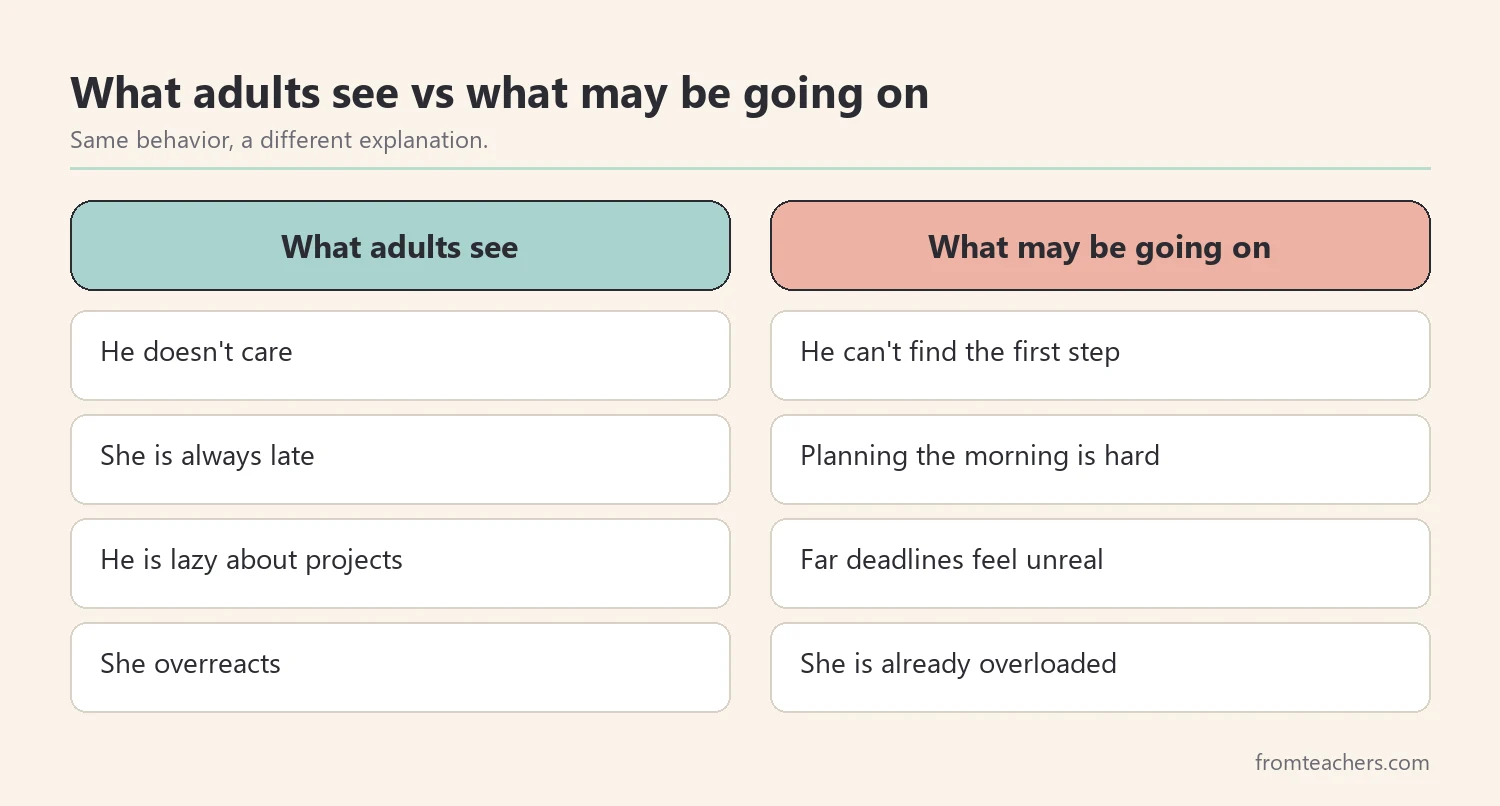
Emotional control is part of executive function too. When a teen is already overloaded, a small request, such as “Take out the trash,” can trigger a big reaction.
What it can look like: snapping, slamming doors, shutting down.
Try this: notice when blowups happen. Often they come at the end of a long day or right before a hard task. A short break and a calm, brief request usually work better than a debate.
Example: Sam’s parents noticed most arguments started right after school. They saved chores and questions for after dinner.
7. Trouble switching between tasks
Shifting attention, also called cognitive flexibility, lets a teen move from gaming to homework or from math to English. When it is weak, transitions feel like hitting a wall.
What it can look like: “Just one more minute” that lasts an hour, frustration when plans change.
Try this: give a warning before the switch and agree on a stopping point, such as “after this match,” rather than a vague “soon.”
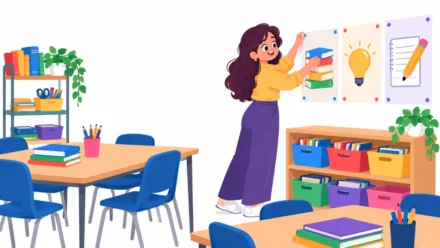
Example: Sam used to fight every request to stop gaming. Once his parents agreed on “after this match, then homework” and gave a five-minute warning, the switch took minutes instead of an argument. In class, his English teacher posted the next activity before the bell, which helped him shift faster too.
Also, watch for rigid thinking when plans change. A canceled practice or a substitute teacher can throw some teens off for the rest of the day. Naming the change early and giving one clear next step helps them recover.
8. Messy notes and a messy room
Organization shows up in physical spaces. A messy room alone is not a sign of anything. However, combined with lost work and missed deadlines, it can be part of the pattern.
What it can look like: notes with no dates or titles, a desk that is too cluttered to use.
Try this: keep systems simple, such as one folder per class and one “inbox” tray for papers. Clean up together for fifteen minutes on Sunday.
9. Knowing the material but failing the grade
Finally, the most confusing sign: a teen who clearly understands the subject but whose grades do not show it. Missing work, careless errors and unfinished tests can pull down the grade.
What it can look like: strong class discussion, low homework scores, teachers saying “If only he turned things in.”
Try this: ask teachers which assignments are missing and why. Then work on the system, not only the content. If you want a clear explanation to share with your teen, the Executive Function Guide: Why Smart Students Get Stuck covers why executive dysfunction looks like laziness, the neuroscience behind the freeze and strategies that work, in a comic style many teens find easy to read.
Example: Sam’s chemistry grade rose once his missing assignments were tracked. His test scores had been solid all along.
What to do when you see several signs of executive dysfunction in teens
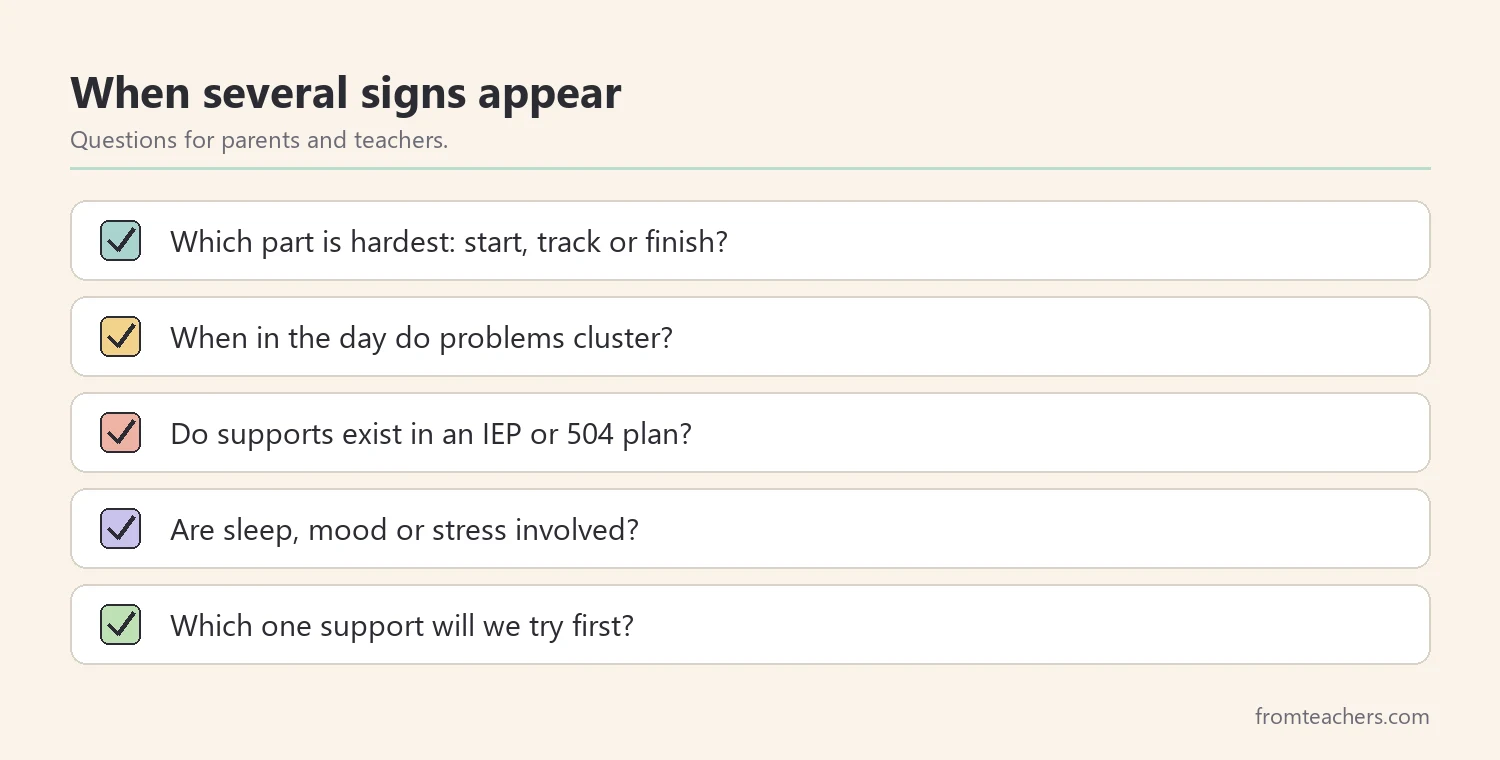
One sign on its own is common. Several signs that last for months and affect school or home life are worth a closer look. First, talk with your teen in a calm moment. Ask which part feels hardest: starting, remembering or finishing.
Next, talk with the school. A school counselor or case manager can gather information from teachers. If your teen already has an IEP or a 504 plan, ask whether executive function supports, such as checklists or extended time, are included and used.
Also, consider a conversation with your teen’s doctor if you are concerned about ADHD, anxiety, depression or sleep, since these can all affect executive function. Figure 4 lists questions to bring.
In addition, involve your teen in every step. Teenagers want independence, and support works best when they help design it. Ask, “What would make starting easier?” and try their idea first.
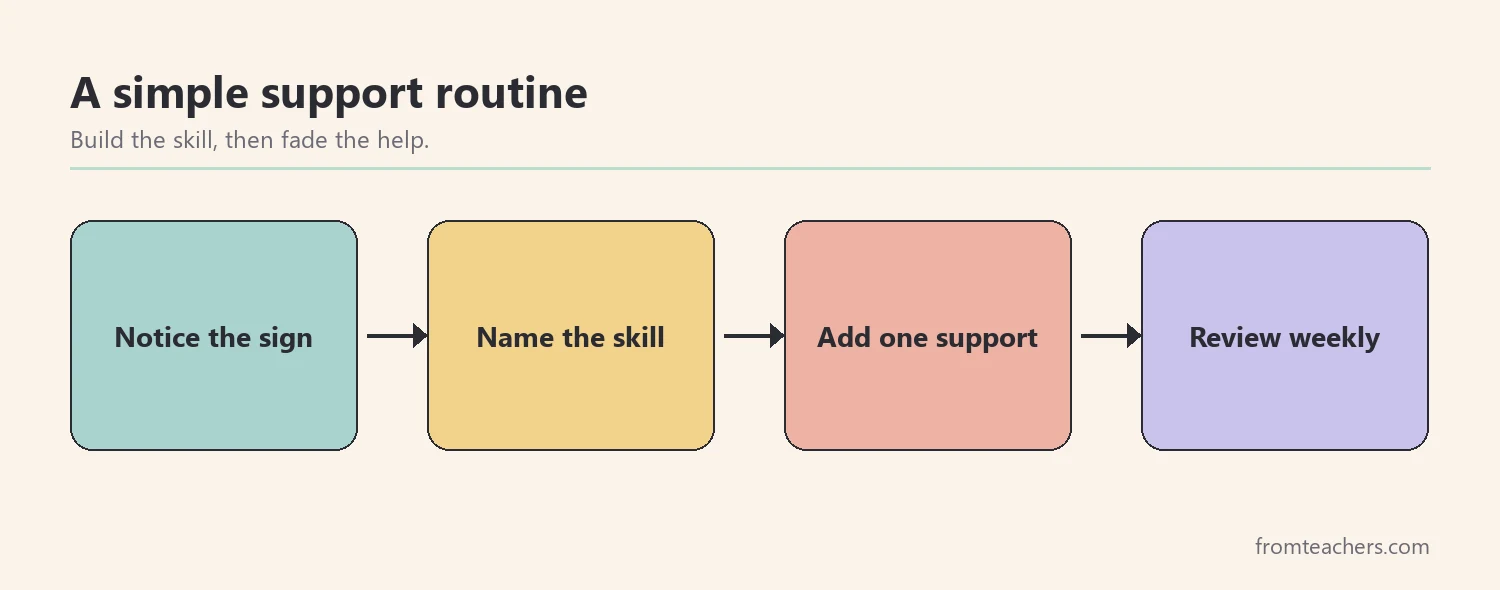
Then, plan to fade support gradually. For example, start by checking the planner together every night. After a few good weeks, check twice a week. Later, your teen checks alone and shows you on Sunday. This way, the skill moves from the adult to the teen instead of staying with the adult.
Finally, protect the relationship. Daily battles about homework can damage trust and make teens hide problems. Keep one calm check-in a day, praise effort and systems, and leave room for conversations that have nothing to do with school. Figure 5 shows a simple support routine.
Common mistakes and how to avoid them
- Calling it laziness. Fix: name the skill, such as “starting” or “planning,” instead of the character.
- Taking over completely. Fix: support the system, then step back slowly.
- Adding more consequences. Fix: add structure first, such as first steps and mini deadlines.
- Using too many tools at once. Fix: one planner, one checklist, one routine.
- Talking only about grades. Fix: celebrate progress in habits, such as starting on time.
Questions parents and teachers ask about signs of executive dysfunction in teens
Is executive dysfunction the same as ADHD?
No. Executive function challenges are common in ADHD, but they can also appear with anxiety, depression, learning disabilities, autism, poor sleep or stress. Only a qualified professional can diagnose a condition.
Will my teen grow out of it?
Executive function skills continue to develop into early adulthood. Still, many teens need support and strategies now, rather than waiting.
Should I check my teen’s grades online every day?
Daily checking can create conflict. A planned weekly review together often works better and builds independence.
Can teachers help without an IEP?
Yes. Many supports, such as posting first steps, chunking projects and giving reminders, help the whole class and need no formal plan.
What is the single best first step?
Pick the hardest moment of the day and add one simple support, such as a checklist or a tiny first step. Review after two weeks.
Related reading: ADHD Support Strategies for Children, ADHD Classroom Strategies for Student Success, and Teacher and Parent Communication in Special Education.
You may also need: Executive Functioning Skills Checklist Sheet.
A companion resource for signs of executive dysfunction in teens:
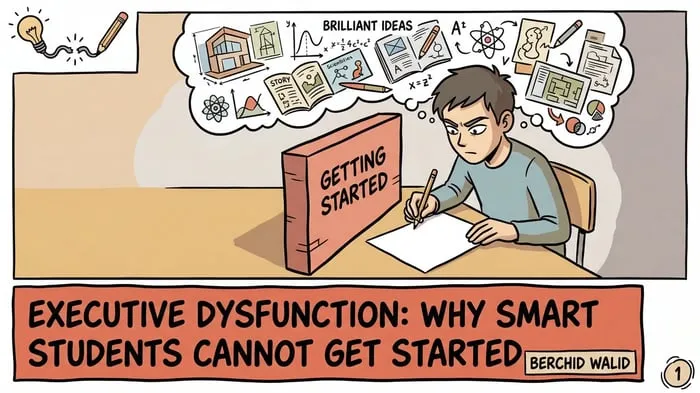
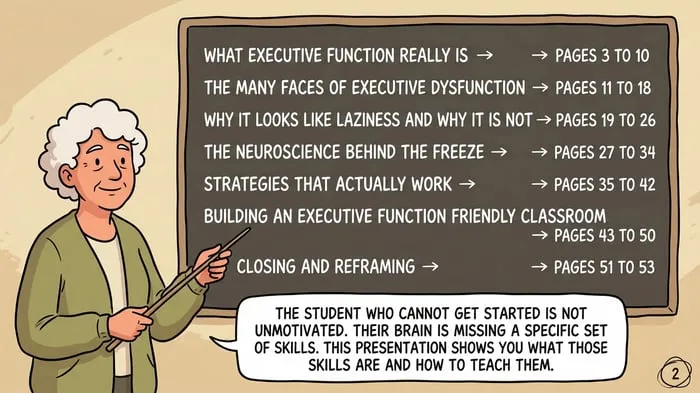
Executive Function Guide: Why Smart Students Get Stuck: a 53-page comic style guide on what executive function is, why dysfunction looks like laziness, the neuroscience behind the freeze, strategies that work and how to build an executive function friendly classroom.
Sources and scope
- Center on the Developing Child at Harvard University: background on executive function and how it develops.
- CHADD: information for families on ADHD and executive function.
- Understood.org: parent and teacher guides on executive function challenges.
- Child Mind Institute: family guides on teen behavior, attention and mental health.
This list describes common signs of executive function challenges in teenagers and everyday supports. It does not diagnose ADHD or any other condition, and it does not replace an evaluation by the school or a health professional.
Key takeaways
- Signs of executive dysfunction in teens often look like laziness but reflect a skill gap.
- Look for patterns across mornings, homework, projects and emotions.
- Tiny first steps, checklists and mini deadlines lower the barrier.
- Involve your teen and fade support slowly to build independence.
- Talk with the school or a doctor when several signs last for months.


Leave a Comment