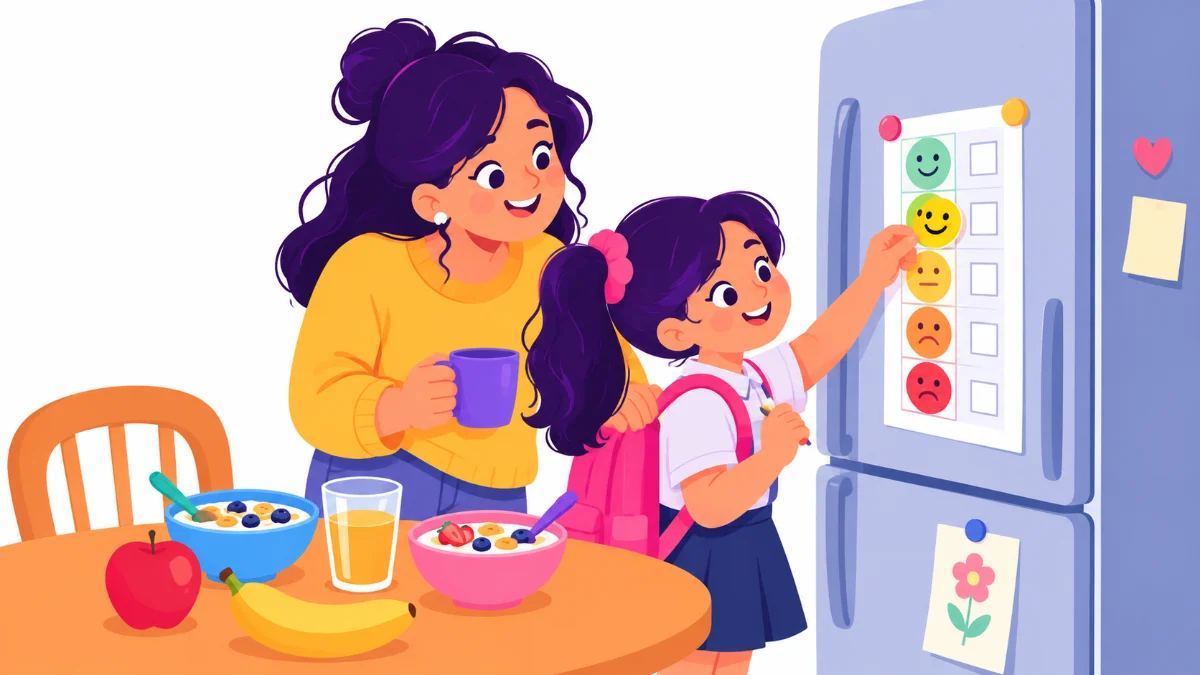

A sleep log for kids sounds simple: write down when your child goes to bed and wakes up. Yet many parents start one, fill it in for three days and give up, or end up with pages of notes that answer nothing. Picture Maya, age 7. She is tired and cranky most school mornings, and her parents are not sure why. They start a notebook, but by the weekend it is half empty and full of guesses.
This list is for parents of young children, roughly ages 5 to 9, who want to understand their child’s sleep and energy without turning bedtime into a project. It covers seven common mistakes, ranked by how often they make a log hard to use, plus what to do instead. By the end, you will know what to record, how long to keep going and how to share what you find with a teacher or pediatrician.
Examples are fictional. A log is a way to notice patterns, not a diagnosis. If you are worried about your child’s sleep, breathing, snoring or health, talk with your pediatrician.
At a glance
- A sleep log for kids works best when it is short, daily and the same every day.
- Record facts, such as times and energy ratings, not long stories.
- Track daytime habits too, because energy depends on more than bedtime.
- Two weeks of steady notes usually shows more than two days of detailed notes.
- Bring the log to the pediatrician if you have health concerns.
How this list is ranked
We ranked these mistakes by how much they reduce the value of the log, starting with the ones that make it hardest to see a pattern. The ranking reflects common practical problems, not research figures. Every family is different, so some mistakes may matter more for you than others.
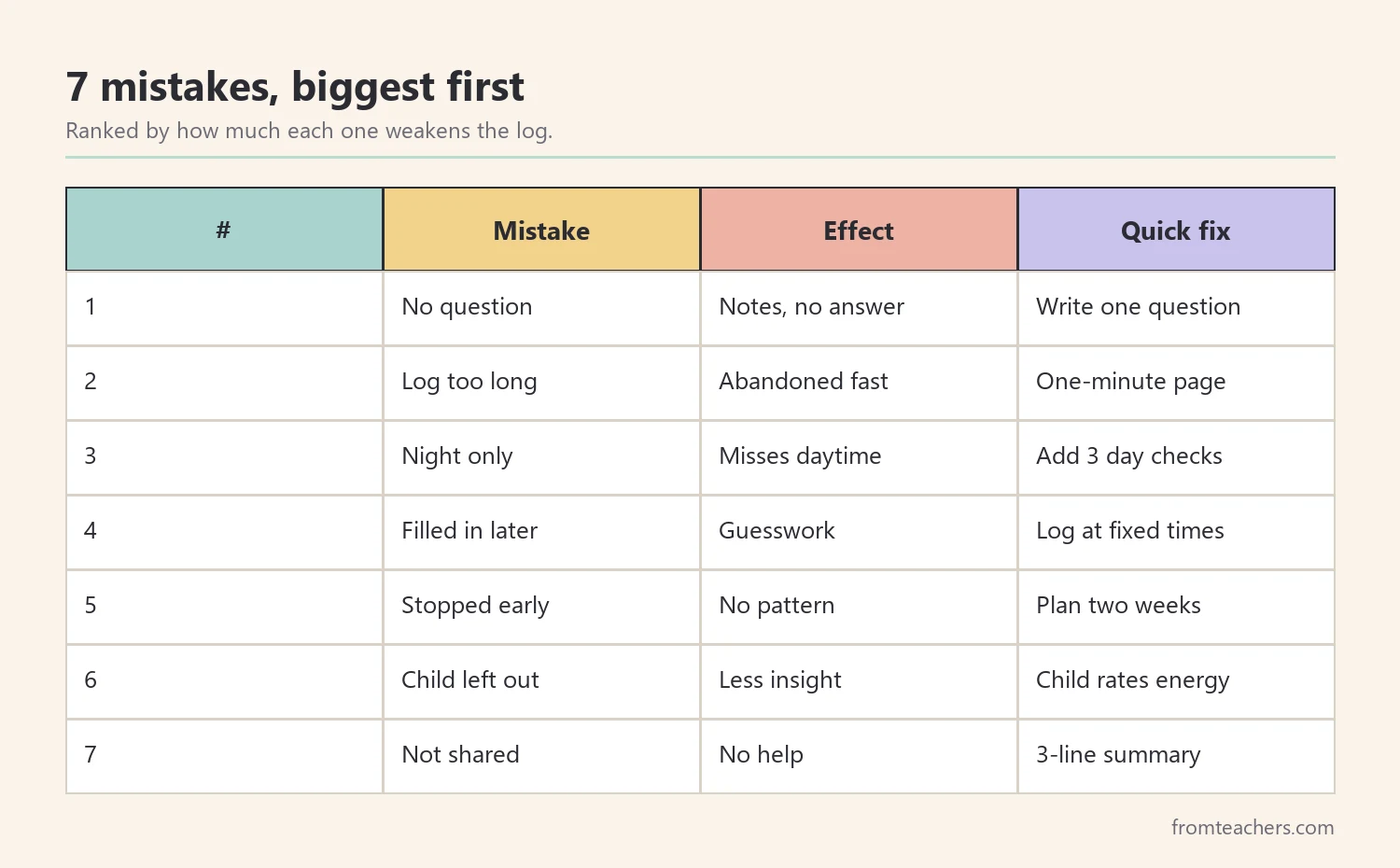
Before we start, a word on purpose. A sleep log for kids is not about perfection. Instead, it helps you answer one or two clear questions, such as “Is Maya tired because she falls asleep late?” Figure 1 shows the seven mistakes at a glance.
1. Starting without a question
First, the biggest mistake is recording everything without knowing why. Parents end up with lots of notes and no answer.
Why it matters: a clear question tells you what to record. For example, “Does Maya have more energy on days she goes to bed before 8:00?” needs bedtime and a morning energy rating, not much else.
What to do instead: write one question at the top of the page. Keep it simple and about what you can observe at home.
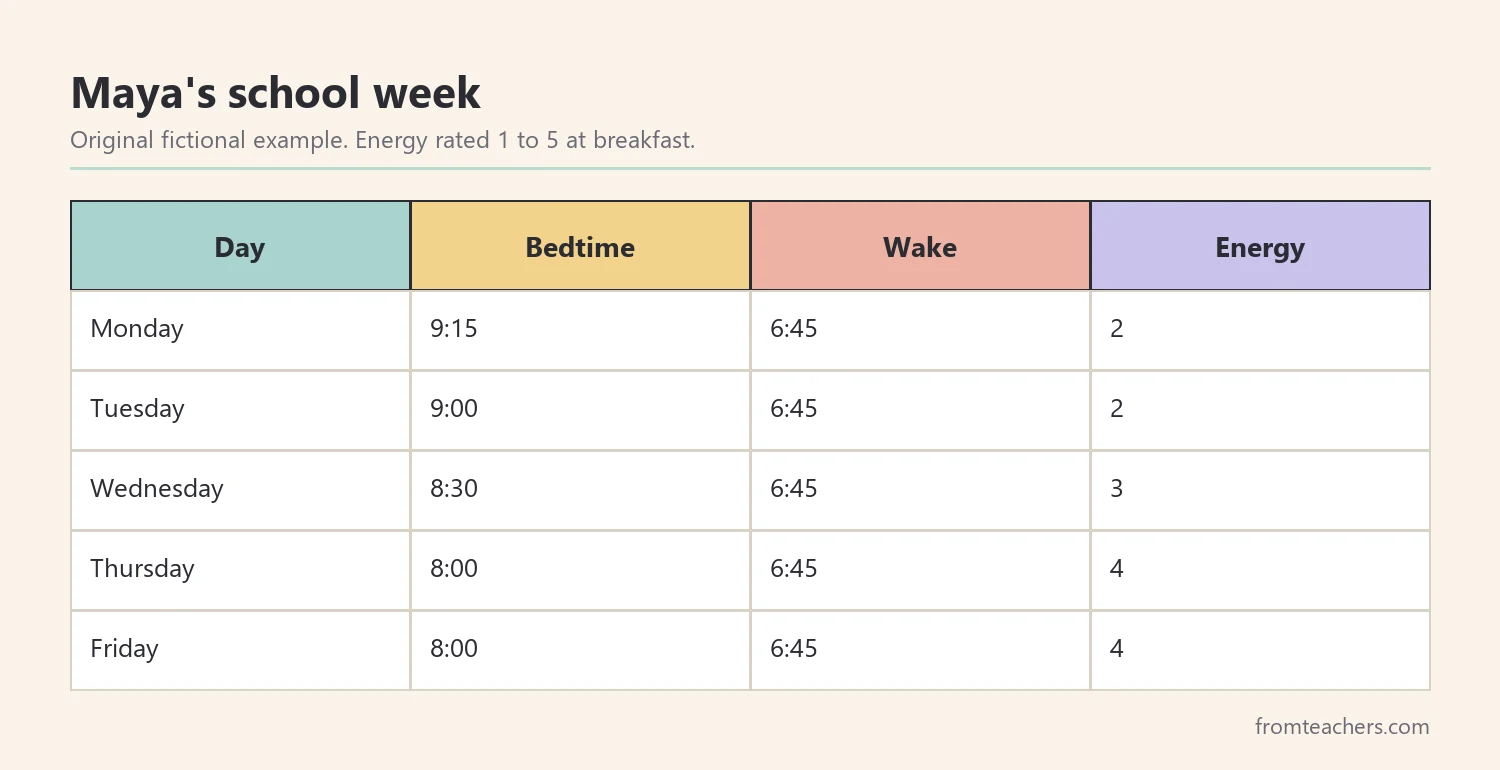
Example: Maya’s parents wrote: “Why is Maya so tired on school mornings?” Suddenly, they knew to record bedtime, wake time and how she felt at breakfast.
2. Making the sleep log for kids too long
Next, long logs do not last. If a page takes ten minutes, it will be abandoned by Thursday.
Why it matters: a log only shows patterns if it is filled in every day. Therefore, short beats detailed.
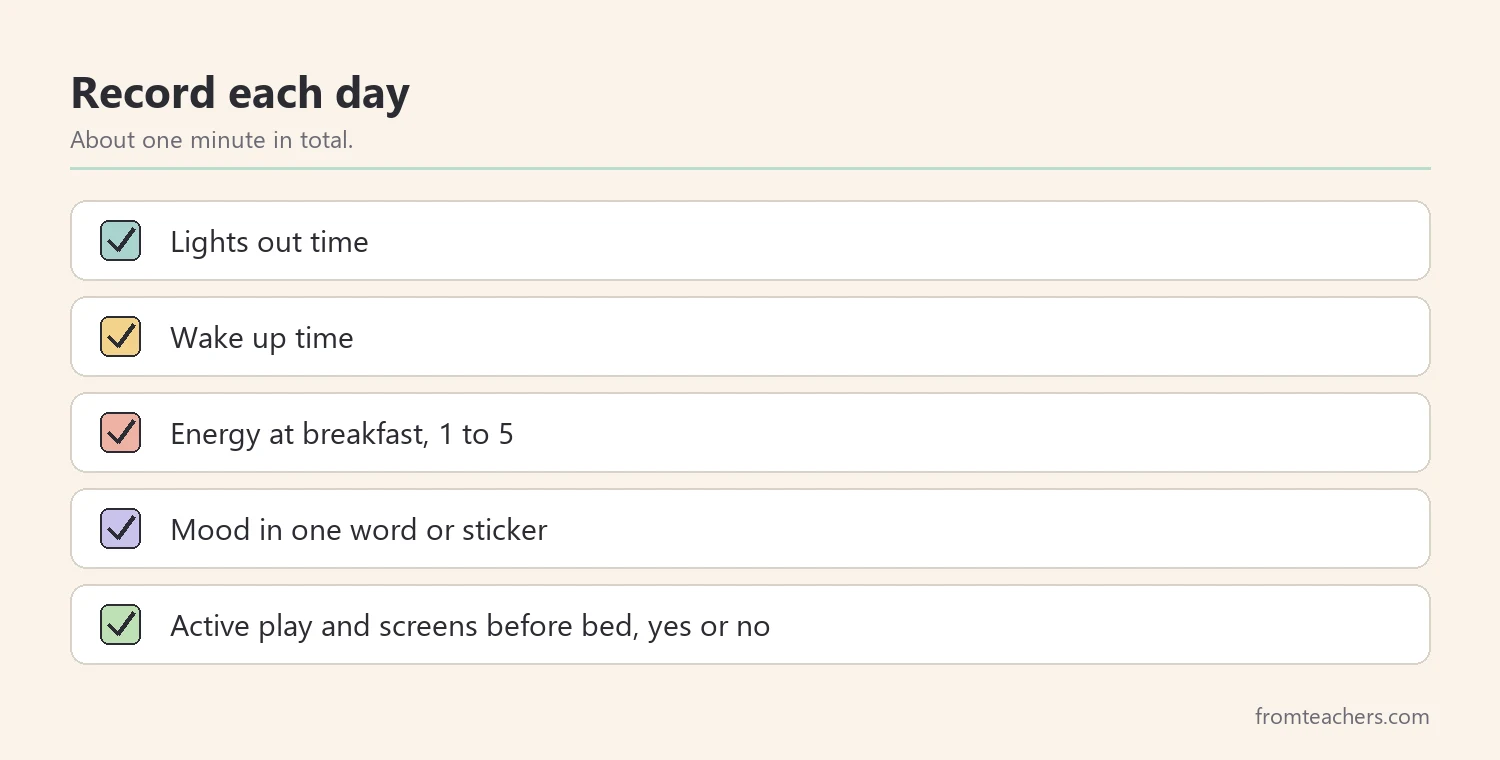
What to do instead: limit the daily entry to about one minute. Use checkboxes and ratings, such as energy from 1 to 5, instead of sentences. A one-page printable such as the daily energy level tracker for sleep, mood and habits already has the columns laid out, so you only fill in the boxes.
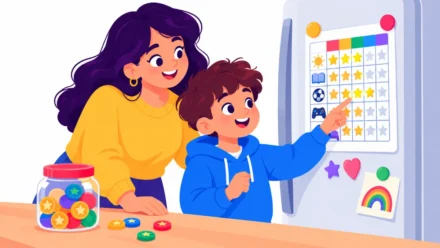
Example: Maya’s parents switched from a notebook to a one-page tracker on the fridge. They kept it going for two full weeks.
| Keep | Skip |
|---|---|
| Bedtime and wake time | Minute-by-minute notes |
| Energy rating 1 to 5 | Long descriptions |
| Mood in one word | Guesses about causes |
| Screens off time | Every snack eaten |
3. Only tracking the night
A sleep log for kids that only records bedtime misses half the picture. Energy during the day also depends on daytime habits.
Why it matters: outdoor play, meals, water and screen time can all relate to how a child feels in the evening and the next morning. Health organizations such as the American Academy of Pediatrics share guidance on healthy sleep habits that includes daytime routines and screens.
What to do instead: add three quick daytime checks: active play, screens before bed and a regular dinner time. Check yes or no.
Example: Maya’s log showed she had the most energy on days with outdoor play after school. Her parents had not noticed that before.
4. Filling it in from memory days later
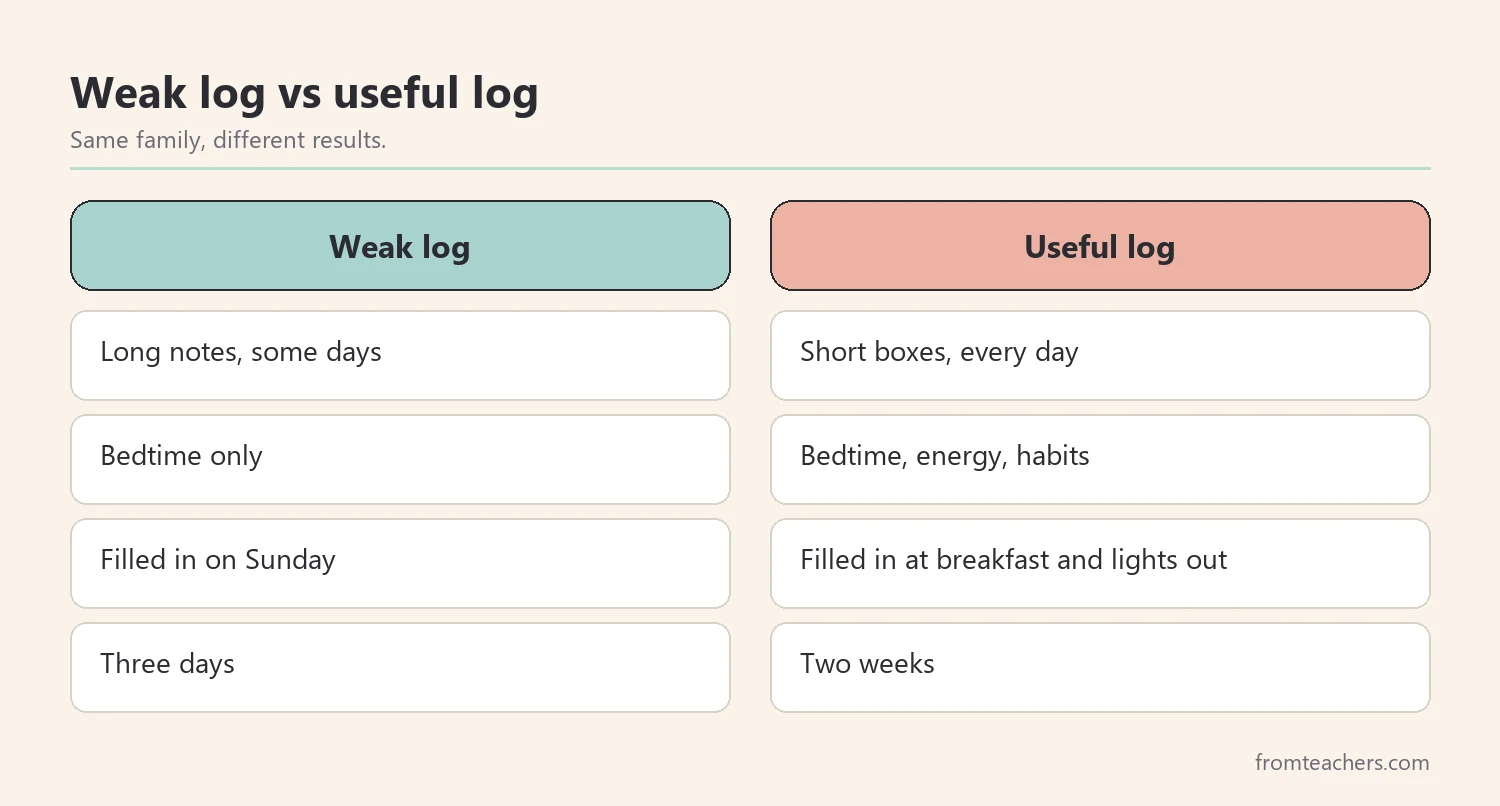
Then there is catch-up logging. On Sunday night, parents try to remember what happened on Tuesday.
Why it matters: memory blurs details. Was bedtime 8:15 or 9:00? Was she tired or just grumpy? As a result, the log becomes guesswork.
What to do instead: link the log to two fixed moments: breakfast for the morning check-in and lights out for the evening entry. Keep a pen next to the page.
Example: Maya’s dad filled in bedtime as he turned off her light. Her mom rated her energy at breakfast.
5. Stopping after a few days
In addition, short logs often show nothing. Three days may include one unusual night, a birthday party or a holiday.
Why it matters: patterns appear over time. A sleep log for kids kept for about two weeks usually covers school days, weekends and normal ups and downs.
What to do instead: plan two weeks from the start, and mark the end date on the page. If you miss a day, simply continue.
Example: After two weeks, Maya’s log showed a clear pattern: later bedtimes on Sunday to Tuesday and low energy on Monday to Wednesday. Figure 3 shows it.
6. Leaving your child out
Moreover, children can take part, even at age 5 or 6. When they help, the log becomes a shared project, not something done to them.
Why it matters: children notice their own feelings. Asking “How much energy do you have, 1 to 5?” also builds early self-awareness, a skill schools teach in social-emotional learning.
What to do instead: let your child color a face or choose a number each morning. Keep the tone curious, not worried.
Example: Maya chose stickers for her mood each morning. She started saying things like, “I’m a 2 today because I stayed up late.”
7. Not sharing what you learn
Finally, a log that stays in a drawer cannot help. Teachers and pediatricians can use clear notes.
Why it matters: a teacher may notice the same tired days at school. A pediatrician can use a written log when you raise a concern, which is easier than describing two weeks from memory.
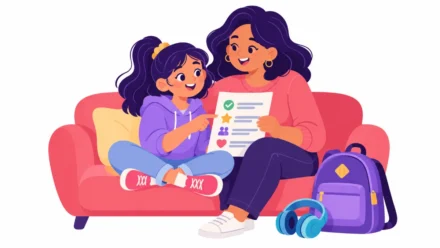
What to do instead: write a three-line summary at the end: the pattern, what you changed and what happened. Share it at a parent-teacher conference or a medical visit.
Example: Maya’s parents moved her bedtime earlier on school nights. They told her teacher, who said Maya seemed brighter in morning reading the next week.
A simple two-week plan
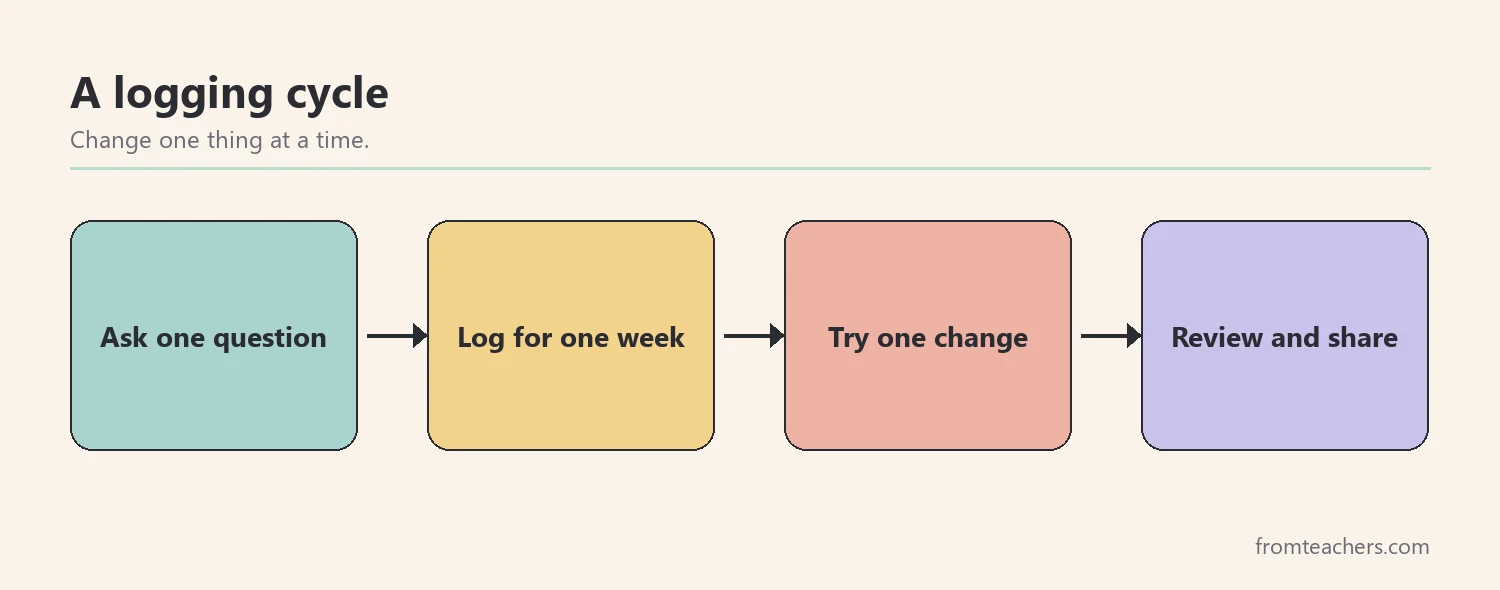
Putting it all together, here is a plan that avoids all seven mistakes. Week one is for observing only: no changes, just notes. At the end of week one, look for one pattern. In week two, try one small change, such as starting the bedtime routine fifteen minutes earlier, and keep logging.
Above all, change only one thing at a time. If you change bedtime, screens and dinner all at once, the sleep log for kids cannot tell you which change helped. Figure 5 shows the four-step cycle.
When you review, look at averages, not single nights. One bad night after a party is normal. Instead, look for repeated patterns, such as low energy after late nights or better mornings after active days.
Adapting a sleep log for kids by age
Children of different ages can take part in different ways. Therefore, it helps to adjust the log to your child’s stage. The table below shows simple ideas for the 5 to 9 age range.
| Age | Child’s part | Parent’s part |
|---|---|---|
| 5 to 6 | Picks a face sticker | Writes all times |
| 7 | Chooses an energy number | Writes times, checks habits |
| 8 to 9 | Writes energy and mood | Checks times, adds notes |
For younger children, pictures work better than numbers. For example, a sleepy face, a middle face and a bouncy face can replace a 1 to 5 scale. Older children can write one word for mood and even notice their own patterns.
Also, think about siblings. If you keep a sleep log for kids in a family with two or three children, use one page per child. Otherwise, the notes get mixed up quickly. Some families also find that a sibling wants to join in, which can make the routine more fun.
Finally, keep the language positive. Say “Let’s see what helps you feel great in the morning,” rather than “We need to fix your sleep.” A sleep log for kids should feel like a small science project, not a test your child can fail. When the tone stays curious, children are more likely to keep taking part until the end of the two weeks, and the sleep log for kids gives you a much clearer picture.
Questions parents ask about a sleep log for kids
How long should we keep a sleep log for kids?
About two weeks is a practical start. That covers both school days and weekends. Keep going longer if your pediatrician asks you to.
Should we use an app or paper?
Either can work. Paper on the fridge is easy for children to join in and does not add screen time at bedtime.
What if my child resists the log?
Keep it light and short. Let your child choose stickers or colors, and never use the log as a punishment.
Can a log tell me if my child has a sleep problem?
No. A log shows patterns, but only a health professional can assess sleep problems. Bring your notes if you have concerns, such as loud snoring or breathing pauses.
Should I share the log with my child’s teacher?
If you are comfortable, a short summary can help. Teachers may notice related patterns at school and can share their observations with you.
Related reading: Parent-Teacher Collaboration in Special Education, ADHD Children Support Strategies, and The Power of Data Tracking in Special Education.
You may also need: Daily Reflection Journal for Students, SEL check-in and goal setting sheet.
A companion resource for a sleep log for kids:
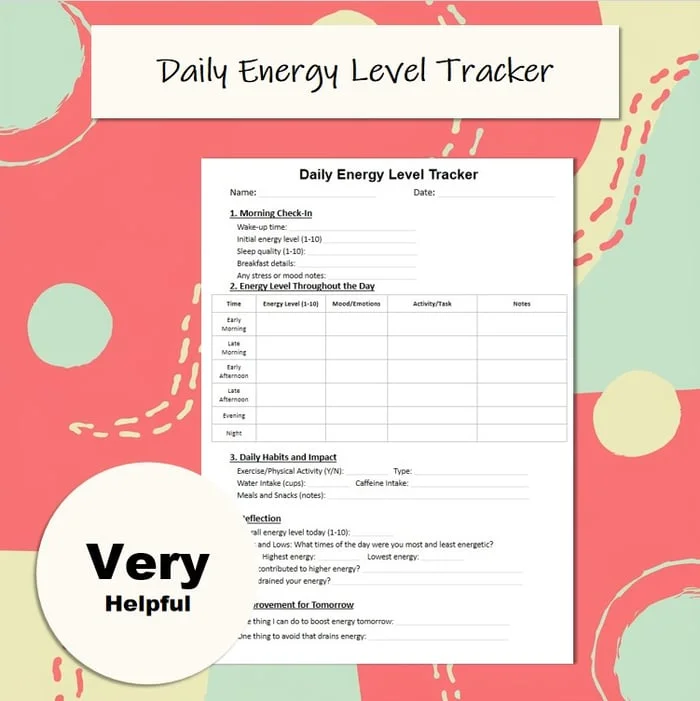
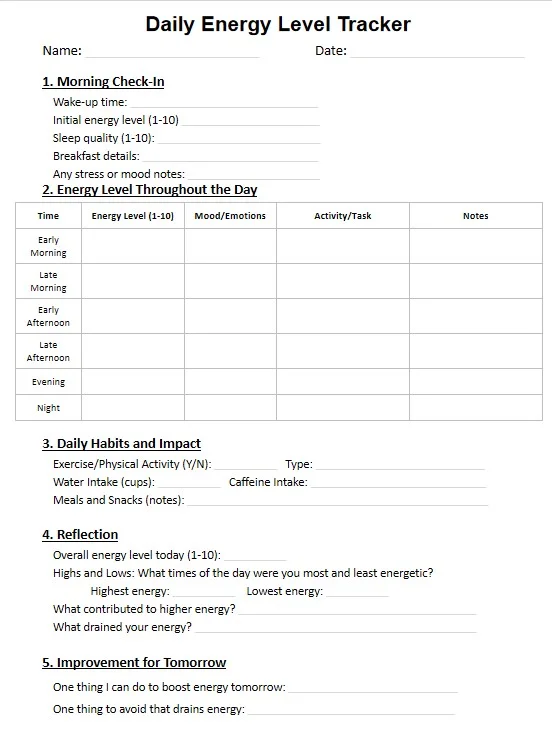
Daily Energy Level Tracker Sleep Mood and Habit Reflection Worksheet: a one-page printable tracker with a morning check-in, an energy and mood table from early morning to night, daily habits such as exercise, water, caffeine and meals, and a reflection with one thing to try tomorrow.
Sources and scope
- HealthyChildren.org (American Academy of Pediatrics): parent information on children’s sleep and healthy routines.
- American Academy of Pediatrics: pediatric guidance on child health, including sleep and screen use.
- Sleep Foundation: general information on children’s sleep and bedtime habits.
- Understood.org: guidance for families on routines, focus and learning.
This list covers practical tips for parents keeping a simple sleep and energy log for young children. It does not cover diagnosis or treatment of sleep disorders and does not replace advice from a pediatrician.
Key takeaways
- Start your sleep log for kids with one clear question.
- Keep entries short and fill them in at fixed moments each day.
- Track daytime habits as well as bedtime.
- Log for about two weeks and change only one thing at a time.
- Share a short summary with the teacher or pediatrician when useful.





Leave a Comment