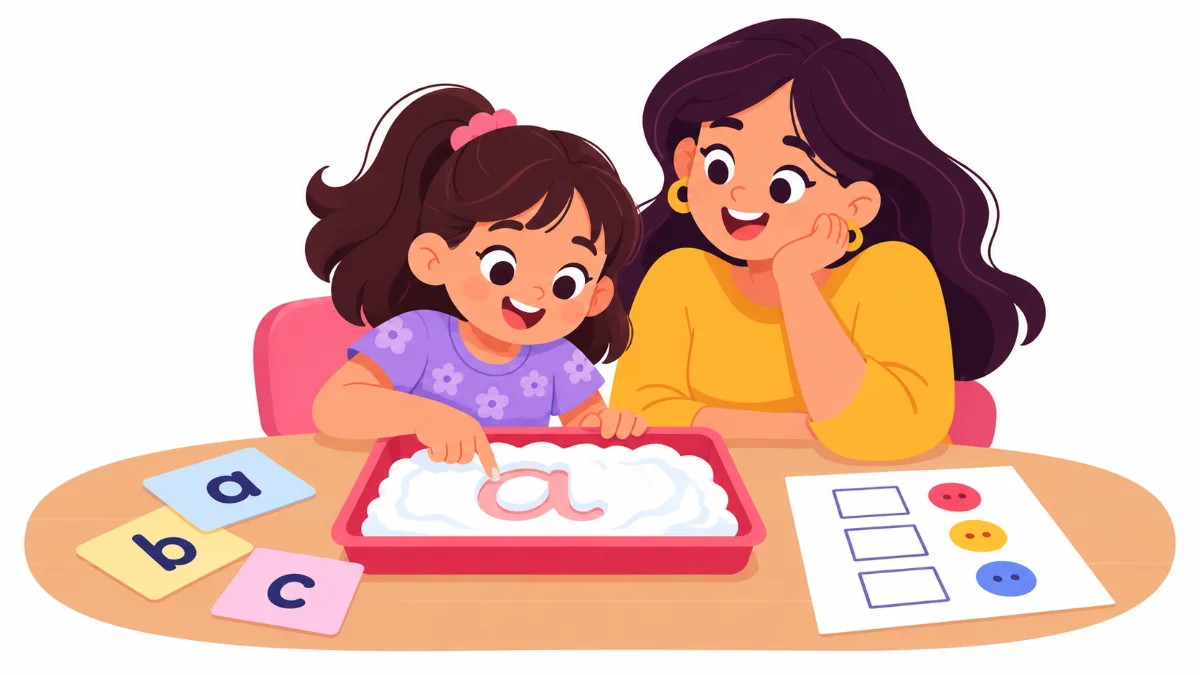

Phonics activities for parents can turn ten minutes at the kitchen table into real reading practice for a child who struggles. Picture a Tuesday evening. Nora, age 7, is in a reading intervention group at school for dyslexia support. Her teacher sends home a note: “Please practice short vowel words.” Her mom wants to help but is not sure what to do beyond flashcards, and Nora already groans at the word “reading.”
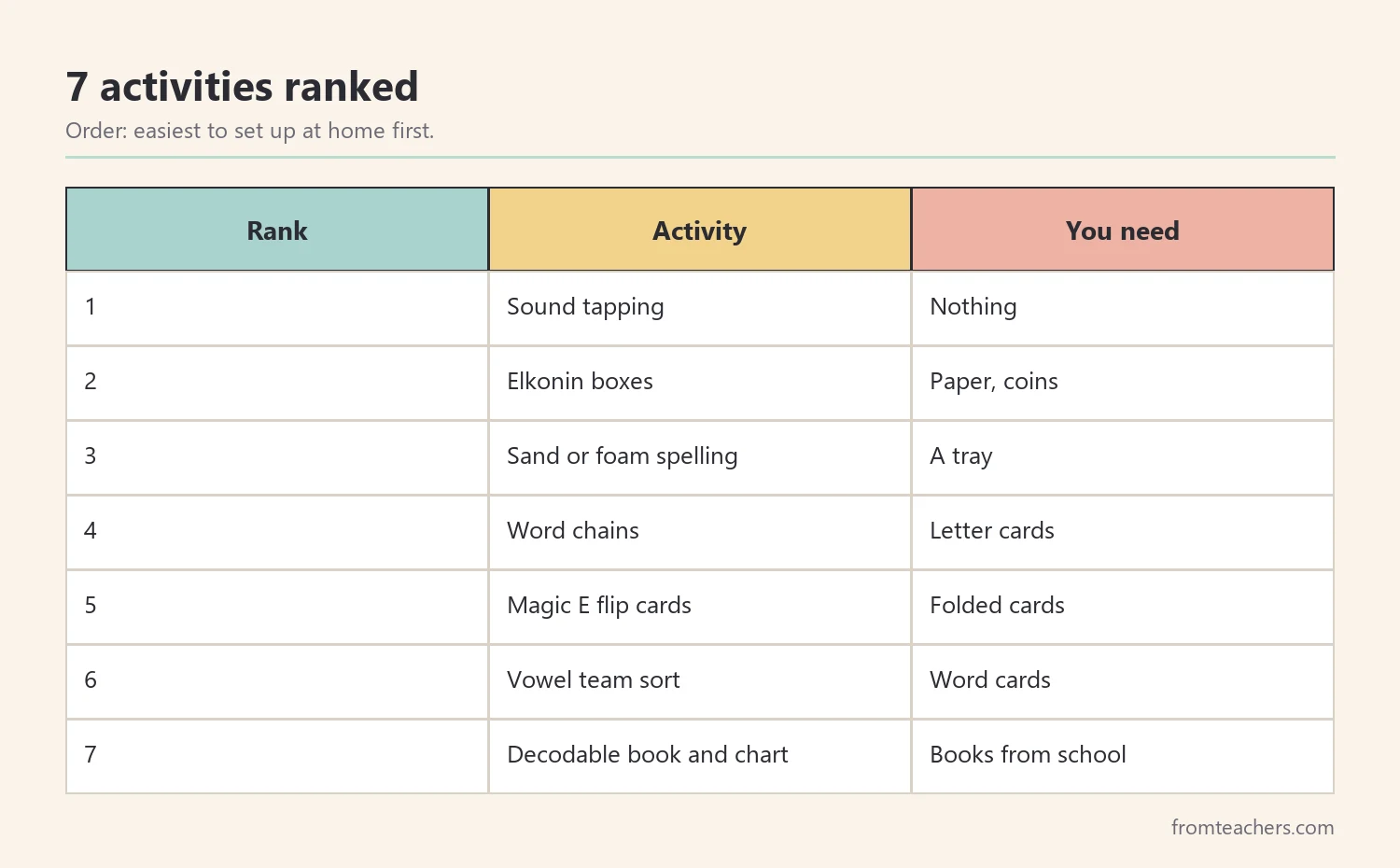
This list gives you seven home activities, ranked from the easiest to set up with what you already have to the ones that need a little preparation. Each one follows structured literacy ideas such as explicit, systematic, and multisensory practice. By the end, you will know what to do, how long to do it, and how to stay in step with your child’s teacher.
Examples are fictional. Adapt to the student’s goals and agreed supports. Home practice supports, but does not replace, school intervention. This is guidance, not a diagnosis.
At a glance
- Start with sound tapping and Elkonin boxes: no materials needed.
- Multisensory spelling in sand or foam links sound, letter and touch.
- Follow the school order: CVC, Magic E, then vowel teams.
- Ten to fifteen minutes, four or five days a week, is realistic.
- Check in with the teacher so home practice matches school.
How we ranked these activities
We ranked the seven activities by one clear rule: how easy each is to set up at home with ordinary household items. Activities at the top need nothing but paper or your hands. Activities lower down need a few cards, a printed template, or a short talk with the teacher.
In addition, every activity matches the order many intervention programs use: sounds first, then short vowel CVC words like “map,” then Magic E words like “cape,” and later vowel teams like “rain.” Practicing in that order helps your child build on what they already know.
The ready-made option: a parent-friendly phonics guidebook
Many parents want to understand the “why” behind their child’s lessons. The CVC, Magic E and vowel teams guidebook for dyslexia intervention is a 55-page professional guide with chapters on dyslexia and the science of reading, structured literacy and multisensory techniques, step-by-step teaching sequences for CVC words, Magic E, and vowel teams, assessment guidance, a sample twelve-week plan, and seven printable templates, including an Elkonin box sheet, a phonics tracking chart, and a parent communication template.
As a result, you can follow the same sequence as the school and talk with the teacher using the same words.
1. Sound tapping on fingers
What it is: your child says a word, then taps one finger to the thumb for each sound: m-a-p is three taps.
Why it works: many children with reading difficulties struggle to hear the separate sounds in words. Tapping makes each sound physical and countable, which is a simple multisensory step.
How to use it at home: say five short words. Your child taps and says the sounds, then blends them back: “m-a-p, map.” Keep it to about three minutes.
Example: Nora tapped “sun,” “hat,” and “pig” while waiting for dinner. She liked “beating” her mom by tapping faster.
Tip: say sounds, not letter names. The sound of “m” is /m/, not “em.”
2. Elkonin boxes with coins
What it is: a row of three boxes drawn on paper. Your child pushes one coin or button into a box for each sound in a word.
Why it works: Elkonin boxes are a well-known tool in reading instruction. They link hearing sounds with seeing and moving objects.
How to use it at home: start with sounds only. Later, replace coins with letter cards so your child connects each sound to its spelling.
Example: Nora pushed three buttons for “fan.” A week later, she placed the letters f, a, n in the boxes herself.
3. Sand or shaving foam spelling
Among phonics activities for parents, this is often the favorite with young children.
What it is: your child writes a word with one finger in a tray of salt, sand, or shaving foam, saying each sound as they write it.
Why it works: it combines saying, seeing, and touch. It also feels like play, which helps children who resist pencils and worksheets.
How to use it at home: dictate a word, have your child say the sounds, write it, then read it back. Smooth the tray and repeat with four or five words.
Example: Nora spelled “cat,” “cap,” and “cape” in shaving foam. She noticed that the e at the end changed “cap” into “cape.”
4. Word chains: change one letter
What it is: you build a word with letter cards, then change one letter at a time: map, mat, sat, sit, sip.
Why it works: your child must listen carefully to which sound changed. This builds accuracy and flexible thinking about letters and sounds.
How to use it at home: make letter cards on paper squares. Say “Change map to mat,” and let your child find which letter to swap. Five or six changes is plenty.
Example: Nora’s chain went from “hop” to “hope” to “rope.” Seeing the Magic E move in and out helped her more than any rule chart.
5. Magic E flip cards
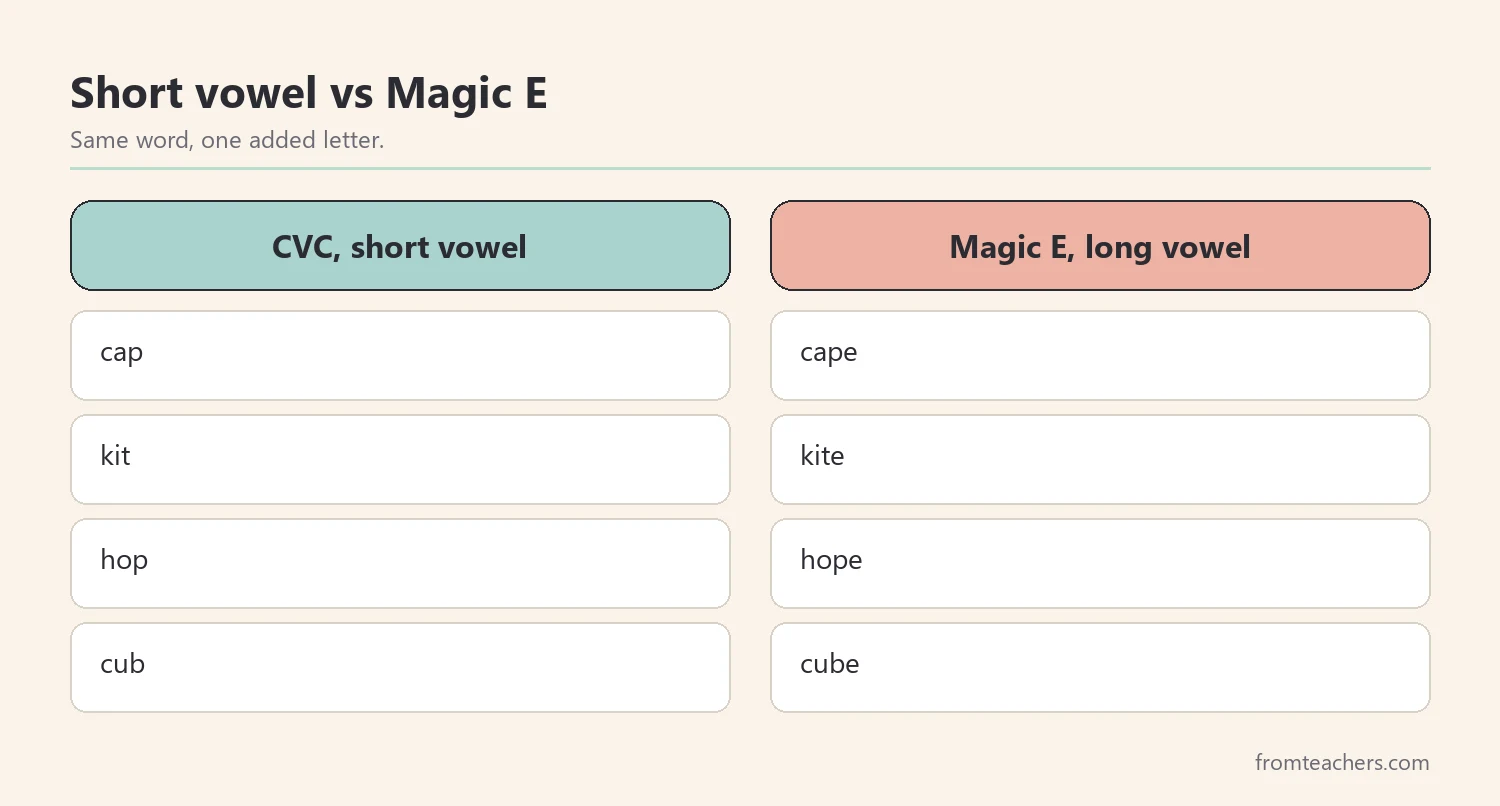
What it is: a folded card with a CVC word on the front and a flap with “e” on the side. Your child reads “kit,” folds out the e, and reads “kite.”
Why it works: it shows the Magic E pattern visually and lets your child hear the vowel change from short to long.
How to use it at home: make six to eight cards with pairs like cap and cape, pin and pine, hop and hope, cub and cube. Practice for a few minutes, then mix them in a pile.
Example: Nora read her flip cards to her grandfather on a video call. He asked for “one more,” which made her proud.
6. Vowel team sorting game
What it is: word cards sorted into piles by vowel team, such as “ai” (rain, paid) and “ay” (play, day).
Why it works: sorting helps children notice spelling patterns, including where each pattern usually appears in a word.
How to use it at home: only start vowel teams when your child’s teacher says they are ready. Sort ten cards, read each pile aloud, then find one pattern word in a book.
Example: after her teacher introduced “ai” and “ay,” Nora sorted twelve cards and noticed that “ay” words in her set ended with the pattern.
7. Decodable book reading with a tracking chart
What it is: reading a short decodable book, which mostly uses patterns your child has learned, and marking progress on a simple chart.
Why it works: decodable text lets children use phonics instead of guessing from pictures. A chart shows progress your child can see.
How to use it at home: ask the teacher for decodable books at your child’s level. Read one page together, then let your child read it alone. Note the date and any tricky words.
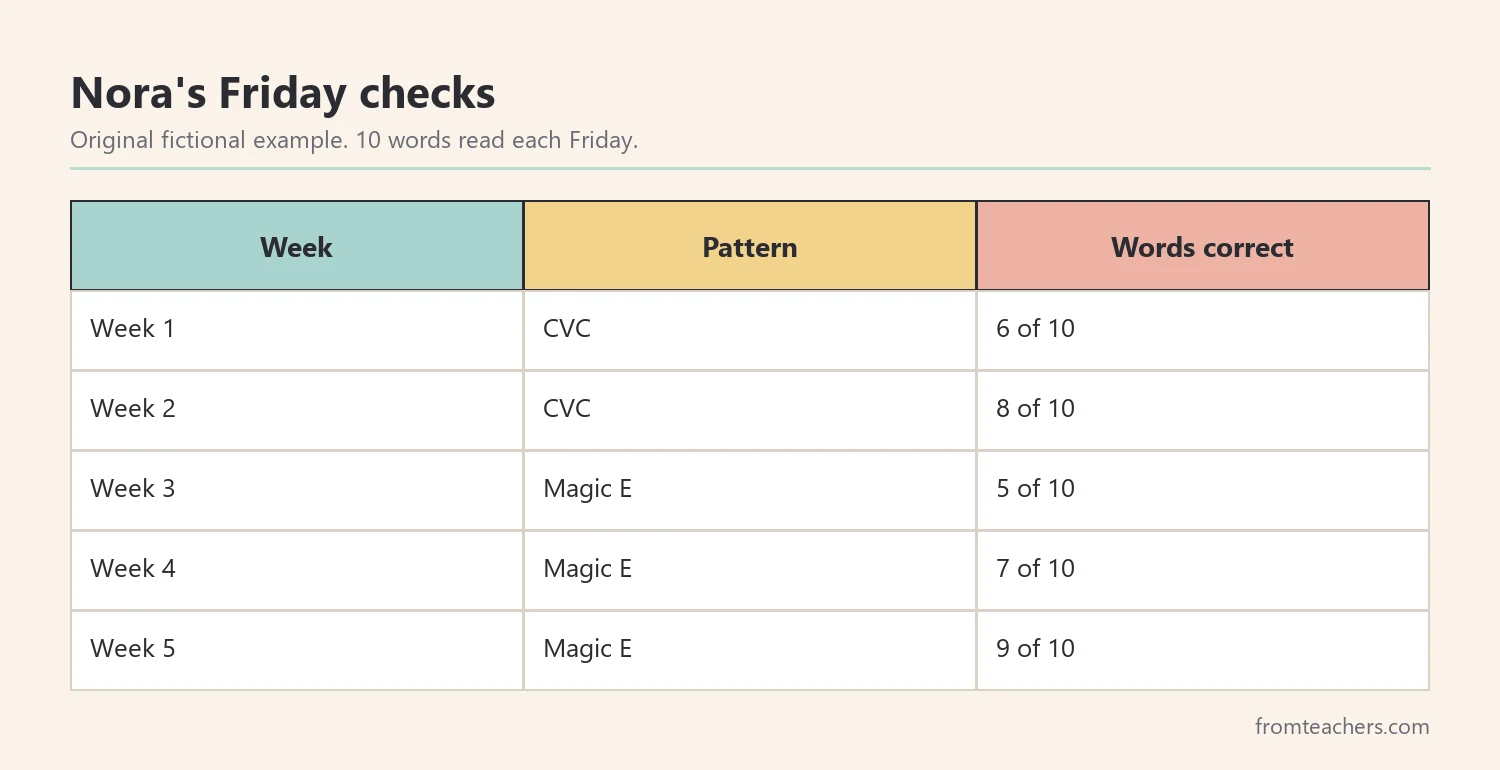
Example: Nora’s mom recorded words read correctly on a short list each Friday. The results are shown in Figure 3.
How to plan a week of phonics activities for parents
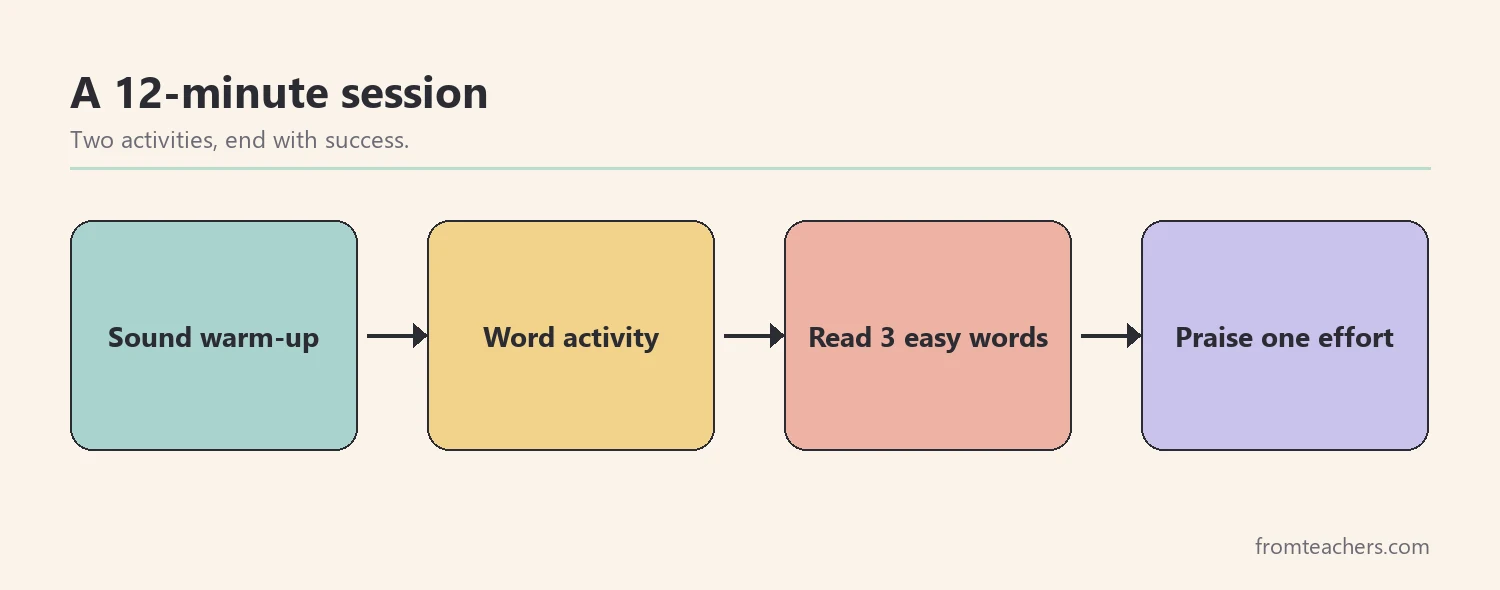
Short and regular practice usually works better than one long session. Many families find ten to fifteen minutes, four or five days a week, realistic. Choose two activities per session: one sound activity and one word activity.
| Day | Sound warm-up | Word activity |
|---|---|---|
| Monday | Sound tapping | Elkonin boxes |
| Tuesday | Sound tapping | Sand spelling |
| Wednesday | Rest day | Read for fun |
| Thursday | Elkonin boxes | Word chains |
| Friday | Flip cards | Decodable book |
Also, end every session with success. Finish on a word your child can read easily, so they leave the table feeling capable.
Staying in step with your child’s teacher
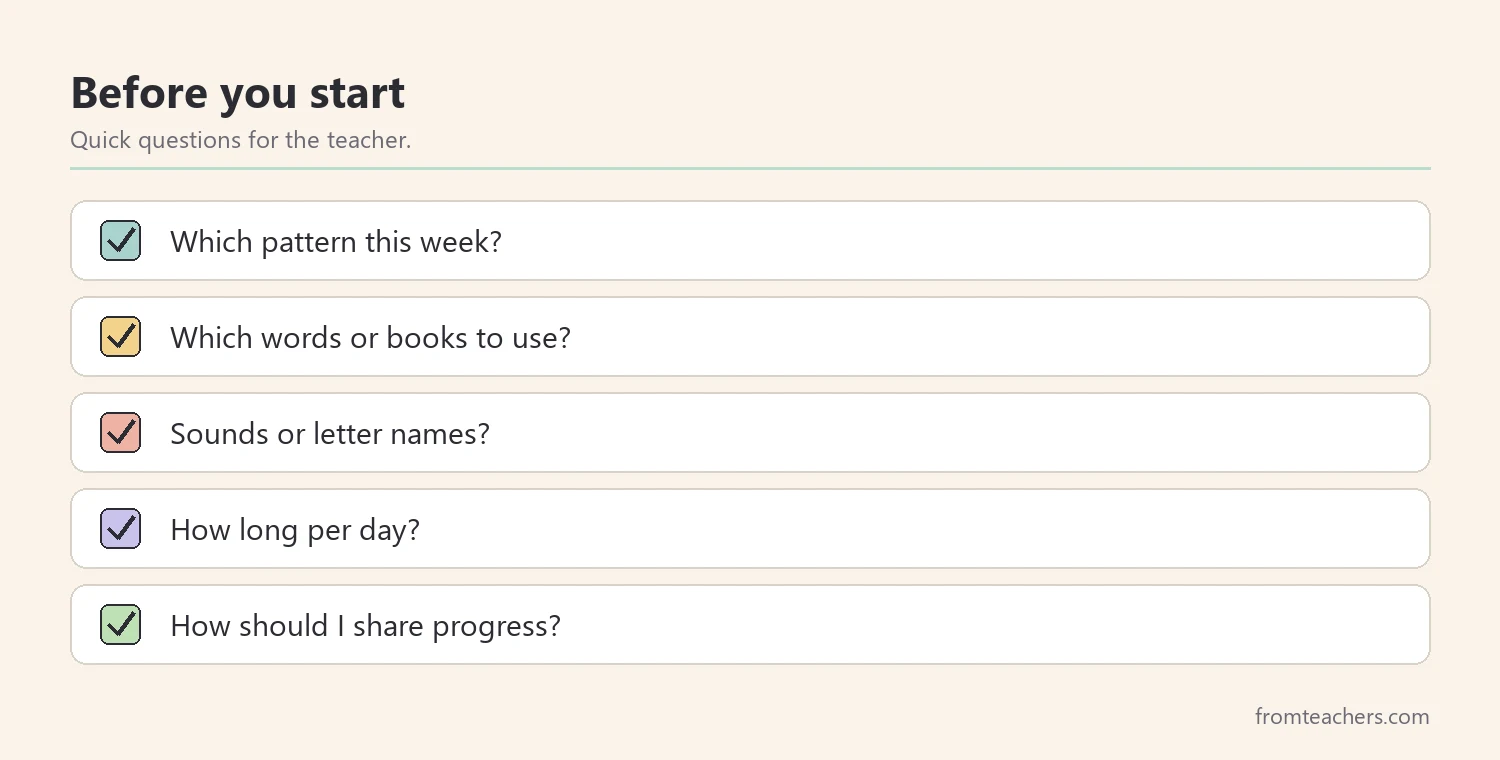
Home practice works best when it matches school. First, ask which pattern your child is learning this week. Next, ask which words or books to use. Then share what you notice, for example “Nora reads CVC words well but mixes up b and d.”
A short note every week or two is enough. Some schools use a parent communication form, which makes these updates quick for both sides. If your child’s IEP includes reading goals, ask how home practice can support them.
Keeping practice positive
Children who find reading hard often know it. By age 7, many have already compared themselves with classmates who read faster. That is why the mood of home practice matters as much as the activity itself.
First, praise effort and strategy, not only correct answers: “You tapped every sound before you blended. That is exactly what good readers do.” Next, let your child choose between two activities, which gives a sense of control. Then keep a visible record of progress, such as stickers on a chart, so your child can see that practice pays off.
Finally, keep reading for fun separate from practice. Read aloud books your child loves, even if they are far above their own reading level. Listening builds vocabulary and enjoyment, while phonics practice builds decoding. Nora’s family kept a bedtime chapter book going all year, with no questions or tests attached.
Common mistakes and how to avoid them
- Jumping ahead to new patterns: practice what your child is learning at school, not the next chapter.
- Using letter names instead of sounds: say /m/, not “em,” during blending.
- Long sessions: keep it to ten to fifteen minutes and stop before frustration.
- Guessing from pictures: use decodable books and cover pictures if needed.
- Correcting every error harshly: point to the tricky sound and let your child try again.
Questions parents ask about phonics activities for parents to use at home
How long should we practice each day?
About ten to fifteen minutes is a realistic target for many young children. Shorter, frequent sessions usually beat a long weekend session.
My child cries during reading. Should we stop?
Take a break and lower the difficulty. Start with sound games that do not involve print, and finish with an easy win. Share the reaction with the teacher.
Can these activities replace tutoring or school intervention?
No. Home activities support practice, but children with dyslexia usually need explicit instruction from trained teachers. Home practice works alongside it.
What are decodable books, and where do I find them?
Decodable books mostly use spelling patterns a child has been taught. Ask your child’s teacher or school library for titles at the right level.
When should we start vowel teams?
Usually after your child reads CVC and Magic E words with good accuracy. The teacher can tell you when your child is ready.
Related reading: evidence-based dyslexia strategies in the classroom, special education: a complete guide for parents and educators.
A companion resource for phonics activities for parents:
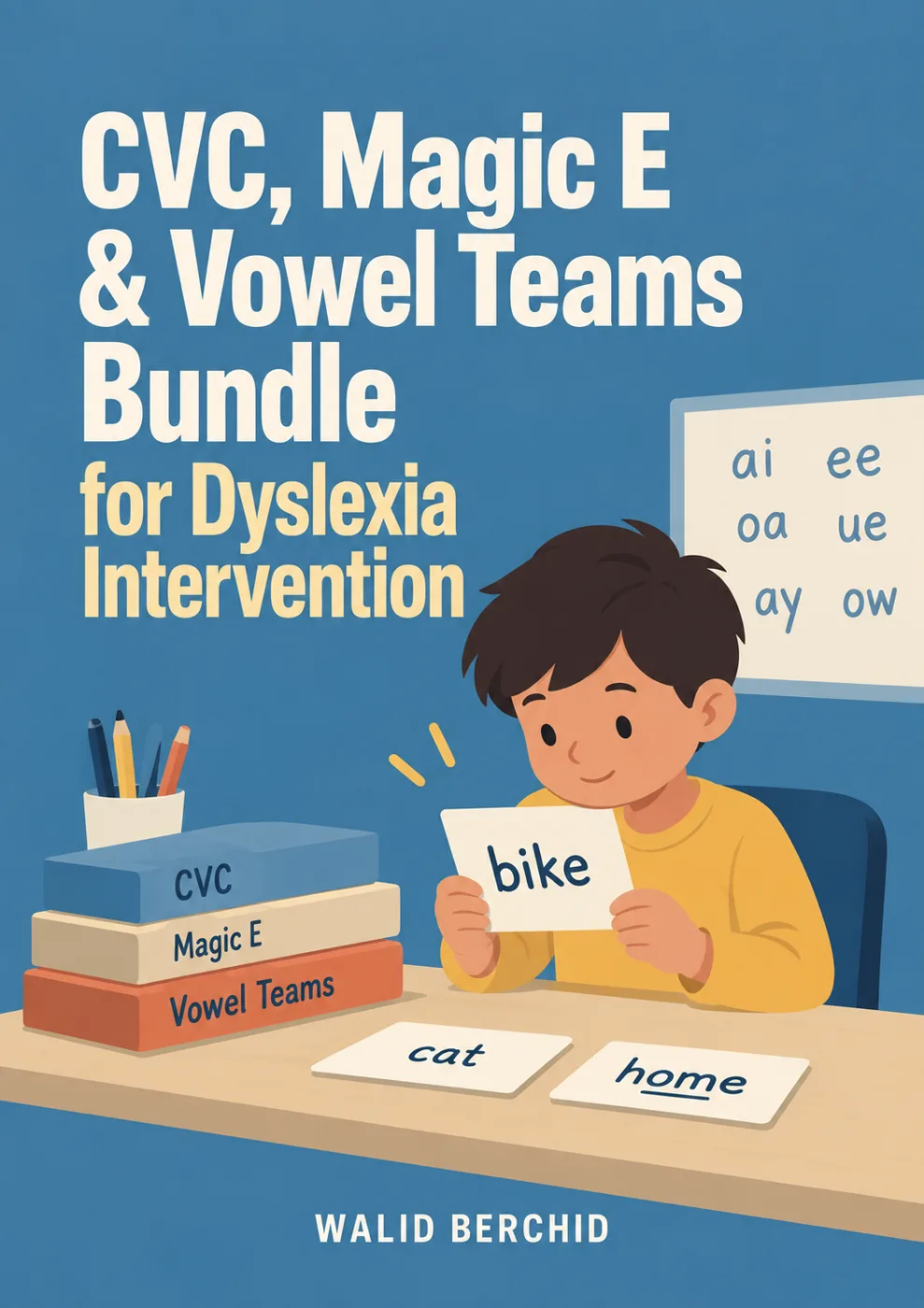
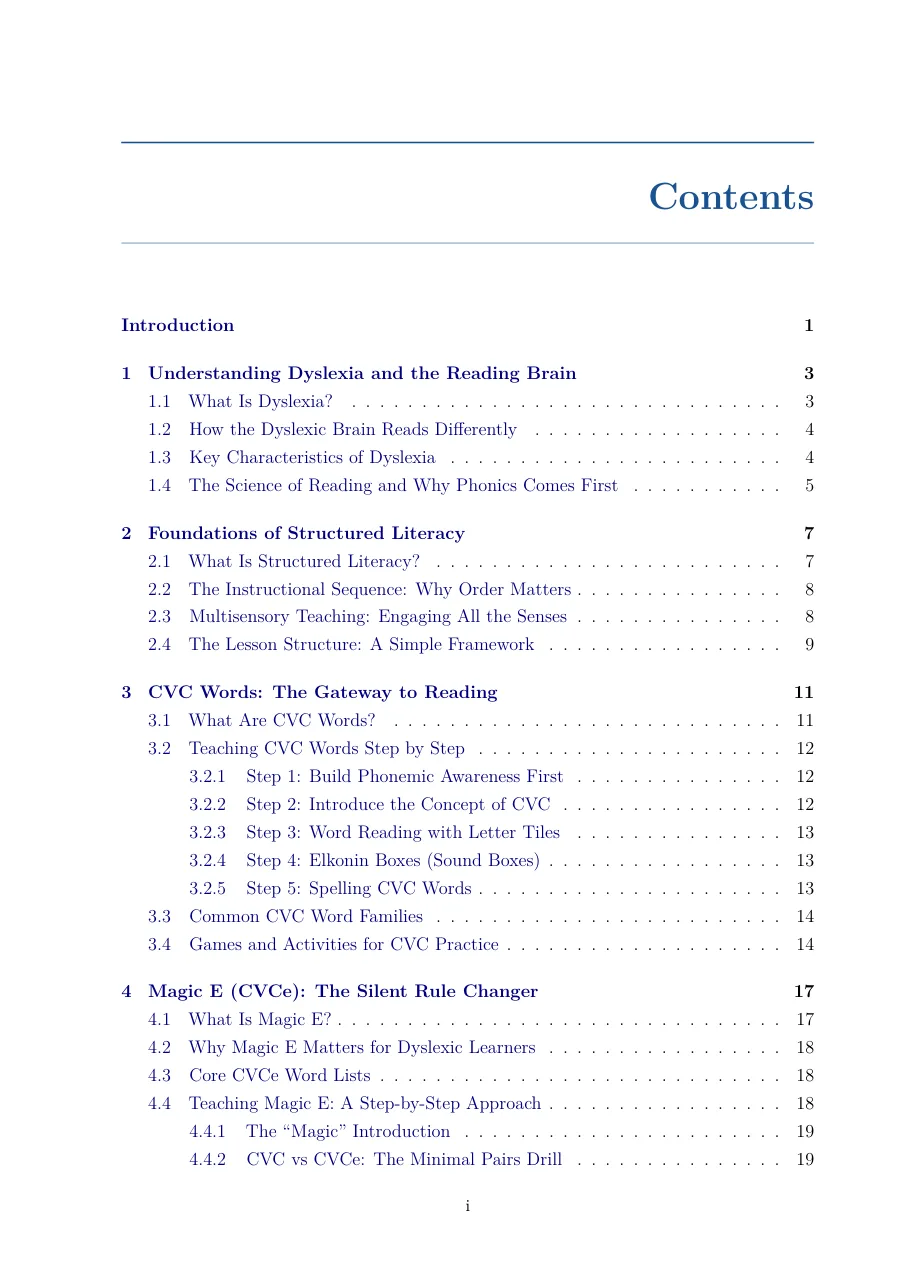
CVC, Magic E and Vowel Teams Bundle for Dyslexia Intervention: a 55-page professional guidebook on dyslexia, the science of reading and structured literacy, with teaching sequences for CVC words, Magic E and vowel teams, assessment guidance, a sample twelve-week plan and seven printable templates.
You may also need: SLD Support Toolkit: Reading, Writing & Math Accommodations.
Sources and scope
- International Dyslexia Association: information on dyslexia and structured literacy for families and educators.
- LD OnLine: articles on reading difficulties and phonics instruction.
- Understood.org: plain-language resources for parents of children with dyslexia.
- What Works Clearinghouse: practice guides on foundational reading skills.
This list covers simple home phonics practice for children who are already receiving reading instruction. It does not diagnose dyslexia or replace school intervention or tutoring.
Key takeaways
- The easiest phonics activities for parents start with sound tapping and Elkonin boxes.
- Multisensory practice, such as sand spelling, links sounds, letters, and movement.
- Follow the school’s order: CVC words, then Magic E, then vowel teams.
- Keep sessions short, regular, and ending in success.
- Stay in touch with the teacher so home practice matches school.







Leave a Comment