
TOP 3
TEACHER ROLLING CARTS
Narrow drawers · Mixed-depth storage · Open shelves

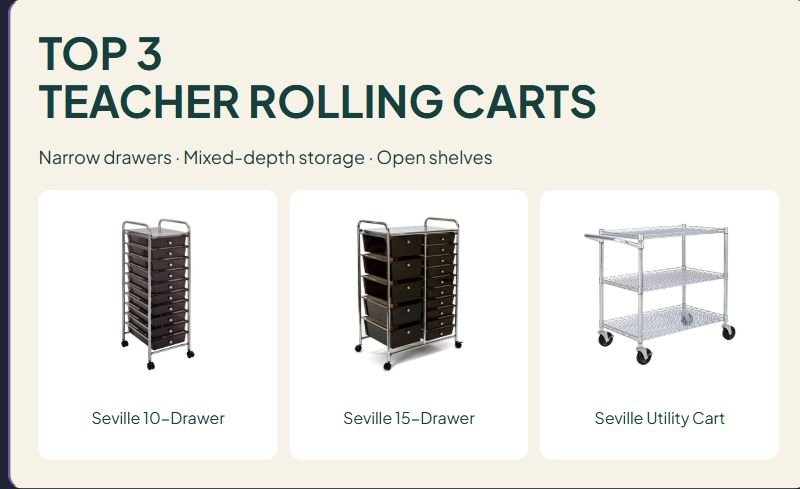
Seville 10-Drawer

Seville 15-Drawer
Seville Utility Cart
Affiliate disclosure: As an Amazon Associate I earn from qualifying purchases. Purchases through our links may earn a commission at no additional cost to you.
Teacher rolling carts work best when the storage layout matches the materials you move. A tall stack of shallow drawers can separate lesson packets, while open shelves make larger containers easier to reach. More drawers are useful only if the contents fit and the cart has a clear place to park.
This guide compares three Seville Classics models for different classroom storage needs. We checked manufacturer information and exact U.S. Amazon listings. We have not tested wheel performance, drawer strength, assembly, or long-term classroom use. These are practical layout choices within one brand, rather than a tested ranking of every teacher cart.
Teacher rolling carts at a glance
| Model | Storage layout | Approximate footprint, W × D | Consider for | Main limitation |
|---|---|---|---|---|
| SHE16218KB, black | 10 shallow drawers | 12.8 × 15.35 inches | Lesson packets and small supplies | Limited drawer height and load |
| WEB208, black | 10 shallow and 5 deeper drawers | 25.2 × 15.3 inches | Separating flat materials and bulkier items | Nearly twice the width of the narrow cart |
| SHE18304BZ | Three adjustable wire shelves | About 36 × 18 inches, including handle | Larger containers and shared materials | Open wire surfaces need suitable containers |
Footprints come from manufacturer information. Allow extra space for handles, turning, drawer access, and the route through the room. Product listings can round dimensions differently; confirm close-clearance fits before ordering.
Three rolling cart layouts for teacher materials
1. Seville Classics 10-Drawer: narrow storage for small categories
The black SHE16218KB stacks ten polypropylene drawers in a chrome-plated steel frame. It stands about 38.2 inches high. Seville lists a 3.3-pound limit per drawer and a 16.5-pound limit for the top shelf. Two of the four casters lock.
Why consider it: A narrow footprint makes it a candidate for a small teacher work area. Ten separate spaces can keep groups of flat materials apart without stacking several storage boxes on a desk.
Limitation: Shallow drawers are easy to outgrow. A container can fit in width and depth yet prevent the drawer from closing because its lid or handle is too tall. Published interior heights differ between the current manufacturer page and Amazon text, so confirm the usable clearance for a tight fit.
Classroom plan: Use five drawers for upcoming lesson materials and the remaining five for small-group resources, spare copies, and supplies that need replenishing. Label the purpose of each drawer before filling it.
SHE16218KB manufacturer information
Check Seville 10-Drawer on Amazon.com →
2. Seville Classics 15-Drawer: flat materials plus deeper storage
The black WEB208 combines ten shallow drawers with five deeper drawers. Its frame is about 25.2 inches wide and 38.2 inches high. The mix of drawer depths is the main reason to compare it with the narrower model.
Why consider it: A teacher can separate paper-based resources from bulkier supply sets in one unit. Deeper drawers create more room vertically without requiring every drawer to be oversized.
Limitation: More drawer volume does not mean heavy storage. Follow the limits supplied with the exact cart; current manufacturer and Amazon descriptions differ on some drawer ratings. Do not infer a higher weight allowance from a deeper drawer. The wider footprint also needs a larger parking space.
Classroom plan: Assign shallow drawers to current skill groups or lesson types. Reserve deeper spaces for lightweight manipulatives in containers that fit. Avoid turning every empty drawer into a permanent home for unused materials.
WEB208 manufacturer information
Check Seville 15-Drawer on Amazon.com →
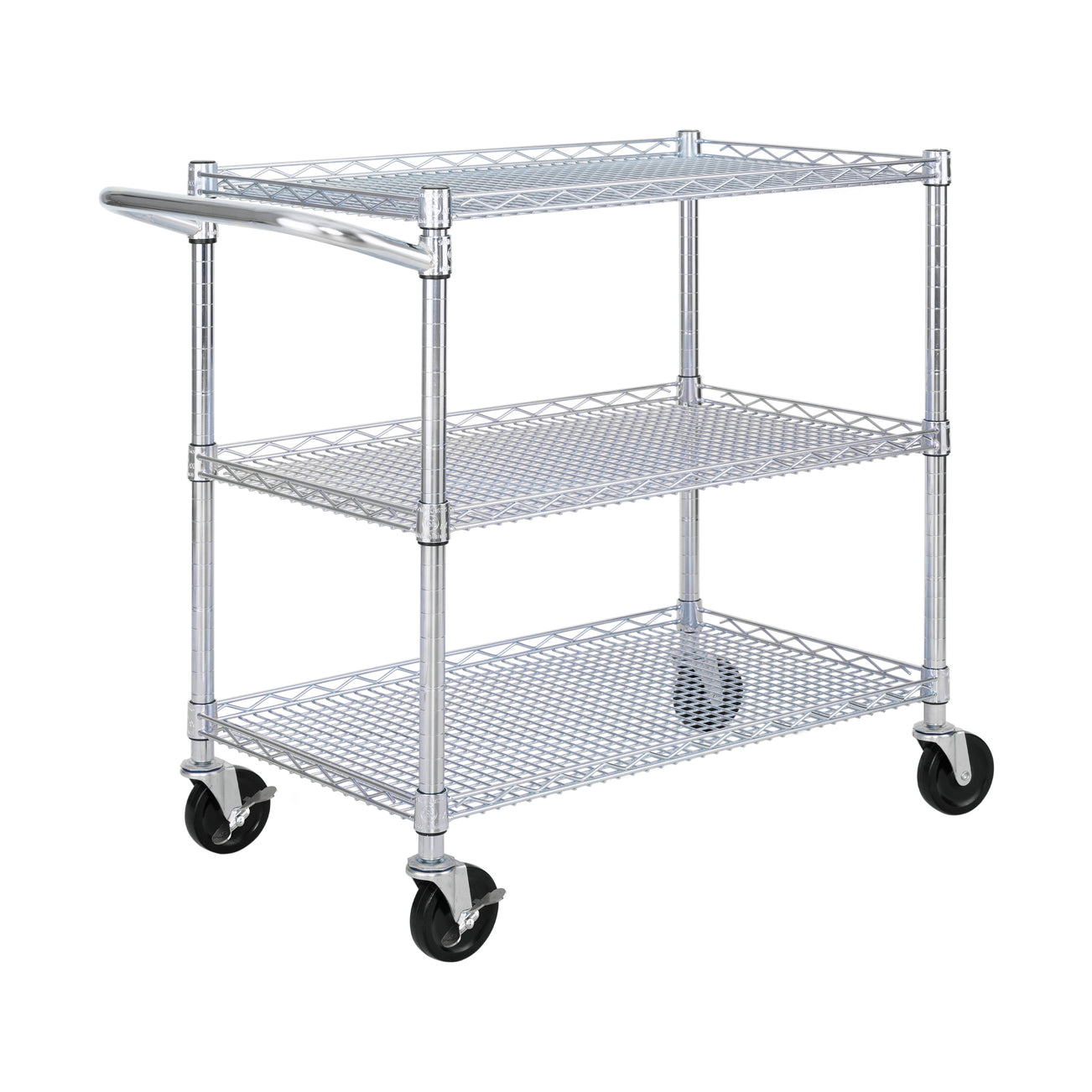
3. Seville Classics SHE18304BZ: open shelves for larger containers
The SHE18304BZ has three steel wire shelves that adjust in one-inch increments, a handle, and four-inch wheels, including two locking casters. Its instructions specify a 500-pound total capacity with the load evenly distributed. That is a manufacturer rating, not a load we tested.
Why consider it: Adjustable shelf spacing lets you plan around the containers you already use. Open access may suit shared project materials better than many small drawers.
Limitation: Loose pencils, cards, and small manipulatives need suitable containers or compatible liners. This cart is substantially wider and heavier than the narrow drawer organizer. A large capacity rating does not prove that a loaded cart will be comfortable to move across your school’s carpet or thresholds.
Classroom plan: Make one shelf a home for each lesson kit. Measure the complete kit with its lid and handle, then choose shelf spacing that allows you to lift the container out without tilting it.
SHE18304BZ manufacturer information
Check Seville Utility Cart on Amazon.com →
What to measure before buying a teacher cart
The materials
Place the intended contents on a table. Group them by when and how you use them. Measure the largest folder, container, book, or kit in each group. Use the loaded container’s size, not just the loose materials inside it. A paper drawer may be wide enough for sheets but too narrow for a binder or an oversized laminated resource.
The parking place and route
Mark the cart’s footprint on the floor and leave room to open drawers. Check doors, desk corners, floor transitions, and the space needed to turn. Keep the parking place out of walkways and access routes. A cart that fits against a wall may still be awkward when someone needs to stand in front of it.
The load and assembly instructions
Check both the total rating and any limit for each drawer or shelf. Distribute materials as the instructions require. Complete assembly and inspect wheels, fasteners, and drawer movement before loading. Use wheel locks when parked as directed; locks do not replace stable placement or proper loading.
The contents that need secure storage
These carts are open-access organizers. Treat private records, medications, sharp tools, and materials with restricted access according to school procedures. A dark drawer is not a lock or a secure records cabinet. Keep everyday lesson storage separate from items that need controlled access.
A simple cart setup that stays useful
- Choose one job. Decide whether this is a lesson-prep cart, small-group resource cart, or shared materials cart.
- Choose the categories. Use labels that describe how you retrieve materials.
- Load one week’s work first. Check what actually needs to be within reach.
- Leave a return space. Give used resources a clear temporary destination.
- Reset regularly. Remove old copies and replace missing supplies before the next cycle.
If storage already available meets the need, try this routine there first. A cart adds mobility and a different layout; it does not automatically solve unclear categories or an overloaded supply collection.
For resources stored in the cart, compare our dry erase lapboards and teacher laminators.
What one verified customer comment adds
“The drawers open easily.”
Maryjean C., a reviewer labeled Verified Buyer on Seville Classics’ 10-Drawer Organizer Cart page, June 26, 2026. This short excerpt concerns that product family; the displayed review does not establish the exact color. It is one customer’s experience, not our test or evidence that every drawer will perform the same way. Read the manufacturer’s customer reviews.
When reading more reviews, look for the exact drawer count, materials stored, floor surface, time owned, and any reports of drawer alignment or caster problems. Reviews grouped across variants may describe a different layout from the one you plan to buy.
Teacher rolling cart questions
Should I choose drawers or open shelves?
Choose drawers for small categories you want to keep separate. Choose open shelves when complete bins or larger kits need quick access. Check the actual container sizes before deciding.
Will these fit under a teacher desk?
Do not assume so. Both drawer carts are about 38.2 inches high, and the utility cart’s height is listed differently across sources. Measure the desk clearance and confirm the assembled dimensions of the exact model.
Can I use a cart for a printer or laminator?
Only after checking equipment weight, support requirements, ventilation, heat clearances, cords, and the cart’s instructions. A top shelf load rating alone does not establish suitability for operating a particular appliance.
Which model should I shortlist?
Start with the narrow ten-drawer model for light, flat categories. Consider the fifteen-drawer layout when deeper compartments justify its added width. Compare the open utility cart when larger containers and adjustable shelf spacing matter more than small drawers.






Leave a Comment