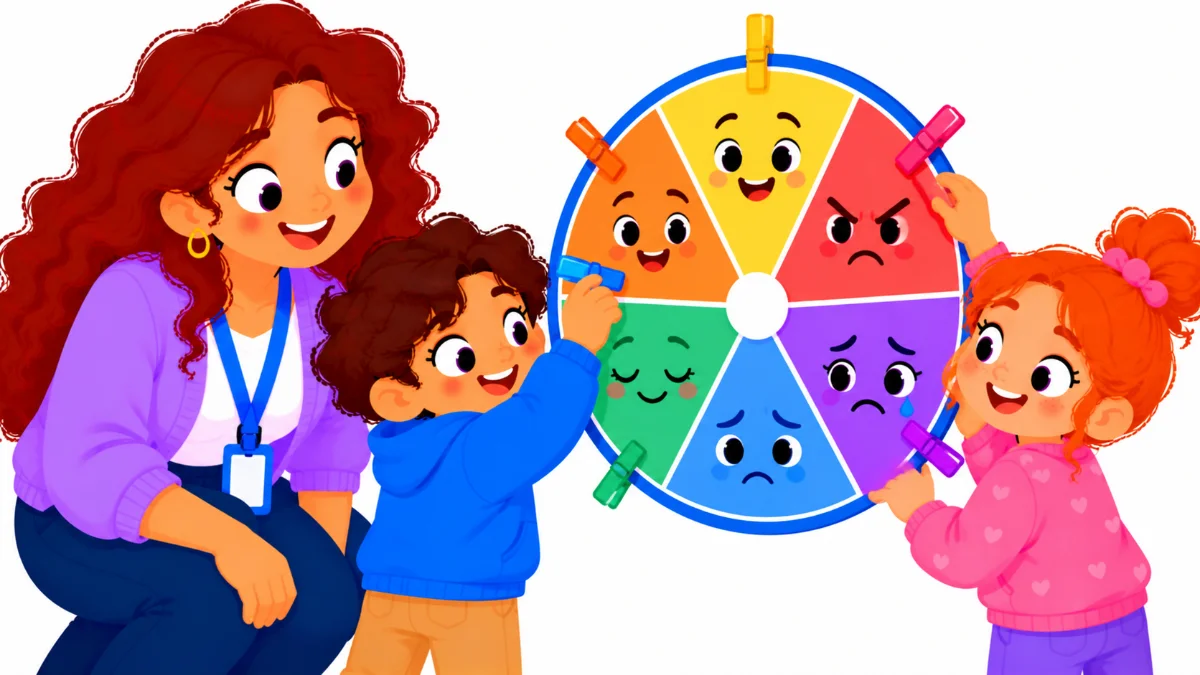

An emotion wheel for kids gives children the words they need to say how they feel, which is often the first step toward handling those feelings. Picture a second grader who comes in from recess, drops into her seat, and says, “I’m mad.” Later, it turns out she was not really angry. She felt left out, embarrassed, and a little sad, but “mad” was the only word she had.
This guide shows you how to use an emotion wheel in five steps: introduce the wheel, teach one feeling family at a time, build a daily check-in, connect feelings to coping strategies, and review vocabulary growth. By the end, you will be able to turn a classroom poster into a simple, daily SEL routine.
Examples are fictional. Adapt to the student’s goals and agreed supports. This is guidance, not a diagnosis.
At a glance
- Many children have only a few feeling words, such as happy, sad, and mad.
- An emotion wheel groups feelings into families, from broad words to more precise ones.
- Teach one family at a time with real examples.
- A short daily check-in turns the wheel into a habit.
- Linking feelings to coping ideas helps children act on what they notice.
1. Introduce the emotion wheel for kids
First, explain what the wheel is for. An emotion wheel for kids is a circle divided into groups of related feelings. Each group, or feeling family, starts with a broad word and branches into more specific words. For example, a broad feeling like “scared” may connect to words like “nervous” or “worried.”
Next, show the wheel and talk about it together. Point out the colors and the families. Ask, “Which words here do you already know? Which ones are new?” Children often enjoy finding words they have heard but never used. This first, playful look sets a positive tone for every later lesson with the emotion wheel for kids.
Also, explain why precise words matter. When a child can say “I feel frustrated” instead of “I’m mad,” adults understand what is going on and can help more quickly. Precise words also help children understand themselves. That is the main reason an emotion wheel for kids is worth a place on the classroom wall.
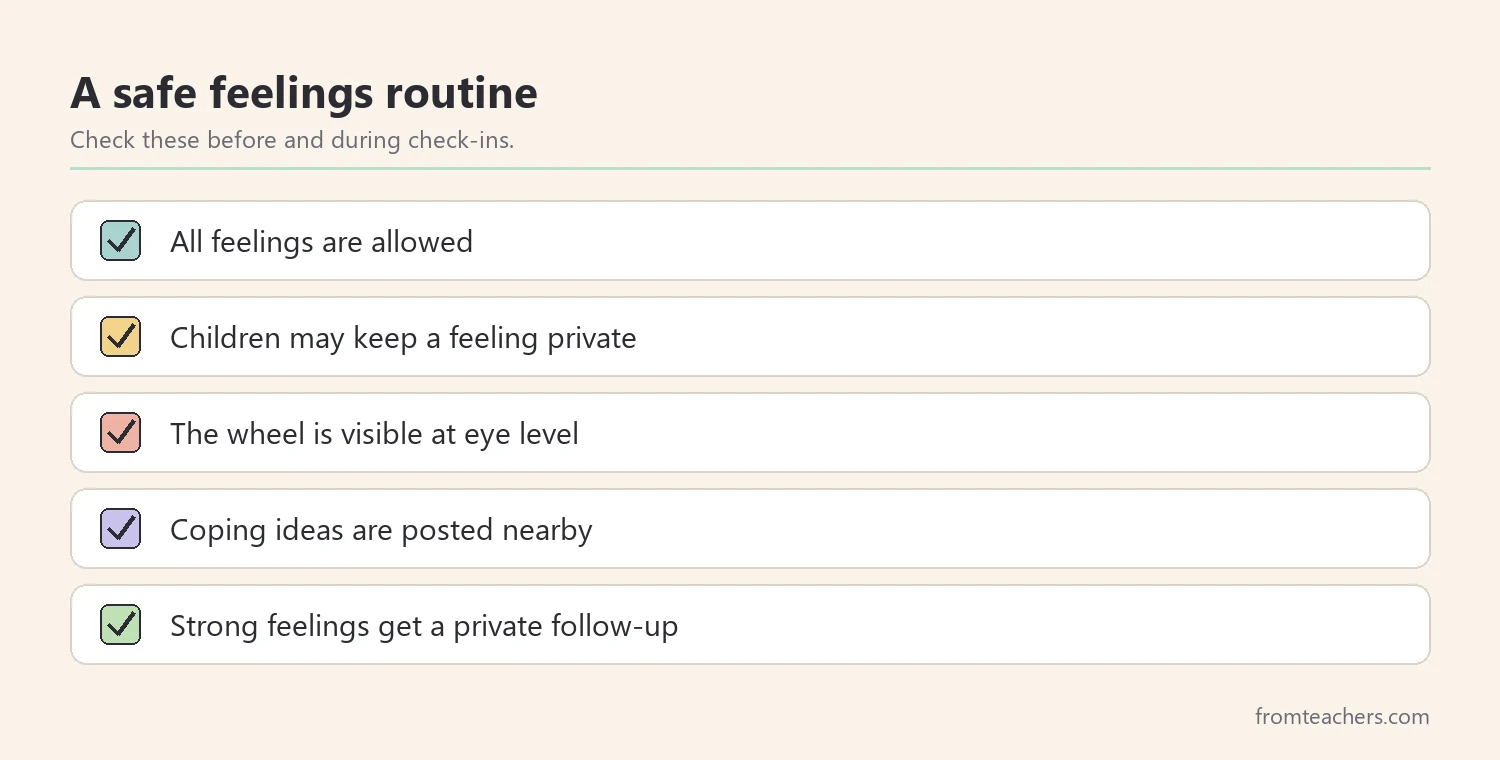
In addition, set a few simple norms. All feelings are allowed. Nobody has to share a feeling they want to keep private. We use the wheel to understand, not to judge. These norms keep the emotion wheel safe for every child.
Then, hang the wheel where everyone can see it. Eye level near the meeting area or the calm corner works well. A visible poster reminds children and adults to use the words throughout the day.
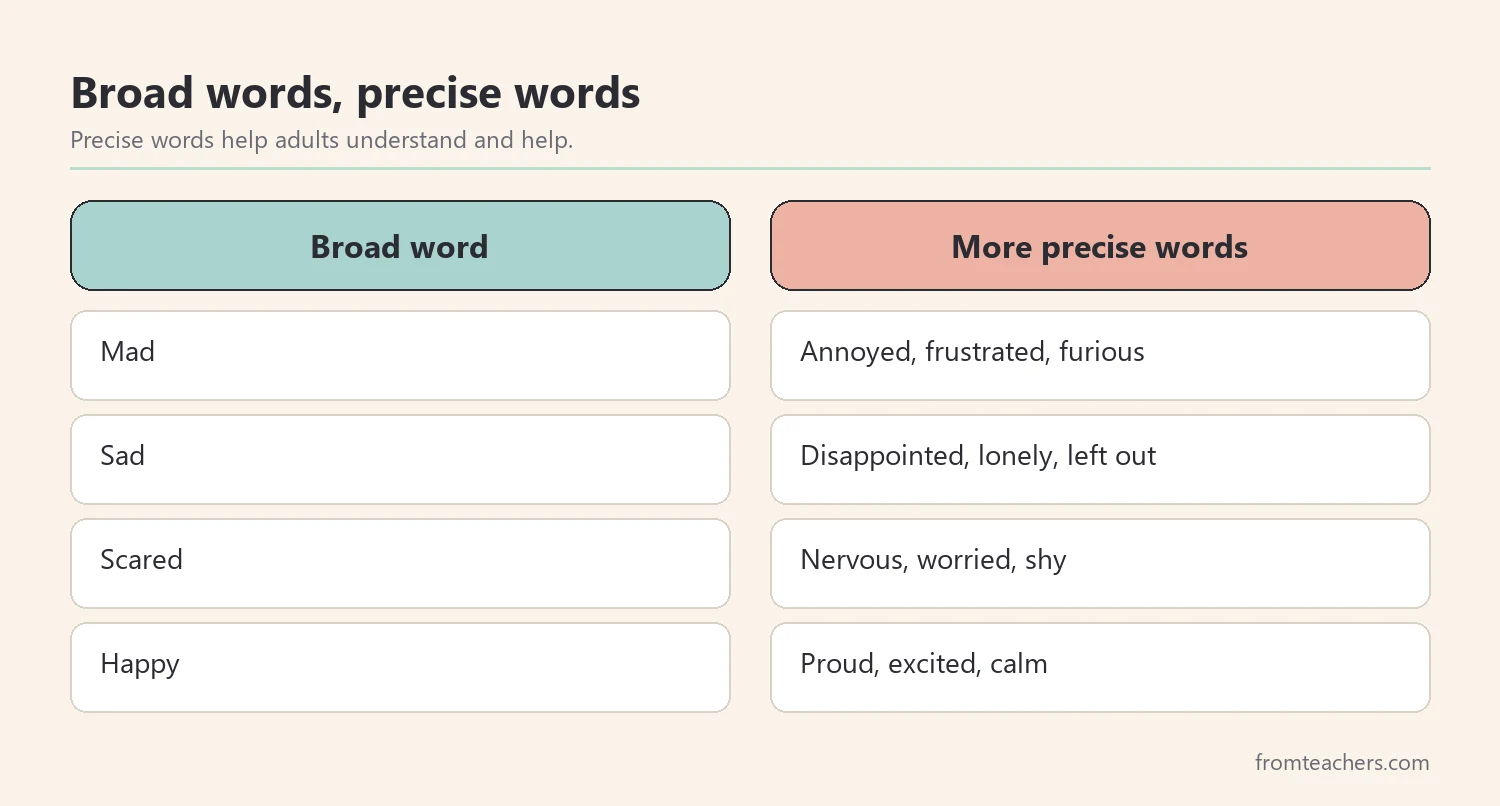
Worked example. Lily is a fictional student in grade 2. Her teacher, Mr. Brooks, introduces the emotion wheel during morning meeting. He asks the class to find words they know. Lily finds “happy” and “sad” right away. She says she has never used “frustrated” or “disappointed.”
2. Teach one feeling family at a time
Next, slow down. An emotion wheel for kids can hold many words, and too many at once can overwhelm young learners. Instead, focus on one feeling family each week. Spend a few minutes each day on it.
For example, during a week on the “scared” family, read a short story where a character feels nervous. Act out what nervous looks like on a face and in a body. Then ask children to share, if they want, a time they felt nervous. Real examples make the words stick. Over a term, this slow pace lets children explore the whole emotion wheel for kids without feeling rushed.
Also, use the words yourself. Narrate your own feelings in simple ways: “I feel a little worried because the projector isn’t working.” When adults model feeling words, children see that naming feelings is normal and useful.
In addition, notice feelings in stories and lessons. Ask, “How do you think the character feels? Find a word on the wheel.” This builds vocabulary without putting any child on the spot about their own feelings. Stories are one of the gentlest ways to use an emotion wheel for kids, especially for shy children.
Meanwhile, review earlier families as you go. A quick game where children match a face to a word keeps older words active while new ones are added.
Worked example. Mr. Brooks spends one week on the anger family. The class reads a story about a boy who is annoyed when his tower falls. They act out annoyed, frustrated, and furious, noticing how each one feels different. Lily says frustrated is “like annoyed but bigger.”
3. Build a daily check-in with the emotion wheel for kids
Next, make the wheel part of the daily routine. A short check-in at the start of the day, after recess, or before a hard lesson helps children notice how they feel. It also gives adults a quick picture of the room.
One simple check-in has four steps. First, children look at the wheel. Second, they find the family that fits. Third, they choose a more precise word if they can. Fourth, they share it or keep it private. The whole routine can take under two minutes.
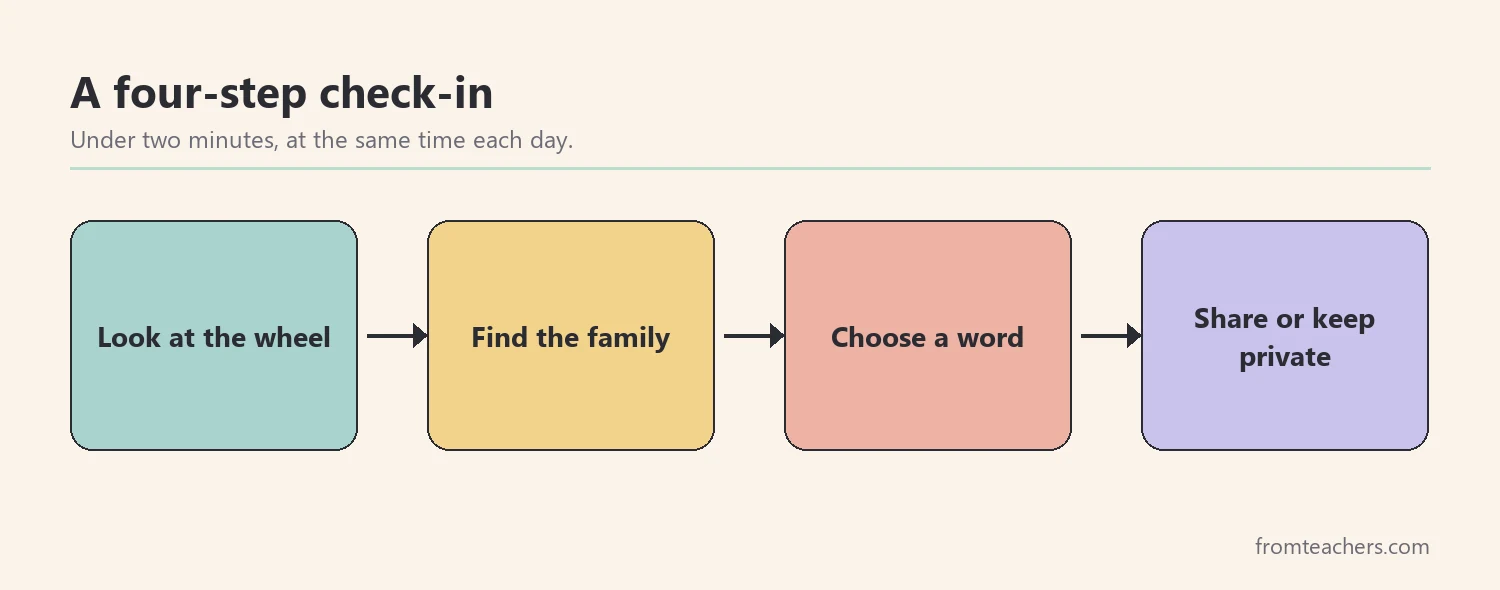
Also, offer different ways to share. Some children like to say a word aloud. Others prefer to point, place a clothespin on the wheel, or write a word on a sticky note. Choice makes the routine comfortable for more children. When every child has a way to take part, the emotion wheel for kids becomes a shared class tool rather than a spotlight.
For a ready-made visual, the emotional vocabulary words poster with an emotion wheel groups words into seven feeling families, which makes it practical for daily classroom check-ins.
In addition, respond briefly and kindly. “Thank you for telling me you feel nervous” is enough in the moment. If a child shares a strong or worrying feeling, follow up privately later, using your school’s usual procedures.
Then, keep the routine predictable. Doing the check-in at the same time each day helps children expect it and use the emotion wheel for kids without reminders.
Worked example. Mr. Brooks runs a check-in after every recess. Children place a clothespin with their name on the wheel. One day, Lily places hers on “left out.” Mr. Brooks thanks her, and later, during a quiet moment, asks if she wants to talk about recess.
4. Connect feelings to coping ideas
Next, help children use what they notice. Naming a feeling is powerful, and it is even more useful when children know what they can do next. For each feeling family, teach one or two simple coping ideas.
For example, if a child feels worried, they might take three slow breaths or talk to a trusted adult. If they feel frustrated, they might take a short break or ask for help. If they feel tired, they might stretch or get a drink of water. Keep ideas simple and practical. Pairing each family on the emotion wheel for kids with one coping idea gives children a clear next step.
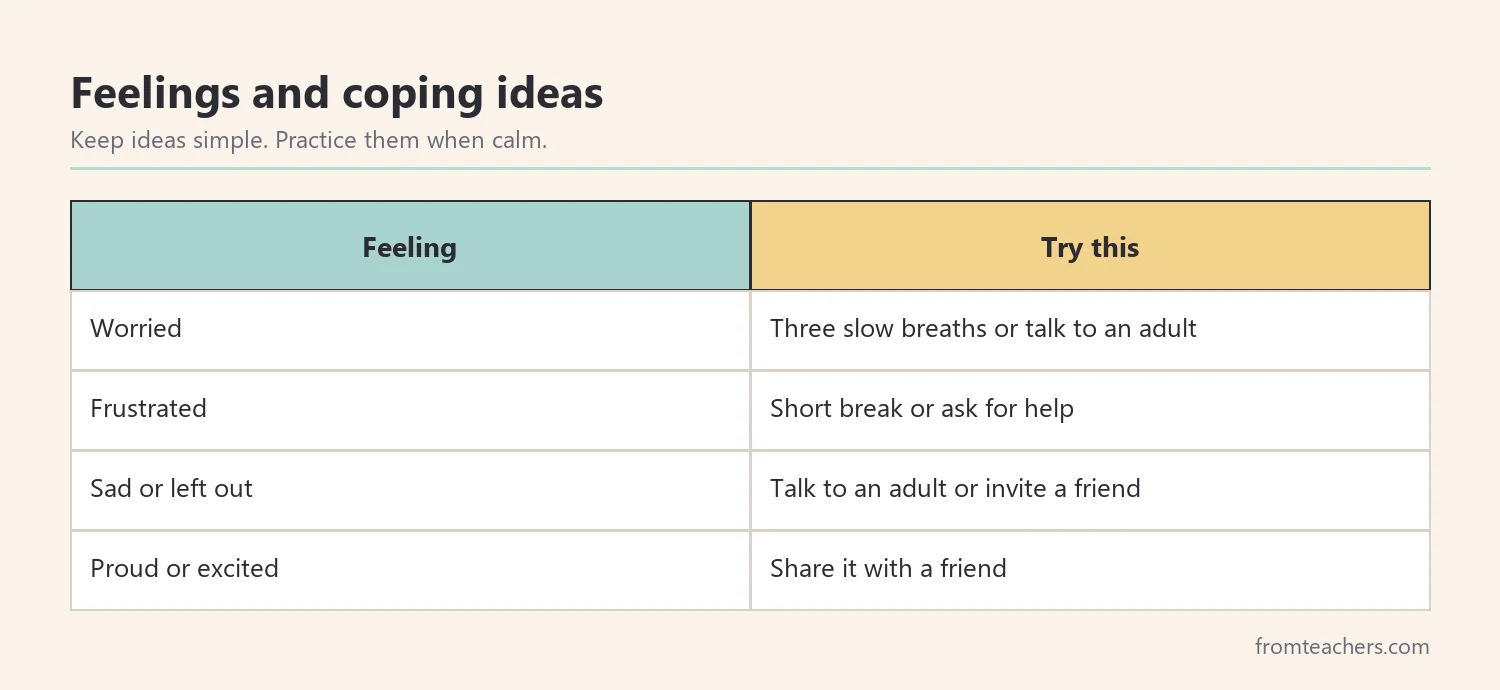
Also, remember that pleasant feelings matter, too. When a child feels proud or excited, they might share it with a friend or write it down. An emotion wheel for kids is not only for hard feelings. It helps children notice and enjoy good moments as well.
In addition, post coping ideas near the wheel or in the calm corner. Visual reminders help children choose a strategy when they are upset and cannot easily remember one.
Meanwhile, practice coping ideas when children are calm. A two-minute breathing practice or a short stretch break during the day makes those strategies easier to use in hard moments.
Worked example. After Lily shares that she felt left out, Mr. Brooks reminds her of two ideas for sad feelings: talk to a trusted adult or ask a friend to play. The next day, Lily asks a classmate to join her at the swings.
5. Review and grow feeling vocabulary
Finally, check how vocabulary is growing. A simple way is to note which words children choose during check-ins. Over weeks, you may see broad words like “mad” and “sad” giving way to more precise words.
Also, play short review games. “Feelings charades,” “Which word fits?” with picture cards, or matching a story moment to a word all keep vocabulary fresh. Games keep the emotion wheel for kids fun instead of a chore.
Next, share the wheel with families. A copy at home lets parents use the same words at bedtime or after school. Shared language across home and school helps children practice more often. Families often find that an emotion wheel for kids makes hard conversations easier, because the child can point instead of explain.
In addition, watch for children who rarely share or who often choose very strong feelings. These patterns are worth a quiet conversation and, if needed, a talk with the family or school counselor.
Then, add new words when children are ready. Older or more confident children can use the outer, more precise words, while others stay with broad words longer. The wheel works at many levels, so the same emotion wheel for kids can grow with a class across the whole year.
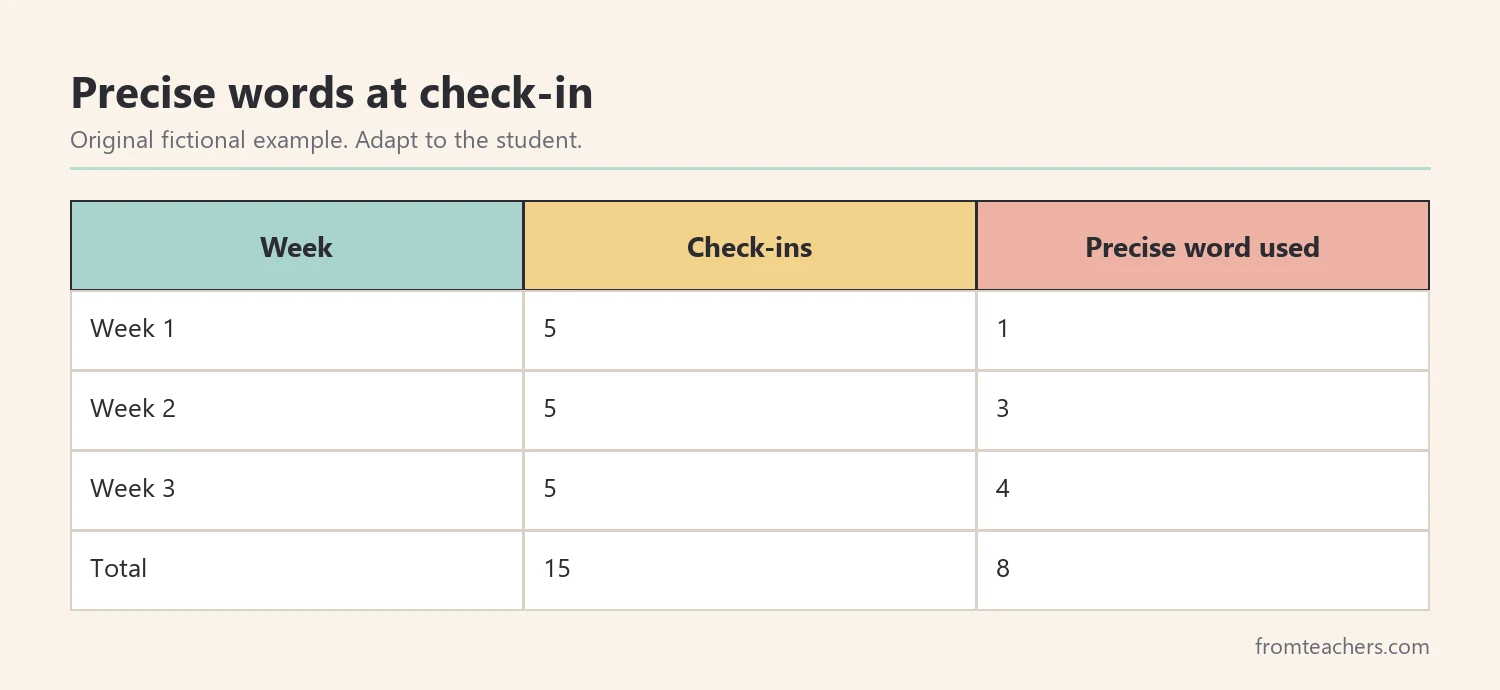
Worked example. Mr. Brooks notes Lily’s check-in words for three weeks. In week 1, she made 5 check-ins and used a precise word in 1. In week 2, she made 5 and used a precise word in 3. In week 3, she made 5 and used a precise word in 4. Across three weeks, that is 8 precise words in 15 check-ins.
Using the wheel with diverse learners
Some children need extra support with feeling words, including English learners and students with language or social communication needs. Pictures of faces, gestures, and fewer choices can help.
Also, an emotion wheel for kids works well alongside other visuals, such as a feelings chart with faces or a simple calm-down card. Choose what fits the child, and keep it consistent.
Finally, follow any agreed supports in the child’s plan. If a child’s emotional needs seem significant, share your observations with the family and the support team.
Common mistakes and how to avoid them
- Teaching all the words at once. Children feel overwhelmed. Fix: teach one feeling family at a time.
- Making sharing required. Some children feel exposed. Fix: allow private check-ins.
- Labeling feelings as good or bad. Children may hide hard feelings. Fix: say all feelings are okay.
- Stopping at the word. Children do not know what to do next. Fix: link feelings to coping ideas.
- Using the poster only once. It becomes wallpaper. Fix: build a daily check-in.
- Ignoring repeated strong feelings. A child may need more help. Fix: follow up privately and involve the team.
Questions teachers and parents ask about the emotion wheel for kids
What age is an emotion wheel good for?
Many children in preschool and early elementary can use a simple wheel with broad words and pictures. Older children can use more precise words. Adjust the number of words to the child.
How long should a feelings check-in take?
Usually one to two minutes. Short, regular check-ins are more useful than long discussions. Save deeper conversations for private moments.
What if a child always picks the same feeling?
That can be fine. Some children feel the same way often, or they are still learning other words. If the feeling is worrying, talk privately and share concerns with the family or counselor.
Can parents use the wheel at home?
Yes. A copy on the fridge or in a bedroom helps families use the same words. Bedtime or the drive home are good, calm times for a quick check-in.
Does naming feelings really help?
Many educators and SEL programs teach feeling vocabulary because it helps children communicate needs and understand themselves. It works best with kind responses and simple coping ideas.
Related reading: Essential Trauma-Informed Teaching Strategies for Modern Classrooms, Moving Beyond Shame and Behavior Charts: Positive Alternatives for Effective Classroom Management, and Building Stronger School Counseling Programs: A Framework for Student Success.
A companion resource for the emotion wheel for kids:
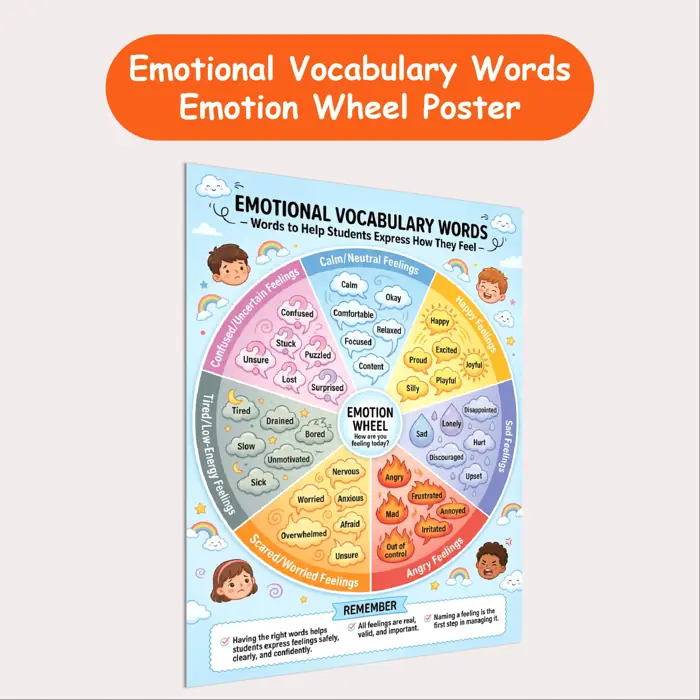
Emotional Vocabulary Words Poster: Emotion Wheel for Kids: a colorful emotion wheel with seven feeling families that gives students words to express how they feel, designed as an SEL classroom poster for daily check-ins.
Sources and scope
- CASEL: a nonprofit focused on social and emotional learning, including self-awareness.
- Understood.org: family-friendly information on learning, thinking, and emotional differences.
- Child Mind Institute: articles for families and educators on children’s emotions and mental health.
- IRIS Center, Vanderbilt University: free modules on classroom environment and behavior supports.
This guide covers using a feelings wheel for classroom and home vocabulary routines. It does not replace counseling, mental health care, or the decisions of a child’s support team.
Key takeaways
- An emotion wheel for kids builds precise feeling vocabulary.
- Teach one feeling family at a time with real examples.
- Run a short, predictable daily check-in with private options.
- Link each feeling family to a simple coping idea.
- Track word growth and share the wheel with families.






Leave a Comment