

Mental fatigue in students often looks like a sudden drop in effort. Picture a seventh grader who answers questions brightly in first period, holds it together through lunch, and by sixth period stares at the board, snaps at a classmate, and cannot recall the homework. Her ability has not changed. Her energy has run out.
This guide walks you through five steps for noticing and responding to that drop. By the end, you will be able to recognize early signs, find the biggest energy drains, plan the day with pacing in mind, teach the student to check and protect energy, and review what helps over time.
Examples are fictional. Adapt to the student’s goals and agreed supports. This is guidance, not a diagnosis.
At a glance
- Neurodivergent students often spend extra energy on masking, processing, and coping with sensory input.
- Early signs of fatigue are easier to address than a full shutdown.
- Pacing means planning demanding tasks and recovery time across the day.
- Students can learn to notice their own energy level and ask for a pause.
- Track patterns over weeks and adjust the plan with the family.
1. Recognize early signs of mental fatigue in students
First, learn what tired looks like for this particular student. Mental fatigue in students rarely announces itself. Instead, it shows up as small changes: slower responses, more mistakes on familiar work, irritability, rubbing eyes, putting the head down, or losing track of directions that were easy an hour ago.
Next, notice when these changes happen. Fatigue tends to build. A student may be fine in the morning, slip a little before lunch, recover partly, and then decline sharply in the afternoon. Some students hold it together all day at school and then fall apart at home, which families often describe as an after-school crash.
Then, keep short notes for a week. Record the time, the activity, and what you saw. For example, “1:50, science reading, reread the same paragraph three times, head on desk.” These notes help you see the pattern rather than react to one hard moment.
Meet Maya, a fictional seventh grader who is autistic. Her teacher, Mr. Okafor, sees that Maya participates well until about 11:00. After that, her written answers shrink, she asks to leave the room more often, and on two days she cried quietly during the last period. Her family reports that she sleeps for an hour after school most days.
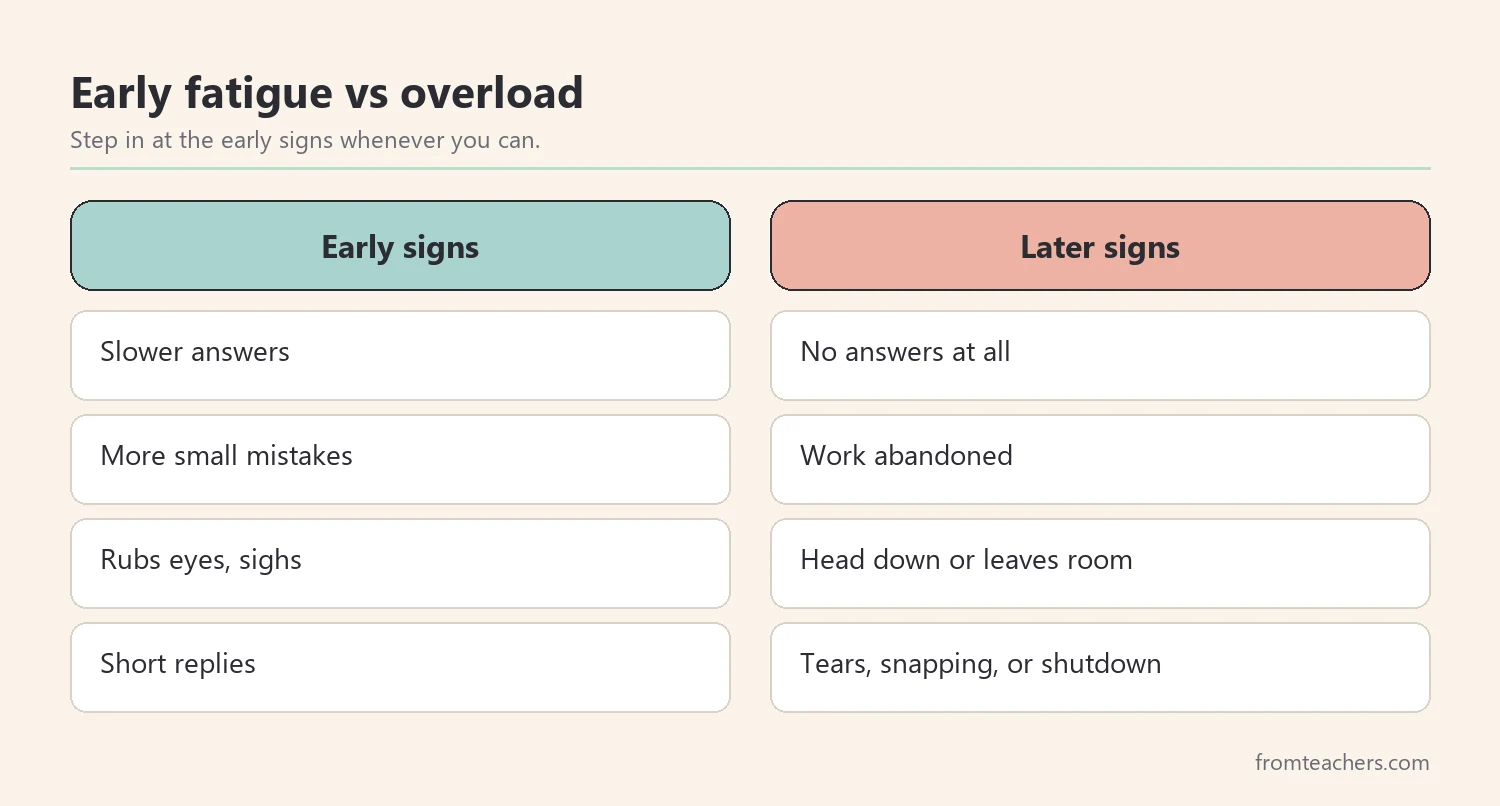
Finally, remember that early signs are an opportunity. Once a student reaches shutdown or meltdown, there is little room for learning. Stepping in at the first signs of fatigue protects both the student and the lesson.
2. Find the biggest energy drains
Now, look for what uses up the most energy. Neurodivergent students often spend extra effort on things others do without thinking. Masking, which means hiding or camouflaging natural responses to fit in, can be very tiring. Processing spoken language quickly, coping with noise or bright light, and managing social expectations all draw from the same limited supply.
Next, list the parts of the day that seem most demanding for this student. Common drains include long periods of listening, group work, noisy transitions, crowded hallways, lunch in a loud cafeteria, and tasks with many unclear steps. Sometimes the drain is not the hardest academic task, but the social or sensory demands around it.
| Possible drain | What it can look like | Small change to try |
|---|---|---|
| Masking during group work | Quiet, stiff, exhausted afterward | Clear roles and a short solo task after |
| Long spoken directions | Asks peers what to do | Written steps on the desk |
| Noisy lunchroom | Leaves food, tired in the afternoon | Quieter lunch option some days |
| Busy hallway transitions | Arrives late or tense | Leave class a minute early |
For Maya, Mr. Okafor and her family identify three main drains: a group project in second period, the loud lunchroom, and the crowded hallway before fifth period. Interestingly, the hardest math lesson is not on the list. Maya enjoys math and finds it calming.
In addition, think about the whole week, not only the single day. Some drains stack up. A student may cope with one assembly, one fire drill, or one substitute teacher, yet struggle badly when all three land in the same week. Noting these events next to your observations helps you plan ahead for heavier weeks and explain sudden changes to the family.
Also, ask the student. Many students can tell you which parts of the day feel heavy, especially when you ask in a calm, private moment. A simple question such as “Which class leaves you most tired?” can be revealing.
3. Plan the day with pacing for mental fatigue in students
Next, arrange the day so demanding tasks and recovery time take turns. Pacing is one of the most practical tools for mental fatigue in students. It does not mean doing less learning. It means spreading the effort so the student still has energy for the work that matters most.
Start by placing the hardest thinking work at the time of day when the student has the most energy, if the schedule allows. Then, follow demanding blocks with lighter ones. A short, predictable recovery break after a draining activity often works better than one long break at the end of the day.
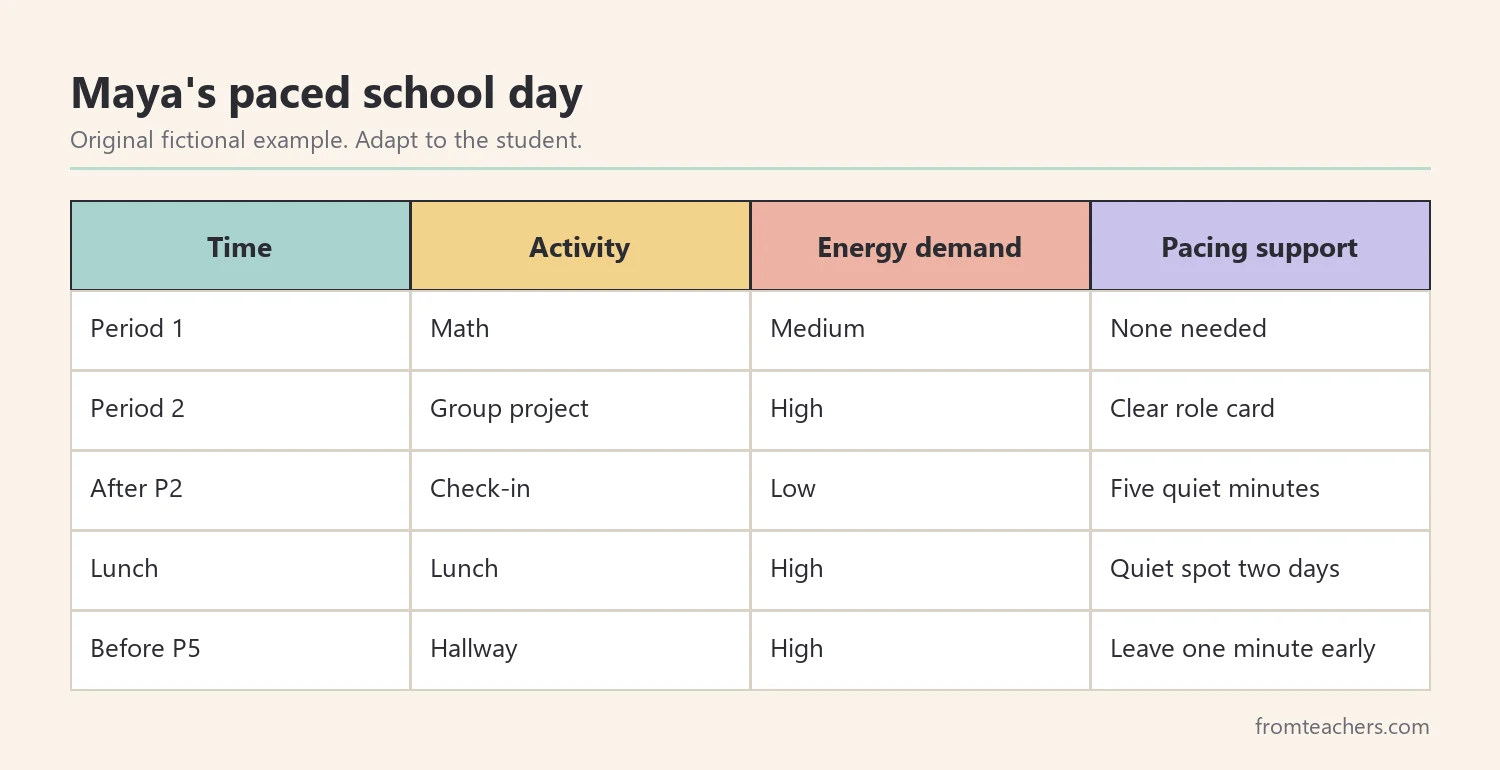
Moreover, recovery breaks should actually restore energy. For many neurodivergent students, a break in a noisy common area is not restful. A quiet corner, a short walk with a clear route, drawing, or a preferred calm activity may help more. The student’s own preferences matter here.
For Maya, the team moves her daily check-in to just after the group project. She gets five minutes in the library before lunch, and she can choose a quieter lunch spot two days a week. Her hallway pass lets her leave one minute early before fifth period.
If you would like a structured starting point, the mental fatigue pacing and energy strategy tables from berchid.com help you recognize early signs and respond with practical pacing steps. They are useful when you are planning a paced day for the first time.
4. Teach the student to check and protect energy
Then, help the student notice their own energy level. Many students do not realize they are getting tired until they are already overwhelmed. A simple energy check gives them words and a tool for that moment.
One option is a three-level scale: high, medium, and low energy. The student checks in at set times, such as after each class or block. If energy is low, a planned response follows, such as a short break, a lighter version of the task, or a quiet place to work.
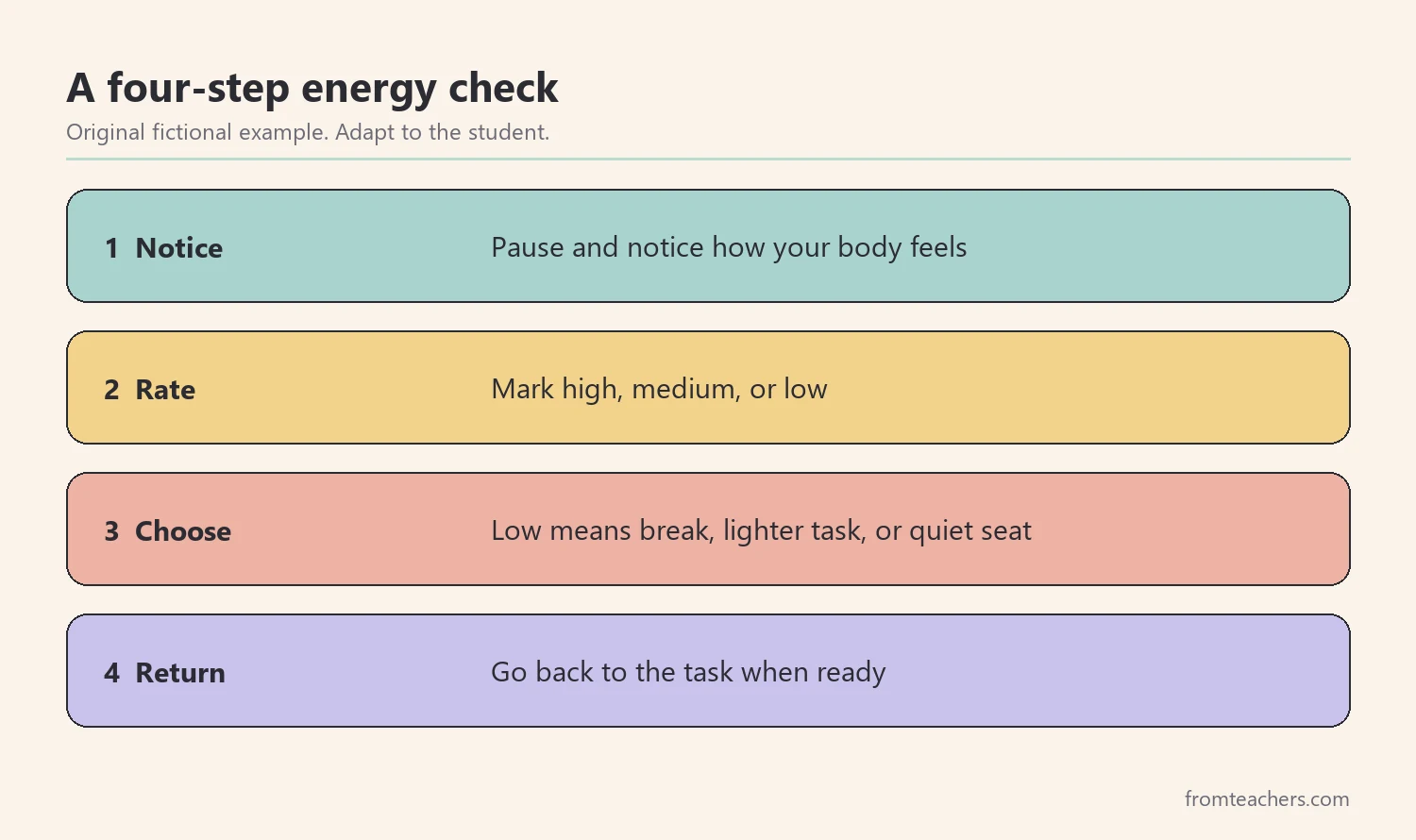
Next, teach the check during calm times. Model it yourself: “My energy is medium right now, so I will take a sip of water before we start.” Practice with the student several times before expecting them to use it alone. Keep the response options short and specific.
Also, make it safe to say “low.” Some students mask fatigue because they worry about being seen as lazy or different. If the student’s honest rating leads to support rather than a lecture, they will keep using it.
For Maya, the energy check is a small card in her planner with three colors. She marks it after second, fourth, and sixth period. Mr. Okafor glances at it during class, and when it shows low, he offers her a reduced set of questions and a quiet seat. Within two weeks, Maya starts asking for the quiet seat on her own.
Meanwhile, watch for students who rate themselves “high” every time. Some students are not yet able to notice their own state, and others want to appear fine. In that case, add your own quiet observation next to theirs. Compare the two over a week and talk about any differences in a supportive, curious way.
Finally, connect school and home. Families can use the same scale after school. That helps everyone understand how energy changes across the full day, including the time after the school bell.
5. Review patterns and adjust the plan
Finally, look at the data over time. Mental fatigue in students rises and falls with schedules, seasons, illness, and big changes. A plan that works in October may need adjusting in March. Regular review keeps the support useful.
Keep the record simple. Count how many low-energy check-ins happen each week, and note any days that ended in a shutdown or after-school crash. Then look for patterns: Mondays, test weeks, days with assemblies, or days after poor sleep.
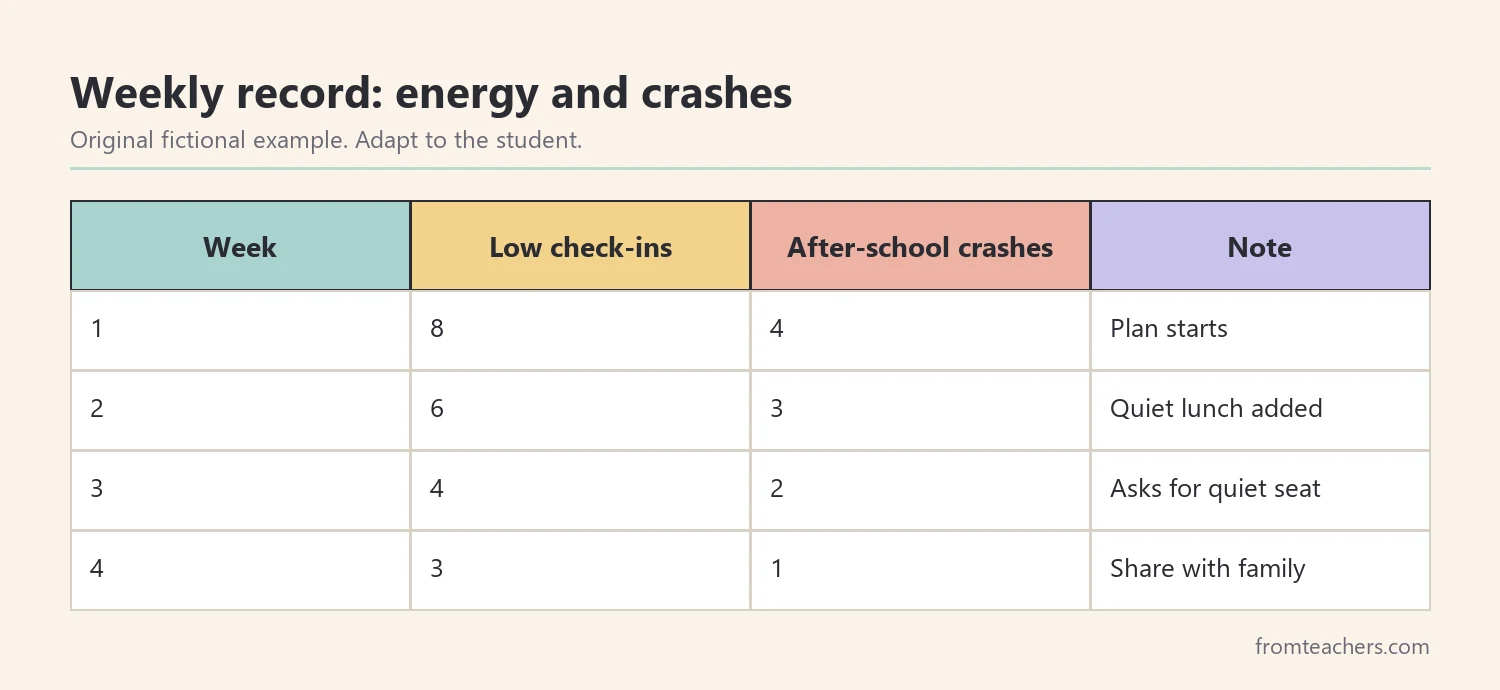
For Maya, low check-ins drop from eight in the first week to three in the fourth week. After-school crashes, reported by her family, drop from four days a week to one. That pattern suggests the pacing changes are helping.
Then, meet briefly with the family and the student every few weeks. Ask what feels better, what still feels heavy, and which one change to try next. If fatigue stays high despite support, the team may want to look more closely at sleep, health, or other factors with appropriate professionals.
Also, look at the quality of work, not only the number of breaks. If the student completes more of the most important tasks, even with more pauses, the plan is doing its job. A paced day that produces focused work is better than a full day of tired, unfinished work.
In addition, protect what is working. When a plan succeeds, it can be tempting to remove supports quickly. Instead, fade them slowly and watch the data. Energy needs often return during stressful periods.
Common mistakes and how to avoid them
- Reading fatigue as a lack of effort. Fix: look at when the drop happens and what came before it.
- Offering breaks that are not restful. Fix: let the student help choose a calm, quiet recovery activity.
- Waiting for a meltdown before acting. Fix: plan responses for early signs and use energy check-ins.
- Making the student explain every low rating. Fix: let a color or number be enough, and respond with support.
- Forgetting the after-school crash. Fix: ask families how the student is after school and include it in your review.
Questions teachers and parents ask about mental fatigue in students
Is mental fatigue the same as being sleepy?
Not exactly. A student may sleep well and still feel mentally drained after hours of processing, masking, and coping with sensory input. Sleep matters, but mental energy can run low for other reasons too.
Why does my child seem fine at school but exhausted at home?
Many students hold it together at school and release the effort once they feel safe at home. This is common for students who mask. Sharing this pattern with the school team can help them plan supports during the day.
Will breaks make my student fall behind?
Short, planned breaks often help students get more done, because they return with more focus. The goal is to protect energy for learning, not to remove learning.
How do I talk to a student about energy without making them feel different?
Use simple, neutral language and model it yourself. Many classes use energy or readiness check-ins for everyone, which makes it feel normal.
Should pacing supports be written into an IEP or 504 plan?
If fatigue affects learning across settings, the team may discuss supports such as breaks, a reduced workload during low-energy times, or a quieter workspace. Bring your notes and data to that conversation.
Related reading: Understanding Autistic Burnout and School Exhaustion: Prevention and Support Strategies, Managing Sensory Overload: Practical Strategies for Autism and ADHD, and Spectrum Voices: Essential Strategies for Navigating High-Functioning Autism.
A companion resource for mental fatigue in students:


Mental Fatigue in Neurodivergent Students: Pacing and Energy Strategies: 12 strategy tables that help you recognize early signs of fatigue and respond with practical pacing steps.
Sources and scope
- IRIS Center, Vanderbilt University: free modules on classroom supports and evidence-based practices.
- Understood.org: plain-language information on learning and thinking differences for families and teachers.
- CDC autism information: general background on autism spectrum disorder for families and educators.
- IDEA, U.S. Department of Education: the law behind special education services and IEPs.
This guide covers practical ways to notice and pace mental energy at school and at home. It does not replace medical advice or individualized guidance from the student’s team.
Key takeaways
- Learn the student’s early signs of fatigue and respond before shutdown.
- Identify energy drains such as masking, processing, and sensory demands.
- Pace the day so demanding tasks and recovery time take turns.
- Teach a simple energy check and make “low” safe to say.
- Review patterns with the family and adjust the plan over time.










Leave a Comment