

Kindness expectations turn a warm idea into clear, everyday actions students can learn. Picture a second grader who hears “Be kind” every morning. He agrees, but at lunch he saves a seat for one friend and tells another, “You can’t sit here.” He does not see that as unkind. Nobody showed him that including others is part of kindness.
This guide gives you five steps to set kindness expectations in your classroom: define clear kindness habits, teach kindness toward others, teach kindness toward yourself, notice and celebrate kind acts, and review and repair. By the end, you will have a practical plan that makes kindness clear and teachable.
Examples are fictional. Adapt to the student’s goals and agreed supports. This is guidance, not a diagnosis.
At a glance
- Kindness is something students practice, not something they just know.
- Clear habits, such as kind words and including others, make kindness concrete.
- Kindness includes how students treat themselves.
- Noticing kind acts out loud helps them grow.
- Mistakes are chances to repair and try again.
1. Define clear kindness expectations
First, make kindness concrete. “Be kind” is a good goal, but it is too broad for many students. Clear kindness expectations break the idea into habits students can see, do, and practice every day.
Next, choose a small set of habits. Seven is a manageable number. A helpful set includes: use kind words, use gentle hands, show respect, practice empathy, be responsible, include others, and be kind to yourself. Together, these cover how we treat others, our classroom, and ourselves.
Also, add two or three actions to each habit. “Use kind words” can mean speaking politely, saying please and thank you, and encouraging others with positive language. “Include others” can mean inviting classmates to join, welcoming new friends, and making sure no one feels left out. Actions make each habit easy to picture.
Explain why kindness matters
Then, explain why kindness matters. Every small act of kindness makes a classroom safer, happier, and stronger. Students who feel safe and included often find it easier to learn, take risks, and ask for help.
In addition, write the habits with students. Ask, “What does kindness look like at the carpet? At lunch? On the playground?” Students often suggest actions adults would not think of, and they remember rules they helped create. Post the final list where everyone can see it.
Moreover, connect kindness expectations to your other classroom rules. Kindness often overlaps with respect, responsibility, and safety. Linking them helps students see one clear picture instead of many separate lists.
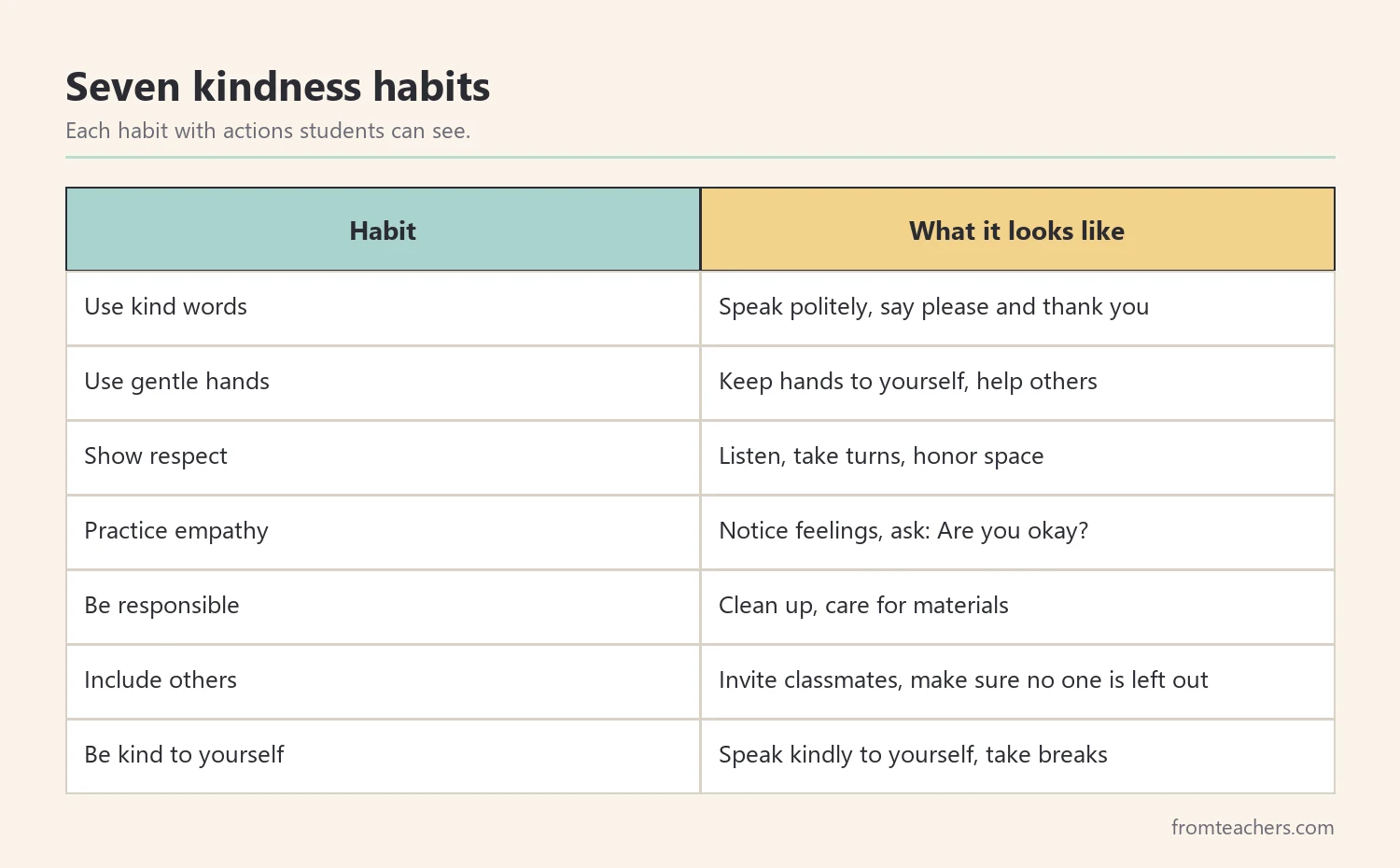
Worked example. Noah is a fictional second grader. His teacher, Ms. Lopez, introduces seven kindness habits during the first week of school. When she reads “Include others,” Noah asks, “Does that mean at lunch too?” Ms. Lopez says yes, and the class talks about saving seats.
2. Teach kindness expectations toward others
Now, teach the habits that focus on other people. Five of the seven habits are about how we treat classmates: kind words, gentle hands, respect, empathy, and including others. Teach them one at a time, with modeling and practice.
First, model each habit. Show what it looks like and sounds like. For gentle hands, show helping a friend pick up dropped crayons. For empathy, show noticing a sad face and asking, “Are you okay?” Students learn a great deal from clear, simple examples.
Next, practice with role-play. Give students short situations: a new student is alone at recess, a classmate drops their books, a friend is upset after losing a game. Let students act out a kind response. Practice makes it easier to remember kindness in real moments.
For a bright classroom display, the Kindness Expectations poster shows how we treat ourselves and others every day through seven kindness habits. It is a positive SEL poster that makes kindness expectations clear and easy to point to during lessons.
Adapt for different learners
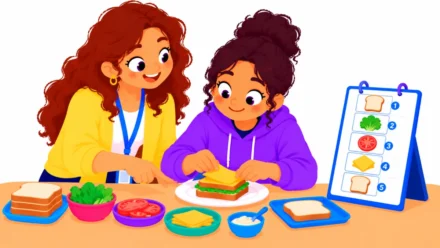
Also, adapt for different learners. Some students, including autistic students or students with language needs, may find it hard to read feelings or join groups. Visual supports, simple scripts such as “Do you want to play?” and extra practice can help. Work with the student’s support team on individual goals.
Moreover, plan a few ready responses for common moments.
| Moment | Kind response | Habit |
|---|---|---|
| A classmate is alone | Do you want to join us? | Include others |
| Someone looks upset | Are you okay? | Practice empathy |
| A friend shares an idea | That’s a great idea. | Use kind words |
| Materials are on the floor | Let me help pick them up. | Be responsible |
Then, use books and stories. Picture books and short stories offer many chances to talk about kindness. Ask, “How did the character show kindness? How could they include someone?” Stories give students safe examples to discuss.
Worked example. Ms. Lopez sets up a role-play about lunch. One student sits alone. Noah practices saying, “Do you want to sit with us?” The next day at lunch, Ms. Lopez notices him making room for a classmate.
3. Teach kindness toward yourself
Next, include self-kindness. Being kind to yourself is part of kindness, too. Students who speak harshly to themselves often struggle to try new things or recover from mistakes.
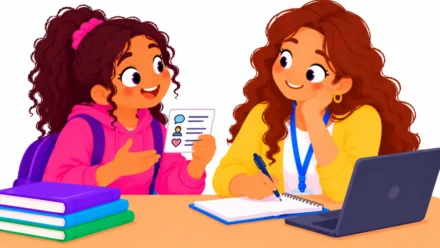
First, teach kind self-talk. Show the difference between “I’m so bad at this” and “This is hard, and I’m learning.” Practice changing harsh thoughts into kinder ones. Students can keep a small card with kind phrases on their desk.
Next, teach that mistakes are part of learning. Celebrate mistakes as information. When you make a mistake, say so calmly: “Oops, I wrote the wrong number. Let me fix it.” Your example shows that mistakes are normal.
Also, teach students to take breaks when they need them. A short break is a kind choice when feelings get big. Make sure students know how to ask for one and where they can go.
Moreover, give students words for hard days. Phrases such as “I’m still learning” or “I can try again tomorrow” help students recover from setbacks. Practicing these phrases during calm moments makes them easier to use when frustration hits.
Then, connect self-kindness to kindness toward others. Students who treat themselves kindly often have more patience for classmates. Clear kindness expectations should include both directions.
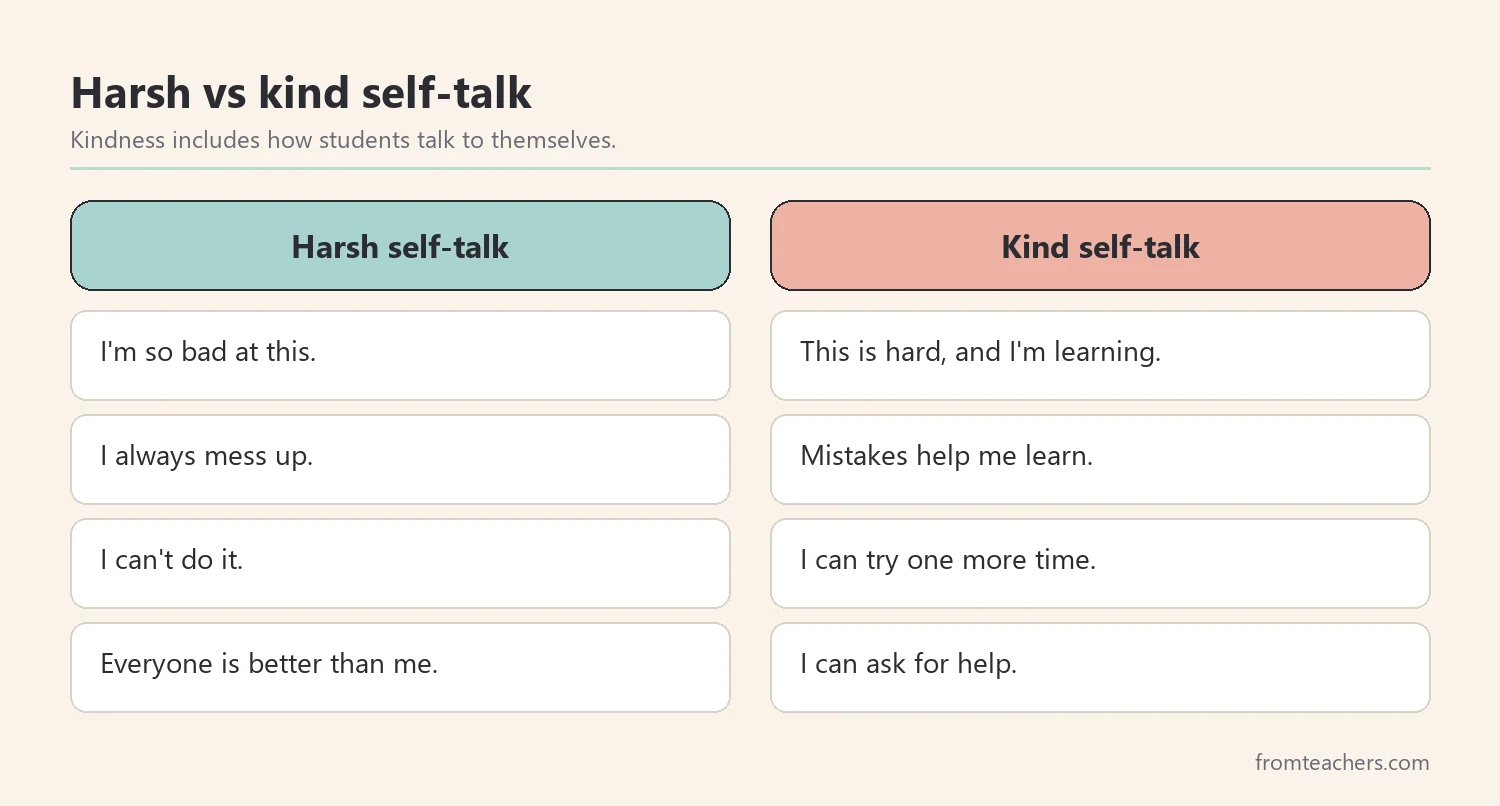
Worked example. During a math lesson, Noah gets a problem wrong and says, “I’m so dumb.” Ms. Lopez kneels next to him and says, “Let’s try kind words for you, too.” Noah tries again: “This is hard, and I’m learning.” Then he fixes the problem.
4. Notice and celebrate kindness expectations
Now, catch kindness in action. When adults notice kind acts out loud, students learn what to repeat. Attention is one of the strongest tools in a classroom.
First, use specific praise. Name the habit and the action. “Noah, you included Mia in your game. That’s what including others looks like.” Specific praise teaches more than “Nice job.”
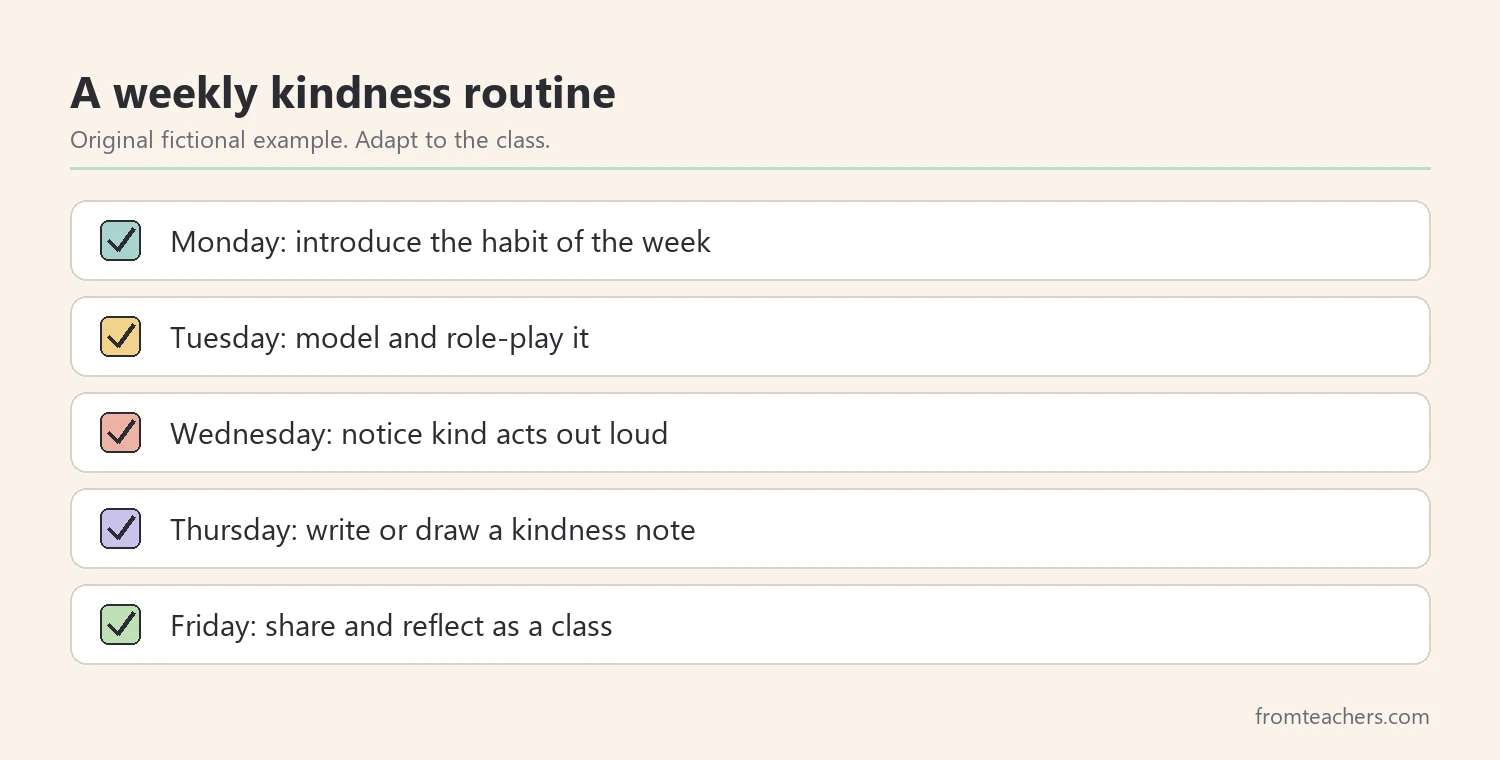
Next, try a simple kindness routine. Pick a habit of the week. Introduce it on Monday, model it on Tuesday, notice it out loud on Wednesday, write or draw kindness notes on Thursday, and share on Friday. A short routine keeps kindness expectations visible without taking much time.
Also, invite students to notice each other. A kindness board, a jar of kind-act notes, or a quick sharing circle lets students recognize classmates. This builds a culture where kindness is seen and valued by everyone, not only adults.
Moreover, notice quiet kindness. Some students show kindness in small ways, such as sharing a pencil or waiting patiently. These acts are easy to miss. Make a point of naming them, so every student sees that kindness expectations include small, quiet choices too.
Then, avoid turning kindness into a competition. Rewards can help some students, but kindness works best when it feels genuine. Focus on noticing and appreciating, not on winning prizes.
Worked example. Ms. Lopez starts a kindness jar. Students write or draw kind acts they notice and drop them in. On Friday, she reads a few aloud. One note says, “Noah let me go first on the slide.” Noah grins.
5. Review kindness expectations and repair mistakes
Finally, keep kindness growing. Kindness expectations are something the class practices all year. Regular review and calm repair after mistakes keep the habits strong.
First, review often. Revisit one habit each week or after breaks. A quick review during morning meeting is often enough.
Also, stay calm when unkindness happens. A calm adult response helps everyone feel safe, including the student who made the mistake. Speak privately when possible, and focus on what happened and what to do next.
Next, teach repair. When a student is unkind, focus on fixing the harm rather than only giving a consequence. Help the student notice how the other person feels, say sorry in a sentence, and do something to make it right. Repair teaches empathy and responsibility at the same time.
Also, track simple data. Count kind acts noticed by the class each week. Rising numbers show kindness is growing. Lower numbers can signal a good time to reteach.
In addition, revisit the poster with the class every few weeks. Ask which habit feels easiest and which feels hardest. Students’ answers show where to focus next and keep kindness expectations fresh.
Involve families
Then, involve families. Share the seven habits and the habit of the week. Families can notice kindness at home and use the same words. This helps students connect kindness expectations across settings.
Moreover, follow individual plans. If a student has an IEP or behavior plan with social goals, link your kindness work to those goals and work with the team.
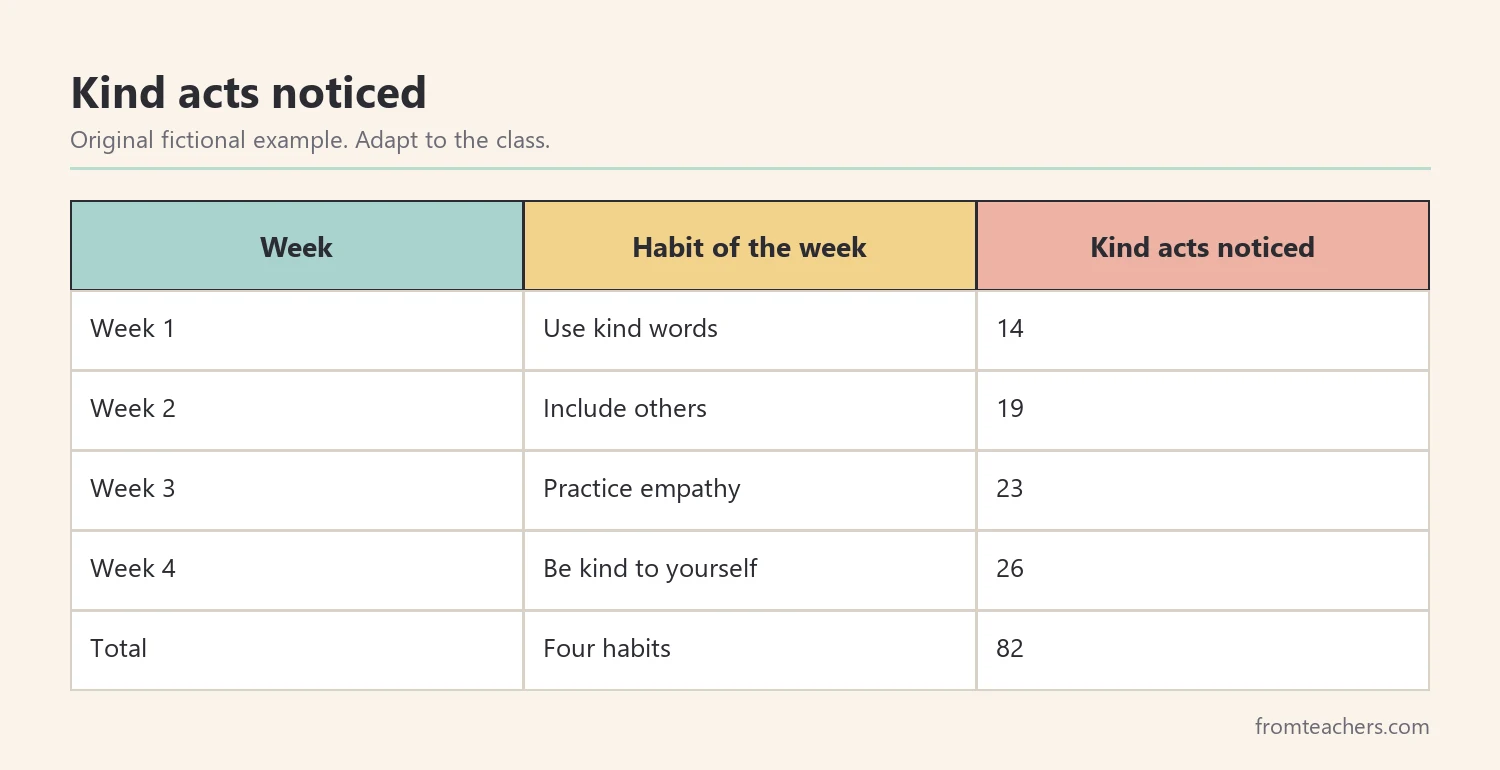
Worked example. Ms. Lopez counts kindness jar notes for four weeks. The class notices 14 kind acts in week one, 19 in week two, 23 in week three, and 26 in week four, for 82 in total. She shares the progress at morning meeting, and the class cheers.
A note for specialists and support staff. Paraprofessionals, counselors, and specialists see students in many settings, such as the hallway, the lunchroom, and small groups. Share the seven habits and the habit of the week with them. When every adult uses the same words and notices the same actions, students hear one consistent message about kindness throughout the school day.
Common mistakes and how to avoid them
- Saying “be kind” without examples. Students may not know what to do. Fix: define clear habits with actions.
- Forgetting self-kindness. Harsh self-talk blocks learning. Fix: teach kind words for yourself.
- Only correcting unkindness. Students learn little about what to do. Fix: notice kind acts out loud.
- Punishment without repair. The harm stays unfixed. Fix: guide students to repair.
- Turning kindness into a contest. It can feel fake. Fix: focus on noticing and appreciating.
Questions teachers and parents ask about kindness expectations
Can kindness really be taught?
Yes. Kindness includes skills such as noticing feelings, using kind words, and including others. Like other skills, these improve with modeling, practice, and feedback.
What age are these habits for?
The habits fit many ages, especially elementary students. Younger students may need more pictures and role-play. Older students can discuss the reasons behind each habit.
How do I handle a student who is often unkind?
Look for patterns and skills the student may be missing. Teach and practice those skills, use repair after incidents, and notice kind acts. If concerns continue, work with the support team.
Should I reward kindness?
Specific praise and recognition usually work well. Some students benefit from extra rewards, but keep the focus on genuine kindness rather than prizes.
How can families help?
Use the same habits at home and notice kind acts out loud. Model kind words, including kind words for yourself. Share stories about kindness at school.
Related reading: Moving Beyond Shame and Behavior Charts: Positive Alternatives for Effective Classroom Management, Autism Social Skills Development: Practical Strategies for Growth, and How Parents and Teachers Can Team Up for Special Education Success.
A companion resource for kindness expectations:
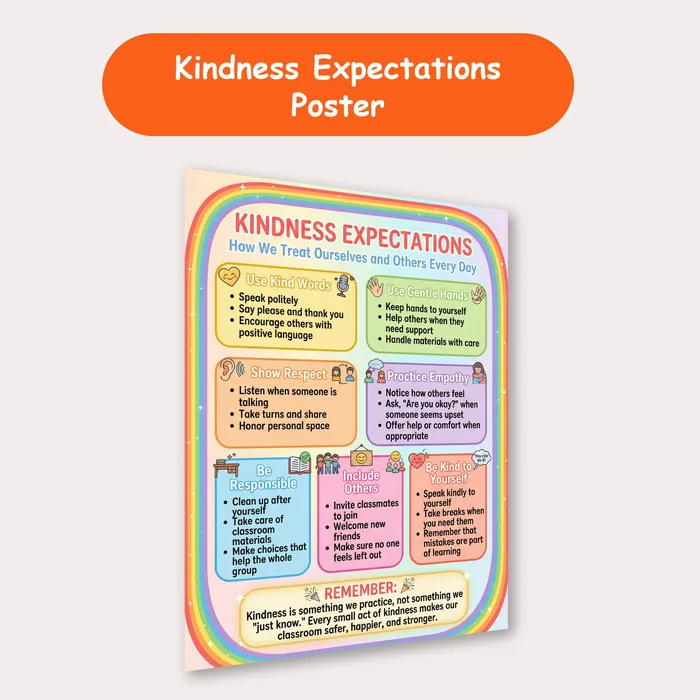
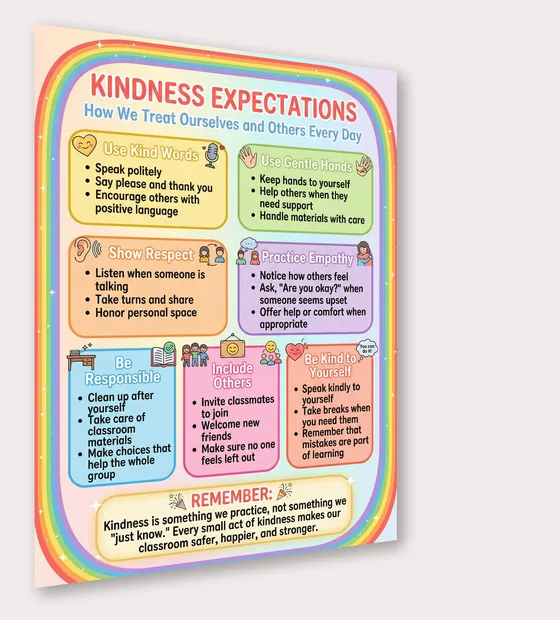
Kindness Expectations Poster: a bright, positive SEL poster that shows how we treat ourselves and others every day through seven kindness habits.
Sources and scope
- CASEL: a widely used framework for social and emotional learning, including social awareness and relationship skills.
- Center on PBIS: information on teaching and recognizing positive expectations in schools.
- IRIS Center, Vanderbilt University: free modules on classroom climate and behavior supports.
- StopBullying.gov: U.S. government information on preventing bullying and building positive school climates.
This guide covers everyday classroom teaching of kindness habits. It does not replace anti-bullying policies, counseling, behavior plans, or the decisions of the student’s support team.
Key takeaways
- Define kindness as clear habits with simple actions.
- Teach kindness toward others with modeling and role-play.
- Include self-kindness and kind self-talk.
- Notice kind acts out loud and keep it genuine.
- Review often and guide repair after mistakes.




Leave a Comment