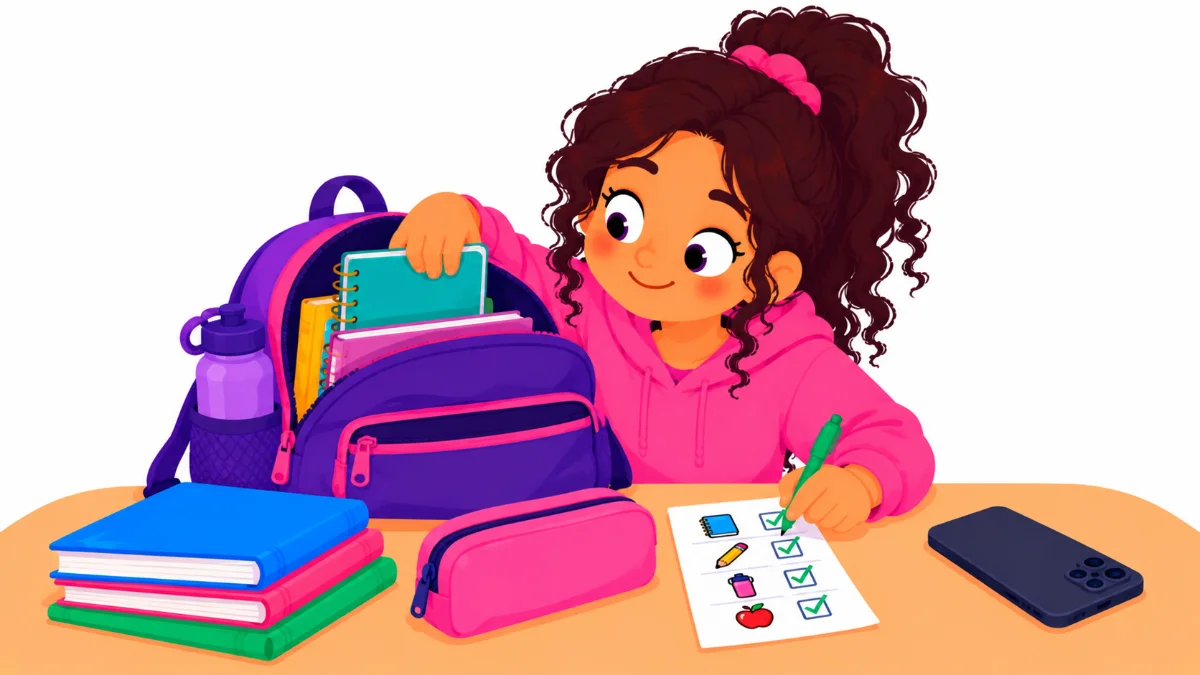

Finishing tasks without reminders is a quiet skill that shapes a student’s whole school day. Picture an eighth grader who sets six phone alarms each afternoon, still waits for a parent’s text before starting homework, and freezes when the phone is in a locker. She is capable, but the reminders have started doing the remembering for her.
After reading this guide, you will be able to spot the signs of reminder overdependence, map a task so the cues live in the routine, fade reminders gradually, teach kind self-talk for slip-ups, and build memory with small, doable challenges. One fictional student appears in every step so you can see how the pieces fit together.
Examples are fictional. Adapt to the student’s goals and agreed supports. This is guidance, not a diagnosis.
At a glance
- Reminders are helpful supports, but heavy reliance can stop students from practicing their own memory.
- Finishing tasks without reminders starts with noticing the signs and choosing one routine to work on.
- Fade reminders step by step instead of removing them all at once.
- Gentle self-talk after a forgotten task protects confidence and keeps students trying.
- Small memory challenges and honest reviews turn slip-ups into lessons.
1. Notice the signs before finishing tasks without reminders becomes the goal
Reminders are not the problem. Planners, alarms, and checklists help many people manage busy lives. The concern begins when a student cannot start or finish anything unless an alert or an adult prompts them.
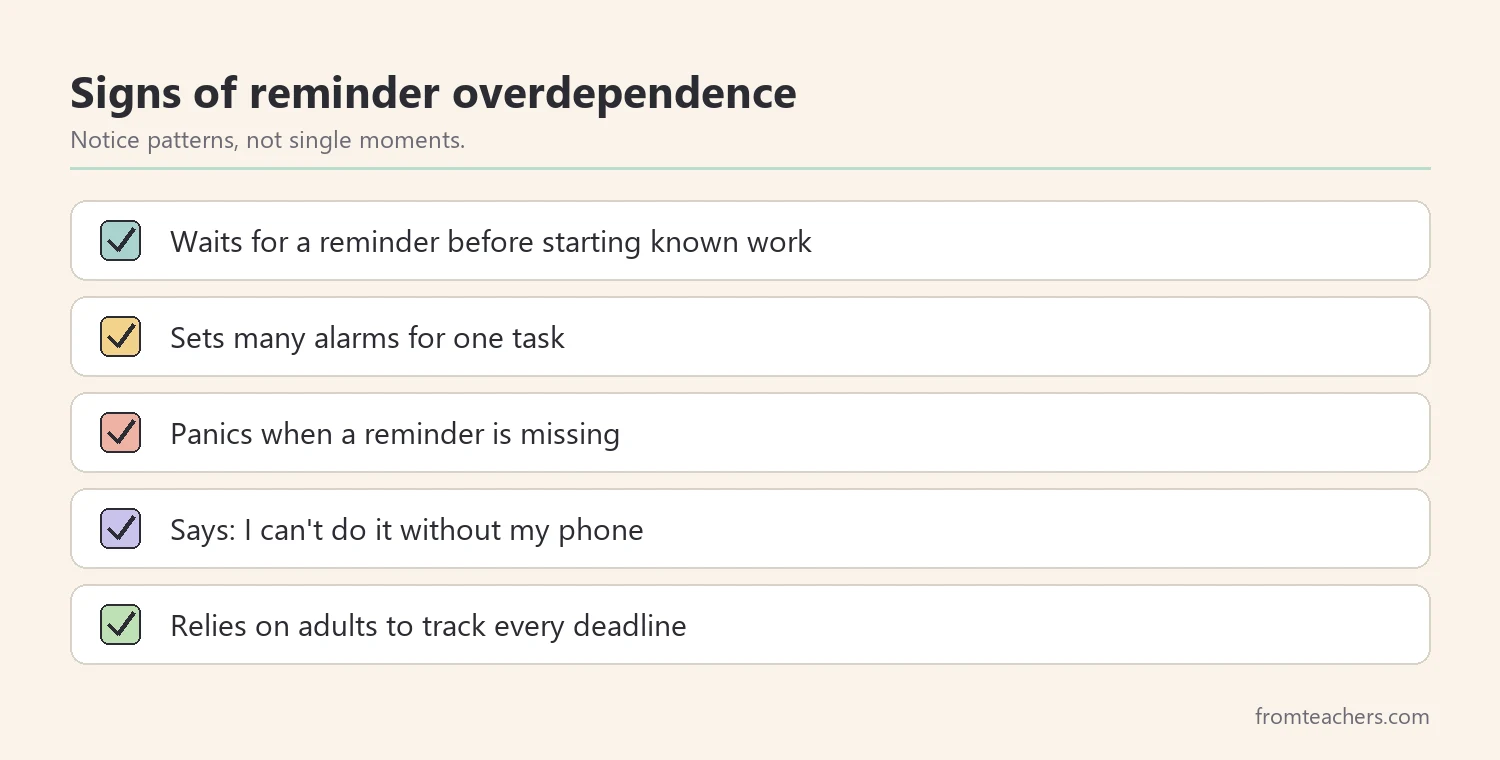
Common signs include:
- Waiting for a reminder before starting work, even when the task is known.
- Setting many alarms for the same task, and then ignoring most of them.
- Strong frustration or panic when a reminder is missing.
- Saying things like “I have a terrible memory” or “I can’t do it without my phone.”
- Relying on adults to track deadlines that the student could track with support.
Students with ADHD, learning differences, or anxiety may find working memory and planning harder, so reminders can be an important, agreed support. In those cases, work with the student’s team and keep any written supports in place. The aim is more independence within those supports, not taking them away.
Worked example: meet Nora
Nora is a fictional eighth grader. Her counselor, Ms. Patel, notices that Nora sets six alarms each afternoon for homework, chores, and packing her bag. In the first week of tracking, Nora finishes 3 of her 10 weekly homework assignments without any reminder. Together, they choose one goal: finishing tasks without reminders for homework first, before working on anything else.
2. Map the task for finishing tasks without reminders
Many students struggle with finishing tasks without reminders because the task has no fixed place in the day. Alerts fill that gap from the outside. A better long-term option is to attach the task to something that already happens.
First, break the task into a few short steps. Next, choose an anchor: a moment that happens every day without fail, such as getting home, finishing a snack, or sitting at the kitchen table. Then place a visual cue at that spot, such as a sticky note or a short checklist.
| Step | Anchor | Visual cue |
|---|---|---|
| Check planner | After snack | Planner left on the table |
| Pick first task | Planner open | Sticky note: “Easiest first” |
| Work 20 minutes | Timer started | Timer on the desk |
| Pack bag | Homework done | Checklist on the bag |
This approach moves the cue from a phone to the environment. As a result, the student is still supported, but the support comes from a routine they control.
For Nora, Ms. Patel and her family agree on the after-snack anchor. Nora writes her own checklist and tapes it inside her homework folder. She still keeps her alarms for now, so the change feels safe.
If you want ready-made language for this stage, the Completing Tasks Without Reminders tables lay out common signs, supports, and their impact on overdependence on alerts and reliance on reminders.
3. Fade reminders step by step toward finishing tasks without reminders
Removing every reminder at once usually backfires, and it can make finishing tasks without reminders feel even more out of reach. The student misses tasks, feels embarrassed, and returns to even more alerts. Instead, fade reminders gradually while the new routine grows stronger.
A simple fading plan reduces the number of reminders each week. It also changes their type, from specific instructions to gentle prompts and then to self-checks. For example, “Start your math worksheet now” becomes “What is next on your list?” and later becomes nothing at all.
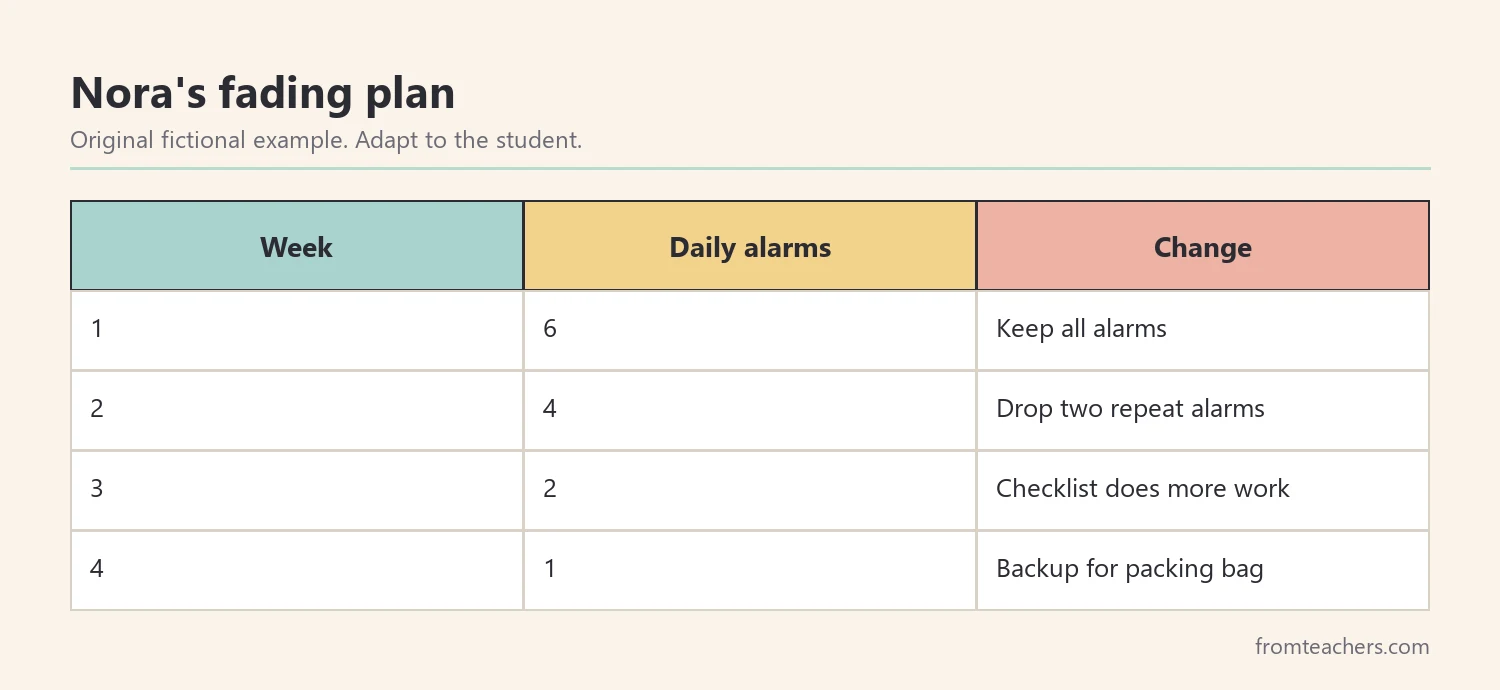
Nora’s plan works like this. In week one, she keeps all 6 daily alarms. In week two, she drops to 4, removing the two alarms that repeat the same task. In week three, she keeps 2. In week four, she keeps 1 alarm as a backup for packing her bag.
Meanwhile, the adults agree on a shared rule. If Nora has not started by a set time, a parent asks one open question rather than giving a direct order. This keeps the thinking with Nora. Finishing tasks without reminders grows when adults ask, not tell.
Track progress with one number per week. Without data, it is easy to remember only the bad days and miss the steady gains. For Nora, the number is how many of 10 homework assignments she finishes without any reminder. Clear numbers keep everyone honest and make small wins visible.
4. Teach gentle self-talk for forgotten tasks
Everyone forgets things. However, what students say to themselves after forgetting can either rebuild confidence or drain it. Harsh self-talk often leads to avoidance, which makes the next task even harder.
So teach a few short, honest scripts students can use with themselves. These are not empty praise. They admit the slip, stay calm, and point to a next step.
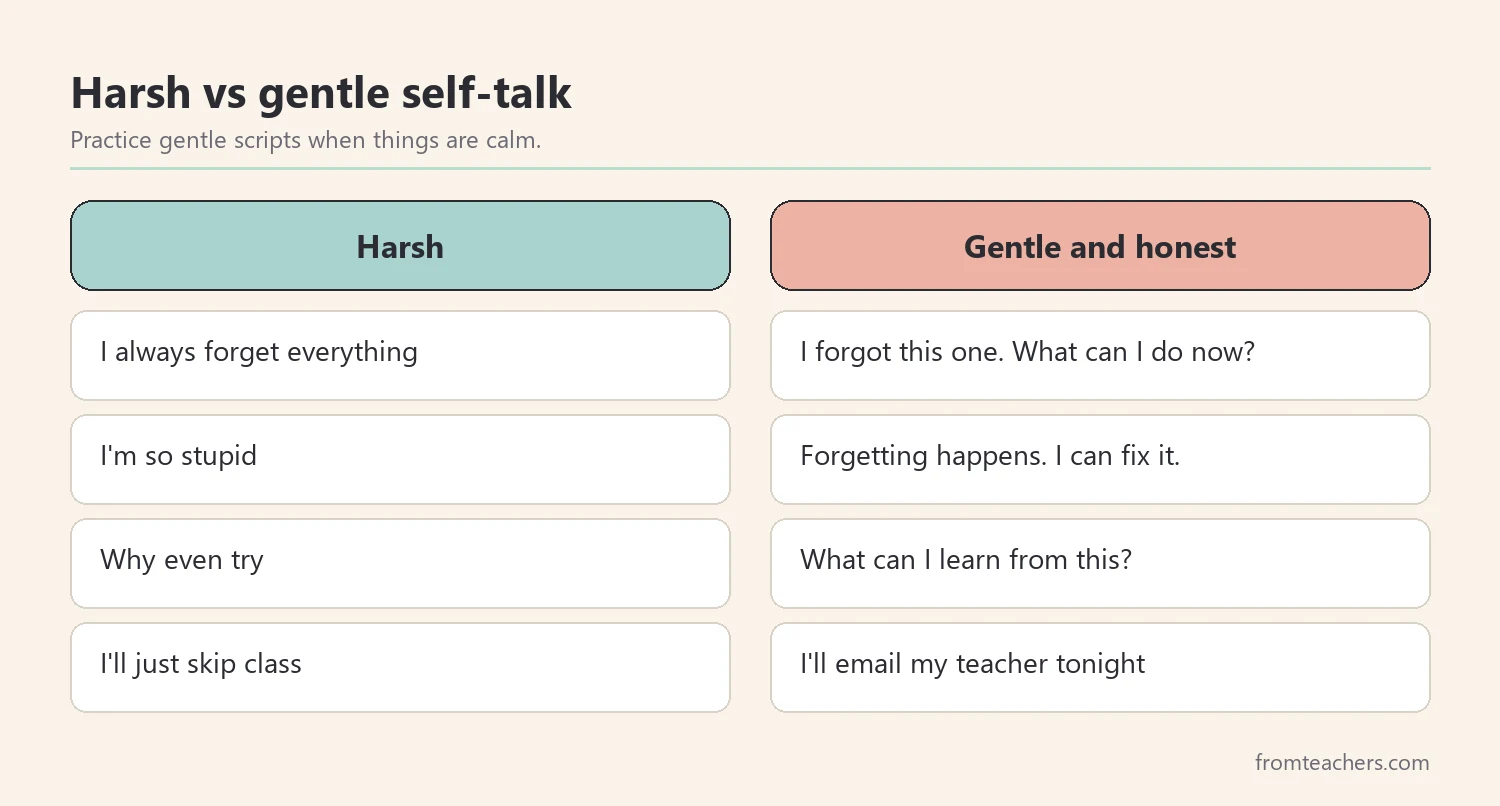
Practice scripts when things are calm, not only during a stressful moment. For instance, role-play a forgotten worksheet and let the student try a script out loud. Then ask which one feels most natural, and write it on a card.
Nora chooses “I forgot, and that’s okay. What can I do right now?” She keeps it on the back of her checklist. When she forgets her science lab sheet in week two, she reads the card, emails her teacher, and finishes the sheet that evening. In the past, she might have avoided the class the next day.
Adults can model the same language. A parent who says “I forgot to buy milk, so I’ll add it to my list now” shows that forgetting is normal and fixable. This makes finishing tasks without reminders feel like a shared, human skill rather than a test.
5. Build memory for finishing tasks without reminders with small challenges
Confidence grows from evidence. In other words, students need to see themselves finishing tasks without reminders, even in tiny ways, before they believe it is possible. Students who believe they have a “bad memory” need small, safe chances to see their memory work. Short challenges give them that proof.
Two simple ideas work well:
- Two-minute memory task: the student chooses one small task, such as remembering to return a library book at lunch, and holds it in mind without a reminder. If it works, they note the win.
- System break day: once a week, on a low-stakes day, the student turns off nonessential alerts for one routine and relies on the anchor and checklist instead.
Keep the stakes low. In addition, let the student choose which routine to try first, since ownership makes the challenge feel like an experiment rather than a test. Pick days without tests or major deadlines, and agree on a backup plan. The aim is to build trust in natural memory, not to create stress.
Nora tries a system break day each Wednesday for her homework routine. On the first Wednesday, she remembers the after-snack anchor and starts on time. On the second, she forgets once but uses her script and catches up. Both outcomes count as practice, because both teach her something about her own system.
Here, finishing tasks without reminders becomes a habit that students own. They learn which anchors work for them, which tasks are hardest to remember, and which supports they still want to keep.
6. Learn from missed tasks and review progress
Missed tasks will still happen, even when finishing tasks without reminders is going well. The difference is whether they become a source of guilt or a source of information. A short, structured review helps students turn a slip into a lesson.
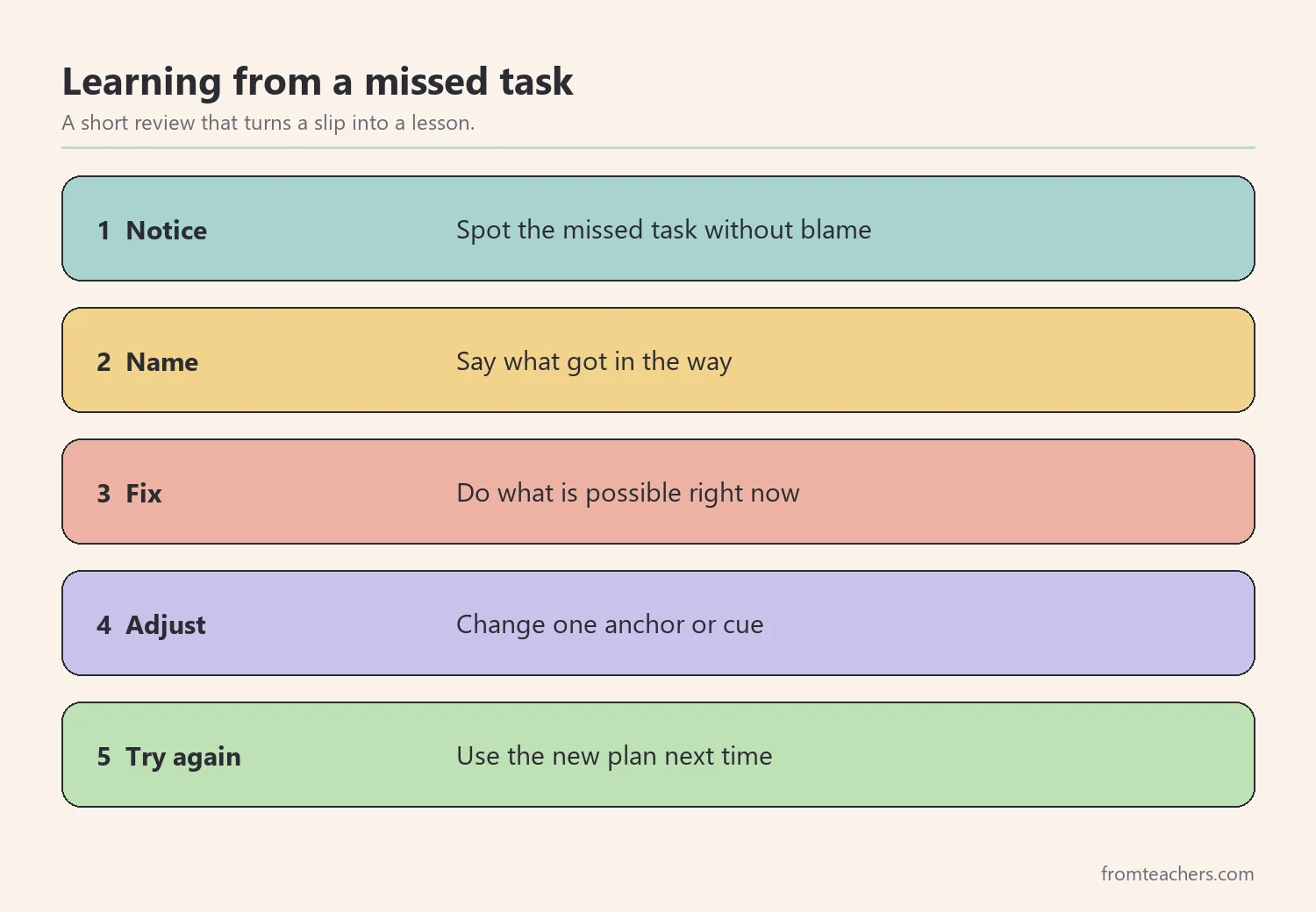
Each week, take five minutes to review progress on finishing tasks without reminders. Look at the number, talk about one success, and choose one small change. Avoid long lectures. The student should do most of the talking.
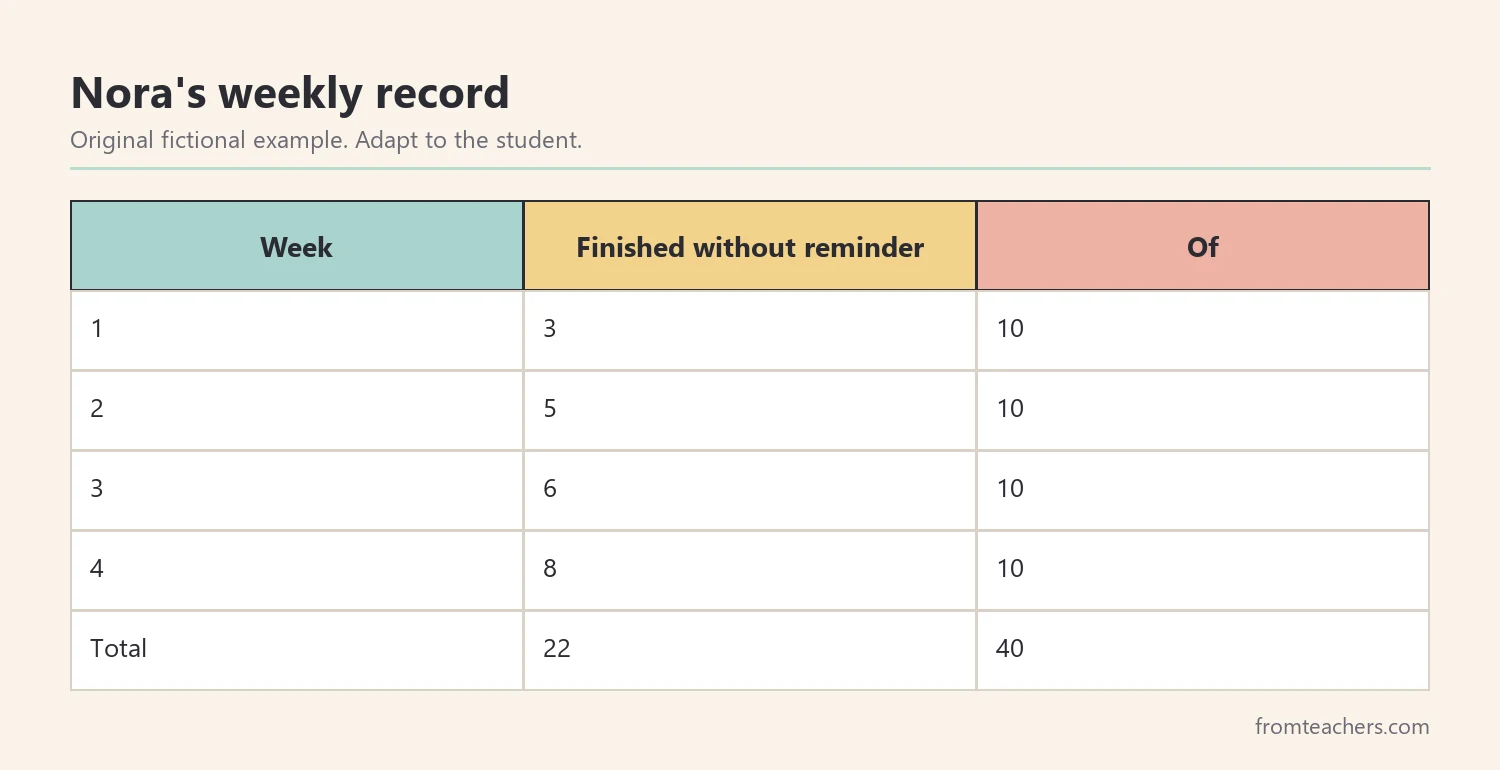
Nora’s record shows steady growth. She finishes 3 of 10 assignments without a reminder in week one, 5 of 10 in week two, 6 of 10 in week three, and 8 of 10 in week four. Over the four weeks, that adds up to 22 of 40 assignments finished on her own.
The review also shows where she struggles. Both missed assignments in week four are long-term projects. So the next goal is breaking big projects into dated steps, using the same anchor and checklist system.
Share the review with the people who support the student. A short note to a teacher or parent, written by the student, keeps everyone aligned and gives the student practice in describing their own progress.
Celebrate progress honestly. Nora still uses one alarm, and that is fine. Independence does not mean using no tools. It means choosing the tools yourself and trusting your own memory more than before.
Common mistakes and how to avoid them
- Removing all reminders at once. Fix: fade them step by step over several weeks.
- Calling the student lazy or careless. Fix: treat forgetting as a skill gap and teach the skill.
- Giving orders instead of prompts. Fix: ask “What is next on your list?” so the student does the thinking.
- Running memory challenges on high-stakes days. Fix: practice on low-pressure days with a backup plan.
- Ignoring agreed supports. Fix: keep written accommodations in place and build independence within them.
- Skipping the weekly review. Fix: spend five minutes each week on one number, one win, and one change.
Questions teachers and parents ask about finishing tasks without reminders
Are reminders bad for students?
No. Reminders are useful tools, and many adults rely on them. The concern is when a student cannot start or finish anything without them. Finishing tasks without reminders is about balance and choice, not about banning tools.
What age is right to start this?
The ideas in this guide fit middle and high school students best, but younger children can practice simple versions. For example, a younger child might use a picture checklist after snack instead of a parent’s verbal reminder.
What if the student has ADHD or a learning disability?
Work with the student’s team and keep agreed supports in place. Many students with ADHD benefit from external cues, so the goal is to build routines and confidence within those supports, not to remove them.
How long does it take to see progress?
It varies by student and task. Track one clear number each week, such as assignments finished without a reminder, so you can see real change instead of guessing.
How can parents help at home?
Parents can agree on an anchor, ask open questions instead of giving orders, and model kind self-talk after their own slip-ups. A short weekly check-in helps the whole family stay on the same page.
Related reading: Effective ADHD Classroom Strategies to Support Student Success, Navigating the Path to Adulthood: Building Essential Life Skills, and 5 Practical Teaching Tips to Boost Classroom Focus and Learning.
A companion resource for finishing tasks without reminders:
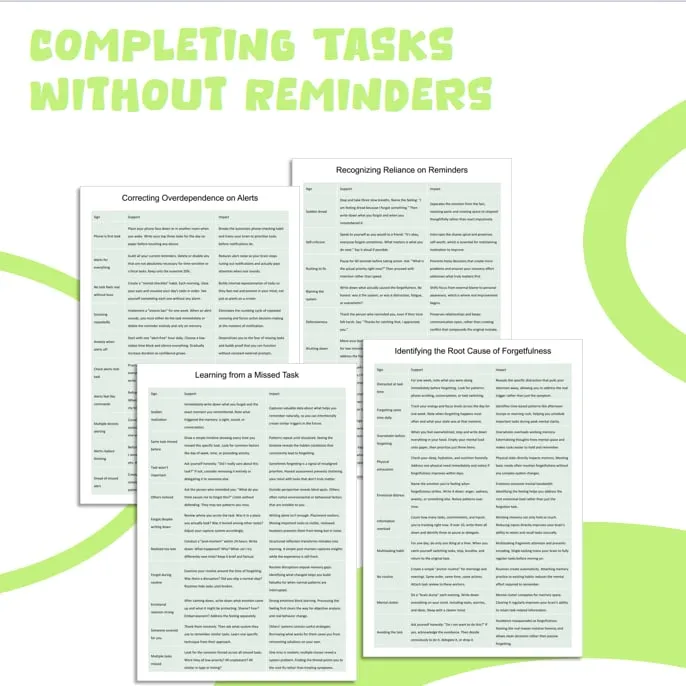
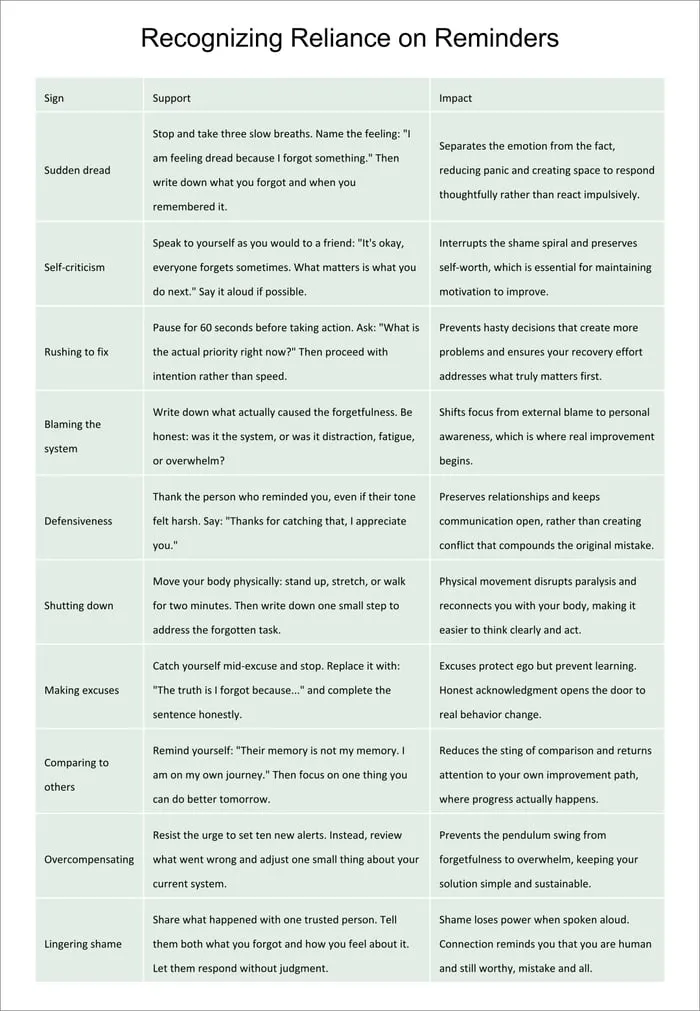
Completing Tasks Without Reminders: 12 pages of Sign, Support, and Impact tables on overdependence on alerts, gentle self-talk scripts, learning from a missed task, and small steps like a two-minute memory task.
Sources and scope
- Center on the Developing Child at Harvard University: research-based resources on executive function and self-regulation.
- Understood.org: articles for families and teachers on executive function, ADHD, and learning differences.
- CHADD: a national organization with information for families and educators about ADHD.
- CASEL: frameworks for social and emotional learning, including self-management.
This guide offers everyday strategies for building task independence at school and home. It does not diagnose attention or memory difficulties or replace advice from qualified professionals.
Key takeaways
- Start finishing tasks without reminders by noticing the signs and choosing one routine.
- Attach tasks to daily anchors with visual cues the student controls.
- Fade reminders gradually and ask open questions instead of giving orders.
- Teach gentle self-talk so forgetting leads to action, not avoidance.
- Track one weekly number and review it in five minutes.









Leave a Comment