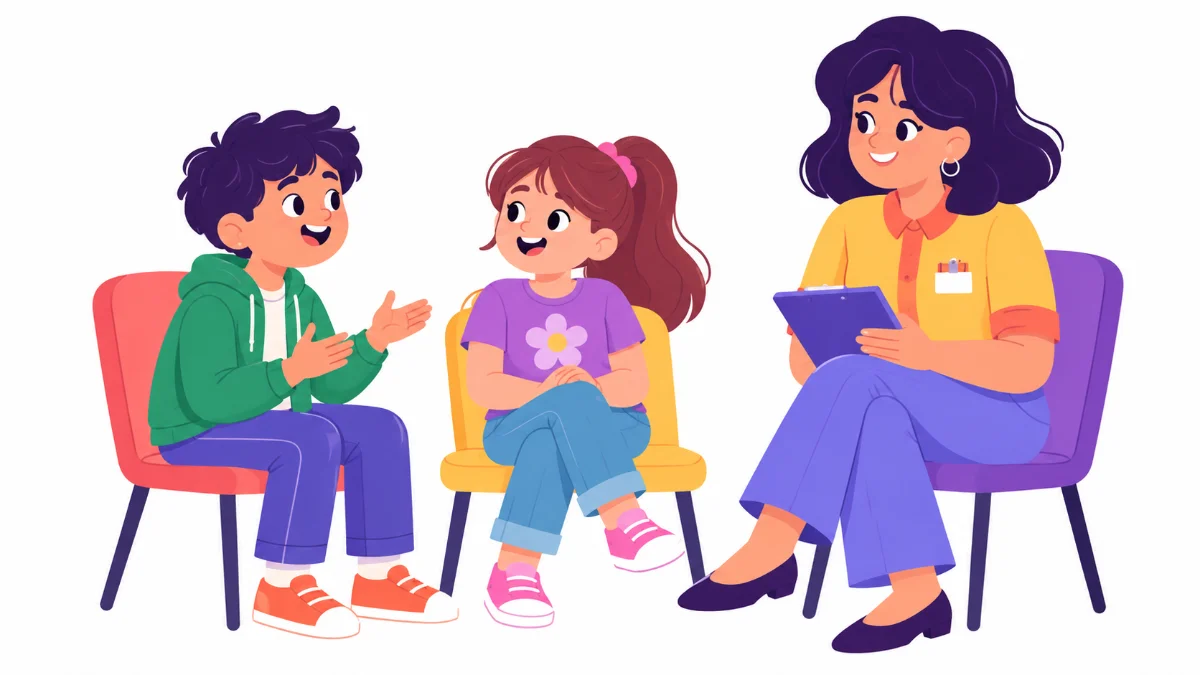

Peer conflict resolution is the process two students use to work through a disagreement safely and respectfully. Picture two fourth graders who were best friends at breakfast and are not speaking by lunch. One says the other told a secret. The other says it was not a secret. Both feel hurt, and both want an adult to decide who is right.
This guide gives you five steps to guide peer conflict resolution: set up a safe conversation, help students calm down and share, teach listening and naming the problem together, help them solve it and try a solution, and fade your support over time. By the end, you will be able to coach students through the seven steps students use, and help them lead those steps more on their own.
Examples are fictional. Adapt to the student’s goals and agreed supports. This is guidance, not a diagnosis.
At a glance
- Conflicts happen, and they are normal. Solving them safely is a learnable skill.
- Students use seven steps, from calming down to checking in afterward.
- Ground rules and sentence frames make the conversation feel safe.
- Both students share, listen, and name the problem together.
- Adult support starts strong and fades as students gain skill.
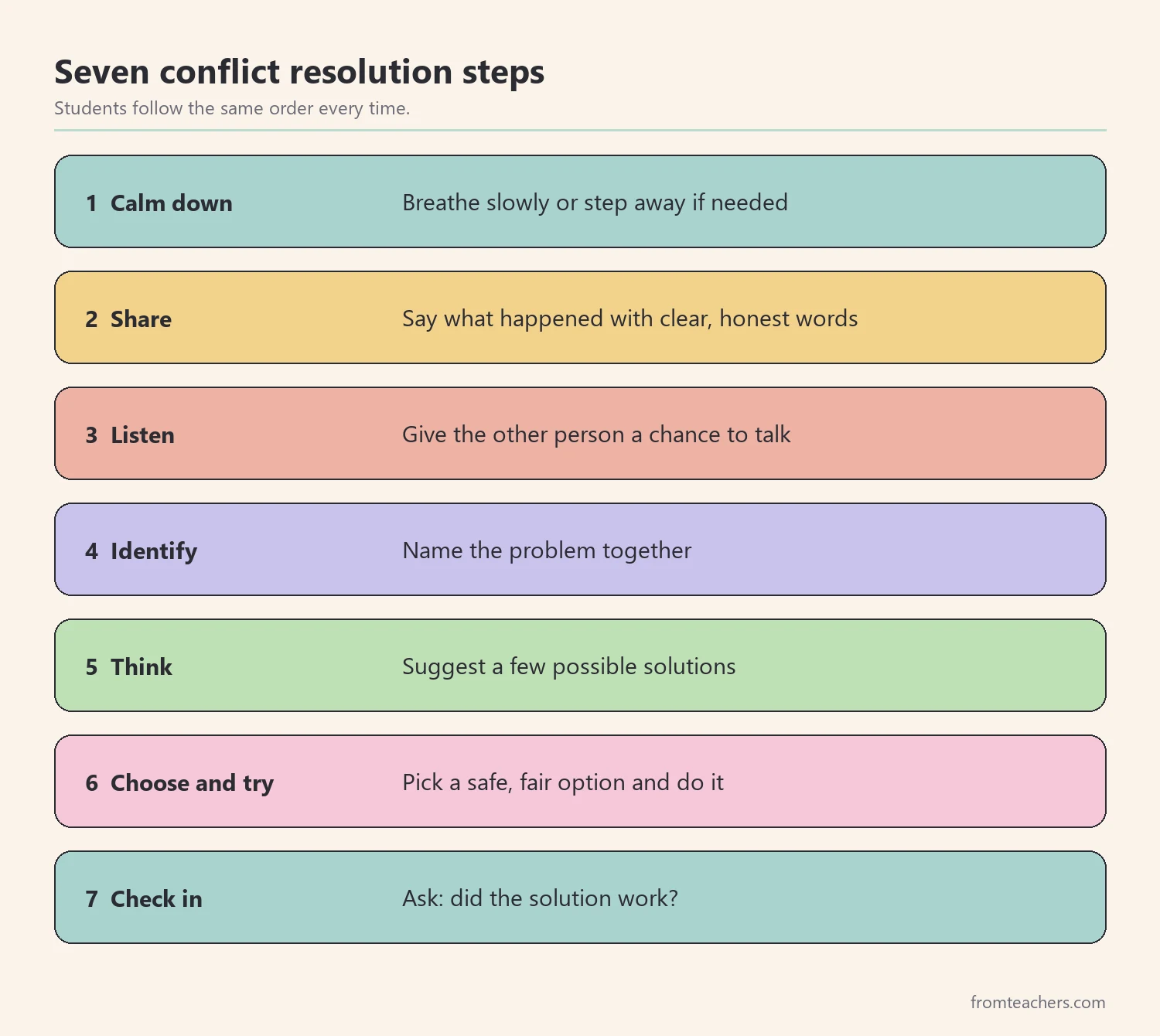
First, a quick overview of the peer conflict resolution steps students learn. They take a moment to calm down, share what happened, listen to the other person, identify the problem together, think of possible solutions, choose a solution and try it, and check in afterward. The five adult steps below explain how to teach and coach these seven steps.
1. Set up a safe space for peer conflict resolution
First, choose the right time and place. Peer conflict resolution works best in a quiet spot, away from an audience. A corner of the classroom, a small table in the hallway, or the counselor’s office can all work. Avoid trying to solve a conflict in front of the whole class.
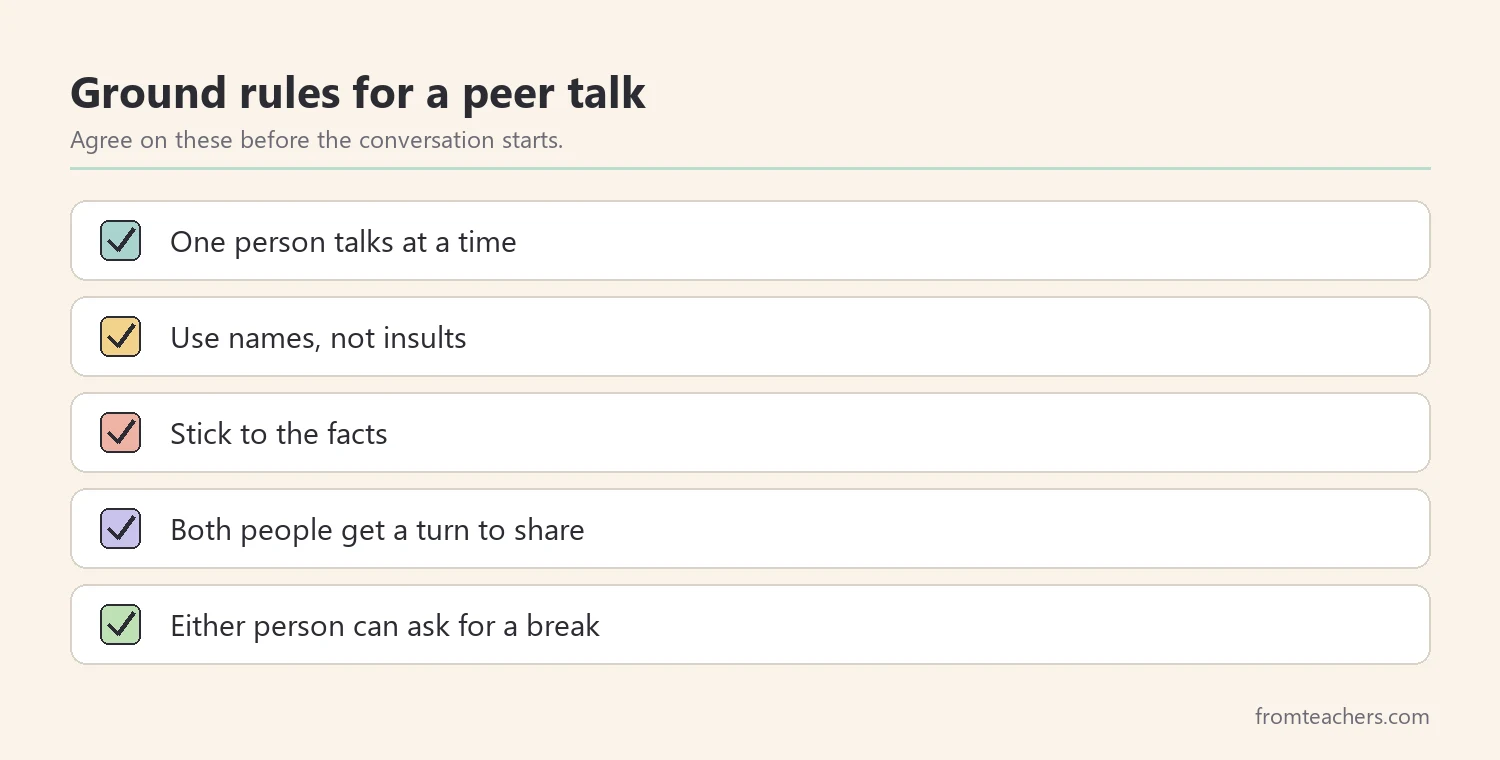
Next, agree on ground rules. Keep them short: one person talks at a time, use names instead of insults, stick to the facts, both people get a turn, and either person can ask for a break. Say the rules out loud before starting, and ask both students to agree.
Also, explain your role. Tell students, “I’m not here to decide who is right. I’m here to help you two work it out.” This shifts the focus from blame to problem-solving, and it helps both students feel the process is fair.
Moreover, plan when peer conflict resolution will happen. Some teachers set aside a few minutes after recess or lunch, when many small conflicts surface. A predictable time tells students their problem will be heard, which often lowers tension right away.
Then, check safety. If a conflict involves physical harm, threats, bullying, or a power imbalance, it needs a different response. Follow your school’s policies and involve administrators or counselors as required. Peer conflict resolution is for ordinary disagreements between students with roughly equal power.
Worked example. Zara is a fictional fourth grader. She and her friend Lila are upset about a shared secret. Their teacher, Mr. Grant, invites them to a small table by the window during independent reading. He reads the ground rules, and both girls nod.
2. Help students calm down and share what happened
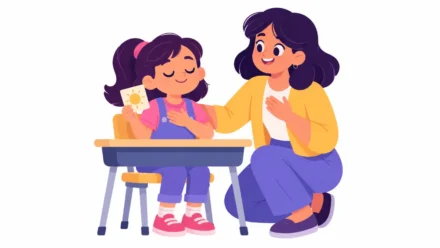
Now, start with calm. Students think more clearly and communicate more respectfully when their bodies and emotions are calm. Offer simple tools: breathe slowly, step away if needed, or use a calming strategy the student already knows. A regulated student can listen, problem-solve, and express themselves better.
Next, invite each student to share. Ask them to use clear, honest words, say what they saw or felt, and stick to the facts. Sharing helps both students understand the situation without blaming or exaggerating. It also creates a safe foundation for the conversation.
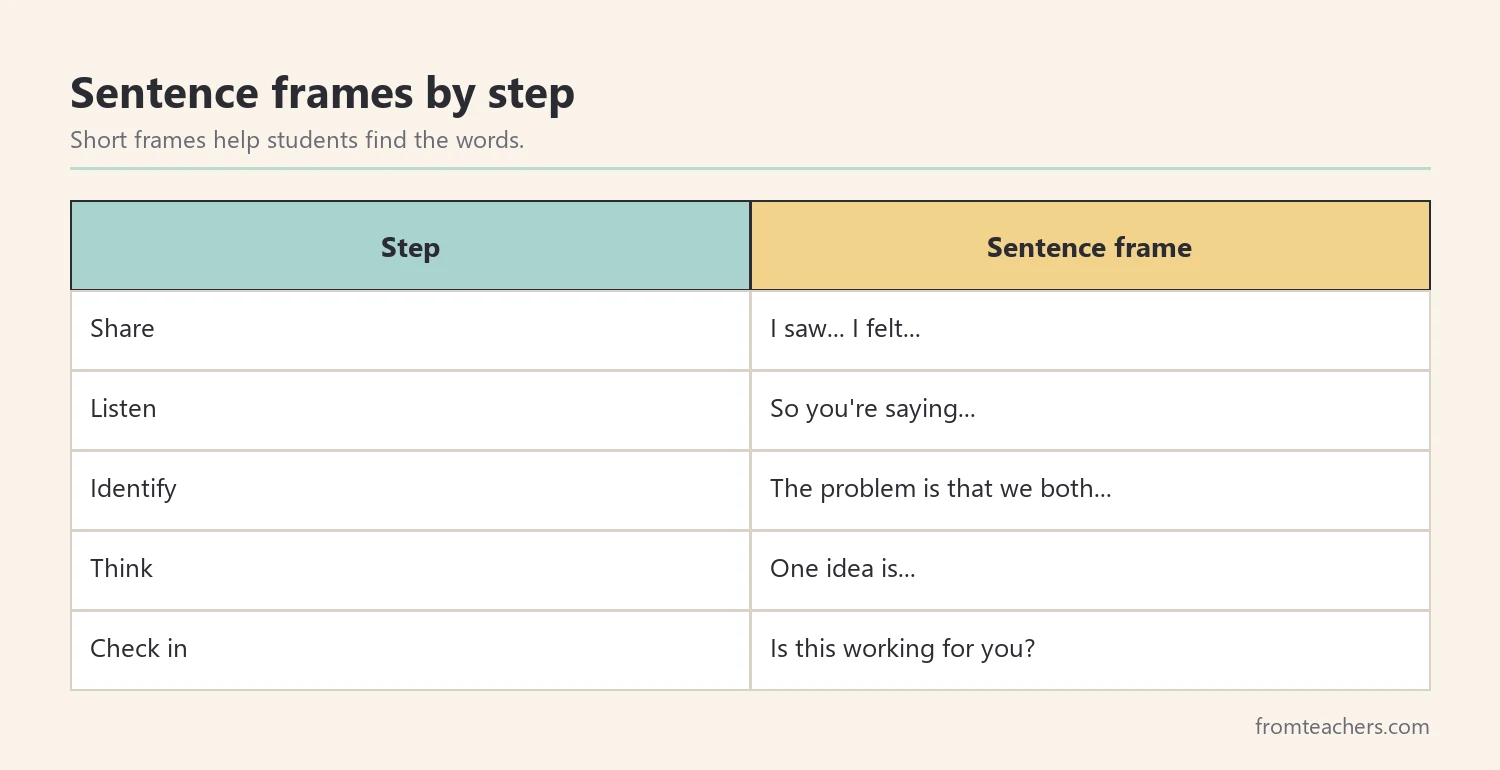
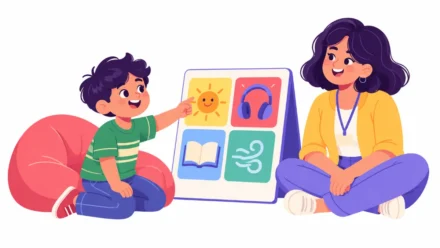
Also, offer sentence frames. Many students struggle to find words when they are upset. A frame such as “I saw… I felt…” gives structure. For students with language or social communication needs, visual frames on a card can help a great deal.
In addition, notice body language. Crossed arms, a turned back, or a shaking voice tell you how a student feels. Name it gently: “You look tense. Do you need another breath?” Small check-ins keep peer conflict resolution calm and respectful.
Then, keep turns balanced. Let one student share fully, then the other. Gently redirect interruptions: “You’ll have your turn next. For now, let’s listen.” Balanced turns show both students the process is fair.
Worked example. Mr. Grant asks both girls to take three slow breaths. Then Zara shares first: “I saw Lila telling Maya about my birthday plans. I felt embarrassed.” Next, Lila shares: “I thought everyone already knew. I felt confused when Zara stopped talking to me.”
3. Build listening into peer conflict resolution
Next, focus on listening. Conflict often comes from misunderstandings. Listening helps students see the problem from another point of view and reduces tension.
First, teach the listening moves. Give the other person a chance to talk, look at them or face in their direction, and try to understand their perspective. A simple check is to paraphrase: “So you’re saying…” This proves the message was heard.
Then, help students name the problem together. Ask, “What are we disagreeing about? What do we both want? What is the real issue?” Naming the problem together helps students see it as a shared challenge, not a fight between enemies. In many conflicts, the real issue is different from the first complaint.
For a classroom visual, the Conflict Resolution Steps poster gives students a simple, supportive guide to work through conflicts safely and respectfully. Its seven steps each include a “why this step matters” note, which makes it practical for classrooms and counseling spaces during peer conflict resolution.
Look for shared goals
Moreover, look for shared goals. In most conflicts, both students want something similar, such as fairness, friendship, or respect. Pointing this out turns peer conflict resolution into teamwork. “It sounds like you both want to stay friends” can soften a tense moment.
Also, watch for emotions rising again. If either student gets upset during this step, pause and return to calming tools. It is fine to take a break and come back later.
Worked example. Mr. Grant asks Zara to paraphrase Lila. Zara says, “So you thought everyone knew about my party?” Lila nods. Together they name the problem: “We didn’t agree on what was private.”
4. Help students solve it and try a solution
Now, move to solutions. Ask both students to suggest ideas, be flexible, and aim for solutions that help everyone. Brainstorming teaches creativity and cooperation. Students in special education may benefit from visuals, sentence starters, or role-play to practice generating options.
First, list ideas without judging. Write them down if possible. Even unhelpful ideas are fine at this stage, because seeing them helps students compare options.
Next, choose together. Help students pick a safe and fair option, agree to try it calmly, and put it into action. Students learn that peer conflict resolution requires action, not just talk, and they practice responsibility and follow-through.
Also, keep the solution concrete. “Be nicer” is hard to check. “Ask before sharing each other’s plans” is clear. A concrete solution gives both students something to do and something to check later.
Moreover, write the agreement down. A short note, such as “We will ask before sharing each other’s plans,” helps both students remember. It also makes the next check-in easier, because everyone can look back at the same words.
Then, close the conversation warmly. Thank both students for working it out. Some students may want to apologize, shake hands, or simply return to class. Do not force an apology. A genuine repair matters more than a scripted one.
Worked example. Zara and Lila list three ideas: never tell each other anything, ask before sharing plans, or let Mr. Grant decide what’s private. They choose to ask before sharing plans. Lila says sorry on her own, and Zara says, “It’s okay. I’ll tell you next time if something is private.”
5. Fade support and check in on peer conflict resolution
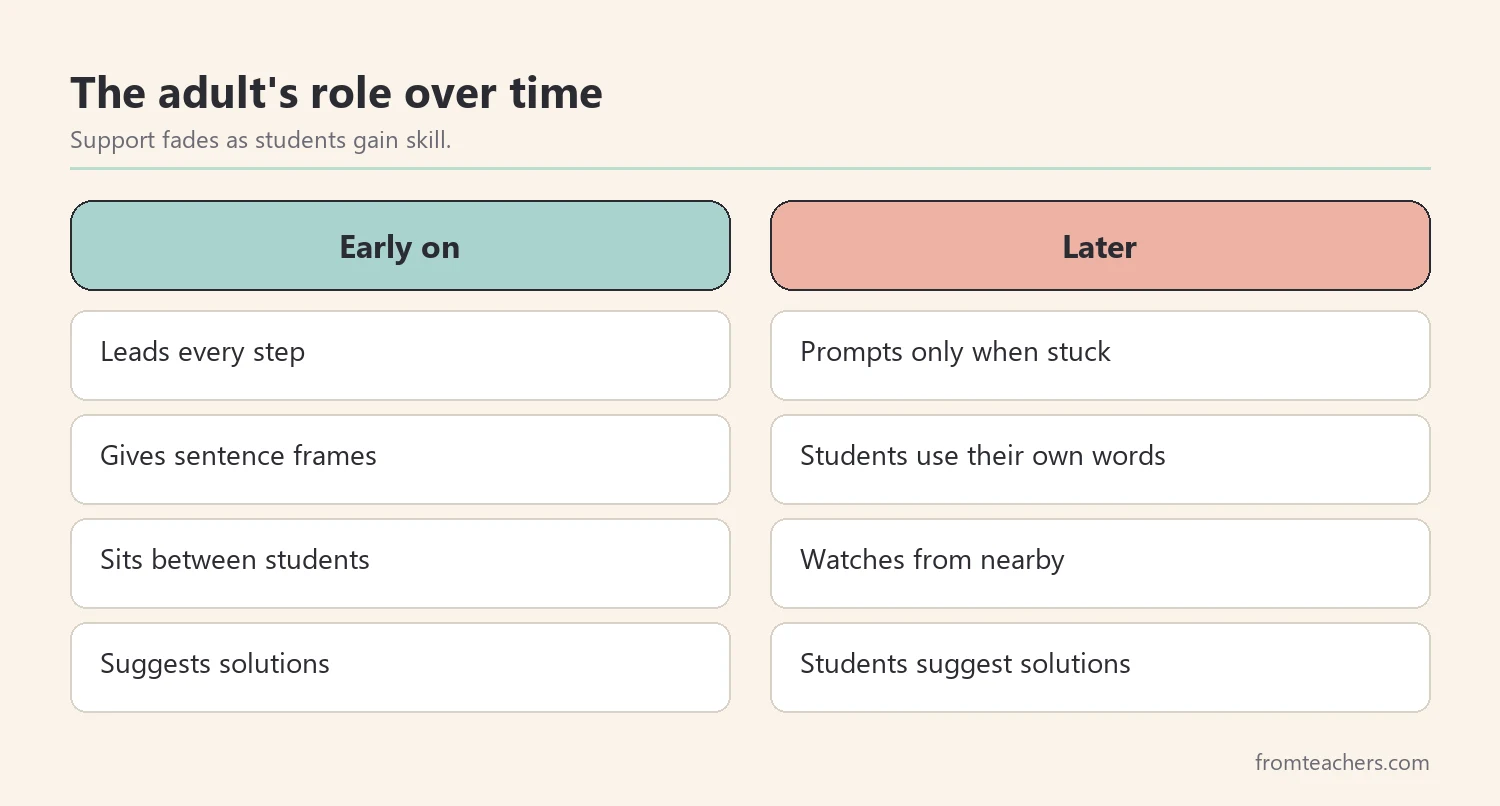
Finally, step back over time. In the beginning, the adult leads every step, offers sentence frames, and suggests solutions. Later, the adult prompts only when students get stuck. The goal is for students to lead peer conflict resolution themselves.
First, check in afterward. Ask both students, “Did the solution work? Do we need to fix anything? Can we move on?” Reflection builds problem-solving skills and shows students that it is okay to adjust solutions.
Next, keep a light record of peer conflict resolution. Note conflicts and how much adult help each one needed. Over time, you should see more conflicts resolved with little help. This can also support social skills goals if a student has an IEP.
Also, practice during calm times. Use short role-plays with pretend conflicts, such as two students wanting the same seat. Practice makes the steps familiar, so students can use them when real feelings run high.
In addition, consider training student leaders. Some schools teach older students to guide peer conflict resolution for younger classmates, with adult supervision. If your school has a peer mediation program, connect your classroom steps to it so students hear the same language everywhere.
Share the steps with families
Then, share the steps with families. Families can use the same steps for sibling conflicts or disagreements with friends. Common language between school and home helps students build the habit faster.
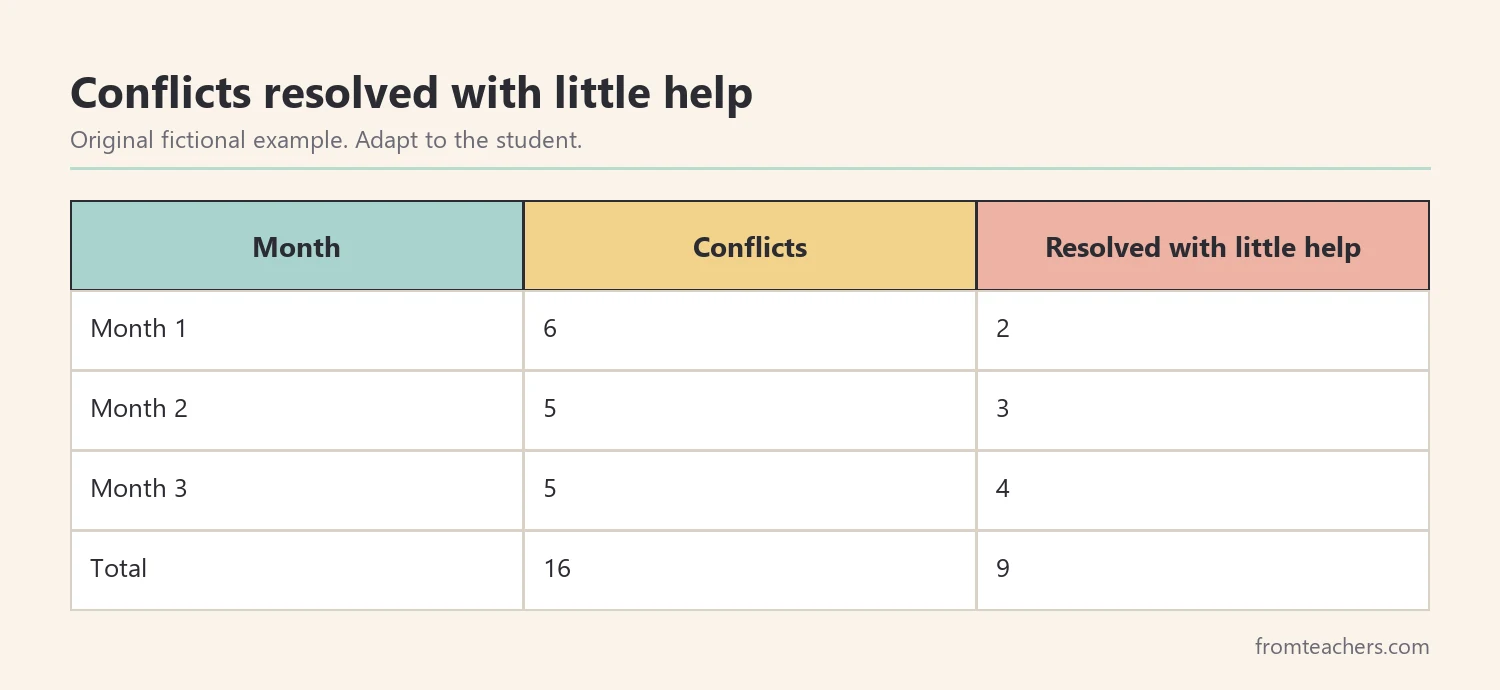
Worked example. Over three months, Mr. Grant tracks Zara’s conflicts. In month one, she has 6 conflicts and resolves 2 with little help. By month two, she resolves 3 of 5. In month three, she resolves 4 of 5. Across 16 conflicts, she leads the steps with little help 9 times.
A note on follow-up. Some conflicts return even after a good conversation. That is normal. When the same problem comes back, use the agreement as a starting point: “Last time you agreed to ask first. What happened?” Returning to the plan teaches students that peer conflict resolution is a process, and that it is okay to adjust.
Common mistakes and how to avoid them
- Deciding who is right. Students learn to argue their case instead of solving the problem. Fix: guide the steps and let students decide.
- Skipping the calm-down step. Upset students cannot listen. Fix: start every conversation with calm.
- Forcing apologies. Scripted apologies feel empty. Fix: invite repair, but let it be genuine.
- Using peer talks for bullying. Power imbalances need a different response. Fix: follow school policy for bullying and safety.
- Never fading support. Students stay dependent on adults. Fix: step back gradually.
Questions teachers and parents ask about peer conflict resolution
When should an adult step in?
Step in right away if anyone is unsafe. For ordinary disagreements, coach the steps and let students do as much as they can. Reduce your support as their skills grow.
Is this the same as peer mediation?
It is related. Some schools train students as peer mediators to guide conflicts. This guide focuses on adults coaching students through the steps, which can be a first step toward student-led mediation.
What if one student refuses to talk?
Give them time and space. Offer a break and try again later. Some students may prefer to write or draw what happened first.
Does this work for students with disabilities?
It can, with supports such as visuals, sentence frames, and extra practice. Work with the student’s support team to adapt the steps to individual goals.
Should conflicts be handled during class time?
Small conflicts can often wait until a natural break. Larger or ongoing conflicts may need a planned time. Choose a moment when both students can focus.
Related reading: Building Stronger School Counseling Programs: A Framework for Student Success, Autism Social Skills Development: Practical Strategies for Growth, and Essential Trauma-Informed Teaching Strategies for Modern Classrooms.
A companion resource for peer conflict resolution:
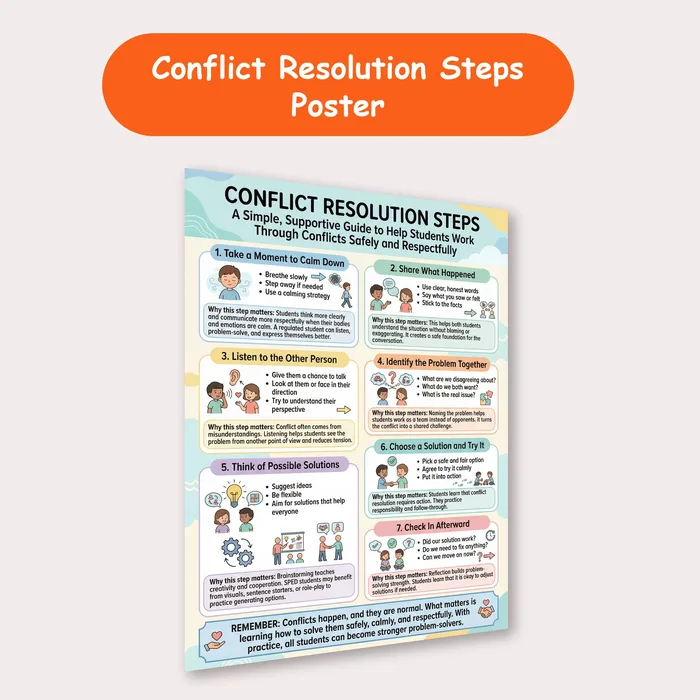
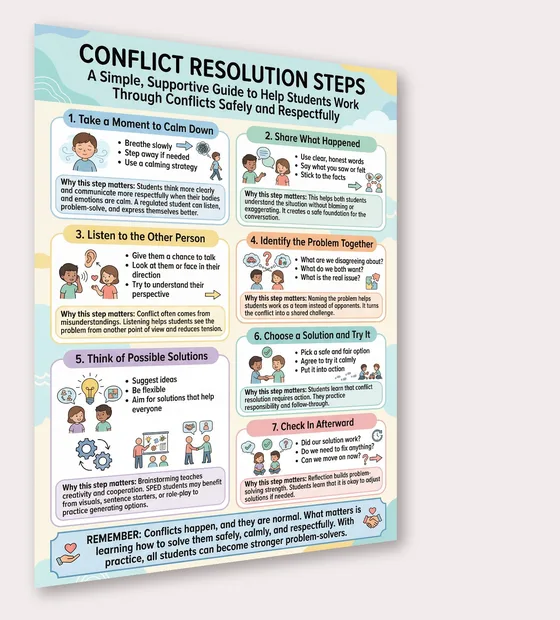
Conflict Resolution Steps Poster: a simple, supportive peer conflict guide with seven steps and “why this step matters” notes, for classrooms and counseling spaces.
Sources and scope
- CASEL: a widely used framework for social and emotional learning, including relationship skills.
- American School Counselor Association (ASCA): information on school counseling and student support.
- StopBullying.gov: U.S. government information on the difference between conflict and bullying, and on prevention.
- Center on PBIS: information on positive behavioral supports in schools.
This guide covers coaching ordinary peer conflicts in classrooms and counseling spaces. It does not cover bullying, safety threats, or discipline decisions, which follow school policy and the student’s support team.
Key takeaways
- Use a quiet space and short ground rules.
- Start with calm, then let each student share.
- Teach listening and name the problem together.
- Choose a concrete, fair solution and try it.
- Check in afterward and fade adult support over time.
Leave a Comment