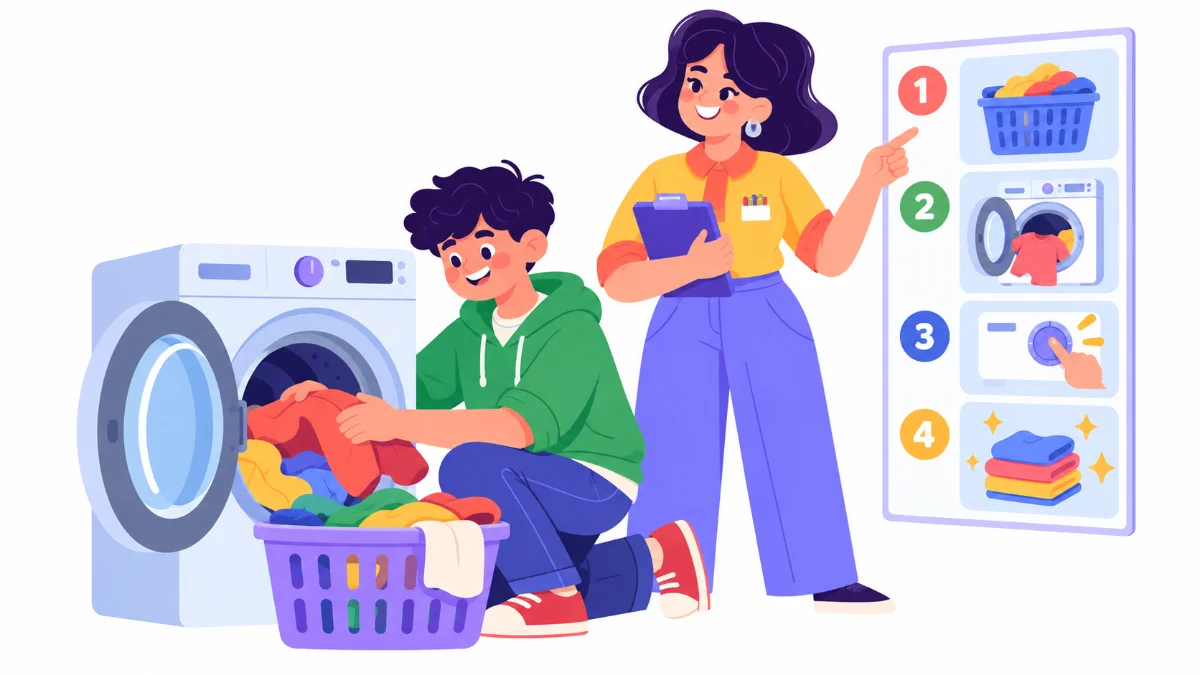

Learning how to use appliances is one of the most practical skills a student can take from school into adult life. Picture a teenager in a vocational class standing in front of a washing machine. He knows the clothes go inside, but he is not sure about the soap, the dial, or the buttons, so he waits for an adult to do it for him.
This guide gives you five steps to teach students how to use appliances and everyday devices safely: choose the devices that matter, teach a safety routine, break each device into steps, practice in real settings, and check skills over time. By the end, you will have a clear plan for one device and a way to repeat it for others.
Examples are fictional. Adapt to the student’s goals and agreed supports. This is guidance, not a diagnosis.
At a glance
- Pick devices the student will really use at school, at home, or at work.
- Teach a short safety check before every device.
- Break each device into numbered steps with pictures.
- Practice on the real device, in the real place, as often as possible.
- Count steps done without help and fade support in a clear order.
1. Choose which devices to teach first
First, make a short list. Students meet many machines in a day: printers, pencil sharpeners, tablets, laptops, and interactive boards at school, and washing machines, dryers, dishwashers, and vacuum cleaners at home. You cannot teach them all at once, so pick the ones that matter most right now.
Next, ask three questions. Which devices does the student use often? Do any of them cause a lot of waiting or adult help? Which ones connect to the student’s goals for home, work, or independent living? The answers usually point to two or three devices to start.
Also, talk with the family. Parents know which appliances the student could help with at home. A student who learns how to use appliances like the washing machine at school can practice the same steps on laundry day, which doubles the practice.
In addition, think about the future. For older students, transition planning often includes skills for living and working more independently. Knowing how to use appliances in a kitchen, laundry room, or office can open doors to jobs and daily routines later on.
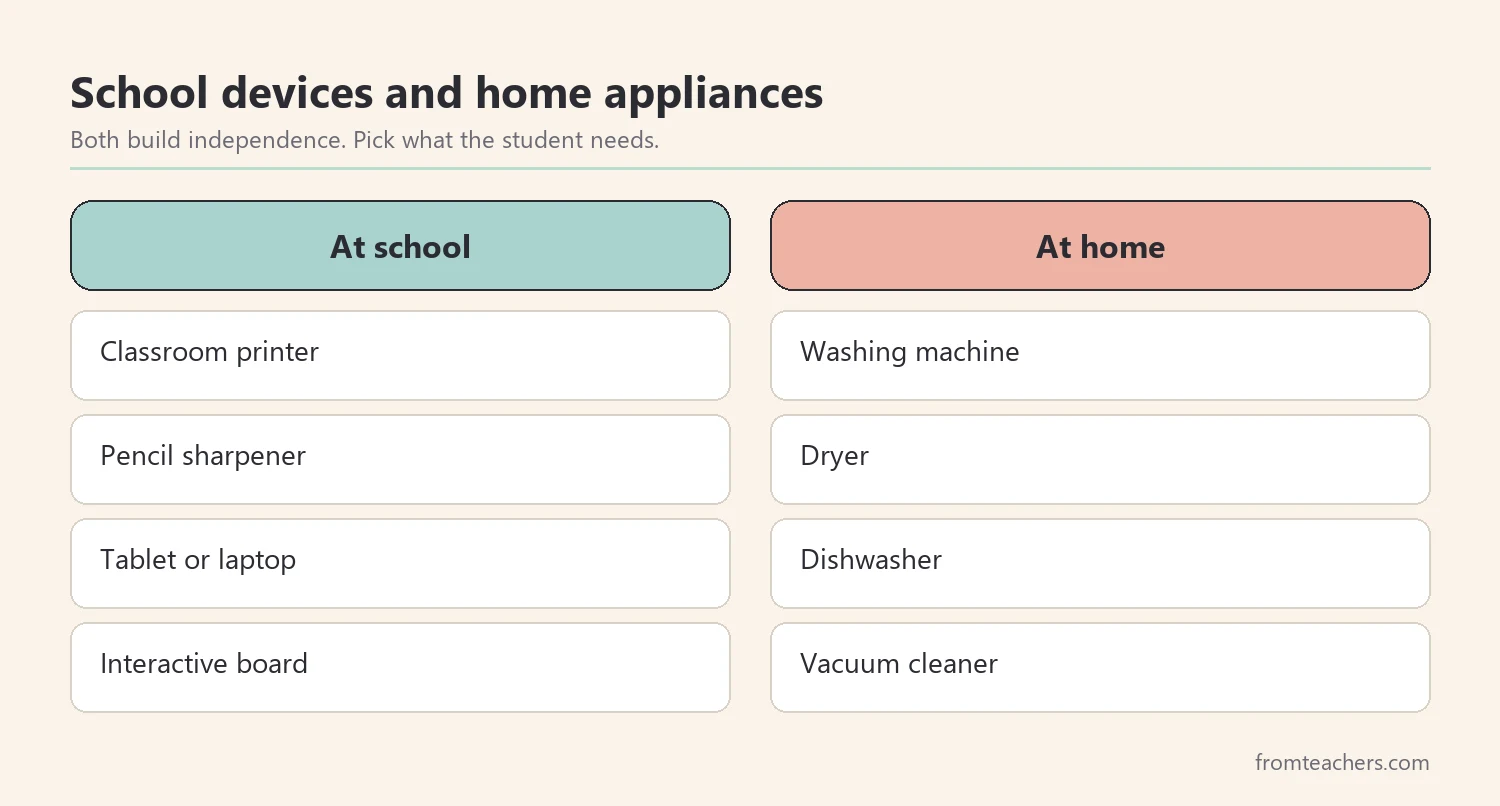
Meanwhile, start small. One school device and one home appliance is a good first pair. Students do not need to learn how to use appliances of every kind in one term. Success with one device builds confidence and gives you a pattern to repeat.
Worked example. Jordan is a fictional 16-year-old in a vocational life skills program. His teacher, Ms. Okafor, talks with his family and learns that he wants to help with laundry. At school, he often waits for help at the printer. She chooses the classroom printer and the washing machine as his first two devices.
2. Teach a safety routine before every device
Next, put safety first. Before teaching students how to use appliances, teach a short safety routine that applies to every machine. The same few checks, done the same way each time, become a habit that protects the student when no adult is close by.
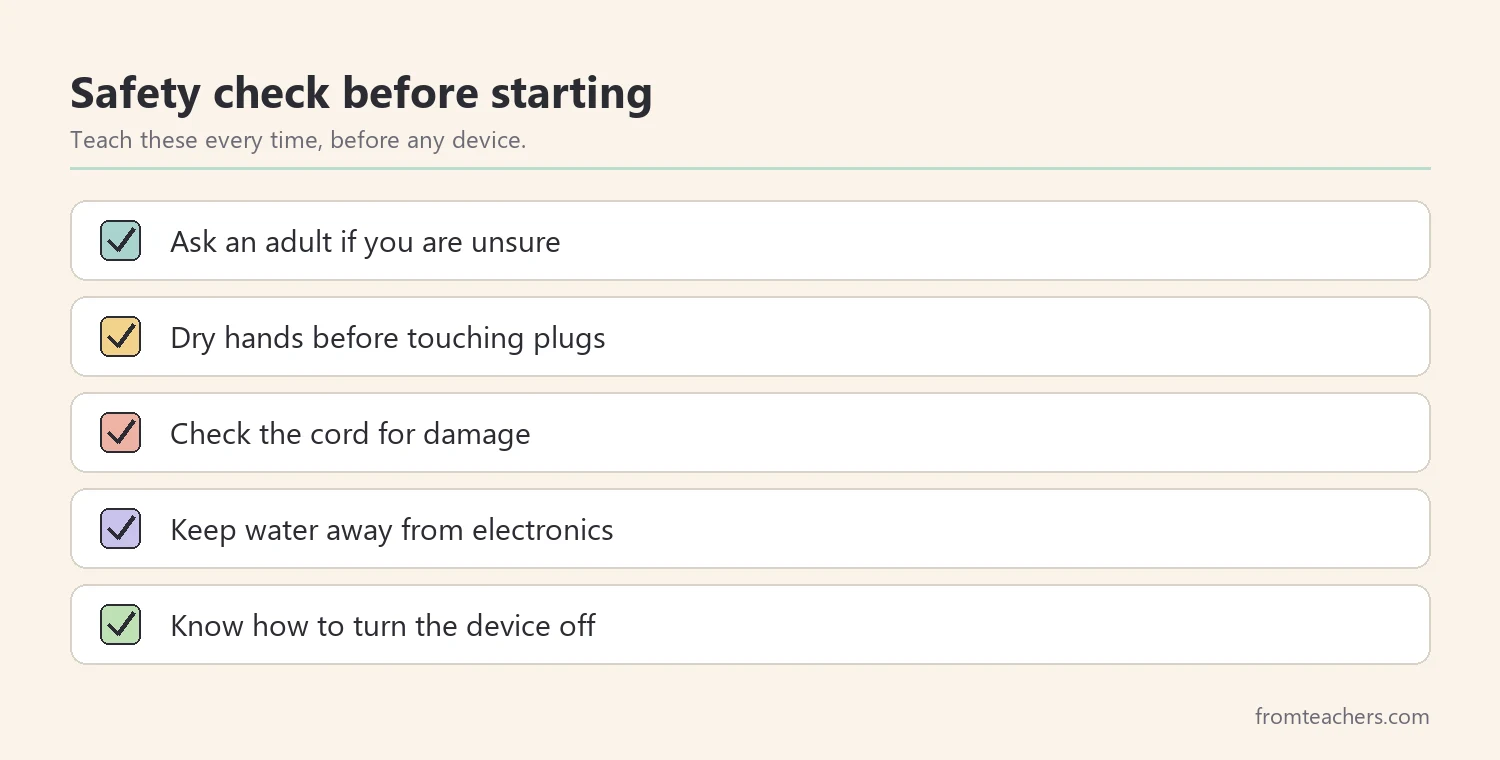
For example, a safety routine might include asking an adult when unsure, drying hands before touching plugs, checking cords for damage, keeping water away from electronics, and knowing how to turn the device off. Keep the list short enough to remember.
Then, teach what to do when something goes wrong. Students should know a simple plan: stop, turn the device off if it is safe to do so, and get an adult. Practice this plan out loud. “If it beeps or smells strange, I stop and get help.”
Also, follow your school’s rules. Some appliances may only be used with an adult present, and some settings, such as high heat, may be off-limits. Check school policy and the device’s own instructions before you begin.
In addition, model calm caution, not fear. Students learn how to use appliances more confidently when adults treat machines as useful tools that need care. A calm tone helps anxious students try.
Worked example. Ms. Okafor teaches Jordan a five-point safety check and posts it near the laundry area. Before each practice, Jordan reads the check aloud. On the third day, he notices a twisted cord on the classroom printer and tells her before plugging it in.
3. Break down how to use appliances step by step
Next, turn each device into a short list of steps. Teachers call this a task analysis. Watch yourself use the device and write down each action in order. Then cut the list to the steps that really matter, usually five to eight.
Then, write each step as a short action with a verb. Clear verbs are the heart of teaching how to use appliances. “Load the clothes.” “Add detergent.” “Press start.” Use the same words each time you prompt. Consistent language helps students learn how to use appliances without having to decode different instructions from different adults.
Also, add a picture for each step. Pictures are one of the simplest ways to show how to use appliances. A clear image of the button, dial, or door shows exactly what to do. Numbered, illustrated steps are easier to follow than a block of text, especially for students who are still building reading skills.
In addition, mark the tricky parts. Every device has one or two steps where students often make mistakes, such as overfilling a washer or choosing the wrong print setting. Add a short tip next to those steps.
If you would like ready-made visuals, the how-to-use machine and device posters give students ten step-by-step guides for everyday technology and household appliances, with numbered, illustrated steps for life skills and vocational teaching.
Meanwhile, test the steps yourself. Follow only the written steps and see if anything is missing. If you have to guess, the student will too.
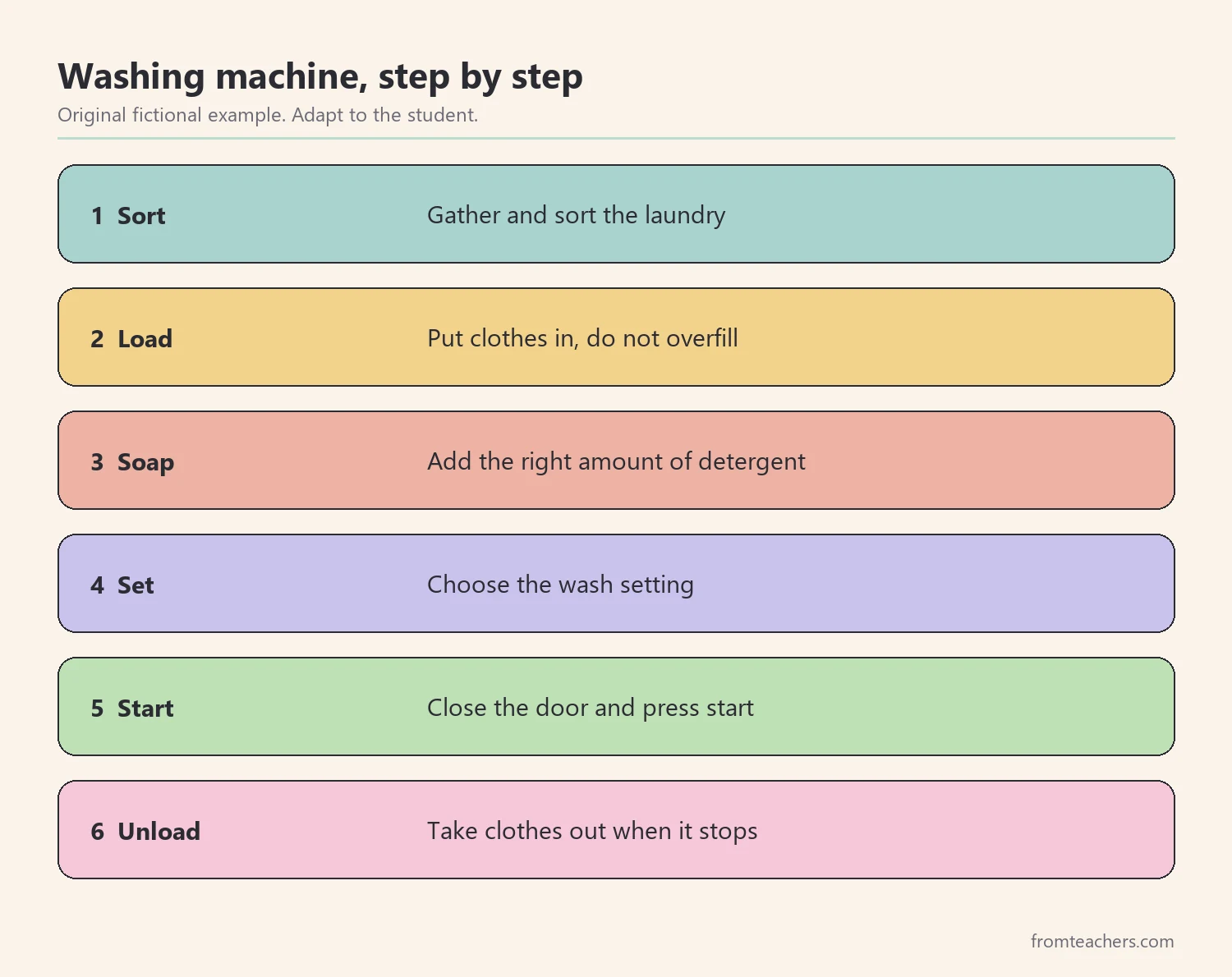
Worked example. Ms. Okafor writes six steps for the washing machine: sort, load, add soap, choose the setting, press start, and unload. She notices Jordan tends to pack the drum full, so she adds a tip to step two: “Leave space at the top.”
4. Practice how to use appliances in real settings
Next, move from talking to doing. Students learn how to use appliances best by using them, on the real device and in the real place. Practicing on a picture or a toy model can be a first step, but real practice is where skills stick.
First, model the whole task. Stand at the device with the poster and do each step while saying it aloud. Then let the student try with you beside them. Point to the poster and give short prompts only when needed.
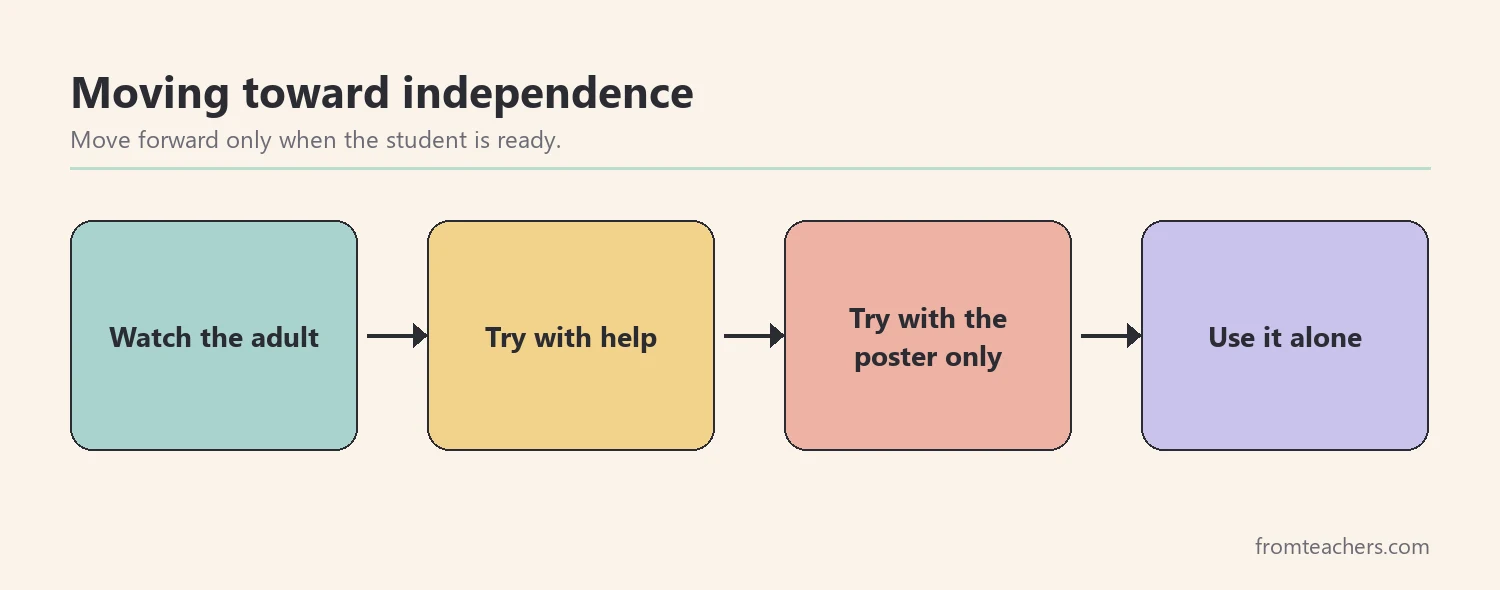
Then, fade your help in a clear order. Start with full support, move to help on certain steps, then to the poster alone, and finally to independent use. Move forward only when the student is ready, not on a fixed schedule.
Also, practice often and briefly. A few minutes on the printer each day works better than one long session a week. For appliances like washers, link practice to real needs, such as washing classroom towels or aprons from a cooking lesson.
In addition, plan for the real world. Different printers and washing machines have different buttons. Once the student knows one model well, show a second model and point out what is the same and what is different. This helps the skill transfer to new places.
Worked example. Jordan practices the printer every morning when he prints his schedule. He washes the class towels on Thursdays. After three weeks, he uses the printer with the poster only. For the washer, he still needs help choosing the setting.
5. Check skills and build independence
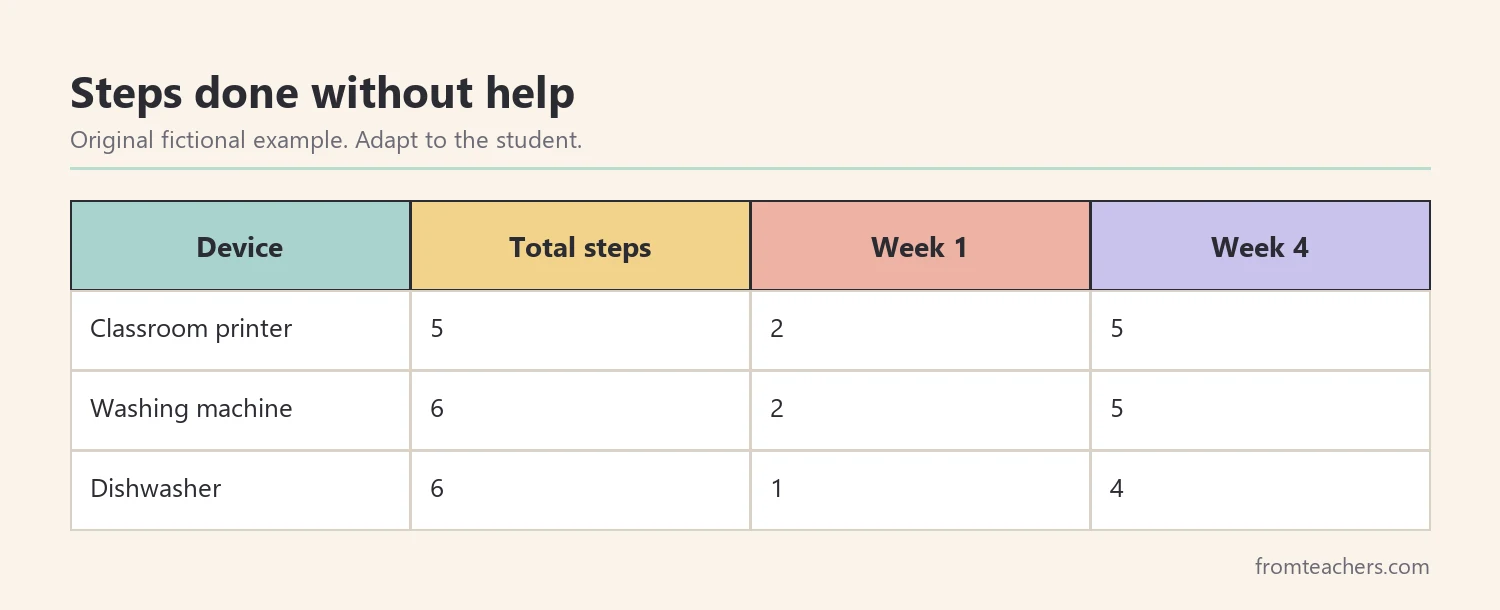
Finally, keep a simple record of how the student is learning how to use appliances. For each device, list the steps and mark which ones the student did without help. A weekly check is enough to see progress and spot the steps that need more teaching.
Adjust teaching to the data
Next, read the pattern. Students learn how to use appliances at different speeds, so compare each student only with their own earlier record. If a student always misses the same step, reteach it, change the picture, or add a tip. Steady progress means you can keep going. If progress stalls, check whether the device, the setting, or the poster needs to change.
Also, share progress with the student and family. Many students enjoy seeing their own record. Families can continue practice at home, which matters a lot for household appliances. A short note, such as “Jordan used the washer on his own except for the dial,” gives families a clear next step.
In addition, add devices one at a time. When one device is steady, add the next. Students who learn how to use appliances one by one, with clear steps each time, build a strong base for later skills.
Then, connect the skills to goals. If the student has an IEP with transition goals, share your records with the team. Skills like using a washing machine or dishwasher can support goals for independent living when the team agrees.
Worked example. Ms. Okafor tracks three devices for Jordan. On the printer, he went from 2 of 5 steps in week 1 to all 5 in week 4. His washing machine score rose from 2 of 6 to 5 of 6. On the dishwasher, added later, he went from 1 of 6 to 4 of 6.
Supporting practice at home
Home practice makes a big difference. Families are often the best partners for teaching how to use appliances, because the laundry and dishes happen at home every week. Families can use the same steps and words the school uses. A copy of the poster near the washer or dishwasher helps the student follow the routine at home.
Also, keep expectations realistic while your child learns how to use appliances. At first, the student might do only one or two steps while a parent does the rest. That is still progress. Over time, the student can take on more of the task.
Common mistakes and how to avoid them
- Skipping safety. Students may form unsafe habits. Fix: teach the same safety check before every device.
- Doing it for the student. It is faster, but the student does not learn. Fix: wait, point to the poster, and give a short prompt.
- Too many steps at once. Long lists overwhelm. Fix: keep each device to five to eight clear steps.
- Practicing only on pictures. Skills may not transfer. Fix: practice on the real device as often as possible.
- Teaching one model only. New machines can confuse. Fix: show a second model and compare.
- No record. Progress is hard to see. Fix: count steps done without help each week.
Questions teachers and parents ask about how to use appliances
At what age can students learn how to use appliances?
It depends on the student, the device, and safety rules. Younger students can learn simple classroom devices like a pencil sharpener or tablet. Older students often work on household appliances as part of life skills or transition goals.
Should students use appliances without an adult?
Only when the team, the school, and the family agree it is safe. Many students move gradually from full supervision to an adult nearby, and then to independent use for specific devices.
How do I teach a student who cannot read the steps?
Use pictures for each step and model often. Point to each picture as you say the step. Many students learn the sequence through repeated practice with clear visuals.
What if the school does not have a washing machine?
Start with the devices you do have, and share the steps with families for home practice. Some programs also practice in community settings when that is part of the student’s plan.
How long does it take to learn one device?
There is no fixed time. Some students learn a simple device in days, while others need weeks. Track steps done without help and adjust teaching based on what you see.
Related reading: Building Workplace Readiness: Essential Skills for Career Success, Navigating the Path to Adulthood: Building Essential Life Skills, and Boost Access and Independence: An Assistive Technology Toolkit for Special Education.
A companion resource for how to use appliances:
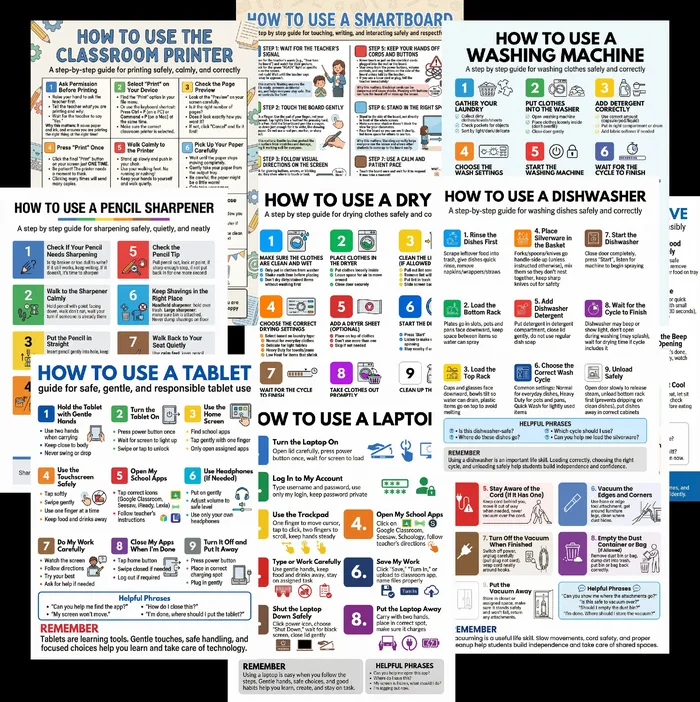
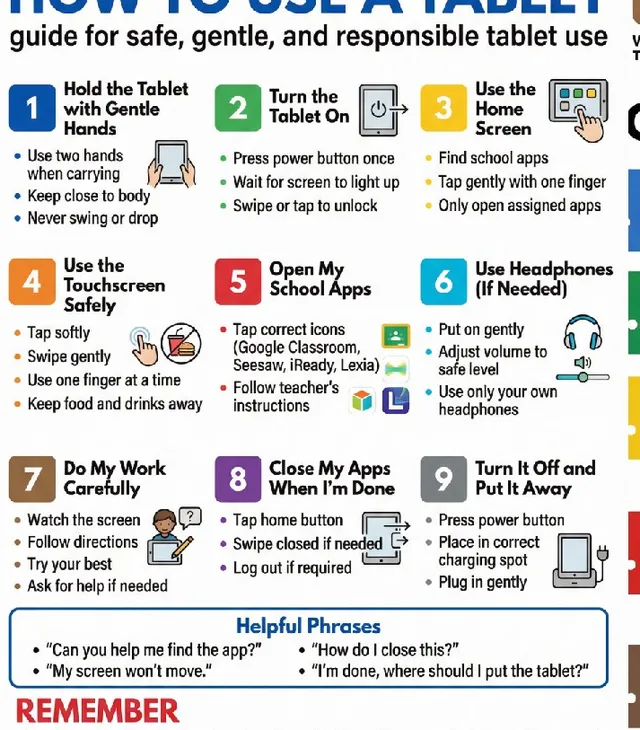
How-To-Use Machine and Device Posters: 10 life skills classroom posters with numbered, illustrated steps for everyday technology and household appliances, for life skills and vocational teaching.
Sources and scope
- IRIS Center, Vanderbilt University: free modules on evidence-based practices and secondary transition.
- IDEA, U.S. Department of Education: the law behind special education and transition services.
- National Technical Assistance Center on Transition: resources on preparing students for life after school.
- U.S. Consumer Product Safety Commission: general information on household product safety.
This guide covers teaching students to use common classroom devices and household appliances step by step. It does not replace device manufacturer instructions, school safety policies, or the decisions of the student’s support team.
Key takeaways
- Choose devices the student uses at school, at home, or at work.
- Teach one safety routine before every device.
- Break each device into short, numbered, illustrated steps.
- Practice on real devices and fade support in a clear order.
- Track steps done without help and add devices one at a time.










Leave a Comment