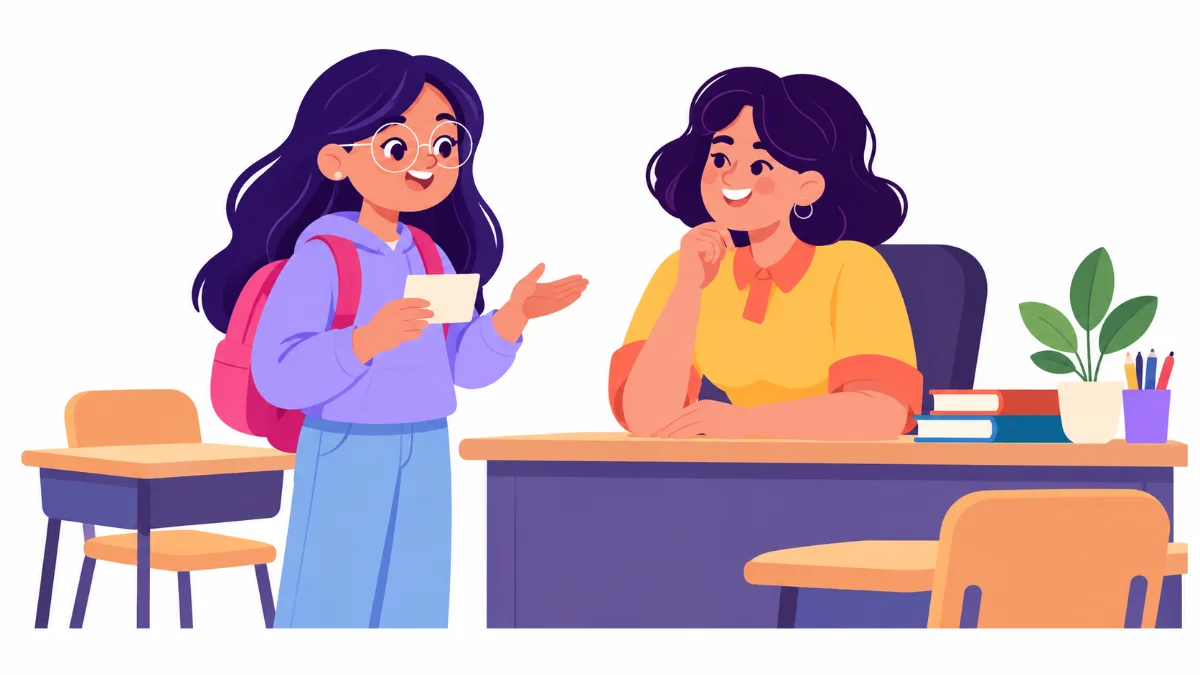

Teaching self-advocacy phrases for students gives them the exact words they need when a support is missing or a task feels impossible. Picture a grade 8 science class. Ava, who has an IEP for reading with extended time and text read aloud, receives a long test with no audio version. She knows she is entitled to it, but she freezes, says nothing, and rushes through the test alone.
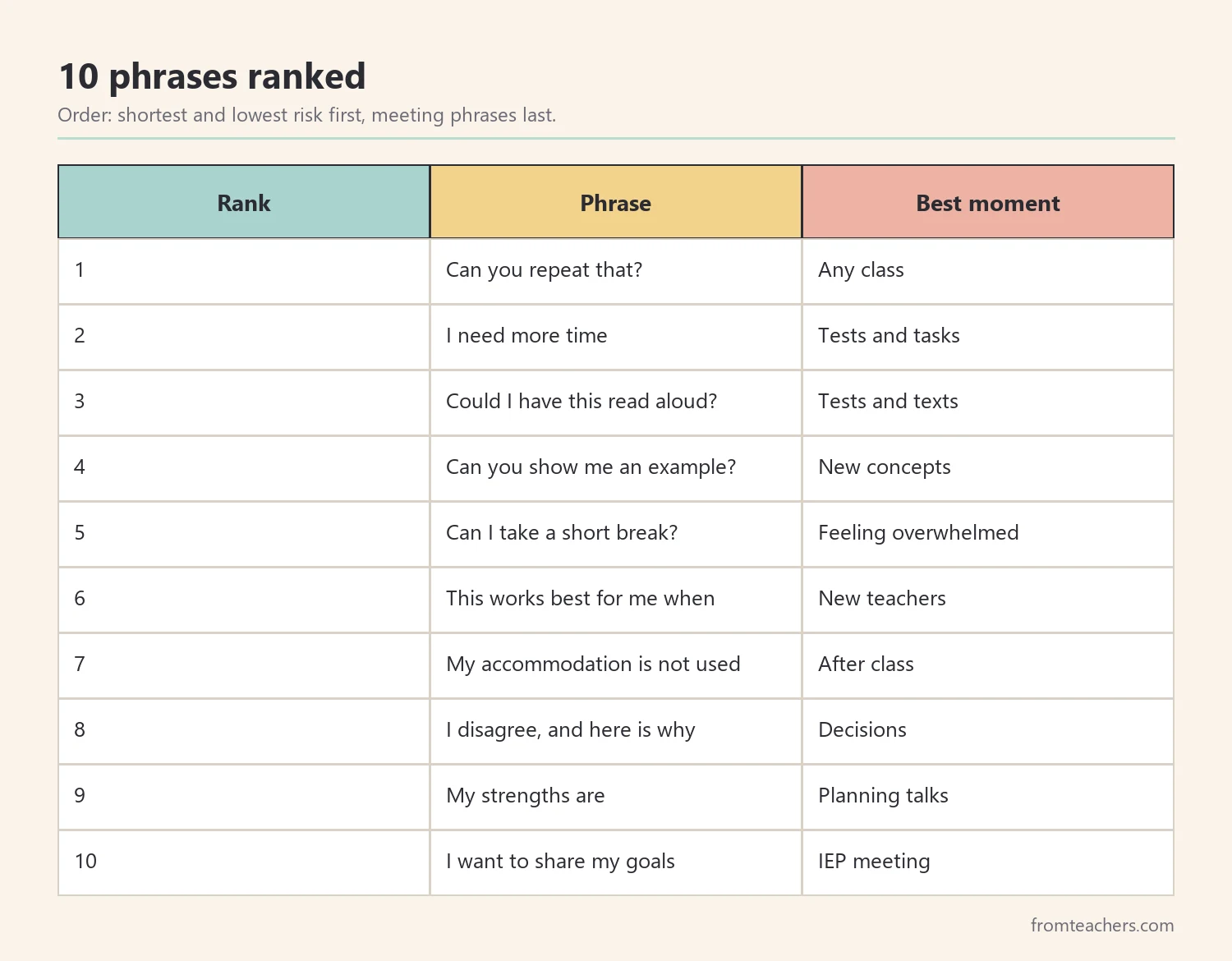
This list ranks ten phrases from the easiest and lowest-risk to say, to the more complex ones used in meetings. By the end, you will know which phrases to teach first, how to practice them through role play, and how to track whether students actually use them in class.
Examples are fictional. Adapt to the student’s goals, age, and agreed supports. This is guidance, not legal advice.
At a glance
- Start with short, low-risk requests like asking for repetition.
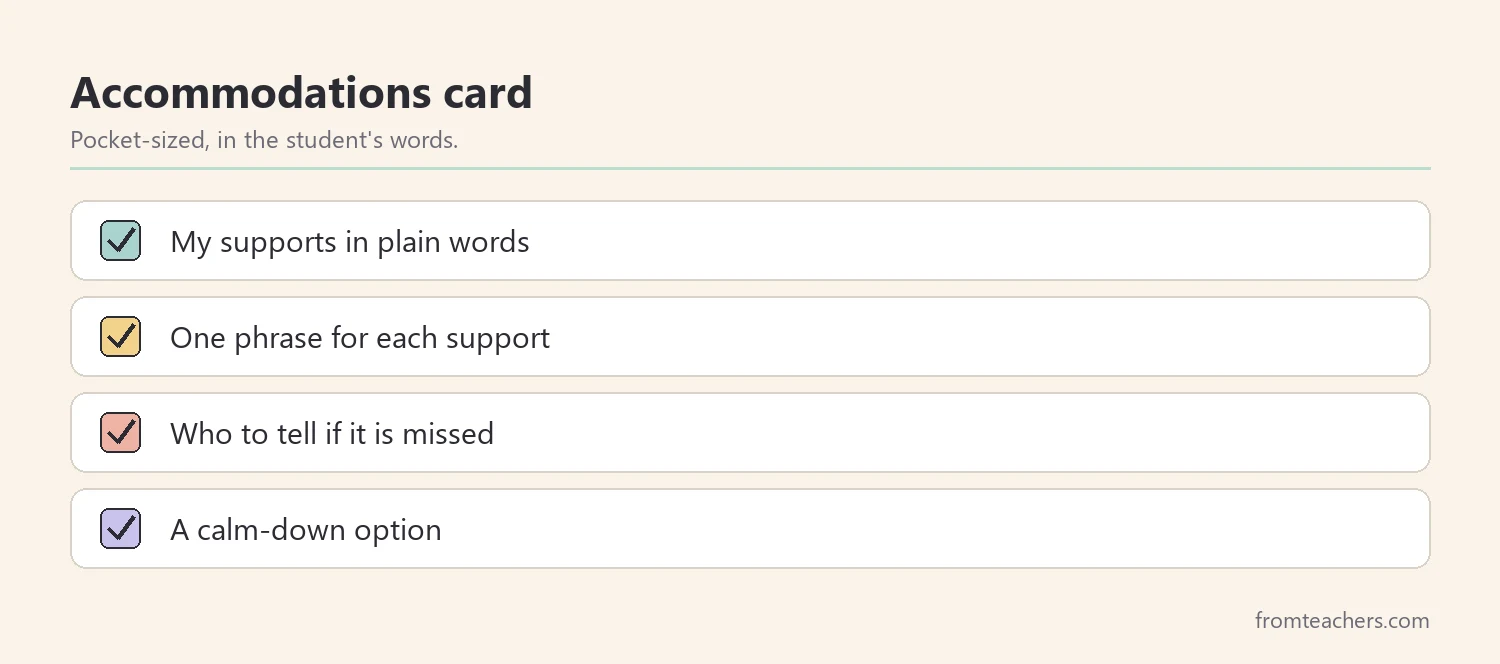
- Give students a card listing their own accommodations.
- Practice every phrase through role play first.
- Move toward meeting phrases as confidence grows.
- Track requests and outcomes weekly.
How we ranked these phrases
We did not rank phrases by importance, because every student’s needs differ. Instead, we used two practical criteria. First, how short and low-risk the phrase is to say in front of others. Second, how often the situation comes up in a typical school day. Phrases near the top can be used in almost any class. Phrases near the bottom are for planned conversations, such as IEP meetings.
Therefore, the list also works as a teaching sequence. Start at the top, and move down as the student gains confidence.
The ready-made option: a self-advocacy intervention toolkit
If you want structured lessons rather than building each one yourself, the self-advocacy skills toolkit for students with disabilities provides 20 ready-to-use intervention guides. Topics include understanding self-advocacy, rights and accommodations under IDEA, the ADA, and Section 504, communicating effectively with teachers and staff, developing self-confidence, identifying strengths and challenges, decision-making, and handling disagreements.
Each page walks through a common issue, a clear strategy, and the purpose behind it, which makes it easy to pick the right guide when a challenge comes up.
1. “Can you repeat that, please?”
When to use it: when directions or information went by too fast.
Why it works: it is short, polite, and common, so it rarely draws attention.
How to teach it: model it yourself in class. Then praise students who use it.
Example: Ava practiced asking her math teacher to repeat directions. The first time, her voice was quiet, but the teacher responded warmly, which made the next time easier.
2. “I need more time to finish this.”
When to use it: when a task is longer than expected, or when extended time is an agreed accommodation.
Why it works: it names the need clearly without long explanations.
How to teach it: practice with a timer during a low-stakes task. Let the student request time before the timer ends.
Example: During a quiz, Ava raised her hand and said, “I need more time to finish this.” Her teacher nodded and moved her to the extended time group.
3. “Could I have this read aloud?”
When to use it: when text read aloud is an accommodation and it has not been provided.
Why it works: it asks for a specific support, which is easier for teachers to act on than “I can’t do this.”
How to teach it: write the student’s accommodations on a small card so they can name them accurately.
Example: After practicing, Ava used this phrase on her next science test. The teacher arranged audio within minutes.
4. “I don’t understand this part. Can you show me an example?”
When to use it: when a concept is unclear.
Why it works: it points to the exact problem and asks for a specific kind of help.
How to teach it: teach students to point to the part they do not understand. That makes the request concrete.
Example: Ava pointed to a graph and asked for an example. Her teacher drew a simpler graph, and Ava finished the problem.
5. “Can I take a short break?”
When to use it: when the student feels overwhelmed or needs to reset.
Why it works: it helps the student manage their own regulation instead of waiting until things escalate.
How to teach it: agree on how breaks work: where, how long, and how to return. A break card can help students who find speaking hard in the moment.
Example: Ava used a break card during a long writing task. After five minutes, she returned and finished.
6. “This works best for me when…”
When to use it: when telling a new teacher or substitute what helps.
Why it works: it frames the need positively and shares useful information.
How to teach it: help students complete the sentence ahead of time, for example, “This works best for me when I can hear the text as well as read it.”
Example: Ava introduced herself to a substitute with this phrase. The substitute thanked her and checked the plan.
7. “My accommodation is not being used. Can we talk about it?”
When to use it: when an agreed support keeps being missed.
Why it works: it is direct and calm, and it invites a conversation rather than a confrontation.
How to teach it: role play this one several times, and practice choosing a good moment, such as after class.
Example: Ava spoke to her history teacher after class. Together, they agreed that tests would come with audio.
8. “I disagree, and here is why.”
When to use it: when the student has a different view on a decision.
Why it works: disagreeing respectfully is a key life skill and a big step in self-advocacy.
How to teach it: practice a simple structure: state the view, give one reason, suggest an option.
Example: Ava told her case manager, “I disagree with removing extended time, because I still need it for long readings. Could we try it for one more term?”
9. “My strengths are… and I find it hard to…”
When to use it: in meetings, transition planning, or conversations with new teachers.
Why it works: knowing strengths and challenges is the foundation of self-advocacy.
How to teach it: help the student list strengths and challenges first, then practice saying them.
Example: Ava said, “My strengths are science and speaking. I find it hard to read long texts quickly.”
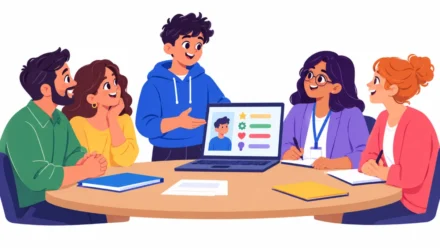
10. “I would like to share my goals at my IEP meeting.”
When to use it: before an IEP meeting.
Why it works: it moves the student from receiving decisions to taking part in them.
How to teach it: prepare a short script or slide with goals and preferences. Practice with a trusted adult.
Example: Ava shared two goals at her IEP meeting. Her family said it was the first meeting where she spoke for herself.
Practicing self-advocacy phrases for students through role play
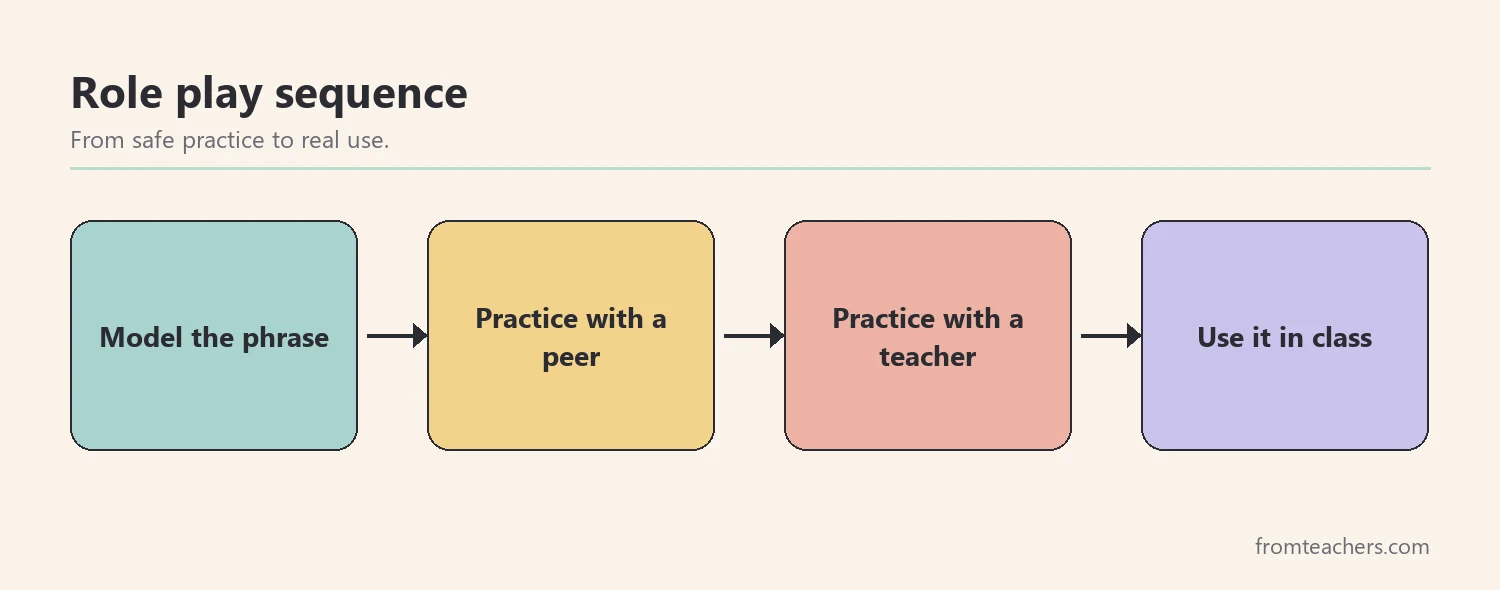
Phrases stick when students practice them in safe settings before they need them. Role play is one of the simplest ways to do that. Set up a short scene, let the student practice the phrase, then switch roles so they hear how it sounds.
In addition, start with low-stakes scenes, such as asking a classmate to repeat something. Then move to scenes with teachers. Finally, practice the meeting phrases with a trusted adult.
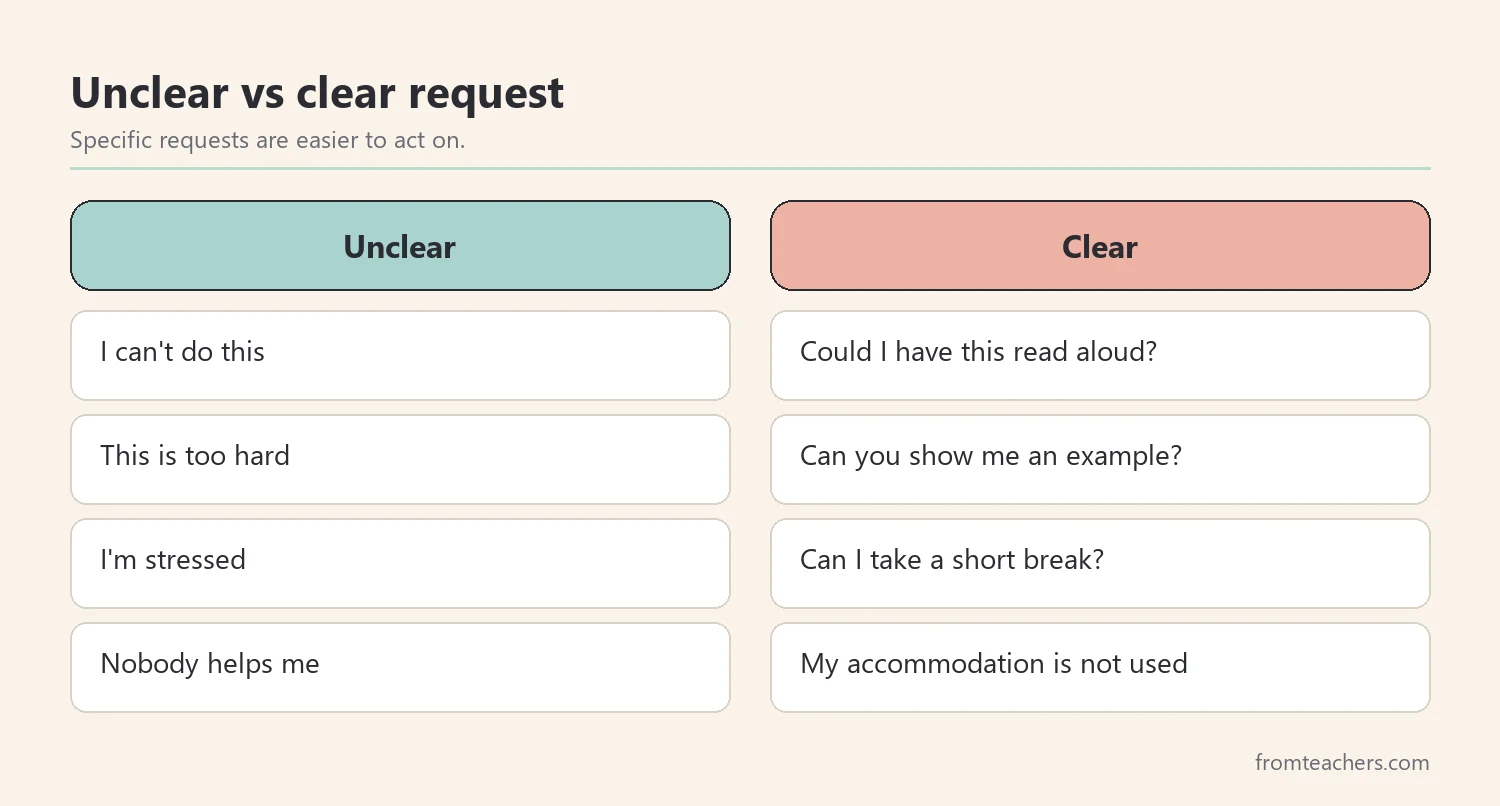
Also, give feedback on tone and timing, not just words. A calm voice, eye contact or a glance toward the person, and choosing a good moment all make a phrase more effective.
Preparing staff to respond well
Self-advocacy only works if adults respond in a way that rewards the effort. A student who finally asks for more time and receives a sigh or a public comment may not try again for weeks. Therefore, share the plan with the teachers and support staff who work with the student.
First, tell staff which phrases the student is practicing. Next, ask them to respond briefly and warmly, for example, “Thanks for telling me. Let’s set that up.” Then, if a request cannot be met in the moment, ask staff to explain when it will be handled, so the student does not feel dismissed.
In addition, celebrate attempts, not only perfect requests. A quiet “Can you repeat that?” is a real step for a student who used to stay silent. Over time, those small wins build the confidence needed for harder conversations.
Tracking whether students use the phrases
Practice only matters if it transfers to real classes. Ask the student and teachers to note when a phrase is used and what happened. A simple weekly tally is enough.
Here is Ava’s record over five weeks.
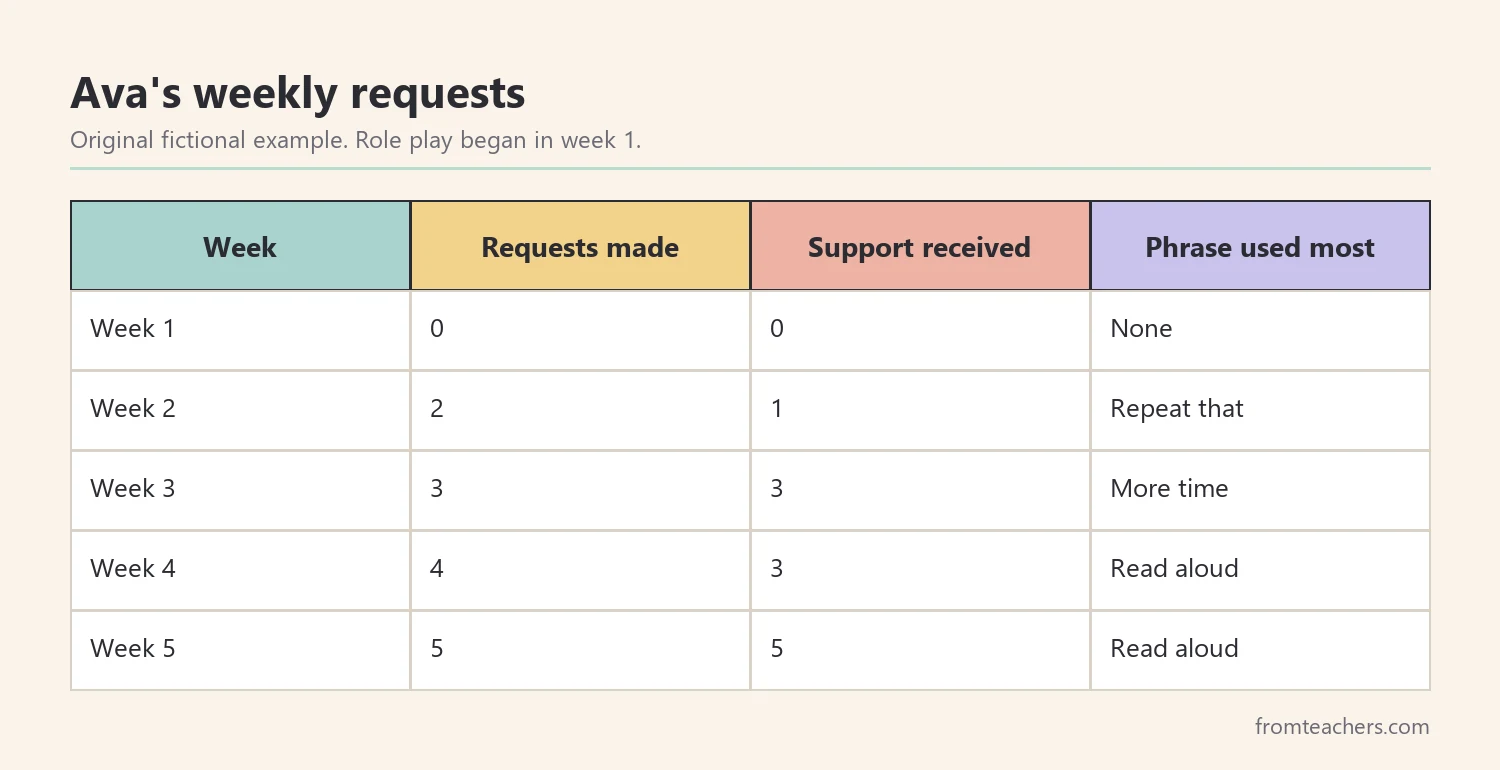
The pattern showed real growth. Ava moved from no requests to several per week, and more of them led to the support she needed. As a result, her team planned for her to lead part of her next IEP meeting.
Common mistakes and how to avoid them
- Teaching phrases without practice. Fix: role play each phrase several times.
- Starting with the hardest phrases. Fix: begin with short, low-risk requests.
- Students not knowing their own accommodations. Fix: give them a simple accommodations card.
- Adults reacting negatively to requests. Fix: share the plan with staff and ask them to respond warmly.
- Doing the advocacy for the student. Fix: step back gradually so the student speaks first.
Questions teachers and parents ask about self-advocacy phrases for students
At what age should students start self-advocacy?
Simple requests can start in early elementary school. More complex skills, such as speaking at IEP meetings, often develop in middle and high school. Transition planning in the IEP usually starts by age 16 under IDEA, and some states start earlier.
What if a student is too anxious to speak?
Offer alternatives: a break card, a written note, or a private signal. Speaking can come later as confidence grows.
Should students know they have an IEP or 504 plan?
Many educators and families believe students benefit from understanding their own supports, in age-appropriate language. Discuss the best approach with the family.
What if a teacher refuses a request?
Teach students to stay calm, accept the moment, and tell their case manager or family afterward. The team can then follow up.
How can parents help at home?
Families can practice phrases during everyday situations, such as ordering food or asking a store clerk for help. Real-world practice builds confidence that carries into school.
Related reading: Navigating the Path to Adulthood: Building Essential Life Skills, Building Workplace Readiness, and Accommodations vs Modifications in Special Education.
You may also need: Classroom Accommodation Feedback Form IEP 504 Effectiveness Tracker.
A companion resource for self-advocacy phrases for students:
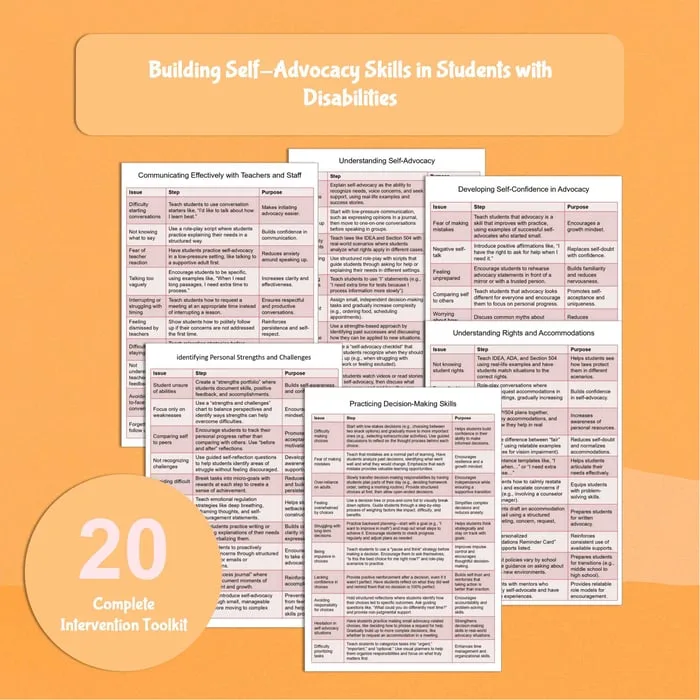
Self-Advocacy Skills for Students with Disabilities SPED Intervention Toolkit: 20 intervention guides covering self-advocacy, rights and accommodations under IDEA, the ADA and Section 504, communicating with staff, self-confidence, strengths and challenges, decision-making and conflict resolution, each with the issue, a strategy and its purpose.
Sources and scope
- Center for Parent Information and Resources: information for families on IEPs, transition, and student involvement.
- National Technical Assistance Center on Transition: resources on transition planning and self-determination.
- Understood.org: practical articles on teaching kids to self-advocate.
- Wrightslaw: information on special education law and advocacy for families.
This list covers practical phrases and practice routines for student self-advocacy. It does not provide legal advice about rights under IDEA, the ADA or Section 504; consult your school team or a qualified advocate for specific questions.
Key takeaways
- Teach self-advocacy phrases for students from short and low-risk to complex.
- Give students a card with their own accommodations.
- Practice each phrase through role play before real use.
- Track requests and outcomes with a simple weekly tally.
- Step back gradually so the student speaks first.
Leave a Comment