
Gross motor games can change the feel of a whole school day. Picture a first grader who slides off his chair during reading, bumps into classmates in line, and seems to have endless energy by ten in the morning. Telling him to sit still rarely works for long. A few minutes of planned, playful movement often helps him settle and get back to learning.
After reading this guide, you will be able to plan a short movement session, run warm-ups, animal walks, balance games, crossing-the-midline games, and heavy work, end with a calm cool-down, and notice which games help a child focus. The steps work for brain breaks, PE warm-ups, and sensory support at school or home.
Examples are fictional. Adapt to the student’s goals and agreed supports. This is guidance, not a diagnosis.
At a glance
- Gross motor games build strength, balance, and coordination while giving the body movement it needs.
- A simple session has three parts: warm up, main games, cool down.
- Animal walks, balance games, and crossing-the-midline games target different skills.
- Heavy work, such as pushing and carrying, can help many children feel calmer.
- Watch how a child focuses after each game and keep what works.
1. Start with why and pick a goal for gross motor games
First, decide what you want the movement to do. Some days, you need energy out before a quiet lesson. Other days, you want to build balance or core strength. The goal shapes which gross motor games you choose.
Meet Jayden, a fictional first grader. Jayden loves recess and races everywhere. However, he tires quickly when sitting on the rug, often leans on others, and trips more than peers. His teacher, Ms. Carter, notices he focuses much better right after PE.
Next, pick one main goal per session. For Jayden’s class, Ms. Carter chose two goals for the month: help everyone reset before reading, and build balance and core strength for children like Jayden who slump while sitting.
| Goal | Good game types | When to use |
|---|---|---|
| Release energy | Animal walks, jumping games | Before a quiet lesson |
| Build balance and core | Balance games, bridges | PE warm-up or morning meeting |
| Calm and organize | Heavy work, slow stretches | After recess or a busy transition |
Put this step into practice
Then, think about space and safety. Clear chairs, check the floor, and agree on a stop signal, such as a raised hand or a short chime. Children with physical disabilities or medical needs should have games adapted with input from the family and specialists, such as an occupational or physical therapist.
After that, choose a time of day. Many classes do best with a short session first thing in the morning, another after lunch, and quick one-minute breaks between lessons. Short and regular usually beats long and rare.
Finally, explain the “why” to students. A short line works: “Our bodies need to move so our brains can focus.” Children cooperate better when they know movement is part of learning, not a reward or a punishment.
2. Warm up the body first
In addition, every session of gross motor games should start with a short warm-up. Warming up gets muscles ready and helps children shift from sitting to moving safely.
First, keep it simple. Two or three minutes is enough for young children. March in place, reach high and low, roll shoulders, and do slow arm circles. Then add a few gentle jumps.
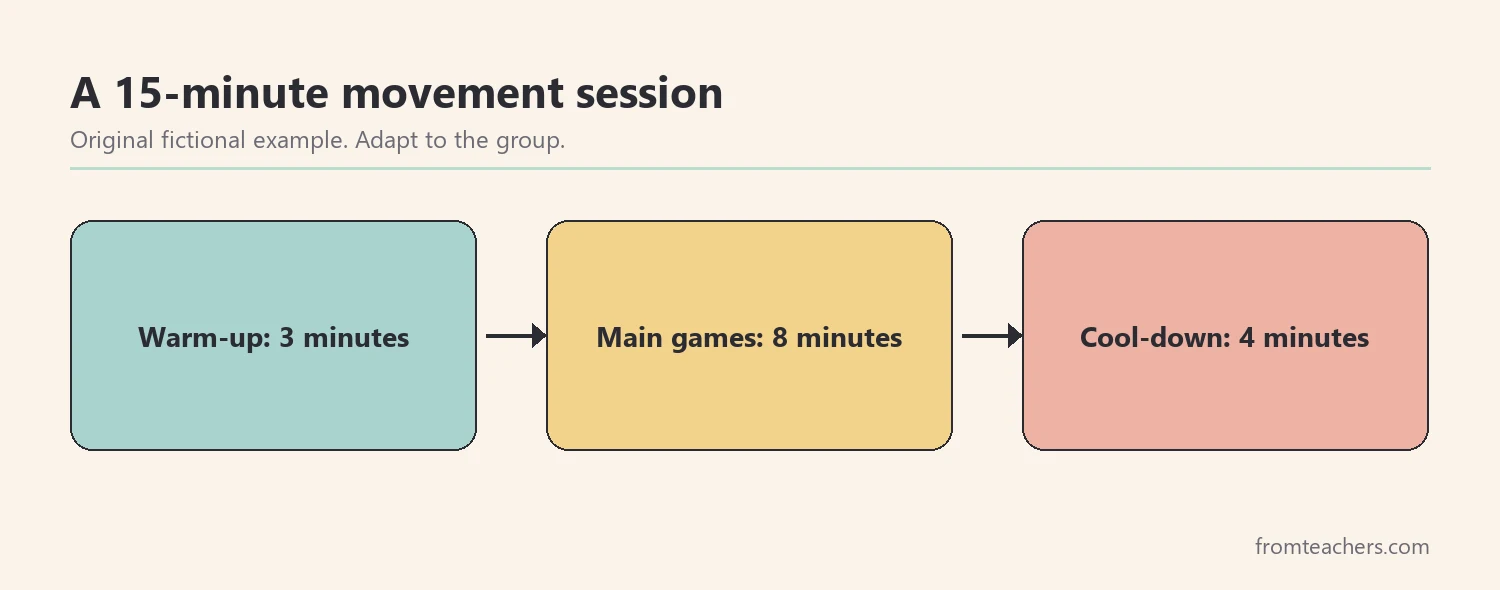
Next, use a plan with a clear time. Ms. Carter’s movement session lasts 15 minutes in total: a 3-minute warm-up, 8 minutes of main games, and a 4-minute cool-down. The same structure every time helps children know what comes next.
Then, make it playful. “Follow the leader” works well, with a student leader picking moves from a short picture list. Music with a steady beat also helps children move together.
Finally, watch for children who hang back. Some may feel unsure about moving in front of peers. Offer a choice of two moves or let them be the “music helper” first. For Jayden, warm-up was easy; the challenge was slowing down enough to follow the moves, so Ms. Carter gave him the job of counting the marches out loud.
3. Play animal walks and balance gross motor games
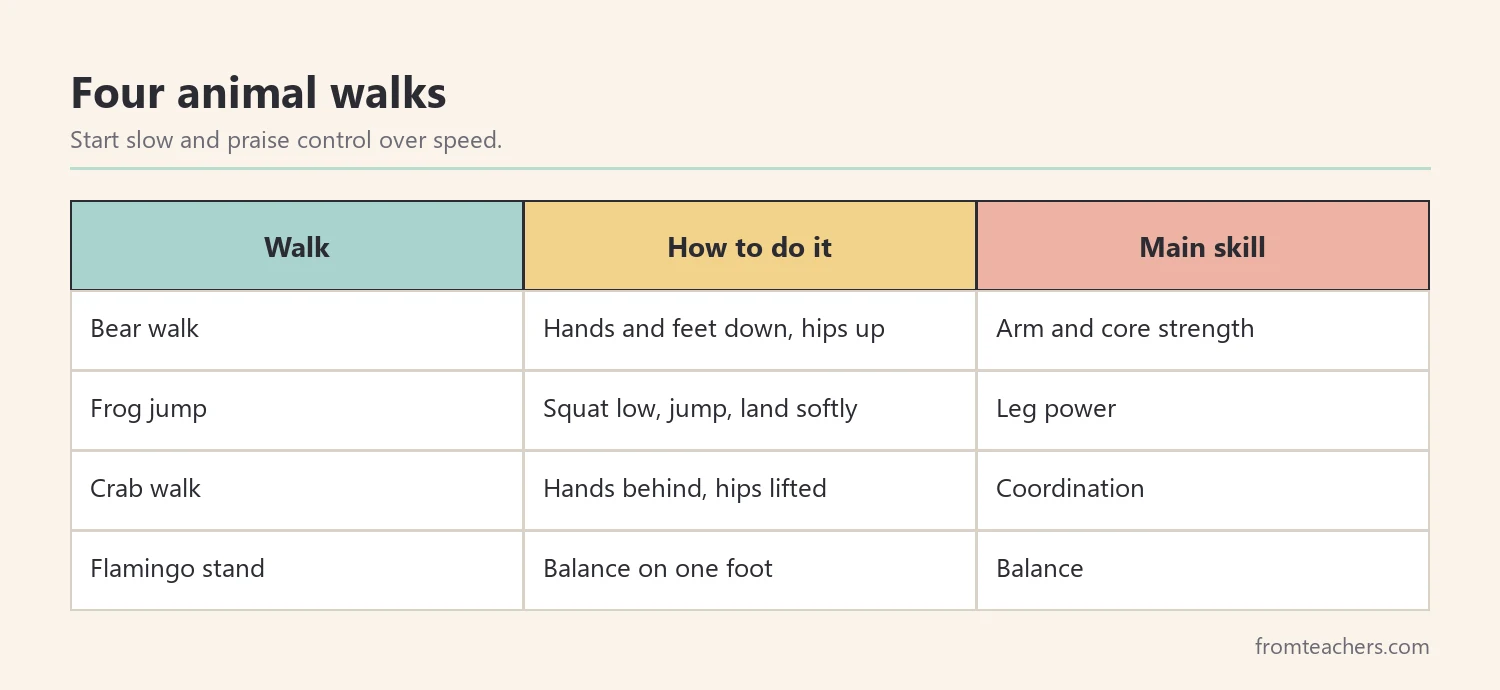
Animal walks are some of the most loved gross motor games. They build strength, coordination, and body awareness, and children enjoy pretending.
First, teach a few classic walks:
- Bear walk: hands and feet on the floor, hips up, walk forward.
- Frog jump: squat low, then jump forward and land softly.
- Crab walk: sit, hands behind, lift hips, and walk sideways or backward.
- Flamingo stand: balance on one foot, then switch.
Next, add balance games. Walk heel-to-toe on a tape line. Freeze like a statue on one foot when the music stops. Carry a beanbag on the head across the room. For instance, Jayden wobbled at first on the tape line, so Ms. Carter made the line wider with two strips of tape side by side.
Then, make games easier or harder. Shorten the distance, hold a hand, or let children use a wall for support. Later, close the eyes for a few seconds during a balance hold, or add a second task like catching a soft ball.
In addition, rotate the games. Using the same four animal walks every day becomes boring. Swap one walk each week to keep interest high. The Move, Groove, Play gross motor games guide organizes animal walks, balance and core, and other sections in one visual guide, which makes weekly swaps quick to plan.
Finally, focus on quality over speed. Racing tends to make movements sloppy. Instead, say “slow and strong” and praise control.
4. Add crossing-the-midline games and heavy work
Two more kinds of gross motor games are especially useful: games that cross the midline and games that give heavy work.
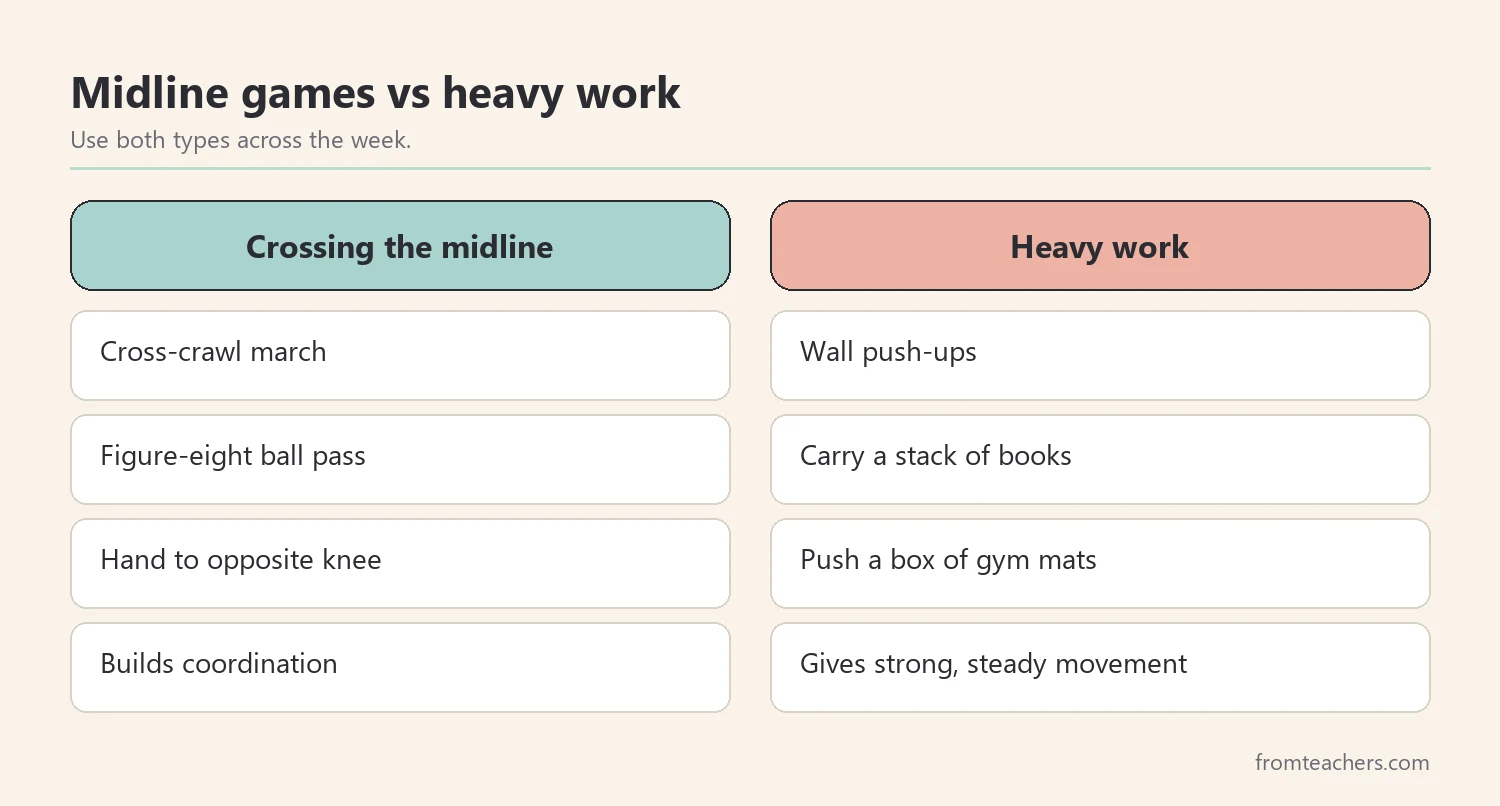
First, crossing the midline means moving a hand or foot across the center of the body. Many everyday tasks, like reaching across a desk, use this skill. Simple games include touching the right hand to the left knee, cross-crawl marching, and passing a ball around the waist in a circle.
Next, heavy work means activities where muscles push, pull, or carry. Many teachers and therapists use heavy work to help children feel more settled. Examples include wall push-ups, carrying a stack of books to the library cart, pushing a box of gym mats, and tug games with a strong towel.
| Game | Type | Classroom version |
|---|---|---|
| Cross-crawl march | Midline | March and touch the opposite knee |
| Figure-eight ball pass | Midline | Pass a ball around both legs |
| Wall push-ups | Heavy work | Ten slow pushes against the wall |
| Book carry | Heavy work | Carry a stack of books to a shelf |
A quick classroom example
Then, use these games at the right time. Heavy work often helps after recess or before a quiet task. For Jayden, Ms. Carter added a “job”: carrying the class book bin to the reading corner before reading. He walked with it slowly and then sat down more easily.
Also, keep the language simple and visual. A picture card for each move helps children who are still learning English, children who struggle with spoken directions, and children who need to see a move before trying it. Point to the card, model the move once, and then let the class try.
Finally, ask your team. If a child has sensory or motor goals, an occupational therapist can suggest which gross motor games fit best and how often to use them.
5. Cool down and track what works
For example, a cool-down helps children move from active play back to learning. Without it, the class may stay wound up after the gross motor games.
First, slow everything down. Use slow stretches, deep breaths, and quiet music. Try “melting snowman”: stand tall, then slowly melt to the floor over a count of ten. End with one calm breath together.
In addition, use the cool-down to bridge into the next lesson. While children are still on the floor, give one quiet direction, such as “When you stand up, walk to your reading spot.” For Jayden, this short bridge made the move from frog jumps to reading much smoother, because the next step was clear before he stood up. Over time, the class learned that every round of gross motor games ends the same calm way.
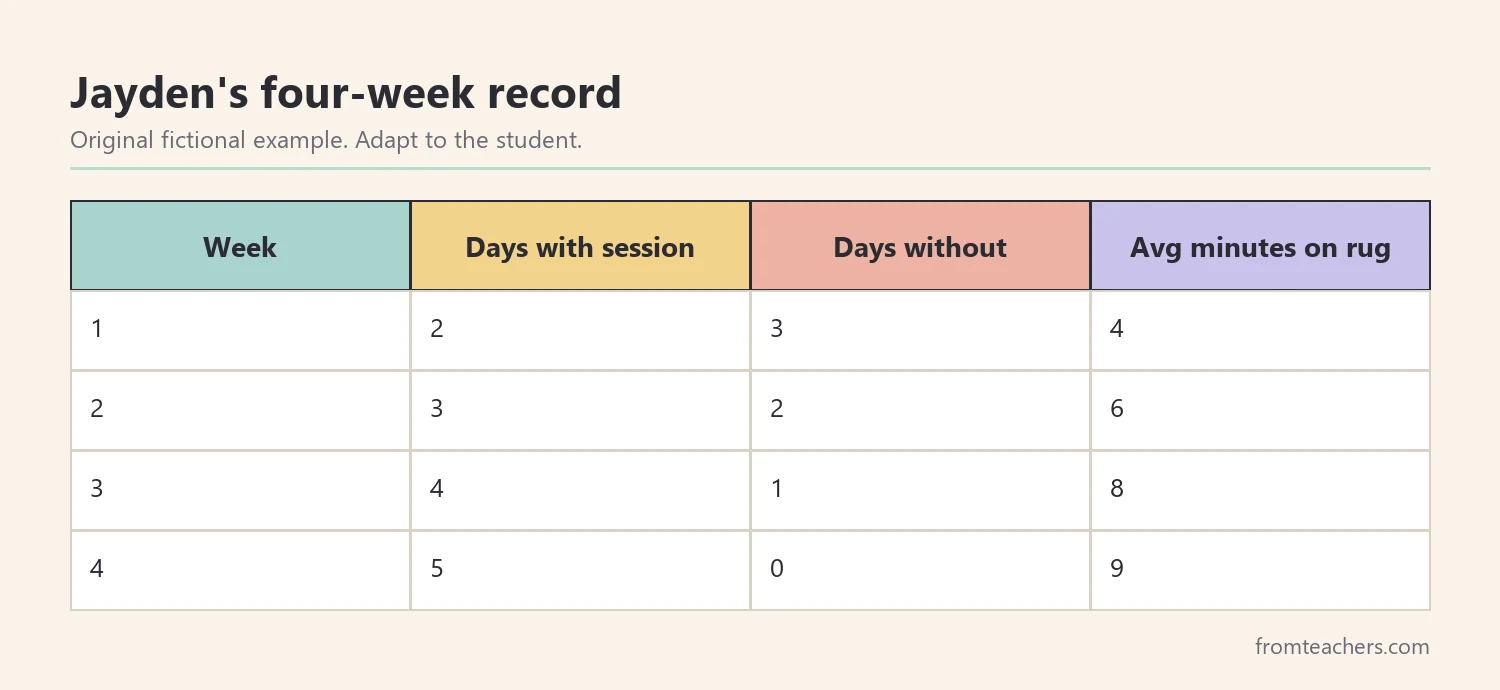
Next, track a simple sign of focus. For Jayden, Ms. Carter counted how many minutes he stayed on the rug during the first part of reading, on days with and without a movement session before it.
| Week | Days with session | Days without | Average minutes on rug |
|---|---|---|---|
| 1 | 2 | 3 | 4 |
| 2 | 3 | 2 | 6 |
| 3 | 4 | 1 | 8 |
| 4 | 5 | 0 | 9 |
Make it stick
In this example, each week has five school days, so the two middle columns always add up to five. Jayden’s average time on the rug rose as more days started with movement. This does not prove cause, but it helps the team decide what to keep. Other things, like sleep, a new seat, or a calmer week, can also change focus, so look at the pattern rather than one number.
Next, note which games you used. A short list next to the tally, such as “frog jumps, book carry, melting snowman,” lets you compare weeks later and spot the games that seem to help most.
Then, ask the students. “Which game helped your body feel ready?” Children often know. Jayden said the book carry helped most, and the class voted frog jumps as their favorite.
Finally, share with families. Send home two gross motor games each month that children can play in a small space, like wall push-ups and flamingo stands. Home practice builds the same skills and gives families a fun routine.
Common mistakes and how to avoid them
- Mistake: Skipping the cool-down. Fix: Always end with a few minutes of slow stretches and breathing.
- Mistake: Using movement only as a reward. Fix: Plan movement as part of the day, for every child.
- Mistake: Turning every game into a race. Fix: Praise control and quality over speed.
- Mistake: Running the same games for months. Fix: Swap one game each week.
- Mistake: Ignoring safety and individual needs. Fix: Clear the space, agree on a stop signal, and adapt with the team.
Questions teachers and parents ask about gross motor games
What are easy gross motor games for small classrooms?
Animal walks in place, flamingo stands, cross-crawl marching, and wall push-ups all fit small spaces. Clear a strip of floor and keep moves short.
How long should a movement session last?
A short session of about 10 to 15 minutes works well for most young classes. Even two or three minutes between lessons can help.
Are gross motor games only for students with special needs?
No. All children benefit from planned movement. Gross motor games work as brain breaks, PE warm-ups, and sensory support for the whole class.
What is heavy work and why does it help?
Heavy work means pushing, pulling, or carrying something with some resistance. Many teachers and therapists use it to help children feel more settled before quiet tasks.
How can parents use gross motor games at home?
Parents can pick two or three games, like bear walks down the hallway or carrying groceries, and use them daily. Short, regular play helps more than one long session.
Related reading: Managing Sensory Overload: Practical Strategies for Autism and ADHD, Effective ADHD Classroom Strategies to Support Student Success, and 5 Practical Teaching Tips to Boost Classroom Focus and Learning.
A companion resource for gross motor games:
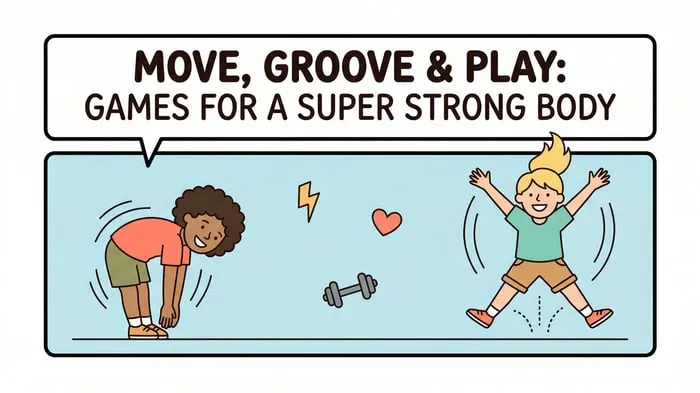
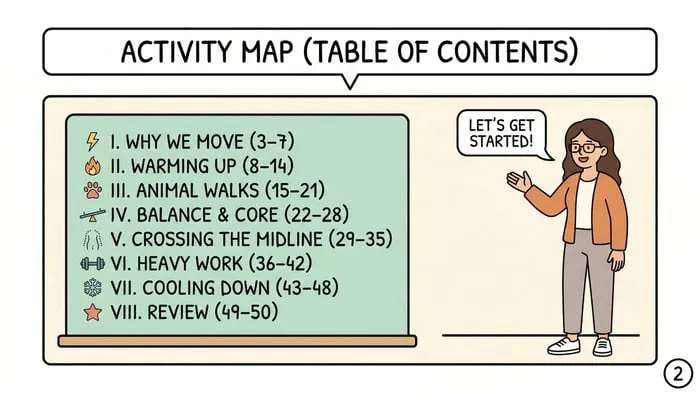
Move, Groove, Play: Gross Motor Games for Kids: a 50-page visual guide covering why we move, warming up, animal walks, balance and core, crossing the midline, heavy work, and cooling down, for brain breaks, PE warm-ups, or sensory support.
Sources and scope
- SHAPE America: the Society of Health and Physical Educators, with resources on physical education for children.
- American Occupational Therapy Association: background on occupational therapy, motor skills, and sensory support.
- American Physical Therapy Association: information on physical therapy and movement for children.
- NAEYC: the National Association for the Education of Young Children, with guidance on play and active learning.
This guide covers everyday movement games for classrooms and homes. It does not cover therapy plans, injury care, or medical advice, which belong to qualified professionals and the child’s team.
Key takeaways
- Gross motor games work best with one clear goal per session.
- Use the same three-part structure: warm up, main games, cool down.
- Mix animal walks, balance, midline, and heavy work games for different skills.
- Adapt games for safety and individual needs with the team.
- Track one simple sign of focus and keep the games that help.



Leave a Comment