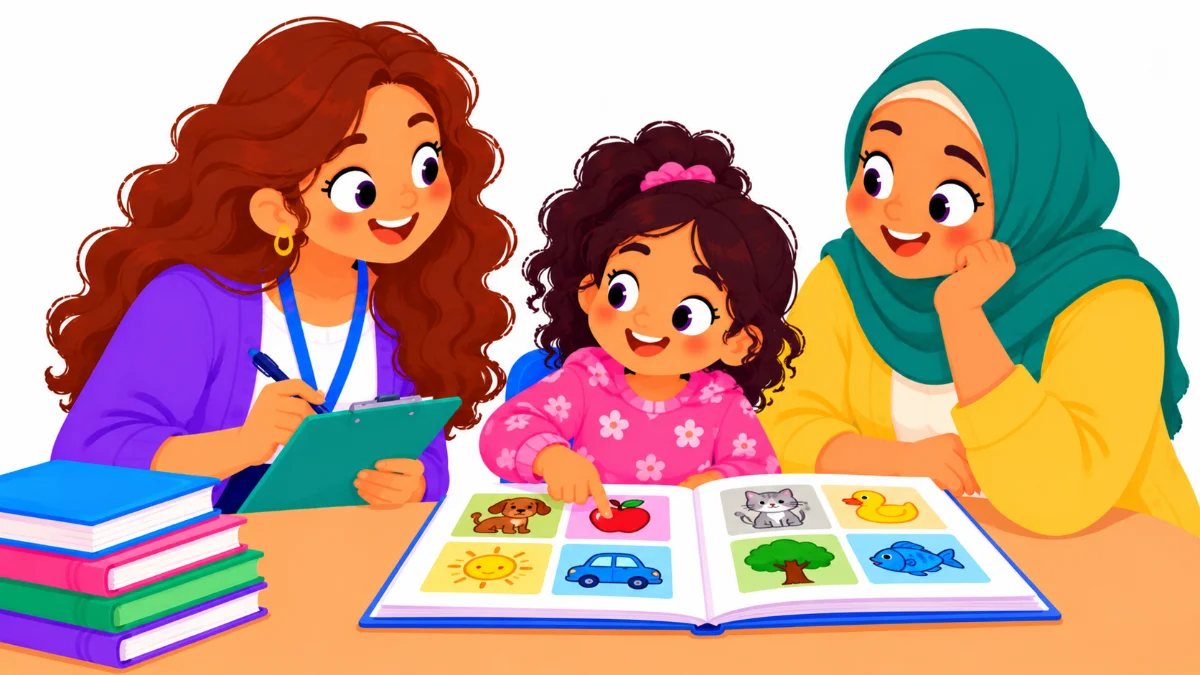

Culturally responsive inclusion means making sure students with disabilities, and their families, feel that school understands who they are. Picture a fifth grader with a reading disability whose parents never come to IEP meetings. The team may decide the family is not interested. In reality, the meeting notices were in English only, the times clashed with work shifts, and no one had asked how the family preferred to talk.
After reading this guide, you will be able to check your own assumptions, learn from families directly, adapt materials and behavior responses, communicate in accessible ways, and look at assessment with fresh eyes. One fictional student appears in every step so you can see the ideas in action.
Examples are fictional. Adapt to the student’s goals and agreed supports. This is guidance, not a diagnosis.
At a glance
- Culturally responsive inclusion starts with adults noticing their own assumptions.
- Families are the best source of information about their culture, language, and priorities.
- Materials, behavior plans, and assessments all carry cultural messages worth checking.
- Communication works better when families can choose the language, time, and format.
- Small, steady actions build trust more than one big event.
1. Begin culturally responsive inclusion with your own lens
Every educator brings a cultural lens to school. It shapes what we call polite, what we see as respectful eye contact, how loud is too loud, and what an “involved parent” looks like. Most of the time, we do not notice this lens at all. Yet it quietly shapes every plan we write, which is why it matters so much for culturally responsive inclusion.
That is why culturally responsive inclusion begins with reflection rather than with students. Before planning for a child, take a few minutes to ask yourself honest questions. What do I expect families to do to show they care? Which behaviors do I tend to read as disrespect? Whose stories are missing from my classroom library?
There is no need to feel guilty about the answers. Instead, treat them as information. Once you see a pattern in your own thinking, you can check it before it affects a student.
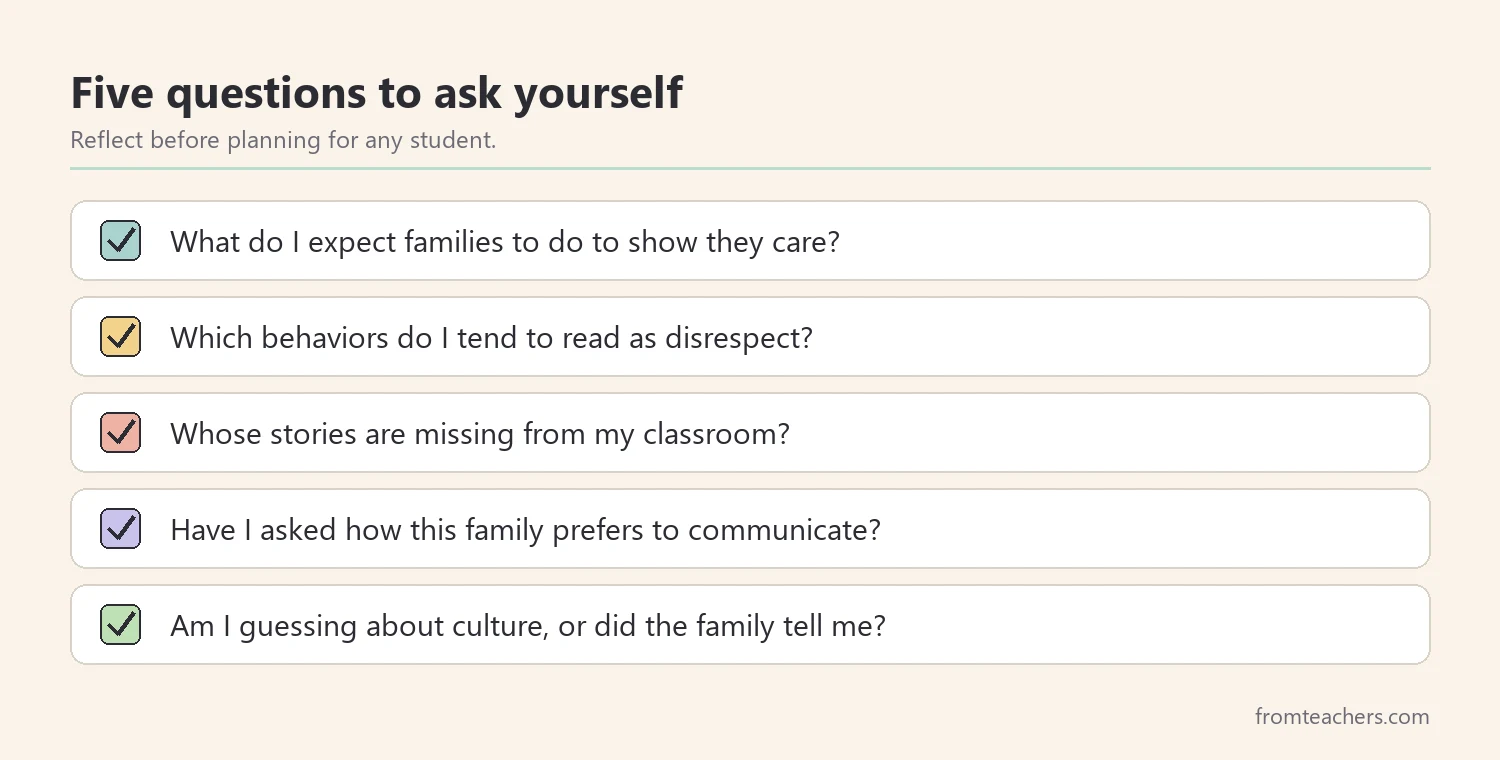
Worked example: Samir’s team reflects
Samir is a fictional fifth grader with a specific learning disability in reading. His family speaks Arabic at home and recently moved to the district. His special education teacher, Mr. Grant, notices that he has written “parent did not attend” on two meeting records. During reflection, he realizes he never asked the family about language, schedule, or preferred contact method. That realization shapes every step that follows.
Professional development can support culturally responsive inclusion too. Many districts offer sessions on bias and cultural awareness, and teams can also read and discuss materials together at a regular meeting.
2. Learn about each family for culturally responsive inclusion
Culture is personal. Two families from the same country, faith, or language group can have very different routines, beliefs about disability, and hopes for their children. As a result, the safest source of information is always the family itself.
In culturally responsive inclusion, start with an open, friendly conversation rather than a form. Ask about strengths, interests, languages used at home, and what the family wants school to know. Avoid questions that feel like a test of the family’s background. Above all, listen more than you talk.
Useful questions include:
- What does your child enjoy most at home?
- Which languages does your family use, and with whom?
- How would you like us to contact you, and at what times?
- What are your hopes for your child this year?
- Is there anything about your family or traditions you would like teachers to know?
Next, compare what you assumed with what you learned. This simple comparison often shows why a plan was not working.
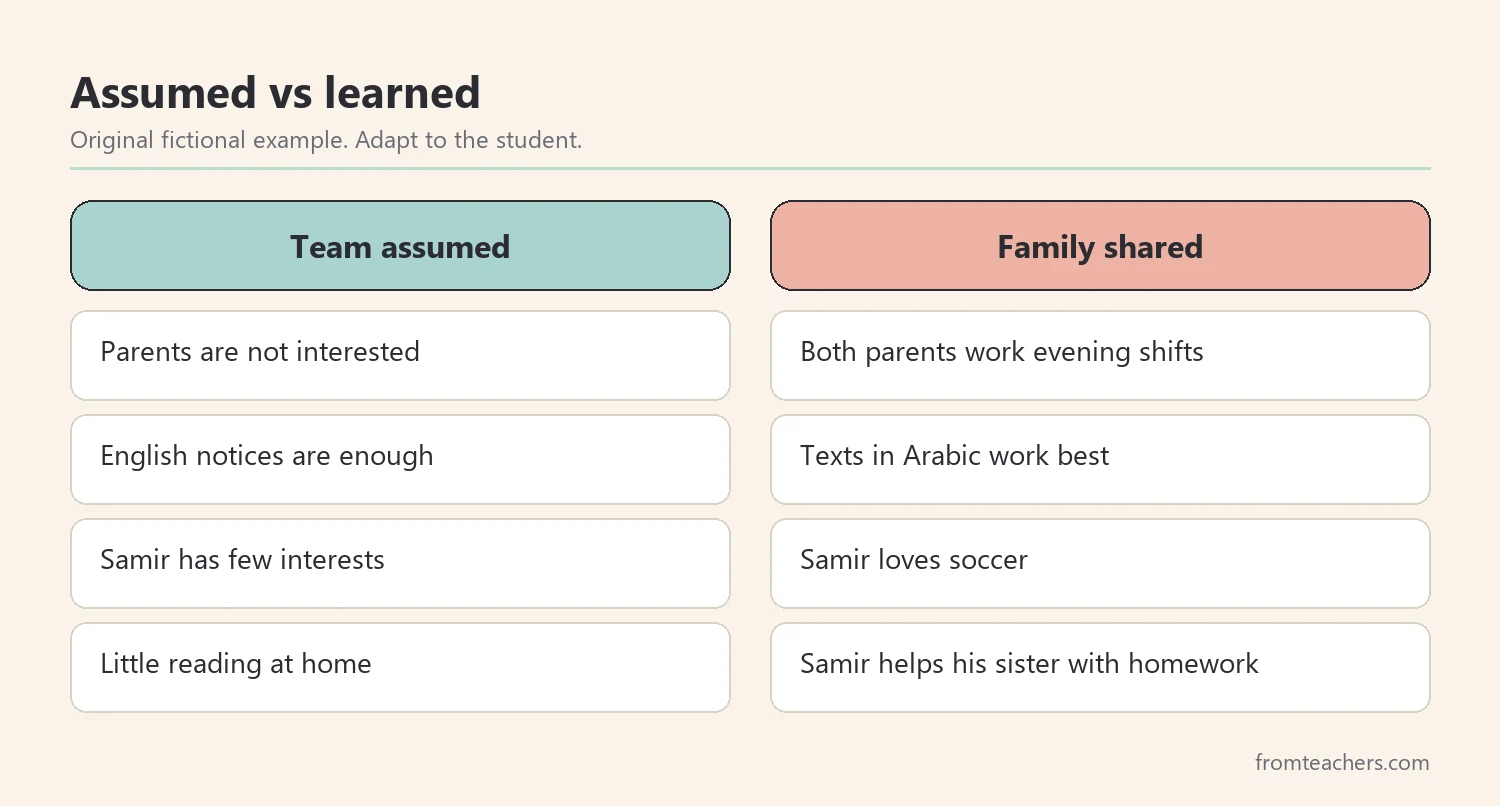
For Samir, Mr. Grant arranges a phone call with an interpreter. The family explains that both parents work evening shifts, that they prefer text messages in Arabic, and that Samir loves soccer and helps his younger sister with homework. Mr. Grant writes down only what the family shares and does not add guesses.
3. Build culturally responsive inclusion into materials and lessons
Students learn more easily when they can see themselves in what they read and discuss. In addition, classmates benefit from meeting people and places that differ from their own. Culturally responsive inclusion therefore includes a careful look at classroom materials.
Begin with a quick audit. Look at your read-alouds, word problems, posters, and examples. Ask whose names, foods, families, and homes appear most often, and whose appear rarely. Then add a few materials at a time, especially ones that show people with disabilities in active, everyday roles.
Also, connect lessons to students’ lives without putting any child on the spot. Invite all students to share a family tradition or a favorite food, and let each child choose how much to say. Never ask one student to speak for a whole culture.
For students with disabilities, keep the agreed supports in place while you adapt content. A student who needs decodable text still needs decodable text. However, the topic can be soccer, a family recipe, or a city the student knows.
In Samir’s case, Mr. Grant uses short decodable passages about soccer for fluency practice. He also adds two picture books with Arabic and English text to the classroom library. Samir begins borrowing one to read with his sister, which gives him extra practice at home.
If your team wants a structured starting point, the culturally responsive special education strategy tables include sections on building cultural awareness and on developing cultural awareness through curriculum, with a strategy and a reason for each need.
4. Respond to behavior with cultural context
Behavior is one of the areas where cultural misunderstandings cause the most harm. Looking down when an adult speaks may be a sign of respect in one family and read as defiance at school. Speaking loudly may be normal and warm at home and labeled disruptive in class.
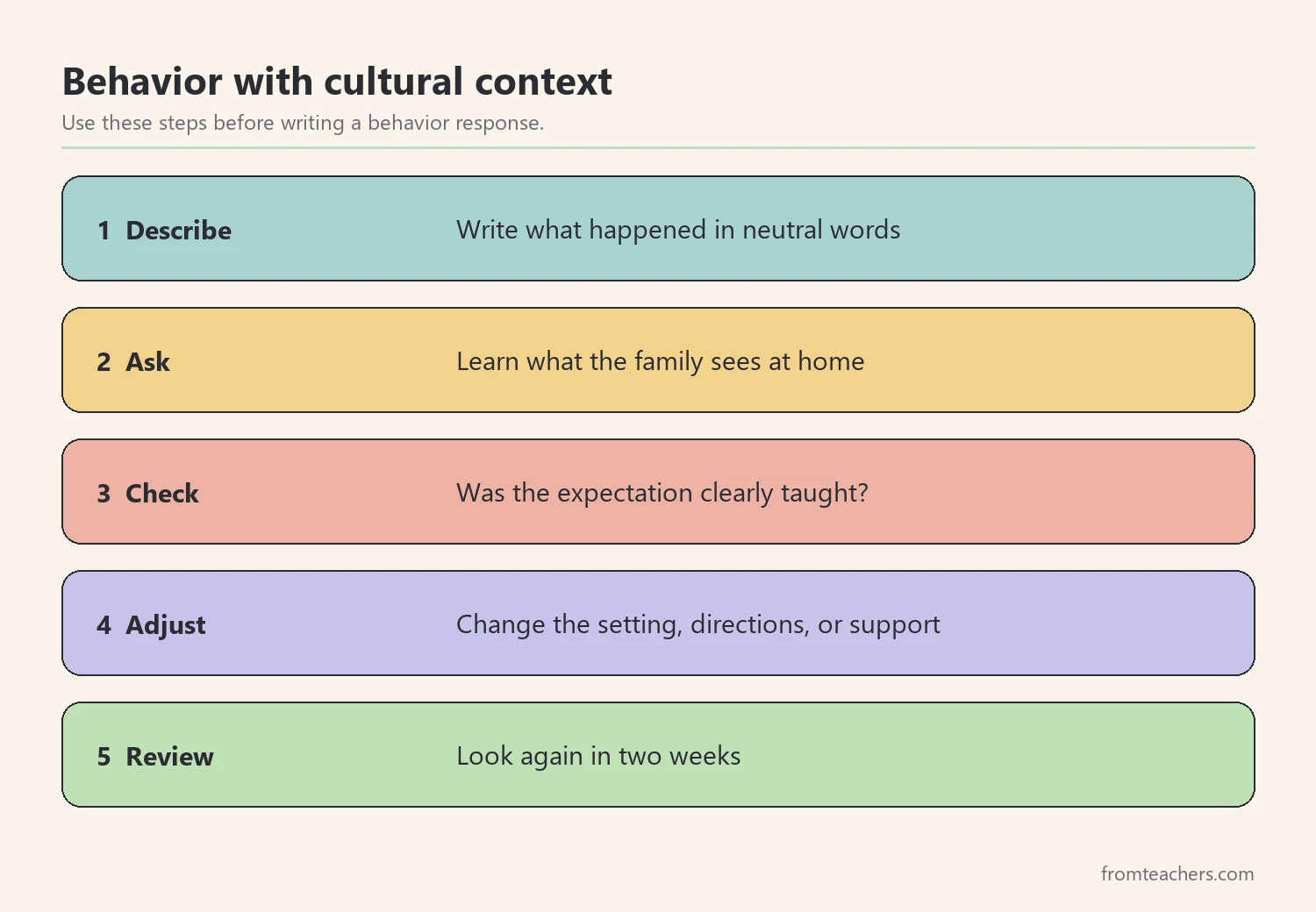
So before writing any behavior plan, gather context. Culturally responsive inclusion does not lower expectations; it makes sure expectations are taught and understood. Ask what the behavior looks like, when it happens, and what the family sees at home. Then check whether the expectation itself is clearly taught or simply assumed.
Restorative approaches often fit culturally responsive inclusion well. They focus on repairing relationships rather than on punishment alone. For example, a short conversation about what happened, who was affected, and how to make it right can teach expectations without shaming.
For Samir, a substitute reports that he “refused to look at me and ignored directions.” Mr. Grant follows the five steps. He describes the event in neutral terms, then asks the family. They explain that Samir was taught to lower his eyes when an adult corrects him. Mr. Grant also notices that the directions were spoken quickly and not written, which is hard for a student with a reading disability who is still learning English.
As a result, the plan changes. Directions are posted in short steps with icons. Substitutes receive a note explaining that lowered eyes do not mean disrespect. No behavior consequence is needed.
5. Make culturally responsive inclusion part of family communication
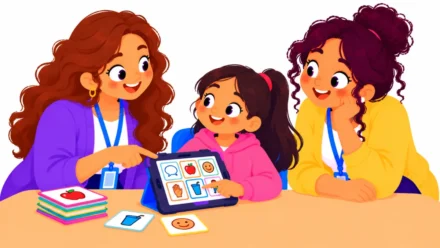
In culturally responsive inclusion, strong partnerships rest on communication that families can actually use. That means the right language, the right time, and the right format. It also means sharing good news, not only concerns.
Several practical habits make a big difference:
- Offer qualified interpreters for meetings and translated key documents, as your district provides.
- Ask families which channel they prefer: text, phone, email, notes home, or in person.
- Offer meeting times outside the standard school day when possible, or a phone or video option.
- Send at least one positive message before any concern.
- Use plain language and explain acronyms such as IEP and FAPE.
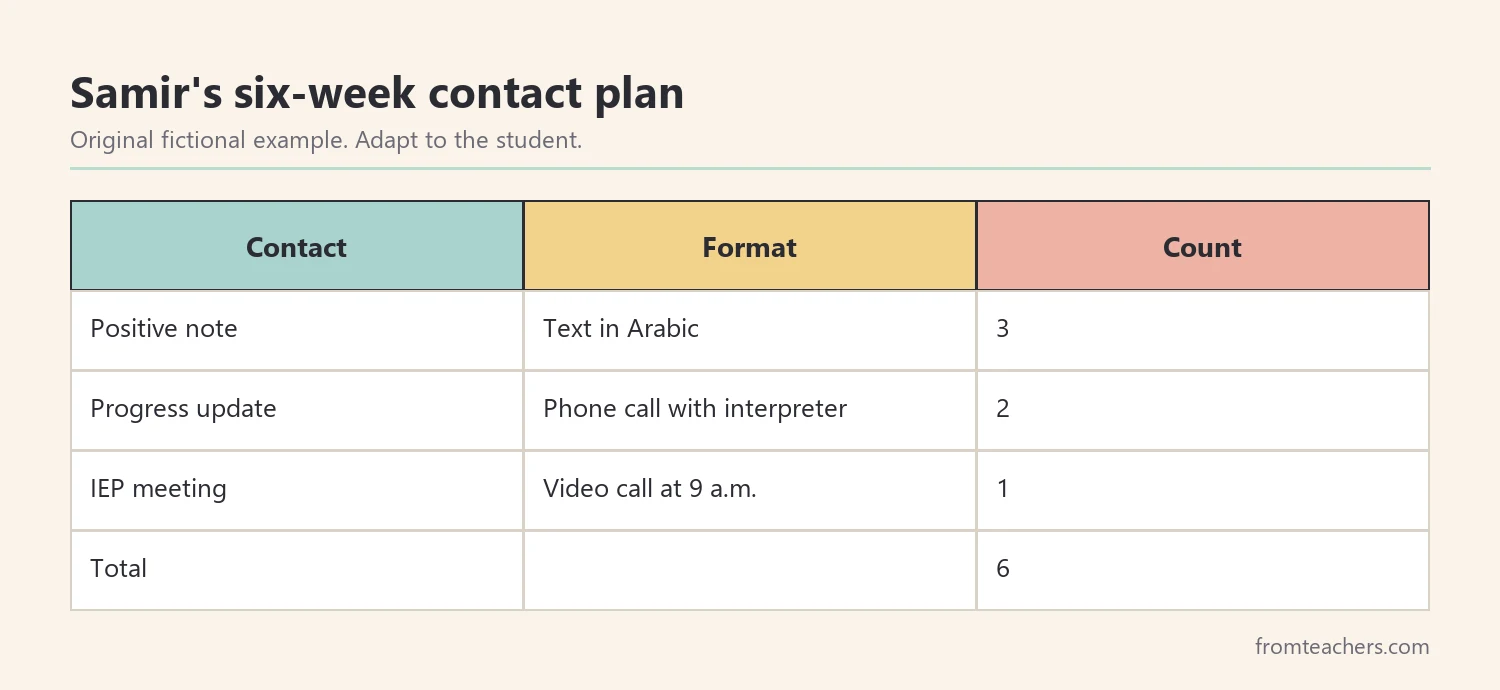
Mr. Grant sets up a simple plan for Samir’s family and tracks it for six weeks.
| Type of contact | Format | Count |
|---|---|---|
| Positive note | Text in Arabic | 3 |
| Progress update | Phone call with interpreter | 2 |
| IEP meeting | Video call at 9 a.m. | 1 |
| Total | 6 |
This time, both parents join the IEP meeting. They share that Samir reads aloud to his sister every night, and the team adds that routine to his reading plan. The family went from “did not attend” to active partners because the school changed how it reached out.
6. Check assessment and access for fairness
Assessments carry cultural assumptions too. A test item may rely on vocabulary or experiences that some students have never met. A student learning English may understand a concept well but struggle to show it in English text.
Culturally responsive inclusion asks teams to look at how students show what they know. Where the IEP and testing rules allow, use more than one measure: work samples, oral responses, performance tasks, and observation. Also, review whether test results are being read in light of language and background.
Equity also covers access, and access is where culturally responsive inclusion becomes visible to students. Check whether students with disabilities from every background can join clubs, field trips, advanced classes, and assistive technology. If one group is missing, ask why and remove the barrier you find.
For Samir, the team adds an oral retell to his reading progress checks alongside the written measure. His oral retells show stronger comprehension than his written answers suggested. That gives the team a fuller picture of his reading and helps them choose better supports.
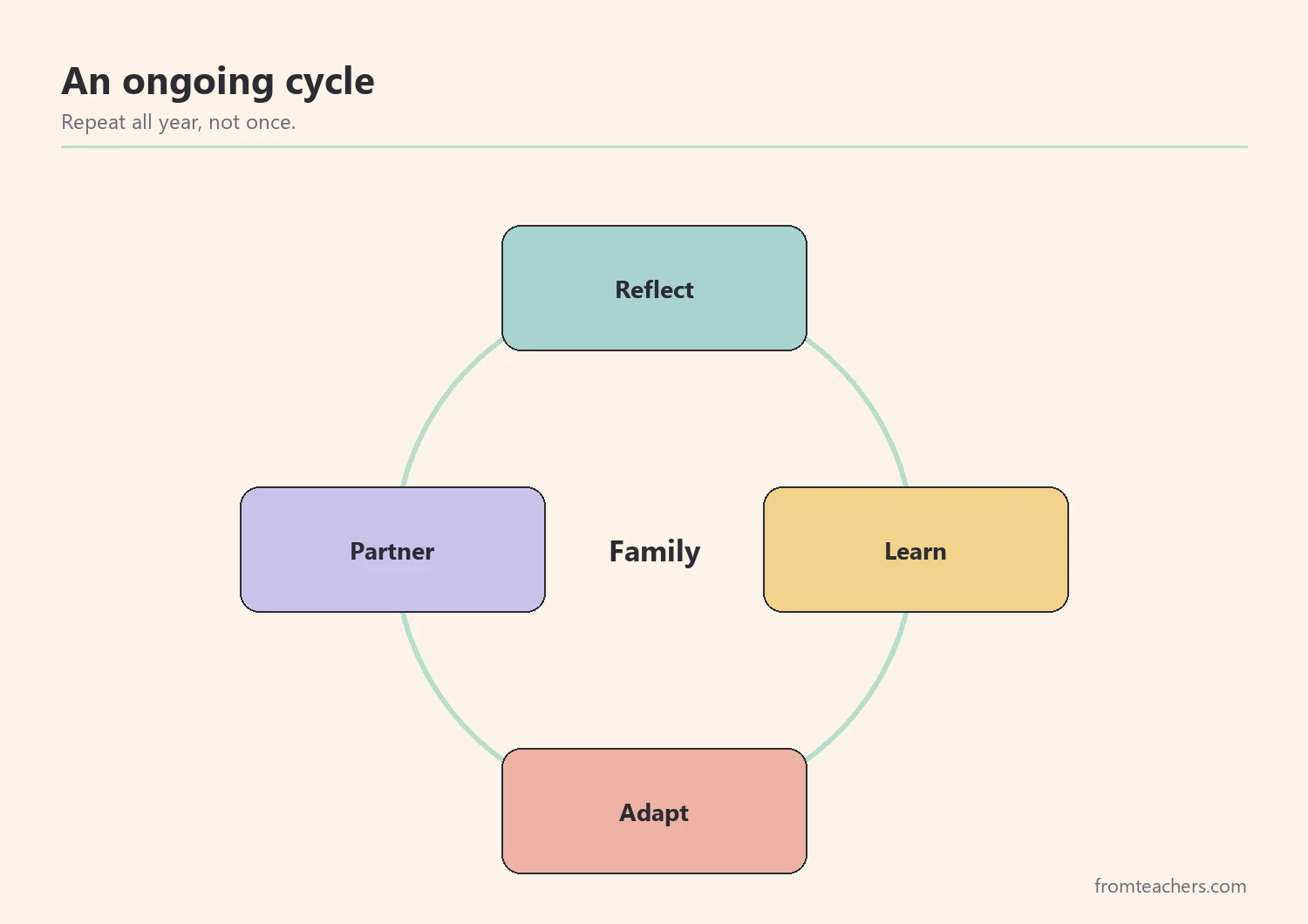
Finally, return to the beginning. Reflect, learn from the family, adapt, partner, and reflect again. Culturally responsive inclusion is not a single training or a poster. It is a cycle that continues all year.
Common mistakes and how to avoid them
- Treating culture as a holiday or food day. Fix: connect culture to daily lessons, materials, and relationships all year.
- Assuming based on a group. Fix: ask each family about their own beliefs, routines, and priorities.
- Using students or siblings as interpreters. Fix: use qualified interpreters for meetings and important conversations.
- Reading low attendance as low interest. Fix: check language, timing, and format before drawing conclusions.
- Writing behavior plans without context. Fix: describe the behavior, ask the family, and check whether the expectation was taught.
- Only calling with bad news. Fix: share positive notes first and often.
Questions teachers and parents ask about culturally responsive inclusion
What is culturally responsive inclusion in special education?
It is an approach that combines inclusive special education practices with respect for each student’s culture, language, and family. Teams adapt materials, behavior responses, communication, and assessment so that students with disabilities from every background can fully take part.
Do I need to be an expert on every culture?
No. You need curiosity, humility, and a habit of asking families. Families are the experts on their own culture, and they usually appreciate respectful questions.
How can parents support culturally responsive inclusion?
Parents can share their child’s strengths, home languages, routines, and preferred ways to communicate. They can also ask for an interpreter, translated documents, or different meeting times when needed.
Does this change the IEP process?
The legal steps stay the same. However, the way the team gathers information, communicates, and plans can become more respectful and more accurate when cultural context is part of the conversation.
Where should a busy teacher start?
Culturally responsive inclusion can start small: one family conversation and one positive message home. Then add one new classroom book or example each week. Small, steady actions build trust over time.
Related reading: How Teachers Communicate With Parents in Special Education: Building a Strong Partnership, How Parents and Teachers Can Team Up for Special Education Success, and Moving Beyond Shame and Behavior Charts: Positive Alternatives for Effective Classroom Management.
A companion resource for culturally responsive inclusion:
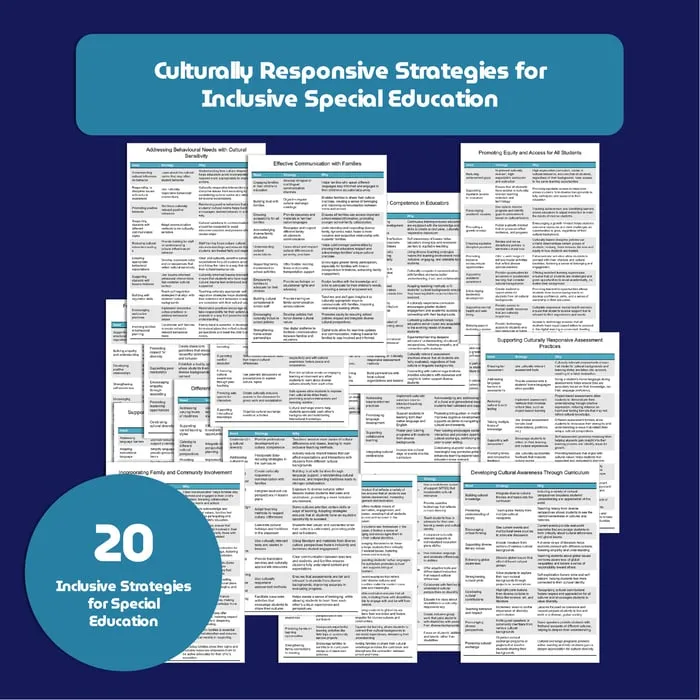
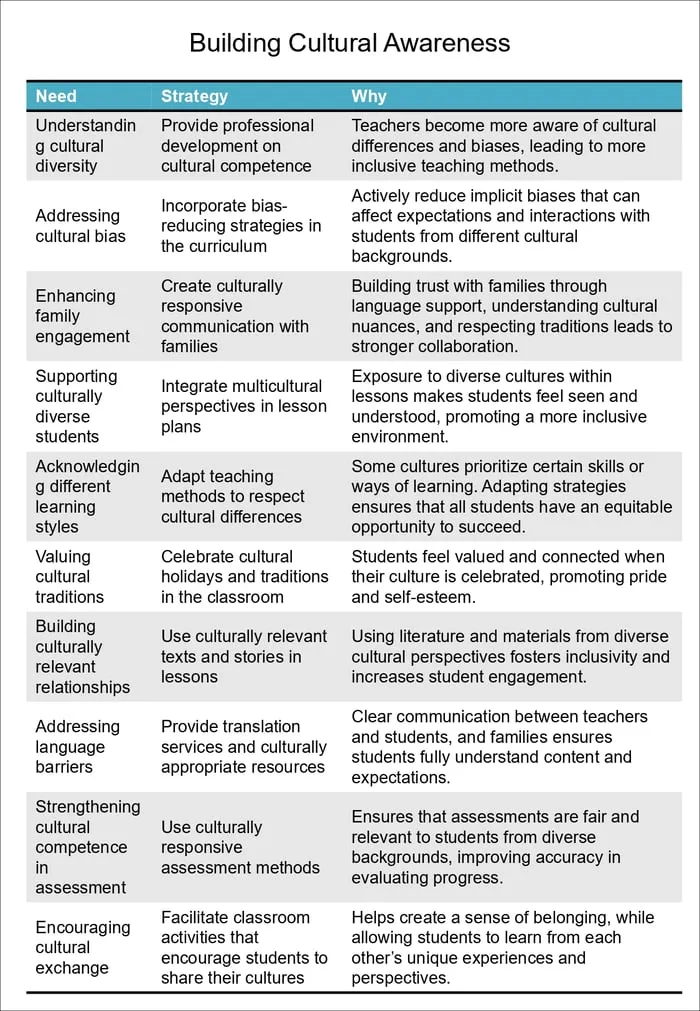
Culturally Responsive Special Education Guide: 20 need, strategy, and reasoning tables covering cultural awareness, behavior, family communication, equity and access, assessment, curriculum, and community involvement.
Sources and scope
- U.S. Department of Education, IDEA website: official information on the Individuals with Disabilities Education Act, including parent participation.
- IRIS Center, Vanderbilt University: free modules on cultural and linguistic diversity and on family partnerships.
- Center for Parent Information and Resources: resources for families and the parent centers that support them.
- CAST: Universal Design for Learning resources for planning around learner variability.
This guide offers classroom and family partnership practices. It does not give legal advice or replace district policies on interpreters, evaluation, or eligibility.
Key takeaways
- Begin culturally responsive inclusion by checking your own lens before planning for a student.
- Learn about culture from each family, not from assumptions.
- Reflect students in materials while keeping agreed supports in place.
- Gather cultural context before writing any behavior plan.
- Communicate in the family’s language, time, and format, and start with good news.


Leave a Comment