

Teaching Alabama facts for kids works best when each fact has a picture, a place on the map, and a reason to remember it. Picture a third grade class on the first day of a state study. The teacher says “Montgomery is the capital,” and two minutes later half the room has forgotten. Facts presented as a list rarely stick.
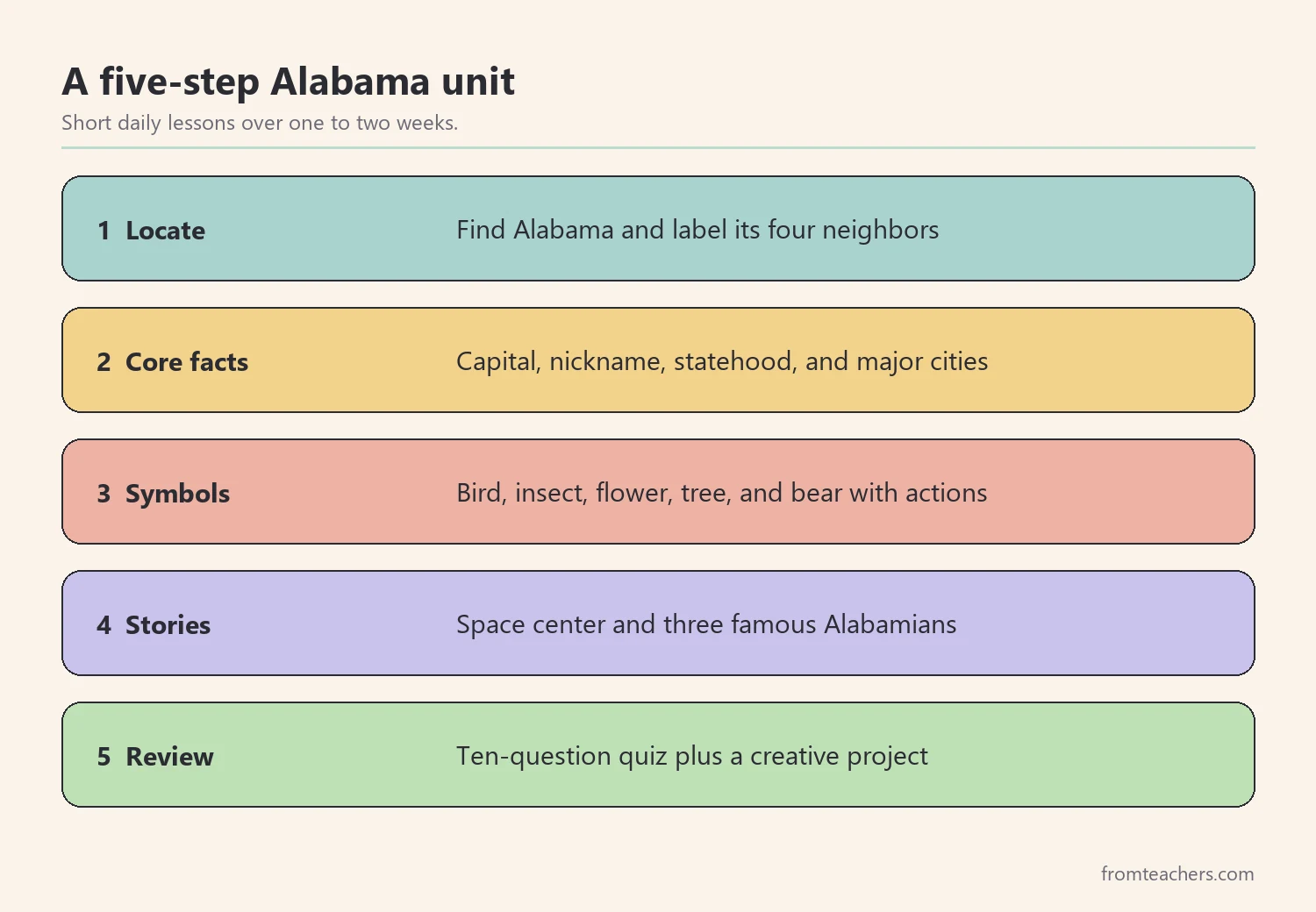
In addition, this guide gives you a five-step plan for a short Alabama unit. You will locate the state, teach its core facts, bring its symbols to life, explore landmarks and famous people, and finish with a fair review. Each step includes a classroom example and simple activities that work for mixed-ability groups.
Examples are fictional. Adapt to the student’s goals and agreed supports. This is guidance, not a diagnosis.
At a glance
- Start with the map so every fact has a place to live.
- Teach a few core facts first: capital, nickname, neighbors, and major cities.
- Pair each state symbol with a picture and a quick action.
- Connect landmarks and famous people to short, true stories.
- Review with a short quiz and a creative project, not just a worksheet.
1. Locate Alabama before you teach Alabama facts for kids
First, give students a mental map. Facts are easier to remember when children can point to where they belong. Show a United States map and ask students to find the Gulf of Mexico. Then trace a finger north to Alabama.
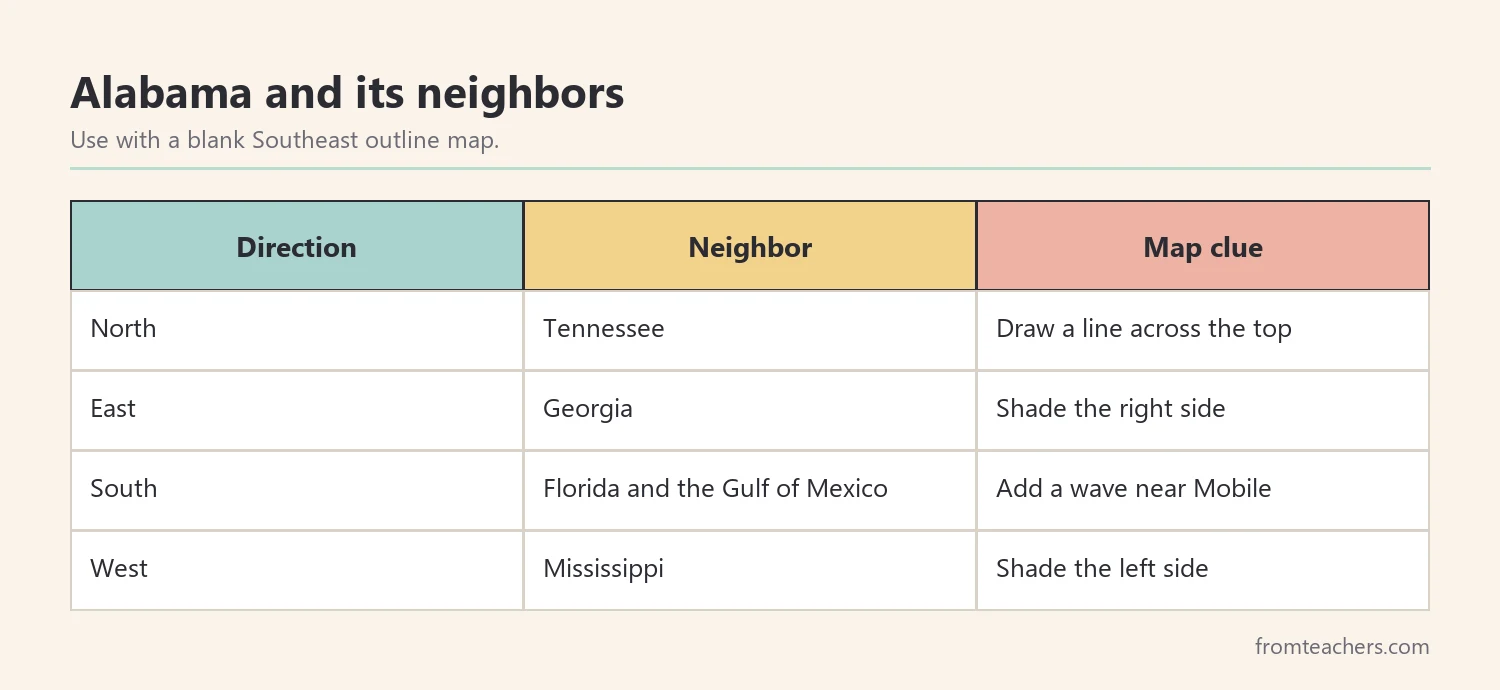
Next, name the four neighbors. Tennessee is to the north, Georgia is to the east, Florida is to the south, and Mississippi is to the west. Alabama also touches the Gulf of Mexico in the southwest corner, near the city of Mobile.
| Direction | Neighbor |
|---|---|
| North | Tennessee |
| East | Georgia |
| South | Florida and the Gulf of Mexico |
| West | Mississippi |
For example, in Ms. Carter’s fictional third grade class, students each get a blank outline of the Southeast. They color Alabama, label the four neighbors, and draw a small wave for the Gulf coast. One student, Jonah, struggles with writing, so he uses state name stickers instead. Everyone ends up with the same finished map.
Put this step into practice
Also, mention that Alabama became the 22nd state in 1819. This one date gives students a sense of how long the state has been part of the country. Keep it simple: one date is enough for young learners.
Finally, hang a large class map on the wall. As the unit continues, add pictures to it for each new fact. By the end, the map becomes a visual summary of all your Alabama facts for kids, built by the students themselves.
For home learners, the same map works on a kitchen table. A parent can print one outline, add stickers as the week goes on, and use it as a placemat during snack time. Short, repeated looks at the map do more for Alabama facts for kids than one long lesson.
2. Teach the core Alabama facts for kids first
Before symbols and landmarks, lock in a small set of core facts. Young learners do better with four or five facts learned well than with twenty facts heard once.
For example, start with the capital. Montgomery is the capital of Alabama. It sits in the south-central part of the state. Ask students to put a star on their maps.
Next, teach the nickname. Alabama is often called “The Heart of Dixie,” a name that reflects its location in the Deep South. Students may also hear “The Yellowhammer State,” which connects to the state bird. Two nicknames can confuse younger students, so introduce the second one in step 3.
A quick classroom routine
Next, add major cities. Birmingham, Huntsville, Mobile, and Montgomery are among the best known. A quick way to make cities memorable is to give each one a picture clue. For example, Mobile sits on the Gulf, so draw a boat. Huntsville is home to a famous space museum, so draw a rocket.
| Core fact | Picture clue |
|---|---|
| Capital: Montgomery | A star on the map |
| Nickname: The Heart of Dixie | A heart drawn on the state |
| Statehood: 1819 | A birthday cake with “22” |
| Coast city: Mobile | A boat on the Gulf |
In Ms. Carter’s class, students make a four-square fact card with one picture clue in each square. Jonah dictates his labels to a partner. Then the class plays a quick game: the teacher holds up a picture, and students call out the fact. Because the game takes three minutes, it fits easily at the start of each lesson.
In addition, a ready-made slideshow can carry much of this teaching for you. The Alabama state study slideshow walks through location, neighbors, capital, cities, and the nickname one slide at a time, which is helpful for students who need information in small pieces.
Before moving on, check that the core facts are solid. Ask each student to tell a partner the capital, the nickname, and one neighbor. If most can do it, continue. If not, spend one more day on the picture clue game before adding new Alabama facts for kids.
3. Bring the state symbols to life
State symbols are where many students get excited. Each one is a small story, and each one can be paired with a picture and a quick action.
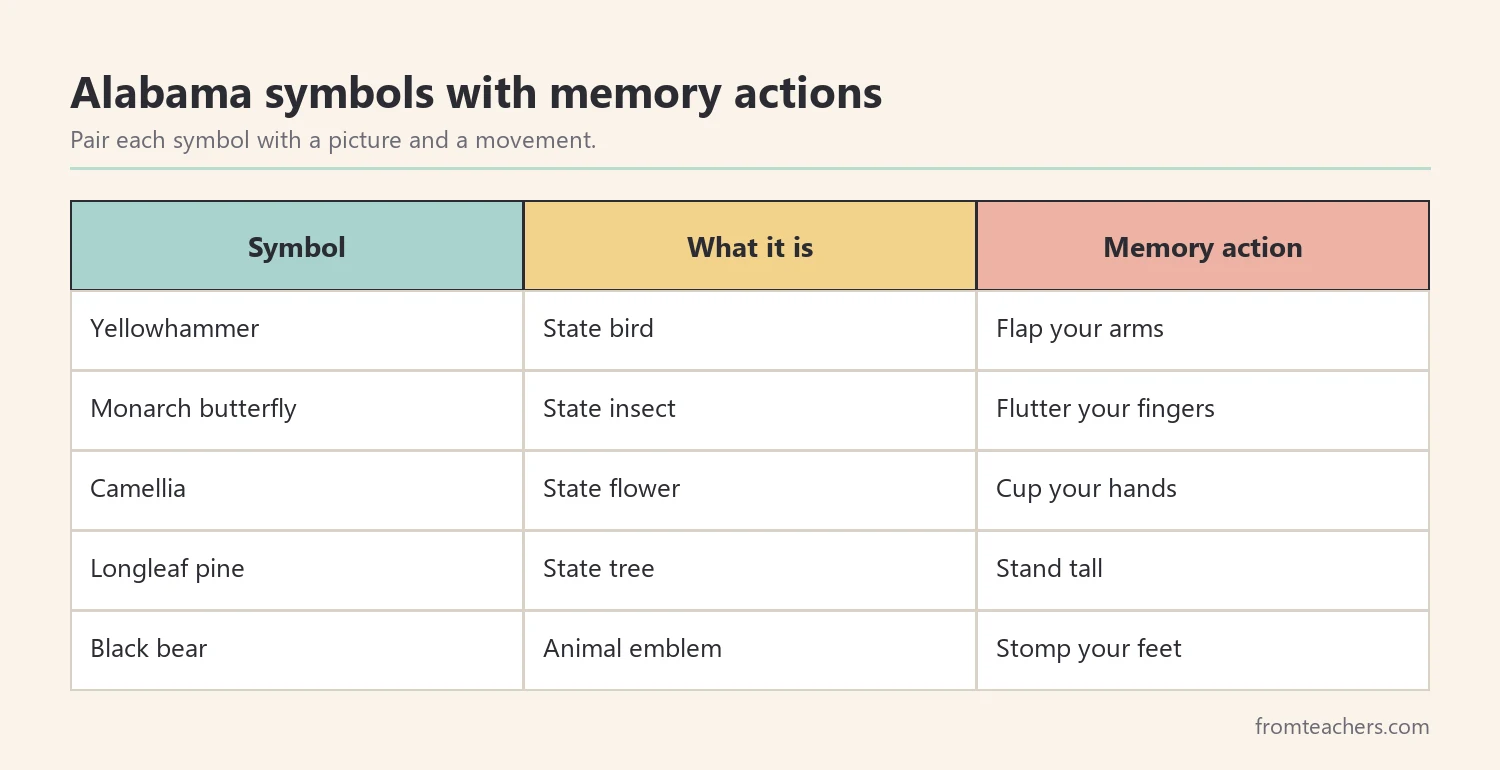
First, introduce the state bird, the yellowhammer. It is a type of woodpecker, also called the northern flicker. Show a photo and point out the yellow under its wings. Then explain that this bird gives Alabama its second nickname, “The Yellowhammer State.”
Next, add the state insect, the monarch butterfly. Students may already know its orange and black wings. Then show the camellia, the state flower, and the longleaf pine, the state tree. Finally, mention the black bear, one of the state’s notable animal emblems.
Make the symbols stick
To help these Alabama facts for kids stick, pair each symbol with a movement. Students flap their arms for the yellowhammer, flutter their fingers for the monarch, cup their hands for the camellia, stand tall for the pine, and stomp for the bear. Movement gives active learners a way in and keeps the lesson light.
In Ms. Carter’s class, students then make a symbol mini-book. Each page has one symbol, one picture, and one sentence. Jonah draws the pictures and uses a word bank to copy the sentences. As a result, every student has a product that shows what they learned.
Also, keep the number of symbols manageable. Five is plenty for a short unit. If students ask about others, add them to a “Did you know?” corner of the board.
Afterward, students can sort the symbols into groups: animals, plants, and insects. Sorting is a quick thinking task that also builds vocabulary. It turns a set of Alabama facts for kids into a small science connection, too.
4. Explore landmarks and famous Alabamians
Landmarks and people turn a list of facts into stories. Choose a few that students can connect with, and tell each story in a few sentences.
Also, start with the U.S. Space & Rocket Center in Huntsville. It is a museum about space exploration, with rockets on display. Huntsville has a long connection to rocket work, which is why some people call it “Rocket City.” Students who love space usually remember this fact first.
Next, introduce famous people. Rosa Parks, born in Tuskegee, Alabama, became known around the country after she refused to give up her bus seat in Montgomery in 1955. Helen Keller was born in Tuscumbia, Alabama, and became a famous author and speaker who was deaf and blind. Hank Aaron, born in Mobile, became one of baseball’s greatest home run hitters.
| Person | Alabama connection | Known for |
|---|---|---|
| Rosa Parks | Born in Tuskegee | Civil rights, Montgomery bus boycott |
| Helen Keller | Born in Tuscumbia | Author and speaker |
| Hank Aaron | Born in Mobile | Baseball home run hitter |
Connect places to people
For a hands-on activity, set up three “people stations” around the room. At each station, students read a short card, look at a picture, and write one thing they learned. Then groups rotate every five minutes. In Ms. Carter’s class, Jonah’s group records their facts on a tablet, and Jonah reads them aloud to the class.
Meanwhile, connect each person back to the map. Students add a small picture at Tuskegee, Tuscumbia, and Mobile. Now their Alabama facts for kids are not only memorized but also placed in real locations.
When telling these stories, keep the language age-appropriate and accurate. For Rosa Parks, focus on courage and fairness. For Helen Keller, focus on how she learned to communicate with help from her teacher, Anne Sullivan. Simple, true stories like these make Alabama facts for kids feel human and meaningful.
5. Review and check Alabama facts for kids
Finally, give students a chance to show what they know. A short quiz tells you who has the core facts, and a creative project lets students show more.
As a result, keep the quiz to ten questions. Mix formats: matching symbols to pictures, labeling neighbors on a map, and choosing the capital from three options. For students who find writing hard, read questions aloud or allow pointing answers.
Here is how Ms. Carter’s class did on a ten-question quiz.
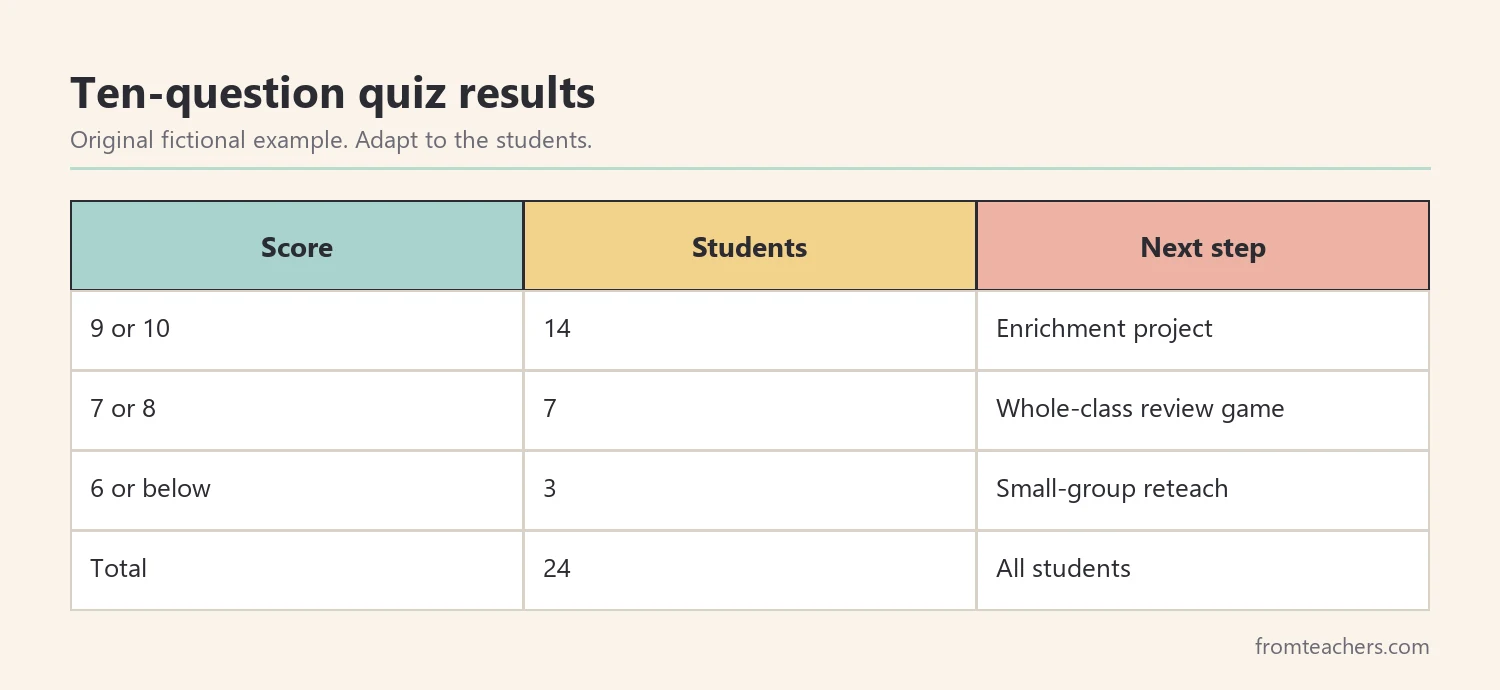
In this example, 14 students scored 9 or 10, 7 students scored 7 or 8, and 3 students scored 6 or below. That adds up to 24 students. So the teacher plans a quick review game for the whole class and a small-group reteach for the three students who need it, using the picture clue cards.
Next, finish with a creative project. Students can make a “Welcome to Alabama” postcard, a symbol poster, or a short talk about one famous person. Projects let students show understanding in different ways, which is especially helpful for learners with IEPs.
Also, revisit the class map one last time. Ask students to walk the map and name each picture. This review takes five minutes and pulls every piece of your Alabama facts for kids unit together.
Lastly, ask students what they would most like to see if they visited Alabama. Their answers show which facts made the strongest impression. Use those answers to plan your next state study, so each new unit builds on what worked with your Alabama facts for kids lessons.
Common mistakes and how to avoid them
- Teaching too many facts at once. Students forget most of a long list. Fix: start with four or five core facts and add more slowly.
- Skipping the map. Facts without a place feel random. Fix: build a class map and add a picture for each fact.
- Mixing the two nicknames on day one. Younger students may confuse them. Fix: teach “The Heart of Dixie” first, then “The Yellowhammer State” with the bird.
- Telling people’s stories without context. Names alone do not stick. Fix: give one short, true story and one picture per person.
- Using only written tests. Some students know more than they can write. Fix: allow pointing, oral answers, or projects.
Questions teachers and parents ask about Alabama facts for kids
What grade level is best for Alabama facts for kids?
Most state studies happen in grades 2 to 5. Younger students focus on the map, capital, and symbols. Older students can add history, people, and research projects.
How long should an Alabama unit last?
A focused unit can run one to two weeks with short daily lessons. If you are studying all 50 states, a few days per state is common. Adjust the length to your students and your schedule.
How do I support students who struggle with reading?
Use pictures, movement, and read-alouds. Let students answer by pointing or speaking. Partner reading and word banks also help students take part fully.
Can parents use these Alabama facts for kids at home?
Yes. A map, a few picture cards, and a short daily game are enough. Families can also look up the yellowhammer or the monarch butterfly together.
Which Alabama facts should every student know?
Start with the capital, Montgomery, the four neighboring states, the nickname “The Heart of Dixie,” and the state bird. Those core facts give students a strong base for the rest of the unit.
Related reading: Learning Styles and Student Success Guide, 5 Practical Teaching Tips to Boost Classroom Focus and Learning, and Homeschooling vs Public Schooling.
A companion resource for Alabama facts for kids:
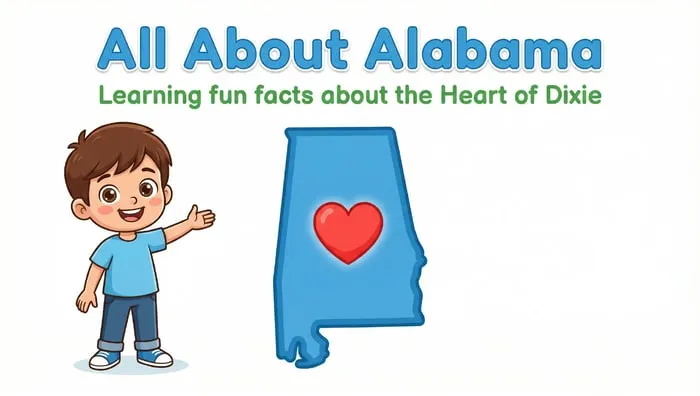
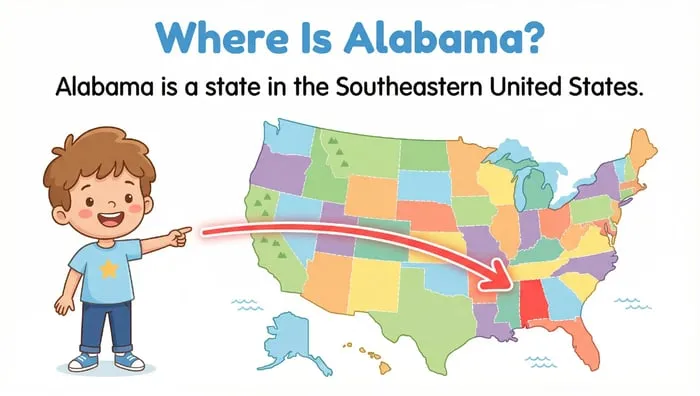
Alabama State Study: Facts, Symbols, and Famous Alabamians: a 33-slide illustrated resource covering location, neighboring states, capital, major cities, nickname, state symbols, the U.S. Space & Rocket Center, famous Alabamians, and a review slide.
Sources and scope
- Alabama.gov: the official state website, with general information about Alabama.
- U.S. Space & Rocket Center: the museum’s own site, with visitor and education information.
- Library of Congress: primary sources and background on figures such as Rosa Parks.
- CAST UDL Guidelines: a framework for offering multiple ways to learn and show learning.
This guide covers an introductory elementary unit on Alabama. It does not cover the full history of the state, which older students can explore through deeper research.
Key takeaways
- Start Alabama facts for kids with the map and the four neighboring states.
- Teach a few core facts well before adding more.
- Pair each symbol with a picture and a movement.
- Tell short, true stories about landmarks and famous Alabamians.
- Review with a short quiz plus a creative project.


Leave a Comment