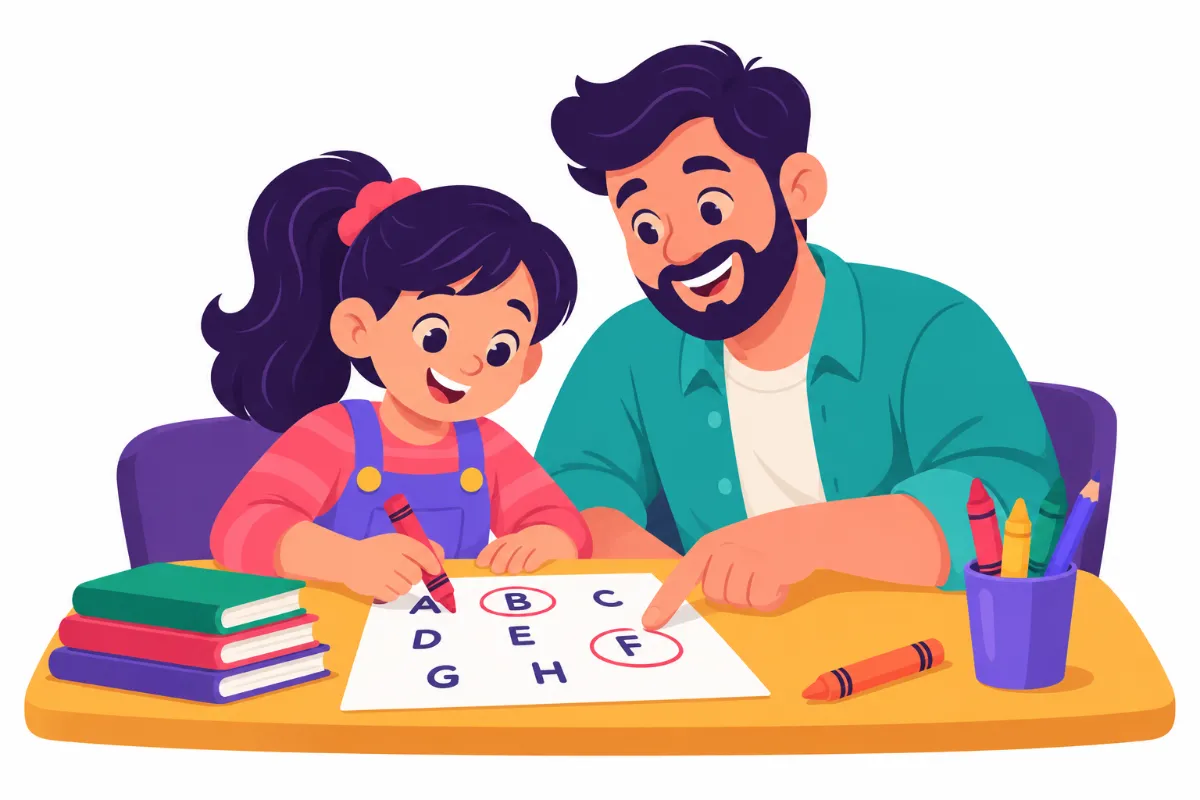

Letter and number recognition is one of the first steps toward reading and math, yet young children often mix up symbols that look almost the same. Picture a four-year-old pointing at a b on a cereal box and calling it “d,” then naming a 6 as “9” a moment later. He is paying attention. He just has not yet learned which tiny details make each symbol different.
This guide gives you a five-step plan you can use at home, in preschool, or in kindergarten: find out what the child already knows, choose a small set of symbols, teach with find-and-circle practice, weave short practice into daily routines, and review progress. By the end, you will have a simple, playful routine that fits into ten minutes a day.
Examples are fictional. Adapt to the student’s goals and agreed supports. This is guidance, not a diagnosis.
At a glance
- Start with a quick, friendly check of which letters and numbers the child knows.
- Teach a few symbols at a time and keep look-alikes, such as b and d, apart at first.
- Find-and-circle pages train the eye to notice small differences.
- Short daily letter and number recognition practice beats long sessions once a week.
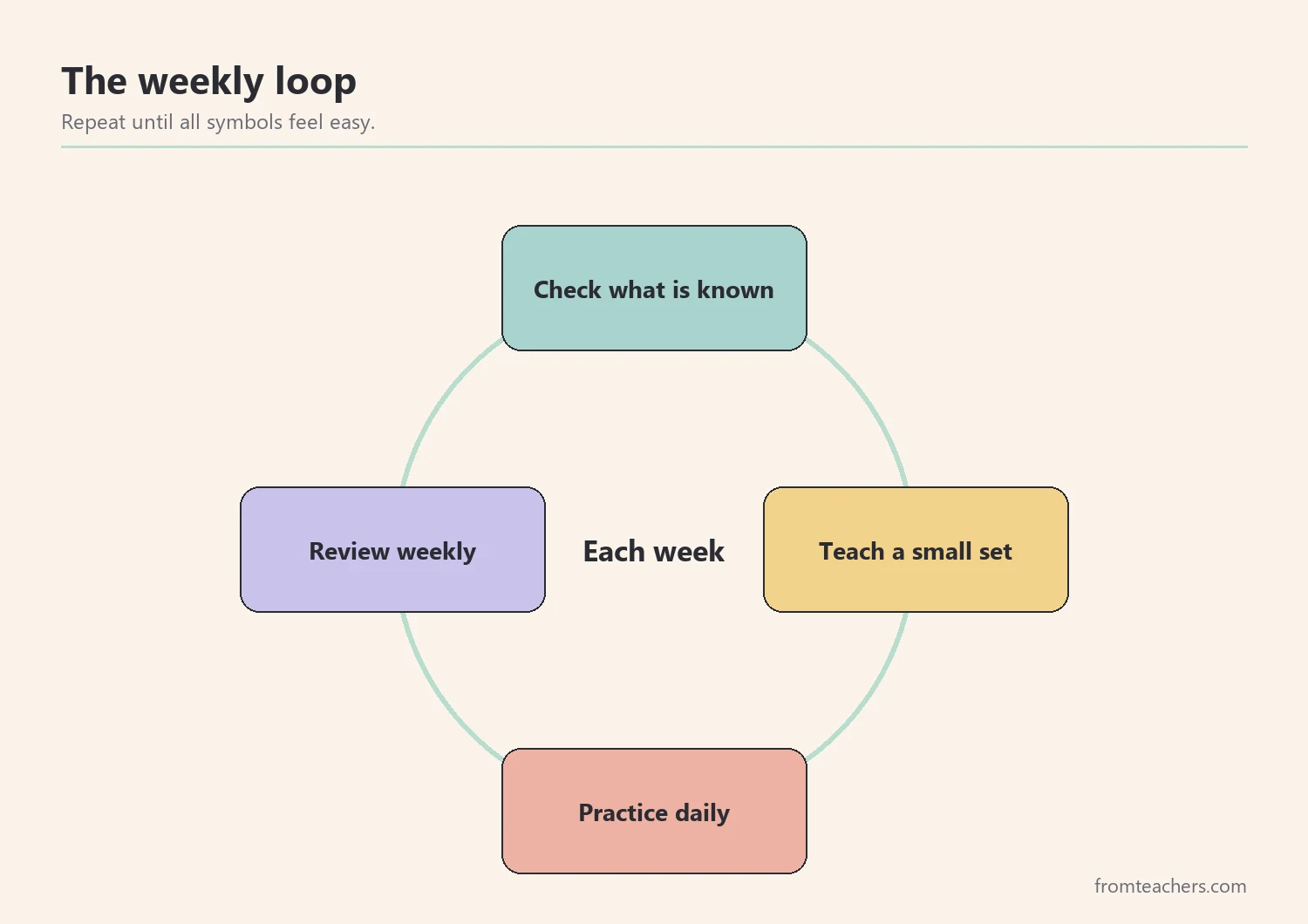
- Use the same quick check each week to decide what to teach next.
1. Check letter and number recognition before you teach
Before planning any lessons, find out what the child already knows. A short check prevents you from reteaching familiar symbols and shows you exactly where to focus. Keep it relaxed, like a game, and stop if the child gets tired.
First, write the 26 uppercase letters and the numerals 0 to 9 on cards. Then mix them up and show them one at a time. Ask, “What is this?” and sort each card into one of two piles: “knows” and “not yet.” If the child hesitates for a long time, put the card in “not yet” and move on with a smile.
In addition, notice the kind of mistakes the child makes. Confusing b and d, or 6 and 9, is a visual problem: the child sees the shape but not its direction. Calling every letter “A” is different. It usually means the child has not yet learned that each symbol has its own name.
Worked example. Noah is four and in preschool. His dad, Sam, checks all 36 cards at the kitchen table. Noah names 9 of the 26 letters, including the N and O in his own name, and 6 of the 10 numerals. That leaves 17 letters and 4 numerals in the “not yet” pile.
| Symbols | Checked | Knows | Not yet |
|---|---|---|---|
| Uppercase letters | 26 | 9 | 17 |
| Numerals 0 to 9 | 10 | 6 | 4 |
| Total | 36 | 15 | 21 |
As a result, Sam now has a clear starting list for letter and number recognition, and Noah has had a fun ten minutes with his dad.
2. Choose a small set of symbols and space out look-alikes
Next, decide which symbols to teach first. Good letter and number recognition plans start small. Trying to learn all 21 unknown symbols at once would overwhelm most young children. Instead, choose three or four for a week: one or two letters and one or two numerals from the “not yet” pile.
Start with symbols that matter to the child. Letters in the child’s name, a sibling’s name, or a favorite word are a natural place to begin. Similarly, the numeral for the child’s age or house number is often easier to remember because it already has meaning.
At the same time, keep look-alike symbols apart in the early weeks. Pairs such as b and d, p and q, M and W, 6 and 9, and 2 and 5 can be confusing because the shapes are similar. Teach one, let it settle, and introduce its partner later.
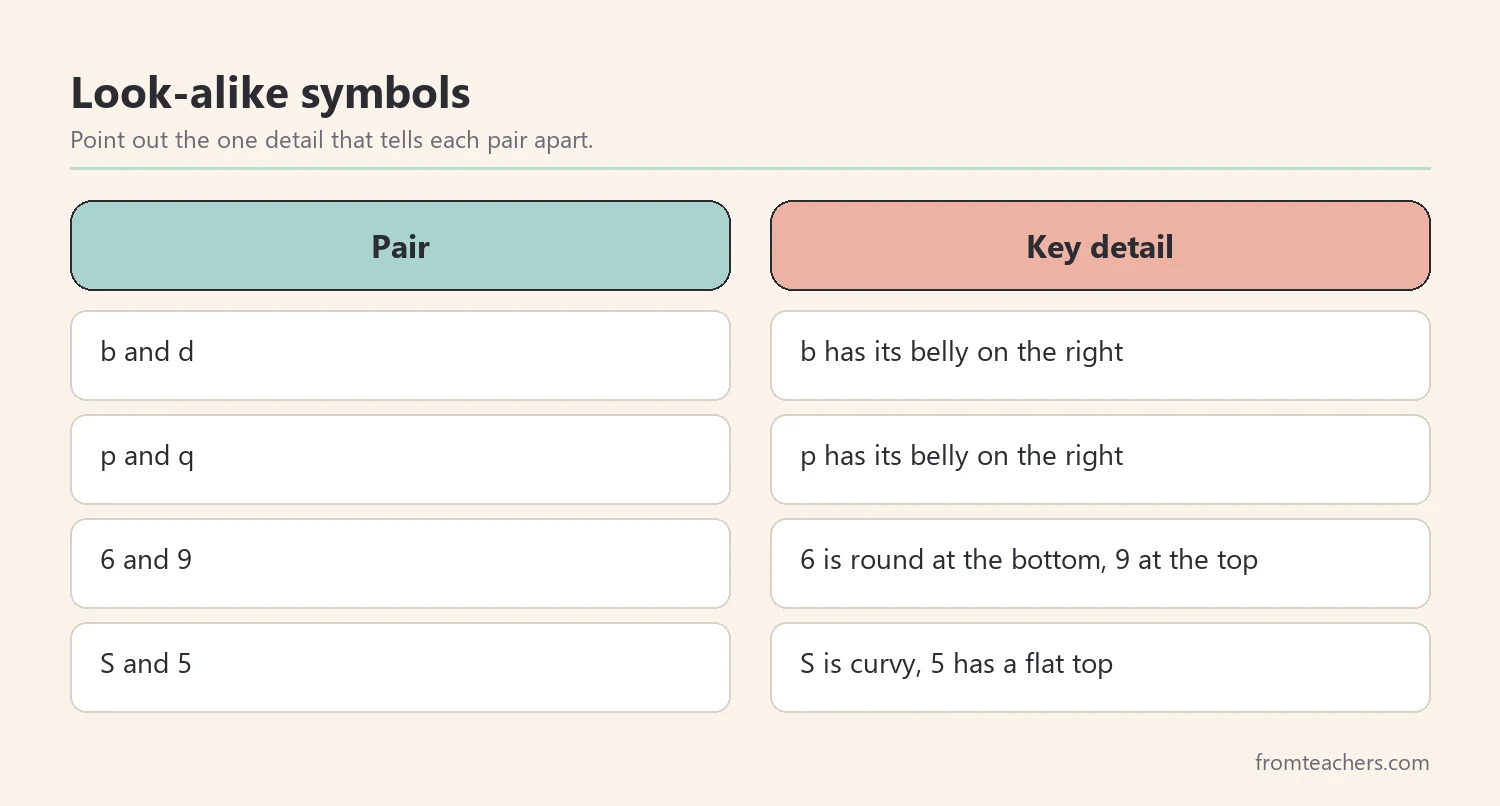
Worked example. In week one, Sam chooses S (from Noah’s sister’s name, Sara), T, and the numerals 4 and 7. He waits until week three to add 9, because Noah already knows 6 and the two shapes are easy to mix up.
Therefore, a good weekly set for letter and number recognition mixes meaning, contrast, and success. Each week, the child should meet symbols that are new, symbols that are easy to tell apart, and at least one familiar symbol to review.
3. Teach letter and number recognition with find-and-circle practice
Now the teaching begins. For many children, find-and-circle pages make letter and number recognition feel like a game. Find-and-circle activities are simple: the child looks for one target symbol hidden among many others and circles each one. This trains the eye to scan, compare, and notice small differences, a skill often called visual discrimination.
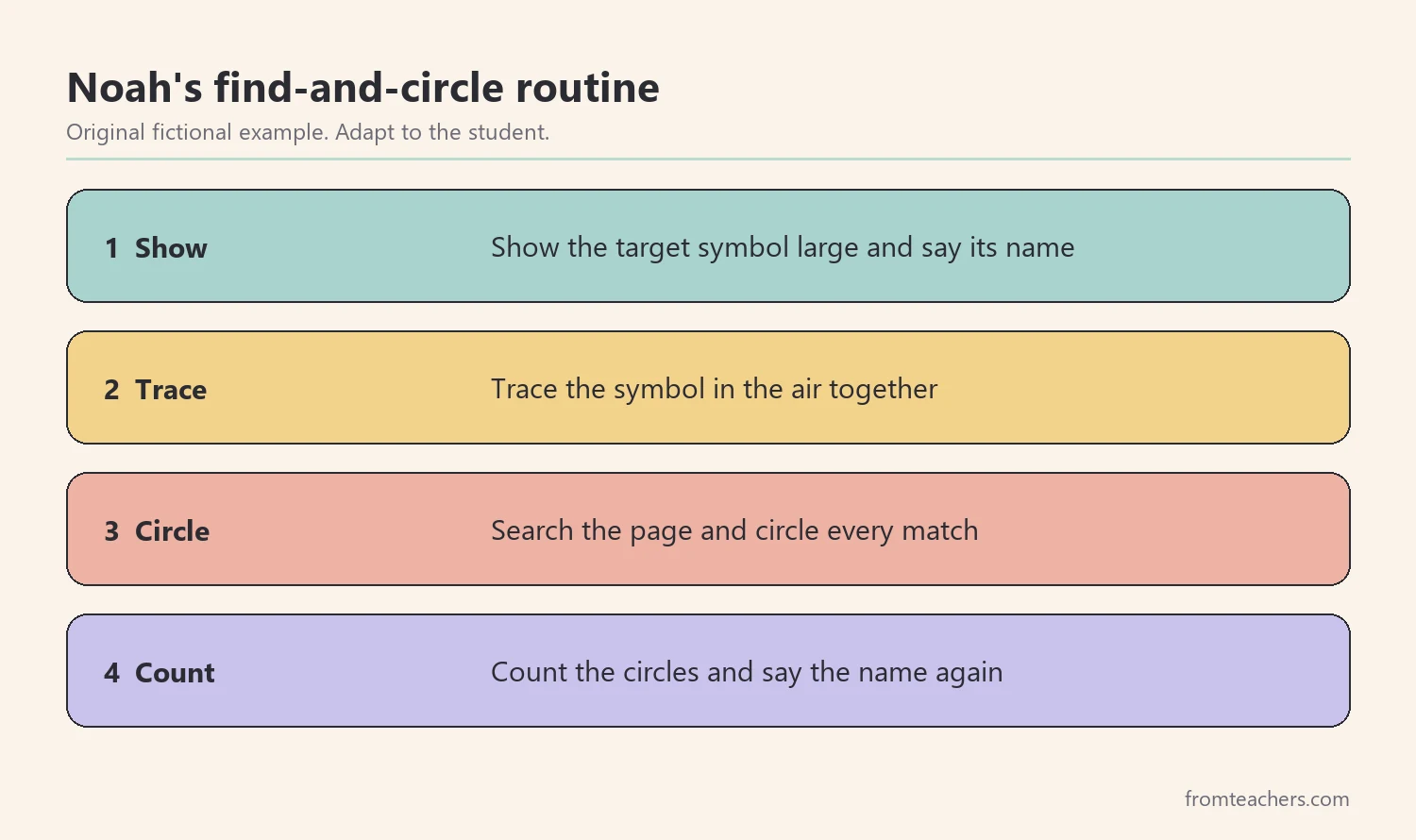
Use a short routine every time. First, show the target symbol large and say its name. Second, trace it in the air together with a finger. Third, search the page and circle every match. Fourth, count the circles together and say the name one more time. The routine keeps practice predictable and calm.
For ready-made pages, the A-Z animals and 0-9 numbers letter and number find workbook includes find-and-circle pages for every letter and every numeral from 0 to 9, each with a target symbol hidden among a mix of others.
Worked example. On the page for S, Noah says “S” while tracing it in the air with his dad. Then he searches the page and circles each S he finds. When he circles a 5 by mistake, Sam says, “Look, this one has a flat top. S is curvy all the way.” Noah erases the circle and keeps going.
Above all, keep the tone light. If the child misses a symbol, point to it and say its name. There is no need for long corrections at this age.
4. Build letter and number recognition into daily routines
Worksheets are useful, yet the biggest gains in letter and number recognition often come from noticing symbols in everyday life. Letters and numbers are everywhere: on cereal boxes, street signs, clocks, elevator buttons, and license plates. Each of these is a free practice opportunity.
- Symbol hunt: “Can you find a T on this page of the store flyer?”
- Number spotting: Point out house numbers or bus numbers on a walk.
- Name letters: Find the letters of the child’s name on signs and labels.
- Sticky note match: Put symbols on sticky notes and match them to the same symbols on a poster.
- Count and name: “We have 4 apples. Where is the 4 on the calendar?”
Meanwhile, keep each moment short. Two or three questions during breakfast or a car ride are enough. As a result, letter and number recognition becomes part of the day rather than a separate lesson.
Worked example. At the grocery store, Noah looks for the number 7 on aisle signs and finds it on the third try. At home, he matches sticky notes with S and T to the letters on a family photo label. These activities take only a few minutes, yet they give him many extra chances to see his weekly symbols.
For preschool and kindergarten classrooms, the same ideas work as morning work or center activities. Similarly, a single page a day can serve as quiet independent practice once the routine is familiar.
Adapting letter and number recognition practice for different children
Every child learns symbols in a slightly different way. Some children love sitting with a page, while others learn best when they move or touch. Fortunately, letter and number recognition practice is easy to adjust without new materials.
| If the child… | Try this |
|---|---|
| Needs to move | Tape symbols on the floor and jump to the one you name |
| Loses focus on busy pages | Cover half the page with paper and search one half at a time |
| Enjoys touch | Trace symbols in sand, salt, or play dough |
| Gets frustrated quickly | Practice two known symbols before one new one |
For example, on a rainy afternoon Noah is too restless for a worksheet. Instead, Sam tapes S, T, 4, and 7 on the hallway floor and calls out one symbol at a time. Noah jumps onto each one and shouts its name. The goal of letter and number recognition stays the same, while the format matches his energy.
Likewise, children who are learning English may know a letter’s name in another language. That knowledge is a strength. Accept both names at first, then model the English name clearly and often.
5. Track and review letter and number recognition each week
Finally, use a short and consistent check to see what is sticking. Each week, choose 10 symbols: the ones you taught plus a few earlier ones for review. Show them in mixed order and count how many the child names correctly.
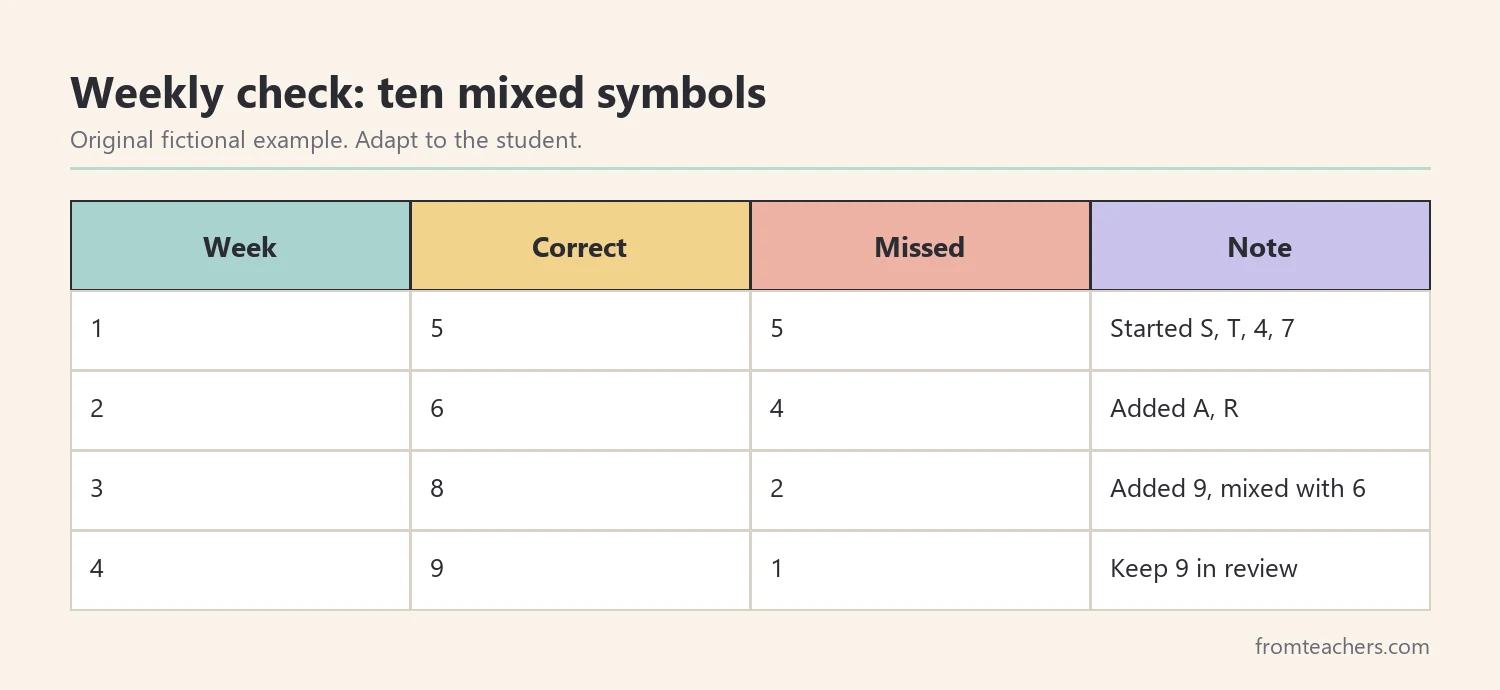
Worked example. Over four weeks, Noah names 5, 6, 8, and then 9 of his 10 weekly symbols. In weeks 3 and 4, the symbol he still mixes up is 9, which he sometimes calls 6. As a result, Sam keeps 9 in review for another week and points out that the 9 has its round part at the top.
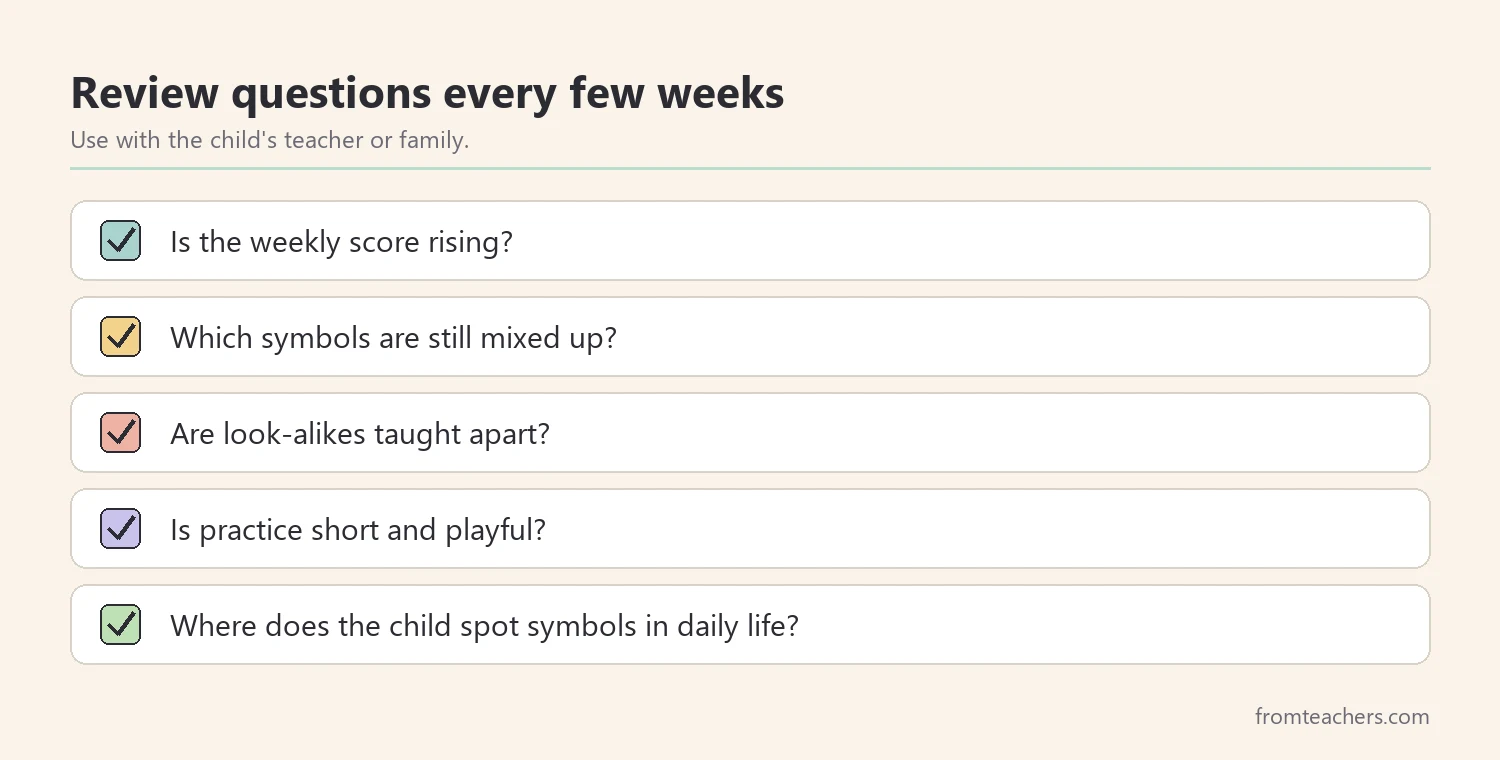
Look for two things in your letter and number recognition record. First, is the number of correct answers rising? Second, are the same one or two symbols still causing trouble? Return those to the daily routine, and add new symbols only when most of the current ones feel easy.
In addition, share the weekly record with the child’s teacher or family. A quick note such as “knows S, T, 4, and 7, still mixing 6 and 9” helps every adult practice the same symbols in the same way, which keeps progress steady.
Common mistakes and how to avoid them
- Teaching too many symbols at once. Fix: limit each week to three or four new symbols plus review.
- Introducing look-alikes together. Fix: separate pairs such as b and d, or 6 and 9, by a week or two.
- Relying only on worksheets. Fix: add quick real-life hunts during the day.
- Turning practice into a test. Fix: model names often and celebrate effort, not only right answers.
- Skipping review. Fix: include a few earlier symbols in every weekly check.
Questions teachers and parents ask about letter and number recognition
At what age do children learn letter and number recognition?
Many children begin recognizing some letters and numbers in the preschool years, often starting with letters in their own name. Children vary widely, so focus on steady, playful progress rather than a fixed age.
Should I teach uppercase or lowercase letters first?
Many families and teachers start with uppercase because the shapes are more distinct. Lowercase letters can follow, especially those in the child’s name. Your child’s school may have its own approach, so ask the teacher.
Is it normal to mix up b and d?
Yes, reversals like b and d or 6 and 9 are very common in young children. Teaching look-alikes separately and pointing out the key detail usually helps. If concerns continue as the child gets older, talk with the child’s teacher.
How long should practice last?
Five to ten minutes is plenty for most young children. Short, frequent sessions build letter and number recognition better than long, tiring ones.
Do find-and-circle pages really help?
They give focused practice in scanning and comparing symbols. They work best alongside saying the names aloud and noticing symbols in everyday life.
Related reading: Learning Styles Student Success Guide, 5 Practical Teaching Tips to Boost Classroom Focus and Learning, and Homeschooling vs. Public Schooling: Which Educational Path Is Right for Your Child?
A companion resource for letter and number recognition:
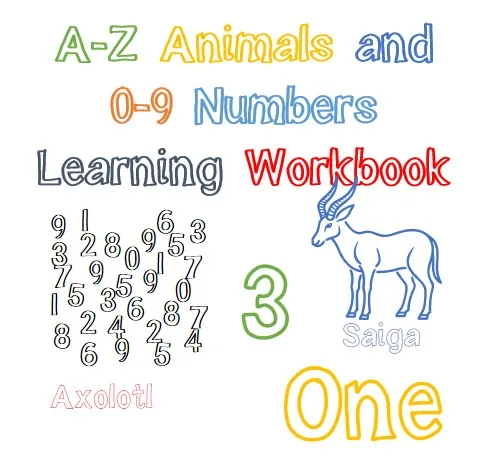
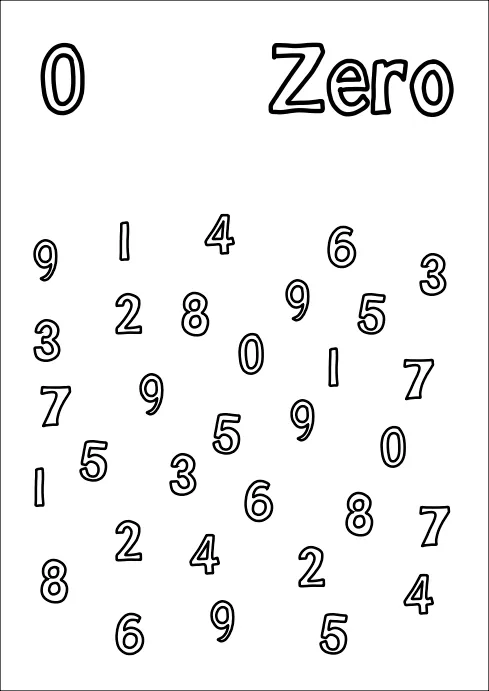
A-Z Animals and 0-9 Numbers Learning Workbook: Letter and Number Find: an 88-page workbook with 26 letter pages and 10 number pages of find-and-circle practice, plus a unique animal illustration on every letter page and black-and-white line art for coloring.
Sources and scope
- National Association for the Education of Young Children (NAEYC): guidance on early learning and developmentally appropriate practice.
- Reading Rockets: free articles on alphabet knowledge and early reading for teachers and families.
- What Works Clearinghouse: reviews of research on early literacy and early math practices.
- ZERO TO THREE: resources for families on early development and learning through play.
This guide covers everyday practice of letter and number recognition for young children at home and in early classrooms. It does not replace a developmental screening or individual advice from the child’s teacher or specialist.
Key takeaways
- Begin with a quick check and teach only the symbols that are missing.
- Choose three or four meaningful symbols a week and keep look-alikes apart.
- Use a short find-and-circle routine to train careful looking.
- Practice letter and number recognition in daily life for a few minutes at a time.
- Review with the same ten-symbol check each week and adjust the plan.


Leave a Comment