

A special education consultant often gets the call when a district is stretched thin: a coordinator has left, IEP timelines are slipping, and new teachers need coaching that no one has time to give. Many experienced special educators hear about these roles and wonder, “Could I do that work, and where would I even begin?”
By the end of this guide, you will understand what the role involves, which compliance foundations matter most, how the main role types compare, how to run a simple file review, and how to plan your first steps. Examples are fictional. Adapt to the student’s goals and agreed supports, and to your own state’s rules. This is guidance, not legal advice.
At a glance
- A special education consultant supports systems, teams, and compliance rather than one classroom.
- Core knowledge includes IDEA, FAPE, LRE, and Child Find.
- Roles range from IEP file audits to interim leadership and staff training.
- Simple tracking systems and clear communication are the daily tools of the job.
- Start small: one skill, one sample project, one honest conversation with a district.
Throughout the guide, we will follow one fictional educator. Dana has taught in a resource room for many years, has led dozens of IEP meetings, and is the person colleagues ask when a timeline question comes up. She is curious about consulting but unsure what it really looks like.
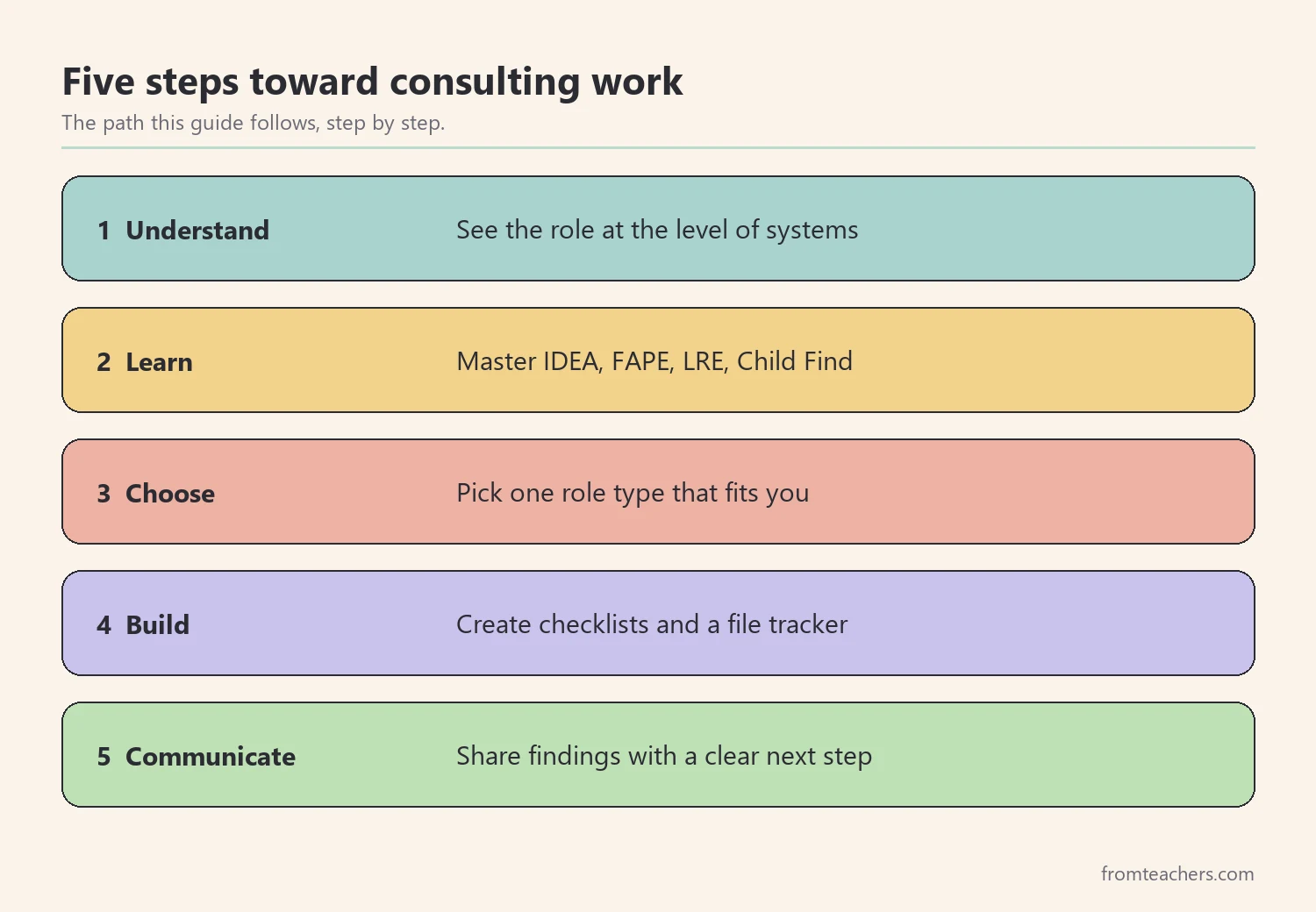
1. Understand what a special education consultant does
First, picture the role at the level of systems. A teacher serves a caseload. In contrast, a special education consultant helps many teams improve how services are planned, written, delivered, and documented. The student is still the reason for the work, but the consultant’s direct client is usually a school, a district, or an agency.
Districts bring in outside support for several common reasons:
- Staff shortages: vacant positions leave caseloads and paperwork uncovered.
- Compliance concerns: files need review before or after a monitoring visit.
- New programs: a district wants help designing or launching a service.
- Training needs: new staff need coaching on IEPs, data, or meetings.
- Complex cases: a team wants an outside view on a difficult situation.
Also, the day to day work is varied. A special education consultant may spend Monday reviewing files remotely, Wednesday on site facilitating meetings, and Friday writing a summary report. That mix is one reason many educators enjoy the role, and one reason it demands strong organization.
Worked example. Dana lists the tasks she already does informally: answering timeline questions, helping a new teacher write goals, and calming a tense meeting. She notices that each one maps to a consulting role: compliance support, coaching, and facilitation. As a result, consulting starts to feel less like a leap and more like a shift in who her client is.
However, Dana also notices what would change. As a special education consultant, she would not see the same students every day, and she would often leave before a plan is fully in place. Some educators miss that daily connection. Therefore, it is worth asking early whether system level impact feels as rewarding to you as classroom impact.
2. Learn the compliance foundations
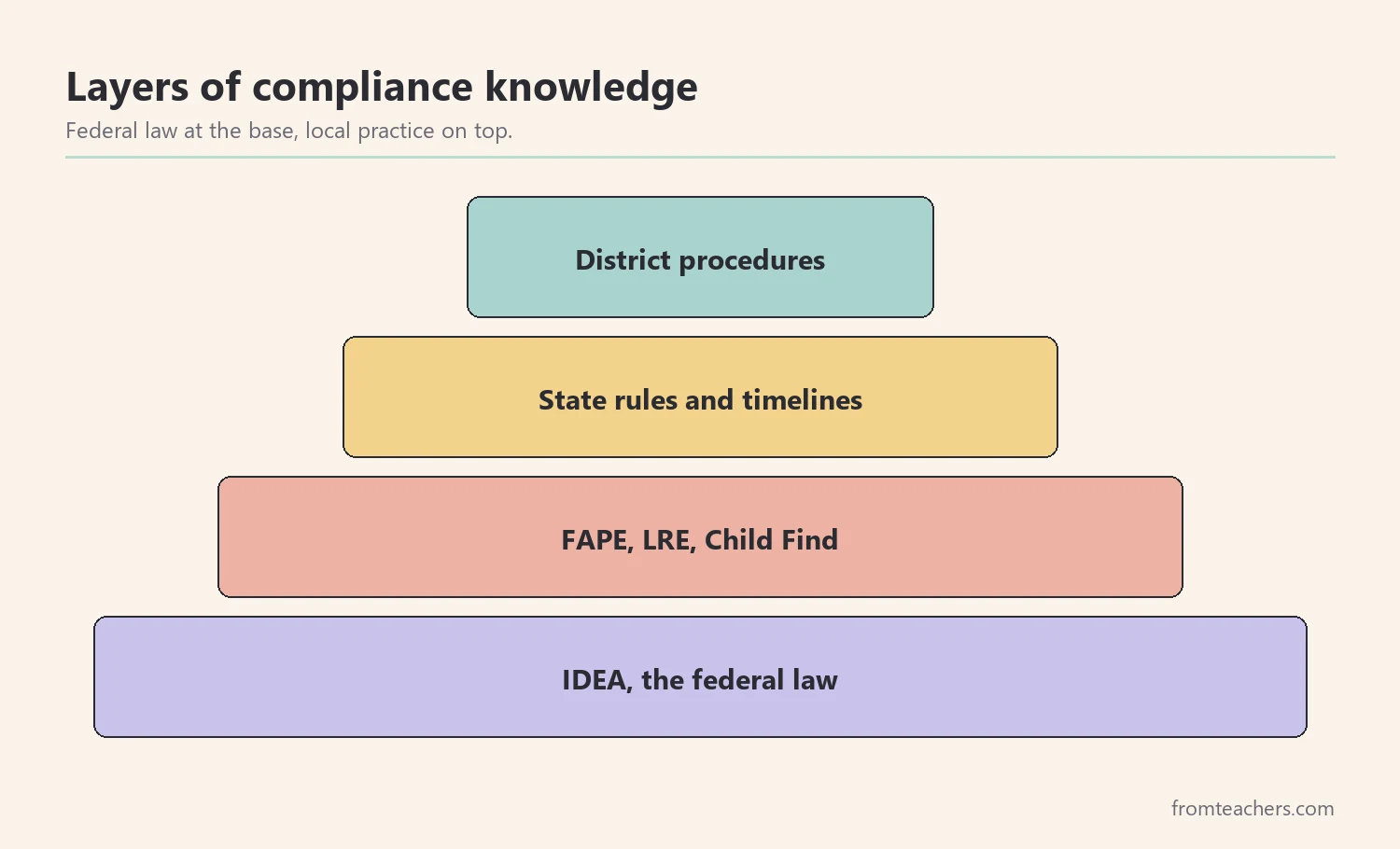
Next, strengthen the legal and procedural basics. Districts hire a special education consultant to reduce risk, so accuracy matters more than charm. You do not need to be a lawyer, but you do need a clear working grasp of the core ideas and your state’s procedures.
| Term | What it means in practice |
|---|---|
| IDEA | The federal law that governs special education services |
| FAPE | A free appropriate public education for each eligible student |
| LRE | Learning alongside peers without disabilities to the maximum extent appropriate |
| Child Find | The duty to locate, identify, and evaluate students who may need services |
In addition, learn the timelines your state sets for evaluations, eligibility, annual reviews, and reevaluations. Timelines differ by state, and districts often have local procedures too. Therefore, always check the current state guidance instead of relying on memory or on another state’s rules.
Beyond the four core terms, review procedural safeguards, prior written notice, and how your state handles disagreements between families and schools. You will not resolve disputes yourself, yet a special education consultant should recognize when a situation needs the district’s legal or leadership team. Moreover, practice explaining these ideas in plain language. A principal or a parent does not need jargon. They need to know what the rule requires and what the team should do next.
Worked example. Dana creates a one page reference for her state: the key timelines, the required IEP components, and where the official guidance lives. She tests it by explaining LRE to a friend outside education in under a minute. When the friend can repeat it back, Dana knows the explanation is clear enough to use with a school team.
3. Choose the special education consultant role that fits you
Then, look at the main role types and match them to your strengths. Each role asks for different skills and offers a different kind of week.
- IEP file audits: reviewing records for missing components, timelines, and alignment between goals, services, and data.
- Meeting facilitation: guiding IEP meetings so they stay focused and respectful.
- Corrective action support: helping a district plan and document fixes after a finding.
- Interim coordinator roles: covering a vacant leadership position for a set period.
- Professional development: running workshops and coaching new staff.
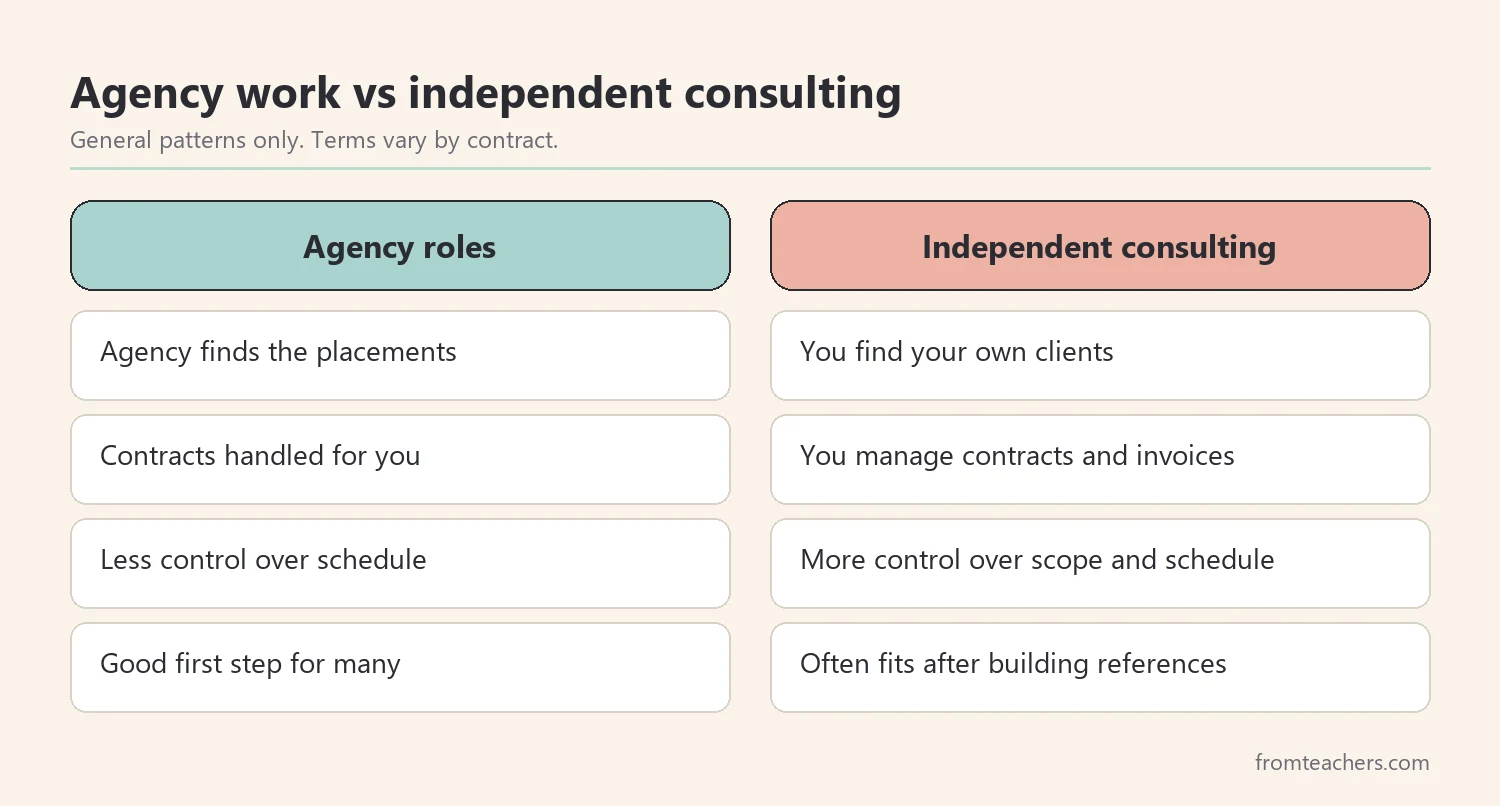
Furthermore, decide how you want to work. Some educators join an agency that places them with districts and handles contracts. Others build an independent practice and find clients directly. Neither is better for everyone, so compare them honestly.
For instance, agency work can offer steadier placements and less paperwork about contracts, while independent work offers more control over clients, scope, and schedule. On the other hand, independent consultants usually handle their own marketing, invoicing, and insurance questions. Ask people who do each kind of work what a typical month looks like before you commit.
If you want a structured overview of these options before you decide, The Special Education Consultant guide to IEP compliance and district support roles walks through core roles, interim and training work, and agency versus independent consulting in 31 slides.
Worked example. Dana enjoys detailed review work and feels calm in tense meetings, but she does not want to manage contracts yet. So she decides to look first at agency roles focused on file audits and facilitation. She notes that independent consulting may fit later, once she has references and a clear specialty.
4. Build tracking systems and run a sample review
After choosing a direction, build the tools you will use every day. A special education consultant lives by timelines and checklists. Clear tracking protects students, supports the district, and makes your reports credible.
Start with a simple file review checklist. Typical items include present levels, measurable annual goals, how progress will be reported, services and minutes, accommodations, transition planning where required, and meeting dates against timelines. Then use a tracker that shows each file, each item, and a short note.
In addition, keep a simple timeline tracker for active cases: due dates for evaluations, eligibility meetings, annual reviews, and reevaluations. Many districts already use a case management system, so learn to read its reports quickly. Often, the most valuable thing a special education consultant brings is a calm, consistent way to see what is due and what is overdue.
Also, practice on files you are allowed to review, or on fully fictional sample files. Never take real student records home or share them outside the people authorized to see them. Confidentiality is part of the job from day one.
Worked example. Dana builds a fictional set of 12 sample files to test her checklist. Her review finds that 7 files are complete, 3 are missing progress reports, and 2 have annual reviews past the due date. That adds up to 12 files, with 5 needing follow up. She then writes a short summary: what was found, why it matters, and the next action for each group.
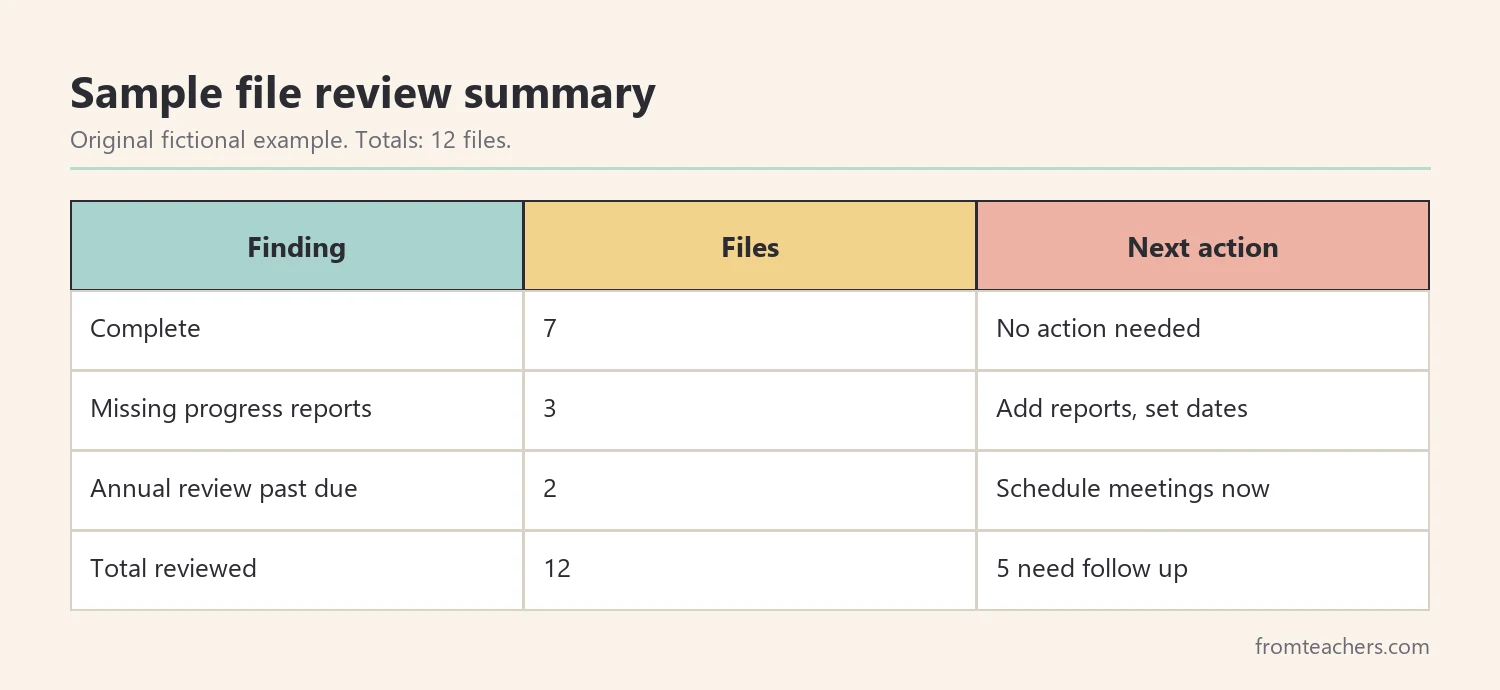
In short, a clear tracker turns a pile of findings into a plan the district can act on. It also gives you a work sample you can describe when you apply for roles. Keep the sample fully fictional so you can share it freely in interviews.
5. Communicate well and take your first steps as a special education consultant
Finally, focus on communication, because it decides whether your findings lead to change. Teachers may feel judged during an audit. Administrators may feel pressure about timelines. A good special education consultant names problems clearly while keeping the tone supportive and practical.
Useful habits include:
- Lead with purpose: “The goal is to make sure every student’s services are documented.”
- Describe, do not blame: “Three files are missing progress reports” rather than “staff forgot.”
- Offer a next step: pair every finding with a simple action and a date.
- Expect resistance: listen first, then return to the shared goal.
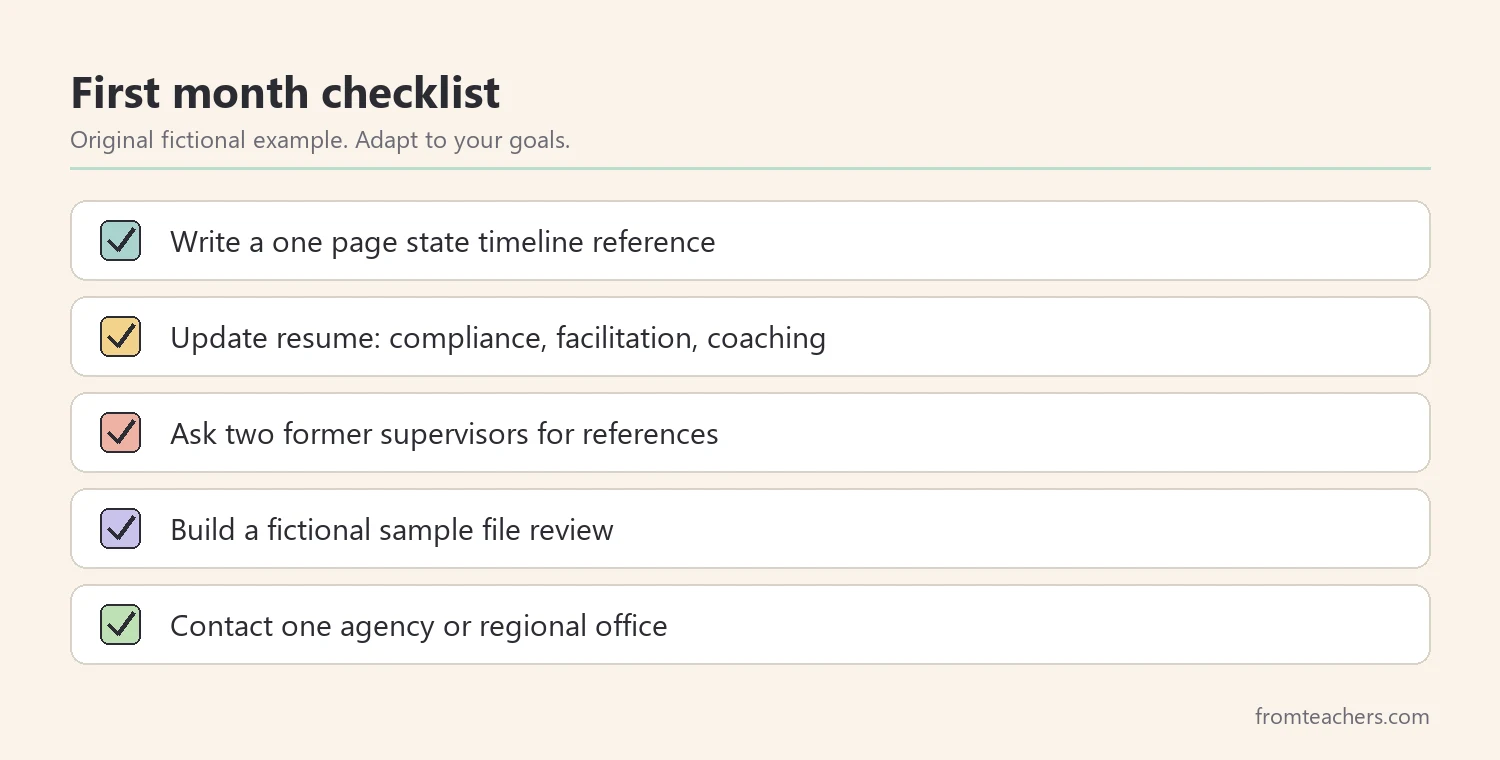
Next, plan your first steps. Update your resume to highlight compliance, facilitation, and coaching. Gather references who have seen that work. Then talk with an agency, a regional education office, or a nearby district about what support they need.
Worked example. Dana practices a short script for sharing audit results with a teacher: purpose, findings, one next step, and an offer to help. Then she sets three small goals for the next month: update her resume, ask two former supervisors for references, and contact one agency. She keeps teaching while she explores, which lets her test the role without risk.
Common mistakes and how to avoid them
- Relying on memory for timelines. Fix: check current state guidance for every project.
- Taking every role offered. Fix: choose a clear specialty first, then expand.
- Writing findings that sound like blame. Fix: describe facts and pair each with a next step.
- Weak tracking. Fix: use one checklist and one tracker for every review.
- Handling records carelessly. Fix: follow district confidentiality rules at all times.
- Leaving teaching too quickly. Fix: test the work through short projects first.
Questions teachers and parents ask about special education consultant work
What background does a special education consultant usually have?
Many come from special education teaching, related services, school psychology, or administration. Requirements differ by state, agency, and role. Therefore, check each posting and your state’s licensing rules rather than assuming one path.
Do parents ever work with a special education consultant?
Some consultants work for districts, while others support families in understanding the IEP process. The role and its limits should be clear from the start. A consultant is not a substitute for legal advice when a formal dispute is involved.
Is consulting work remote or on site?
Often it is a mix. File reviews and reports can sometimes be done remotely, while meetings, coaching, and interim roles usually need time on site. It depends on the contract.
How is an interim coordinator role different from an audit?
An audit is a defined review with a report at the end. An interim role means stepping into a leadership position for a period, handling daily decisions, staff questions, and timelines. Interim work is broader and usually more intense.
How can I tell if consulting is right for me?
Look at what energizes you. If you enjoy systems, documentation, and helping adults improve their practice, consulting may fit. Testing the work through a short project or a training role is a low risk way to find out.
Related reading: accommodations vs modifications in special education, how teachers communicate with parents in special education, and the power of data tracking in special education.
A companion resource for aspiring special education consultants:
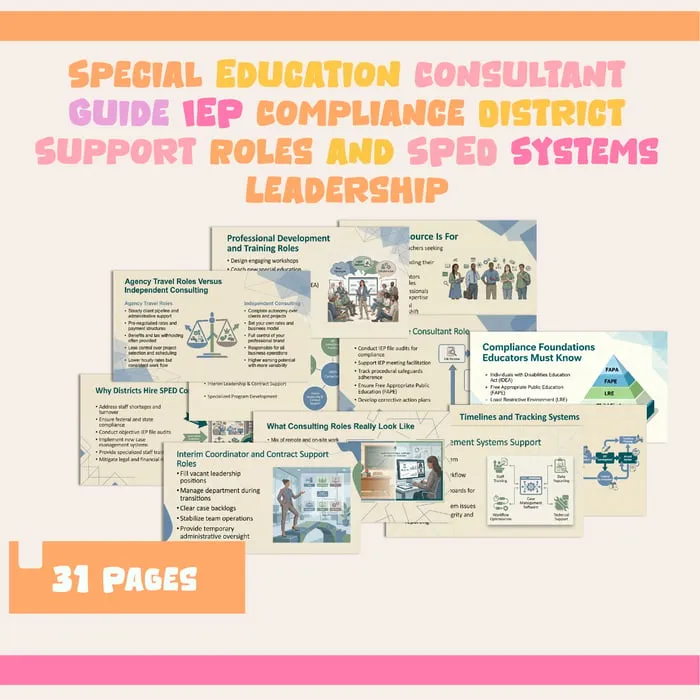
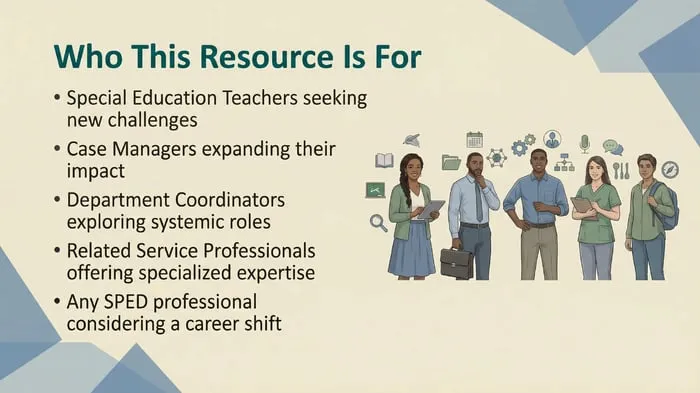
The Special Education Consultant: Your Guide to IEP Compliance and District Support Roles: 31 slides on compliance foundations, core consulting roles, agency versus independent work, tracking systems, and communication scripts for consultant conversations.
Sources and scope
For official and professional background, start with these organizations:
- Individuals with Disabilities Education Act (IDEA), the U.S. Department of Education site for the law, regulations, and guidance.
- The IRIS Center, with free modules on IEPs, instruction, and progress monitoring.
- Council for Exceptional Children, a professional organization for special educators.
- Center for Parent Information and Resources, which explains special education processes for families.
Scope: this guide describes common consulting roles and first steps in general terms. It does not give legal advice, does not cover every state’s rules, and does not promise any job or income outcome.
Key takeaways
- A special education consultant supports systems and teams, not one classroom.
- Solid knowledge of IDEA, FAPE, LRE, Child Find, and state timelines comes first.
- Pick one role type that fits your strengths before expanding.
- Checklists, trackers, and confidentiality make your work credible.
- Clear, supportive communication turns findings into real change.


Leave a Comment