

Knowing the signs a student needs a daily check-in can help you offer support before small struggles grow. Picture Ms. Carter, a fictional grade 6 teacher, watching Zara walk into class. Zara used to chat with friends and start her warm-up right away. Lately, she sits with her hood up, forgets homework and stares at the board.
This list is for teachers in grades 4 to 8 who want a clear way to decide when a short, daily check-in might help. It ranks eight signs from the easiest to notice to the most subtle. For each sign, you will find what it may look like, why it matters and how a check-in could help, with Zara as a fictional example.
Examples are fictional. Adapt to the student’s goals and agreed supports. This is guidance, not a diagnosis.
At a glance
- A check-in is a short, kind conversation, not a consequence.
- Look for changes from the student’s usual pattern.
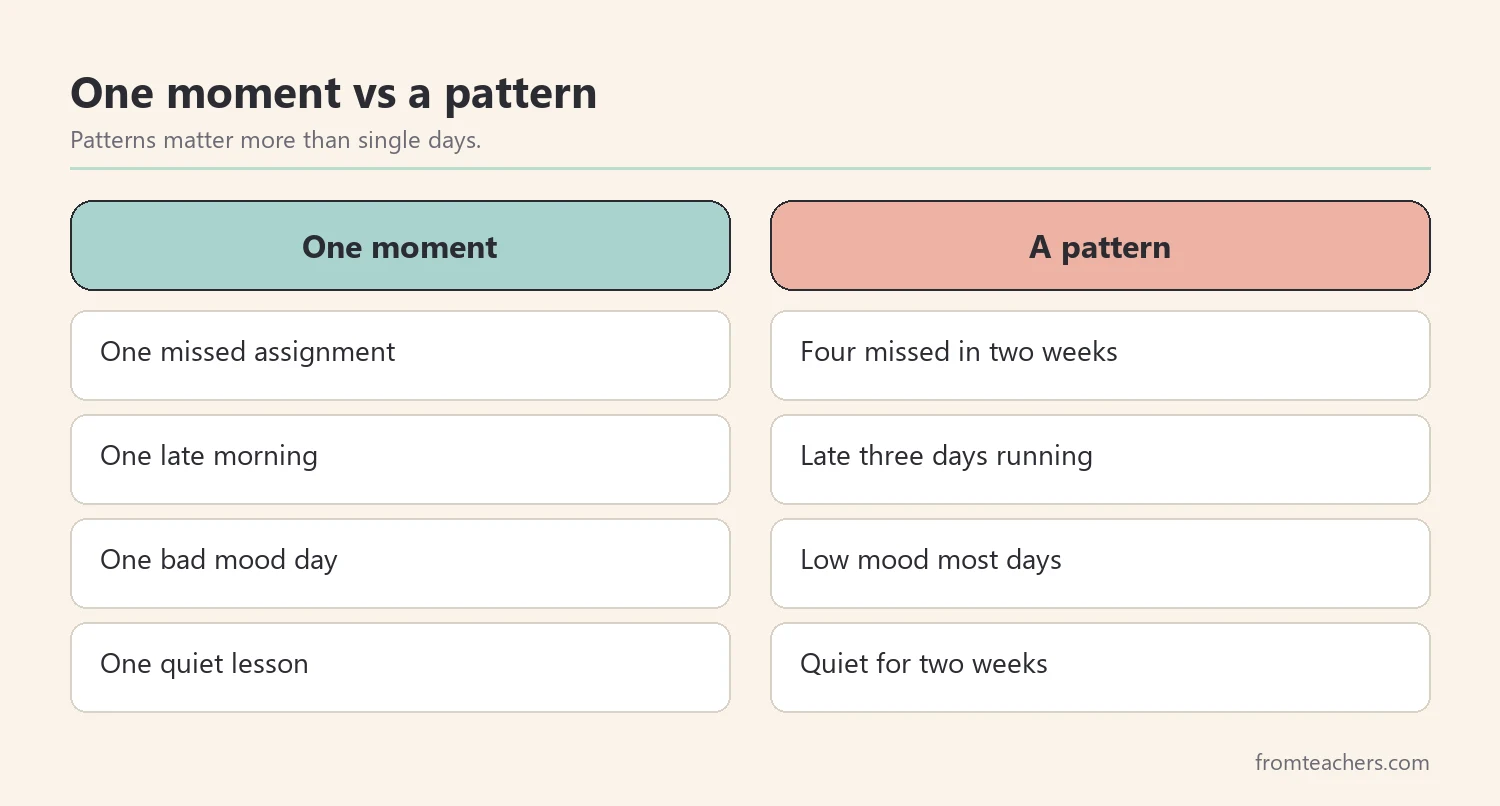
- One sign alone is not a reason to worry, but patterns matter.
- Keep notes short, factual and private.
- Involve the counselor when concerns are serious.
How we ranked these signs
We ranked the eight signs from the easiest for a busy teacher to notice to the most subtle. Early signs, like missing work, show up in records. Later signs, like a quiet change in mood, need closer attention. Subtle signs are not less important. They are simply easier to miss.
Remember that these are not diagnoses. They are signals that a student might benefit from a two-minute daily conversation with a trusted adult. When you see several of these signals, a short routine can give them a steady point of connection. Figure 1 shows the ranking.
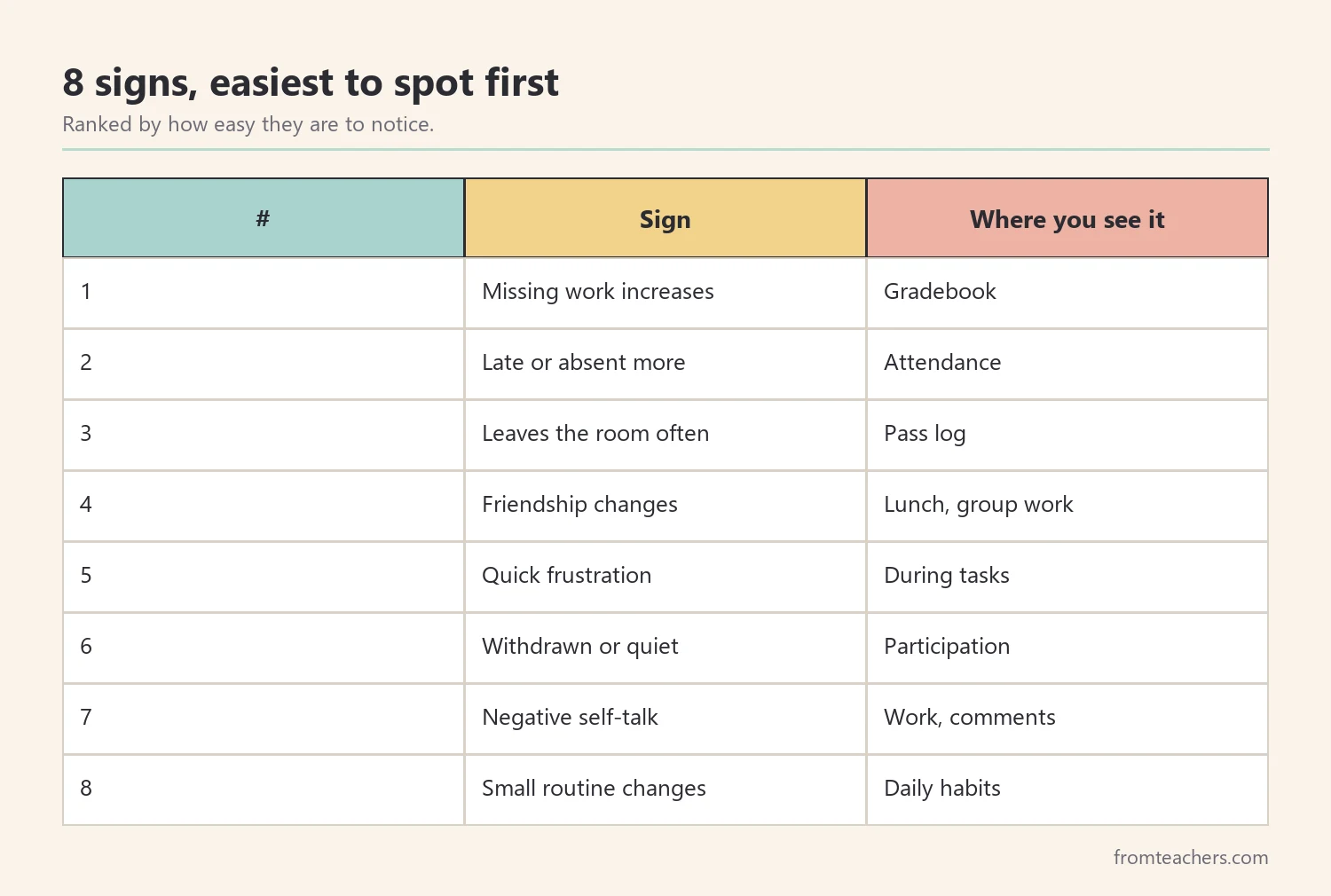
1. Missing work suddenly increases
What it may look like: a student who usually completes work starts missing assignments several times a week.
Why it matters: sudden changes often point to something new, such as stress at home, trouble organizing or a skill gap.
How a check-in helps: a quick morning look at the day’s tasks can help the student plan and feel less overwhelmed.
Example: Zara missed four assignments in two weeks. In the past, she rarely missed any. Ms. Carter noted the change in her planner.
2. Frequent late arrivals or absences
What it may look like: arriving late several days in a row, or missing more school than usual.
Why it matters: attendance changes can reflect sleep, family or emotional difficulties. Missing the start of class also makes the day harder.
How a check-in helps: a warm greeting and a quick plan for the first task can make arriving feel easier.
Example: Zara arrived late three mornings that week. Ms. Carter greeted her quietly and pointed to the warm-up instead of commenting on the time.
3. Repeated requests to leave the room
What it may look like: many trips to the nurse, bathroom or office, especially during certain subjects.
Why it matters: leaving often can be a way to avoid something hard, from a difficult task to a social situation.
How a check-in helps: it gives the student a safe time to mention what feels hard, which may reduce the need to leave.
Example: Zara asked to go to the nurse during every math lesson. During a check-in, she said she felt lost in fractions.
4. Changes in friendships
What it may look like: eating lunch alone, changing seats away from usual friends or seeming left out of group work.
Why it matters: peer relationships are very important in grades 4 to 8. Social difficulties can affect focus and mood.
How a check-in helps: a trusted adult can listen, notice patterns and, if needed, connect the student with the counselor.
Example: Ms. Carter noticed that Zara now worked alone during partner tasks. She did not ask directly about friends but asked how group work felt.
5. More irritability or quick frustration
What it may look like: snapping at classmates, giving up quickly or reacting strongly to small corrections.
Why it matters: irritability can be a sign of stress, tiredness or frustration with a task.
How a check-in helps: rating energy and mood at the start of the day lets the teacher adjust support before frustration builds.
Example: Zara rated her mood “2 out of 5” on Tuesday. Ms. Carter gave her a choice of where to sit for independent work, and the morning went more smoothly.
6. Withdrawn or very quiet behavior
What it may look like: a usually talkative student who stops participating, keeps a hood up or avoids eye contact.
Why it matters: quiet changes are easy to miss in a busy class, because the student is not disrupting anyone.
How a check-in helps: it makes sure the student has a daily moment of positive attention from an adult.
Example: Zara stopped raising her hand. After a week of check-ins, she began answering one question per lesson again.
A structured format, such as a daily reflection journal with SEL check-in and goal setting sheets, gives quiet students a way to share how they feel on paper first.
7. Negative self-talk
What it may look like: comments like “I’m so dumb” or “I can never do this,” written on work or said quietly.
Why it matters: repeated negative self-talk can affect motivation and effort. It is worth noticing and sharing with the counselor when it is frequent or intense.
How a check-in helps: a daily goal and a short reflection give the student evidence of small successes.
Example: Zara wrote “I’m bad at math” on a quiz. In her check-in, she set a small goal: “Ask one question in math.” By Friday, she had met it three times.
8. Small changes in routine or appearance
What it may look like: seeming more tired than usual, forgetting supplies often or changes in daily habits.
Why it matters: these subtle signs can reflect changes at home, sleep or wellbeing. They are the hardest to notice and should be handled with care and privacy.
How a check-in helps: a regular, low-pressure conversation makes it more likely the student will share if something is wrong.
Example: Ms. Carter noticed that Zara often seemed tired. She shared this observation with the school counselor, following school procedures, rather than asking personal questions herself.
What a daily check-in looks like
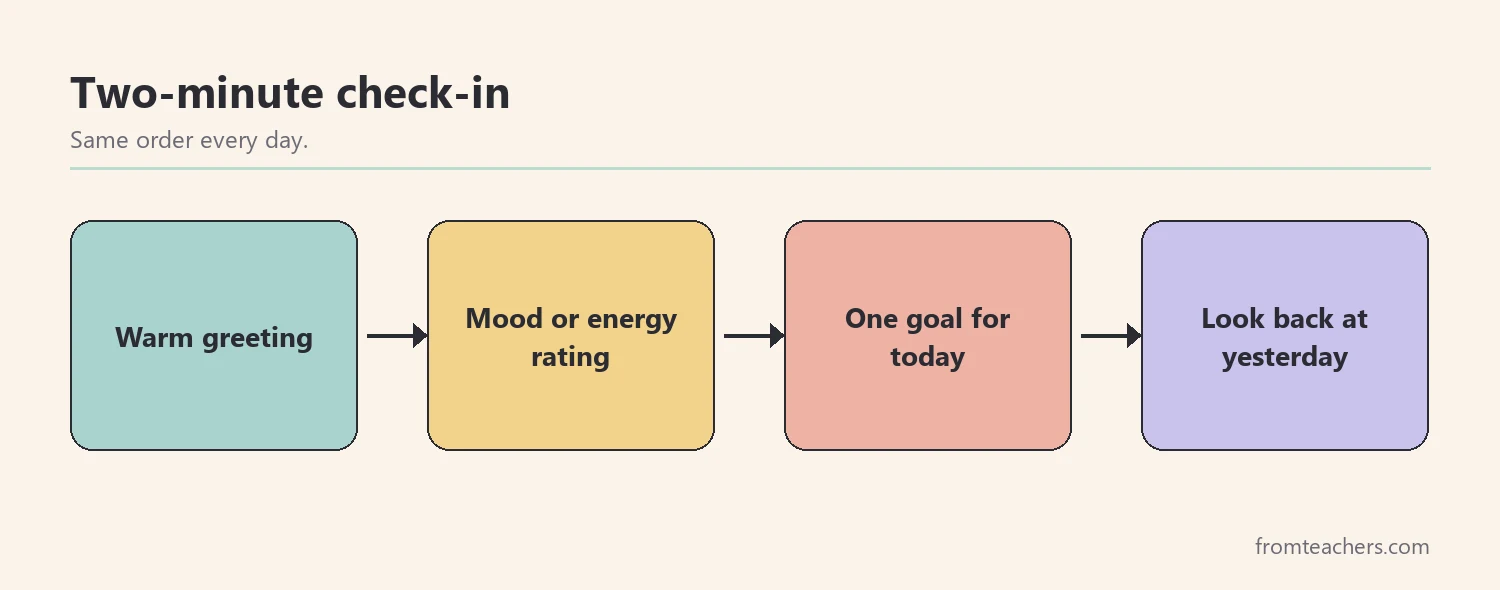
A check-in should take two to three minutes. It usually includes a greeting, a quick mood or energy rating, one goal for the day and a short look back at yesterday. Figure 4 shows a simple flow.
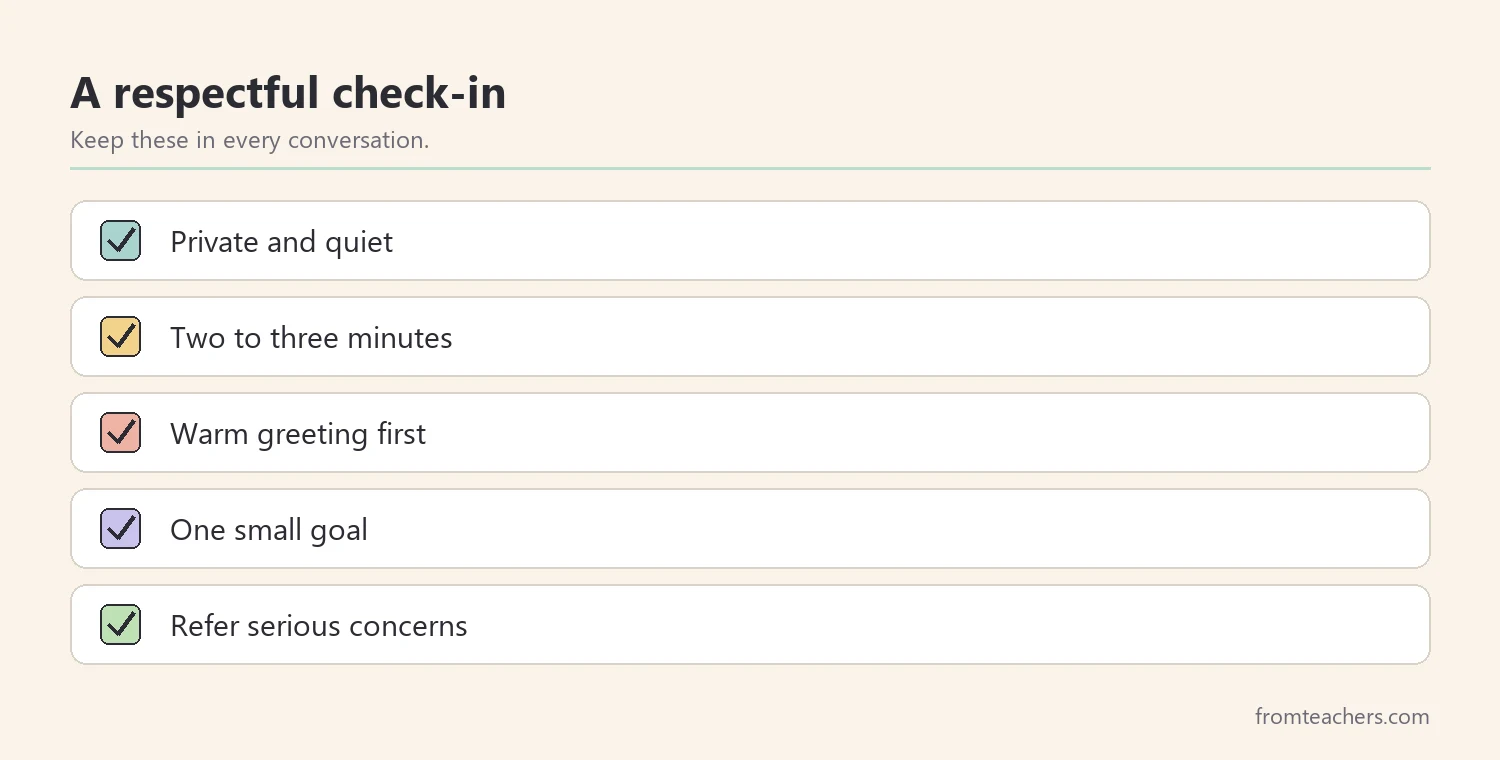
Keep the tone warm and private. Do the check-in at the student’s desk, by the door or at a quiet table, never in front of the class. Also, keep it consistent. The power of a check-in comes from its daily rhythm, not from any one conversation.
Sample check-in notes
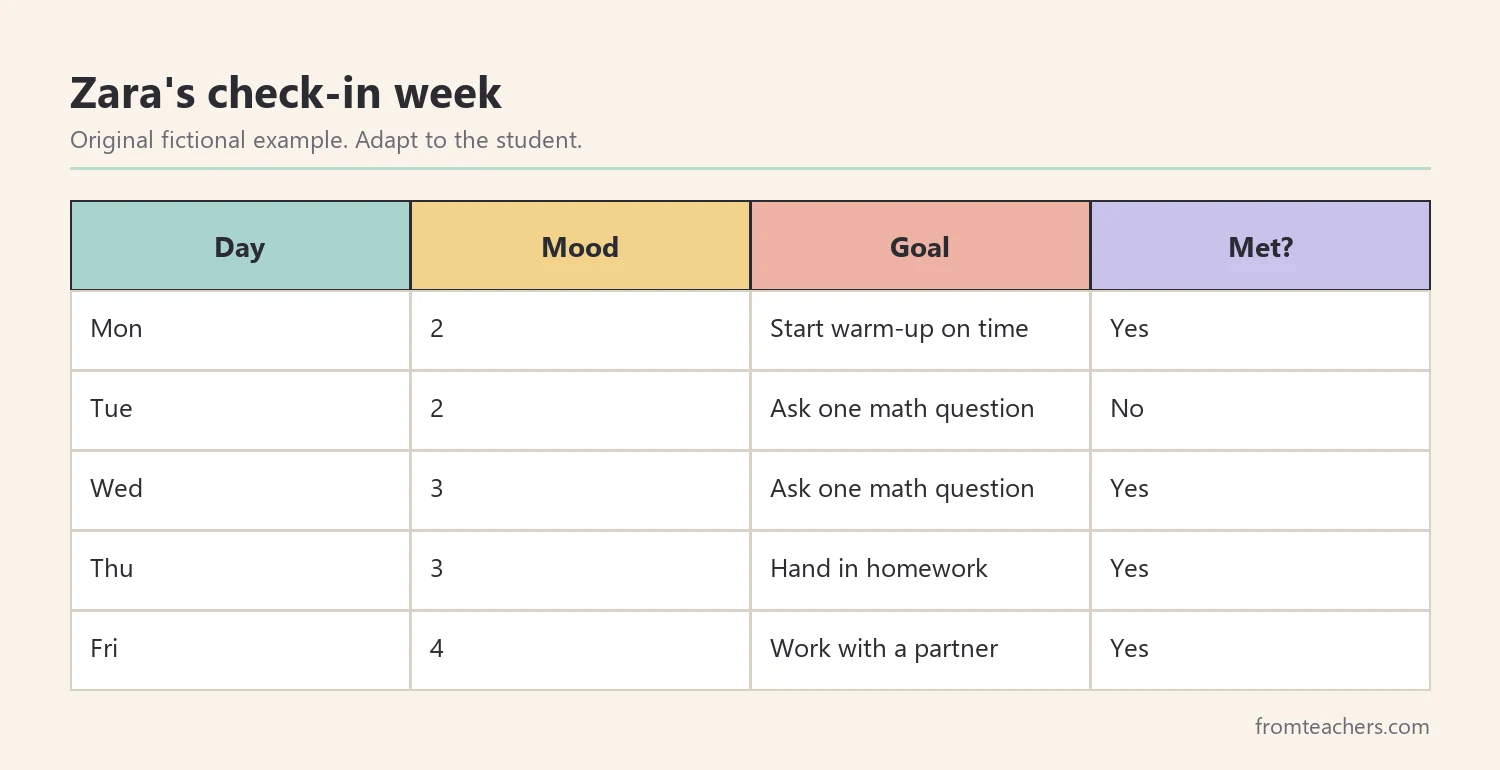
Short notes help you see whether the check-in is helping. Here are Zara’s fictional notes for one week. They show the format only.
| Day | Mood (1 to 5) | Goal | Goal met? |
|---|---|---|---|
| Monday | 2 | Start warm-up on time | Yes |
| Tuesday | 2 | Ask one question in math | No |
| Wednesday | 3 | Ask one question in math | Yes |
| Thursday | 3 | Hand in homework | Yes |
| Friday | 4 | Work with a partner | Yes |
After two weeks, review the notes with the student. Ask what helped and what they would like to change. Some students will want to keep the routine. Others may be ready to check in less often.
When a check-in is not enough
A daily check-in is a light support. It works well for many students, but it is not a replacement for help from counselors, psychologists or families. Watch for signs a student needs a daily check-in, and also for signs that the student needs more than that.
If a student shares anything about safety, harm or abuse, follow your school’s reporting procedures immediately. Similarly, if signs continue or get worse despite check-ins, talk with the counselor and family about next steps. Your notes will help the team understand the pattern.
Common mistakes and how to avoid them
- Treating the check-in as a punishment. Fix: frame it as a support and keep it positive.
- Asking personal questions. Fix: focus on the school day and refer deeper concerns.
- Checking in publicly. Fix: choose a private, quiet moment.
- Skipping days. Fix: keep the routine daily, even when it is short.
- Not tracking anything. Fix: write one line of notes each day.
Questions teachers ask about signs a student needs a daily check-in
How many signs should I see before starting?
There is no fixed number. A clear change from the student’s usual pattern, especially in more than one area, is a good reason to offer a check-in.
Should I tell the family?
It is usually helpful to let families know, in a positive way, that you are offering a short daily routine. Follow your school’s communication practices.
Who should do the check-in?
Any trusted adult the student connects with, such as a teacher, counselor or paraprofessional. Consistency matters more than role.
How long should a check-in routine last?
Many teachers try it for two to four weeks, then review progress with the student and decide together.
Is this the same as Check-In Check-Out?
Check-In Check-Out is a structured intervention used in some schools’ tiered support systems. A simple daily check-in is lighter, though it shares the idea of regular adult connection.
Related reading: 5 Practical Teaching Tips to Boost Classroom Focus, ADHD Children Support Strategies, and Positive Alternatives to Behavior Charts.
You may also need: Daily Routine Journal for Students.
A companion resource for teachers starting daily student check-ins:
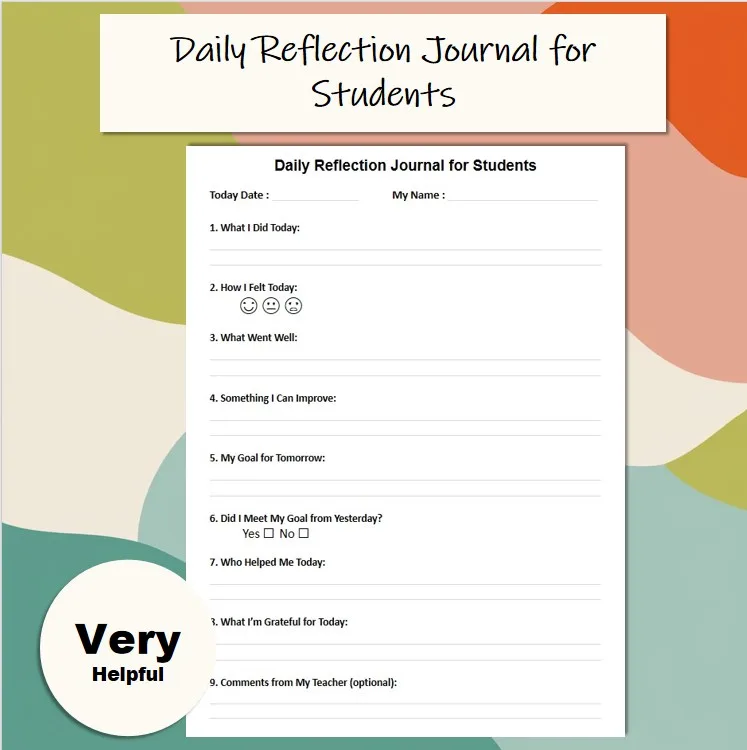
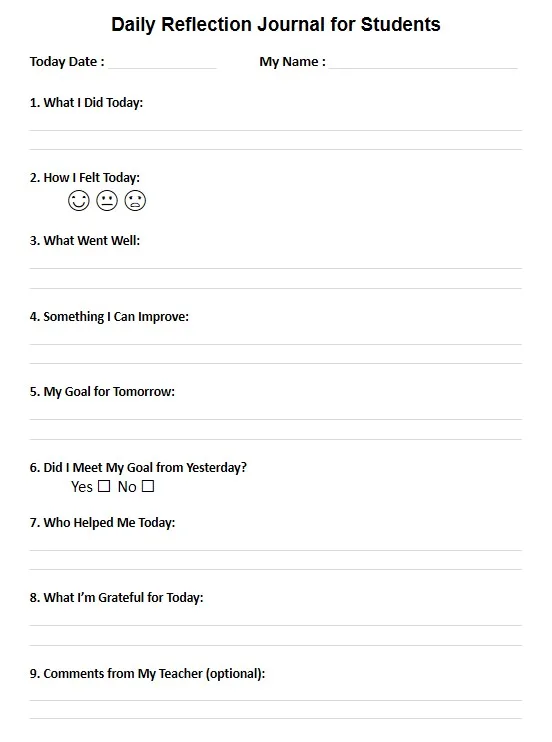
Daily Reflection Journal for Students: SEL Check-In & Goal Setting Sheet: a one page journal, editable or print-ready, with name and date fields, what I did today, a three face feeling scale, what went well, something I can improve, my goal for tomorrow with a did I meet my goal from yesterday check-in, who helped me today, a gratitude prompt and an optional teacher comment space.
Sources and scope
- CASEL: the Collaborative for Academic, Social, and Emotional Learning, with frameworks and resources on SEL.
- Center on PBIS: guidance on tiered supports, including check-in and check-out style interventions.
- National Association of School Psychologists: resources on student mental health and school-based support.
- Child Mind Institute: articles for educators and families on children’s emotional wellbeing.
This guide helps teachers notice students who may benefit from a short daily check-in. It is not a screening tool or diagnosis. Follow school procedures and involve counselors or psychologists whenever you have safety or wellbeing concerns.
Key takeaways
- Signs a student needs a daily check-in often show up as changes from the usual pattern.
- Obvious signs include missing work and lateness; subtle ones include quiet withdrawal.
- A check-in is short, private, warm and daily.
- Track one line of notes and review after two to four weeks.
- Refer serious or ongoing concerns to the counselor and family.










Leave a Comment