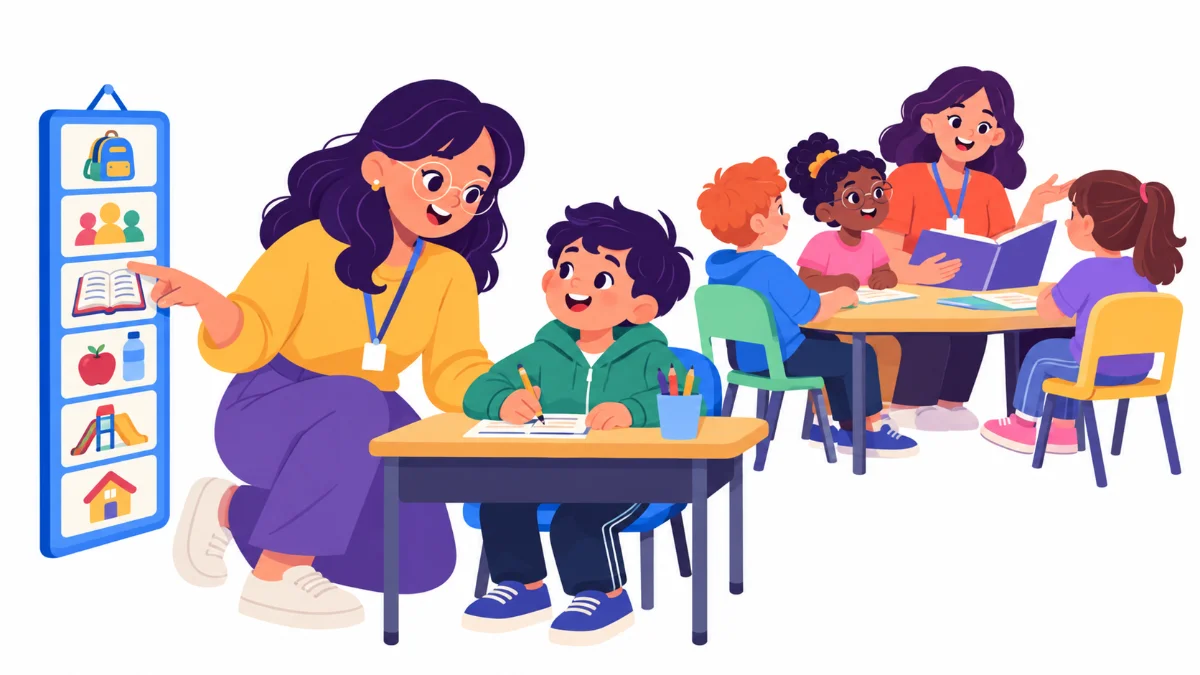

Classroom management tips for paraprofessionals are hard to find, even though aides often spend more one to one time with students than anyone else in the room. Picture Mr. Luis, a new paraprofessional in a K to 2 special education classroom. On his first week, he repeated “sit down” to a seven year old named Ava a dozen times, and each time she wandered further from her desk.
This list is for paraprofessionals, classroom aides and one to one support staff in special education. It ranks eight habits from the easiest to start to the ones that take practice. Each tip shows what to do, what to avoid, why it matters and how it changed Mr. Luis’s days with Ava. At the end, you will find a simple first month plan and questions to bring to your teacher.
Examples are fictional. Adapt to the student’s goals and agreed supports. This is guidance, not a diagnosis.
At a glance
- Follow the teacher’s plan; ask before changing anything.
- Tell students what to do, not only what to stop.
- Notice and name good behavior often.
- Use visuals and fewer words during hard moments.
- Stay consistent with the rest of the team.
How we ranked these tips
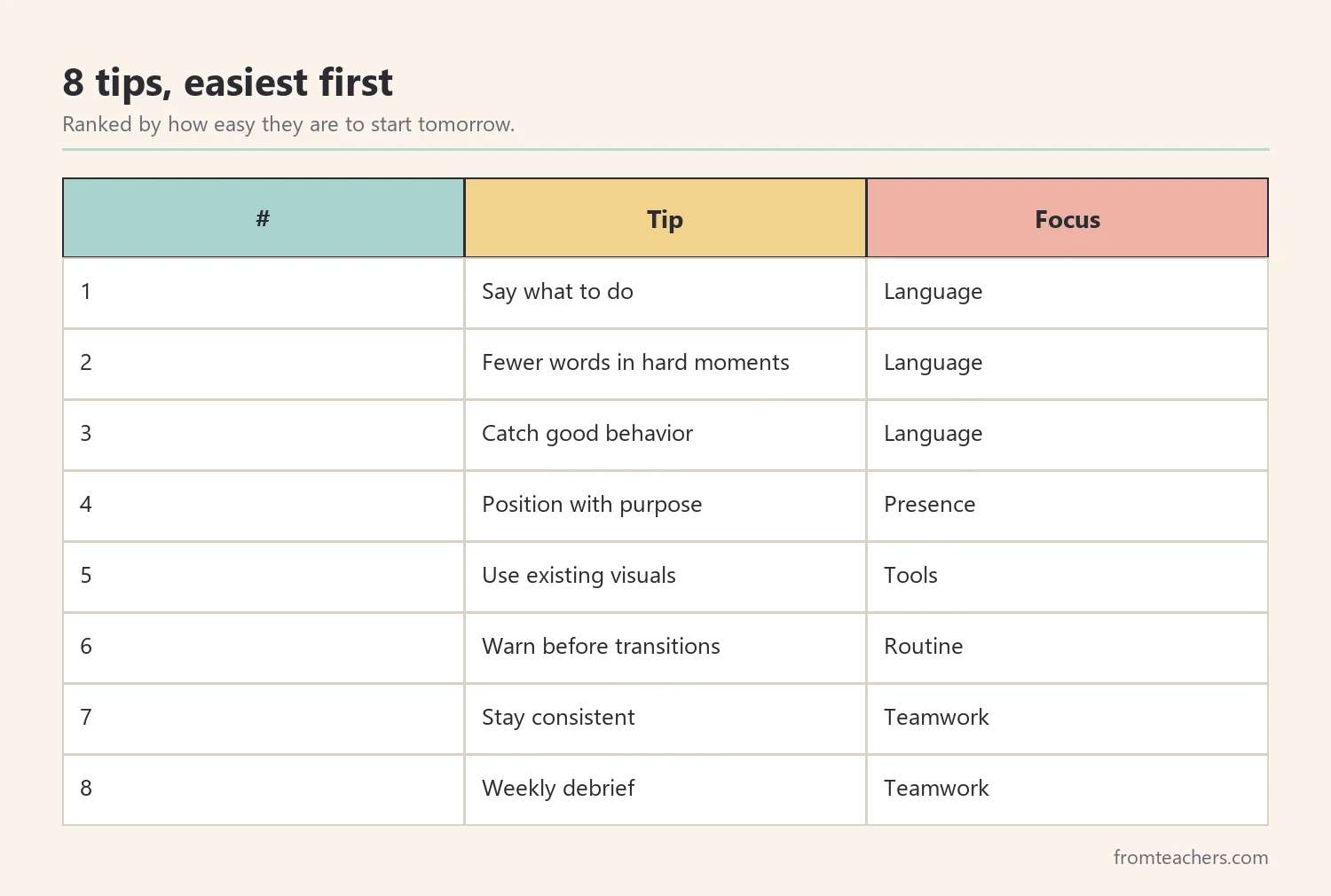
We ranked the eight tips by how easy they are to start tomorrow. Tips 1 to 3 change how you talk. Tips 4 and 5 change where you stand and what you use. Also, tips 6 to 8 depend on teamwork and take a few weeks to build. Figure 1 shows the ranking.
A note before the list: your teacher leads the classroom, and many students have individual behavior plans. These tips work inside that plan. When in doubt, ask the teacher before you try something new.
1. Say what to do, not only what to stop
Do: give a clear, positive direction, such as “Feet on the floor and pencil in hand.”
Do not: repeat “stop,” “no” or “sit down” without telling the student what comes next.
Why it matters: many students, especially those with language or attention needs, follow a clear action more easily than a ban.
Example: Mr. Luis switched from “sit down” to “Chair, then crayons.” Ava returned to her seat on the second try.
2. Use fewer words in hard moments
Do: keep directions short and calm, two to five words when a student is upset.
Do not: explain, lecture or argue while the student is overwhelmed.
Why it matters: stress makes language harder to process. Short phrases are easier to follow.
Example: When Ava cried at the end of recess, Mr. Luis said only “Breathe with me,” then “Line up.” She followed both.
3. Catch good behavior often
Do: name specific positive behavior right away: “You started your work. Nice job.”
Do not: speak to a student only when something goes wrong.
Why it matters: specific praise shows students exactly what to repeat. Positive attention also builds trust with the adult.
Example: Mr. Luis set a goal of noticing Ava doing something right every five minutes. By Friday, she smiled at him when she sat down.
4. Position yourself with purpose
Do: stand or sit where you can see your students and reach them quietly.
Do not: stay at the back of the room or hover so close that the student feels watched.
Why it matters: calm, nearby presence often prevents problems before they start.
Example: Mr. Luis moved to a chair at the end of Ava’s table during independent work. She stayed seated longer without any reminders.
5. Use the visuals the teacher already set up
Do: point to the visual schedule, first then board or timer instead of only talking.
Do not: ignore the visuals or create new ones without asking.
Why it matters: visuals give the same message every time, which supports students who need predictability.
Example: When Ava refused math, Mr. Luis pointed to her first then card: math first, then blocks. She completed four problems.
6. Prepare students for transitions
Do: give a warning before changes, such as “Two more minutes, then lunch.”
Do not: end an activity suddenly without notice.
Why it matters: transitions are a common time for difficult behavior in many special education classrooms. A warning helps students shift.
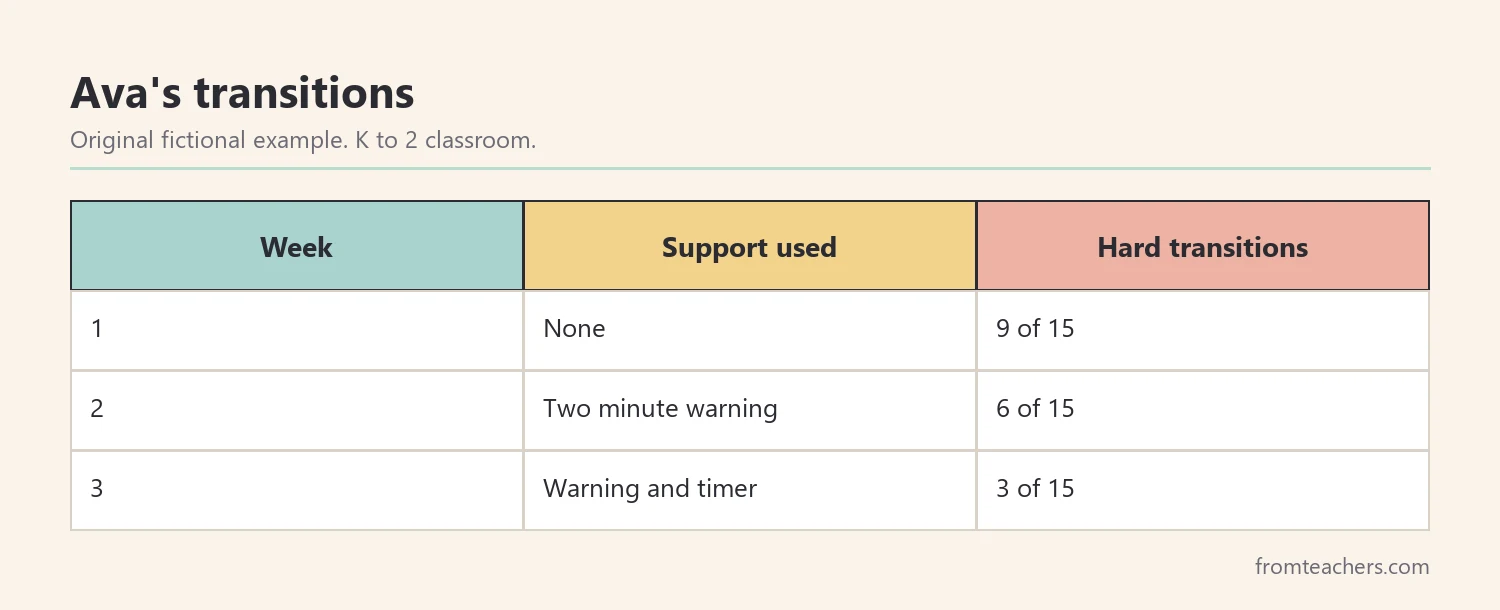
Example: Mr. Luis started giving Ava a two minute warning with a visual timer. Figure 2 shows how her transitions changed over three weeks.
7. Stay consistent with the team
Do: use the same words, rules and rewards as the teacher and other staff.
Do not: make side deals, such as extra screen time the teacher does not know about.
Why it matters: mixed messages confuse students and can make behavior harder to change.
Example: Mr. Luis learned that the teacher said “safe hands,” not “hands to yourself.” Using the same phrase helped Ava respond faster.
8. Debrief with the teacher every week
Do: ask for ten minutes each week to share what worked and what did not.
Do not: wait until a big problem to talk.
Why it matters: regular check-ins catch small issues early and help you learn the teacher’s approach.
Example: In their first debrief, the teacher showed Mr. Luis a visual guide of classroom dos and don’ts. The Classroom Management Dos and Don’ts comic guide for SPED teachers pairs each common habit with a better alternative, which made the team’s expectations easy to see and remember.
Do versus do not at a glance
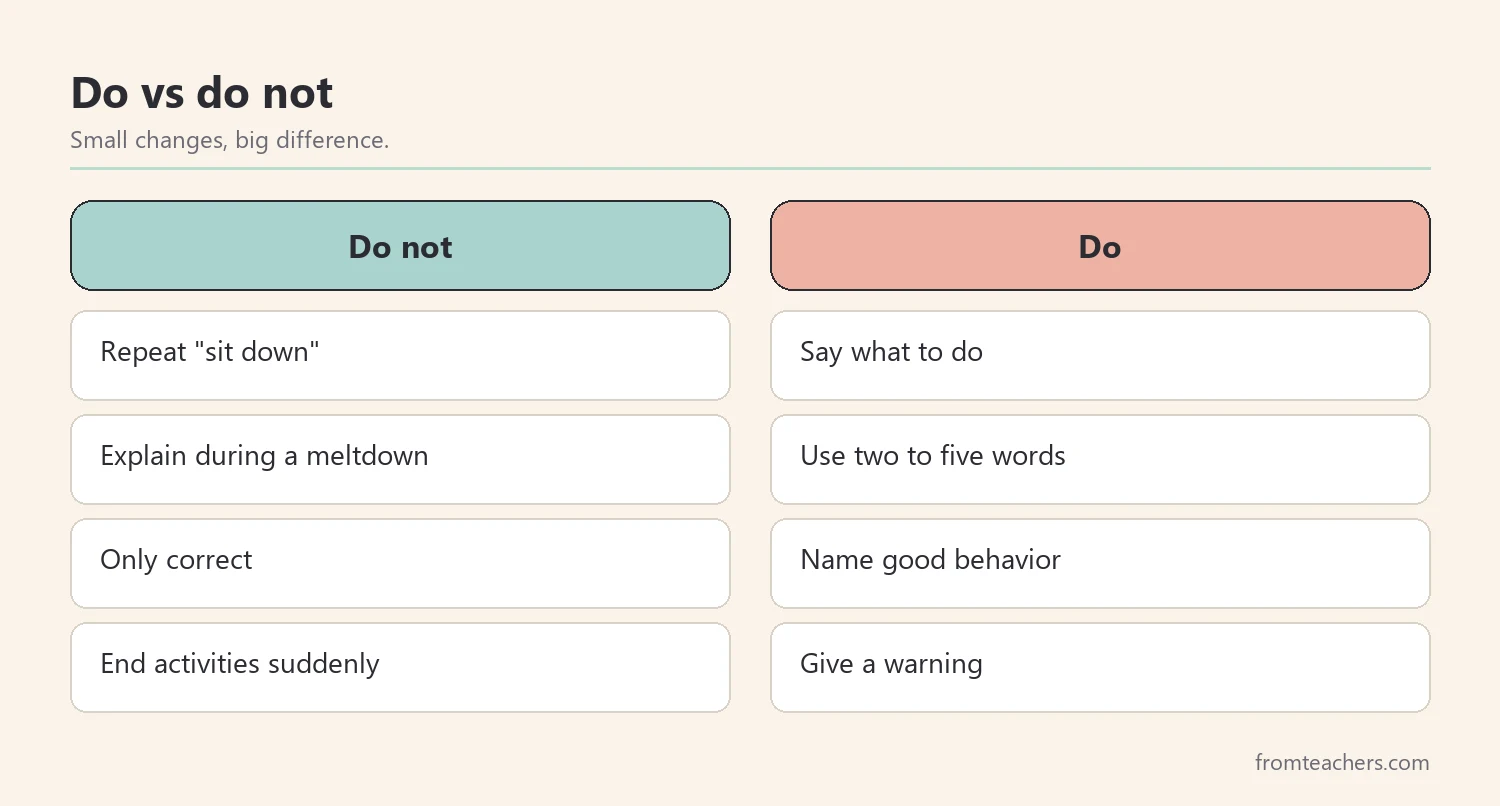
Side by side comparisons make habits stick. Figure 3 summarizes the main classroom management tips for paraprofessionals as do and do not pairs.
| Situation | Instead of | Try |
|---|---|---|
| Student out of seat | “Sit down” again and again | “Chair, then crayons” |
| Student upset | Long explanation | “Breathe with me” |
| Work refusal | Arguing | Point to first then card |
| End of activity | Sudden stop | Two minute warning |
Your first month as a paraprofessional
Starting a new role is a lot. A simple plan helps you focus on the right things first. Figure 4 shows a four week plan Mr. Luis followed with his teacher.
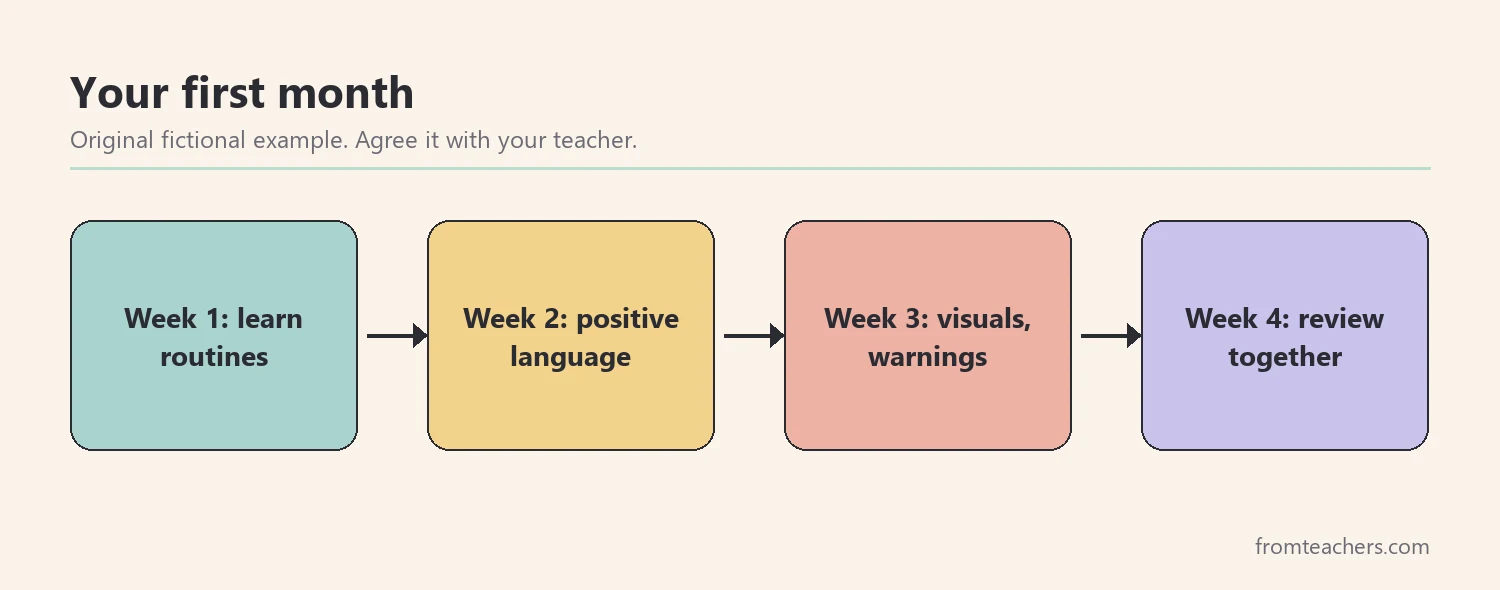
In week one, focus on learning names, routines and individual plans. In week two, practice positive directions and praise. Also, in week three, add visuals and transition warnings. By week four, you and the teacher can review what is working.
Above all, be patient with yourself. Most new aides need several weeks to feel confident, and asking questions is a sign of good practice, not weakness.
Questions to bring to your teacher
Many paraprofessionals are unsure what to ask. Figure 5 lists five questions that help you understand the classroom quickly.
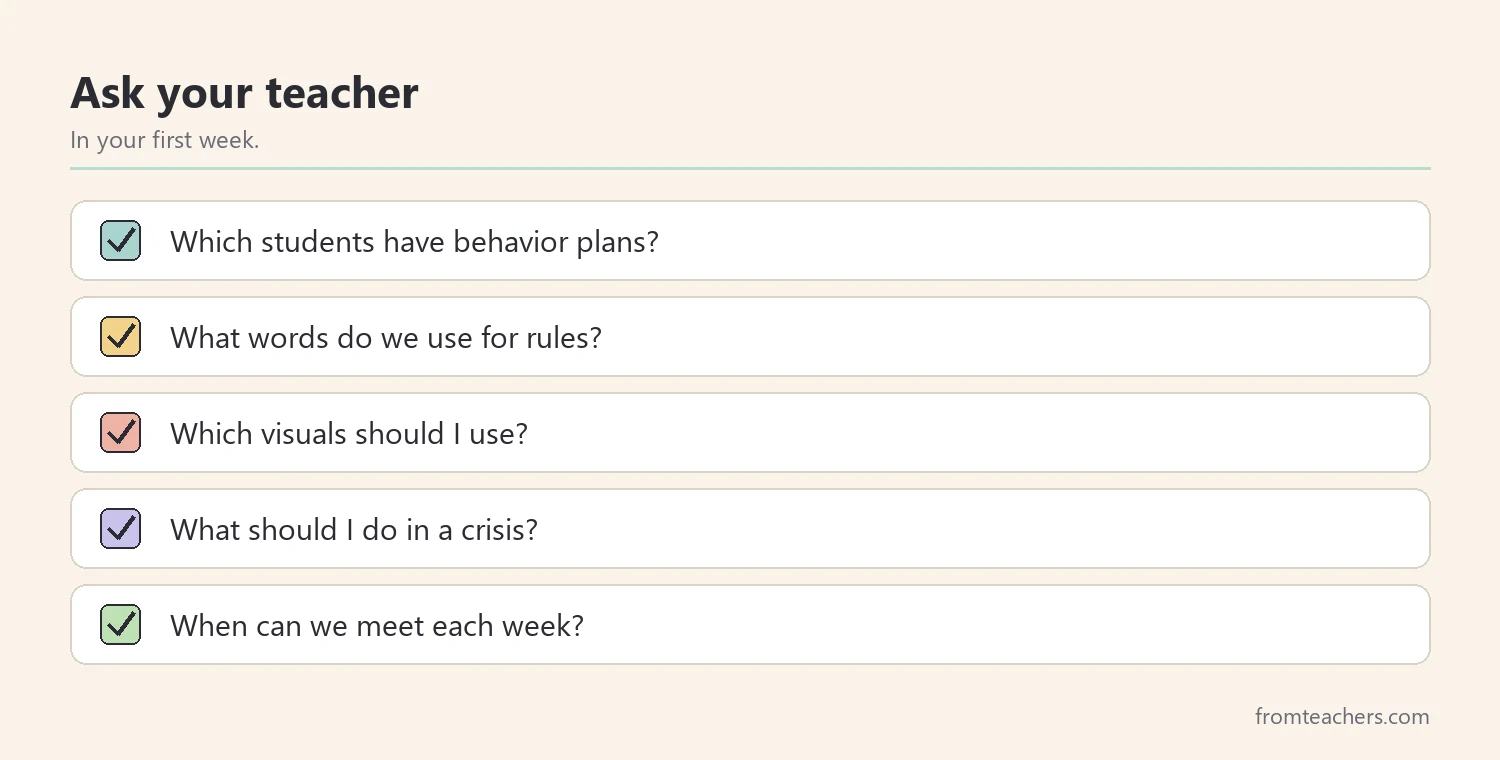
Write down the answers in a small notebook. Over time, that notebook becomes your own guide to the classroom and its students.
Adapting the tips to different students
Every student in a special education classroom is different, so the same tip can look different from one child to the next. For example, a student who uses a communication device may need you to point to a picture instead of speaking. Similarly, a student with sensory needs may respond better if you lower your voice and reduce your movement nearby.
Older students need a different tone. With a ten year old, “Chair, then crayons” might feel babyish, so you could say, “Grab your seat, we start in one minute.” The idea stays the same: a short, clear, positive direction. Only the words change.
Some students also have specific triggers listed in their plan, such as loud noises, unexpected touch or certain tasks. Read those notes carefully during your first week. If a plan says to avoid a phrase or an action, follow it even when another approach seems faster.
Mr. Luis worked with three students. Ava responded to first then cards, Malik needed quiet movement breaks and Zoe preferred written reminders on a sticky note. Keeping a short list of what works for each student helped him switch quickly between them during the day.
Finally, remember that classroom management is about relationships as much as rules. Learn something each student enjoys, greet them by name and celebrate small wins. Students tend to follow adults they trust, and trust is built in ordinary, calm moments long before a difficult one.
Common mistakes and how to avoid them
- Changing the plan on your own. Fix: check with the teacher first.
- Talking too much during a meltdown. Fix: use short, calm phrases.
- Only correcting. Fix: notice good behavior several times an hour.
- Doing the work for the student. Fix: prompt, then step back.
- Discussing students in public spaces. Fix: keep student information private.
Questions aides ask about classroom management tips for paraprofessionals
Can I give consequences to students?
Follow your teacher’s plan and school policy. Many classrooms ask aides to use agreed responses and leave bigger decisions to the teacher.
What if a strategy does not work right away?
Most new habits take time to show results. Use it consistently for a week or two, then discuss it with the teacher.
How do I handle a student who only listens to the teacher?
Build a relationship through positive attention and use the same words and visuals as the teacher. Trust usually grows over time.
Should I help students with their work?
Yes, but prompt before helping. Give the least help needed, so the student builds independence.
What should I do in an unsafe situation?
Follow the school’s safety plan and the student’s behavior plan. Get help from the teacher or other staff right away.
Related reading: Positive Alternatives to Behavior Charts, Special Education Strategies, and Meltdowns vs Tantrums.
You may also need: Behavior Contracts and Individual Behavior Plans Toolkit.
A companion resource for classroom management tips for paraprofessionals:
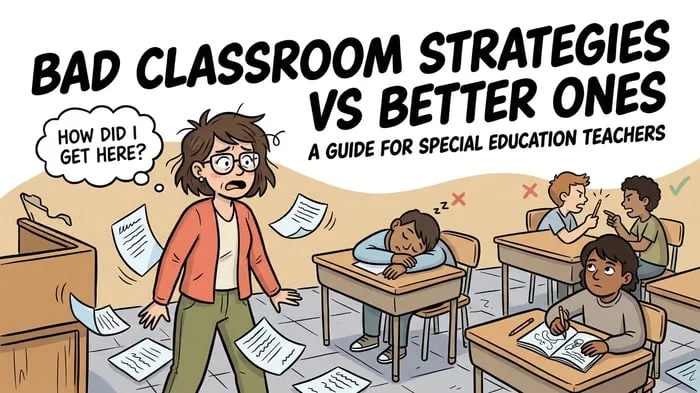
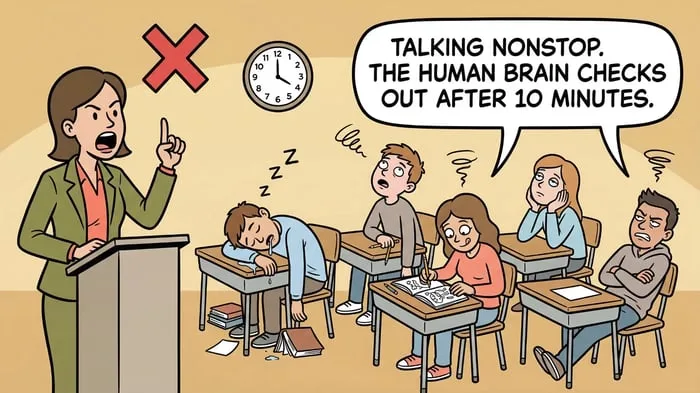
Classroom Management Strategies: Dos & Don’ts for SPED Teachers: a 51 page comic style visual guide that pairs a what not to do scene with a do this instead scene for common classroom habits, covering engagement, behavior, transitions, differentiation and communication, built with special education teachers in mind and useful for sharing with mentees and new team members.
Sources and scope
- Center on PBIS: resources on positive, proactive classroom practices and behavior support.
- Center for Parent Information and Resources: information on special education roles, services and supports.
- Understood.org: plain-language guidance on behavior and learning differences for educators.
- National Center for Learning Disabilities: resources on supporting students with learning and attention issues.
This list covers everyday classroom management habits for paraprofessionals working under a special education teacher. It does not replace school policies, safety plans or individual behavior plans written by the team.
Key takeaways
- Strong classroom management tips for paraprofessionals start with clear, positive language.
- Use fewer words when students are upset.
- Catch good behavior often and specifically.
- Use the teacher’s visuals and warnings for transitions.
- Stay consistent and debrief with the teacher every week.







Leave a Comment