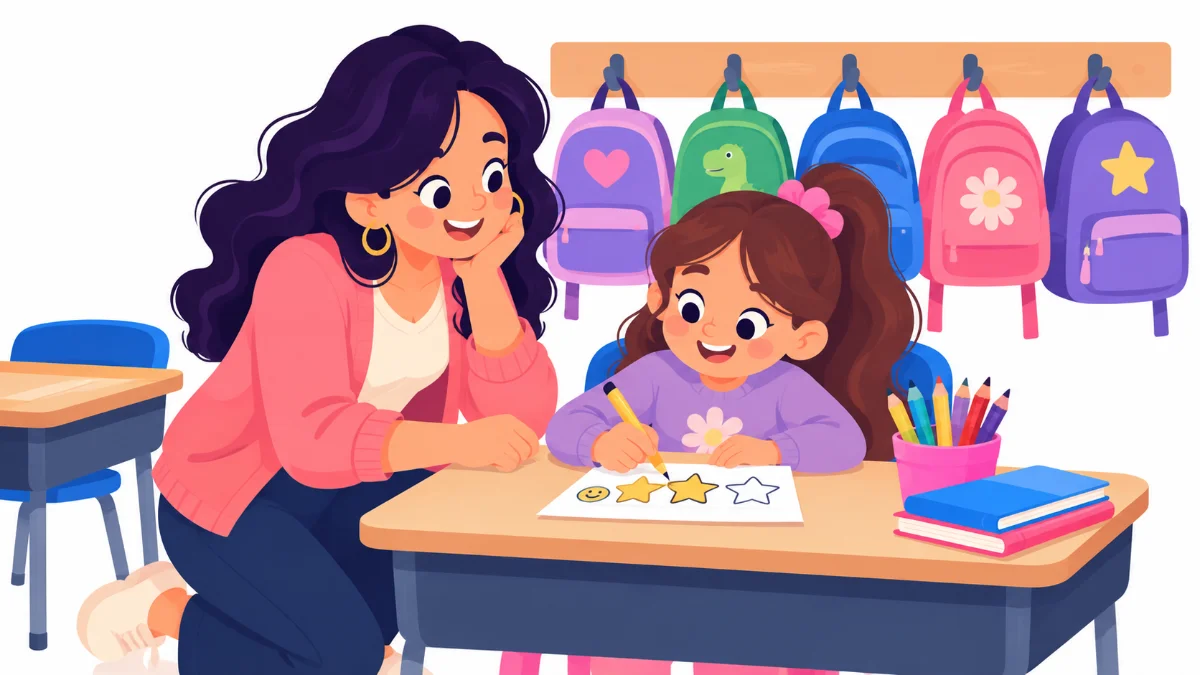

Small daily goals for kids teach young students that they can choose something to work on and actually see themselves improve. Picture Zara, a first grader who often says “I can’t do it” before she even tries. Her teacher, Mrs. Kim, wants Zara to feel the pride of meeting a goal, but big goals like “be a better reader” mean nothing to a six year old.
This list is for teachers of grades 1 to 3, including special education and resource teachers. It ranks ten goals from the easiest to reach to the more challenging. Each goal includes how to word it for young children, how to check it the next day and how it worked for Zara. You will also find a short daily routine, a tracking example and tips for celebrating progress without turning goals into a competition.
Examples are fictional. Adapt to the student’s goals and agreed supports. This is guidance, not a diagnosis.
At a glance
- Young children need goals they can see and finish in one day.
- Word goals as “I will…” with one clear action.
- Check yesterday’s goal before setting today’s.
- Celebrate effort, and adjust goals that are too big.
- Two or three minutes a day is enough.
How we ranked these goals
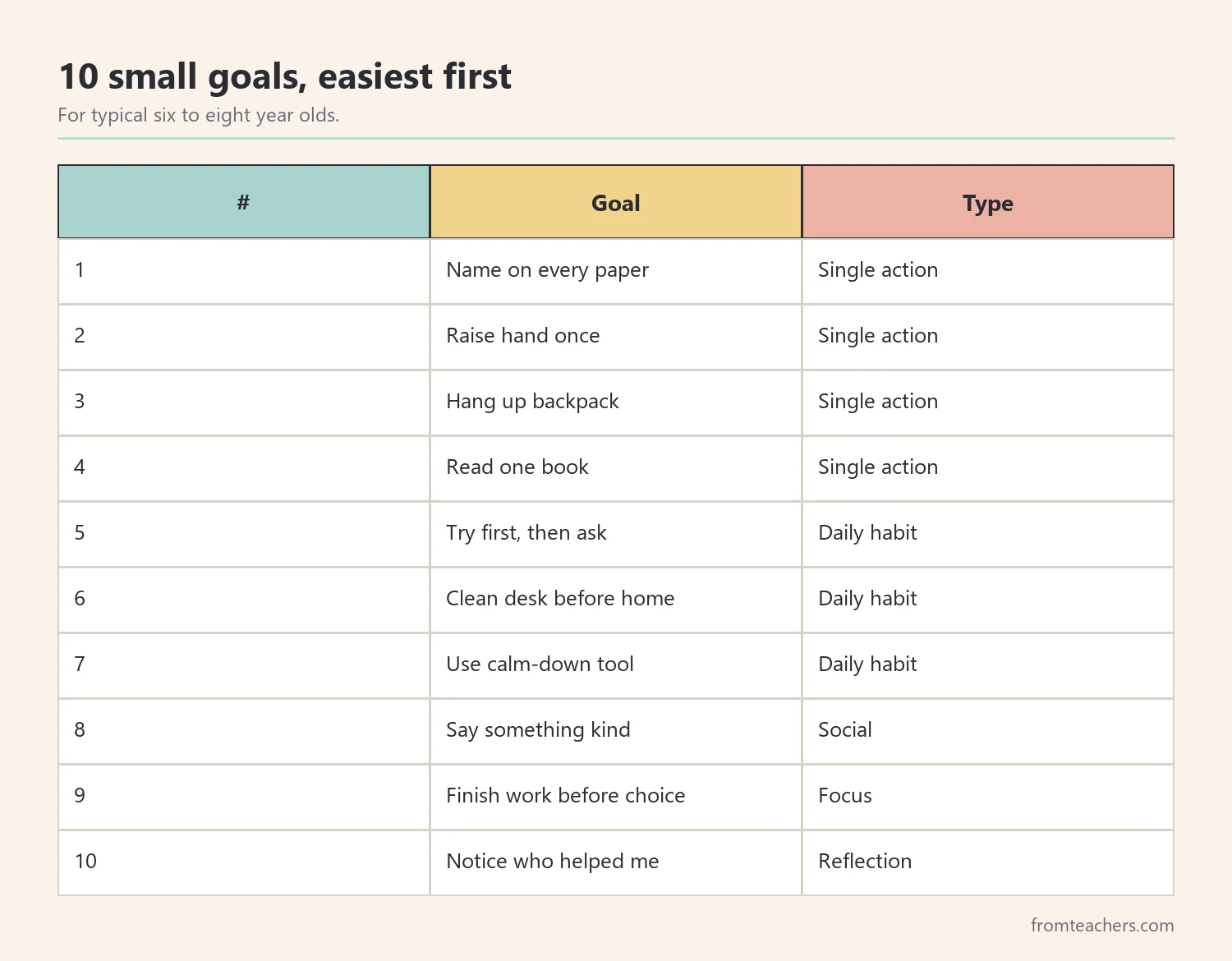
We ranked the ten goals from the easiest to reach to the more challenging for typical six to eight year olds. Goals 1 to 4 involve a single action. Goals 5 to 7 involve a short habit across the day. Then, goals 8 to 10 involve feelings or social skills, which are harder to measure. Figure 1 shows the full ranking.
Start with the easy ones. A child who meets a goal on the first try learns that goals are reachable. After that, harder goals feel less scary.
1. I will put my name on every paper
Why it works: it is concrete, quick and easy to check. Many young students forget, so success is visible.
How to check it: at the end of the day, the child looks through their papers.
Example: Zara met this goal on her first day and asked for “a harder one” the next morning.
2. I will raise my hand once to share
Why it works: one time is a small, safe step, especially for shy children.
How to check it: the child remembers, or the teacher gives a quiet thumbs up when it happens.
Example: Zara shared her favorite animal during morning meeting and beamed.
3. I will hang up my backpack when I arrive
Why it works: it supports a classroom routine and is easy to see.
How to check it: look at the hooks after arrival.
Example: Zara met it four days out of five. On the fifth, she noticed herself and fixed it.
4. I will read one book during quiet time
Why it works: it builds a reading habit and has a clear finish line.
How to check it: the child names the book they read.
Example: Zara chose a short picture book. Finishing it gave her the confidence to try a longer one later.
5. I will try first, then ask for help
Why it works: it targets the “I can’t” habit gently. The child does not have to succeed, only try.
How to check it: the child tells about one time they tried before asking.
Example: This was Zara’s key goal. She tried two math problems before raising her hand, and the teacher praised her effort.
6. I will clean my desk before we go home
Why it works: it builds responsibility and can be checked in seconds.
How to check it: a quick look at the desk at dismissal.
Example: Zara made it a race with her table partner, which kept it fun.
7. I will use my calm-down tool when I feel upset
Why it works: it connects goal setting to self-regulation. However, it depends on having a moment of upset, so it is harder to check.
How to check it: the child says whether they felt upset and what they did.
Example: Zara used three deep breaths when a classmate took her crayon. She proudly reported it.
8. I will say something kind to a classmate
Why it works: it builds social skills and a positive class climate.
How to check it: the child shares who they spoke to and what they said.
Example: Zara told a classmate, “Your drawing is cool.” The classmate smiled, and Zara noticed.
9. I will finish my work before choice time
Why it works: it builds focus and persistence across a longer block.
How to check it: the teacher and child look at the work together.
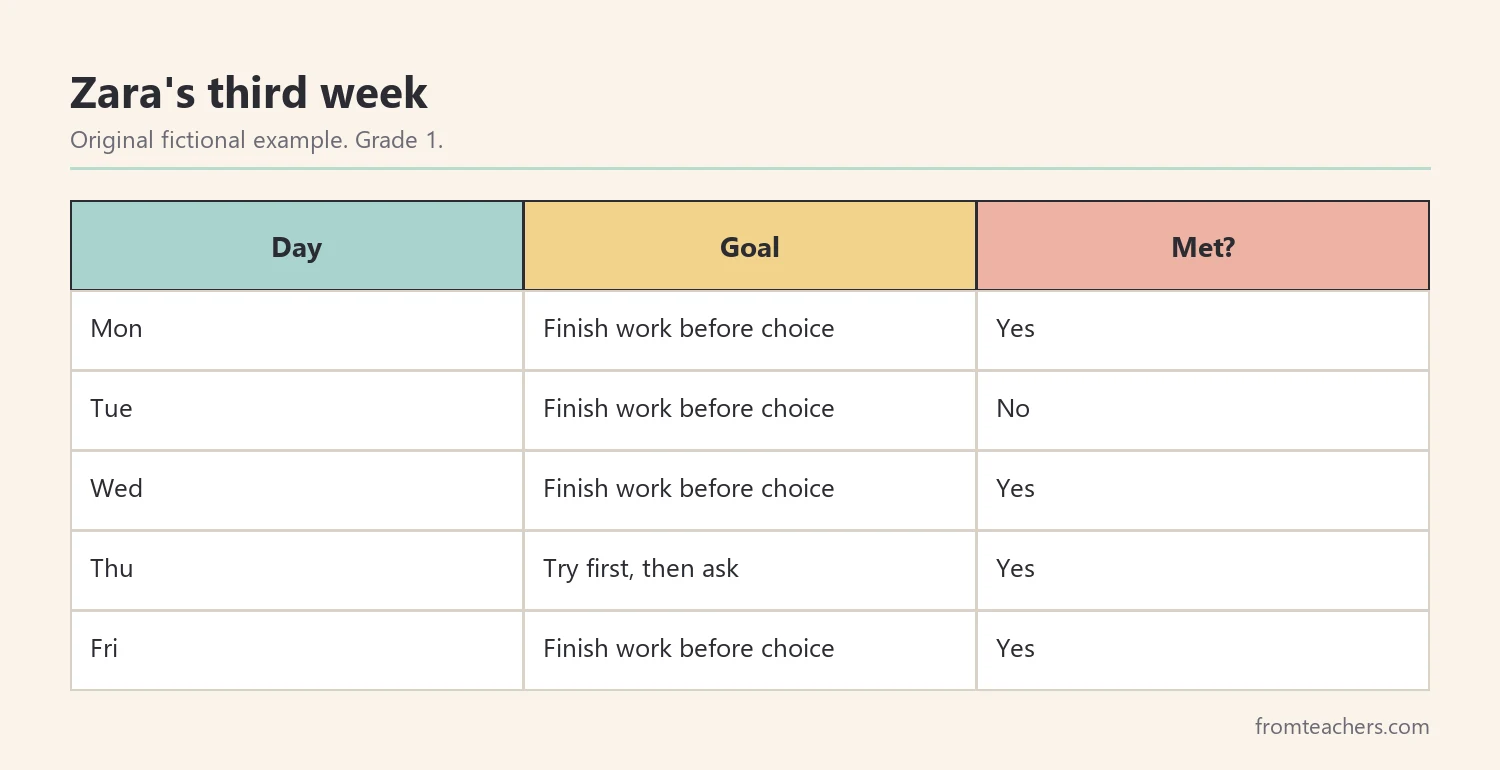
Example: Zara met this goal three days out of five in her third week, as Figure 2 shows.
10. I will notice who helped me today
Why it works: it builds gratitude and awareness of others. It is challenging because it requires reflection.
How to check it: the child names one person and what they did.
Example: Zara named the lunch helper who opened her yogurt. That small moment of noticing became part of her end of day routine.
A simple daily goal routine
Small daily goals for kids work best inside a short, predictable routine. Figure 3 shows the four step routine Mrs. Kim used at the end of each day.
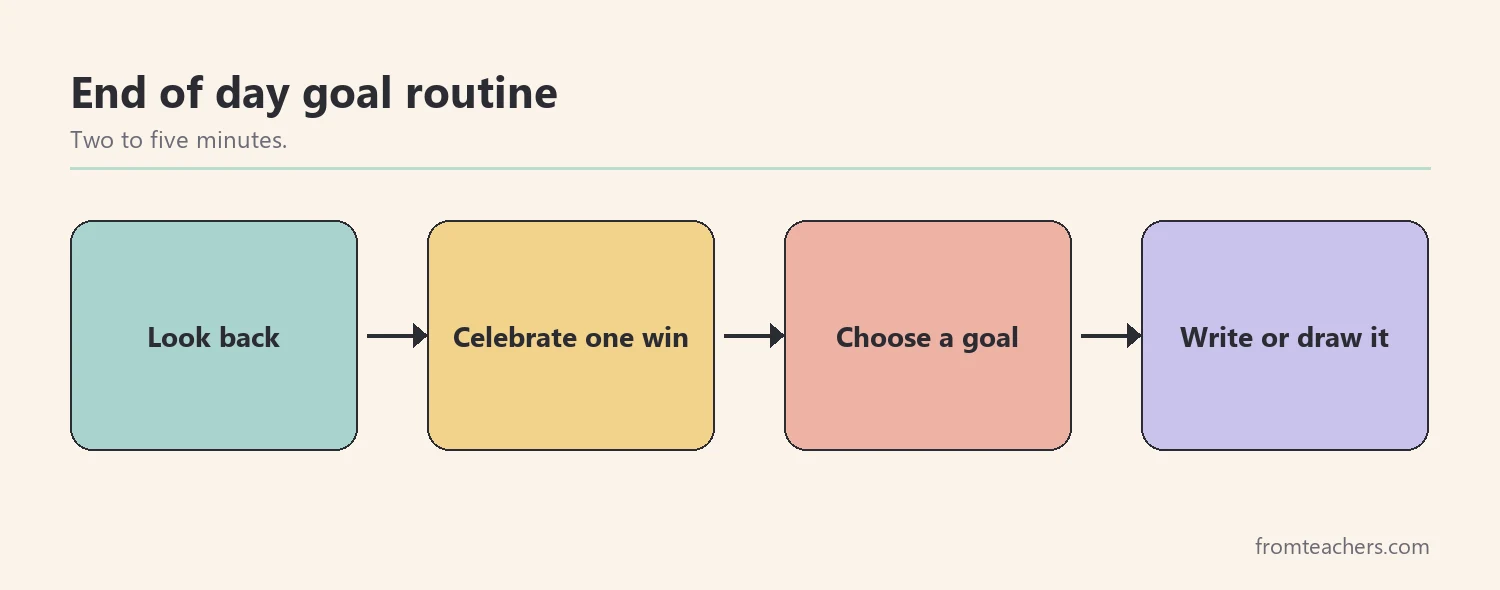
- Look back: did I meet yesterday’s goal?
- Celebrate: name one thing that went well.
- Choose: pick tomorrow’s goal, with help if needed.
- Write or draw: record the goal.
A one page sheet keeps it quick. The daily reflection journal with goal setting for students includes a feeling scale, what went well, a goal for tomorrow and a did I meet my goal check, so young students follow the same steps every day.
Good goals versus vague goals
How you word a goal matters more than the goal itself. Figure 4 compares vague and clear goals for young students.
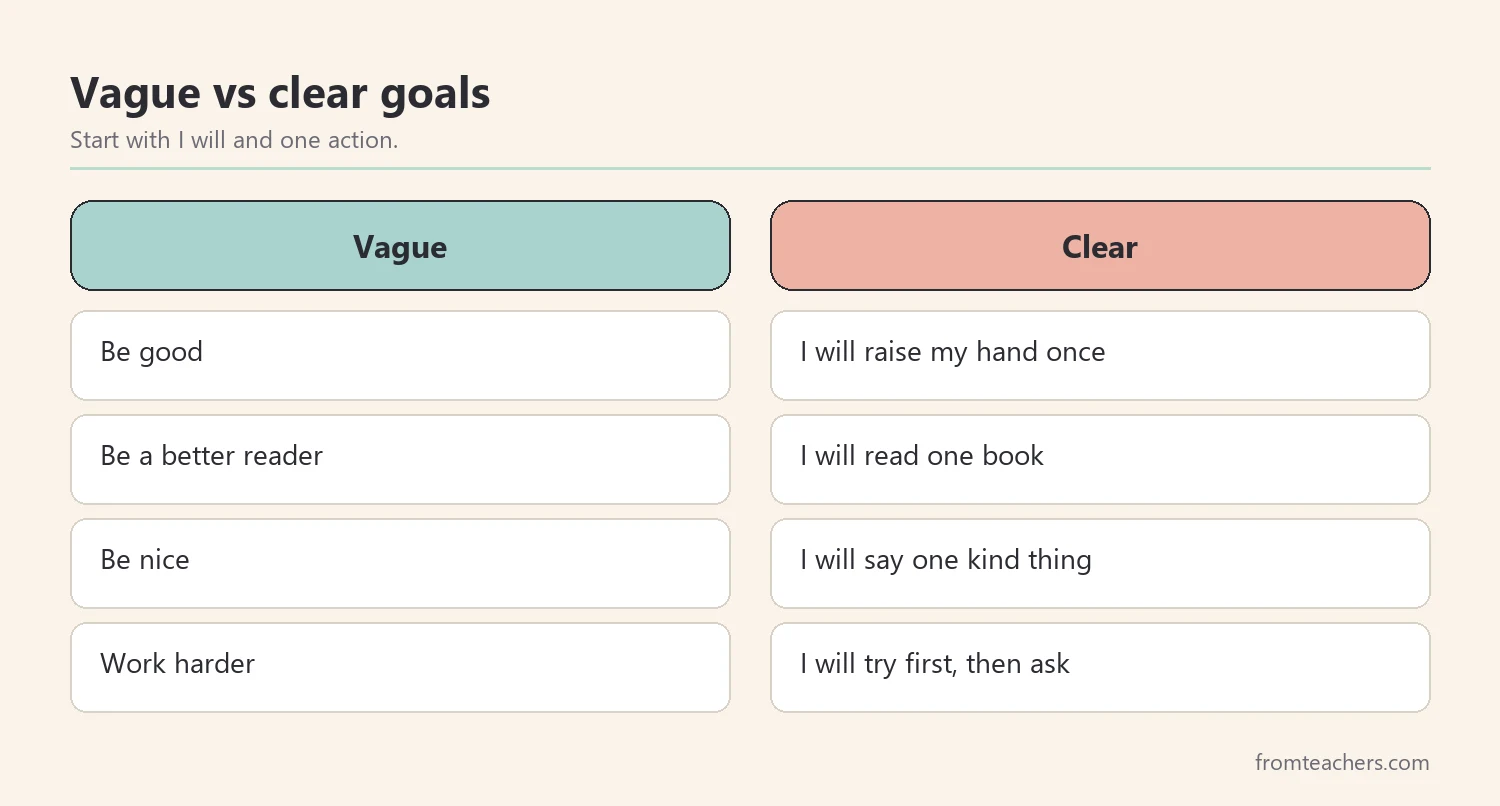
| Vague goal | Clear goal | How to check |
|---|---|---|
| Be good | I will raise my hand once | Thumbs up from teacher |
| Be a better reader | I will read one book | Name the book |
| Be nice | I will say one kind thing | Share who and what |
| Work harder | I will try first, then ask | Tell one example |
Supporting children who struggle with goals
Some children choose goals that are too big or feel upset when they miss one. For these students, offer two or three choices instead of an open question. In addition, use pictures for children who are not yet reading.
Make missing a goal safe. Say, “That one was tricky. Do you want to try again or pick a smaller one?” The goal is learning how goals work, not a perfect record.
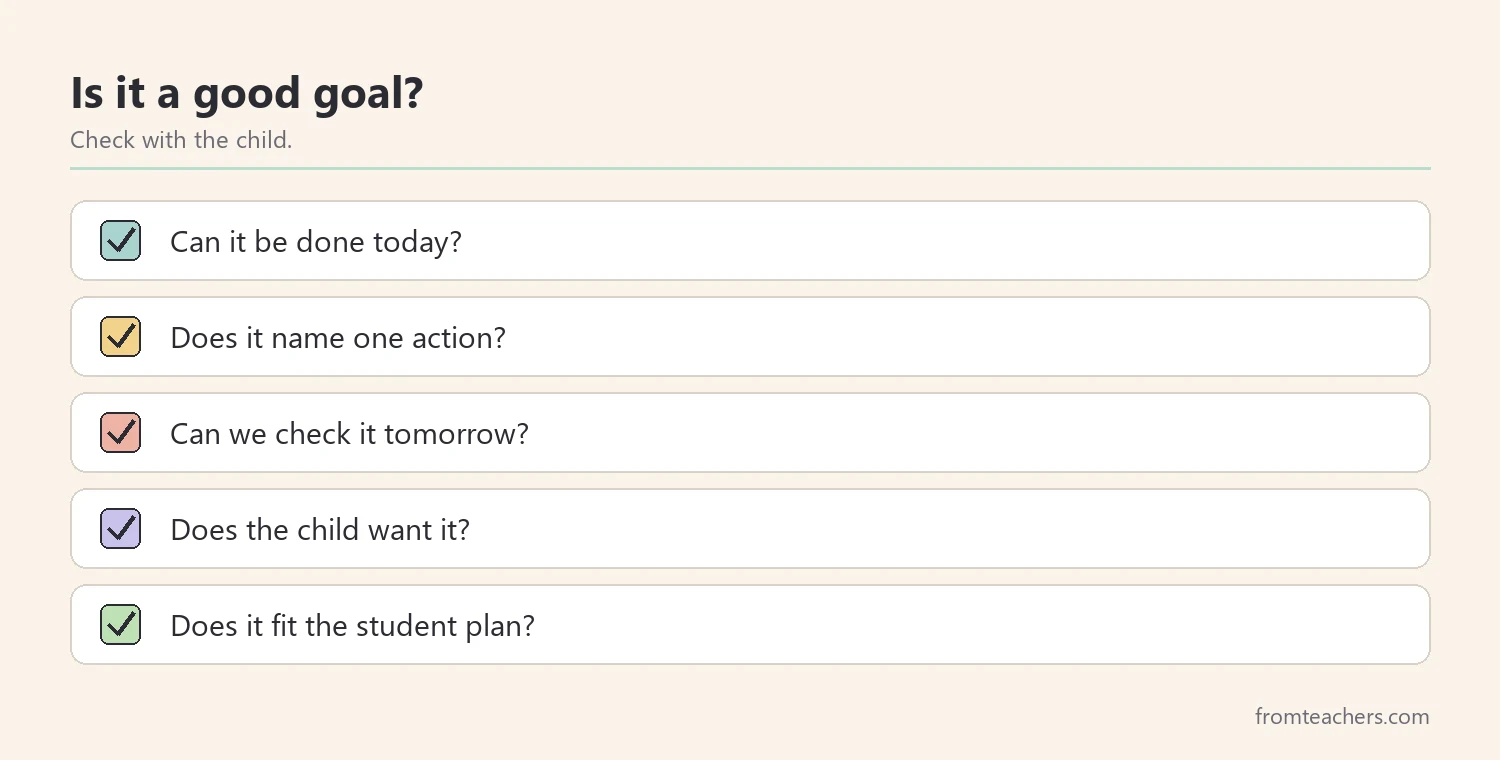
For students with IEPs or behavior plans, check with the team so daily goals support, rather than compete with, their formal goals. Figure 5 lists questions to help you choose the right goal for each child.
Involving families
Families can make small goals even more powerful. Send home a quick note once a week with the goals your child met. Parents can then celebrate at home and ask, “What goal will you choose tomorrow?”
Keep the message positive and specific. For example, “Zara tried two problems before asking for help three times this week.” This kind of note gives families something concrete to praise.
Mrs. Kim found that Zara’s mother began using the same “try first, then ask” phrase at home during homework. Hearing the same words in both places helped Zara use the strategy more often.
Using pictures and symbols for early readers
Many first graders cannot yet write a full goal sentence, and that is fine. Instead, create a small set of picture cards, one for each common goal: a hand for raising your hand, a book for reading, a backpack for hanging it up. The child chooses a card and colors or circles it on their sheet.
Pictures also help students with language delays or those learning English. Furthermore, they make the routine faster, because children recognize the symbol instantly. Over time, add the written words under each picture so students begin to read their own goals.
Mrs. Kim made eight picture cards and kept them in a pocket chart by the door. By November, Zara could read every card and often wrote her goal herself.
Common mistakes and how to avoid them
- Goals that are too big. Fix: one action, one day.
- Vague wording. Fix: start with “I will” and name an action.
- Skipping the check. Fix: look back before choosing a new goal.
- Comparing students. Fix: keep goals personal, not a class contest.
- Only rewarding success. Fix: praise effort and honest reflection.
Questions teachers ask about small daily goals for kids
How young can children set goals?
Many first graders can choose a simple goal with adult help. Kindergarten students can pick from picture choices.
Should students keep the same goal for several days?
Yes, if they have not met it yet. Repeating a goal until it is met teaches persistence.
How long should the routine take?
Two to five minutes at the end of the day is usually enough.
Do children need rewards for meeting goals?
Praise and the pride of checking a box are often enough. Some classes add a small group celebration for effort.
What if a child always picks the same easy goal?
Celebrate it, then offer a slightly bigger option. Gradual stretching works better than forcing a hard goal.
Related reading: 5 Practical Teaching Tips to Boost Classroom Focus, ADHD Children Support Strategies, and Positive Alternatives to Behavior Charts.
You may also need: Daily Routine Journal for Students.
A companion resource for teachers setting small daily goals for kids:
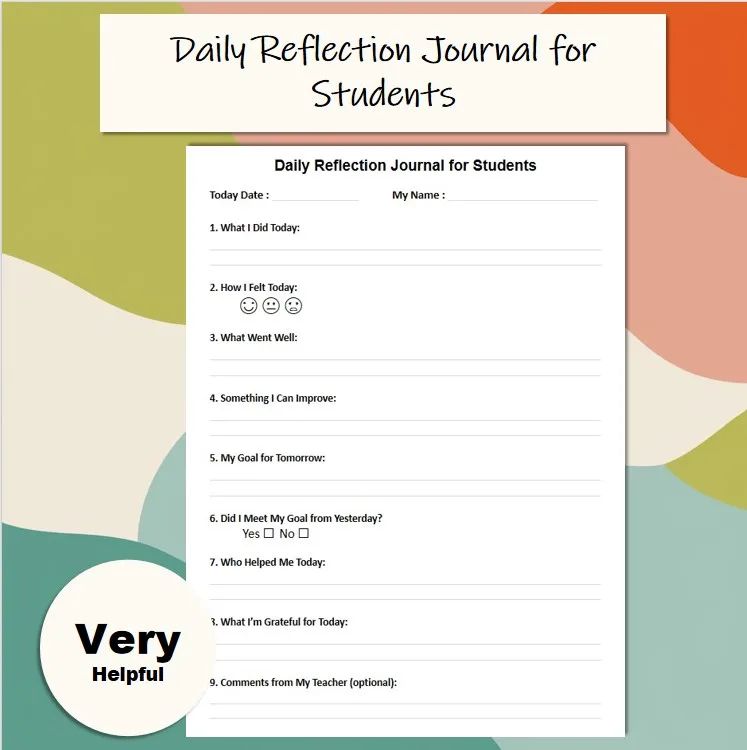
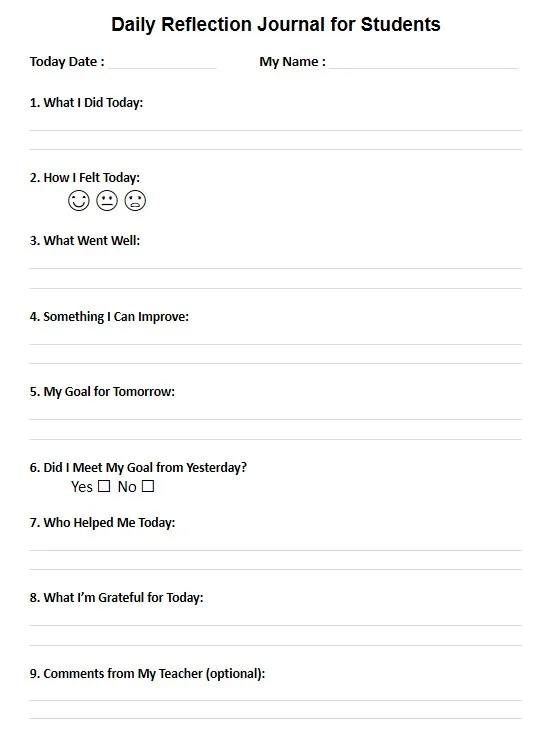
Daily Reflection Journal for Students: SEL Check-In & Goal Setting Sheet: a one page journal, editable or print-ready, with name and date fields, what I did today, a three face feeling scale, what went well, something I can improve, my goal for tomorrow with a did I meet my goal from yesterday check-in, who helped me today, a gratitude prompt and an optional teacher comment space.
Sources and scope
- CASEL: the widely used framework for social and emotional learning, including self-management and goal setting.
- Center on PBIS: resources on teaching and acknowledging expected behavior in classrooms.
- Understood.org: plain-language guidance on helping kids build self-awareness and routines.
- KidsHealth (Nemours): articles for families and teachers on building confidence and healthy habits in children.
This list covers simple daily goal setting for students in grades 1 to 3 in general or special education classrooms. It does not replace IEP goals or behavior plans set by a school team.
Key takeaways
- Small daily goals for kids should be concrete and doable in one day.
- Start easy and stretch slowly.
- Check yesterday’s goal before setting a new one.
- Praise effort and honest reflection.
- Keep the routine short and predictable.

Leave a Comment