

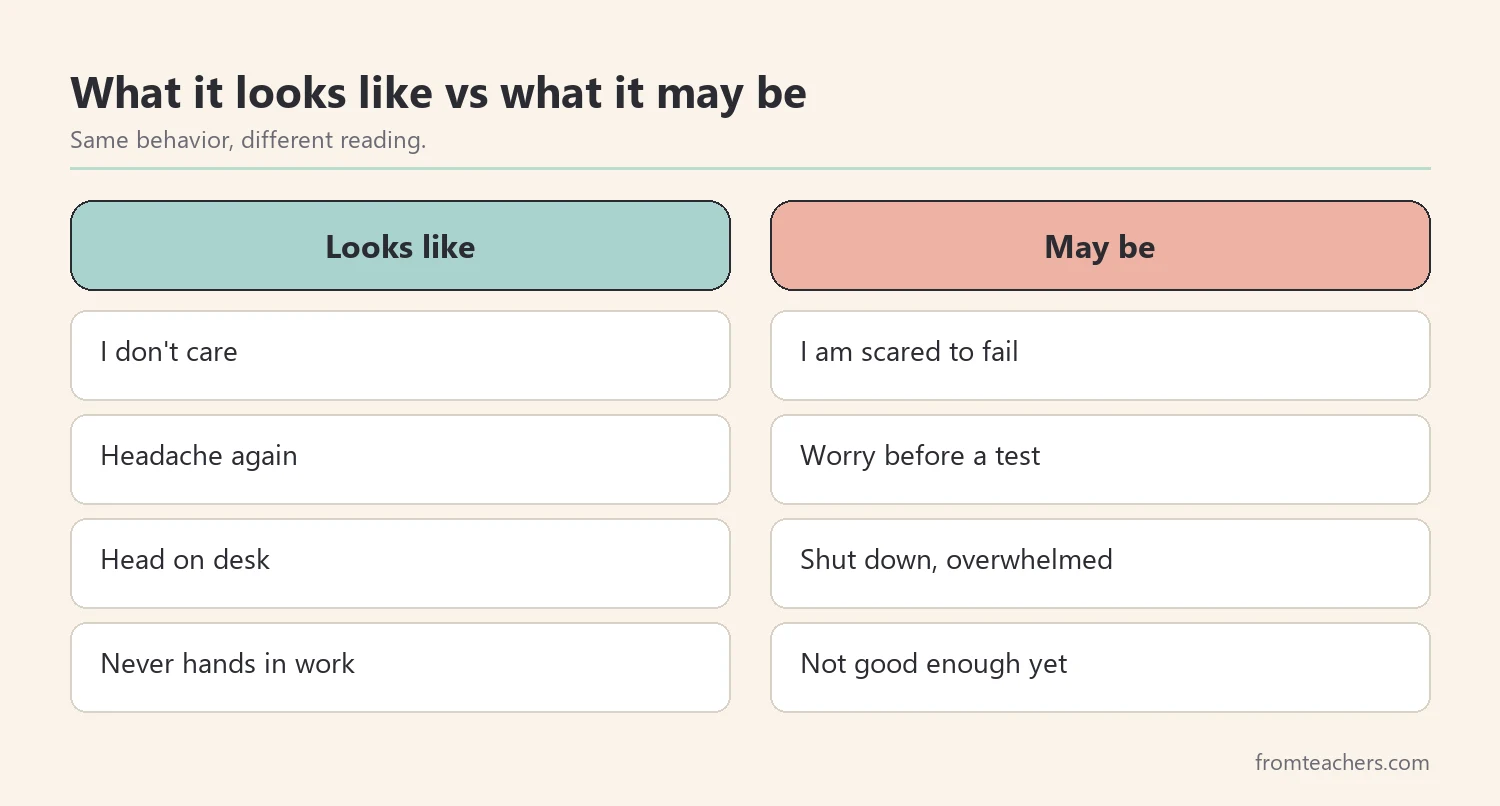
School avoidance in teens rarely looks like fear. More often, it looks like a student who “doesn’t care.” Picture a tenth grader who is late every Monday, visits the nurse before every test, and sits with her head down when presentations start. It is easy to read this as attitude. Sometimes, though, it is a teenager who is very worried and trying not to show it.
This list is for middle and high school teachers. It covers nine signs of anxiety-driven avoidance, ordered from the easiest to notice in class to the patterns you only see over time. For each sign, you will find what it looks like, what it is often mistaken for, and a calm response you can try. You will follow Jada, a fictional tenth grader, and her English teacher, Ms. Collins.
Examples are fictional. Only qualified professionals can diagnose anxiety. This is guidance for teachers, not a diagnosis or treatment. If you think a student may be unsafe, follow your school’s procedures right away.
At a glance
- Avoidance in teens often looks like defiance, boredom or perfectionism.
- Patterns matter more than single days: look at when and where absences happen.
- A private, calm check-in works better than a public question.
- Small, gradual steps back into hard situations help more than full excuses.
- Partner with families and the counselor early, before absences pile up.
Why avoidance is easy to miss in teenagers
Younger children often show worry openly: crying at drop-off, clinging or saying “I’m scared.” Teenagers usually hide it. They may joke, shrug, or give practical reasons for missing class. In addition, adults sometimes assume teens are simply unmotivated.
Organizations such as the Child Mind Institute and the Anxiety and Depression Association of America describe school avoidance as one way anxiety can show up. Avoidance brings short-term relief, which makes the next attempt harder. That is why early, gentle noticing matters.
We ordered the signs by how visible they are to a classroom teacher, not by how serious they are. Any single sign can have many causes. Patterns across several signs deserve a closer look.
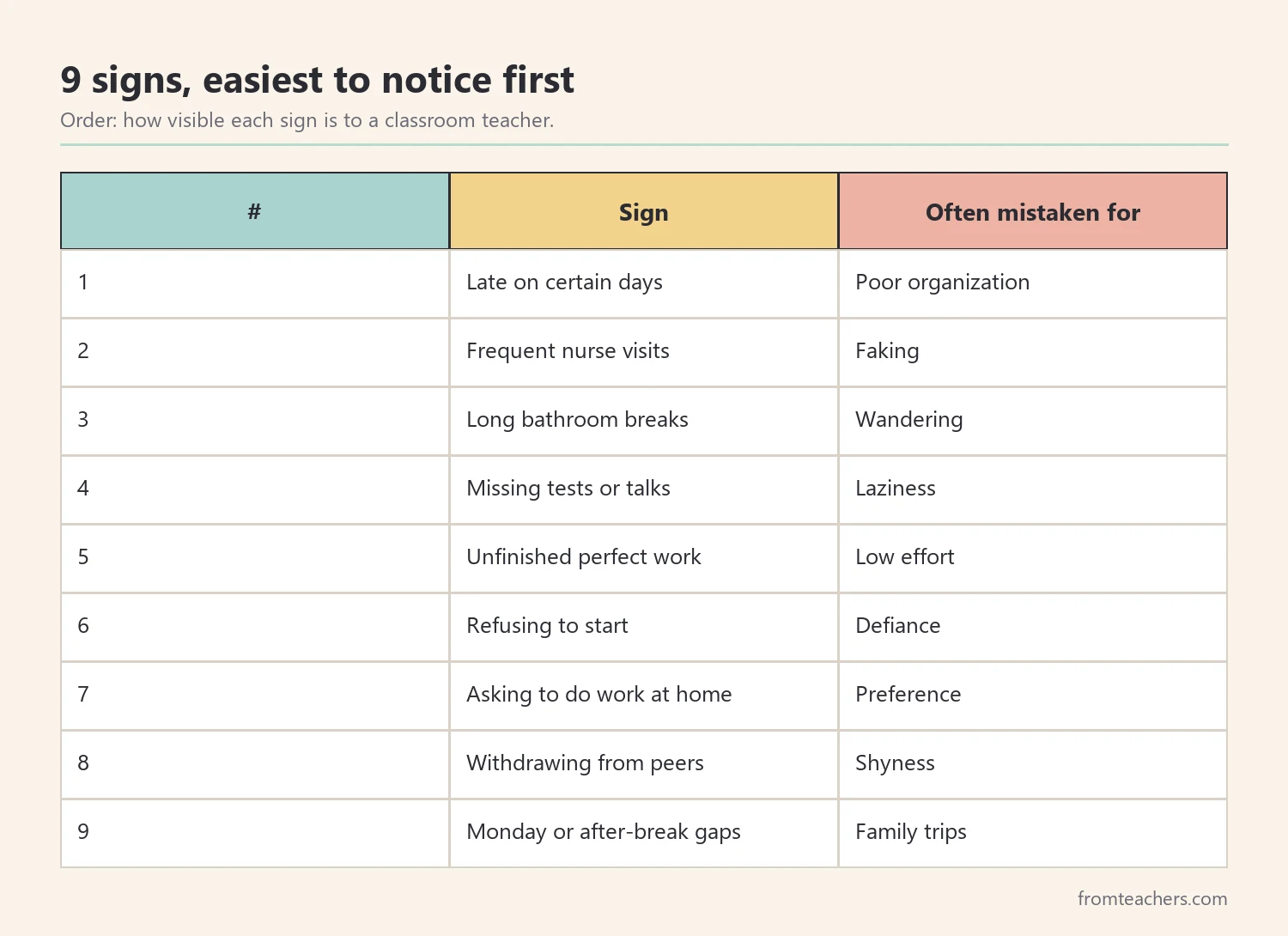
1. Late on certain days
What it looks like: the student is late mostly on specific days, such as Mondays, test days or days with a certain class.
Often mistaken for: poor time management.
What to do: keep a quiet note of which days. Greet the student warmly when they arrive, without public comments about lateness.
Example: Ms. Collins noticed Jada was late five of six Mondays, but rarely on other days.
2. Frequent nurse visits
What it looks like: headaches, stomachaches or nausea, often before tests or presentations.
Often mistaken for: faking to skip class.
What to do: take physical complaints seriously; anxiety can cause real physical symptoms, and some complaints have medical causes. Share the pattern with the nurse and counselor.
Example: the nurse told Ms. Collins that Jada had visited with a stomachache on three of the four test days that month. Neither adult had seen the full pattern until they compared notes.
3. Long bathroom or water breaks
What it looks like: the student leaves at the start of hard tasks and comes back much later.
Often mistaken for: wandering the halls.
What to do: notice which tasks trigger the breaks. Offer a short, structured break option, such as a five-minute pass, so the student can return more easily.
Example: Jada often asked for the bathroom as soon as group discussion began. With a five-minute break pass and a quiet seat near the door, she started coming back on time and joining the second half of discussions.
4. Missing tests and presentations
Among the signs of school avoidance in teens, this is one of the clearest patterns.
What it looks like: absences cluster on days with tests, oral presentations or group work.
Often mistaken for: laziness or poor planning.
What to do: compare attendance with your calendar. If you see a match, plan a private conversation rather than simply scheduling make-ups.
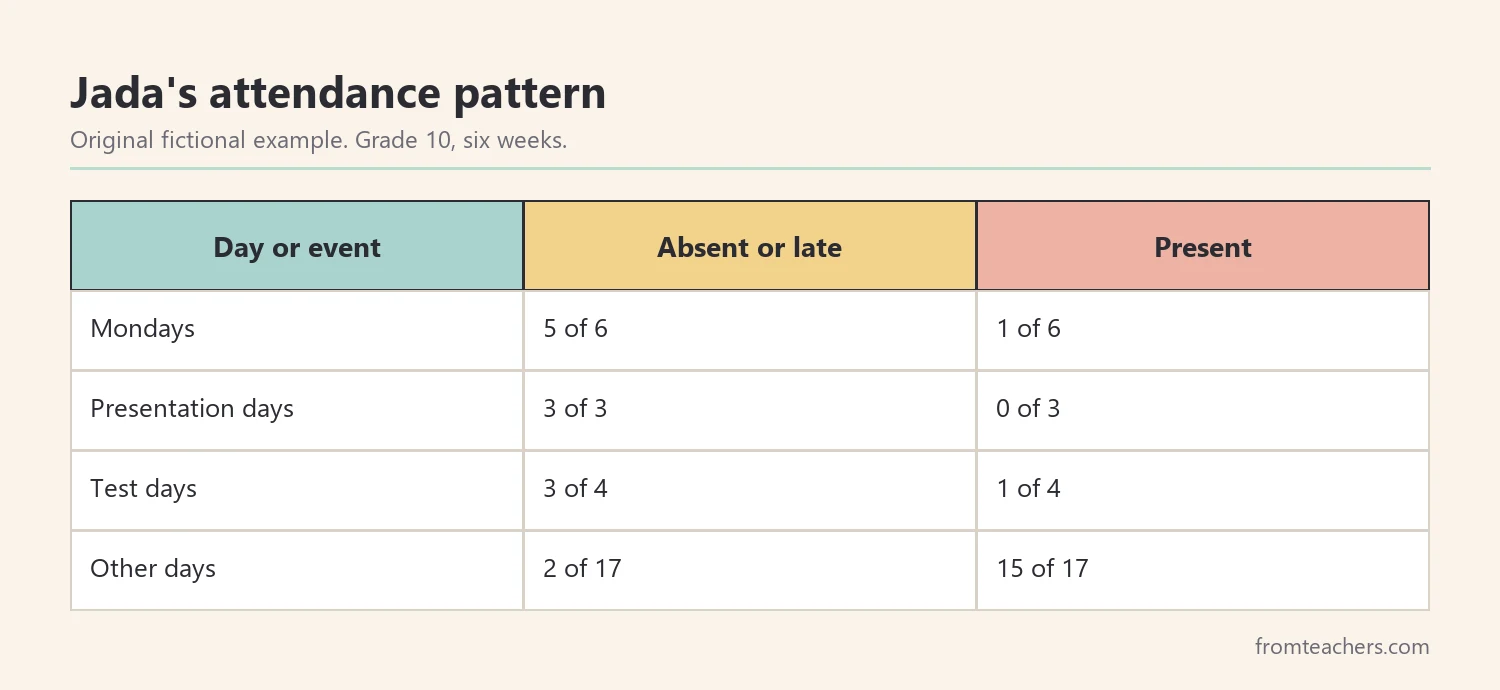
Jada’s pattern was hard to ignore: she missed every presentation day and three of four test days, but attended most ordinary days.
5. Unfinished work that “isn’t good enough”
What it looks like: a capable student starts assignments but does not hand them in, or rewrites the first paragraph many times.
Often mistaken for: low effort.
What to do: perfectionism can mask fear of failure. Grade drafts, set a “good enough” checklist, and praise submission, not only quality. The school anxiety support guide for worry, avoidance and perfectionism includes a full section on perfectionism and when it hides an underlying fear.
Example: Jada had three essays “almost finished” in her folder. When Ms. Collins offered to grade the first draft for completion only, Jada handed in all three within a week.
6. Refusing to start
What it looks like: the student says “I’m not doing this,” puts their head down, or stares at the page.
Often mistaken for: defiance.
What to do: lower the first step. Say, “Just write your name and the first sentence starter. I’ll check back in two minutes.” Small starts reduce the size of the fear.
Also, avoid power struggles in front of peers. A teen who feels cornered will often double down to save face. Moving closer, speaking quietly and offering two choices, such as “start with question one or question three,” usually works better than a public demand.
7. Asking to do work at home instead
What it looks like: requests to take tests home, do group work alone, or join online instead of attending.
Often mistaken for: a simple preference.
What to do: listen to the reason. Occasional flexibility can help, but full avoidance tends to grow. Aim for partial participation, such as presenting to you alone first.
Example: Jada asked to record her presentation at home. Ms. Collins agreed once, on the condition that the next one would be live with her alone at lunch. That kept a door open without making avoidance the new routine.
8. Pulling away from peers
What it looks like: eating alone, avoiding group tasks, or dropping clubs and teams.
Often mistaken for: shyness or a normal teen phase.
What to do: offer low-pressure roles in group work, such as timekeeper or note-taker. If withdrawal is sudden or strong, tell the counselor.
Peers also notice. Sometimes a friend mentions, “She stopped coming to lunch.” Thank the student for caring and pass the information to the counselor, without asking the friend to keep watch.
9. Gaps after weekends and breaks
What it looks like: absences after long weekends, holidays or illness, sometimes growing longer each time.
Often mistaken for: family trips or extended illness.
What to do: contact the family before the return day with a warm message about what is coming up. A clear plan for the first day back can ease the restart.
Example: before winter break ended, the counselor emailed Jada’s family with the first-day schedule and a note that there would be no test that week. Jada attended on the first day back for the first time that year.
A steady response when you see a pattern
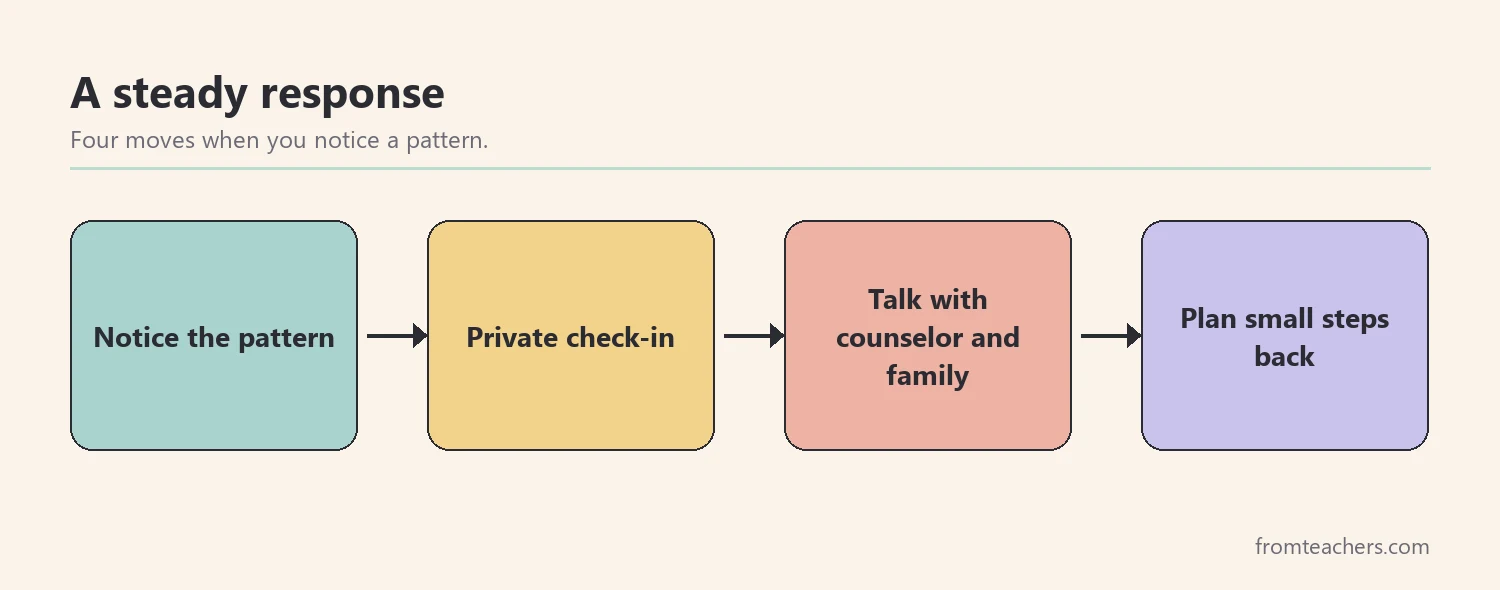
Ms. Collins did not confront Jada in class. First, she checked her notes and the attendance record. Next, she asked Jada to stay for a minute after class and said, “I’ve noticed Mondays and presentation days seem hard. I’m not upset. I want to help.” Jada was quiet, then said that speaking in front of others made her feel sick.
Then Ms. Collins contacted the counselor, who reached out to Jada’s family. Together they planned small steps: Jada would first present to Ms. Collins alone, then to a small group, and later to the class. She also had a quiet start task every Monday.
After six weeks, Jada was attending most Mondays and presented to a group of four classmates. She was still anxious. However, she was in school and moving forward, which is the goal.
Working with families
Parents often see a different side of avoidance: stomachaches at breakfast, long nights before tests, or arguments about getting out the door. Their view helps the school see the full picture.
When you contact a family, start with something positive about the student, then describe the pattern you noticed in neutral words. Ask what they see at home and what has helped before. Finally, agree on one small next step and one way to stay in touch, such as a weekly email.
Keep the tone of partnership, not blame. Families of anxious teens are often exhausted and worried too.
What helps and what usually backfires
| Helps | Usually backfires |
|---|---|
| Private, calm check-ins | Calling out lateness in front of class |
| Small steps toward hard tasks | Excusing all hard tasks forever |
| Predictable plans and warnings | Surprise tests and cold calling |
| Early contact with family and counselor | Waiting until absences pile up |
Moreover, many of these habits help the whole class, not only students with anxiety.
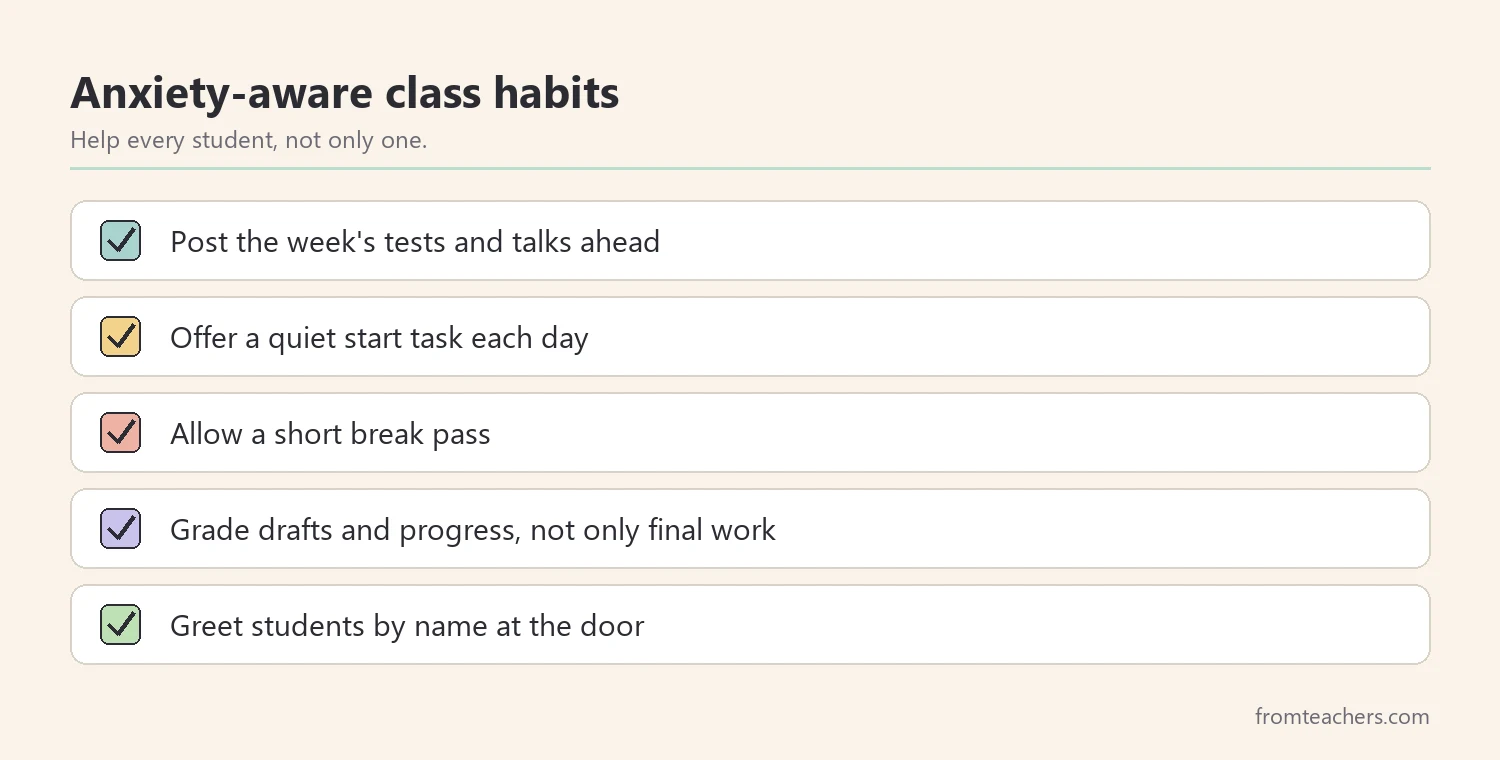
Common mistakes and how to avoid them
- Judging from one day: look for patterns across weeks.
- Public confrontation: talk privately and kindly.
- Full accommodation of avoidance: aim for small steps back, not permanent exemptions.
- Working alone: involve the counselor and family early.
- Ignoring your own stress: supporting anxious students is demanding; ask colleagues for support too.
Questions teachers ask about school avoidance in teens
How do I know if it is anxiety or something else?
You may not know, and you do not need to. Note the patterns, share them with the counselor and family, and let qualified professionals assess. Avoidance can also relate to bullying, learning difficulties, health or problems at home.
Should I let an anxious student skip presentations?
Occasional flexibility is fine, but long-term skipping can make fear grow. Offer graded steps, such as presenting to you first, then a small group.
What should I say in a check-in?
Keep it short and non-judgmental: “I’ve noticed this pattern. I’m not upset. How can I help?” Then listen.
Is this a 504 or IEP matter?
Sometimes. If anxiety significantly affects learning or attendance, the family or school can ask about an evaluation for a 504 plan or special education services.
When is it urgent?
If a student talks about self-harm or seems unsafe, follow your school’s safety procedures immediately and contact the counselor the same day.
Related reading: demand avoidance and school refusal, building stronger school counseling programs.
A companion resource for school avoidance in teens:

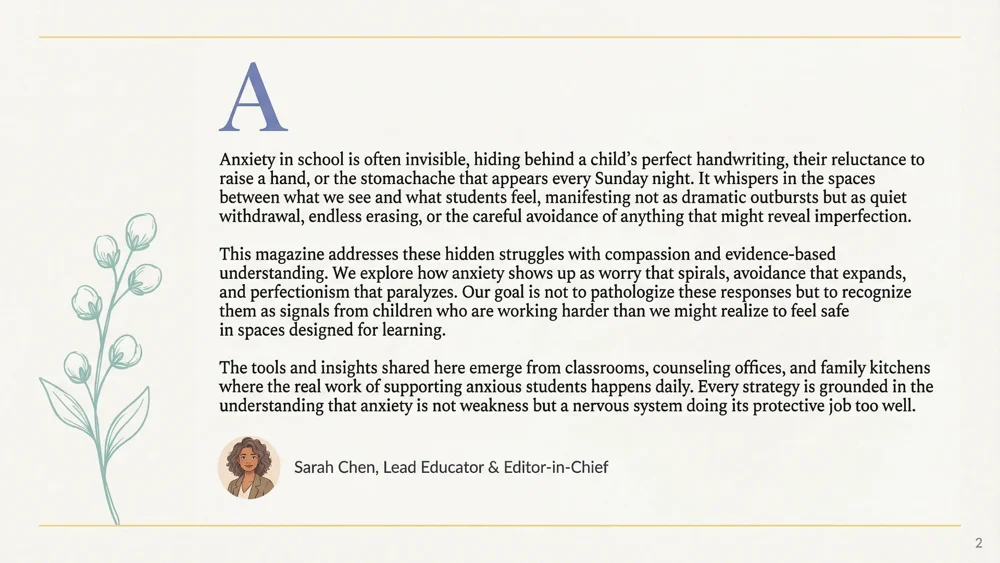
School Anxiety Support: Worry and Avoidance Help: a guide for general and special education teachers on understanding and recognizing school anxiety, supporting worry and avoidance day to day, responding to perfectionism that masks fear, whole-school approaches to anxiety-aware classrooms, working with families as partners, and educator well-being.
You may also need: Mastering Anxiety: Practical Strategies for Lasting Calm.
Sources and scope
- Child Mind Institute: articles on anxiety and school avoidance in children and teens.
- Anxiety and Depression Association of America: information on anxiety, including in young people.
- National Association of School Psychologists: resources on student mental health and school supports.
- CDC: Children’s Mental Health: overview of anxiety and other mental health conditions in children.
This list helps teachers notice and respond to avoidance patterns in class. It does not diagnose or treat anxiety; refer concerns to the counselor, school psychologist or family’s health provider.
Key takeaways
- School avoidance in teens often looks like defiance, boredom or perfectionism.
- Look for patterns: certain days, tests, presentations and returns after breaks.
- Check in privately and calmly before drawing conclusions.
- Plan small, gradual steps back into hard situations.
- Involve the counselor and family early.










Leave a Comment