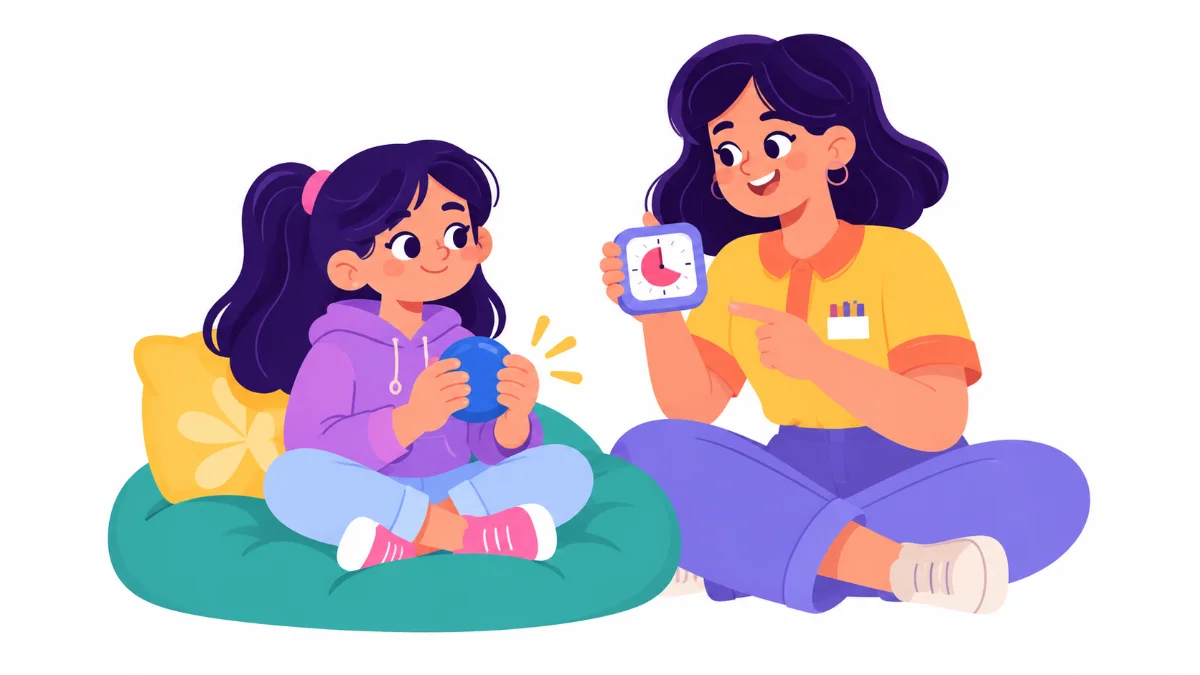

Teaching children what to do when angry gives them a plan for one of the strongest feelings they will ever have. Picture a fourth grader who loses a close game at recess, comes inside with clenched fists, and kicks a chair before anyone can say a word. The anger is normal. The missing piece is a set of steps the child has practiced and can follow.
This guide gives you five steps to teach what to do when angry: notice the body, make space and calm down, name the feeling with supportive self-talk, ask for help, and solve the problem once calm. By the end, you will be able to teach and practice an anger plan at school or at home.
Examples are fictional. Adapt to the student’s goals and agreed supports. This is guidance, not a diagnosis.
At a glance
- Anger is a normal emotion. What matters is choosing safe, healthy ways through it.
- Body signals are the early warning, so teach children to notice them.
- Space and a calming strategy come before talking things through.
- Naming the feeling and asking for help are skills worth practicing.
- Problem-solving works best after everyone is calm.
1. Teach children to notice angry body signals
First, start with the body. Anger often shows up physically before a child can put it into words. Common signals include tight fists, fast breathing, a hot face, and tense muscles. When children learn these clues, they get a few extra seconds to choose what to do.
Next, give children a simple sentence to say to themselves: “My body feels angry right now.” Saying it, even silently, turns an automatic reaction into a moment of awareness. Awareness is the first step to calming down.
Also, practice noticing during calm times. Ask children to make tight fists, then relax them. Ask them to breathe fast for a few seconds, then slowly. These small experiments help them recognize the difference between a calm body and an angry one.
In addition, help each child find their own signals. One child may feel heat in their face, while another notices a stomach ache or wants to shout. Write the child’s personal signals on a small card. Personal clues are easier to remember than a general list.
Then, make sure adults notice too. When you see early signs, a calm, quiet prompt can help: “I notice your fists are tight. What does your body need?” Early noticing is one of the most useful parts of teaching what to do when angry, because it stops the feeling from growing unnoticed.
Finally, keep the tone warm. Children who feel judged for anger often hide their signals until they explode. When adults treat early signals as useful information, children learn that noticing is safe, and the rest of the plan for what to do when angry becomes easier to follow.
Worked example. Mia is a fictional grade 4 student who sometimes kicks furniture when frustrated. Her teacher, Ms. Grant, meets with her during a calm moment. Together they list Mia’s signals: hot face, tight fists, and wanting to yell. Ms. Grant writes them on a card for Mia’s desk.
2. Make space and use a calming strategy
Next, teach children that taking space is a safe choice. Moving to a quiet spot, sitting in a calm-down corner, or taking a few steps away from the situation can prevent reactions that might hurt them or others. Space is not punishment. It is a tool.
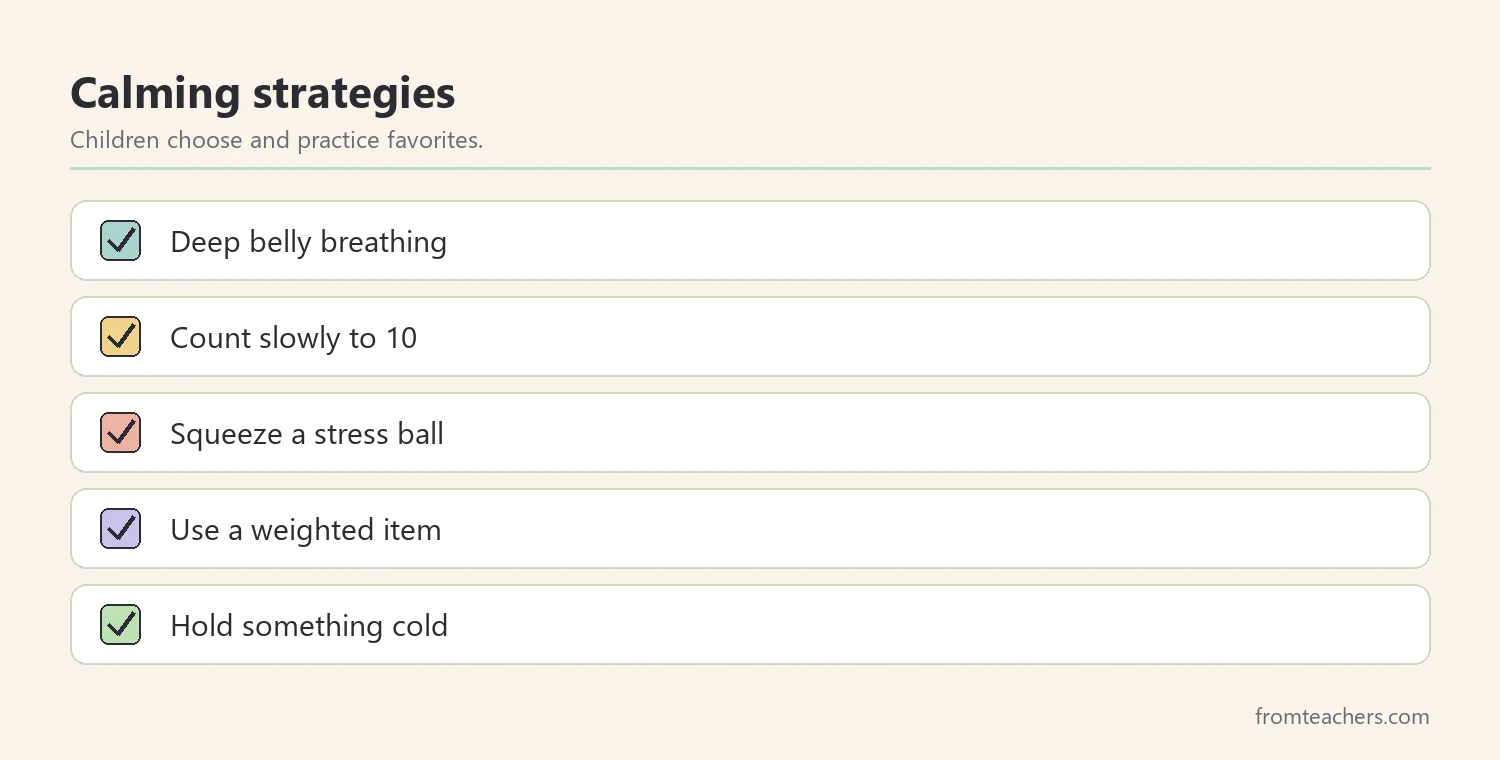
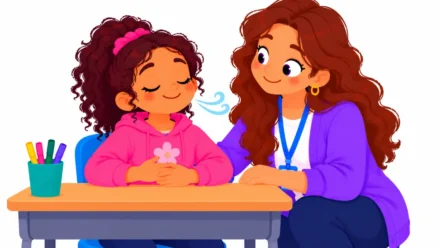
Also, pair space with a calming strategy. Good options include deep belly breathing, counting slowly to 10, squeezing a stress ball, using a weighted item, or holding something cold. Each one gives the body something to do while the brain slows down.
In addition, let children choose their favorite strategies. Practice a few options during calm times and ask which ones feel best. A child who has already chosen and practiced a tool is far more likely to use it when angry.
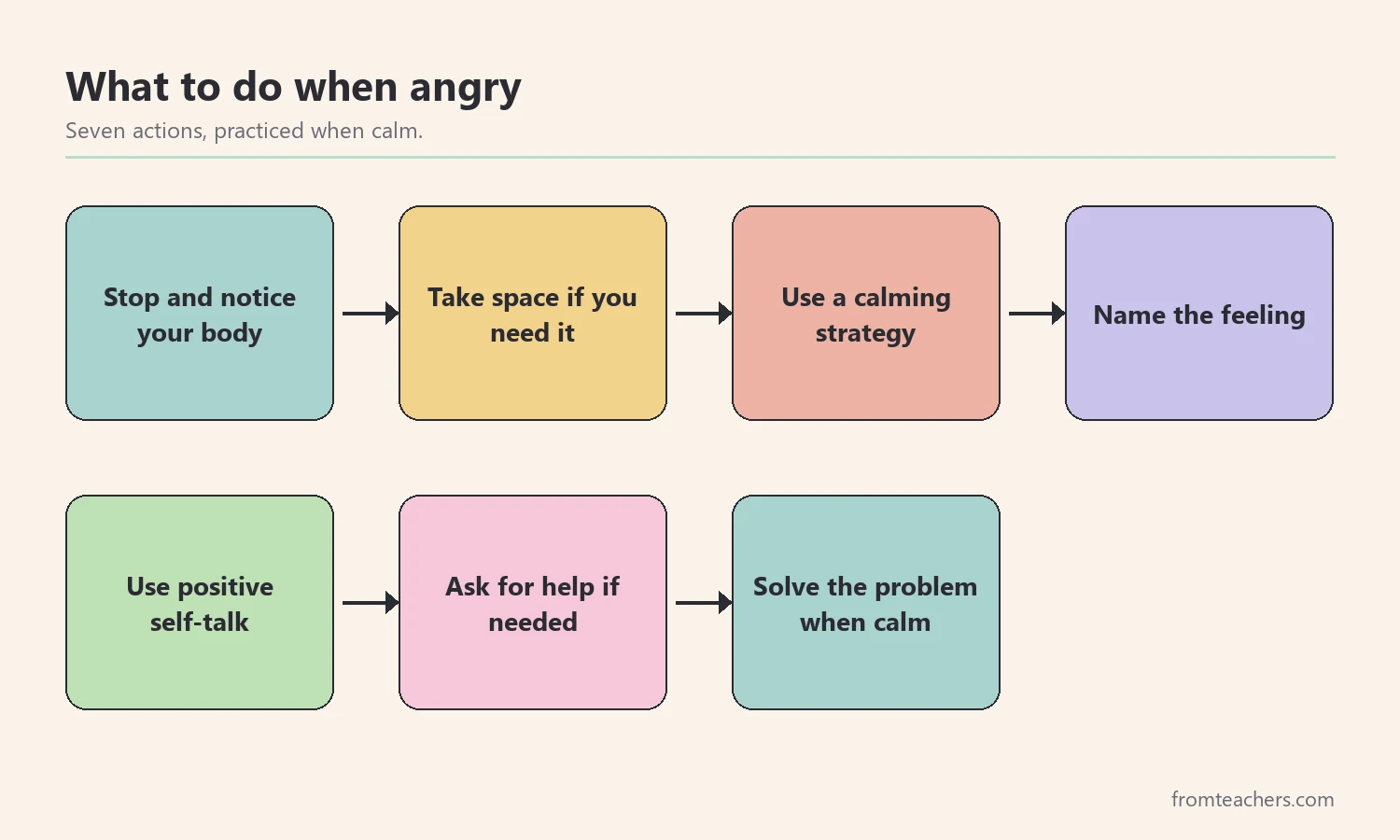
For a clear classroom visual, the what to do when angry poster walks students through seven steps, from noticing body signals to solving the problem once calm, with a short “why this helps” note for each step. It works well in a calm-down corner or near the classroom door.
Meanwhile, plan the space in advance. Decide where children can go, what tools are there, and how long they can stay. Clear plans make it easier to follow what to do when angry without needing a long conversation in the hard moment.
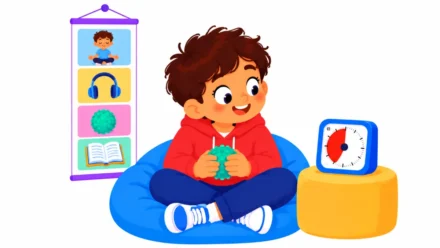
Worked example. Mia chooses counting slowly to 10 and squeezing a stress ball. Ms. Grant shows her the calm corner, with a stress ball and a small timer. Mia practices walking there, counting to 10, and walking back during a calm afternoon.
3. Practice what to do when angry with words and self-talk
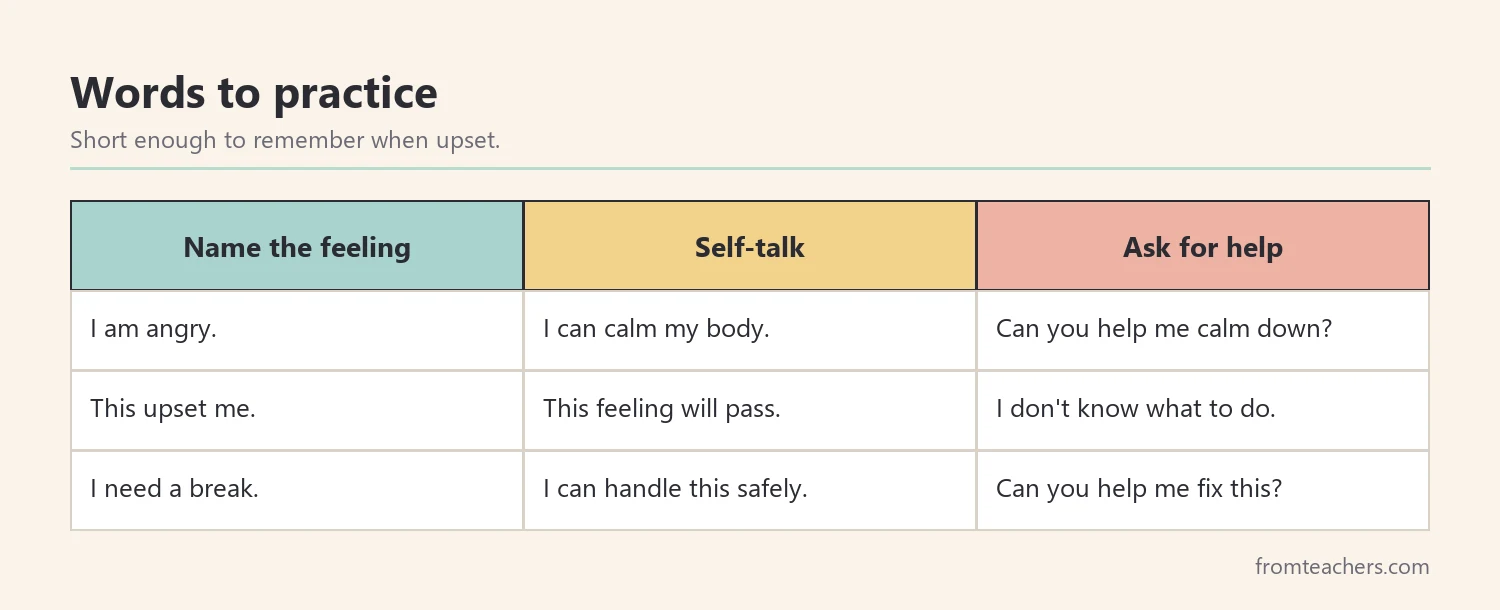
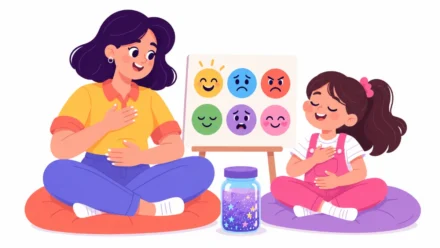
Next, teach children to put anger into words. Simple phrases such as “I am angry,” “This upset me,” and “I need a break” help children communicate without hurting anyone. Naming emotions can help the brain organize them.
Also, teach positive self-talk. Phrases like “I can calm my body,” “This feeling will pass,” and “I can handle this safely” support control. These thoughts are short enough to remember even when a feeling is strong.
In addition, practice the words out loud. Role-play short situations: a lost game, a broken pencil, a friend who will not share. Children practice saying “I am angry” and one self-talk phrase. Practice makes the words available later.
Meanwhile, model it yourself. Say, “I’m feeling frustrated, so I’m going to take a breath,” when something goes wrong in class. Children learn what to do when angry by watching how adults handle their own frustration.
Then, accept angry words that are safe. “I’m so mad!” is a better choice than kicking a chair. Respond to the feeling first: “You’re really angry. Thank you for telling me.” Correcting tone can wait until later.
Worked example. Ms. Grant and Mia practice saying “I am angry” and “This feeling will pass” during a quick role-play. Mia adds a phrase of her own: “I need a minute.” Ms. Grant writes it on the card next to her signals.
4. Make asking for help part of what to do when angry
Next, teach children that asking for help is part of the plan. Some angry moments are too big to handle alone. A trusted adult can guide a child through the moment and help keep everyone safe.
Also, give children clear words to ask. “Can you help me calm down?” “I don’t know what to do.” “Can you help me fix this?” Practicing these sentences makes it easier for children to reach out instead of exploding or shutting down.
In addition, agree on a signal. Some children do not want to ask out loud in front of classmates. A hand signal, a card, or simply walking to a certain spot can tell the adult that help is needed.
Meanwhile, respond calmly and briefly. When a child asks for help, use few words: “I’m here. Let’s breathe together.” Long explanations can feel overwhelming during strong emotions. Save the conversation for later.
Then, follow safety plans when needed. If a child may hurt themselves or others, use your school’s procedures and the child’s support plan. Teaching what to do when angry supports regulation, but it does not replace safety plans agreed by the team.
Worked example. Ms. Grant and Mia agree that Mia can place her card on the corner of the desk to ask for help. Ms. Grant will come over and say, “I’m here.” The next week, Mia uses the card after a disagreement at her table.
5. Solve the problem when calm and track progress
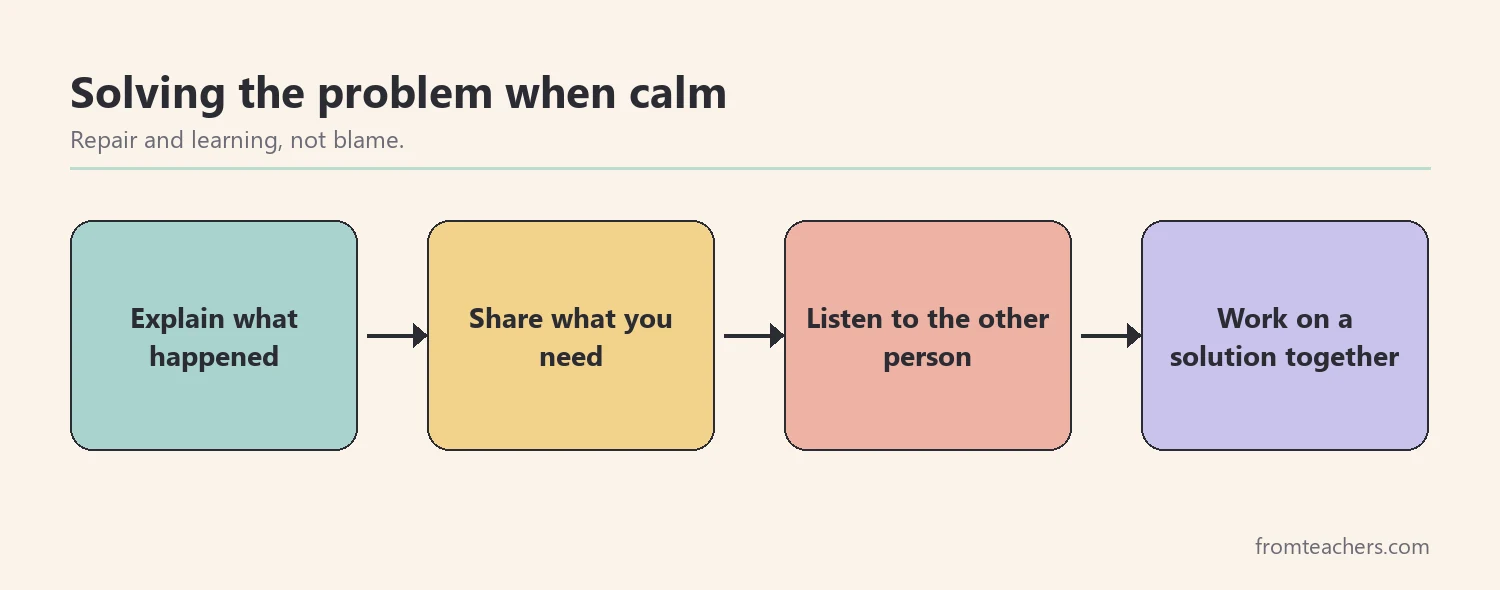
Finally, return to the problem once everyone is calm. Solutions work better when the thinking brain is back online. A short problem-solving talk might include explaining what happened, sharing what you need, listening to the other person, and working on a solution together.
Also, keep it short and fair. Problem-solving is the last part of what to do when angry, and it should feel safe. The goal is repair and learning, not blame. Praise the safe choices the child made: “You went to the calm corner and counted to 10. That was a safe choice.”
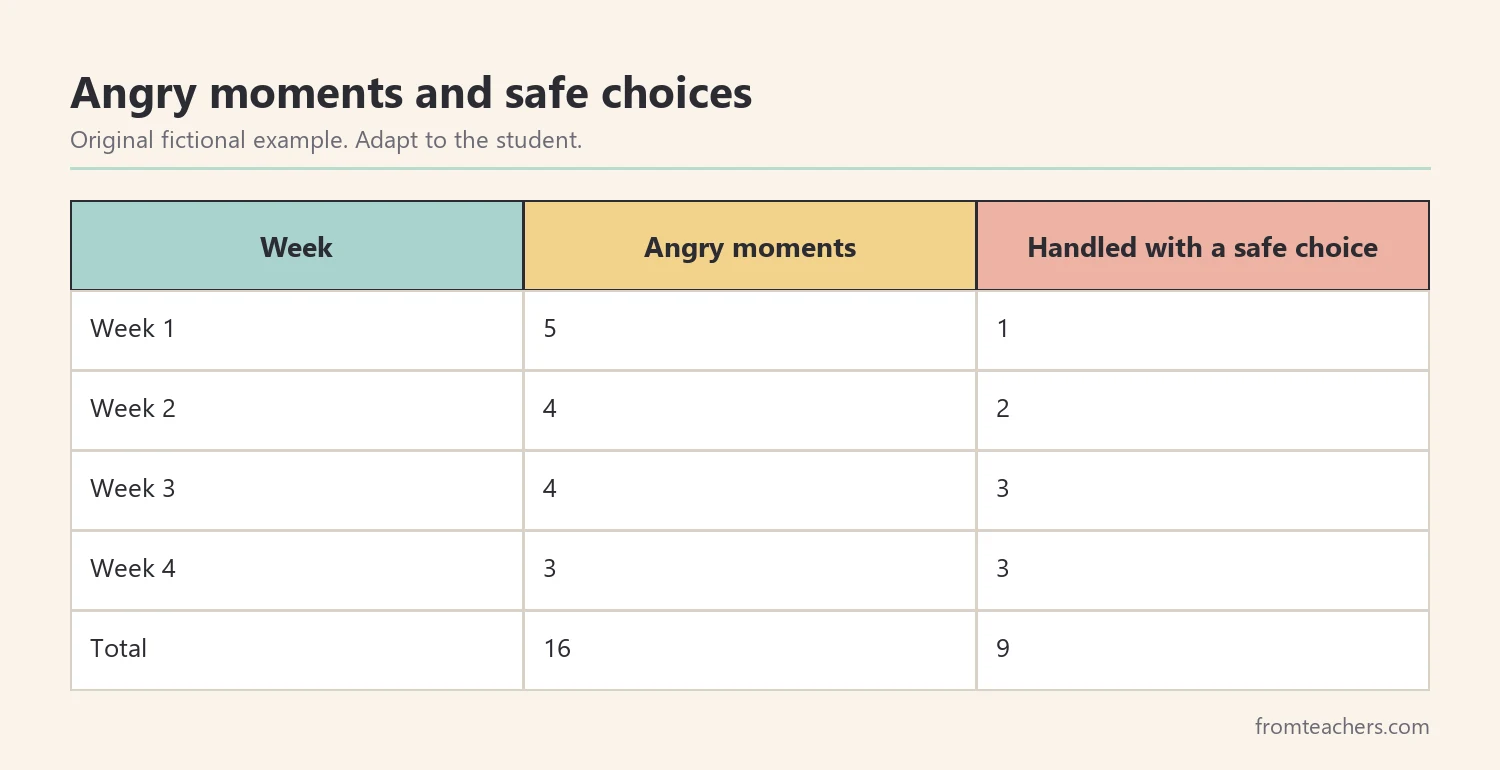
Next, track a few simple numbers. Count angry moments and how many of them the child handled with a safe choice. Over weeks, these numbers show whether the plan for what to do when angry is working.
In addition, share wins with families. A note such as “Mia used her calm corner and then talked it through today” helps families reinforce the same steps at home.
Then, update the plan. Swap strategies that do not help, and add new ones as the child grows. A plan for what to do when angry should feel like the child’s own, so invite the child to suggest changes.
Also, look for patterns in the record. If angry moments cluster after recess, before tests, or at the end of the day, small changes to those times can prevent some of them. Prevention and practice work best together.
Worked example. Ms. Grant records Mia’s angry moments for four weeks. In week 1, 5 moments and 1 handled with a safe choice. Week 2 brings 4 moments and 2 safe choices. In week 3, 4 moments and 3 safe choices. By week 4, it is 3 moments and 3 safe choices. That is 16 angry moments and 9 safe choices across the month.
Using the steps at home
Families can post the same steps for what to do when angry at home and agree on a calm spot. Practice the steps together during calm times, not only after an outburst.
Also, model the steps as a parent. Saying “I’m angry, so I’m going to take some space” shows children that adults use the same plan.
Common mistakes and how to avoid them
- Teaching the plan only after an outburst. Children cannot learn then. Fix: practice during calm times.
- Treating space as punishment. Children resist it. Fix: present space as a safe tool.
- Talking too much in the moment. Words add pressure. Fix: use a few calm words.
- Problem-solving too early. The child is not ready. Fix: wait until the body is calm.
- Telling children not to be angry. They hide feelings. Fix: say that anger is normal and teach safe choices.
Questions teachers and parents ask about what to do when angry
Is it okay for children to feel angry?
Yes. Anger is a normal emotion, and knowing what to do when angry is a skill children build over time. The goal is not to stop the feeling but to help children choose safe, healthy ways to calm their body and handle the moment with care.
What age can children learn these steps?
Young children can learn simple versions with pictures, such as noticing tight fists and taking a deep breath. Older children can add self-talk, asking for help, and problem-solving.
What if a child refuses to use the calm corner?
Offer another safe option, such as a strategy at the desk. Revisit the plan during a calm time and let the child help design the space.
Should there be consequences after an angry outburst?
Follow your school’s policies and the child’s plan. Many teachers focus on repair, such as helping fix what was damaged or apologizing when ready, alongside teaching the steps.
When should we ask for more help?
If anger is very frequent, intense, or unsafe, talk with the school counselor, the child’s team, or a health professional for further support.
Related reading: Meltdowns vs Tantrums: A Guide to Understanding and Responding, Moving Beyond Shame and Behavior Charts: Positive Alternatives for Effective Classroom Management, and Essential Trauma-Informed Teaching Strategies for Modern Classrooms.
A companion resource for what to do when angry:
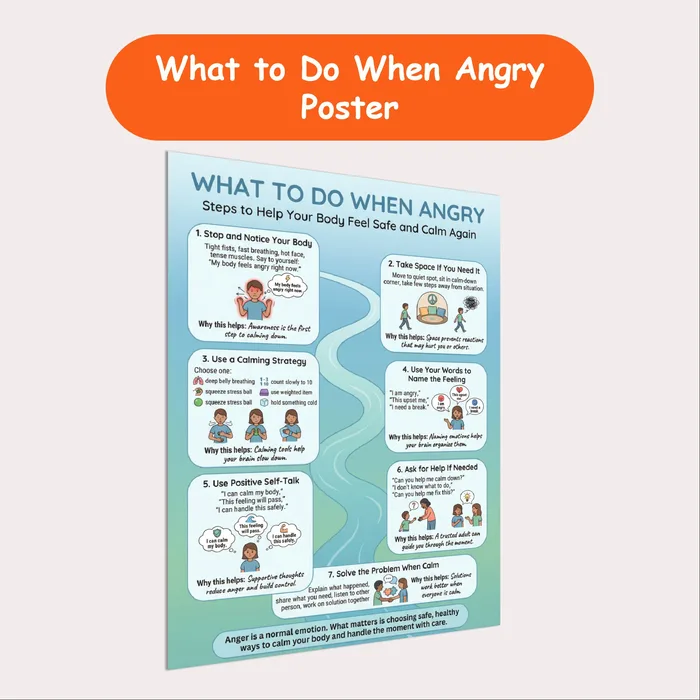
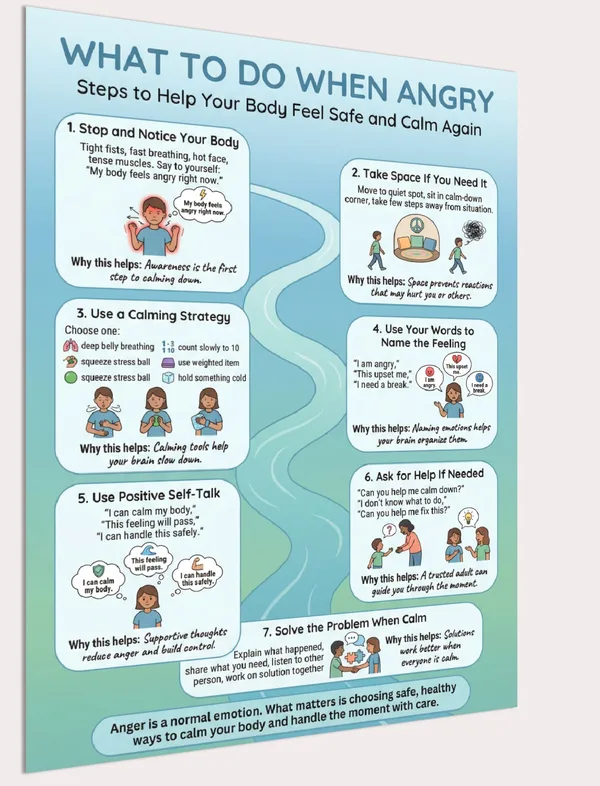
Anger Management Poster for Kids: seven steps for what to do when angry, from noticing body signals to solving the problem once calm, each with a “why this helps” note, for calm down corners and classrooms.
Sources and scope
- CASEL: resources on social and emotional learning, including self-management.
- Centers for Disease Control and Prevention (CDC): general information on children’s mental health and behavior.
- HealthyChildren.org, American Academy of Pediatrics: parent information on children’s emotions and behavior.
- Center on PBIS: information on positive behavior supports in schools.
This guide covers everyday classroom and home strategies for teaching children to handle anger safely. It does not replace mental health care, diagnosis, safety plans, or the decisions of a child’s support team.
Key takeaways
- Anger is normal, and children can learn what to do when angry.
- Teach body signals so children notice anger early.
- Pair space with a calming strategy the child has practiced.
- Practice naming the feeling, self-talk, and asking for help.
- Solve problems when calm and track safe choices over time.



Leave a Comment