

School refusal support works best when adults see the behavior as a stress response, not defiance. Picture a sixth grader who freezes in the car outside school every morning. His parent pleads, a staff member waits at the door, and everyone grows more frustrated. Pushing harder rarely helps. What helps is a calm, shared plan that rebuilds safety, trust, and capacity, one small step at a time.
This guide shows educators how to provide school refusal support in six steps: look beneath the behavior, protect emotional safety and the relationship, start with small steps and less pressure, plan mornings and transitions, work with families as a team, and focus on regulation while celebrating progress. By the end, you will have a practical framework your school team can use together.
Examples are fictional. Adapt to the student’s goals and agreed supports. This is guidance, not a diagnosis.
At a glance
- School refusal is often a sign of anxiety, overwhelm, or feeling unsafe.
- The goal is to rebuild safety and trust, not to force attendance.
- Small, realistic steps work better than “all or nothing.”
- Mornings and arrival need a predictable plan and a soft landing.
- Families and staff work best as one team with one written plan.
1. Look beneath the behavior before planning support
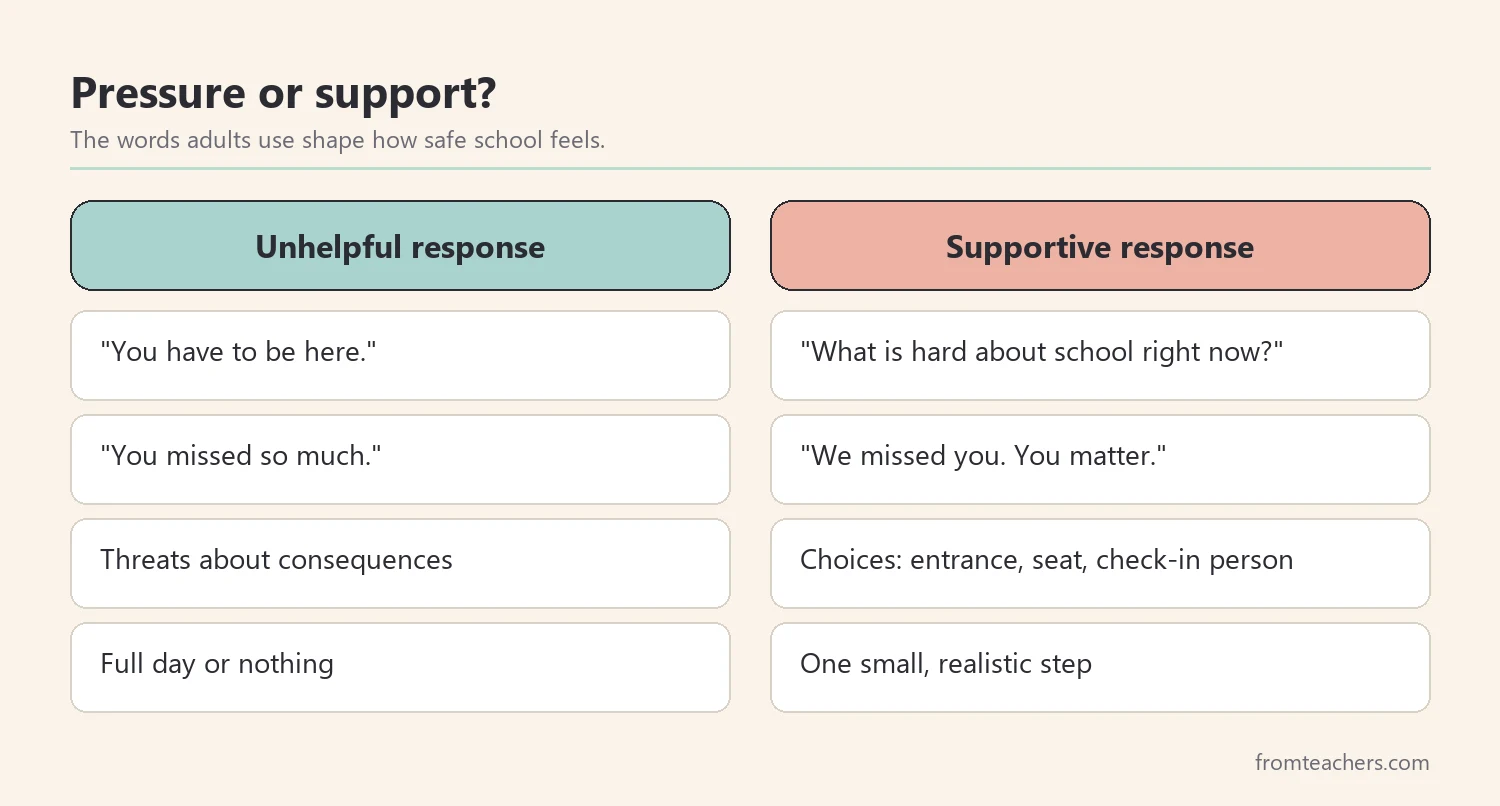
First, get curious about what is driving the refusal. School refusal is often a sign of anxiety, overwhelm, or feeling unsafe. Ask the student gently, “What is hard about school right now?” Focus on understanding, not blaming.
Next, gather information from several angles. When did it start? Is it worse on certain days, before certain classes, or after weekends? Are there changes at home, problems with peers, or academic struggles? Patterns often point to the real barrier, and they show where school refusal support should begin.
Also, avoid labeling the student as lazy or manipulative. Those labels shut down conversation and make families defensive. Effective school refusal support starts from the belief that the student wants things to be different but cannot yet manage the stress.
In addition, check whether the student already has a plan, such as an IEP or 504 plan, or whether the team should consider an evaluation. Follow your school’s procedures, and involve the counselor or school psychologist early.
Worked example. Sam is a fictional student in grade 6. He has missed many mornings this term. When the counselor, Ms. Lopez, asks what is hard, Sam says the crowded hallway at arrival “feels like too much.” He also worries about being called on in his first class. The team now has two concrete barriers to work on.
2. Build school refusal support on safety and trust
Next, make emotional safety the priority. Validate the student’s feelings, even if you cannot change the situation. Use calm, nonjudgmental language. Show the student that their emotions are real and important.
Then, keep the relationship strong, especially on hard days. Stay in gentle contact through short notes, emails, or quick calls. Let the student know they are missed, not in trouble. Make sure the message is “You matter,” not “You failed.”
Also, choose one key adult. A trusted teacher, counselor, or aide who greets the student each day becomes an anchor. Consistent, warm contact with one person is often the foundation of school refusal support.
For a quick staff reference, the school refusal support reminders poster for educators gives teachers, counselors, and support staff ten clear reminders, written for adults and focused on safety and connection.
Worked example. Ms. Lopez becomes Sam’s key adult. On days he does not come in, she sends a short message: “We missed you today. I’ll be at the side door tomorrow at 8:15.” She never mentions how many days he has missed in these notes.
3. Start school refusal support with small steps
Next, break attendance into small, realistic goals. Steps might be entering the building, a short stay, or one class. Use gradual exposure instead of “all or nothing,” and celebrate each step, even if it seems small.
Then, reduce pressure while increasing support. Avoid threats and guilt-based language. Offer choices where possible, such as the entrance, seating, or the check-in person. Adjust workload temporarily during re-entry.
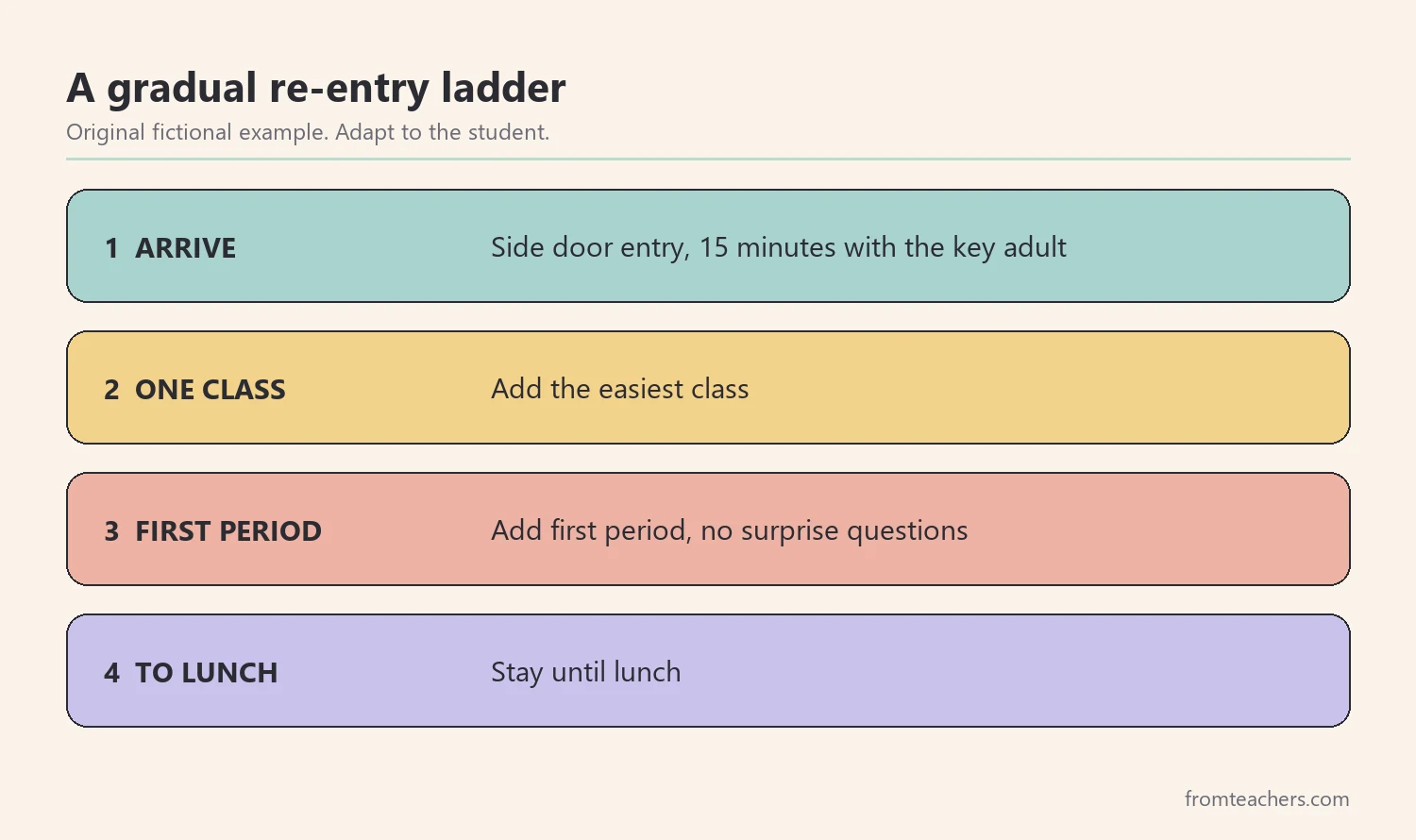
Also, write the steps down with the student and family. A clear ladder shows everyone what comes next, and it lets the student see progress. Move up only when the current step feels manageable, and step back briefly if needed.
In addition, keep academic demands realistic during this stage. A student returning after many absences may need a reduced workload or a catch-up plan. Good school refusal support treats learning as something that will follow once safety is rebuilt.
Worked example. Sam’s team writes a four-step ladder. Step one is arriving through the quiet side door and spending 15 minutes with Ms. Lopez. Step two adds his second class, which he finds easier. Next, step three adds first period with an agreement that he will not be called on without warning. Finally, step four is staying until lunch.
4. Plan mornings and transitions
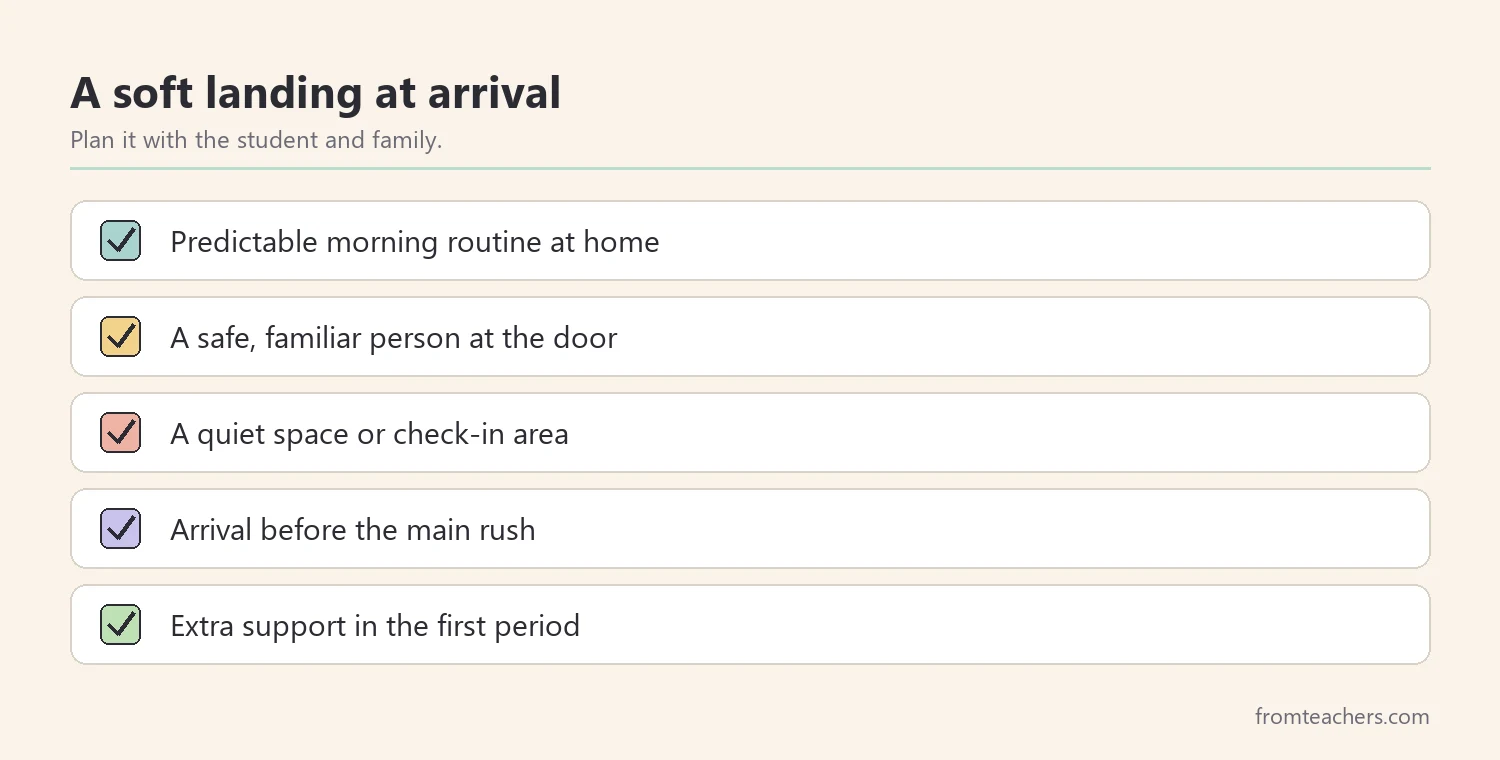
Mornings are often the hardest part. So, create a predictable morning routine with the family. A visual schedule for wake-up, breakfast, and leaving the house reduces last-minute decisions and conflict.
Next, offer a soft landing at school. This can be a safe person, a quiet space, or a check-in area where the student starts the day. Give extra support during arrival and the first period, because these moments set the tone for everything that follows.
Also, plan transitions inside the school. Crowded hallways, noisy lunchrooms, and unexpected changes can all trigger stress. Simple adjustments, such as leaving class a minute early or having a set lunch spot, reduce these pressure points.
In addition, prepare the student for changes in advance. If a substitute teacher, assembly, or fire drill is planned, let the student know ahead of time. Predictability is a core part of school refusal support.
Worked example. Sam’s family uses a simple morning checklist at home. At school, he enters through the side door at 8:15, before the main rush, and spends ten minutes in the counseling office. Ms. Lopez then walks with him to class through a quieter hallway.
5. Work with families and use a team approach
Next, collaborate closely with families. Listen to caregivers’ observations about mornings and triggers. Share plans and strategies clearly. Work together rather than assigning blame to home or school.
Then, build a team. Involve the counselor, case manager, administrator, and special education staff where relevant. Share information so the student does not have to retell everything to each adult. Create one clear, written plan that everyone follows.
Also, agree on how the team communicates. A short weekly check-in, by message or meeting, keeps everyone aligned. Decide who contacts the family, who greets the student, and who adjusts the plan when needed.
| Team member | Role in the plan |
|---|---|
| Counselor | Key adult, morning check-in |
| Class teachers | Seating, workload, no surprise questions |
| Family | Morning routine, shares observations |
| Administrator | Coordinates the plan and attendance follow-up |
In addition, review the plan with the student when appropriate. Older students often have useful ideas about what helps, and their input makes school refusal support feel less like something done to them.
Worked example. Sam’s team meets for 20 minutes. They write one plan covering the side-door entry, the counseling check-in, the first-period agreement, and weekly updates by email to his parents. Every adult who works with Sam gets a copy.
6. Focus school refusal support on regulation and progress
Finally, focus on regulation before academics. Support the nervous system first and schoolwork second. Offer calming tools, sensory supports, and predictable routines. A regulated student can access learning more easily.
Then, celebrate progress, not perfection. Notice and name small wins, such as getting dressed, reaching the parking lot, or entering the building. Keep track of gains over time, and help the student see their own courage and growth.
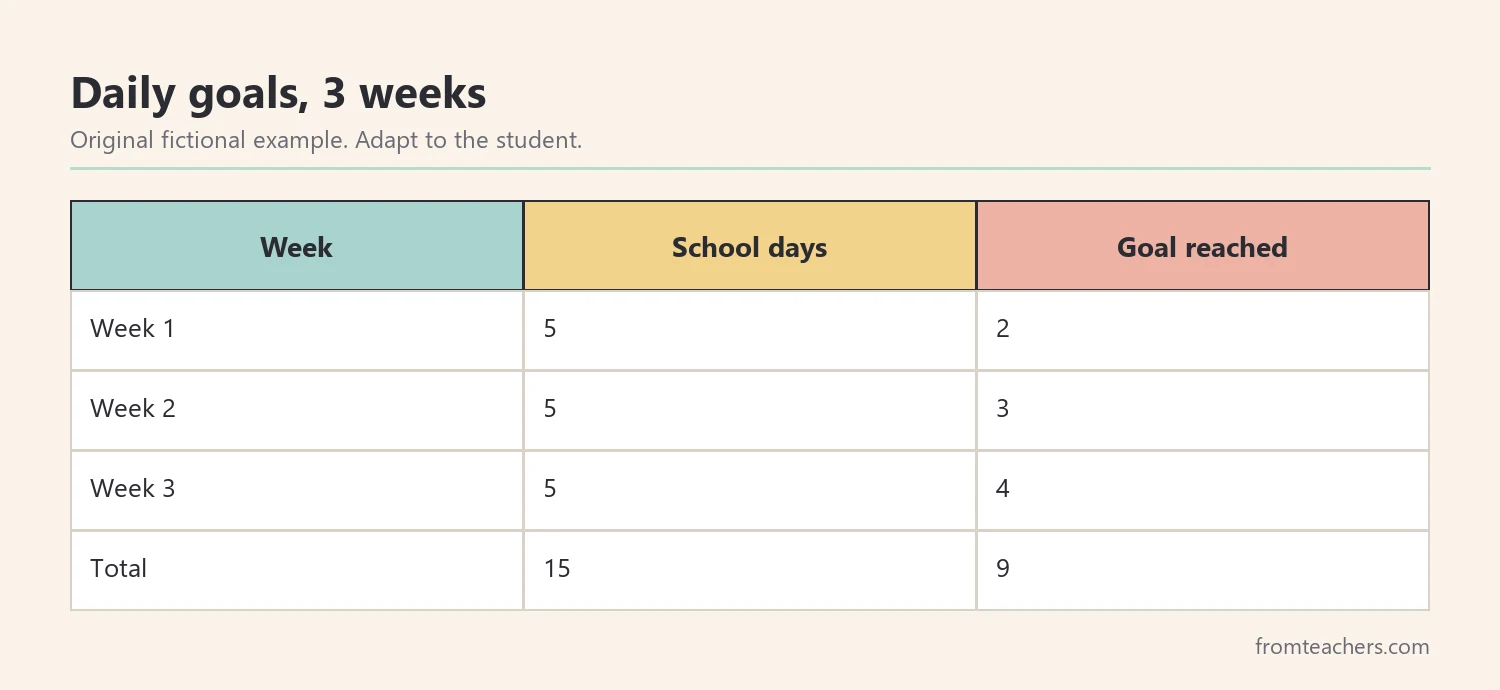
Also, keep simple records. Track each day’s goal and whether it was reached. Over a few weeks, the data shows whether school refusal support is working, and it helps the team decide when to move up the ladder.
Meanwhile, expect setbacks. Holidays, illness, or a hard day can bring old patterns back. Treat setbacks as information, return briefly to an easier step, and keep the relationship warm. Compassionate, consistent support creates long-term change.
Worked example. Over three weeks, Sam has a daily goal on each of 15 school days. He reaches it on 2 days in week 1, 3 days in week 2, and 4 days in week 3, which is 9 of 15 days. Ms. Lopez points out each success to him, and the team moves him to step three of the ladder.
Supporting staff who work with the student
School refusal can be stressful for adults too. Teachers may worry about falling behind, and front office staff may not know what to say at arrival. So, give every adult a short summary of the plan and the key messages to use.
Also, keep the language consistent. When every adult says “We’re glad you’re here” and avoids questions about missed days, the student hears the same safe message everywhere. A shared reminder poster in the staff room or office can help keep that message steady.
When progress stalls
Sometimes a student stays on the same step for weeks. First, check whether the step is too big. Splitting it into two smaller steps often restarts progress. For example, “stay for first period” might become “stay for the first 20 minutes of first period.”
Next, look again at the barriers. A new problem, such as a conflict with a peer or a hard unit in one subject, can block progress. Ask the student and family what has changed, and adjust the plan.
Also, review whether the plan is being followed. If different adults respond in different ways, the student may feel unsure. Consistent school refusal support from every adult matters as much as the plan itself. If progress still stalls, the team can discuss whether additional assessment or outside support would help, with the family’s agreement.
Common mistakes and how to avoid them
- Treating refusal as defiance. Pressure increases stress. Fix: look for the barrier behind the behavior.
- All-or-nothing goals. Full days feel impossible. Fix: use small, gradual steps.
- Threats and guilt. Trust breaks down. Fix: use calm language and offer choices.
- Many adults, many messages. The student feels confused. Fix: one written plan, shared by all.
- Ignoring small wins. Motivation fades. Fix: notice and name every step forward.
Questions teachers and parents ask about school refusal support
Is school refusal the same as truancy?
Not usually. School refusal is often linked to anxiety or distress, and families typically know where the child is. Truancy usually involves missing school without the family’s knowledge. Each needs a different response.
Should we let the student stay home until they feel ready?
Long absences can make return harder. Most approaches aim for gradual, supported steps toward school, adjusted to what the student can manage, while the team addresses the underlying stress.
Who should lead the plan?
Often the counselor, school psychologist, or case manager leads, with an administrator coordinating. What matters most is one clear plan and one key adult for the student.
What if the student has an IEP or 504 plan?
Review whether the current supports address the barriers you have found. The team may need to meet and update the plan following your school’s procedures.
When should outside help be involved?
If anxiety or distress is significant or does not improve, families may seek support from qualified mental health professionals. The school team can share observations with the family’s permission.
Related reading: Understanding Demand Avoidance and School Refusal: Strategies for PDA-Style Profiles, Understanding Autistic Burnout and School Exhaustion: Prevention and Support Strategies, and How Parents and Teachers Can Team Up for Special Education Success.
A companion resource for school refusal support:
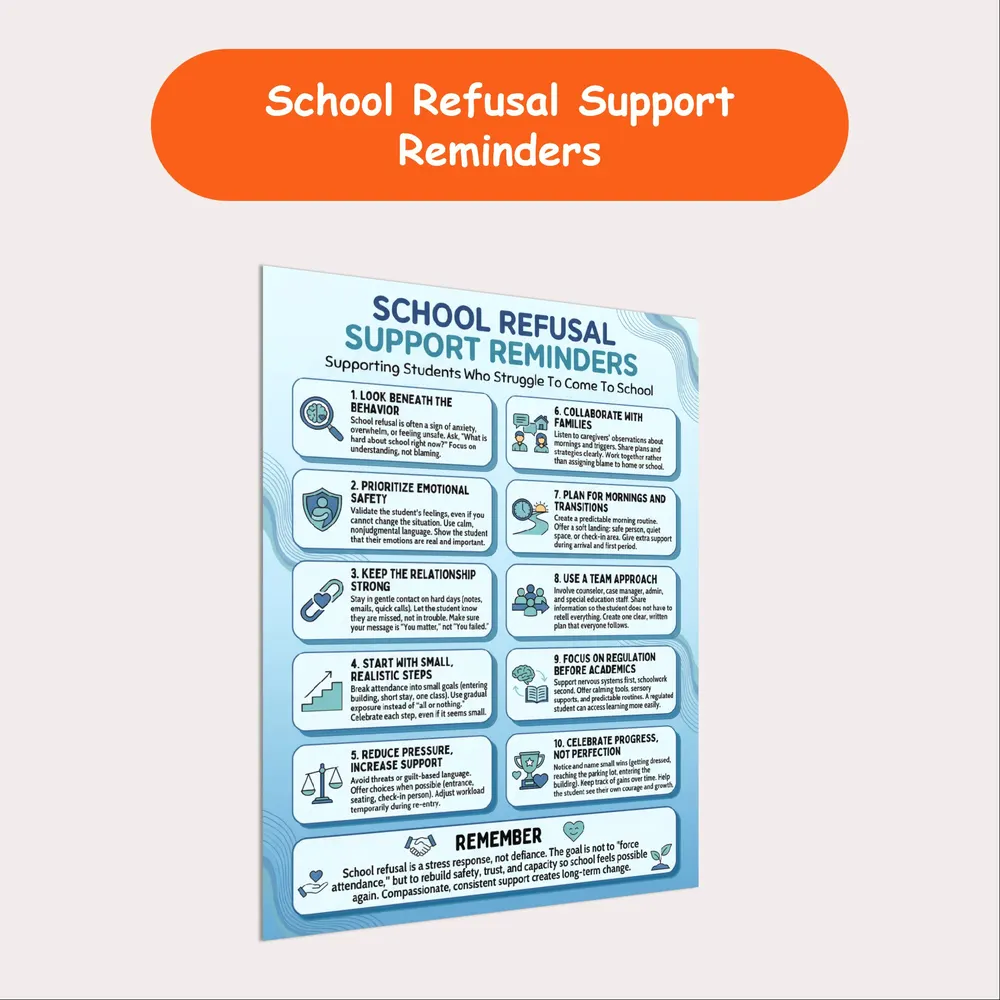
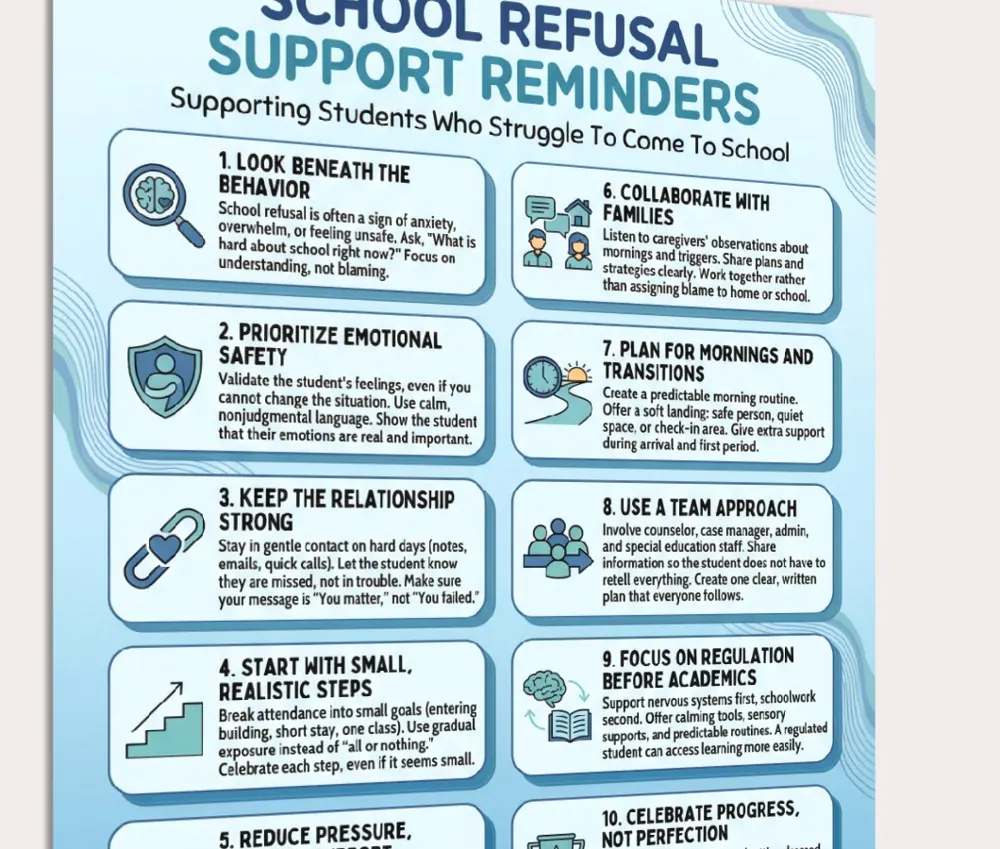
School Refusal Support Reminders Poster: a printable poster for teachers, counselors, and support staff with ten clear reminders for working with students who struggle to come to school. It frames school refusal as a stress response and focuses on safety and connection.
Sources and scope
- Child Mind Institute: information for families and educators on anxiety and children’s mental health.
- Anxiety and Depression Association of America: public information on anxiety, including in children and teens.
- Attendance Works: a national initiative focused on reducing chronic absence.
- Understood.org: family-friendly guidance on learning and thinking differences and school stress.
This guide covers practical school-based steps for supporting students who struggle to attend. It does not replace mental health assessment, treatment, or your school’s attendance and safeguarding procedures.
Key takeaways
- School refusal support starts by looking beneath the behavior.
- Protect emotional safety and keep one warm, key relationship.
- Use small, realistic steps and reduce pressure.
- Plan mornings, arrival, and transitions carefully.
- Work as one team, focus on regulation, and celebrate every win.









Leave a Comment