

ABC data collection often starts in the middle of a busy lesson. A student pushes his writing folder off the desk, a paraprofessional steps in, and by lunch nobody remembers exactly what happened first. Without a record, the team ends up guessing, and guesses rarely lead to a plan that works.
This guide walks you through a five-step process for collecting antecedent, behavior, and consequence data that is fast, consistent, and useful. By the end, you will know how to define one behavior, record it in seconds, summarize each day, read the patterns, and share what you found with the team.
Examples are fictional. Adapt to the student’s goals and agreed supports. This is guidance, not a diagnosis.
At a glance
- Pick one behavior and define it so any adult would record it the same way.
- Use a checkbox format so each entry takes seconds, not minutes.
- Write a short daily summary while the day is still fresh.
- Look for patterns across at least a week before naming a possible function.
- Share a simple summary with the team and decide on one next step.
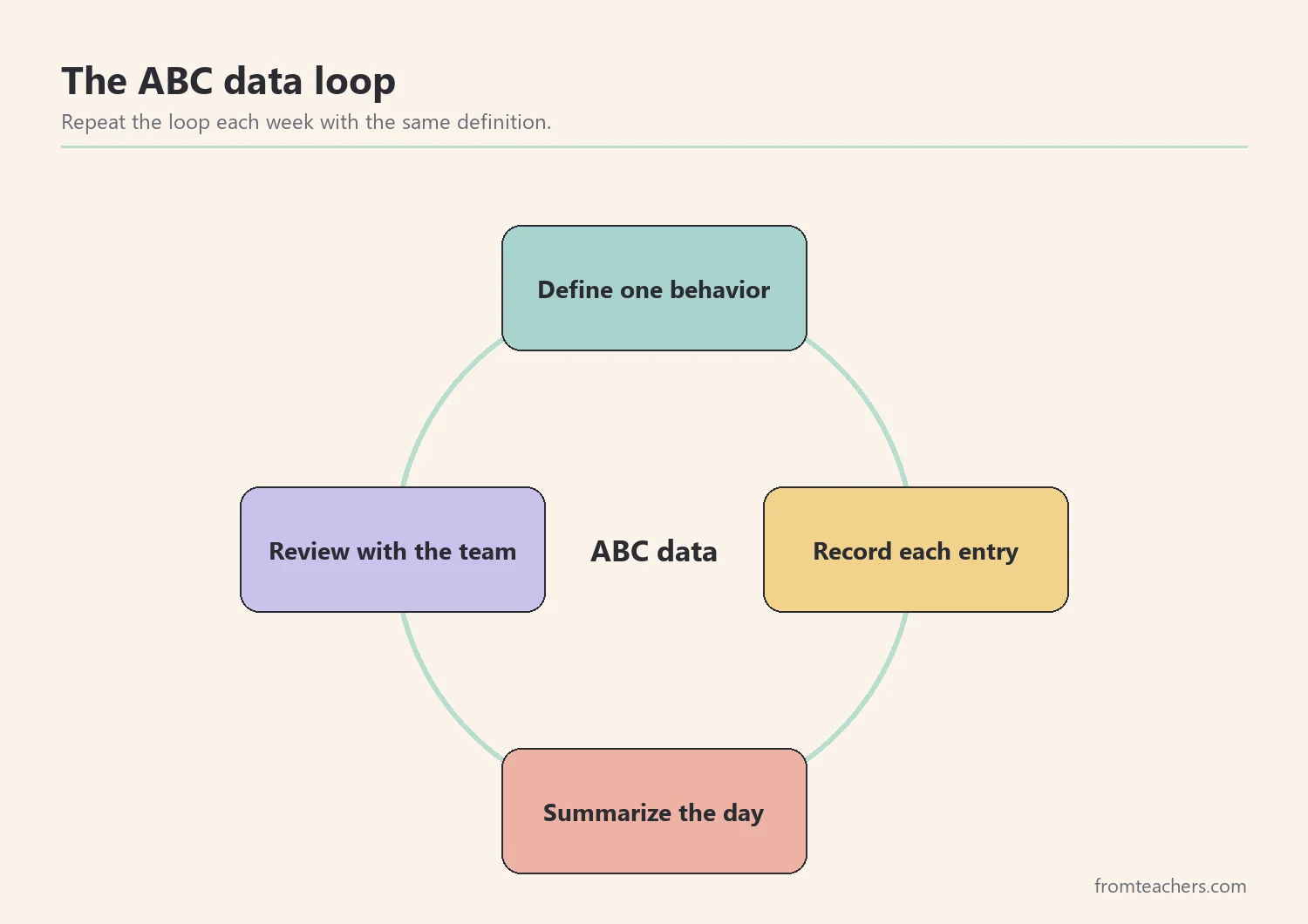
1. Define the behavior before ABC data collection starts
First, choose one behavior. Teams often try to track everything a student does that bothers adults, and the data turns into a pile of notes nobody can read. ABC data collection is most useful when every entry describes the same, clearly defined action.
Next, write the definition in observable terms. Describe what you would see or hear, not what you think the student feels. “Frustrated” or “defiant” are interpretations. “Pushes materials off the desk” or “leaves the group area without permission” are actions that two adults can agree on.
Then, add a short example and a non-example. This step sounds small, but it prevents a lot of confusion between staff members. For instance, if the behavior is leaving the area, does walking to the pencil sharpener count? Decide now, not halfway through the week.
Consider a fictional example. Leo is in grade 3. His teacher, Ms. Rivera, notices that writing time is often hard for him. The team agrees on this definition:
| Part | Leo’s definition |
|---|---|
| Behavior | Pushes his folder or paper off the desk |
| Example | Sweeps the folder to the floor with his arm |
| Non-example | Drops a pencil by accident |
| When to record | Every time, any adult who sees it |
Finally, share the definition with everyone who will record. Paraprofessionals, specials teachers, and support staff should all read it before the first entry. Consistent definitions are the foundation of every good data set.
2. Set up a fast ABC data collection format
Once the behavior is defined, decide how you will record it. Narrative notes have their place, but they take time, and busy adults tend to skip them. A checkbox format makes ABC data collection realistic during a real school day.
A practical sheet has three wide columns. The antecedent column lists common triggers, such as a new task, a transition, a denied request, or a demand to work alone. The behavior column lists the defined behavior and a few related ones. The consequence column lists what usually happens next, such as a redirect, a break, peer attention, or the task being removed.
In addition, include a few header fields: date, time, setting, activity, and the name of the staff member recording. These details matter later. A pattern by setting or by adult is easy to miss if the sheet does not ask for it.
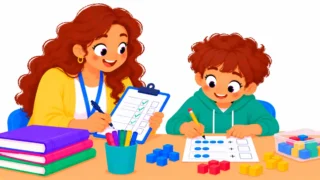
For Leo, Ms. Rivera uses a one-page form with checkboxes and a small notes line. She keeps a copy on a clipboard by the writing table, and the paraprofessional has another. If you would rather not build this from scratch, a set of fillable ABC data collection sheets with daily summary pages gives you ready columns, observer fields, and signature lines.
Before the first real entry, practice once. Ask two adults to watch the same short lesson and fill in the form separately. Then compare. If their entries differ, adjust the definition or the checkboxes until they match more closely. This short practice makes your ABC data collection more reliable from day one.
As a rule, keep the form to one page. When a sheet needs scrolling or flipping, entries get skipped. Also, keep a pen with the clipboard. It sounds obvious, yet a missing pen is one of the most common reasons data gaps appear.
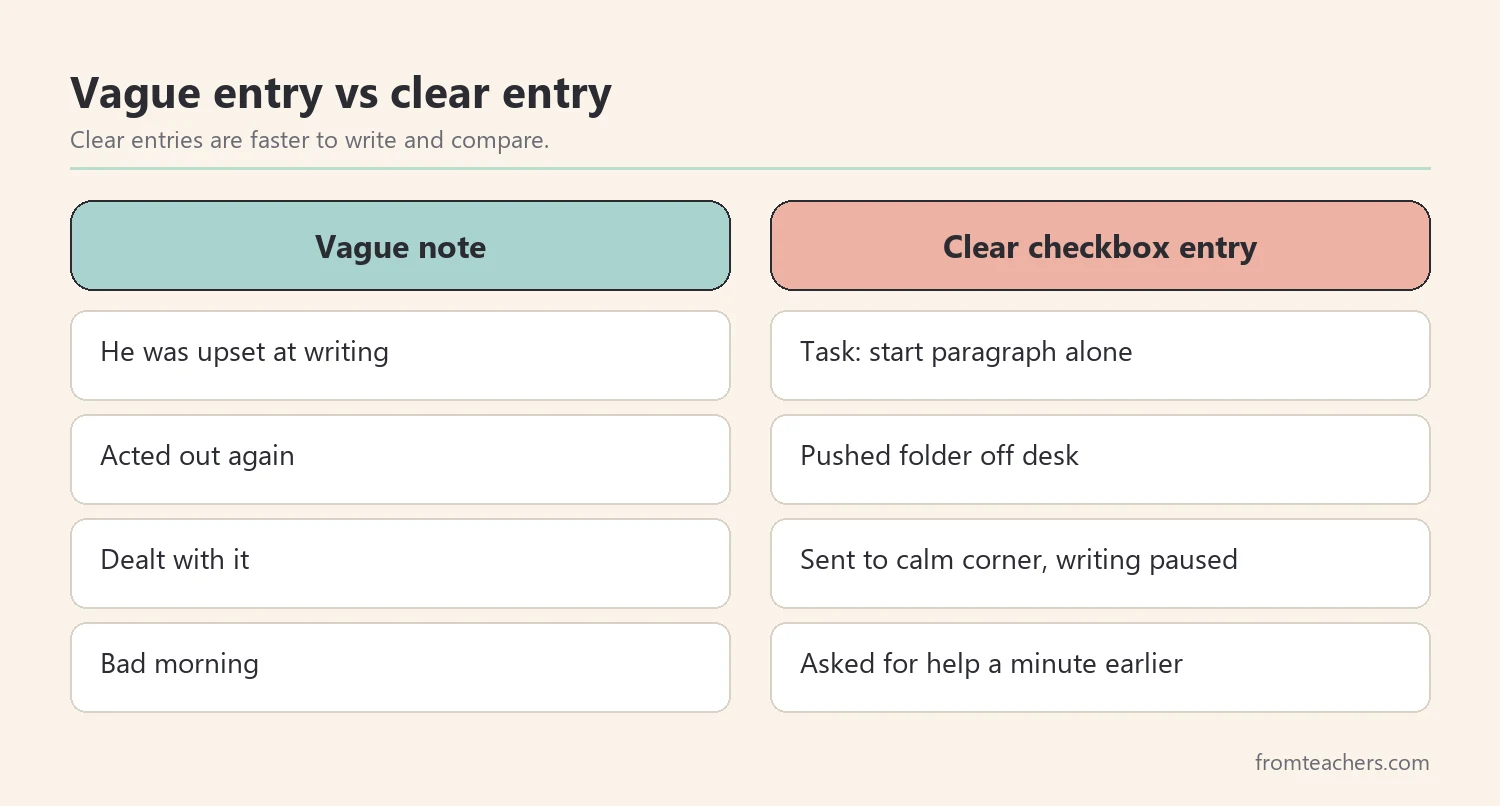
3. Record ABC data collection entries in the moment
Now the actual recording begins. The goal is accuracy with very little time. Record as soon as you safely can, ideally within a few minutes, because memory changes quickly in a busy classroom.
Start with the antecedent. Ask yourself what happened just before the behavior. Then check the behavior box. Next, record what happened right after, including what you did. That last part is uncomfortable for some adults, but honest consequence data is what makes ABC data collection useful.
Here is how one of Leo’s entries looks on Tuesday at 10:15 during writing:
- Antecedent: asked to start a paragraph alone.
- Behavior: pushes folder off the desk.
- Consequence: sent to the calm corner, writing paused.
- Note: had asked for help a minute earlier.
Notice that the note adds context without guessing a reason. “Had asked for help” is something the adult saw. “He hates writing” would be a guess.
Meanwhile, avoid two common traps. The first is recording only the worst incidents, which makes the behavior look more intense than it is. The second is writing the entry at the end of the day from memory. Both distort the pattern you are trying to find.
4. Summarize each day and look for patterns
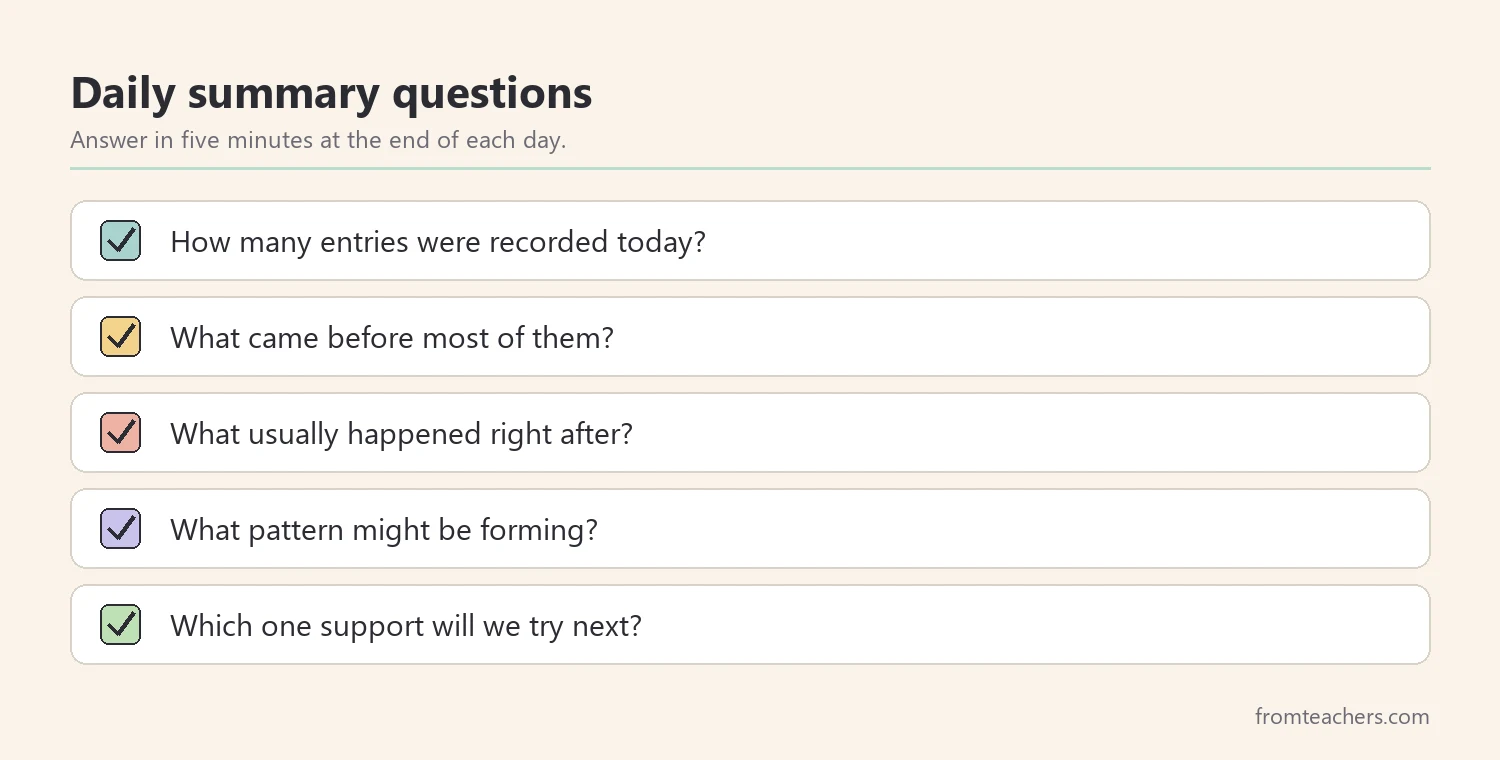
At the end of each day, take five minutes to write a short summary. This is where ABC data collection turns from a list of incidents into information. A daily summary asks a few simple questions: how many entries, what came before most of them, what usually followed, and what you noticed.
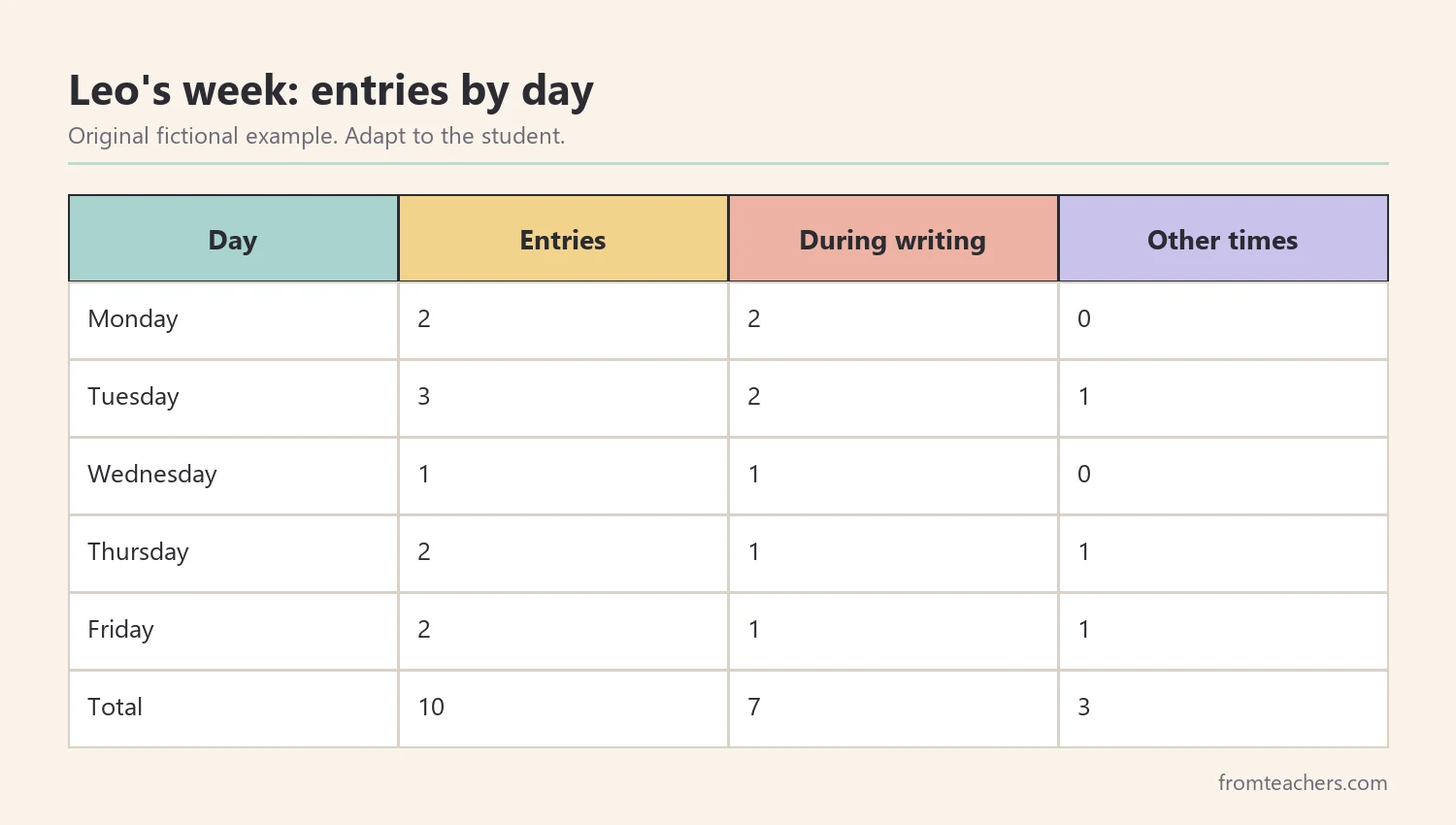
After one week, Ms. Rivera has ten entries for Leo. She tallies them by day and by antecedent:
Then she looks at consequences. Six of the ten entries ended with Leo leaving the task, three ended with an adult redirecting him at his desk, and one had no adult response. That adds up to ten.
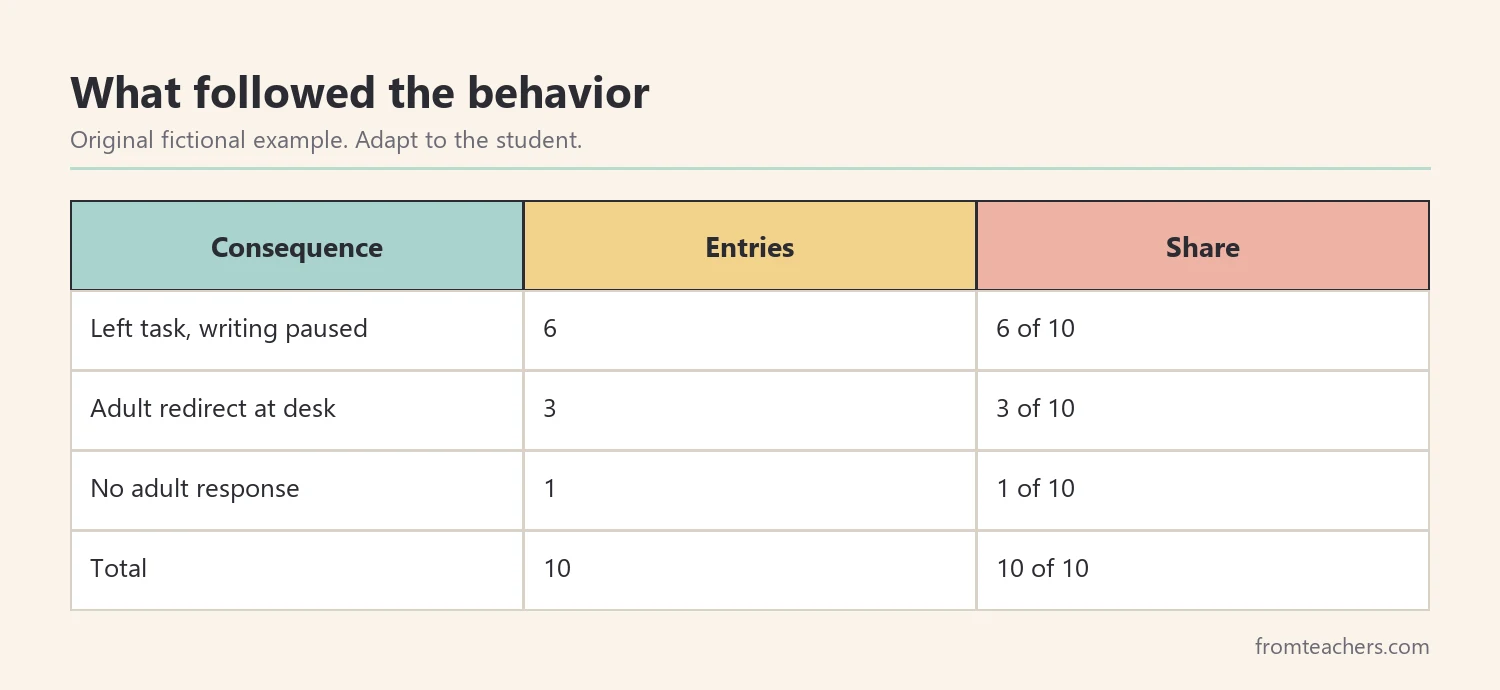
Together, these tallies suggest a pattern: the behavior happens most during independent writing and is often followed by the writing stopping. A possible function to explore is escape from a hard task. Notice the word “possible.” A summary is a hypothesis, not a conclusion.
In practice, the daily summary also asks what support to try. For Leo, the team notes: offer a sentence starter, check in after two minutes, and teach a “help card” he can show instead.
How to read a pattern without overreaching
First, look for the biggest cluster. In Leo’s case, seven of ten entries happened during one activity, which is a strong signal. If entries were spread evenly across the day, the antecedent would be less clear, and the team would need more data.
Next, compare the antecedent and the consequence together. A pattern like “hard task, then task removed” points toward escape. A pattern like “adult busy with others, then adult comes over” points toward attention. Other patterns may point toward getting an item or activity, or toward sensory needs. These are common categories, but they are starting points for the team, not labels for the child.
Also, check for setting events. Ask the family whether anything was different on the harder days, such as a poor night of sleep or a change in routine. Write these notes in the summary without assuming they explain everything.
Finally, notice what is missing. If there are no entries during art or recess, that is useful information too. Calm times show you what already works for the student.
5. Review and share ABC data collection results
After one to two weeks of ABC data collection, bring the summary to the team. Keep it short. A one-page overview with the definition, the number of entries, the most common antecedent, the most common consequence, and the possible function is enough to start a good conversation.
Next, decide together what happens now. Some teams move to a formal functional behavior assessment. Others try a small change first and keep collecting data to see whether it helps. Either way, the decision should come from the pattern, not from the most memorable incident.
For Leo, the team agrees on three changes during writing: a sentence starter on his desk, a two-minute adult check-in, and a help card he is taught to use. They continue recording for two more weeks with the same form. If the number of entries during writing drops, the plan is working. If it does not, they will look again.
When you share results, lead with what the data shows, not with the hardest incident. For example, “Seven of ten entries happened during independent writing” keeps the meeting focused. Then invite each adult to add what they noticed, since one recorder rarely sees the whole day.
Also, include the family. A short, calm summary helps parents see that the school is looking for reasons, not blame. Ask whether they notice anything similar at home, such as a hard time starting homework.
Finally, sign and file the sheets. Observer and supervisor signatures make the record easier to use later in meetings, and they remind everyone that the data belongs to a shared process.
Common mistakes and how to avoid them
- Tracking too many behaviors at once. Fix: start with one clearly defined behavior and add another only when the first is running smoothly.
- Vague definitions. Fix: describe actions, add an example and a non-example, and share them with every adult who records.
- Writing entries at the end of the day. Fix: keep the form and a pen where the behavior usually happens and record within minutes.
- Leaving out adult responses. Fix: record every consequence honestly, including breaks, redirects, and attention.
- Naming a function after two entries. Fix: collect at least a week of data before forming a hypothesis, and call it “possible.”
- Collecting data nobody reads. Fix: schedule a five-minute daily summary and a short team review.
Questions teachers and parents ask about ABC data collection
How long should ABC data collection last?
Many teams collect for one to two weeks before looking for patterns. The right length depends on how often the behavior happens. A behavior that happens once a week may need a longer window to show a clear pattern.
Who should record the data?
Any adult who sees the behavior can record it, as long as they know the definition. In practice, that often means the teacher, a paraprofessional, and specialists. Adding the recorder’s name helps the team spot differences between settings or adults.
Is ABC data collection the same as an FBA?
No. ABC data collection is one tool that is often used within a functional behavior assessment. A full FBA usually also includes interviews, record reviews, and other observations, led by qualified staff.
What if the behavior happens too often to record every time?
In that case, record during set time blocks, such as the first fifteen minutes of each lesson. Write down when you recorded so the team knows the sample is partial. Then use the daily summary to describe the rest of the day in general terms.
Can parents use ABC data collection at home?
Yes. A simple home version with the same three columns can help families notice patterns around routines like homework or bedtime. Sharing home and school notes gives the team a fuller picture.
Related reading: Moving Beyond Shame and Behavior Charts: Positive Alternatives for Effective Classroom Management, Meltdowns vs Tantrums: A Guide to Understanding and Responding, and How Teachers Communicate With Parents in Special Education: Building a Strong Partnership.
A companion resource for ABC data collection:
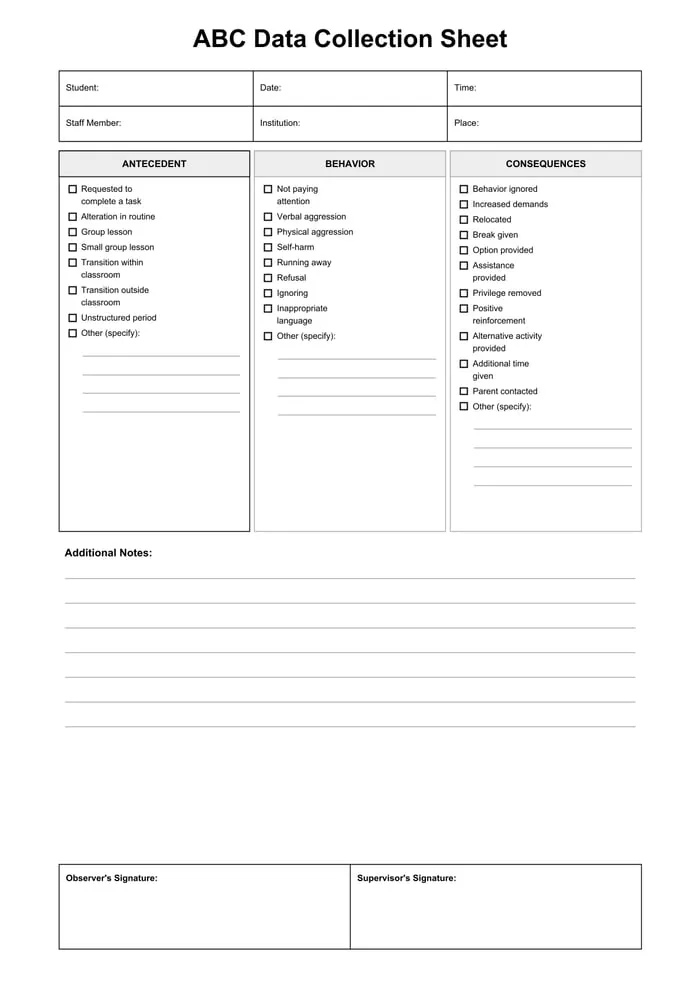
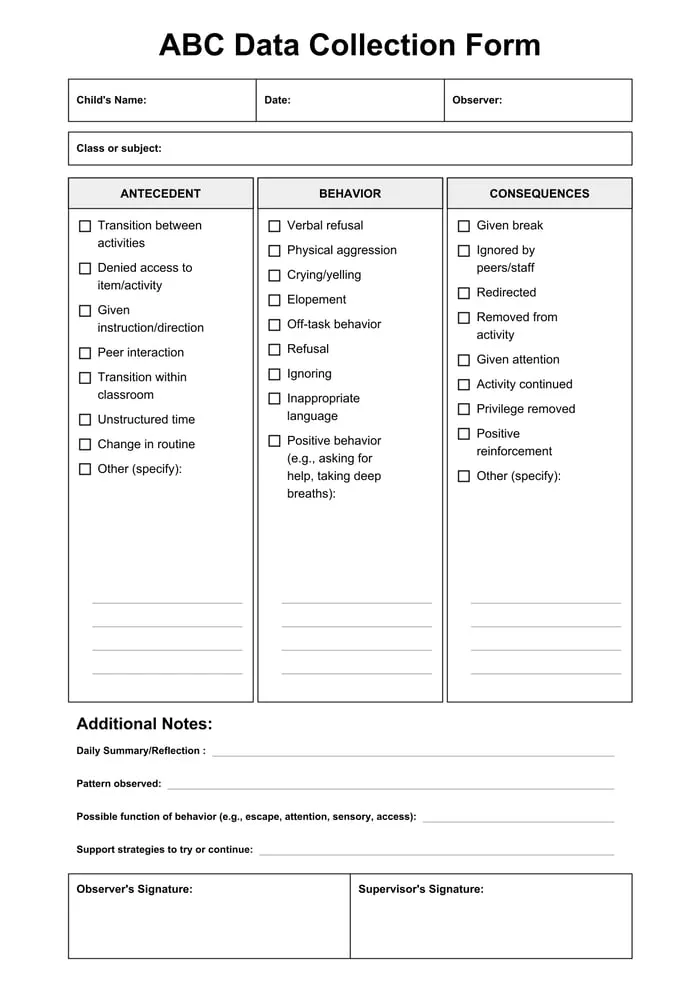
ABC Data Collection & Daily Behavior Summary Forms: fillable PDF sheets with checkbox antecedent, behavior, and consequence columns, a daily summary section for patterns and possible function, extra notes boxes, and observer and supervisor signature lines.
Sources and scope
- IRIS Center, Vanderbilt University: free modules on behavior, functional assessment, and data-based decisions.
- Center on PBIS: resources on positive behavior support and using data in schools.
- IDEA, U.S. Department of Education: the law behind special education services, IEPs, and behavior supports.
- What Works Clearinghouse: reviews of research on education practices.
This guide covers everyday classroom ABC recording and simple pattern review. It does not replace a full functional behavior assessment, which should be led by qualified staff with the student’s team and family.
Key takeaways
- ABC data collection starts with one behavior defined in observable terms.
- A one-page checkbox form makes recording fast and consistent.
- Record each entry within minutes, including the adult response.
- Daily summaries turn entries into patterns and a possible function.
- Review the data with the team and family, then test one change at a time.







Leave a Comment