
Inclusive education strategies matter most in the ordinary moments of a school day. Picture a third grader named Lena sitting at a table group during a science lesson. The class is reading a two-page article about plant life cycles, and Lena, who has an IEP for reading, is staring at the first paragraph while her group moves on. She is in the room, but she is not yet in the lesson.
This guide turns that moment into a clear plan. You will learn how to connect what the law asks of you, how to set up an accessible room, how to teach so more students can enter the lesson, how to assess fairly, and how to review progress with families. By the end, you will have a five-step process you can use with one student or a whole class.
Examples are fictional. Adapt to the student’s goals and agreed supports. This is guidance, not a diagnosis.
At a glance
- Inclusion means access to learning and belonging, not only a seat in the room.
- Know the basics of the laws so you can read an IEP or 504 plan with confidence.
- Design the room and the lesson for variety from the start, then add individual supports.
- Keep the learning goal the same on tests unless the team has agreed to a modification.
- Review one simple measure with the family and the team every few weeks.
1. Ground your inclusive education strategies in the law
First, you do not need to be a lawyer to teach inclusively. However, a working knowledge of the main laws helps you understand why a plan says what it says. It also helps you ask better questions at meetings.
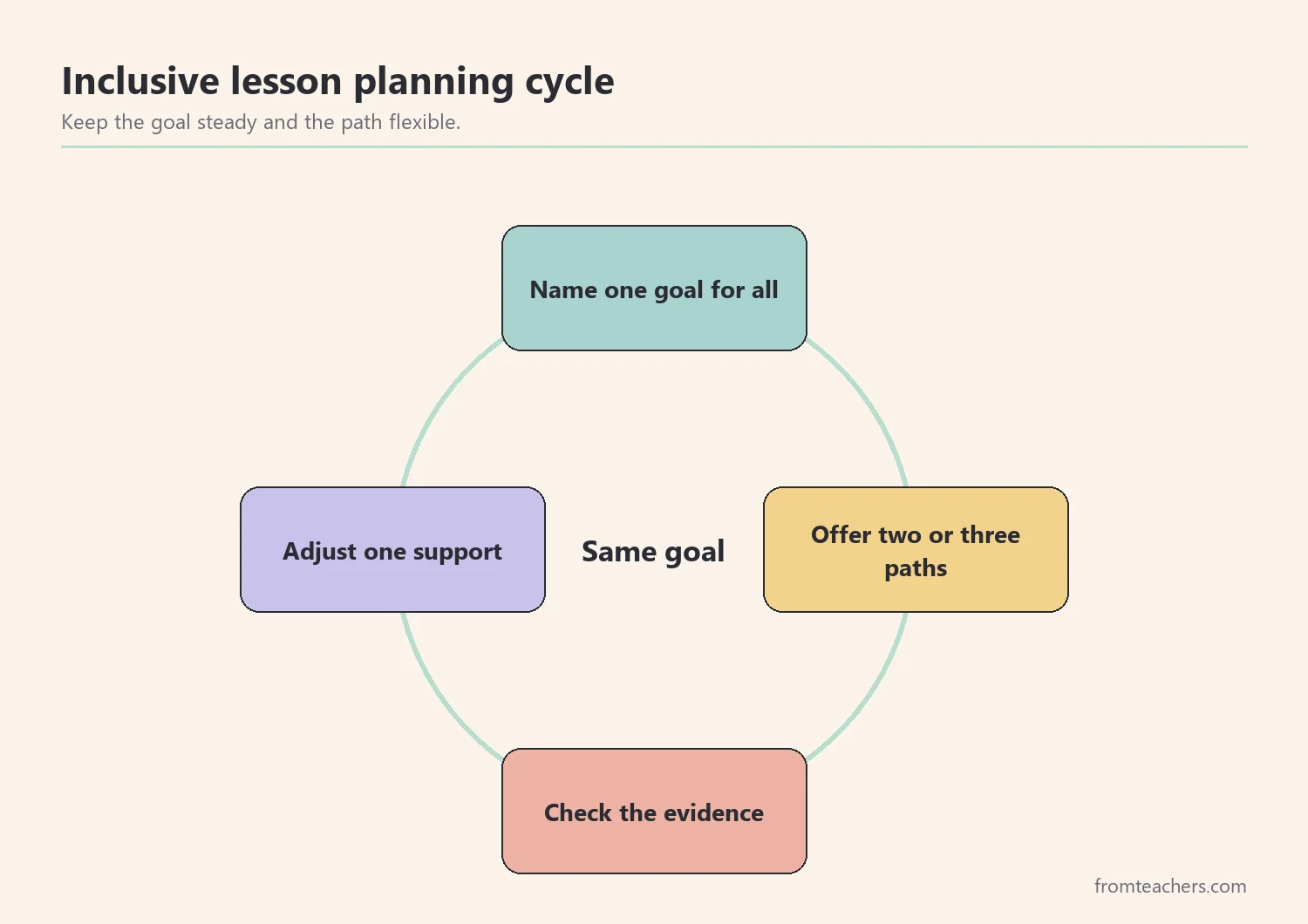
In the United States, the Individuals with Disabilities Education Act (IDEA) is the core special education law. It promises eligible students a free appropriate public education in the least restrictive environment. In practice, that means students with disabilities learn alongside peers without disabilities as much as is appropriate for them. An IEP is the written plan that describes their goals, services, and supports.
In addition, Section 504 of the Rehabilitation Act and the Americans with Disabilities Act (ADA) protect students from disability discrimination. Many students who do not qualify for an IEP receive a 504 plan with accommodations. Meanwhile, FERPA protects the privacy of education records, and ESSA, the main federal K-12 law, includes students with disabilities in state accountability systems.
| Law | What it means for your classroom |
|---|---|
| IDEA | Follow the IEP goals, services, and supports |
| Section 504 and ADA | Provide agreed accommodations and equal access |
| FERPA | Keep student records and plans private |
| ESSA | Include students with disabilities in learning and testing |
For example, Lena’s IEP lists a reading goal, small-group reading support three times a week, and two classroom accommodations: text read aloud for content subjects and extended time on written tasks. Her science teacher is responsible for those two accommodations in every science lesson. Therefore, the very first of your inclusive education strategies is simple: read each plan, highlight what applies in your class, and ask the case manager about anything unclear.
2. Build inclusive education strategies into the room
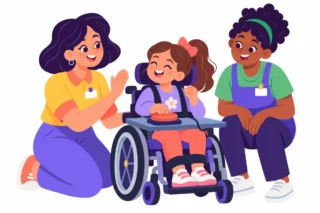
Next, look at the room before you look at the student. Many barriers live in the environment: a cluttered path, glare on the board, a noisy corner, or materials stored where some students cannot reach them. Fixing these once helps every learner, every day. In other words, good inclusive education strategies often start with furniture, lighting, and storage.
Universal Design for Learning (UDL), a framework developed by CAST, gives a useful lens here. It asks you to plan for variety from the start instead of retrofitting one lesson at a time. Practically, that means offering more than one way to take in information, more than one way to show learning, and more than one way to stay engaged.
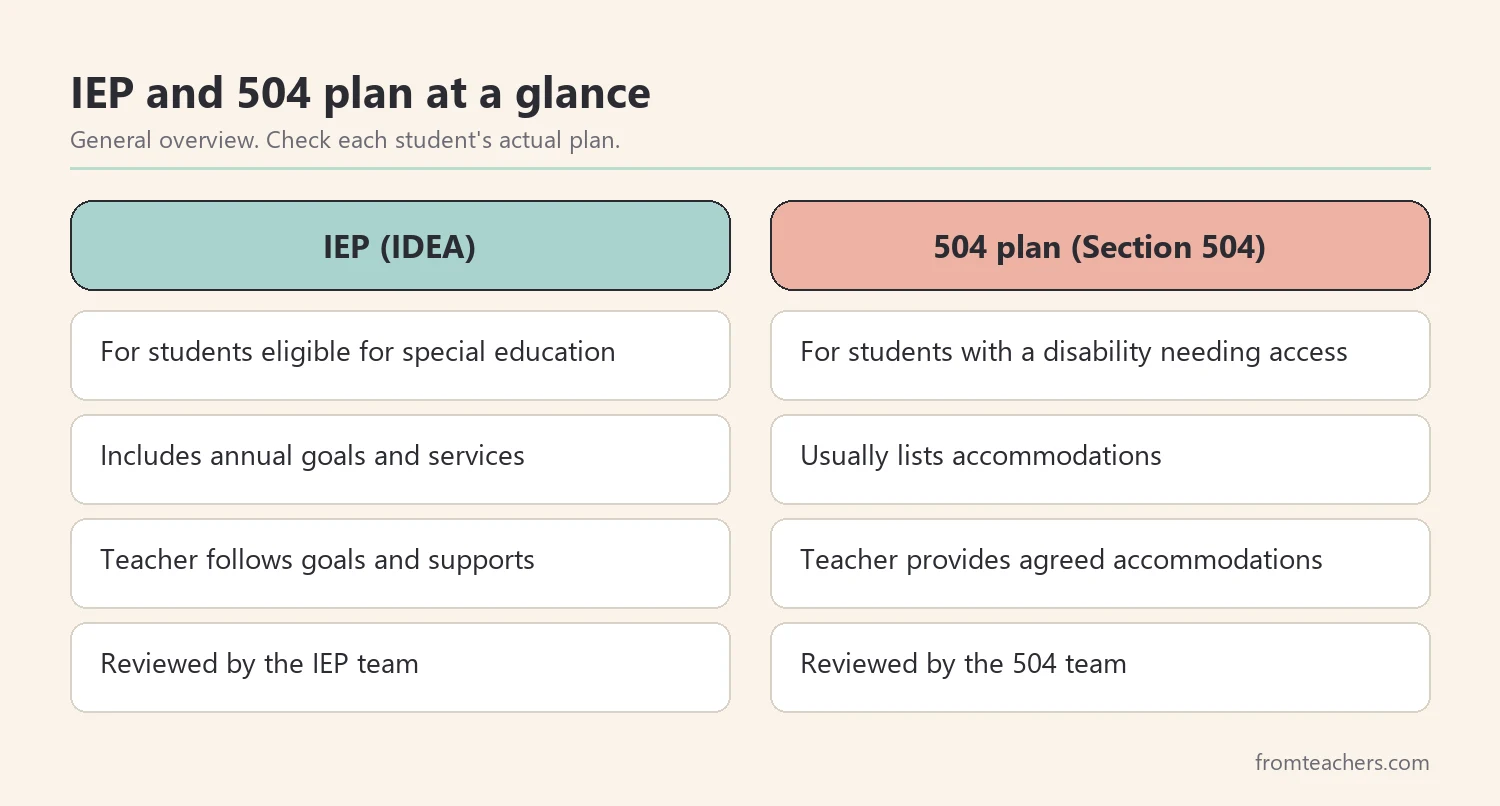
Use this quick room check at the start of a unit:
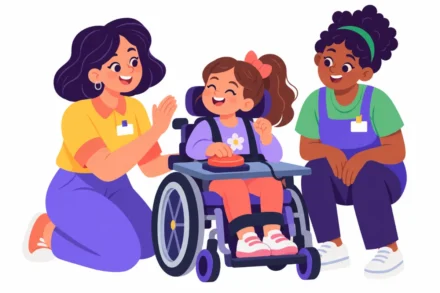
- Clear paths and reachable materials for students who use mobility aids.
- Seating options near the board, near the door, and away from noise.
- A visible daily agenda with words and simple icons.
- Labeled homes for supplies so students can work independently.
- A quiet spot for regrouping that is part of normal routines, not a punishment.
Also, relationships are part of the environment. Greet students by name, learn one interest of each student, and use them in examples. Students who feel known take more academic risks. For this reason, relationship building counts among the most practical inclusive education strategies you have.
In Lena’s class, her teacher moved the science article to a shared tablet with audio, placed Lena’s group near the board, and added a picture agenda to the whiteboard. None of these changes singled Lena out. As a result, three other students began using the audio version too.
3. Teach with differentiated instruction and UDL
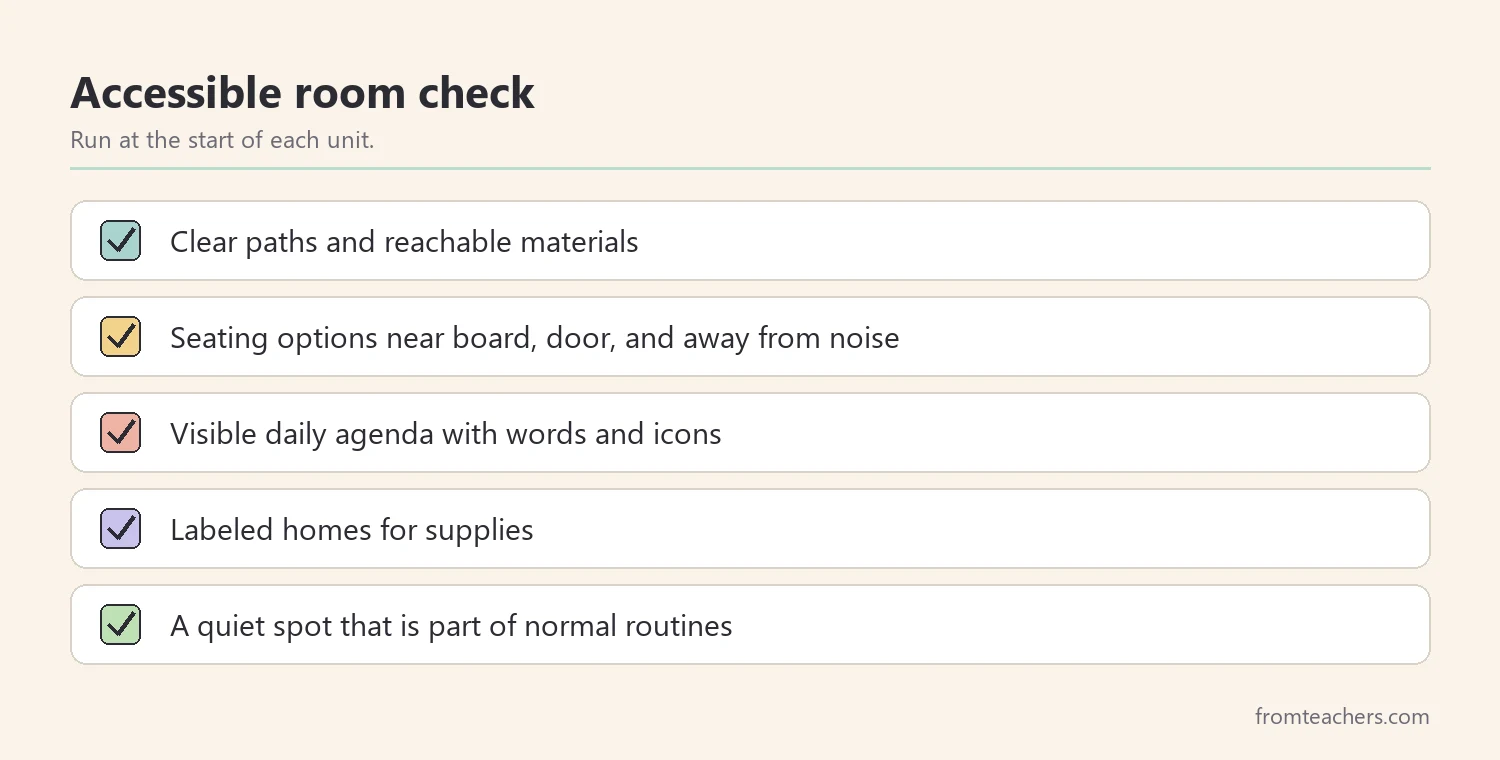
Then, plan the lesson itself for a range of learners. Differentiated instruction means adjusting content, process, or product while keeping the learning goal clear. Strong inclusive education strategies keep the goal steady and change the path to it.
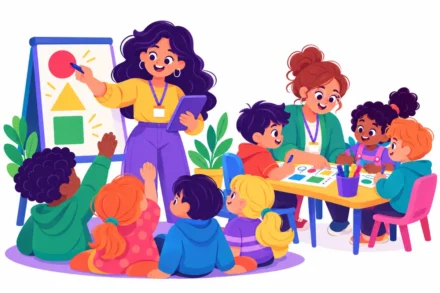
Start with one sentence that names the goal for everyone, such as “Students will describe the four stages of a plant life cycle.” After that, ask how students will take in the content, how they will practice, and how they will show what they learned. Offer two or three options, not twenty. Inclusive education strategies work best when choices are few, clear, and tied to the same goal.
| Part of the lesson | Option A | Option B |
|---|---|---|
| Take in content | Read the article | Listen to the audio version |
| Practice | Partner discussion | Sort picture cards in order |
| Show learning | Short written answer | Labeled drawing with key words |
Technology can widen these options. Text-to-speech, speech-to-text, and digital graphic organizers often help students with reading or writing needs reach grade-level content. Keep tools simple and teach them explicitly before you expect students to use them alone.
Behavior support belongs here too. Clear routines, short directions, and specific praise prevent many problems. If you want a single reference that walks through the laws, classroom strategies, and assessment in one place, the Inclusive Education Guide on special education law, strategies and assessment brings those threads together in three chapters.
For Lena, the teacher used the audio article, a picture-card sort with a partner, and a labeled drawing as the exit task. Lena correctly ordered the four life cycle stages and labeled three of them. That result gave the teacher real information instead of a blank page. In short, the lesson stayed the same for everyone, while the inclusive education strategies changed how Lena reached it.
4. Assess fairly with inclusive education strategies
After teaching, you need to know what students learned. Fair assessment is where many inclusive education strategies are tested, because a test can measure a disability instead of the skill. The goal is to measure the skill you taught, not a student’s reading speed or handwriting when those are not the target.
The key distinction is between accommodations and modifications. An accommodation changes how a student accesses or shows learning, such as extra time, a read-aloud, or a separate setting. A modification changes what the student is expected to learn or show, such as fewer or simpler items. Only the IEP or 504 team decides on modifications, and they can affect grades and records.
| Accommodation | Modification |
|---|---|
| Questions read aloud | Fewer questions on the test |
| Extended time | Easier reading level of content |
| Answers dictated to a scribe | Different learning goal |
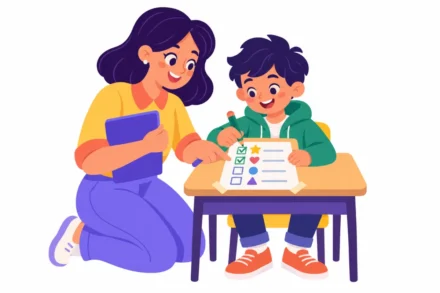
In addition, use more than one kind of evidence. Portfolios, performance tasks, oral explanations, and observation checklists can show learning that a paper test misses. For example, a student who struggles to write may explain a science process accurately in a two-minute conversation.
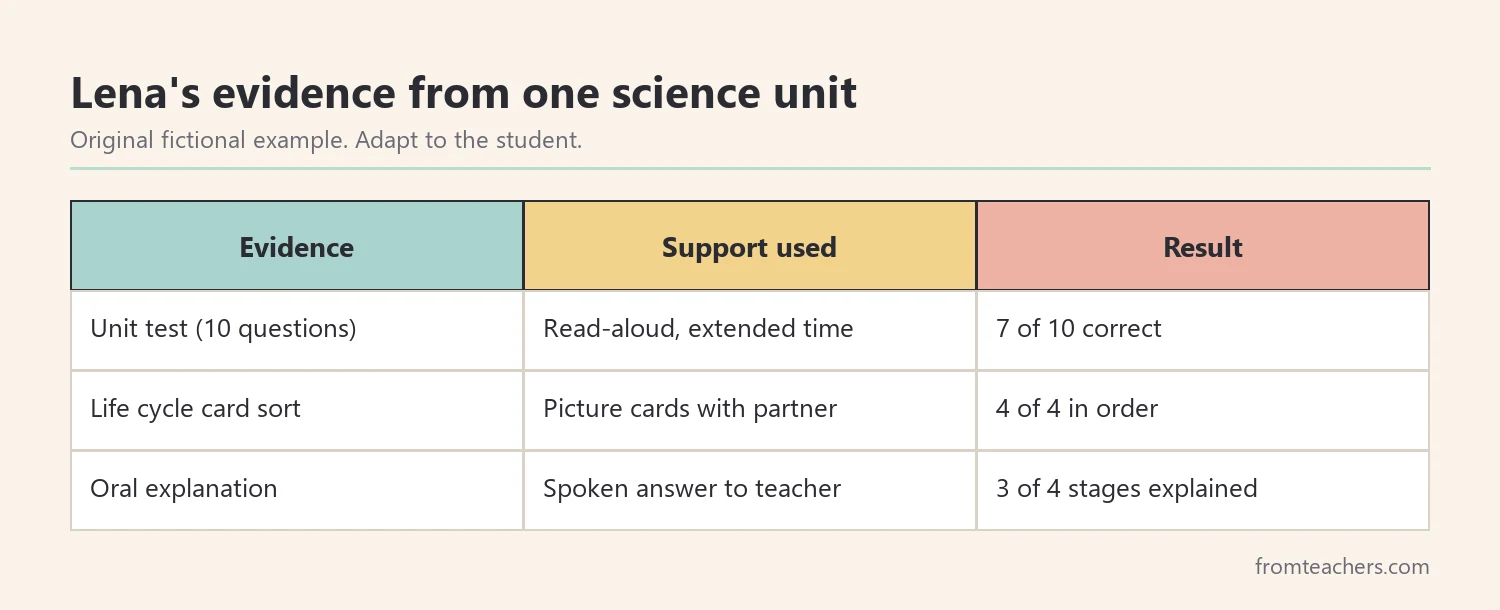
Lena’s unit test had 10 questions. With read-aloud and extended time, she answered 7 correctly, so her score was 7 out of 10. On the performance task, she sorted all 4 life cycle cards correctly and explained 3 of them out loud. Together, these pieces gave a fair picture: she understood most of the content, and she needed more practice explaining the final stage.
5. Review inclusive education strategies with families
Finally, inclusion works best when school and home share the same picture. Families know the student’s history, strengths, and what helps at home. Teachers see how supports work in a busy room. Both views are needed. Moreover, inclusive education strategies that families understand are far more likely to carry over to homework and daily routines.
Keep communication short and regular. A brief note every two or three weeks that names one success, one current focus, and one question works better than a long report at the end of the term. Also, write in plain language and avoid acronyms unless you explain them.
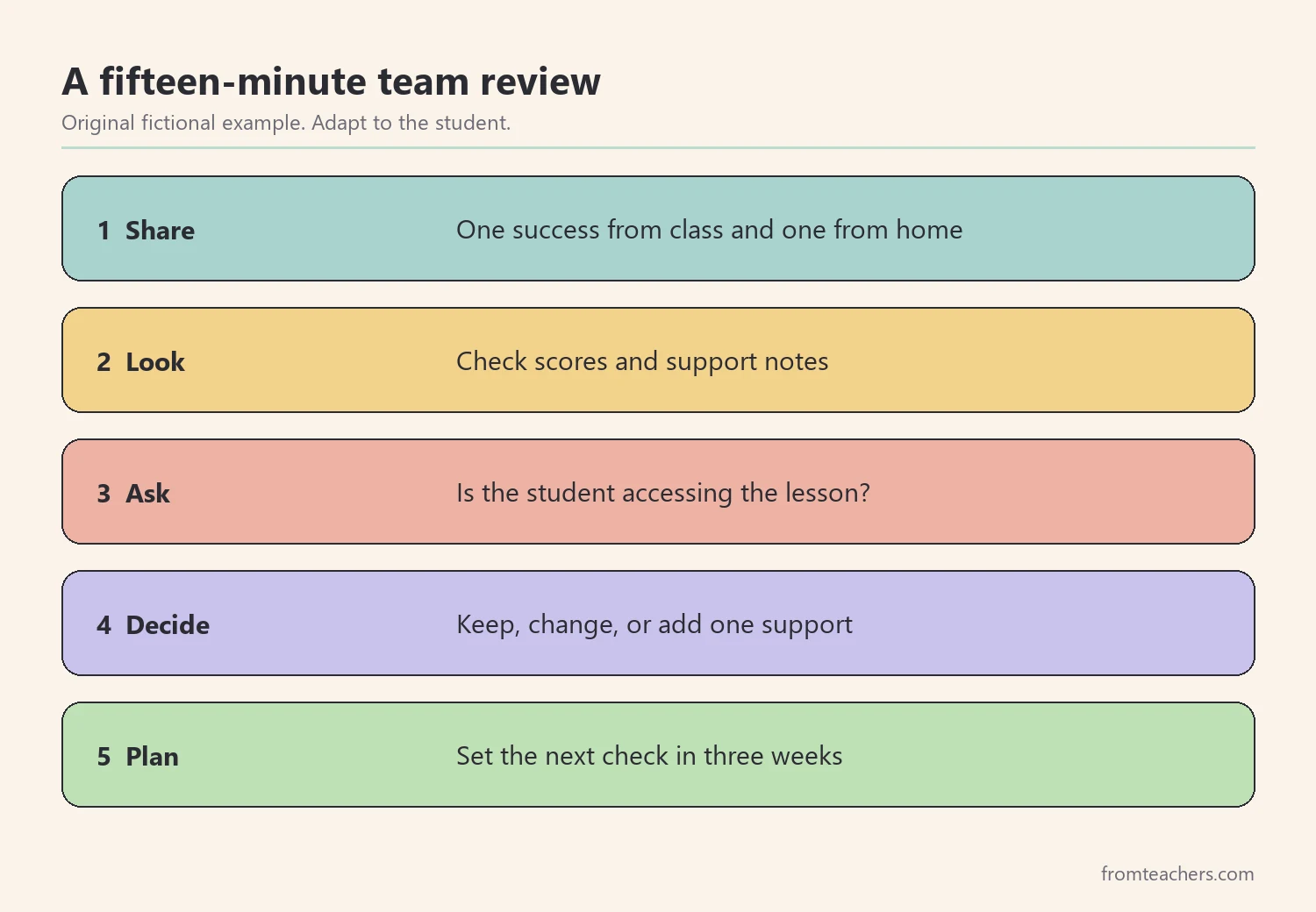
Then, review your inclusive education strategies on a set schedule. Ask whether the student can access the lesson, whether the supports are used consistently, and whether the evidence shows growth. Change one thing at a time so you know what made the difference. Over time, this habit turns a list of inclusive education strategies into a plan you can trust.
For Lena, her teacher and case manager met for fifteen minutes every three weeks. They checked her science scores, her reading group notes, and a message from her parents, who said Lena liked using the audio version at home. As a result, the team kept the audio support, added sentence starters for explanations, and planned to check again in three weeks.
Common mistakes and how to avoid them
- Treating placement as inclusion. Fix: check whether the student can actually access and take part in the lesson, not only whether they are in the room.
- Reading the IEP once in September. Fix: keep a one-page summary of each plan’s classroom accommodations where you plan lessons.
- Offering too many options. Fix: give two or three clear choices that all lead to the same goal.
- Confusing accommodations with modifications. Fix: keep the learning goal the same unless the team has agreed to change it.
- Changing everything at once. Fix: adjust one support at a time and check the evidence after a few weeks.
Questions teachers and parents ask about inclusive education strategies
Do inclusive education strategies only help students with disabilities?
No. Supports like clear agendas, audio versions, and choice in how to show learning often help many students. However, individual supports in an IEP or 504 plan are still required for the students who have them.
What is the difference between an IEP and a 504 plan?
An IEP is created under IDEA for students who qualify for special education and includes goals and services. A 504 plan comes from Section 504 and usually lists accommodations for equal access. Your school’s team can explain which applies to each student. Either way, the same inclusive education strategies in the room can support both groups.
Can I give an accommodation that is not in the plan?
You can use good teaching practices, such as reading directions aloud, for the whole class. For formal testing, follow the plan and your school’s policies. If a student seems to need a new support, talk with the case manager so the team can consider it.
How do I grade a student whose work is modified?
Grade against the modified expectations the team has agreed on, and follow your school’s grading policy. Also, report clearly to the family what the grade represents. When in doubt, ask your special education team before the grading period ends.
How can parents support inclusion at home?
Parents can share what works at home, ask what the student is learning this month, and practice one skill in short, low-pressure sessions. In addition, they can attend meetings with questions written down in advance. When families and teachers share the same inclusive education strategies, students hear one consistent message.
Related reading: Accommodations vs Modifications in Special Education: The Difference Explained, How Parents and Teachers Can Team Up for Special Education Success, and Special Education: A Complete Guide for Parents and Educators.
A companion resource for inclusive education strategies:
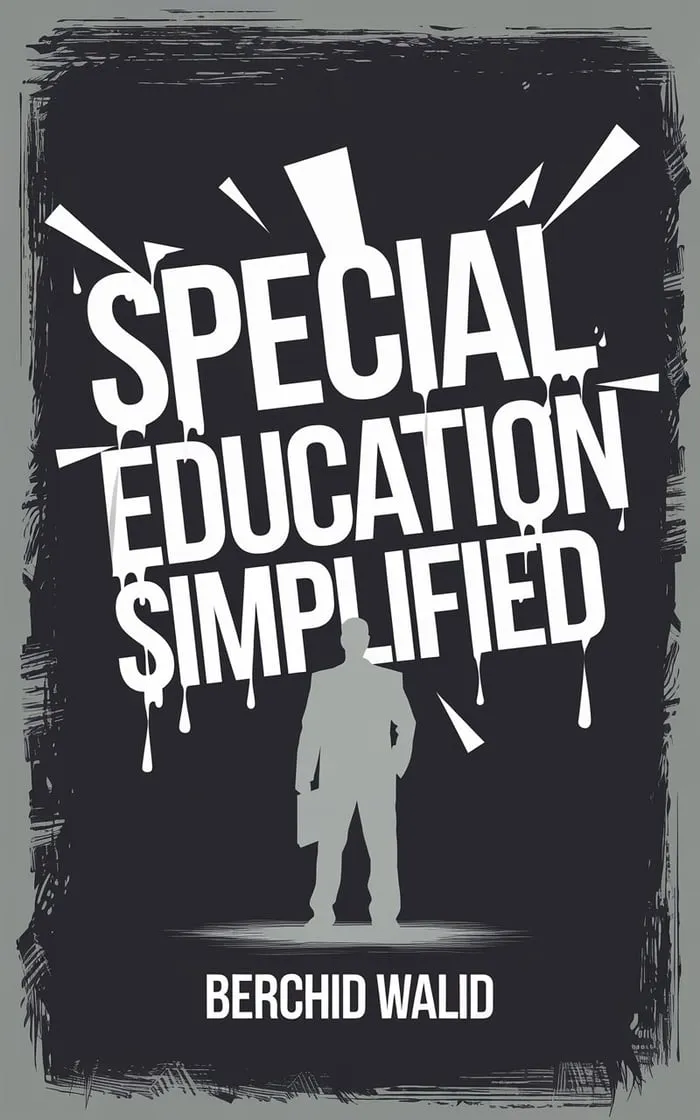
Inclusive Education Guide: Special Education Law, Strategies and Assessment: a 3-chapter guide covering IDEA, Section 504, the ADA, FERPA, and ESSA in plain language, practical classroom strategies including UDL and differentiation, and fair, accessible assessment.
Sources and scope
- IDEA, U.S. Department of Education: the federal law behind special education services, IEPs, and the least restrictive environment.
- Office for Civil Rights, U.S. Department of Education: information on Section 504 and disability rights in schools.
- IRIS Center, Vanderbilt University: free modules on differentiated instruction, accommodations, and inclusive practice.
- CAST: the organization behind the Universal Design for Learning framework.
- Understood.org: plain-language articles for families and teachers on learning differences and school supports.
This guide covers everyday inclusive education strategies for classroom teachers in the United States. It does not give legal advice or replace the decisions of a student’s IEP or 504 team.
Key takeaways
- Inclusive education strategies begin with access to the lesson, not only a seat in the room.
- Know what IDEA, Section 504, and related laws ask of you, and read each plan closely.
- Design the room and the lesson for variety, then add individual supports.
- Use accommodations to measure the real skill, and leave modifications to the team.
- Review one measure with the family and team every few weeks, changing one thing at a time.

Leave a Comment