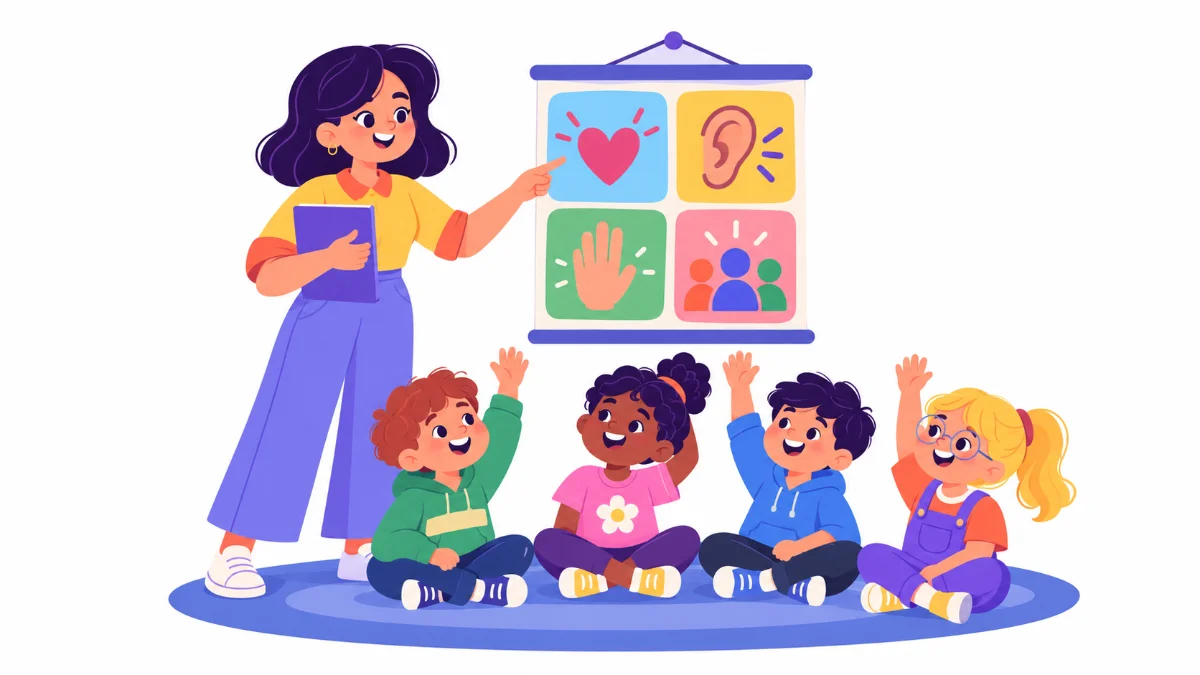

Simple classroom rules help every student know what to do, not only what to avoid. Picture a second grader who hears “Be respectful” on the first day of school. He nods, but ten minutes later he is tapping his neighbor’s desk. Still, he is not ignoring the rule. He simply does not know what “respectful” looks like at a table full of pencils and friends.
This guide gives you five steps to create simple classroom rules that students can actually follow: keep rules few and positive, break each rule into checkable actions, teach and practice, reinforce what you see, and review often. By the end, you will have a clear plan that works in special education, inclusive, and general education classrooms.
Examples are fictional. Adapt to the student’s goals and agreed supports. This is guidance, not a diagnosis.
At a glance
- Keep rules short, positive, and few, so students can remember them.
- Break each rule into two or three actions students can see and check.
- Teach rules like any other skill: explain, model, practice.
- Notice and name students who follow the rules.
- Review rules often, especially after breaks and changes.
1. Keep simple classroom rules few and positive
First, limit the number of rules. Simple classroom rules work because there are only a few of them. Long lists are hard to remember and hard to enforce. A short set of about five to seven rules covers most classroom situations and still fits on one poster. Students can learn them, and adults can apply them consistently.
Next, state rules positively. “Don’t run” tells students what to stop, but not what to do instead. “Walk in the classroom” gives a clear action. Positive wording is easier to follow, easier to praise, and kinder in tone.
Also, use plain words. Abstract words like “respect” or “responsibility” are important, but many students need them translated into actions. Simple classroom rules use short phrases such as “Be kind,” “Use a calm voice,” or “Try your best.” These are easy to say, easy to picture, and easy to remember.
Then, cover the big areas of class life. A strong set usually touches on kindness, listening, following directions, personal space, caring for the room, voice level, and effort. Together, these give students a complete picture of what a good school day looks like.
In addition, think about where students will see the rules. Post simple classroom rules at eye level, near the carpet or the door, where you can point to them quickly. A small desk copy helps students who need a closer reminder. Visible rules save words in busy moments.
Moreover, involve students where you can. Older students can help word the rules. Younger students can help choose pictures. When students have a voice, they often feel more ownership of the rules.
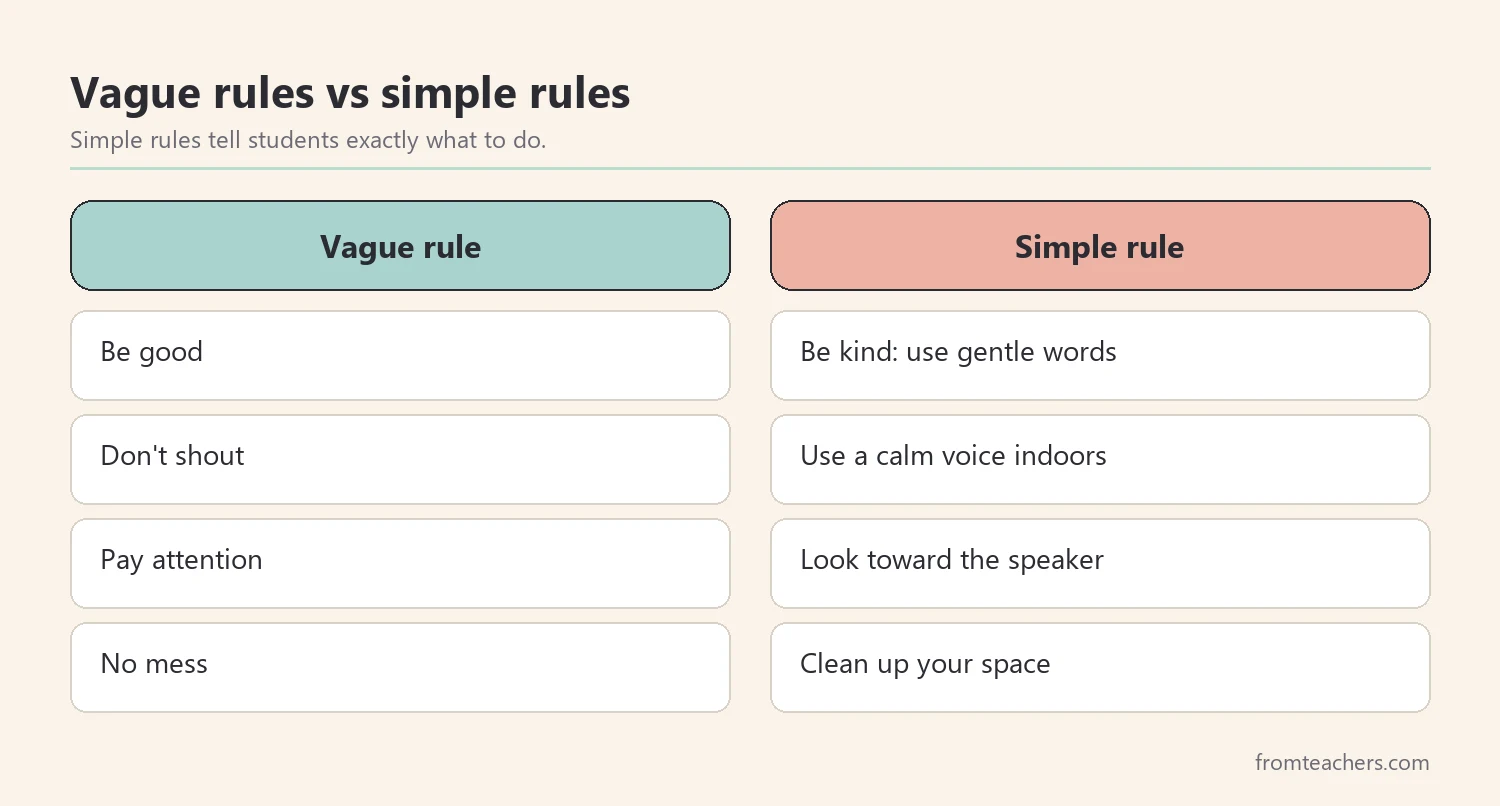
Worked example. Jonah is a fictional second grader in an inclusive classroom. His teacher, Ms. Chen, replaces her old list of twelve “don’ts” with seven simple classroom rules. “No touching” becomes “Keep hands and feet to yourself,” and “No yelling” becomes “Use a calm voice.”
2. Break each rule into checkable actions
Now, make each rule concrete. A rule like “Be kind” is clearer when it comes with actions: use gentle words, use gentle hands, and treat others the way you want to be treated. Each action is something a student can see, do, and check.
In addition, keep actions short. Two or three actions per rule is usually enough. More than that turns a simple rule into a long list again. For example, “Listen when someone is talking” can become: look toward the speaker, wait your turn, and try your best to understand.
Also, think about students who need extra support. Students with language needs, attention differences, or autism often benefit from pictures next to each action. A small icon for “gentle hands” or “calm voice” helps the action stick, especially for early readers.
For a ready-made display, the Classroom Rules Simplified poster presents seven easy rules, each with short, checkable actions underneath. It fits special education, inclusive, and general education classrooms, and it gives students a visual reference for simple classroom rules all year.
Moreover, test each action with one question: could a visitor walk into the room and see it happening? If the answer is yes, the action is clear enough. If not, rewrite it. This quick test keeps simple classroom rules practical rather than vague.
Then, use the actions as your language. When a student needs a reminder, name the action, not just the rule. “Look toward the speaker” is more helpful than “Listen.” Similarly, when you praise, name the action: “You cleaned up your space without being asked.”
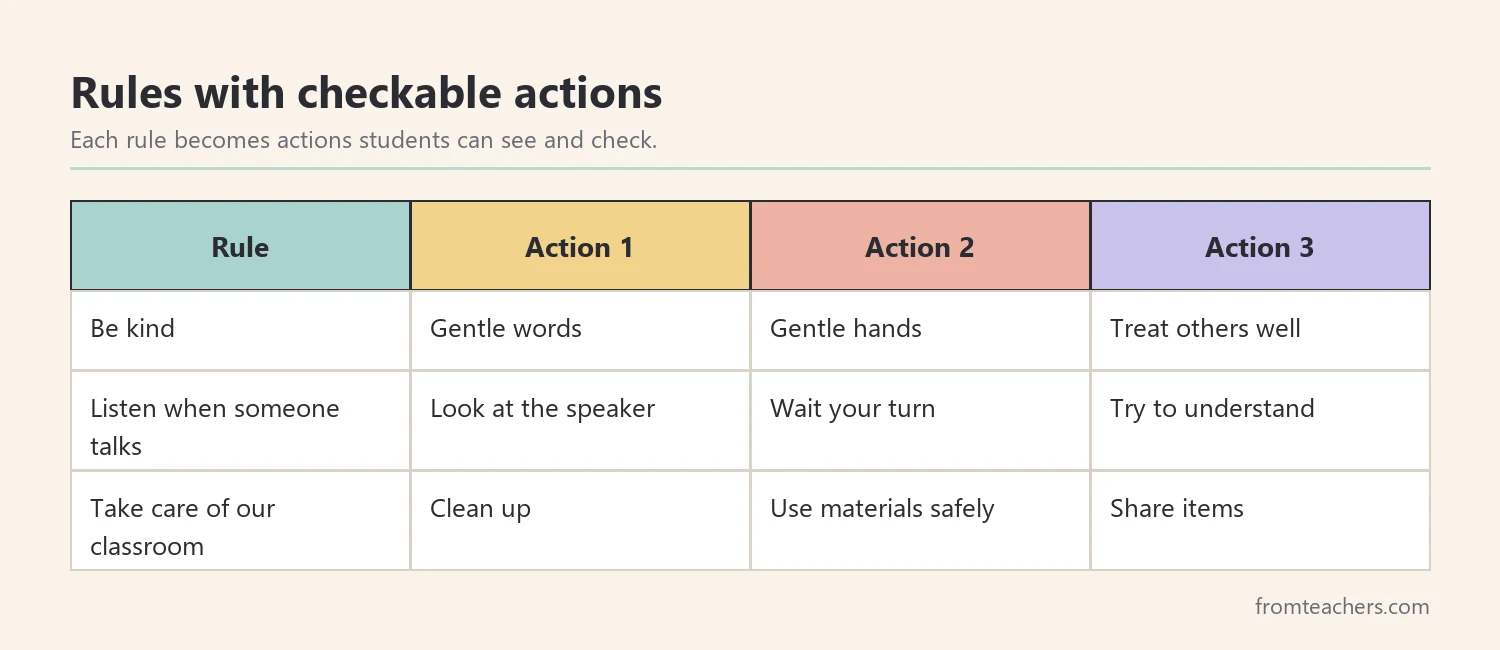
Worked example. Ms. Chen writes three actions under each of Jonah’s class rules. For “Keep hands and feet to yourself,” the actions are: respect personal space, stay safe with your body, and use fidgets or tools if you need them. Jonah now knows exactly what to do when his hands get restless.
3. Teach simple classroom rules like any other skill
Next, teach each rule directly. Students rarely learn rules just by reading them on a wall. Instead, treat each rule like a mini lesson: explain it, model it, and practice it together.
Start by explaining why. Say the rule and how it helps everyone. “We use a calm voice indoors so everyone can think and hear.” Reasons help students see rules as fair, not random.
Then, model the rule. Show what it looks like and what it does not look like. For example, model a calm indoor voice and then a playground voice. Let students say which one fits the classroom. Short, slightly funny non-examples often hold attention well.
After that, practice. Role-play common moments: lining up, sharing materials, waiting for a turn, or asking for help. Practice is especially important for students who learn best by doing. Repeat practice on several days rather than once.
Also, spread lessons across the first weeks. Teach one or two simple classroom rules each day instead of all seven on the first morning. Short lessons are easier to remember. Moreover, they leave time for students to try each rule in real situations before you add the next.
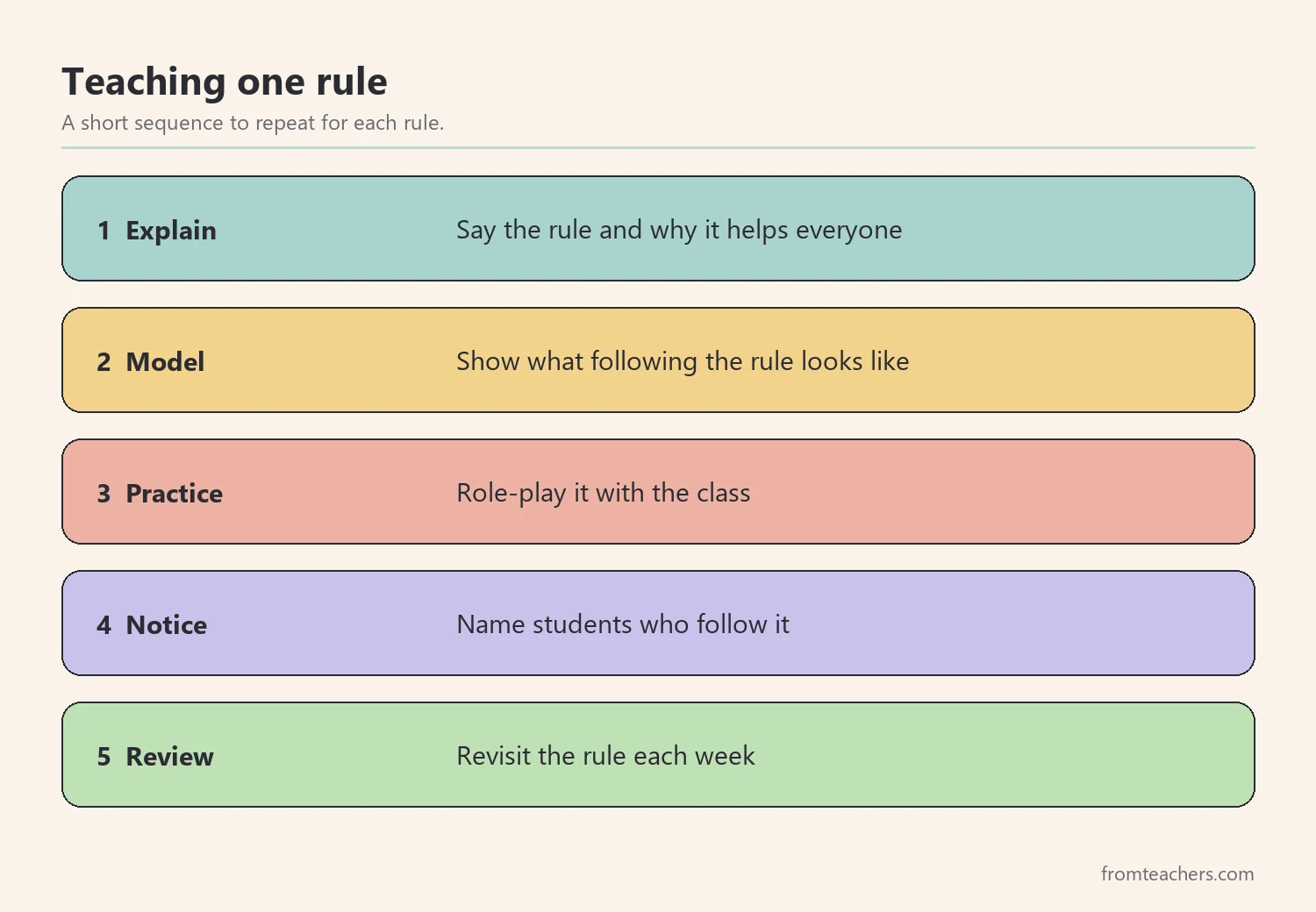
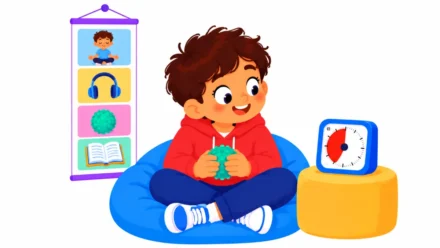
Worked example. On Tuesday, Ms. Chen teaches “Keep hands and feet to yourself.” She models sitting with hands in her lap, then shows a silly non-example of poking a pretend friend. The class laughs and names the right way. Jonah practices sitting on the carpet with a fidget in his hands.
4. Notice and reinforce the rules in action
Now, catch students following the rules. Attention is powerful. When adults mostly notice mistakes, students learn that breaking rules gets attention. When adults notice success, students learn what to repeat.
First, use specific praise. Name the rule and the action. “Jonah, you kept your hands to yourself during the whole story. That kept everyone safe.” Specific praise teaches more than “Good job.”
Next, keep reminders calm and short. If a student forgets a rule, point to the poster and name the action. “Calm voice, please.” Avoid long lectures in front of peers, which can embarrass students and escalate behavior.
Also, keep your response consistent. Students feel safer when every adult responds to simple classroom rules in the same way. Share the rules and actions with paraprofessionals, specialists, and substitutes so everyone uses the same words.
In addition, plan a few quick responses ahead of time. Simple classroom rules work best when adults know exactly what to say.
| Moment | Short reminder | Specific praise |
|---|---|---|
| Loud talking | Calm voice, please. | Your calm voice helped us think. |
| Touching a peer | Hands to yourself. | You kept everyone safe. |
| Messy table | Clean up your space. | Your table is ready for the next group. |
Then, consider individual needs. Some students need more practice, visual reminders on their desk, or a quiet check-in before hard moments. These supports are not unfair. They give every student a real chance to follow the same rules. If a student has an IEP or behavior plan, follow it and work with the team.
Finally, think about the ratio of praise to reminders. Many teachers aim to notice positive behavior much more often than they correct mistakes. Even without counting, a quick self-check at the end of the day helps you see where your attention went.
5. Review simple classroom rules and reteach often
Finally, return to the rules regularly. Rules fade over time, especially after weekends, holidays, schedule changes, or a new student joining the class. A quick review keeps them fresh.
In addition, reteach when patterns appear. If many students struggle with one rule, reteach it to the whole class. Use a new role-play or a short discussion. Reteaching is not a sign of failure. It is a normal part of learning.
Also, use simple data. Track reminders for one rule and one student over a few weeks. If reminders go down, the rule is sticking. If they stay high, look at the setting, the time of day, or the student’s needs, and adjust your support.
Then, celebrate growth together as a class. Remind students that rules help everyone feel safe, respected, and ready to learn. Simple classroom rules are something the class practices every day, and everyone gets better with time and support.
Also, revisit the wording itself once or twice a year. If students keep misunderstanding an action, the words may be the problem. Small edits keep simple classroom rules clear as your class grows and changes.
Moreover, keep families in the loop. Send home a copy of the rules and their actions. Families can use the same words at home, which helps students connect expectations across settings.
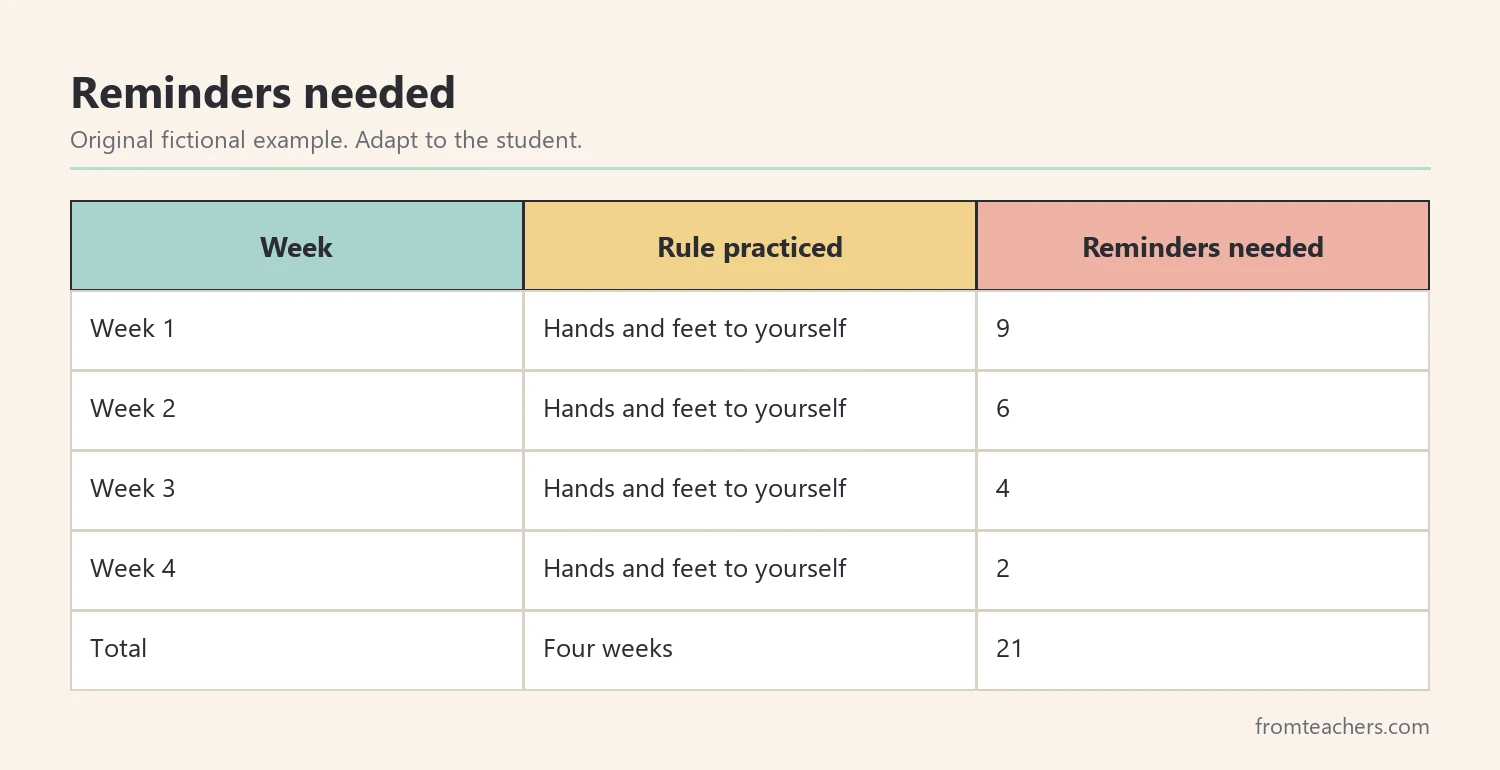
Worked example. Ms. Chen tracks Jonah’s reminders for “Keep hands and feet to yourself.” He needs 9 reminders in week one, 6 in week two, 4 in week three, and 2 in week four, for 21 across the month. She shares the progress with Jonah and his family, and they celebrate together.
One more tip. Pair rule reviews with routines you already have. For example, review one rule during morning meeting, or before lining up for lunch. Short, regular reviews take only a minute or two, yet they keep expectations visible without long lessons. Over a school year, these small moments add up to many extra chances to practice.
Common mistakes and how to avoid them
- Too many rules. Students cannot remember them. Fix: keep about five to seven simple classroom rules.
- Negative wording only. Students know what not to do, but not what to do. Fix: state rules positively.
- Posting without teaching. A poster alone rarely changes behavior. Fix: explain, model, and practice each rule.
- Noticing only mistakes. Students learn that misbehavior gets attention. Fix: give specific praise often.
- Never reviewing. Rules fade after breaks. Fix: review and reteach regularly.
Questions teachers and parents ask about simple classroom rules
How many classroom rules should we have?
Many teachers find that five to seven rules work well. That is enough to cover common situations and few enough to remember. Each rule can have two or three actions underneath.
Should students help write the rules?
Student input can build ownership, especially for older students. You can guide the discussion toward a short, positive list. Younger students can help choose pictures or examples.
Are simple rules fair for students with disabilities?
Yes. Simple, visual rules often help everyone, including students with disabilities. Some students may also need individual supports, which should follow their IEP or plan.
What if a student keeps breaking the same rule?
Look for patterns in time, place, and task. Reteach the rule, add visual supports, and give more practice. If difficulties continue, talk with the student’s support team.
Can families use the same rules at home?
Yes. Many of these rules, such as using a calm voice or being kind, fit home life. Shared words between school and home help students connect expectations.
Related reading: Moving Beyond Shame and Behavior Charts: Positive Alternatives for Effective Classroom Management, 5 Practical Teaching Tips to Boost Classroom Focus and Learning, and Effective ADHD Classroom Strategies to Support Student Success.
A companion resource for simple classroom rules:
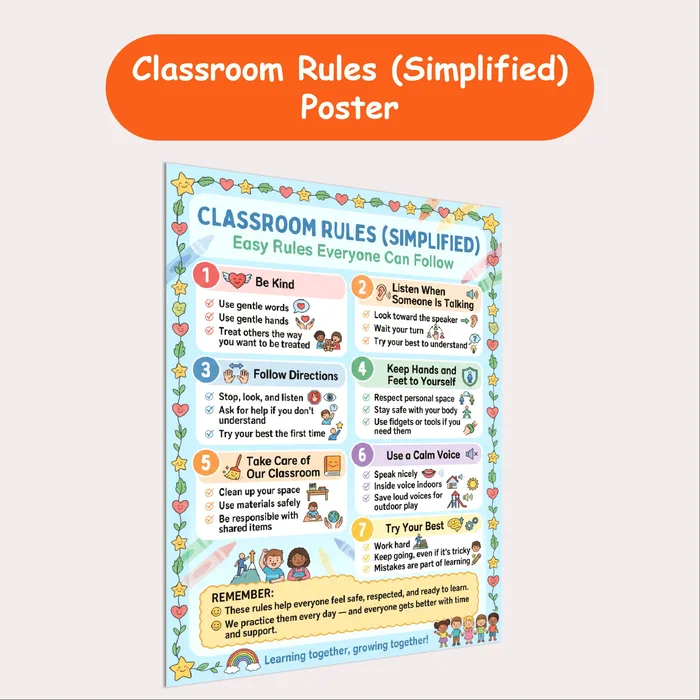
Classroom Rules Simplified Poster: seven easy rules everyone can follow, each with short, checkable actions, for special education, inclusive, and general education classrooms.
Sources and scope
- Center on PBIS: information on positive behavioral interventions and supports, including teaching clear expectations.
- IRIS Center, Vanderbilt University: free modules on classroom management and behavior.
- What Works Clearinghouse: reviews of research on education practices, including classroom behavior.
- IDEA, U.S. Department of Education: the law behind special education and individualized supports.
This guide covers creating and teaching classroom-wide rules. It does not replace individual behavior plans, IEPs, or school-wide policies decided by your school and the student’s team.
Key takeaways
- Keep rules few, short, and positive.
- Give each rule two or three checkable actions.
- Teach rules directly: explain, model, practice.
- Notice success with specific praise.
- Review and reteach after breaks and changes.




Leave a Comment