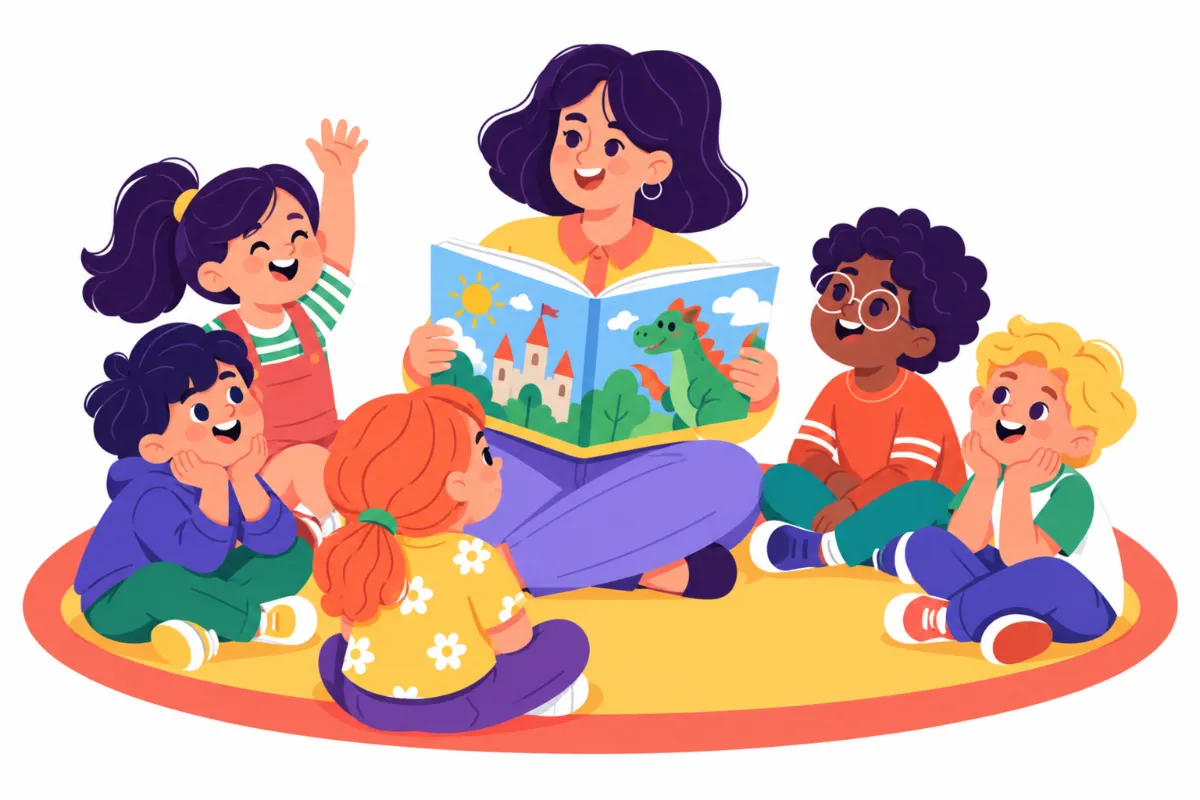

SEL short stories give children a safe way to talk about big feelings before those feelings show up in real life. Picture a first grade class after recess: one child is upset that a friend would not share, another is still angry about a lost game, and the lesson cannot start. A five-minute story about a character in the same situation can turn that tension into a calm, useful conversation.
This guide shows you how to use short social emotional stories in six practical steps. By the end, you will be able to choose the right story for the moment, set up a quick routine, ask simple questions, practice the words from the story, connect it to daily life, and notice growth over time.
Examples are fictional. Adapt to the student’s goals and agreed supports. This is guidance, not a diagnosis.
At a glance
- Pick a story whose theme matches what children are facing right now.
- Keep the routine short: a few minutes of reading and a few minutes of talk.
- Pause to ask simple questions about feelings and choices.
- Practice the exact words characters use, so children have language ready.
- Refer back to the story during real moments, and notice small changes.
1. Choose SEL short stories that fit the moment
First, match the story to what is happening in your room or home. SEL short stories work best when children can see themselves in the character. For example, if sharing has been a struggle at the block center, a story about a child who wants a turn will land better than a general story about kindness.
Look for a few features. Good stories are short enough to read in a few minutes, use everyday situations, include natural dialogue, and end with a clear lesson. In addition, characters should make a mistake or feel a strong emotion, then find a better way through it.
| What you notice | Story theme to try |
|---|---|
| Grabbing toys or materials | Sharing and taking turns |
| Frustration when things go wrong | Patience and trying again |
| A new student or a big change | Making friends, embracing change |
| Hurt feelings after a conflict | Apologizing and kindness |
Think about your group, too. A story about a first day at a new school may be perfect in September and less useful in March. Similarly, a story about sensory sensitivity can help a class understand why a classmate covers their ears during assemblies. Choosing with purpose makes every few minutes of reading count.
Also, keep a small set of SEL short stories ready by theme. When a situation comes up, you can choose in seconds instead of searching.
Worked example. Mr. Lee teaches a fictional first grade class. Noah, age six, often knocks over towers when he gets frustrated. Mr. Lee chooses a story about a character whose block tower falls down and who learns to take a breath and try again.
2. Set up a short read-aloud routine
Next, build a predictable routine. Children settle faster when they know what to expect. Choose a regular time, such as morning meeting, after recess, or before dismissal, and use the same steps each time.
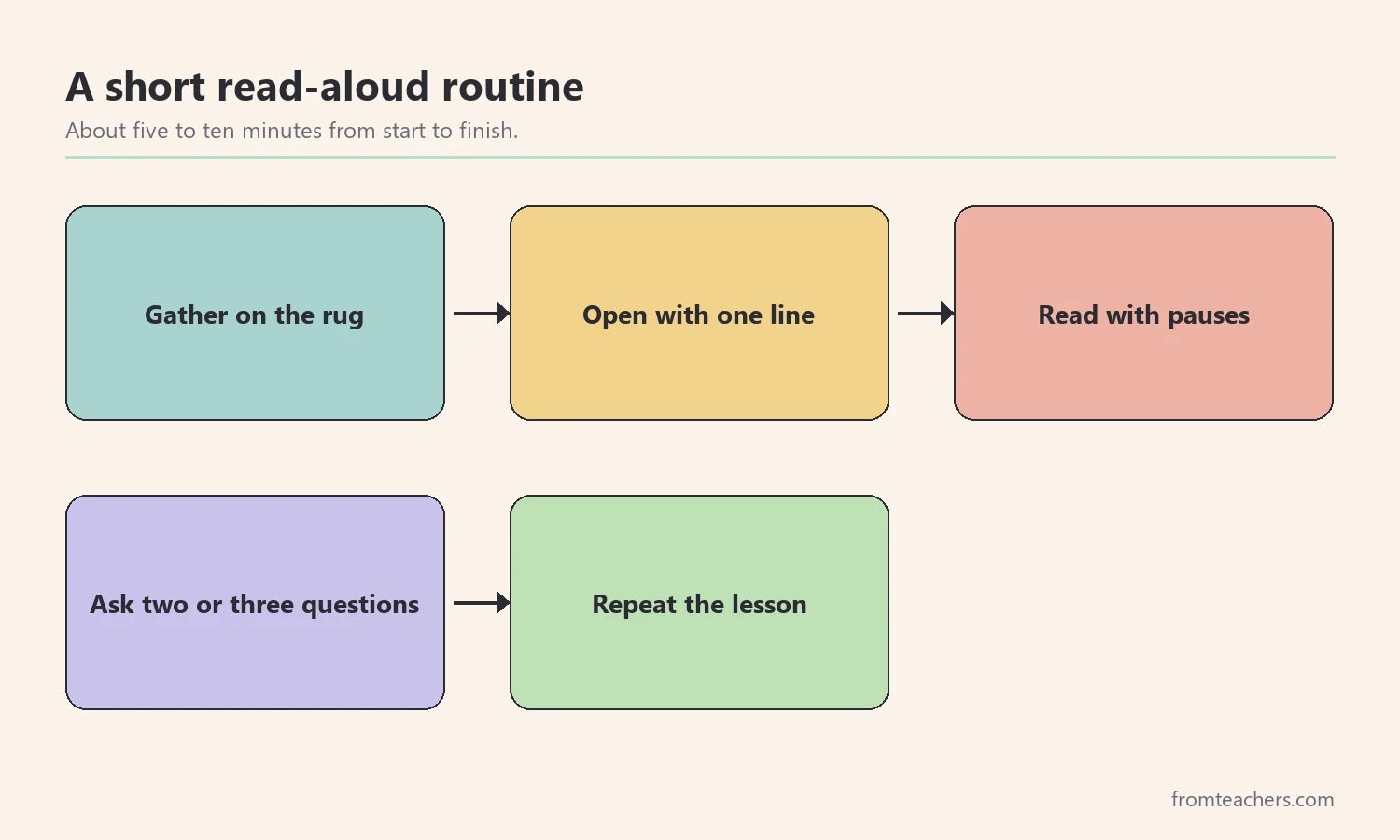
Keep it brief. Most SEL short stories take only a few minutes to read, so the whole routine can fit into five to ten minutes. Then, close by repeating the story’s lesson in one sentence, so children leave with a clear takeaway.
Routine checklist
- Same time and spot each day or week.
- A short opener, such as “Let’s meet a new friend in our story.”
- Read slowly with clear, expressive voices.
- Two or three questions, not ten.
- End with the story’s lesson in one sentence.
If you want a ready set, the collection of 54 SEL short stories for kids covers themes such as emotions, patience, sharing, asking for help, and making friends, with a clear takeaway at the end of every story.
Worked example. Mr. Lee reads one story right after morning recess, three days a week. Children sit on the rug, and he opens with, “Let’s see how our friend handles a hard moment.” The routine takes about eight minutes.
3. Read SEL short stories with pauses and simple questions
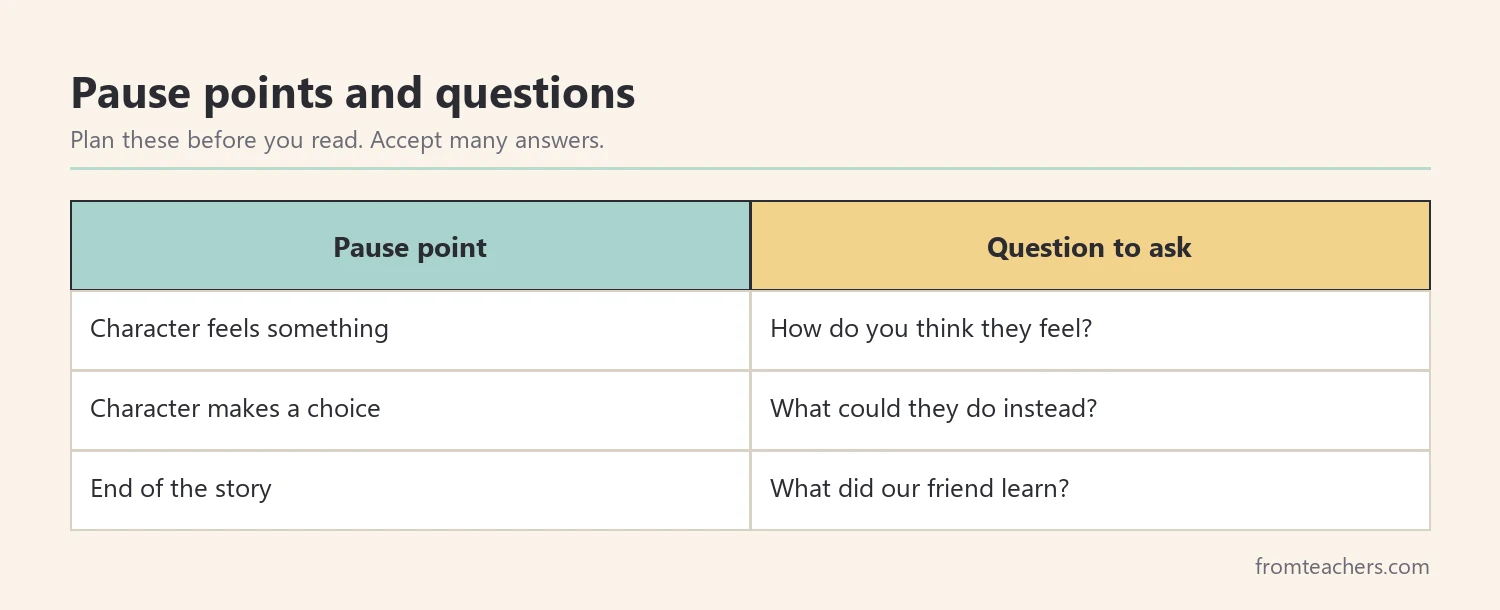
Then, read with purpose. The talk around SEL short stories matters as much as the story itself. Plan two or three pause points: when the character first feels something, when they make a choice, and at the end.
Ask open, simple questions. For example, “How do you think she feels right now?” or “What could he do instead?” Give children time to think, and accept many answers. Moreover, name feelings clearly, because many young children are still learning the words.
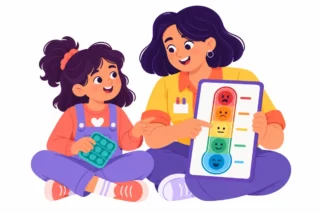
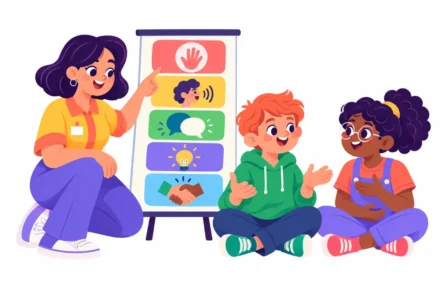
Also, support every child to join in. Offer thumbs up or down, feeling faces to point to, or a turn-and-talk with a partner. Some children will want to share personal stories. Thank them warmly, and keep the focus on the character if a topic feels too private for the group.
Next, model your own thinking now and then. For instance, say, “When my plans change, I feel a little worried too. Then I take a breath.” Hearing an adult name a feeling calmly shows children that emotions are normal and manageable.
In addition, watch the time. Two or three good questions are better than a long discussion that loses the group.
Worked example. When the tower falls in the story, Mr. Lee pauses and asks, “How does Max feel?” Noah says, “Mad.” Mr. Lee nods and asks, “What could Max do with that mad feeling?” A classmate suggests taking a deep breath.
4. Practice the words from the story
Next, turn the story into practice. Many SEL short stories include natural dialogue that models exactly what to say. Children benefit from saying those words out loud, so they are ready in the real moment.
Pick one short line from the story, such as “Can I have a turn when you’re done?” or “I’m sorry I knocked it over.” Then, practice it in quick role-plays. The teacher can play the character first, then children take turns.
| Skill | Practice line |
|---|---|
| Asking for help | “Can you help me with this?” |
| Sharing | “Can I have a turn when you’re done?” |
| Apologizing | “I’m sorry. Can I help fix it?” |
| Calming down | “I need a minute to breathe.” |
After that, switch roles. Let a child play the character who is upset while another child practices the kind response. Acting out both sides helps children understand how the other person feels, which is one of the quiet goals behind SEL short stories. Keep each role-play to a minute or two so energy stays high.
Keep role-plays playful and short. Use puppets or stuffed animals if children feel shy. Furthermore, praise effort, not perfection: “You said that in a kind voice.”
Also, post the practice line where children can see it, with a simple picture. As a result, it becomes a shared phrase the whole class can use.
Worked example. After the tower story, Mr. Lee writes “I need a minute to breathe” on a card with a picture. Noah practices it with a puppet. The class then practices asking, “Can I help you build it again?”
5. Connect SEL short stories to daily moments
Then, bring the story back when real situations happen. This is where SEL short stories make the biggest difference. A quick reminder, such as “Remember what Max did when his tower fell?”, connects the lesson to the moment without a long lecture.
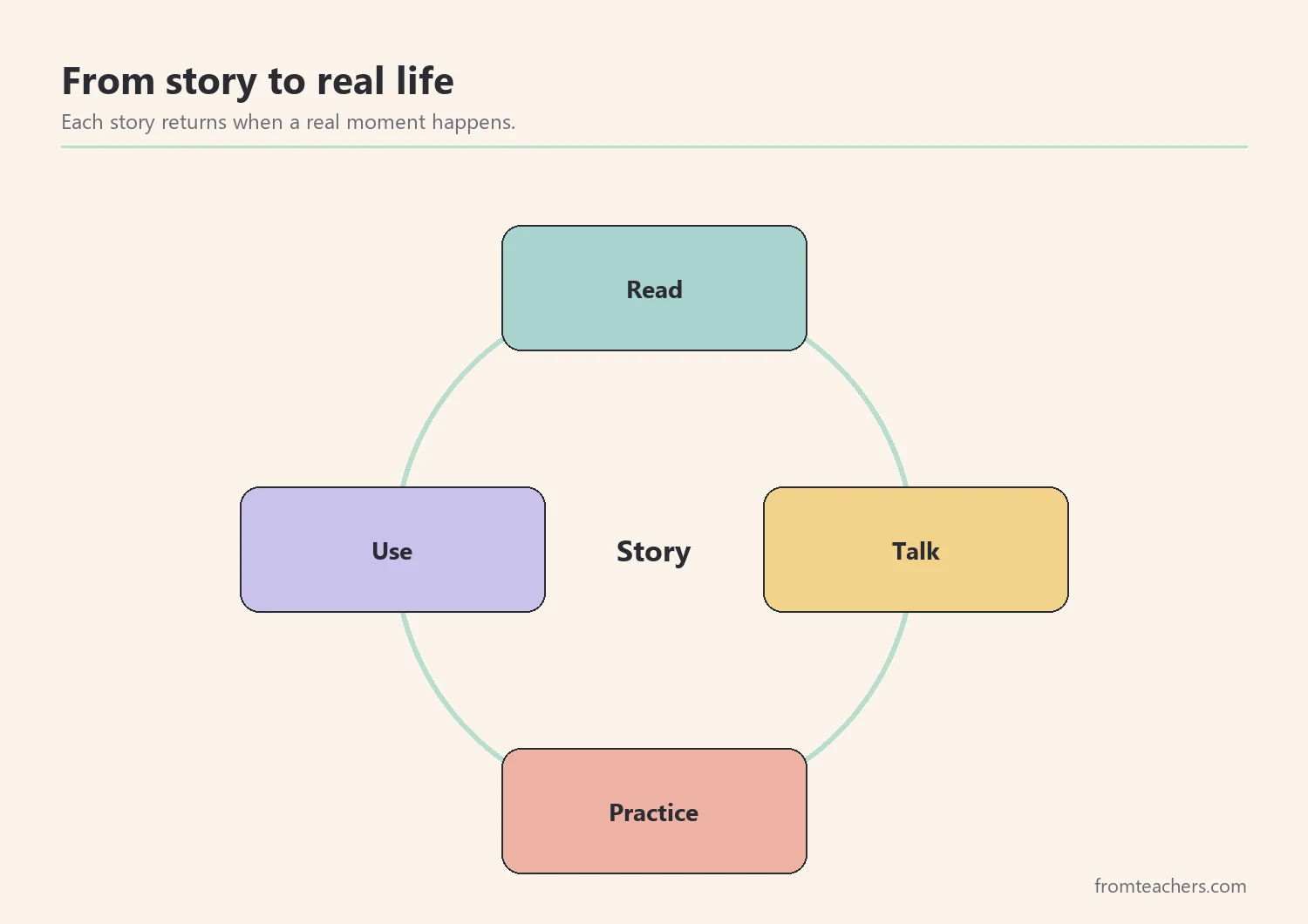
Keep reminders short and calm. During strong emotions, children may not be ready to talk. Therefore, help them calm down first, then refer to the story once they are settled.
Similarly, connect stories to other parts of the day. A story about patience fits well before a long line for lunch, and a story about making friends fits the first week back after a break. Planning ahead turns the story into a gentle preview rather than a correction.
Also, share stories with families. Send home the title and the one-sentence lesson, so parents can use the same words at home. Consistent language at school and home helps children learn faster.
Ways to reuse a story
- Point to the practice line card during a conflict.
- Ask, “What would our story friend do?”
- Reread a favorite story before a known hard time, such as a field trip.
- Invite children to draw the character’s good choice.
Worked example. Two days later, Noah’s tower falls during center time. He clenches his fists. Mr. Lee kneels beside him. Before Mr. Lee can point to the card, Noah glances at it and says, “I need a minute to breathe,” takes a breath, and starts building again.
6. Notice progress and review your story set
Finally, watch for small changes. You will not see every child change after one story, and that is normal. However, simple notes help you see patterns and choose the next story.
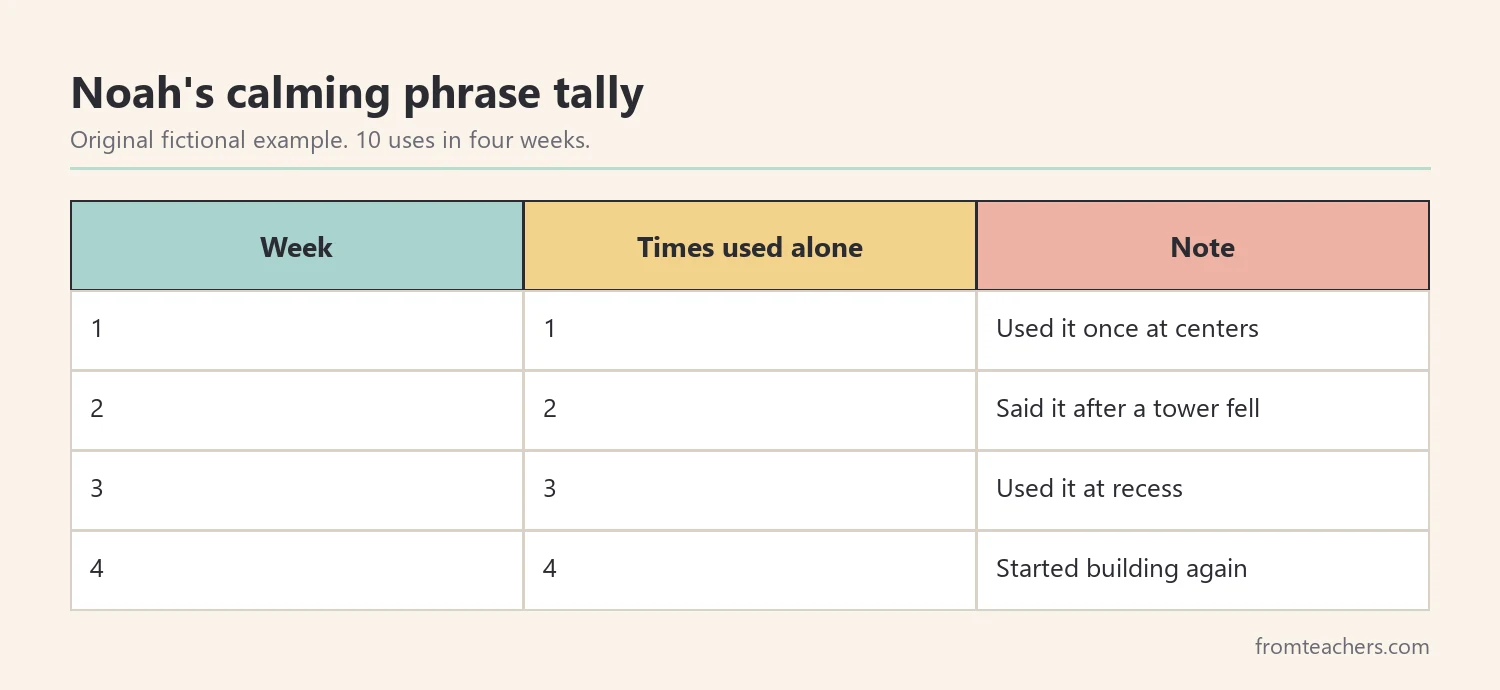
Keep a short tally for one or two skills. For example, count how many times a child uses a practice line on their own during the week. Review the notes every few weeks and decide which theme to read next.
In addition, ask children what they think. A quick thumbs up on “Did this story help you?” or “Which story should we read again?” gives you useful feedback and helps children feel ownership of the routine.
Also, rotate themes across the year. Start with understanding emotions, then add sharing, patience, kindness, apologizing, and change. Revisit favorites, because children enjoy familiar stories and often notice new details the second time.
If a child shows ongoing distress, strong worry, or behavior that does not improve with classroom support, talk with the school counselor and the family. SEL short stories support learning, but they do not replace individual help.
Worked example. Mr. Lee tallies Noah’s use of “I need a minute to breathe.” He uses it once in week 1, twice in week 2, three times in week 3, and four times in week 4. That is 10 times in four weeks. Next, Mr. Lee chooses a story about apologizing.
Common mistakes and how to avoid them
Even simple SEL short stories can miss the mark. Here are common problems and easy fixes.
- Reading only during a conflict. Fix: read in calm moments, then refer back later.
- Asking too many questions. Fix: plan two or three pause points.
- Lecturing about the lesson. Fix: let children name the lesson, then repeat it in one sentence.
- Skipping practice. Fix: role-play one short line from the story.
- Using a story once and moving on. Fix: reuse it during real moments and reread favorites.
Questions teachers and parents ask about SEL short stories
What age are SEL short stories for?
Short stories with simple language and everyday situations often suit preschool and early elementary children. Older children can also enjoy them, especially when they discuss the characters’ choices in more depth.
How often should I read SEL short stories?
A few times a week is a good start. Short, regular sessions are easier to keep up than long, occasional lessons, and they help children build a shared language.
Can parents use SEL short stories at home?
Yes. A story at bedtime or after a hard day can open a calm conversation. Ask one or two questions and keep it relaxed.
What if a child does not want to talk?
That is fine. Let them listen, point to a feeling face, or give a thumbs up. Many children take in more than they say out loud.
Do SEL short stories replace a full SEL program?
No. They work well as a flexible addition to your school’s approach, such as morning meetings or a counseling program. Use them to support, not replace, the plan your school already has.
Related reading: Moving Beyond Shame and Behavior Charts: Positive Alternatives, Meltdowns vs Tantrums: A Guide to Understanding and Responding, and Building Stronger School Counseling Programs.
A companion resource for reading SEL short stories:
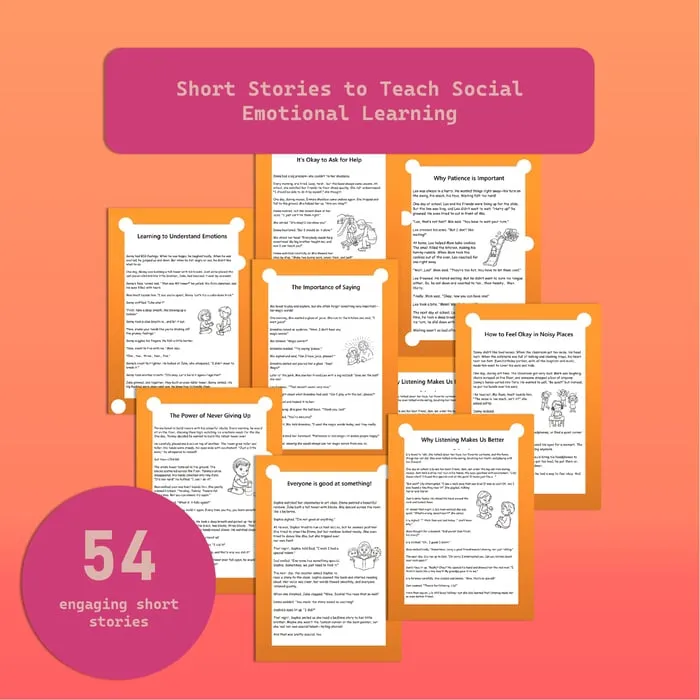
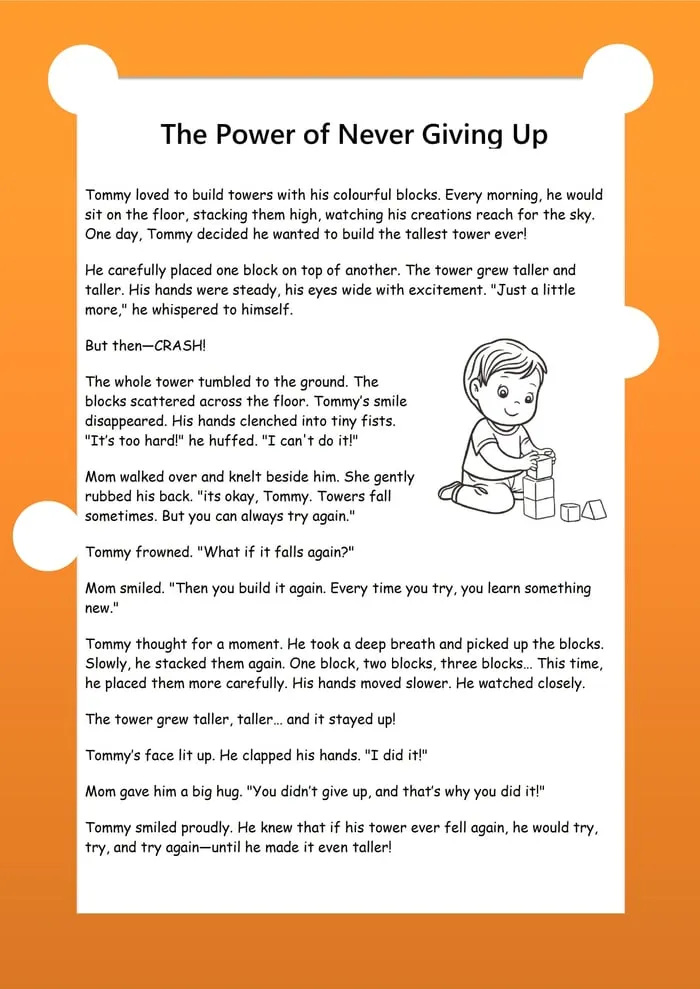
54 SEL Short Stories for Kids: Social Emotional Learning Reading Passages: short, easy-to-read stories about emotions, patience, sharing, kindness, making friends, apologizing, and change, each with natural dialogue and a clear closing takeaway.
Sources and scope
- CASEL: a leading organization on social and emotional learning, with frameworks and guidance for schools.
- National Association for the Education of Young Children: resources on early childhood teaching, including social and emotional development.
- Reading Rockets: guidance on reading aloud and building language with young children.
- American School Counselor Association: information on the role of school counselors in supporting students.
This guide covers using short stories to support everyday social and emotional learning at school and home. It does not replace a school-wide SEL program, counseling, or support for a child with ongoing emotional needs.
Key takeaways
- Choose SEL short stories that match what children are facing right now.
- Keep the routine short, predictable, and focused on two or three questions.
- Practice the exact words from the story so children have language ready.
- Bring the story back during real moments, after the child is calm.
- Track one small skill and rotate themes across the year.


Leave a Comment