

A daily routine for students gives children something many of them are quietly missing: a predictable shape to the day that they can see, follow, and own. Picture a fourth grader who arrives every morning unsure where to put her bag, forgets her reading folder, and spends the first twenty minutes catching up while her classmates are already working. She is not lazy. She simply has no routine to lean on.
This guide shows you how to build that structure in five practical steps. By the end, you will be able to design a short morning routine, add a quick feelings check-in, help students notice small wins, close the day with a calm wind-down, and turn the whole thing into a habit through weekly review. One fictional student appears in every step, so you can see the routine grow.
Examples are fictional. Adapt to the student’s goals and agreed supports. This is guidance, not a diagnosis.
At a glance
- A daily routine for students works best when it is short, visual, and the same every day.
- Start with a morning checklist of four or five clear steps.
- Add a one-minute feelings check-in so students notice how they are doing, not only what they did.
- Close the day with a calm wind-down and a quick note about a small win.
- Review once a week, celebrate progress, and change one thing at a time.
1. Design a short morning routine for students
First, decide what students need to do when they arrive. A daily routine for students should begin with a morning checklist of four or five concrete steps, such as unpacking, handing in homework, choosing lunch, a quick feelings check-in, and starting a quiet task. Fewer steps are easier to remember and easier to finish.
Next, make each step visible. Post the checklist on the board, tape a small copy to each desk, or give students a page in a journal they can tick off. Use the same order every day, because predictable order is what turns a list into a routine.
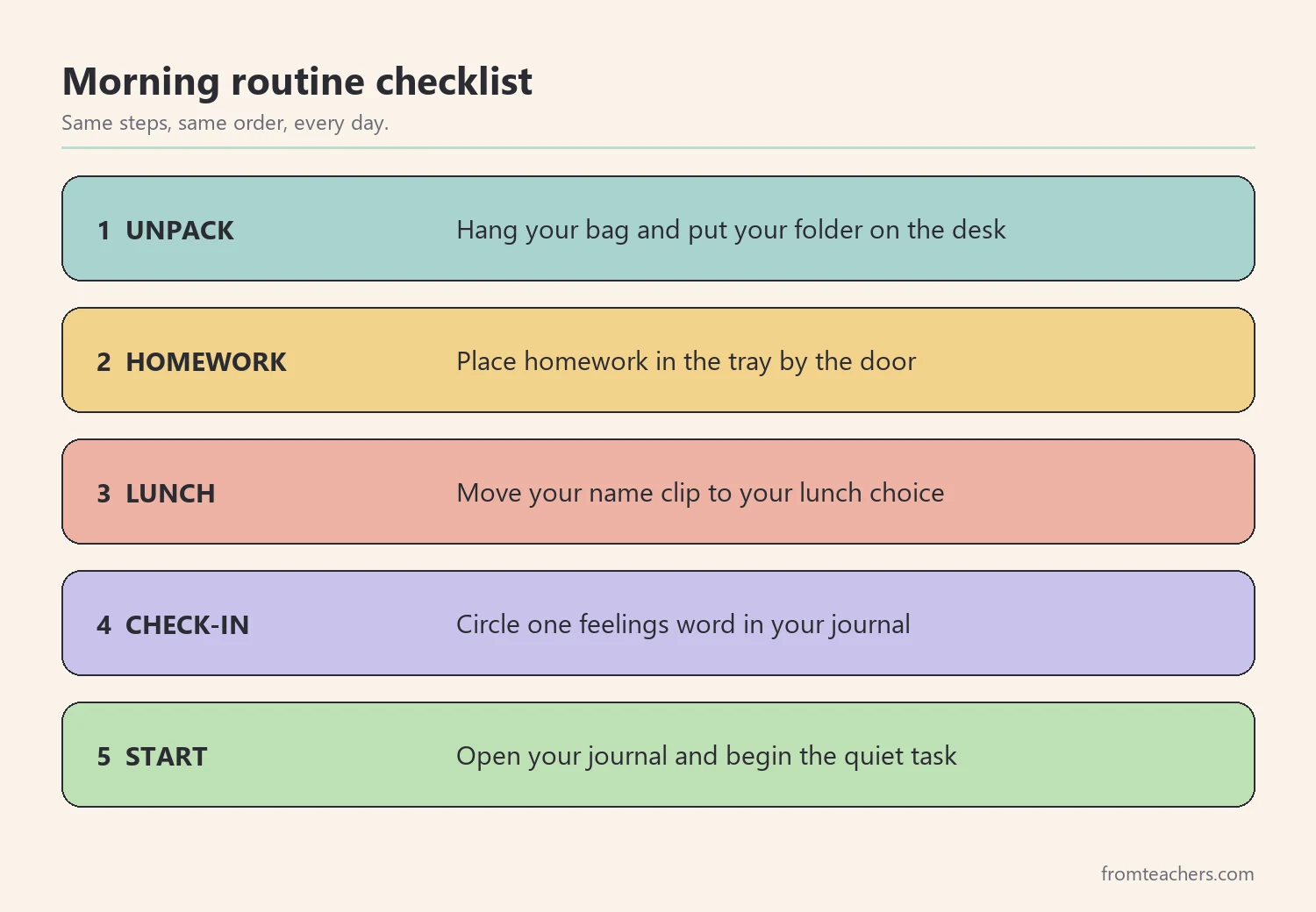
Think about the students who struggle most with transitions. A daily routine for students helps everyone, but it helps most for children who find mornings noisy, rushed, or confusing. For them, a clear list removes guesswork and lowers stress.
Then, teach the routine directly. Walk through each step together for the first few days, model what “done” looks like, and practice. For example, show exactly where homework goes and what a finished bag hook looks like. After that, step back and let students follow the list on their own.
| Step | What “done” looks like |
|---|---|
| Unpack | Bag on hook, folder on desk |
| Homework | In the tray by the door |
| Lunch choice | Name clip moved on the chart |
| Check-in | One feelings word circled |
| Quiet task | Journal open, pencil ready |
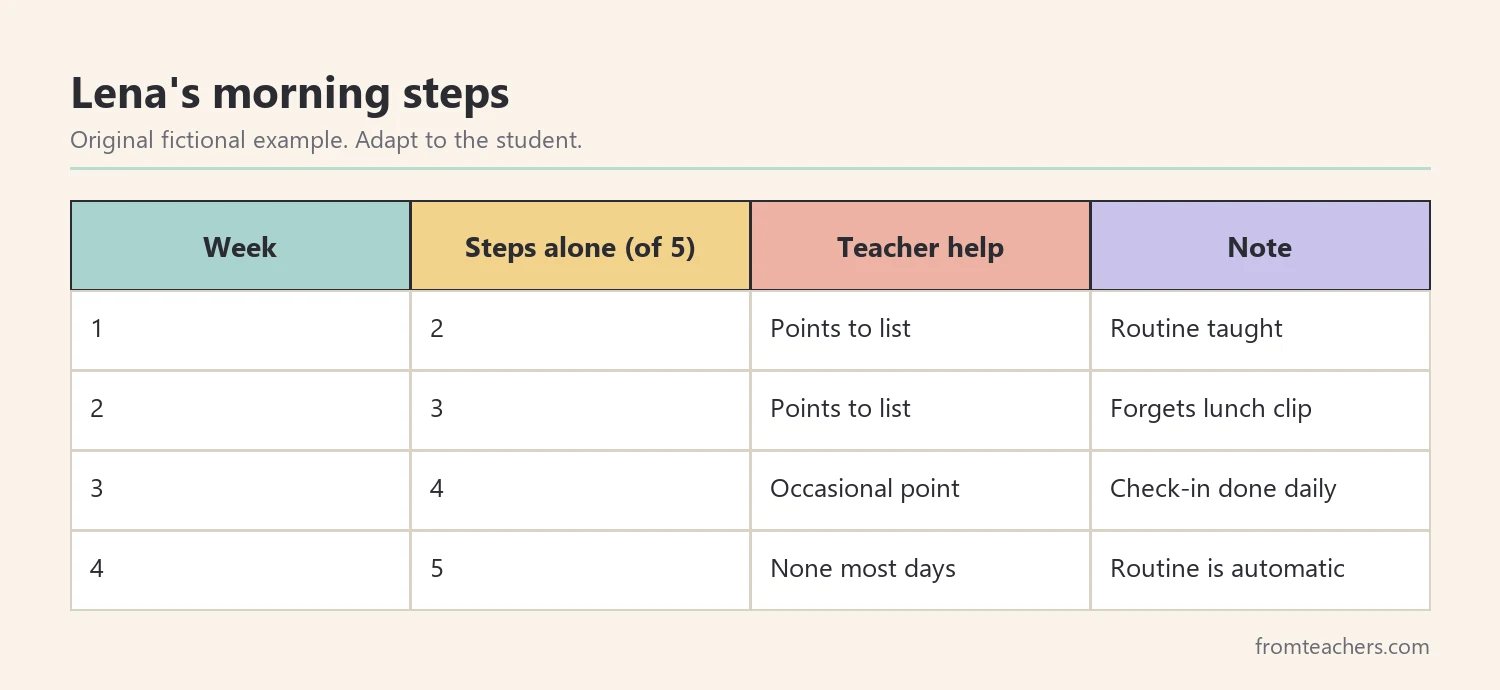
Worked example. Lena is a fictional student in grade 4. Her class uses a five-step morning checklist taped inside each journal. During the first week, Lena completes 2 of the 5 steps without a reminder. Her teacher stands near the door and points to the list as she comes in.
2. Add a quick feelings check-in
Once the morning steps are in place, add one minute for feelings. A daily routine for students is about more than tasks. When students stop to notice how they feel, they build self-awareness, which is one of the core social and emotional skills that many schools aim to teach.
Place the check-in at the same point in the daily routine for students each morning, such as right after unpacking. When the timing never changes, students stop asking whether they have to do it and simply do it.
Keep the check-in simple. Students can circle a word, color a feelings scale, or pick a face. Then, invite one optional sentence: “I feel this way because…” There are no right or wrong answers, and students should never have to share out loud.
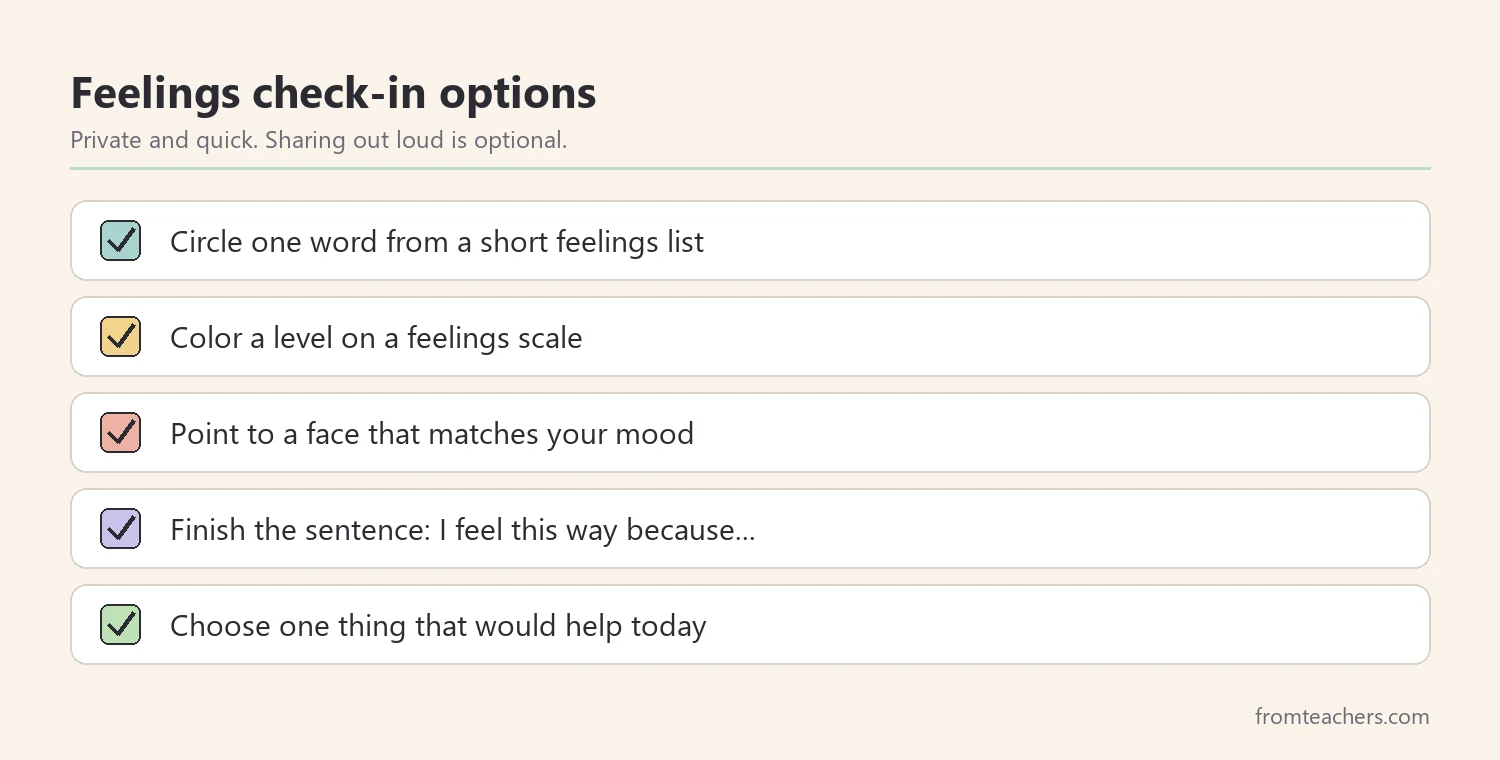
Also, use what you learn with care. If a student checks “worried” or “tired” several days in a row, a quiet conversation may help. In addition, follow your school’s procedures if a student shares something that suggests they may need more support.
A structured journal can make this part of the day easier. The daily routine journal for students includes a Morning Routine Checklist and a “How Do I Feel?” check-in section, so students practice both in the same place each day.
Worked example. After the checklist, Lena circles one word from a feelings list and writes a short reason. On Monday, she circles “tired” and writes, “I went to bed late.” Her teacher notices and quietly asks if she would like a minute to stretch before reading.
3. Add small wins to the daily routine for students
Next, give students a way to record what went well. Small wins keep motivation going, because they show students that effort leads to results. A daily routine for students should include a moment, even just two minutes, to write down one thing they learned, finished, or tried.
Use clear prompts. For example: “Today I finished…”, “Today I learned…”, or “Something I tried for the first time was…” Younger students can draw instead of writing. The goal is noticing, not writing a perfect sentence.
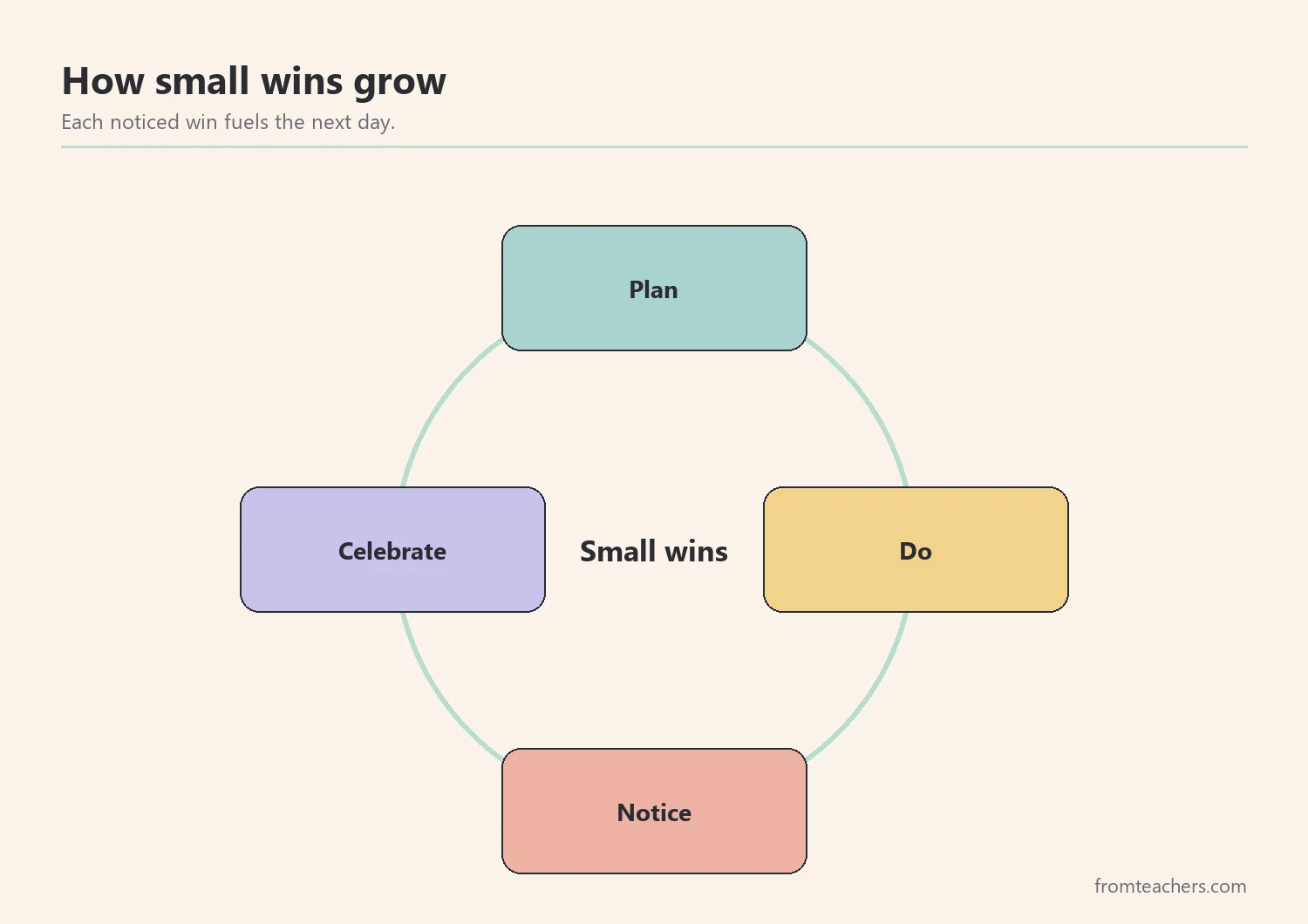
Small wins also help students who feel they are always behind. Over a few weeks, a page full of short notes becomes real evidence that the daily routine for students is working and that they are making progress.
Then, make wins visible in a quiet way. A student might put a sticker next to a finished checklist or read one win to a partner on Fridays. Avoid public rankings or comparisons, since the point is personal progress, not competition.
Prompts for small wins
- One thing I did on my own today was…
- Something that was hard but I kept trying was…
- A question I want to ask tomorrow is…
- Someone who helped me today was…
Worked example. At the end of math, Lena writes, “I finished all my problems before the timer.” On Friday, she reads two of her wins to a partner and adds a sticker to her journal page.
4. Close the day with a calm wind-down
Then, plan how the day ends. Many classrooms end in a rush, with bags flying and announcements shouted over noise. A calm wind-down is a valuable part of a daily routine for students, because it helps them leave school settled and ready for the next day.
Keep it short and repeatable. For instance, students might tidy their desk, check tomorrow’s schedule, pack their bag using a picture list, and write one sentence about the day. Some teachers add a slow breathing moment or a quiet song. Whatever you choose, keep the same steps in the same order so the end of a daily routine for students feels as familiar as the start.
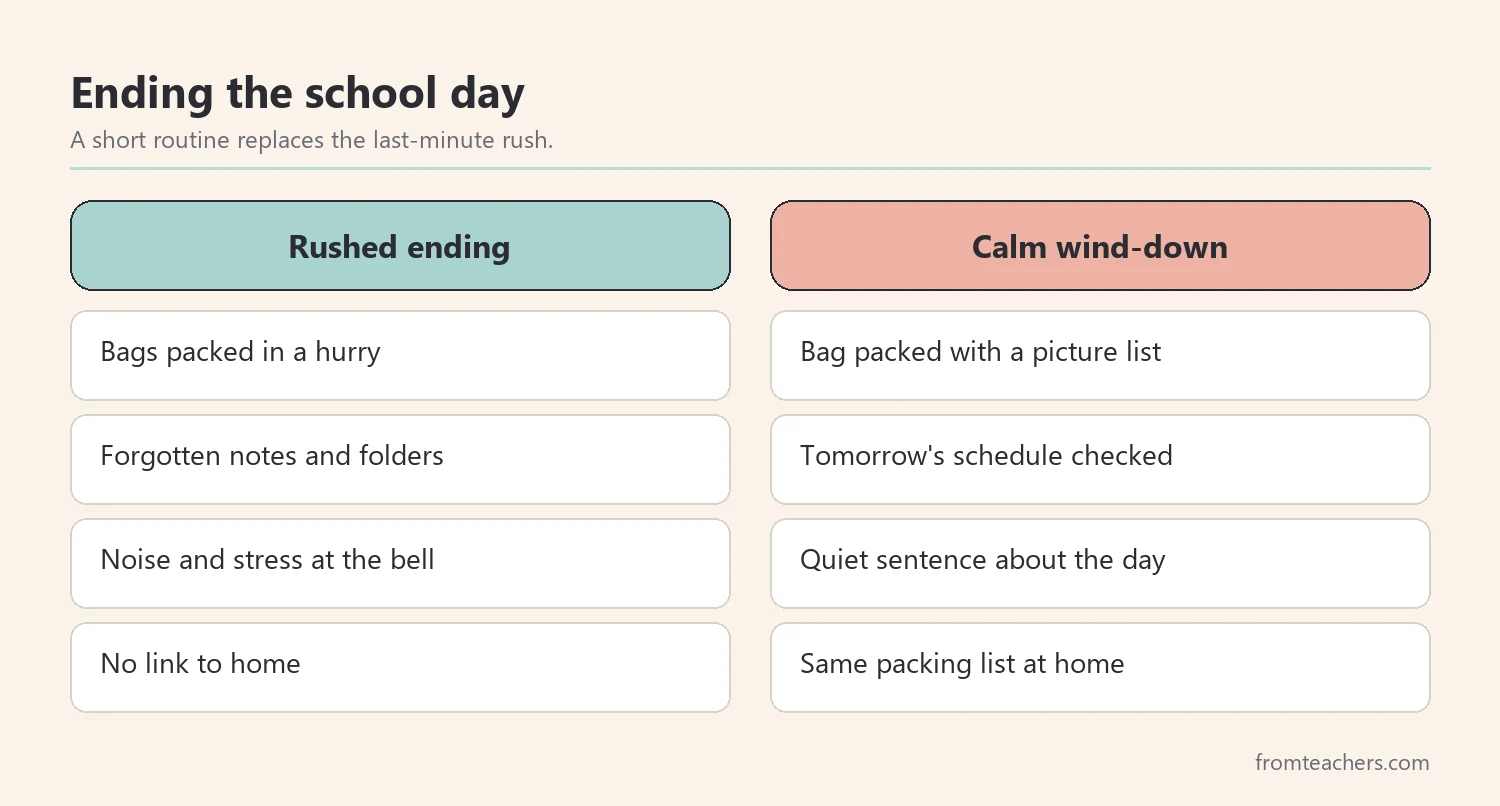
Protect the wind-down time even on busy days. If the routine disappears whenever the schedule is tight, students learn that it is optional. A shortened version, such as packing and one sentence, keeps the daily routine for students intact.
Also, connect the wind-down to home. Families can use a similar evening routine, such as packing the bag, setting out clothes, and a short reading time. Even a few shared steps between school and home make the routine stronger.
| Time | Wind-down step |
|---|---|
| Last 10 minutes | Tidy desk and supplies |
| Last 7 minutes | Check tomorrow’s schedule |
| Last 5 minutes | Pack bag with the picture list |
| Last 2 minutes | Write one sentence about the day |
Worked example. Lena’s class begins the wind-down ten minutes before dismissal. She packs her bag using the picture list and writes, “Today I was proud of my math.” Her family uses the same picture list for packing at night.
5. Review weekly and make the daily routine for students a habit
Finally, review the routine once a week. Habits form through repetition and reflection. A short Friday review lets students look back at their checklists, notice patterns, and choose one thing to improve next week.
Ask simple questions. Which steps did I do on my own most days? What was hard? What will I try next week? Similarly, teachers can look at the class as a whole and adjust steps that most students skip.
Involve students in the review. When they suggest a change to their own daily routine for students, such as moving the check-in earlier, they are far more likely to follow it. Ownership is what turns a teacher’s checklist into a student’s habit.
Then, change one thing at a time. If a step is always missed, make it clearer, move it, or remove it. As students grow more independent, fade your reminders, and let the checklist do the work.
Finally, share the progress with families. A short note such as “This week your child unpacked and started work on their own four days out of five” tells parents what the routine looks like and gives them something specific to praise at home. In addition, ask families what helps in the mornings at home, because their ideas often improve the classroom routine too.
Worked example. In week 1, Lena completes 2 of 5 morning steps on her own. In week 2, she completes 3, and in week 3 she completes 4. By week 4, she completes all 5 most days, and her teacher no longer needs to point to the list.
Common mistakes and how to avoid them
- Making the routine too long. Fix: start with four or five steps and add more only when students are ready.
- Changing the order often. Fix: keep the same steps in the same order every day.
- Skipping direct teaching. Fix: model and practice each step before expecting independence.
- Forcing students to share feelings aloud. Fix: keep check-ins private and optional to share.
- Comparing students publicly. Fix: celebrate personal progress, not rankings.
- Never reviewing the routine. Fix: hold a short weekly review and change one thing at a time.
Questions teachers and parents ask about a daily routine for students
What age is a daily routine for students best for?
Routines help students of all ages. For elementary and early middle school students, short visual checklists and simple prompts work especially well. Older students can take on more planning themselves.
How long does it take for a routine to become a habit?
It varies from student to student. Most classes need several weeks of consistent practice before a routine feels automatic. Keep the steps the same and review weekly to speed things up.
Should the routine be the same at home and school?
A daily routine for students does not need to be identical, but a few shared steps help. For example, using the same packing list at school and home reduces forgotten items and arguments.
What if a student refuses to follow the routine?
Look at the steps first. Are they too many, too vague, or too hard? Then, give the student a choice within the routine, such as which quiet task to start, and praise any step they complete on their own.
Can a journal really help with emotional regulation?
A journal is not a treatment, but daily check-ins give students regular practice naming feelings. Naming a feeling is a first step toward managing it, so the habit can support broader SEL goals in your classroom.
Related reading: 5 Practical Teaching Tips to Boost Classroom Focus and Learning, Effective ADHD Classroom Strategies to Support Student Success, and Building Stronger School Counseling Programs: A Framework for Student Success.
A companion resource for a daily routine for students:
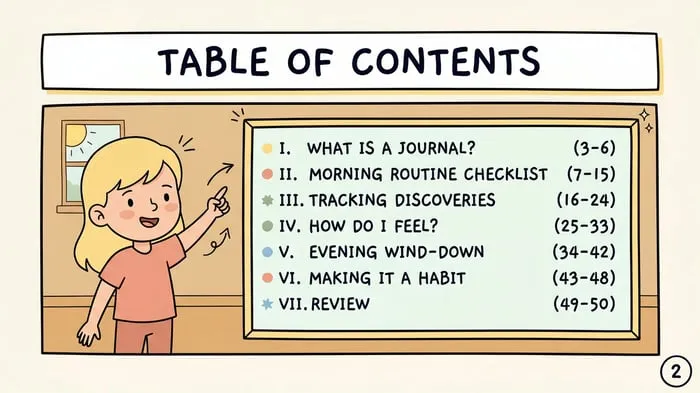
Daily Routine Journal for Students: Structured SEL Workbook: a printable 50-page journal with a Morning Routine Checklist, Tracking Discoveries pages, a “How Do I Feel?” check-in, an Evening Wind-Down, a habit-building section, and a final Review.
Sources and scope
- CASEL: information on social and emotional learning, including self-awareness and self-management.
- HealthyChildren.org, American Academy of Pediatrics: parent information on routines, sleep, and child development.
- Child Mind Institute: articles for families and educators on children’s mental health and daily habits.
- Understood.org: resources on executive function and supporting students who struggle with organization.
This guide covers practical ways to build classroom and home routines with checklists and reflection. It does not replace support from a school counselor, psychologist, or health professional for a specific child.
Key takeaways
- A daily routine for students should be short, visual, and consistent.
- Teach each step directly before expecting independence.
- Add a private feelings check-in and a moment to notice small wins.
- End the day with a calm wind-down that can connect to home.
- Review weekly and change one thing at a time.










Leave a Comment