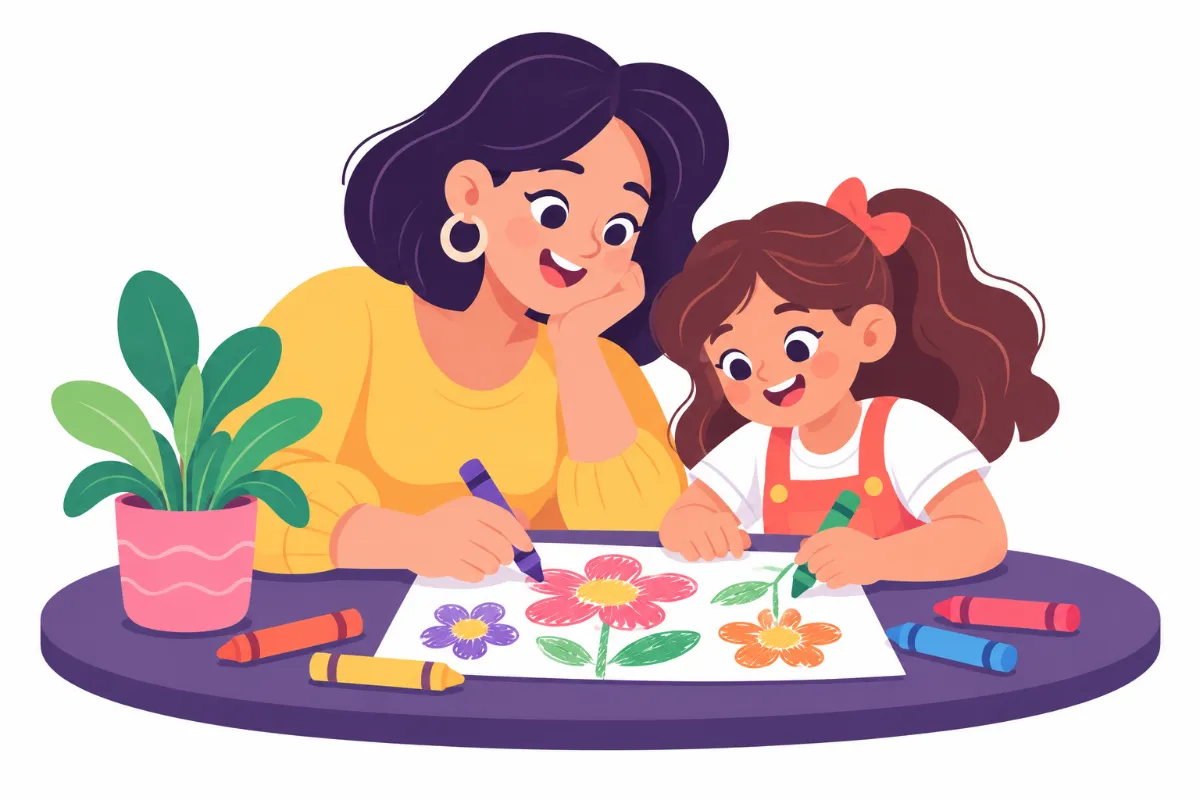

Gardening coloring pages can turn a restless spring afternoon into a calm, focused stretch of learning. Picture a five-year-old who grips the crayon in a fist, scribbles across the whole page in ten seconds, and asks for the tablet. With the right page, a short routine, and a little talk, that same child can slow down, color inside a flowerpot, and tell you what a seed needs to grow.
After reading this guide, you will be able to choose a page that fits a child’s current skills, set up a short coloring session, teach grip and control step by step, add nature vocabulary, and notice progress over a few weeks. The steps work at home, in a preschool center, or in an early elementary classroom.
Examples are fictional. Adapt to the student’s goals and agreed supports. This is guidance, not a diagnosis.
At a glance
- Gardening coloring pages give young hands a calm, repeatable way to practice control.
- Match the page to the child: bigger shapes first, finer detail later.
- Keep sessions short, about 10 to 20 minutes, and stop before frustration.
- Use the garden scene to build words like seed, soil, root, and sprout.
- Track one simple sign of progress each week, such as staying inside a shape.
1. Choose gardening coloring pages that match the child
First, look at the child before you look at the page. Some children are still learning to hold a crayon. Others already color carefully and want more detail. The best page is one that is a little challenging but still feels possible.
For example, meet Lina, age 5, a fictional kindergartener. Lina loves being outside but finds table work hard. She holds crayons in a fist and colors in fast, wide strokes. Her teacher, Ms. Ortiz, starts with a page that has a few large, clear shapes: a pot, a seedling, and two figures.
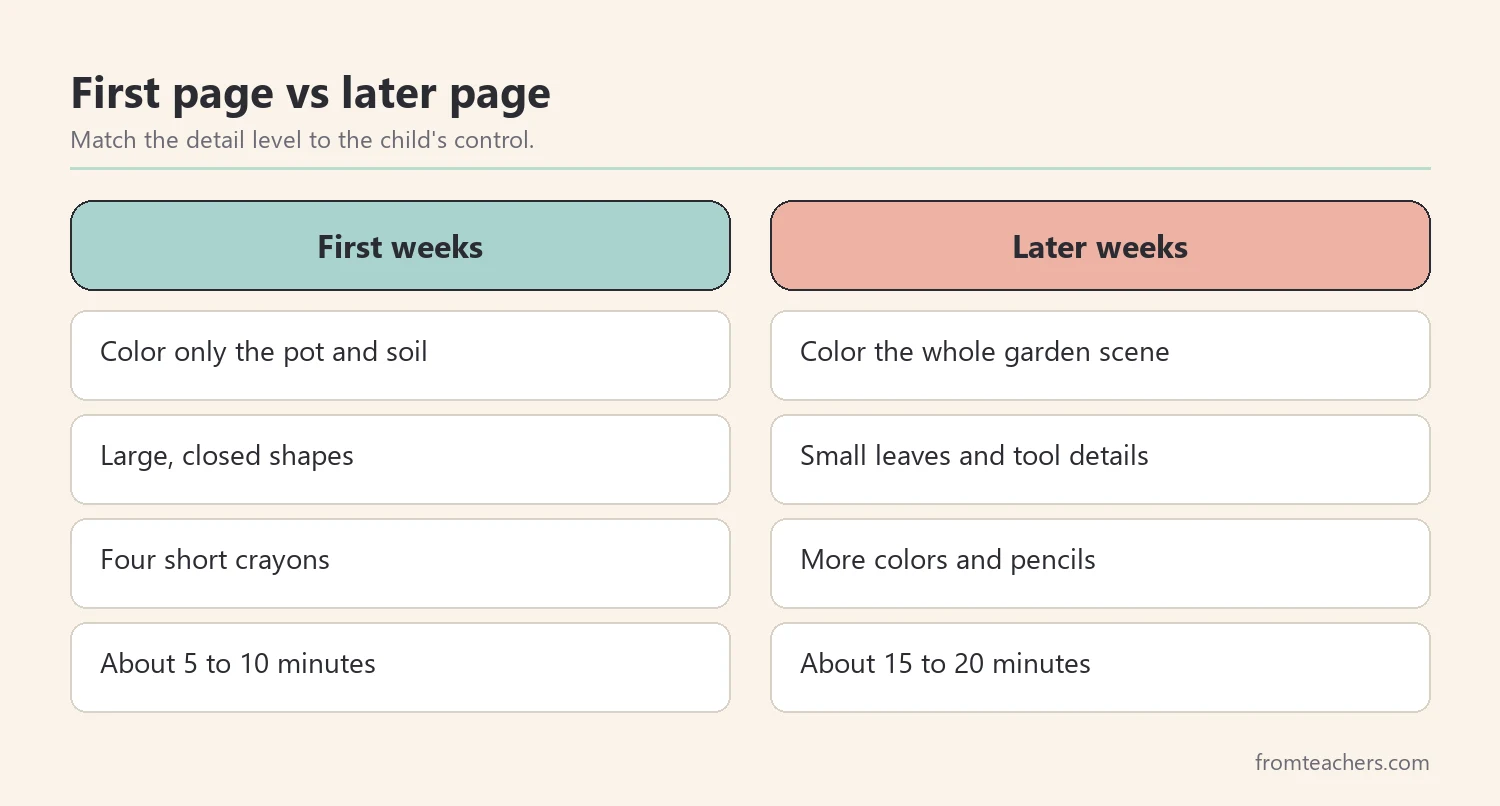
Next, think about detail level. Gardening coloring pages with realistic line art often include leaves, hands, clothing folds, and tools. These small areas are useful later, once a child can slow down. At first, you can tell the child which parts to color and let the rest stay white.
| Child’s current skill | What to look for in a page | How to adapt it |
|---|---|---|
| Fist grip, fast scribbles | Large, closed shapes | Color only the pot and soil |
| Emerging control | Medium shapes with a clear outline | Add the leaves and one figure |
| Careful colorer | Fine detail, small spaces | Color the whole scene, add a background |
Finally, offer a small choice. Two gardening coloring pages are enough. When a child picks the page, they usually stay with it longer. Lina chose the page where the child holds the watering can, and she pointed to the seedling right away.
2. Set up a calm session for gardening coloring pages
A good session starts before the child picks up a crayon. Set the table, the tools, and the time so the child can focus on the page instead of the room.
Start with tools. Short, chunky crayons are easier for small hands than long, thin ones. In fact, breaking a crayon in half often helps, because a short piece invites the fingers to pinch instead of the fist to grab. Offer four or five colors, not the whole box. Too many choices can turn coloring into sorting.
Then, think about posture. Feet should rest on the floor or on a box. The table should sit near elbow height. A slanted surface, such as a binder turned sideways, can help some children see the page and keep their wrist in a better position.
After that, set a clear time frame. For most young children, 10 to 20 minutes is plenty. A visual timer or a simple “when the song ends, we stop” works well. In Lina’s case, Ms. Ortiz plays one quiet song, about four minutes long, three times in a row. That gives a 12-minute session with natural check-in points between songs.
- Use a quiet corner or a cleared table.
- Give 4 to 5 short crayons or colored pencils.
- Check feet, table height, and lighting.
- Agree on the stopping point before starting.
- Keep a second one of your gardening coloring pages ready for early finishers.
Lastly, sit nearby, at least for the first few sessions. You do not need to hover. However, your calm presence tells the child this is a real activity, not filler.
3. Teach grip and control with gardening coloring pages
Coloring is not handwriting, but it builds many of the same building blocks: hand strength, finger control, and the ability to stop at a line. Gardening coloring pages are useful here because the shapes are familiar and meaningful. A child knows what a pot looks like, so it is easier to understand where the color should stop.
First, model the grip. Show a “pinch and hold” with your thumb and two fingers on a short crayon. Keep the words simple: “Pinch the crayon, then let your other fingers rest.” Avoid correcting every second. Instead, gently reset the grip at the start and once halfway through.
Next, teach control in small moves. Ask the child to trace the outline of one shape slowly, like a snail walking around the pot. Then color inside it with short strokes. After that, try one direction only, such as up and down. These three moves make a simple routine that children can remember.
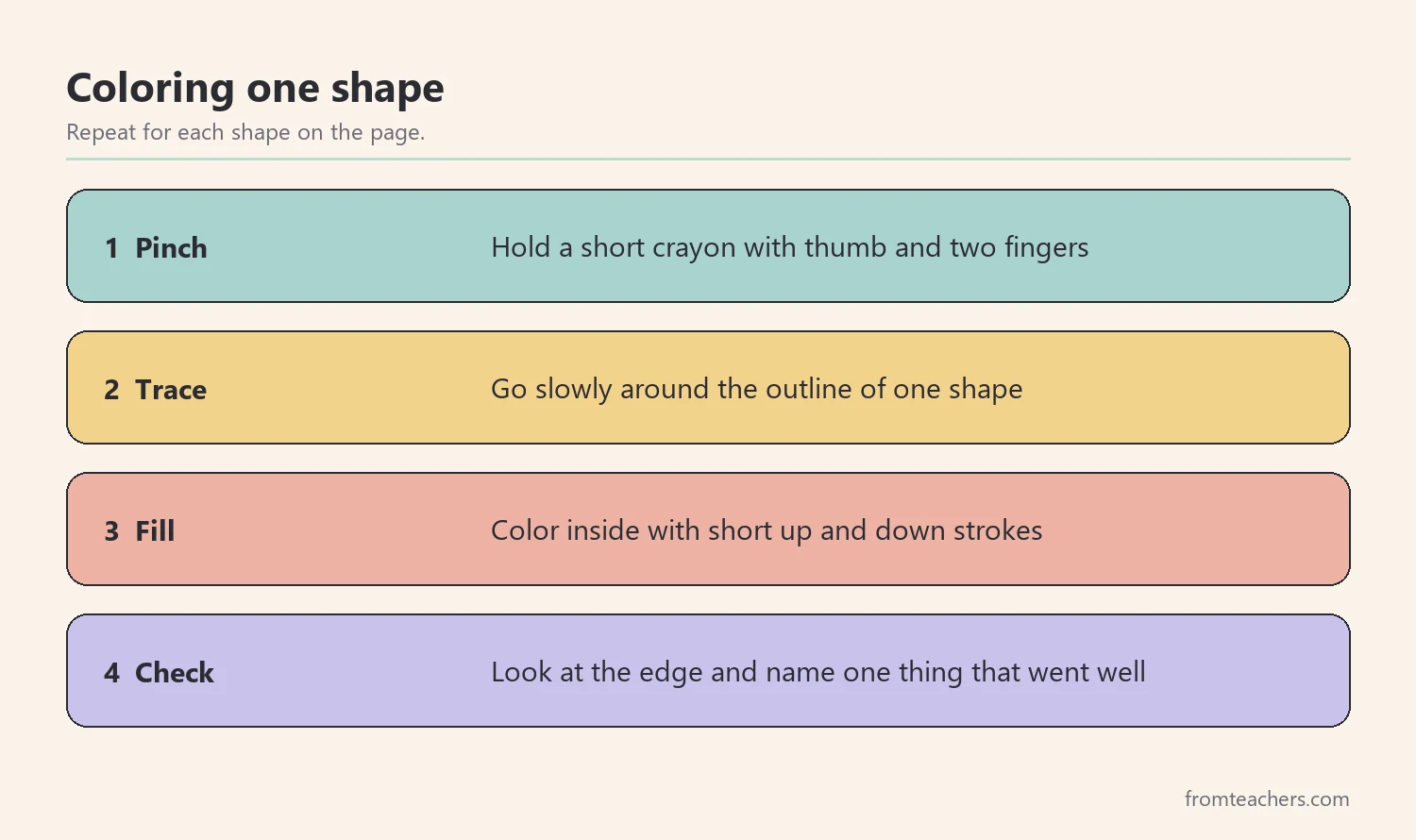
Then, praise effort, not perfection. “You slowed down near the edge” is more useful than “Beautiful.” Lina’s first pot went over the line in many places. Still, she traced the outline before filling it, which was new. Ms. Ortiz named exactly that.
Also, mix coloring with other hand work. Playdough, tearing paper for a collage, and picking up small objects with tongs all build the same muscles. If you want a full set of garden scenes for this routine, the Mother and Child Gardening Coloring Pages set gives you 20 variations of the same warm scene, so the child repeats the skill without getting bored.
Because gardening coloring pages repeat a familiar scene, the child can spend energy on control instead of figuring out the picture. Finally, watch for fatigue. Shaking out the hand, switching hands often, or pressing very hard can all mean the child needs a break. Stop, stretch, and try again later.
4. Build nature vocabulary while coloring
A coloring page is also a picture to talk about. Gardening coloring pages show a real, everyday activity: an adult and a child planting together. That makes them a natural starting point for words about plants, growth, and family.
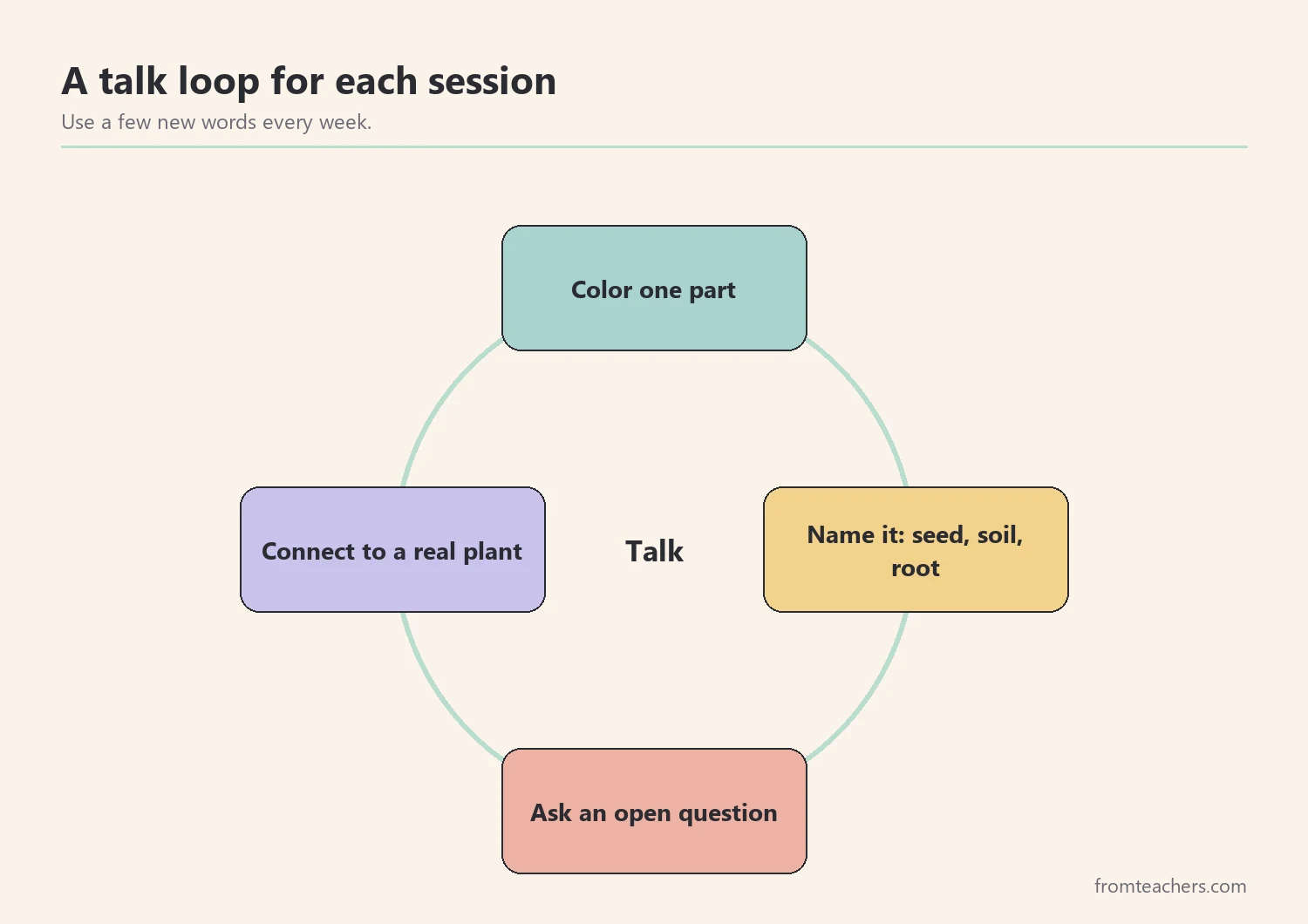
Start with a small word set. Choose four or five words per week and use them often. For a garden scene, good first words are seed, soil, pot, root, and sprout. Point to each part as the child colors it. For instance, say: “You are coloring the soil. Soil is the dirt where the root grows.”
Next, ask open questions. “What do you think they are planting?” or “What will the plant need tomorrow?” invite longer answers than yes or no questions. Then, wait. Silence gives children time to think.
| Week | Words | Talk prompt |
|---|---|---|
| 1 | seed, soil, pot | What goes inside the pot? |
| 2 | root, sprout, water | What happens after we water? |
| 3 | leaf, sun, grow | Where should the pot live? |
| 4 | gentle, together, care | How do they help each other? |
After that, connect the page to real life. If possible, plant a bean seed in a clear cup. Over the next weeks, the child can compare the real sprout with the picture. Lina checked her bean every morning and colored her sprout green “like the real one.”
Over time, gardening coloring pages also become a shared reference point. When the child sees a real pot or a watering can, they often name it and remember the page. In addition, use the scene to talk about feelings and family. The mother and child are working side by side. You can ask, “How do you think they feel?” This makes the page a good fit for Mother’s Day, a spring unit, or a lesson on caring for living things.
5. Track progress with gardening coloring pages and review
Progress with fine motor skills is slow and uneven, so a simple record helps you see it. You do not need a formal chart. A sticky note on the back of each finished page is enough.
First, pick one or two things to watch. For example: Did the child use a pinch grip for most of the session? Did they stay inside the main shape? How many minutes did they color before asking to stop? Choose what matters for this child, not everything at once.
Next, date each of the gardening coloring pages the child finishes and keep them in a folder. Comparing the first page with a later one is often the clearest way to show a child, a family, or a colleague what has changed.
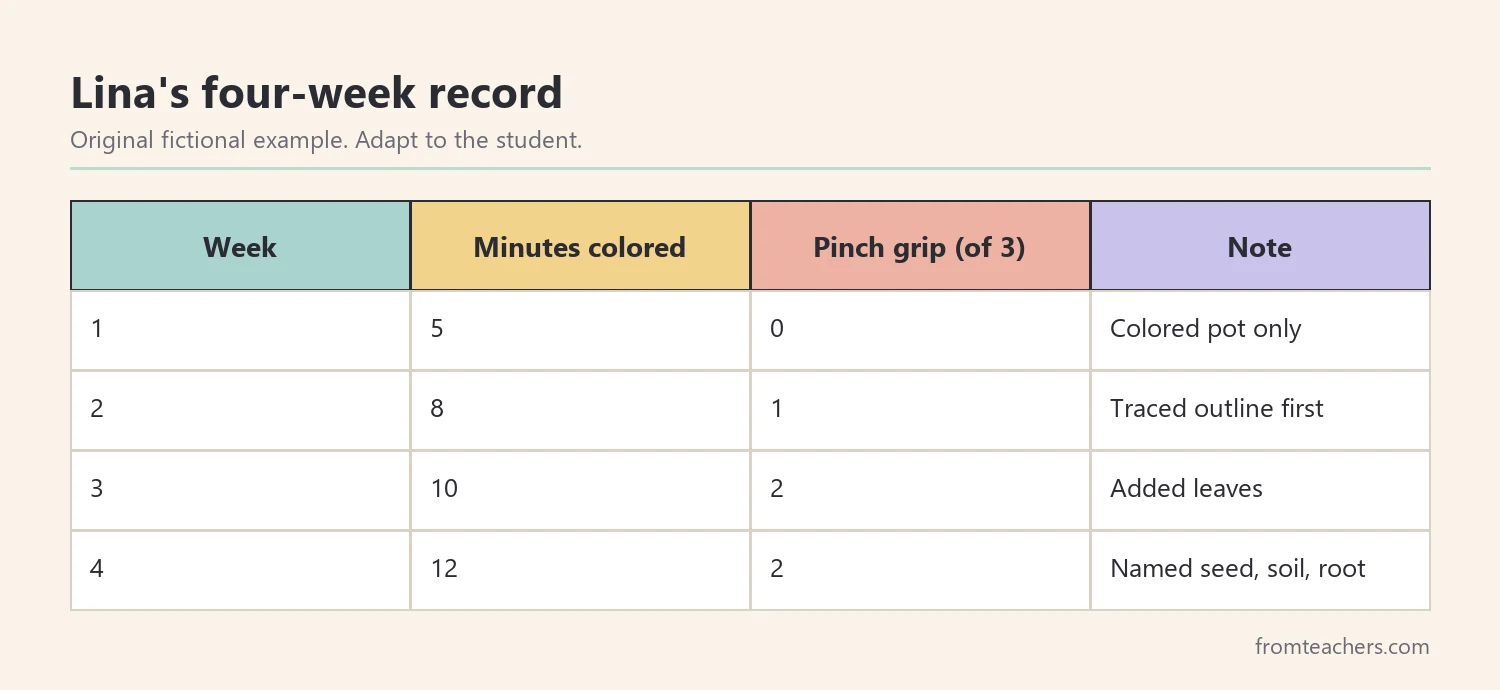
Here is what Ms. Ortiz recorded for Lina over four weeks. Each week, Lina had three sessions, so the “Pinch grip” column counts how many of those three sessions she held a pinch grip for most of the time.
| Week | Minutes colored per session | Pinch grip (of 3 sessions) | Note |
|---|---|---|---|
| 1 | 5 | 0 | Colored pot only |
| 2 | 8 | 1 | Traced outline first |
| 3 | 10 | 2 | Added leaves |
| 4 | 12 | 2 | Named seed, soil, root |
Then, review with the people who matter. Families often enjoy seeing gardening coloring pages side by side, because the change is easy to spot even for someone who was not there. Share two pages, one early and one recent, with the family. Ask what they notice at home. Lina’s father said she now asks to color at the kitchen table after dinner, which was new.
Finally, decide on one next step. For Lina, the next step was adding one small detail, the watering can, to each page. If progress stalls for several weeks, or if a child seems to struggle much more than peers, talk with the school team. An occupational therapist can look more closely at fine motor needs.
Common mistakes and how to avoid them
- Mistake: Starting with the most detailed page. Fix: Begin with big shapes and ask the child to color only part of the scene.
- Mistake: Correcting grip every few seconds. Fix: Reset the grip at the start and once halfway, then let the child work.
- Mistake: Long sessions that end in tears. Fix: Set a clear stopping point, such as one song or a short timer.
- Mistake: Treating coloring as quiet filler. Fix: Add a few words and one question to every session.
- Mistake: Praising only neat results. Fix: Name the effort you saw, such as slowing down near a line.
Questions teachers and parents ask about gardening coloring pages
What age are gardening coloring pages best for?
Most preschool and early elementary children enjoy them. Younger children can color only the large shapes. Meanwhile, older children often like detailed line art and can add their own background.
How long should a coloring session last?
For most young children, 10 to 20 minutes is enough. Stop while the child is still interested. That way, they want to come back next time.
Can coloring really help with handwriting?
Coloring builds hand strength and control that writing also uses. However, it is one piece of the picture. It works best alongside other hand play, such as playdough, cutting, and building.
Should I correct a child who colors outside the lines?
Not every time. Gardening coloring pages are practice, not a test. Instead, model tracing the outline first and praise any attempt to slow down. Over weeks, staying inside the shape usually improves with practice.
How can I use gardening coloring pages for a spring unit?
Pair each page with a real planting activity and a short word list. Children can color, plant a seed, and compare the picture with their sprout. The scene also fits Mother’s Day and lessons on family and growth.
Related reading: 5 Practical Teaching Tips to Boost Classroom Focus and Learning, Managing Sensory Overload: Practical Strategies for Autism and ADHD, and Learning Styles Student Success Guide.
A companion resource for gardening coloring pages:
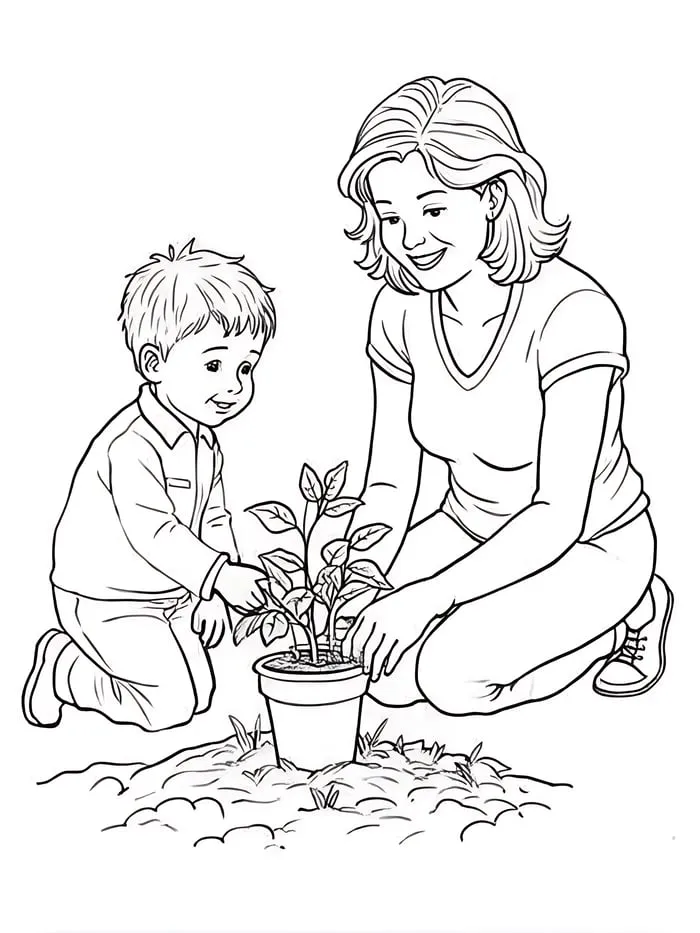
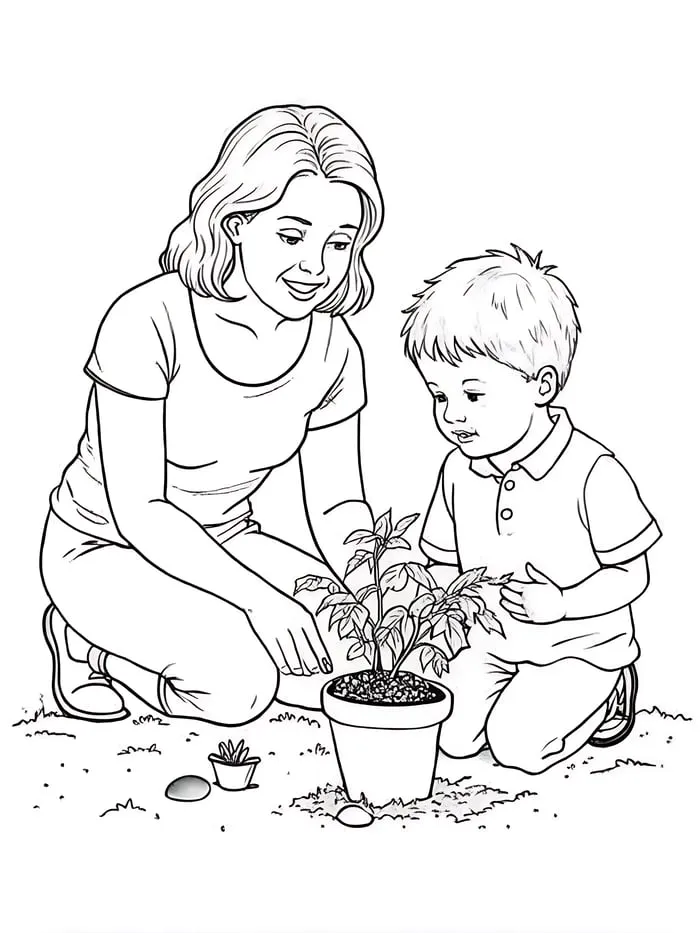
Mother and Child Gardening Coloring Pages: 20 coloring page variations of a mother and child planting a seedling together, with high-resolution JPG files and a combined PDF for easy printing.
Sources and scope
- NAEYC: the National Association for the Education of Young Children, with guidance on play and early learning.
- CDC Learn the Signs. Act Early.: general information on developmental milestones in young children.
- American Occupational Therapy Association: background on occupational therapy and everyday skills such as fine motor work.
- ZERO TO THREE: resources for families and educators on early development and play.
This guide covers everyday coloring routines for home and classroom. It does not cover assessment or therapy for motor delays, which belong to qualified professionals and the child’s team.
Key takeaways
- Gardening coloring pages work best when the page matches the child’s current control.
- Short, calm sessions with a few short crayons beat long sessions with the whole box.
- A simple routine of pinch, trace, fill, and check builds control over time.
- Every garden scene is a chance to teach words like seed, soil, and sprout.
- Date pages, compare them every few weeks, and share progress with the family.



Leave a Comment