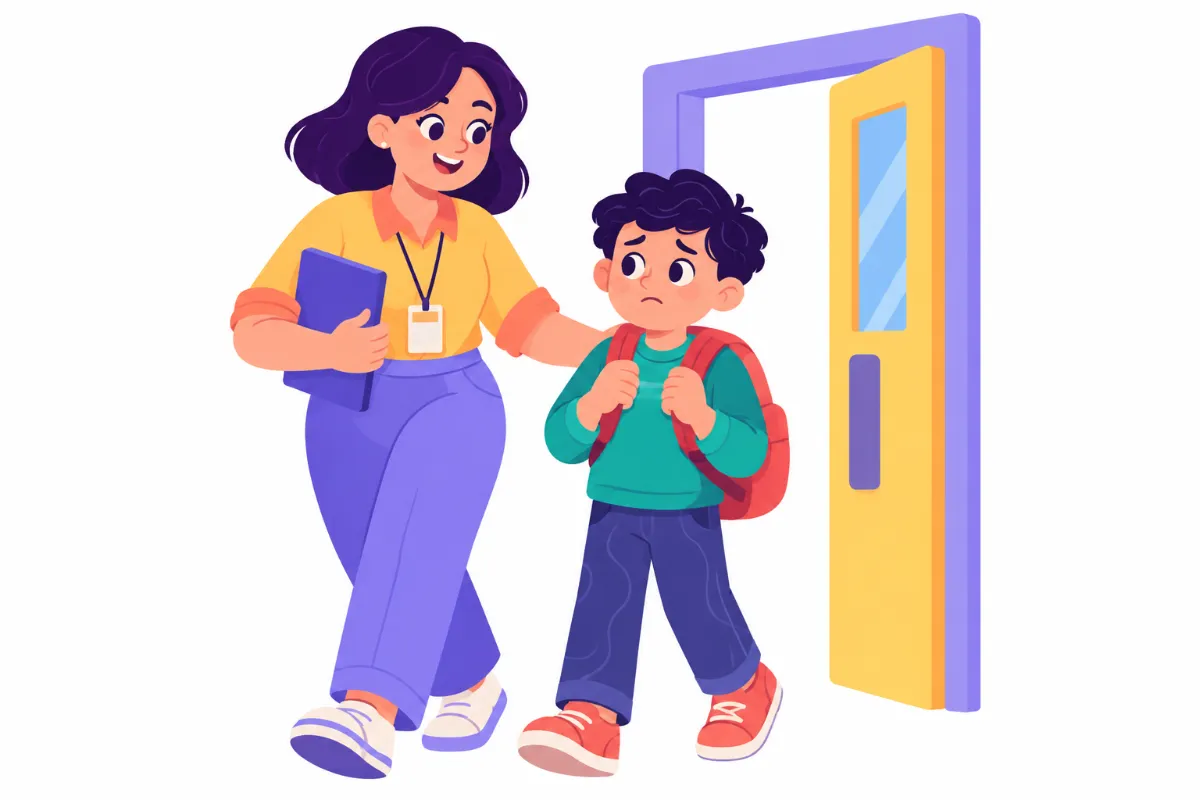

Back to school anxiety often shows up before the school day even starts: a stomachache at breakfast, a refusal to put on shoes, or tears at the classroom door. For teachers and parents, these moments are hard to watch, and it is easy to wonder whether to push, wait, or call it a day.
This guide works like a short course. By the end, you will be able to spot early warning signs of back to school anxiety, find the specific triggers, build a calm morning routine, plan a gradual return, and track small wins with the student’s team. Examples are fictional. Adapt to the student’s goals and agreed supports. This is guidance, not a diagnosis.
At a glance
- Back to school anxiety is common, and early, calm support usually works better than waiting.
- Look for patterns: when, where, and with whom the worry appears.
- A predictable morning routine lowers the number of decisions a worried child faces.
- Gradual, planned steps back into the full day are kinder and more lasting than all-or-nothing demands.
- Track small wins together and involve the school counselor or psychologist when worry persists.
1. Recognize early signs of back to school anxiety
First, learn what worry looks like for this particular child. Some students say they are scared. Many others show it through their bodies or behavior instead of words.
Common early signs include frequent complaints of stomachaches or headaches on school mornings, trouble sleeping on Sunday nights, clinging at drop-off, many trips to the nurse, and questions like “What if I don’t know anyone?” Some students also arrive late more often, or ask to call home during the day.
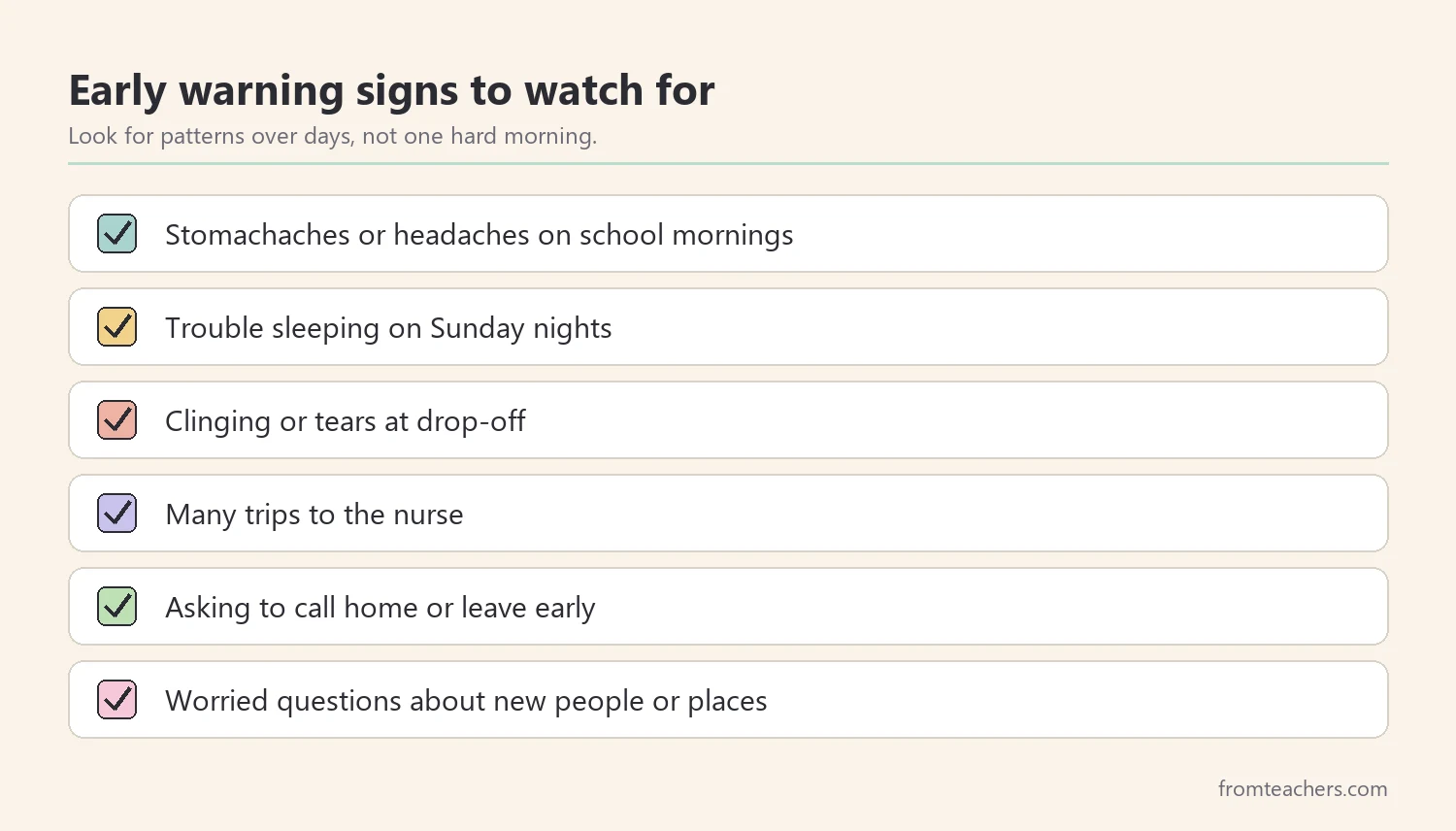
Meet our fictional student, Nora, grade 5. Nora moved to a new school over the summer. In the first two weeks, she visits the nurse almost every morning, says her stomach hurts before math, and asks her mom to pick her up early twice. None of these alone is alarming, but together they form a clear pattern of back to school anxiety.
Also, remember that physical complaints should be checked by a health professional, especially if they are new or strong. Supporting worry at school does not replace medical care. Rather, both can happen at the same time.
Finally, share what you notice early. A short, friendly message such as “Nora seemed worried before math today. How are mornings at home?” opens a partnership between home and school. Early notes are much easier than a conversation after weeks of missed days.
2. Identify the specific triggers
Next, move from “she is anxious about school” to “she is anxious about this part of school.” Back to school anxiety is rarely about everything at once. Usually, it centers on a few predictable moments.
To find them, keep a short trigger log for one or two weeks. For each hard moment, write the time, the place, what happened just before, what the student did, and what helped. Teachers, aides, and parents can all add to the same log.
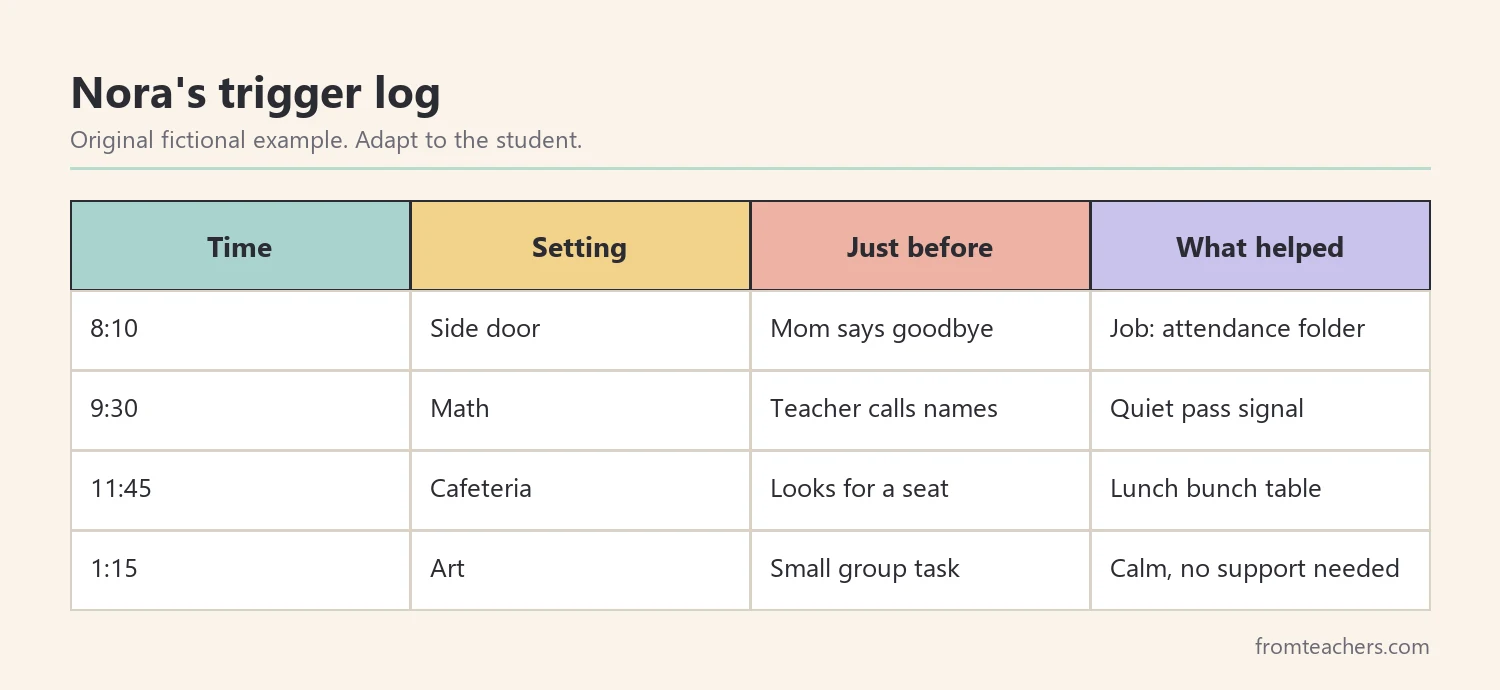
For Nora, the log quickly showed a pattern. Hard moments clustered around three times: arrival, the start of math, and lunch in the busy cafeteria. When the teacher asked Nora privately, she explained that she worried about being called on in math and about having nowhere to sit at lunch.
In addition, notice what goes well. Nora was calm in art and during small group reading. These bright spots matter, because they show what conditions help her feel safe, such as small groups, clear tasks, and a friendly adult nearby.
Moreover, keep the log neutral. Write what you see, not what you guess. “Put head down and said stomach hurt” is more useful than “trying to avoid work.” Accurate notes help the team design supports for back to school anxiety that fit the real problem.
If you want a ready-made structure for this step, the school avoidance and back to school anxiety strategy tables include a page focused on identifying specific anxiety triggers, along with pages on early warning signs and reacting to school refusal.
3. Build a calm, predictable morning routine
Mornings are where back to school anxiety often peaks. Every open choice (“Which shirt? What breakfast? Are we late?”) adds pressure for a worried child. Therefore, a predictable routine helps by turning a stressful morning into a familiar sequence.
Start by writing the morning as five or six short steps. Prepare as much as possible the night before: clothes, backpack, and lunch. Then post the routine where the child can see it, and follow the same order every day.
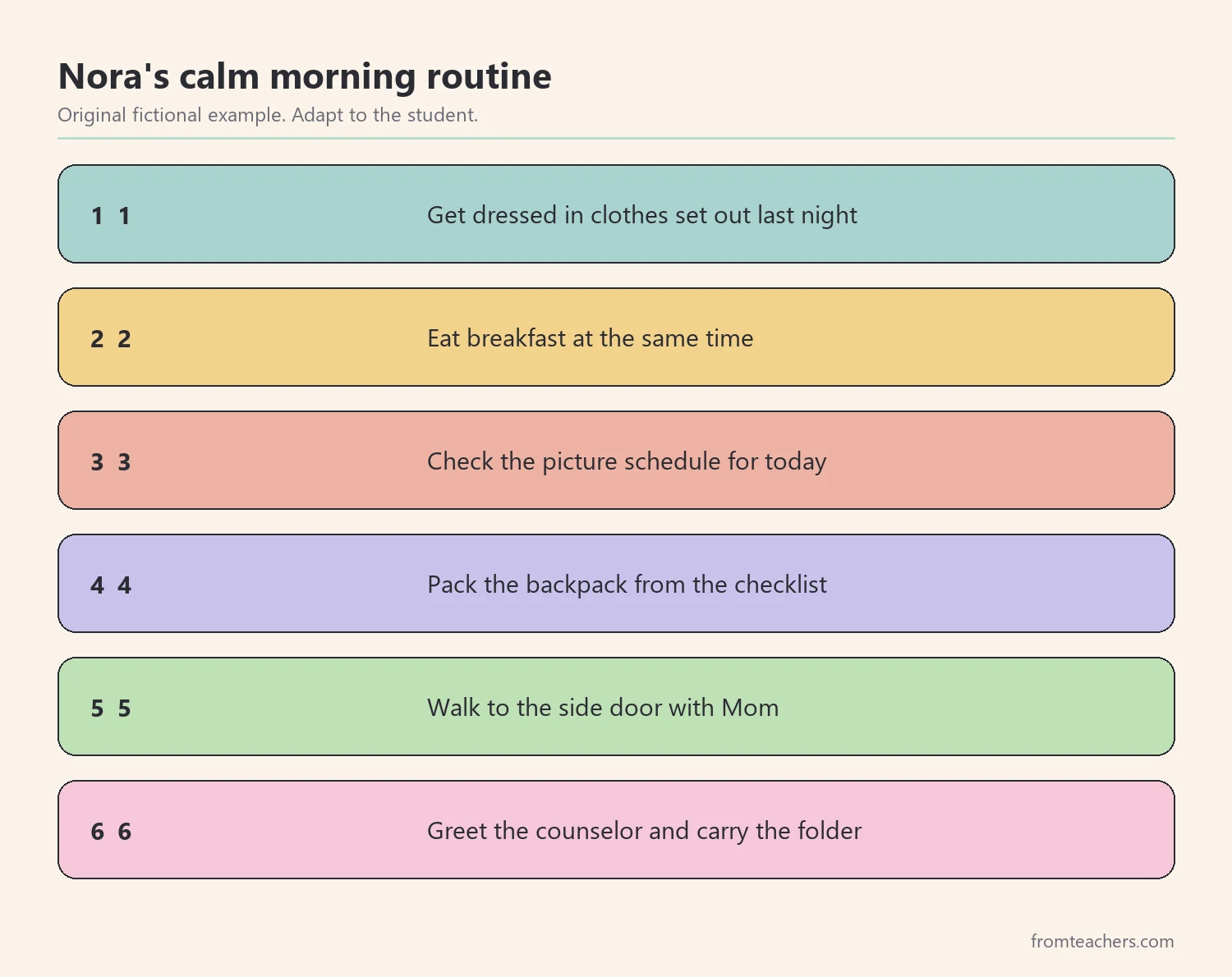
Also, plan a calm handoff at school. A specific adult, a specific door, and a specific first job help a lot. For Nora, the plan was simple: her mom walks her to the side door, the counselor says hello, and Nora carries the attendance folder to the office. Having a job gives her a reason to walk in and something to focus on besides worry.
Furthermore, keep goodbyes short and warm. Long, emotional goodbyes can make leaving harder. A brief, consistent phrase such as “I love you, see you at three” signals confidence that the child can do this.
Finally, watch your own pace. Rushing tends to raise everyone’s stress. Building in ten extra minutes can be one of the simplest supports for back to school anxiety.
4. Plan a gradual return to the full day
When a student is avoiding school or leaving early often, an all-or-nothing approach rarely helps. Instead, many school teams plan small, steady steps that move the student back toward the full day. The goal is to build confidence one success at a time.
Work with the student, family, teacher, and counselor to agree on the steps. Each step should be challenging but doable. In addition, decide in advance how you will know a step is ready to grow, for example, three calm days in a row.
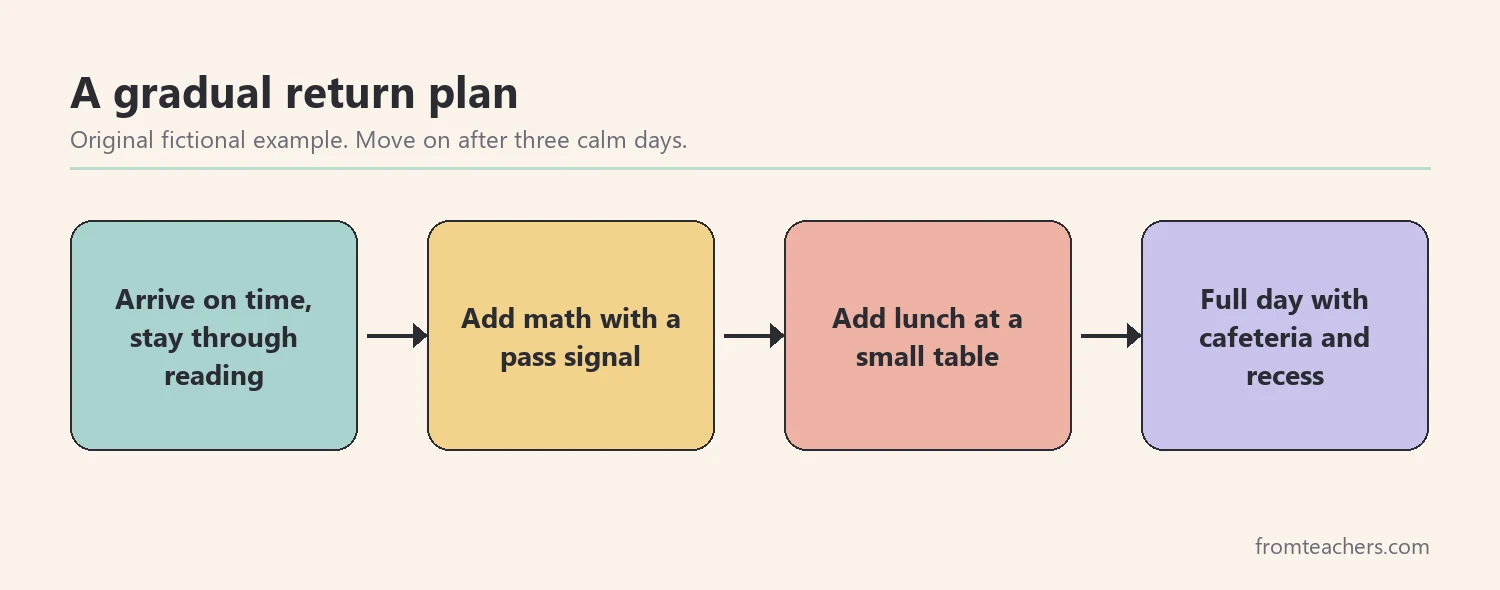
In Nora’s fictional plan, step one was arriving on time and staying through morning reading. Step two added math, with a quiet signal she could use to pass if called on. Step three added lunch at a small “lunch bunch” table with the counselor and two classmates. Step four was the full day, including the cafeteria and recess.
Meanwhile, keep the student’s voice in the plan. Ask what would make each step easier. Nora suggested sitting near the door in math, which cost nothing and helped her feel less trapped.
Also, plan for setbacks. A hard day after a weekend or a holiday is normal. When it happens, go back one step for a day or two, then move forward again. Treating setbacks as part of the plan keeps everyone calm and focused on progress, which is central to supporting back to school anxiety over time.
5. Respond calmly in hard moments
Even with a good plan, there will be moments of refusal, tears, or panic. How the adults respond in those minutes often shapes the next day.
First, stay calm and brief. Use a low voice and few words. Acknowledge the feeling, then point to the next small step: “You feel worried. That’s okay. Let’s walk to the office together and drop off the folder.”
Second, offer a calming strategy the student has already practiced, such as slow breathing, holding a fidget, or a short walk with an adult. Practicing these strategies when the child is calm makes them easier to use when worry rises.
Third, avoid long negotiations and avoid sending the student home as the default solution. Going home can bring quick relief, but it may also teach that avoidance works. Of course, follow the school’s procedures and the family’s guidance, and contact health professionals when there is any concern about safety or health.
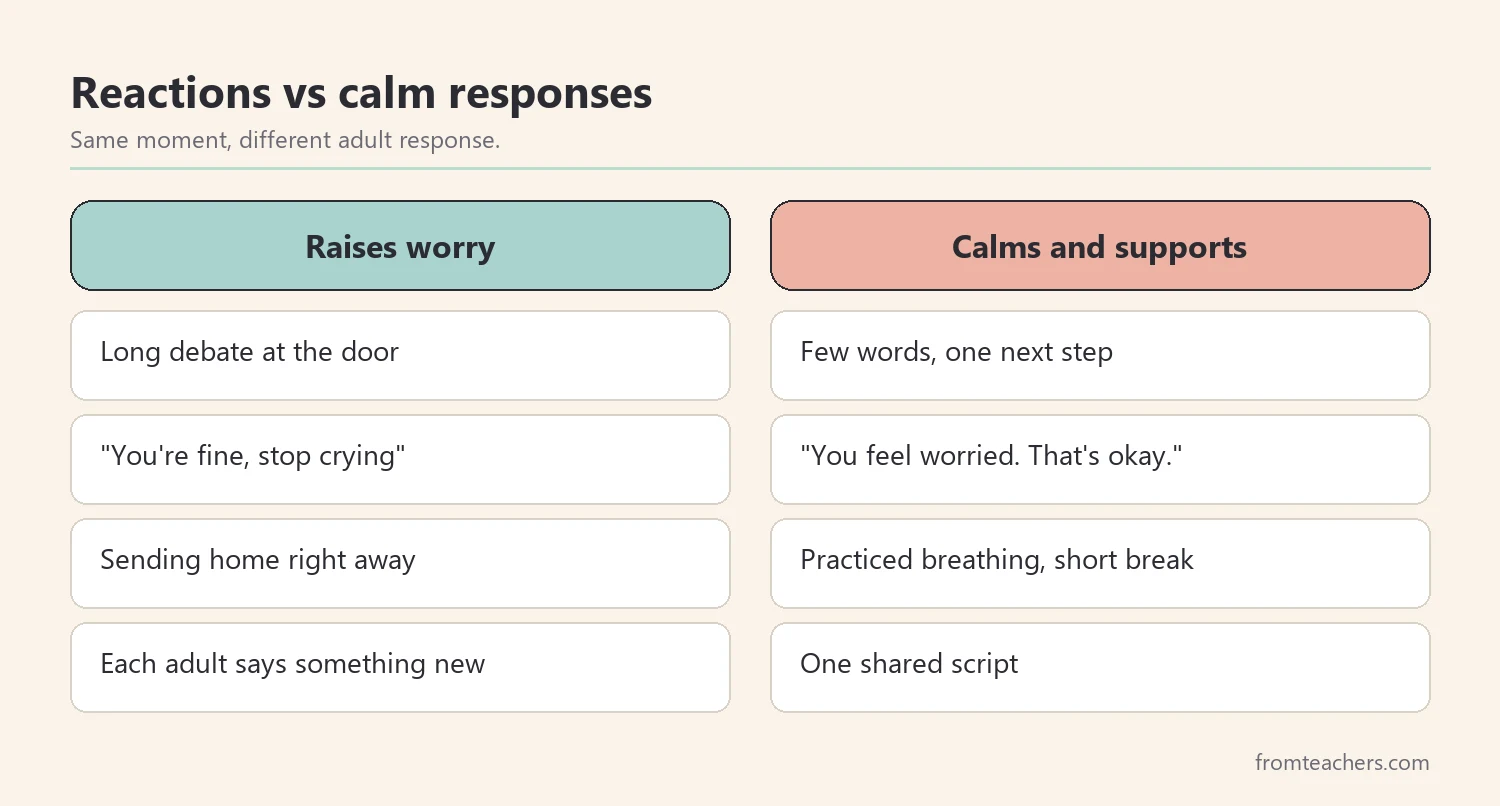
For Nora, the team agreed on one script and one strategy. When she froze at the door, the counselor said, “I see you’re worried. Breathe with me three times, then we’ll take the folder.” On most days, that was enough. On harder days, Nora spent five minutes in the counselor’s office before joining her class.
6. Track small wins and review with the team
Progress with back to school anxiety is often slow and uneven, so it helps to write it down. Choose one or two simple measures, such as days attended in full or minutes until the student joins class.
For example, Nora’s team counted full days each week. In week 1, she stayed the full day on 1 of 5 days. In week 2, it was 2 of 5. In week 3, it was 3 of 5, and in week 4, it was 4 of 5. In other words, the trend was clearly upward, even though some days were still hard.
Then, review the plan every week or two. Ask: What helped most? Which step is next? What still feels hard? Share the answers with the student, too. Seeing a simple chart of growing full days can boost a child’s confidence.
Also, celebrate wins in ways the student enjoys. Nora chose to earn extra art time when she reached four full days in a week. Celebrating a full day of attendance reminds everyone that progress is happening.
Finally, know when to ask for more help. If back to school anxiety stays strong, grows worse, or affects sleep, eating, or friendships, the school psychologist, counselor, or a health professional can help the family decide on next steps. For students with IEPs or 504 plans, the team can also discuss whether supports should be updated.
Common mistakes and how to avoid them
- Mistake: Waiting for the worry to pass on its own. Fix: notice patterns early and start small supports right away.
- Mistake: Treating all avoidance as defiance. Fix: use a trigger log to find out what the student is worried about.
- Mistake: Long, emotional goodbyes. Fix: use a short, warm, consistent goodbye and a clear handoff to a trusted adult.
- Mistake: Sending the student home as the default. Fix: offer a practiced calming strategy and a short break at school, following school procedures.
- Mistake: Jumping straight to the full day. Fix: plan gradual steps and agree on how you will know a step is ready to grow.
- Mistake: Each adult using different words. Fix: agree on one script and share it with home and school.
Questions teachers and parents ask about back to school anxiety
Is back to school anxiety normal?
Some worry at the start of a school year is very common, especially after a move, a long break, or a change of school. It becomes a bigger concern when it lasts, grows, or leads to missed school. In that case, talk with the school counselor or a health professional.
Should I let my child stay home on a hard morning?
Staying home can bring quick relief, but repeated absences may make returning harder. Many families find it helps to agree on a plan with the school ahead of time, so there is a clear, calm response for hard mornings. Always check with a doctor if there are physical health concerns.
How can teachers help without singling out the student?
Use private signals, quiet check-ins, and small jobs that give a reason to walk in. Many supports, such as a visual schedule or a warm greeting at the door, help the whole class too.
How long does it take for back to school anxiety to improve?
It varies widely. Some students settle in a few weeks, and others need longer support. Tracking a simple measure helps the team see real progress, even when it is slow.
Who should be involved in the plan?
The student, family, classroom teacher, and school counselor or psychologist are a strong core team. For students with IEPs or 504 plans, the plan can be discussed with the full team.
Related reading: Understanding Demand Avoidance and School Refusal: Strategies for PDA-Style Profiles, Building Stronger School Counseling Programs: A Framework for Student Success, and How Teachers Communicate With Parents in Special Education: Building a Strong Partnership.
A companion resource for back to school anxiety:
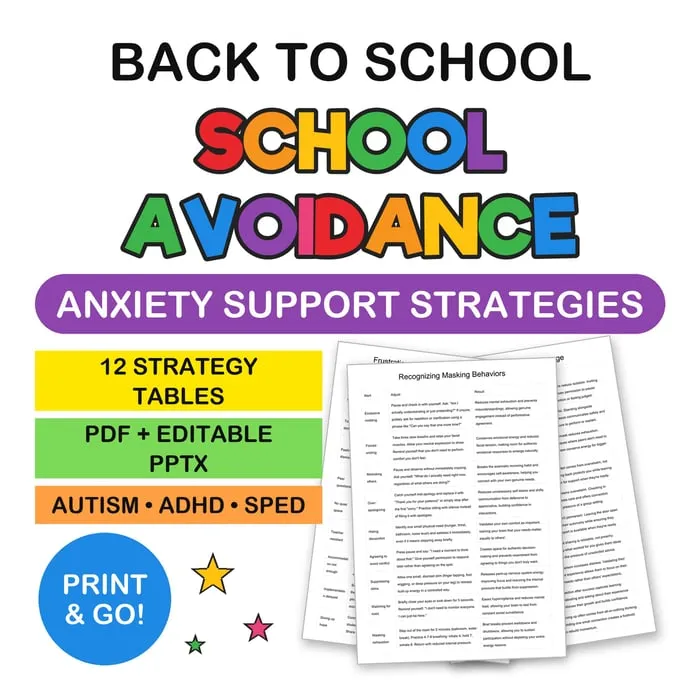
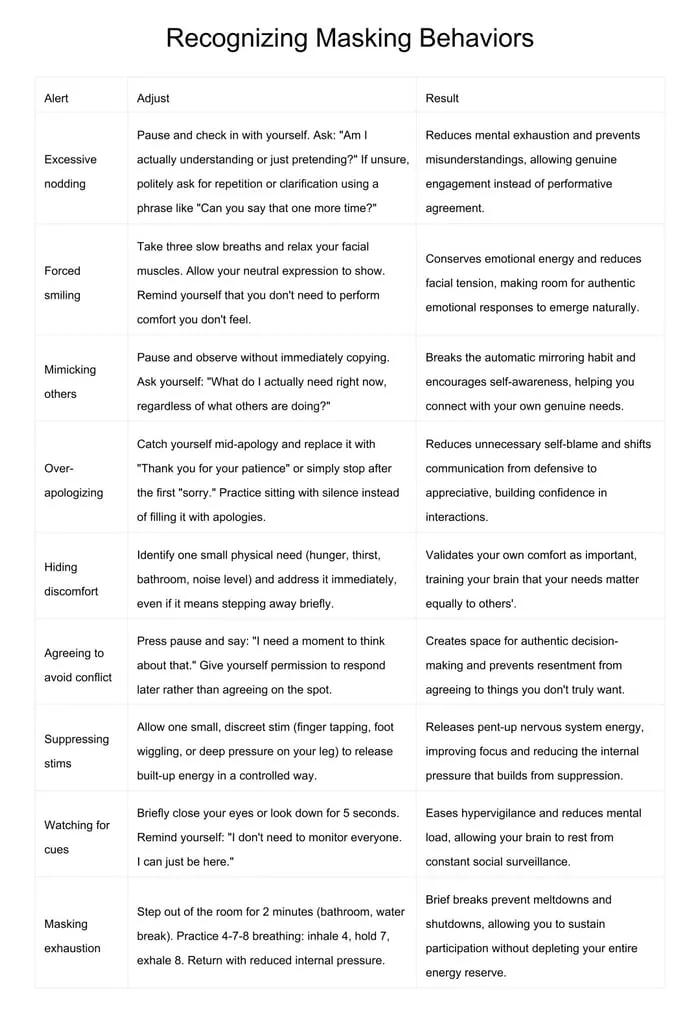
School Avoidance and Back to School Anxiety Strategies for Special Education: a set of 12 strategy tables for teachers, counselors, and parents, each focused on one real situation with clear, practical steps. Includes a 12-page PDF and an editable PowerPoint file.
Sources and scope
- National Association of School Psychologists: resources for families and educators on student mental health and school supports.
- HealthyChildren.org, American Academy of Pediatrics: parent information on children’s health, emotions, and school.
- Centers for Disease Control and Prevention: general information on children’s mental health.
- American School Counselor Association: information on the role of school counselors in supporting students.
This guide covers everyday school and home strategies for worry about returning to school. It does not cover diagnosis, therapy, or medication, which belong to qualified health and mental health professionals.
Key takeaways
- Back to school anxiety is easier to support when you notice early signs and share them quickly.
- A trigger log turns general worry into specific moments you can plan for.
- Predictable mornings and a warm handoff reduce pressure at the door.
- Gradual, agreed steps rebuild confidence toward the full school day.
- Track small wins, celebrate them, and involve professionals when worry persists.




Leave a Comment